Illinois Panfish Tackle Setup
One of the greatest joys of fishing in Illinois is the sheer abundance and accessibility of panfish. Whether you're a seasoned angler looking for a relaxing afternoon or a parent trying to introduce your kids to the magic of fishing, panfish are often the perfect target. However, many new anglers, and even some experienced ones, get overwhelmed trying to figure out the right tackle setup. It can feel like there are a million tiny hooks and bobbers, and it's easy to waste money on gear that just doesn't work for these feisty little fish. This guide will walk you through setting up an effective and enjoyable panfish tackle system, ensuring you spend less time fumbling with gear and more time feeling that satisfying tug on your line.
Understanding Panfish in Illinois: More Than Just a Little Fish
Before we dive into the nitty-gritty of tackle, let's talk about what makes panfish such a fantastic target here in Illinois. The term "panfish" generally refers to smaller freshwater fish that are typically small enough to fit in a frying pan, making them a delicious meal if you choose to keep them. They’re usually prolific, relatively easy to catch, and can be found in almost every body of water, from tiny farm ponds to massive reservoirs like Lake Shelbyville or Rend Lake.
The appeal of panfish isn't just their culinary value or their numbers; it's also the pure, unadulterated fun they offer. Catching a dozen bluegill in an hour can be just as thrilling, if not more so, than waiting all day for one big bass. They're excellent for honing your angling skills, teaching patience, and creating lasting memories, especially when fishing with family. Plus, the light tackle required for panfish means every nibble feels like a trophy fish, adding to the excitement.
Popular Panfish Species in Illinois
Illinois is blessed with a diverse array of panfish species, each offering a slightly different challenge and reward. Knowing a bit about these species can help you fine-tune your tackle and approach.
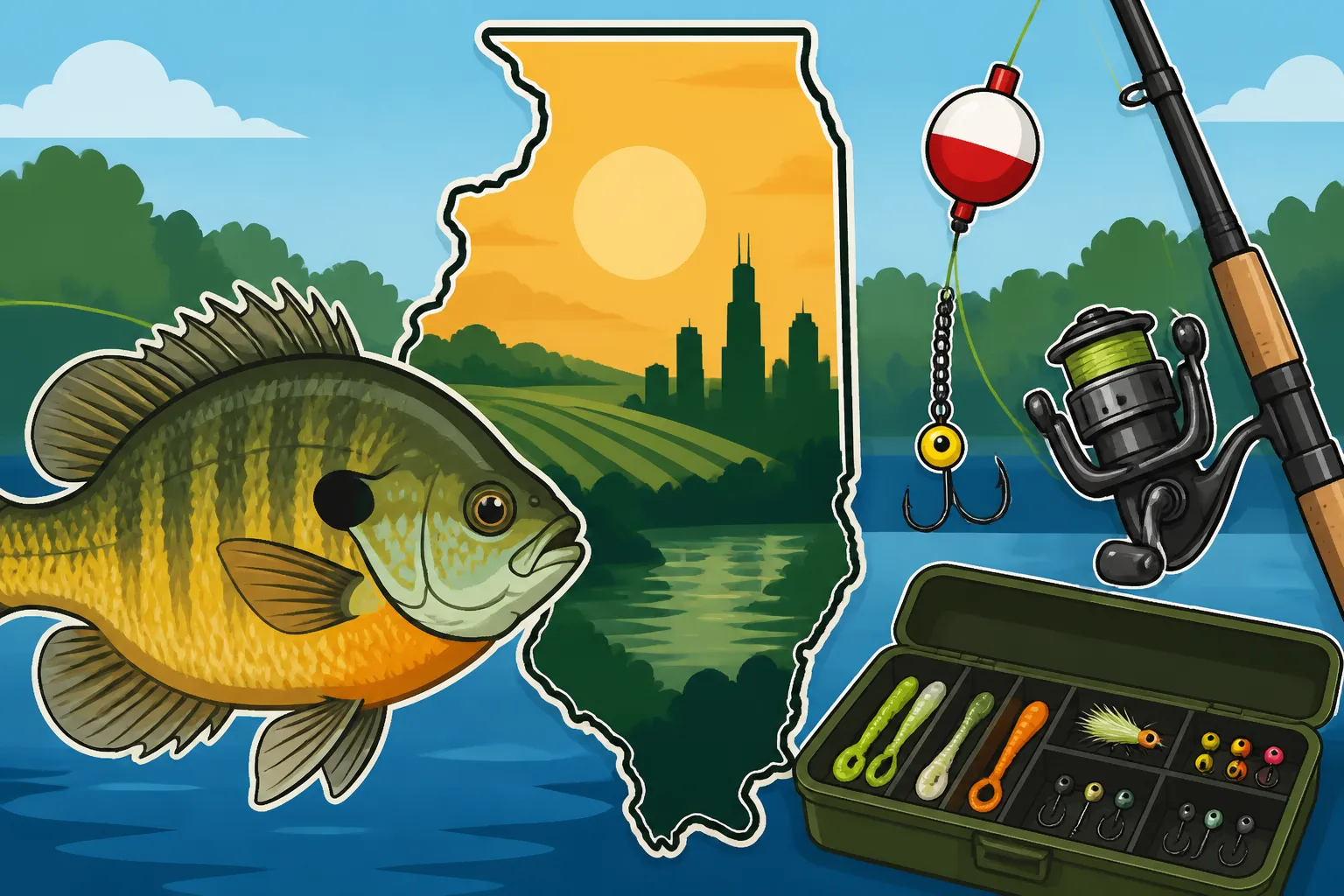
Bluegill: These are arguably the most common and beloved panfish in Illinois. They are round-bodied, often with dark spots and bright orange or yellow bellies, and are found in almost every pond, lake, and slow-moving river. Bluegill are aggressive biters and can be caught year-round, making them an excellent target for beginners. They typically don't grow huge, but a "slab" bluegill over eight inches is a real treat and puts up a surprisingly strong fight on light tackle. Many anglers specifically target these fish, especially at lakes known for their size, like those found by reading Best Illinois Lake for Trophy Bluegill Fishing.
Crappie (Black and White): Crappie are slender, silvery fish with distinct dark markings, and they are incredibly popular among Illinois anglers for their delicious white meat. Both black crappie and white crappie are found throughout the state, often schooling in submerged brush piles, timber, or around docks. Black crappie prefer clearer water, while white crappie are more tolerant of turbid conditions. They are known for their "paper mouths," meaning you need a gentle touch when setting the hook. Finding crappie often means locating structure, and they can provide fast and furious action when you hit a school. If you're looking for where to target them specifically, check out Best Crappie Lakes in Illinois for a Full Cooler.
Yellow Perch: While more common in the northern parts of Illinois and especially in Lake Michigan, yellow perch are another fantastic panfish. They have distinct vertical bars on their sides and often have an orange tint to their fins. Perch are schooling fish and can be caught through the ice or open water. They prefer cooler water and are a favorite for their delicate, flaky meat. Anglers often find them along drop-offs or near weed lines.
Redear Sunfish: Also known as "shellcrackers" for their ability to crush snails, redear sunfish are similar in shape to bluegill but often grow larger and have a distinctive red or orange margin on their operculum (gill plate). They are a bit pickier than bluegill, often preferring natural baits like worms or crickets, and are a real prize when landed. You might find them in the same waters as bluegill, but often deeper and near shell beds.
Why Panfish are Perfect for All Skill Levels
One of the biggest advantages of panfish fishing is its inclusivity. It truly is a sport for everyone, regardless of age or experience.
For beginners and children, panfish offer instant gratification. They bite frequently, are relatively easy to hook, and don't require overly complex techniques. This immediate success is crucial for building confidence and a lifelong love for fishing. Imagine a child's excitement when they feel that first tug and reel in a vibrant bluegill – it's priceless! Setting up a simple bobber and worm rig is straightforward and can be learned in minutes. If you are planning a trip with kids, considering Best Beginner-Friendly Fish Species for Kids Fishing in Illinois can help you prepare.
For intermediate anglers, panfish can be a fantastic way to refine skills. Learning to "read" the water, identify subtle bites, and master delicate presentations are all things you can practice while targeting panfish. Experimenting with different baits, jigs, and retrieval speeds can make an afternoon of panfishing a true learning experience. Plus, it's a great fallback when the bass or walleye aren't biting.
Even experienced anglers find joy in panfishing. It's a chance to simplify, slow down, and enjoy the pure essence of angling. Whether it's chasing trophy-sized bluegill at Rend Lake or filling a cooler with crappie, panfishing provides consistent action and a delicious reward. It's also an excellent opportunity to test out new ultralight gear or hone finesse techniques. Plus, the serenity of a quiet morning panfishing trip can be incredibly restorative.
Essential Rod and Reel Combos for Panfish
Choosing the right rod and reel combo is the foundation of any good tackle setup, and for panfish, "ultralight" is usually the name of the game. You want gear that is sensitive enough to detect the faintest nibble from a small fish, yet strong enough to handle a surprisingly powerful fight from a big crappie or bluegill.
Ultralight Spinning Combos: The Go-To Setup
When it comes to panfish, an ultralight spinning combo is hands down the most versatile and enjoyable choice. These setups are designed for casting light lures and baits, and their sensitivity allows you to feel everything that's happening at the end of your line.
An ultralight rod is typically between 5 to 6.5 feet long, very flexible, and has a light power rating. This flexibility is key – it absorbs the shock of a fish's fight, preventing hooks from tearing out of delicate panfish mouths. The soft tip also acts like a spring, launching those tiny jigs and pieces of bait a good distance. You'll find these rods paired with small spinning reels, usually in the 500 to 1000 series size. These reels are compact, lightweight, and have a smooth drag system, which is crucial when a big crappie decides to make a run. Many popular brands offer excellent ultralight combos, readily available at stores like Bass Pro Shops or online through Amazon.
The line you choose for an ultralight setup is also critical. Monofilament line in the 2 to 6-pound test range is usually perfect. It has enough stretch to act as an additional shock absorber, is easy to tie knots with, and is very forgiving. Lighter line means more natural bait presentation and more bites. Some anglers prefer a very thin braided line with a fluorocarbon leader for ultimate sensitivity, but for most panfish situations, a good quality mono is all you need.
Rod Action and Length for Panfish Success
Beyond just "ultralight," understanding rod action and length can help you dial in your setup even further.
Rod Action: This refers to where the rod bends when pressure is applied.
- Slow Action: These rods bend throughout their entire length. They offer maximum flexibility and are great for casting very light baits and for absorbing head shakes from fish, minimizing hook pulls. If you're primarily using live bait under a bobber and want a very forgiving setup, a slow action might be ideal.
- Moderate Action: These rods bend in the top half. They offer a good balance of casting distance, sensitivity, and fighting power. This is a versatile choice for panfish, working well with both live bait and small jigs.
- Fast Action: These rods bend only in the top third or less. They are very sensitive and allow for quick, powerful hook sets. While perhaps a bit much for the smallest bluegill on a worm, a fast action ultralight can be excellent for jigging for crappie, where feeling subtle bites and making decisive hook sets are important.
For most panfish scenarios, a moderate to fast action ultralight rod around 5.5 to 6 feet is a sweet spot. It gives you enough backbone to control a decent fish but retains the sensitivity needed for those light bites.
Rod Length:
- Shorter Rods (4.5-5.5 feet): Great for tight spots, kayak fishing, or fishing from a small boat where casting distance isn't paramount. They offer good control and are easy for kids to handle.
- Medium Length Rods (5.5-6.5 feet): These are the workhorses for most panfish situations. They provide a good balance of casting distance, accuracy, and sensitivity, allowing you to reach those brush piles or lily pad edges.
- Longer Rods (7+ feet): While less common for general panfish, a longer, lighter rod can be fantastic for casting very small jigs or floats a long distance, especially from shore or when targeting wary crappie. However, they can be a bit unwieldy in dense cover.
Reel Size and Line Recommendations
Matching your reel to your rod is crucial for balance and performance. For ultralight panfish setups, you'll typically be looking at very small spinning reels.
Reel Size:
- 500 Series: These are tiny reels, perfect for the lightest rods and shortest lengths. They hold very little line but are incredibly lightweight and sensitive, ideal for pursuing the smallest panfish or for highly specialized ultralight tactics.
- 1000 Series: This is perhaps the most popular size for general panfish fishing. A 1000 series reel offers a good balance of line capacity, casting performance, and smooth operation for typical panfish battles. It pairs wonderfully with a 5.5 to 6.5-foot ultralight rod.
- 2000 Series: While a bit larger, a 2000 series reel can still be considered "light" and can be a good choice if you anticipate catching larger crappie or even accidentally hooking into a decent bass while panfishing. It offers more line capacity and slightly more cranking power.
Line Recommendations:
- Monofilament (2-6 lb test): As mentioned, this is the most common and recommended line. Brands like Stren or Trilene offer excellent options. It's inexpensive, easy to handle, and has just enough stretch to absorb shocks without breaking thin leaders or tearing hooks out.
- Fluorocarbon (2-6 lb test): While pricier, fluorocarbon is nearly invisible underwater, which can be a huge advantage in clear water or when fish are finicky. It has less stretch than mono, offering more sensitivity, but can be a bit stiffer and harder to tie knots with. Often used as a leader with braided main line.
- Braided Line (4-8 lb test, with leader): Braided line offers superior strength for its diameter and no stretch, providing ultimate sensitivity. However, it's highly visible, so it's almost always paired with a 2-4 foot fluorocarbon or monofilament leader. This setup is excellent for feeling the lightest bites when jigging.
When setting up your reel, make sure to spool it properly, not overfilling or underfilling, to ensure smooth casting and prevent tangles. Remember, the goal is natural presentation, and a lighter line allows your bait to behave more realistically in the water.
Terminal Tackle: The Little Things That Matter Most
Once you have your rod, reel, and line, it's time to consider the bits and pieces that actually connect you to the fish. For panfish, these small items make a huge difference, often dictating whether you get a bite or not.
Hook Sizes and Styles for Panfish Mouths
Panfish have relatively small mouths, so using tiny hooks is absolutely critical. Too large a hook, and they simply won't be able to get it in their mouth, or they'll be able to steal your bait right off the hook without getting caught.
Sizes: For most panfish like bluegill and crappie, you'll want hooks in the size 6 to 10 range. Some anglers even go as small as size 12 or 14 for very finicky fish or tiny baits. Remember, with hooks, the larger the number, the smaller the hook.
- Size 8-10: Perfect for average bluegill and small crappie, especially with small pieces of worm or grubs.
- Size 6-8: Good for larger bluegill, crappie, and perch, or when using slightly larger baits like minnows or whole crickets.
Styles:
- Aberdeen Hooks: These are a classic panfish hook. They are lightweight, have a long shank, and a wide gap, making them excellent for baiting worms and for easy removal from a fish's mouth. The thin wire also straightens out under extreme pressure, which can sometimes save your line from snagging.
- Baitholder Hooks: These have small barbs on the shank to help hold soft baits like worms securely. They're a solid all-around choice.
- Jig Heads: When fishing with soft plastic grubs, tubes, or small minnows, tiny jig heads are essential. Look for 1/64 oz to 1/8 oz sizes, with hooks appropriate for panfish (typically size 6 to 10). The weight helps cast the lure and get it down to the fish. Jig heads come in various colors, and sometimes a bright color like chartreuse or pink can attract curious panfish.
- Circle Hooks: While less common for traditional panfishing, tiny circle hooks (size 8-10) can be effective, especially for younger anglers. They are designed to hook fish in the corner of the mouth, reducing gut-hooking and making for easy release. You don't "set" the hook with a circle hook; you just reel in slowly as the fish swims away.
Always keep a variety of hook sizes in your tackle box. What works for a small bluegill might be too small for a slab crappie or a larger perch.
Bobbers: Slip vs. Fixed, and Why They Work
Bobbers are perhaps the most iconic piece of panfish tackle, signaling a bite with a satisfying dip or sudden disappearance. But not all bobbers are created equal, and choosing the right type can significantly impact your success.
Fixed Bobbers (Spring Clips or Pegged):
- Pros: Simple to use, easy to attach and remove from your line. They keep your bait at a consistent, shallow depth. Great for fishing shallow water (less than 6-8 feet) or when you know the fish are actively feeding near the surface. Excellent for kids as they are very visual.
- Cons: Cannot fish deeper than your rod length allows, as the bobber is fixed on the line. Casting can be awkward if the bobber is too far up the line.
- Types: The classic red-and-white round bobbers are common. Smaller, oval-shaped foam bobbers are also popular for their buoyancy and visibility.
- When to Use: Ideal for targeting bluegill or other sunfish in shallow ponds, coves, or along weed lines. If you're bank fishing a local park pond, a fixed bobber with a worm is a classic setup.
Slip Bobbers:
- Pros: These are game-changers for deeper water. A small knot (bobber stop) is tied onto your main line, and the bobber itself slides freely up and down the line until it hits the knot. This allows you to set your bait at any depth, even 20 feet or more, while still being able to reel the bobber down to your hook for easy casting. They offer a more natural bait presentation as the line can slide through the bobber.
- Cons: Requires a bit more setup (tying the bobber stop, threading the line).
- Types: Usually elongated, weighted floats made of balsa or plastic. Some come with a small weight built into the bottom for better casting stability.
- When to Use: Essential for crappie fishing in deeper brush piles, walleye in deeper channels, or when targeting bluegill holding off deep drop-offs. If you're fishing from a boat or a pier on a larger lake, a slip bobber is often the superior choice. You can find excellent slip bobber kits at your local tackle shop or through online retailers like Amazon.
No matter the type, choose a bobber that is just large enough to stay afloat with your bait and minimal weight. A bobber that's too big creates too much resistance, and finicky panfish will often drop the bait before you can set the hook.
Split Shot Weights and Their Strategic Use
Weights are often overlooked but are crucial for getting your bait down to where the fish are and for casting effectively. For panfish, we typically use small split shot weights.
Why Use Them?
- Casting Distance: Tiny baits, especially live worms, don't have enough weight to cast far. A small split shot adds just enough mass to allow you to cast further and more accurately.
- Depth Control: Weights help your bait sink through the water column to the desired depth. Without weight, your bait might just drift near the surface, never reaching the panfish holding deeper.
- Stability: In current, a little weight helps keep your bait in the strike zone instead of being swept away too quickly.
Sizes and Placement:
Split shot weights are crimped directly onto your fishing line. They come in various sizes, typically marked with letters (BB, B, C, D) or numbers (e.g., #7, #5, #3). For panfish, you'll generally be using the smaller sizes.
- Smallest Sizes (BB, #7, #5): These are ideal for the lightest presentations. Use just one or two small split shot to slowly drift a worm under a bobber or to add a tiny bit of weight to a small grub.
- Larger Sizes (B, #3, #1): These might be used when fishing deeper water, when there's more current, or when you need to cast a longer distance.
Placement: The key is to place the weight just far enough above your hook to allow the bait to move naturally, but close enough to help it sink.
- Bobber Rig: If using a fixed or slip bobber, place one or two split shot about 6-12 inches above your hook. This keeps the bait directly below the bobber and helps it sink.
- Bottom Fishing (without bobber): If you're casting out and letting your bait sink to the bottom (perhaps for larger crappie or catfish), you might place one or two split shot 12-24 inches above your hook. This allows your bait to waft enticingly near the bottom while the weight holds it in place.
Always use the least amount of weight necessary to get the job done. Too much weight can make your bait look unnatural and cause fish to drop it more quickly. It also dulls the feel of the bite on your line. A great tip for anyone curious about basic setups is to read Best Beginner Bluegill Fishing Setup, which details how to put these pieces together.
Bait and Lure Choices for Illinois Panfish
Now for the exciting part: what to put on your hook! Panfish are generally not picky eaters, which is one of their charms, but certain baits and lures consistently outperform others.
Live Bait Classics for Panfish
Live bait is often the most effective choice for panfish, especially when introducing new anglers to the sport. The natural movement and scent are irresistible to most species.
Worms (Red Worms, Nightcrawlers):
- Red Worms: These are probably the number one panfish bait. They are small, lively, and incredibly attractive to bluegill, crappie, and perch. You only need a small piece, about a half-inch to an inch, threaded onto a size 8 or 10 hook. Their wiggling action and natural scent drive panfish wild. They're easy to find at almost any bait shop.
- Nightcrawlers: While often thought of for larger fish, a small piece of a nightcrawler (the tip, or a section about an inch long) can be very effective, especially for larger bluegill or crappie. The extra bulk and scent can sometimes entice bigger fish.
Minnows:
- Small Fathead Minnows (Crappie Minnows): These are the ultimate bait for crappie, but also effective for perch and larger bluegill. Hook them lightly through the lips or just behind the dorsal fin with a size 6 or 8 hook. Under a slip bobber near a brush pile, a live minnow is incredibly hard for crappie to resist. They also work well on a tiny jig head, tipped or as the main offering.
Crickets and Grasshoppers:
- Crickets: For bluegill and other sunfish, crickets are a secret weapon. Their chirping and struggling on the surface or just below are a strong trigger. Hook them lightly through the collar or tail. They are fantastic for topwater action on warm summer evenings.
- Grasshoppers: Larger versions of crickets, grasshoppers can tempt bigger panfish, especially in late summer and fall. They put up a bigger fuss on the water, making them highly visible.
Wax Worms and Mealworms:
- Wax Worms: These small, plump, creamy-colored larvae are excellent for all panfish, especially through the ice or when conditions are tough. Their soft bodies are easy for panfish to engulf, and their sweet scent is very appealing. They are often tipped onto small jigs.
- Mealworms: Similar to wax worms but a bit tougher, mealworms also make a great panfish bait. They stay on the hook well and are very active. They are often used as a more durable alternative to small pieces of red worm.
The key with live bait is to use small portions that fit the panfish's mouth and to keep the bait lively and fresh.
Small Lures and Jigs That Get Bites
While live bait is a consistent winner, artificial lures can be incredibly effective, especially for crappie and aggressive bluegill. They also offer the convenience of not needing to keep bait alive.
Tiny Jigs (1/64 oz – 1/8 oz):
- Marabou Jigs: These classic jigs, made with soft, flowing marabou feathers, pulse and breathe in the water, creating an irresistible action. White, chartreuse, black, and pink are popular colors. They are fantastic for crappie, jigged vertically or cast out and retrieved slowly.
- Tube Jigs: Small, soft plastic tubes with tentacle-like tails. They come in countless colors and are often paired with a tiny jig head. The tubes provide a subtle, fluttering action that mimics small aquatic insects or baitfish.
- Grub Jigs (Curly Tail Grubs): These are perhaps the most popular soft plastics for panfish. A small curly tail grub (1-2 inches long) on a jig head creates a vibrant swimming action on the retrieve. Chartreuse, white, green pumpkin, and pink are perennial favorites. They are incredibly versatile for all panfish species.
Small Spinners and Spoons:
- Inline Spinners (e.g., Rooster Tail, Mepps Aglia): These miniature spinners, often 1/32 oz to 1/8 oz, create flash and vibration that panfish can't ignore. The rotating blade mimics a fleeing baitfish or insect. They are particularly effective for active bluegill, crappie, and perch, especially when covering water. Silver and gold blades with a small dressed treble hook are excellent.
- Tiny Spoons: Small, fluttering spoons (e.g., Kastmaster, Little Cleo) can be deadly, especially for perch and crappie. Their erratic flash and wobble on the fall or retrieve can trigger aggressive strikes. They are also popular for ice fishing.
Mini Crankbaits and Jerkbaits:
- For larger crappie and especially white bass (often lumped into the panfish category by some anglers), tiny crankbaits and jerkbaits (1-2 inches) can be very effective. These lures mimic baitfish and are best used when fish are actively chasing forage.
When fishing with lures, experiment with different colors, sizes, and retrieval speeds. Sometimes a subtle jigging motion is key; other times, a steady retrieve is what they want. For specific tactics, Crappie Jigging Techniques provides great insights.
Scented Baits and Artificial Boosters
Sometimes, panfish need a little extra encouragement. This is where scented baits and artificial boosters come into play.
Scented Soft Plastics: Many small soft plastic grubs, tubes, and minnow imitations now come pre-scented with attractants like garlic, anise, or fish oils. These can significantly increase your bite rate, especially when fish are hesitant or in murky water where visual cues are limited. Companies like Berkley (PowerBait series) offer a wide range of scented options that are specifically designed for panfish.
Dough Baits and Pastes: While more often associated with trout, small bits of dough bait or scented pastes can be surprisingly effective for bluegill and even crappie, particularly in stocked ponds. These typically have a strong, sweet, or cheesy scent that appeals to many panfish.
Scent Boosters and Attractants: These liquids or gels can be applied to any artificial lure or even live bait to add an extra layer of appeal. You simply squeeze a few drops or a thin smear onto your jig, grub, or worm. The scent slowly disperses in the water, creating a "scent trail" that can draw fish in and encourage them to hold onto the bait longer, giving you more time to set the hook. Brands like Pro-Cure or Mike's Scents offer many different options.
Scented baits and attractants are not always necessary, especially when panfish are aggressive, but they can definitely give you an edge on tough days or in pressured waters. It's always a good idea to have some on hand, especially if you're experimenting with artificial lures.
Setting Up Your Panfish Tackle Box
A well-organized tackle box is a happy tackle box. For panfish, with all their tiny hooks, weights, and jigs, organization is key to preventing frustration and ensuring you have what you need when you need it.
Organizing Your Small Tackle: Avoiding Tangled Messes
There's nothing worse than reaching into your tackle box for a specific jig and pulling out a tangled mess of hooks, weights, and line. Good organization saves time and temper.
Compartmentalized Boxes: These are your best friend. Look for plastic utility boxes with adjustable dividers. Dedicate individual compartments to specific items:
- Hooks: Group by size and style (e.g., "Size 8 Aberdeen," "Crappie Jigs 1/32 oz").
- Split Shot: Keep different sizes in separate compartments. Small containers or dispensers are also excellent for this.
- Bobbers: Store fixed bobbers together. Keep slip bobber components (bobber stops, beads, floats) in their own section.
- Jigs and Lures: Group by type and color. Small plastic grubs can be kept in their original bags to preserve scent and prevent them from melting together, then stored in a larger compartment.
- Swivels and Snaps (if you use them): Keep them separate to avoid tangles.
Magnetized Trays: Some tackle boxes or inserts have magnetized trays, which are fantastic for keeping tiny hooks and weights from scattering. They simply stick to the magnet, making them easy to pick up.
Small Pouches and Bins: For soft plastic grubs that come in bags, consider using small, clear waterproof pouches or zip-top bags within your main tackle box. This keeps the scent in and prevents colors from bleeding onto other plastics.
Labeling: Consider labeling the compartments, especially if you have many similar-looking items. A small piece of masking tape with the hook size or jig weight can be a huge time-saver.
A well-organized panfish tackle box means more efficient fishing and less time fumbling around, especially when a hot bite is on!
Essential Tools and Accessories for Panfish Anglers
Beyond hooks and bait, a few essential tools will make your panfish adventures much smoother.
- Small Pliers or Hemostats: Panfish often swallow hooks, and their small mouths can be tricky. A good pair of small needle-nose pliers or hemostats (forceps) is invaluable for quickly and safely removing hooks. This is especially important if you plan on practicing catch and release.
- Line Clippers/Scissors: You'll constantly be tying and re-tying knots, so a sharp pair of line clippers or small fishing scissors is a must. Don't use your teeth – it's bad for your teeth and your line!
- Stringer or Livewell: If you plan on keeping your catch for a meal, a stringer (a rope with a clip for each fish) or a small bucket with a battery-powered aerator (a "livewell") will keep your fish fresh until you're ready to head home.
- Measuring Device: Many Illinois waters have size limits on certain panfish, especially crappie. A small ruler or measuring tape is crucial for ensuring you're compliant with regulations. Always double-check Illinois Fishing Season and Catch Limit Rules for the specific body of water you're fishing.
- Sunscreen and Insect Repellent: Essential for comfort during long days on the water.
- Small Towel: Handy for wiping hands, fish slime, or any spills.
- First-Aid Kit: Accidents happen, especially when handling hooks. A small kit with bandages and antiseptic wipes is always a good idea.
- Hat and Polarized Sunglasses: A hat protects you from the sun, and polarized sunglasses cut glare off the water, allowing you to see fish, structure, and your bobber much more clearly.
These accessories might seem minor, but they significantly enhance your fishing experience and preparedness. Many of these items can be found readily in a dedicated fishing section at Bass Pro Shops or even general retailers online through Amazon.
Building a Kid-Friendly Panfish Kit
Fishing with kids is one of life's great pleasures, and making sure their tackle is easy to use and frustration-free is paramount. A dedicated kid-friendly panfish kit focuses on simplicity and durability.
Rod and Reel: Start with a spincast rod and reel combo. These are incredibly easy for young children to use, with a simple push-button casting mechanism. Look for shorter rods (around 4-5 feet) that are easy for small hands to manage. Some come in fun colors or with cartoon characters, which adds to the appeal. They are usually pre-spooled with decent line.
Tackle Box: A small, sturdy, and easy-to-open tackle box is best. Don't overfill it. Keep it simple with just the essentials.
Hooks: Use barbless hooks or pinch down the barbs on regular hooks with pliers. This makes hook removal easier and safer for both the fish and the child. Stick to size 8-10 Aberdeen hooks.
Bobbers: Large, brightly colored fixed bobbers are perfect. They're easy to see, even for kids with less developed eyesight, and the big splash when it goes down is exciting.
Weights: Use easy-to-attach, reusable split shot. Avoid tiny ones that are hard for little fingers to handle.
Bait: Live bait is usually the most engaging for kids. Red worms are fantastic because they're active and almost guaranteed to get bites. Small pieces of hot dog or corn can also work in a pinch and are less "icky" for some kids.
Tools: Include kid-safe blunt-nose pliers for hook removal, and maybe a small plastic "fish gripper" to help them hold their catch without touching spines or fins.
Extras:
- Snacks and Drinks: Keep the energy up!
- Net: A small landing net makes it easier to bring in fish and prevents drops. It also adds a fun element for kids.
- Bug Spray and Sunscreen: Don't forget these comfort items.
The goal is to minimize frustration and maximize fun. With a simple, kid-friendly setup, those memories of their first fish will last a lifetime. For more specific guidance on starting young anglers, consider referring to How to Teach a Kid to Fish for Panfish.
Advanced Tips for Panfish Anglers
Once you've mastered the basics, there are always ways to refine your approach and catch more panfish. Advanced techniques often involve a deeper understanding of fish behavior and making subtle adjustments to your tackle.
Understanding Panfish Behavior and Habitat
To consistently catch panfish, you need to think like a fish. Where do they live? What are they eating? How does the environment affect them?
Seasonal Movements:
- Spring (Pre-Spawn/Spawn): Panfish move into shallower waters as temperatures rise, seeking spawning grounds. Crappie might be found in brush piles or emergent vegetation in 2-10 feet of water. Bluegill will often be in even shallower areas, building beds in sandy or gravelly spots. This is often the easiest time to find and catch large numbers of fish. Understanding Illinois Crappie Spawn Season Guide can give you a leg up.
- Summer: As water temperatures peak, panfish often move to deeper, cooler water. Look for them around deeper submerged structure (brush piles, logs, stumps), along drop-offs, or near weed lines in 10-25 feet of water, especially during the heat of the day. They might move shallow again during dawn and dusk.
- Fall: Panfish start to move shallower again, feeding aggressively to fatten up for winter. They might be found around remaining green vegetation or deeper ends of structure.
- Winter (Ice Fishing): Panfish concentrate in deeper holes, channels, or around distinct structure in 15-30+ feet of water. They become less active, requiring very subtle presentations.
Structure is Key: Panfish are almost always associated with some form of cover or structure. This provides them with ambush points for feeding and protection from predators.
- Submerged Timber/Brush Piles: Crappie absolutely love these.
- Weed Lines/Lily Pads: Excellent for bluegill and other sunfish.
- Docks and Piers: Offer shade and structure, attracting panfish year-round.
- Rock Piles/Riprap: Can hold perch and some crappie.
- Channel Edges/Drop-offs: Good holding areas, especially in deeper lakes.
Food Sources: Panfish primarily eat insects, small crustaceans, and tiny baitfish. Matching your bait or lure to their natural forage can be highly effective. If you see bugs hatching, try a small fly or an insect imitation jig. If there are schools of tiny minnows, a small minnow imitation or a live minnow is a good bet.
By observing the water, understanding the season, and looking for key structures, you'll dramatically increase your chances of finding panfish.
Seasonal Adjustments for Panfish Tackle
Just as panfish move seasonally, your tackle setup might need to adapt to different conditions and behaviors.
Spring:
- Location: Shallow, spawning areas.
- Tackle Adjustment: Lighter split shot, smaller bobbers, and smaller hooks (size 10-12) for bluegill. For crappie, tiny jigs (1/64 oz) or small minnows under a fixed bobber in shallow cover. The goal is a subtle, slow fall that mimics natural forage in warming waters.
Summer:
- Location: Deeper structure, cooler water.
- Tackle Adjustment: Slip bobbers are essential to reach deeper depths. You might use slightly heavier jig heads (1/16 – 1/8 oz) to get your bait down faster. Experiment with small crankbaits or spinners if fish are actively chasing bait in open water. Focus on vertical presentations over deep structure. Summer Bass Fishing Patterns can give you an idea of how other species behave, and panfish often follow similar depth preferences in heat.
Fall:
- Location: Moving between shallow feeding grounds and deeper wintering spots.
- Tackle Adjustment: Versatility is key. Have both fixed and slip bobber setups ready. Panfish are often aggressive, so slightly larger jigs or spinners (1/8 oz) can be effective. Don't be afraid to cast and retrieve more actively to cover water as fish feed heavily.
Winter (Ice Fishing):
- Location: Deep holes and tight to structure.
- Tackle Adjustment: Very short, sensitive ice fishing rods (24-36 inches) with tiny reels. Small tear-drop jigs, micro-spoons, or tiny tungsten jigs tipped with wax worms or spikes are deadly. Very light line (1-2 lb test fluorocarbon or monofilament) for maximum sensitivity and natural presentation. Focus on slow, subtle jigging motions.
Always be willing to experiment. If one technique isn't working, don't be afraid to change your bait, your depth, or even your location. That's the beauty of fishing!
When to Downsize or Upsize Your Gear
While "ultralight" is the mantra for panfish, there are times when you might need to make subtle adjustments to your gear to match conditions or target specific fish.
Downsizing Your Gear:
- When: Fish are finicky, water is very clear, or you're targeting exceptionally small panfish (e.g., small bluegill, sunfish). Also common in heavily pressured waters where fish have seen every lure.
- What to Change:
- Line: Drop down to 2 lb test monofilament or even 1 lb test for extreme finesse.
- Hooks: Go to size 10-14 for the tiniest pieces of bait.
- Jigs: Use 1/64 oz or even 1/80 oz micro jigs.
- Bait: Smaller pieces of worm, single wax worms, or tiny soft plastic tails.
- Why it Works: Smaller, lighter tackle creates a more natural presentation, making the bait appear less suspicious to wary fish. It also makes those light bites incredibly obvious on your super-sensitive gear.
Upsizing Your Gear:
- When: Targeting larger panfish (trophy crappie or large redear), fishing in heavy cover where you need to muscle fish out, or when accidentally catching larger species (like bass) is a possibility. Also, when fishing in strong current or wind.
- What to Change:
- Line: Move up to 6 lb test monofilament or a 6-8 lb test braid with a fluorocarbon leader.
- Hooks: Size 6-8 for larger minnows or bigger baits.
- Jigs/Lures: 1/8 oz or 1/4 oz jigs, small crankbaits, or inline spinners.
- Rod/Reel: You might consider a slightly heavier "light" power rod (instead of ultralight) if you're consistently battling bigger fish or fishing very heavy cover. A 2000 series reel might offer a bit more cranking power.
- Why it Works: Heavier gear provides more control, strength, and durability. It helps you avoid break-offs in heavy cover and handle larger fish more efficiently. The stronger line allows for more aggressive hook sets and reduces the risk of losing that potential trophy crappie.
The goal is always to use the lightest tackle you can get away with while still being effective for the conditions and the size of fish you expect to encounter. This balance is what makes panfish fishing both effective and incredibly fun.
| Tackle Component | Ultralight Panfish Setup | Upsized (for bigger panfish/cover) | Downsized (for finicky fish/clear water) |
|---|---|---|---|
| Rod Power/Action | Ultralight, Moderate-Fast Action, 5.5-6.5 ft | Light-Medium Light, Fast Action, 6-7 ft | Ultralight, Slow-Moderate Action, 4.5-5.5 ft |
| Reel Size | 1000 Series | 2000 Series | 500 Series |
| Main Line | 4 lb Monofilament | 6-8 lb Monofilament or Braided (with leader) | 2 lb Monofilament or Fluorocarbon |
| Hook Sizes (Bait) | #8 – #10 Aberdeen/Baitholder | #6 – #8 Baitholder/Circle Hook | #10 – #14 Aberdeen/Light Wire |
| Jig Head Weight | 1/32 oz – 1/16 oz | 1/8 oz – 1/4 oz | 1/64 oz – 1/80 oz |
| Lure Size | 1-2 inch Grubs, Tubes, Small Spinners | 2-3 inch Grubs/Paddle Tails, Larger Spinners, Tiny Crankbaits | 1 inch Micro Grubs, Tiny Marabou Jigs |
| Bobber Type | Fixed or Slip, small to medium buoyant | Slip, medium to large buoyant for heavier bait/wind | Small Fixed or Slip, minimal buoyancy |
| Split Shot Weight | 1-2 small (#7 to #5) | 2-3 medium (#3 to #1) | 1 tiny (BB to #7) |
| Primary Bait | Red Worms, Small Minnows, Wax Worms, Tiny Soft Plastics | Larger Minnows, Crappie Nibs, 2" Soft Plastics | Smallest piece of worm, single wax worm, tiny insect larvae |
Disclaimer
This article is for general informational purposes only and does not constitute professional advice. Laws, prices and regulations vary by location and change over time. Consult a qualified professional for guidance on your specific situation.