Best Bait for Bluegill Fishing
If you've ever spent a frustrating afternoon on an Illinois pond, watching bluegill nip at your bait without ever committing, you know the struggle is real. These feisty little fish can be incredibly fun to catch, especially for beginners or families, but they can also be maddeningly finicky. This guide is all about cutting through the guesswork to help you choose the absolute best bait for bluegill fishing in Illinois, turning those frustrating nips into solid hookups and full stringers.
Understanding Bluegill Behavior to Choose Your Bait
Before we dive into the tackle box, let's talk a little about bluegill themselves. These aren't just hungry bottom feeders; they have preferences, and their diet can shift. Knowing what makes them tick is the first step to picking the right bait.
Why Bluegill are Picky Eaters
It might seem contradictory to call bluegill picky when they're known for biting almost anything, but when they're being finicky, it's often because they're keyed into something specific. Bluegill, especially the bigger ones, are opportunistic feeders but they also have incredible eyesight and can be surprisingly cautious. They live in diverse environments, from clear farm ponds to murky river backwaters, and their prey varies widely. Sometimes, they're looking for a tiny insect struggling on the surface, other times they're rooting around for larvae in the weeds, or even chasing a small minnow. If your bait doesn't mimic what they're currently focused on, they might just give it a sniff and swim away. Factors like water clarity, temperature, and even the time of day can influence their willingness to strike. You have to think like a bluegill to truly understand what's on their menu.
Seasonal Changes in Bluegill Diet
Just like us, bluegill's dining habits change throughout the year. In the spring, after a long, cold winter, they're often gorging themselves to regain energy, and then they get really aggressive during the spawn. They'll be looking for protein-rich meals, focusing on anything that moves. As water temperatures rise into summer, insect activity explodes, and bluegill might key in on terrestrial insects falling into the water or various aquatic larvae. In the heat of summer, they often move to deeper, cooler water, and their feeding can slow down during the brightest parts of the day, making them more receptive to subtle presentations. When fall rolls around, they're once again putting on the feedbag, preparing for winter. They'll actively chase down a variety of baits. During winter, especially under the ice, their metabolism slows significantly, and they often prefer very small, slow-moving baits. Understanding these seasonal shifts helps you match your bait to their natural foraging patterns.
The Best Natural Baits for Illinois Bluegill
When it comes to bluegill, it's tough to beat natural bait. There's just something about the real thing that often triggers an undeniable bite. These are the tried-and-true favorites that Illinois anglers swear by.
Live Bait That Bluegill Can't Resist
Live bait provides scent, movement, and a natural feel that artificials often struggle to replicate. For bluegill, these options are usually a slam dunk.
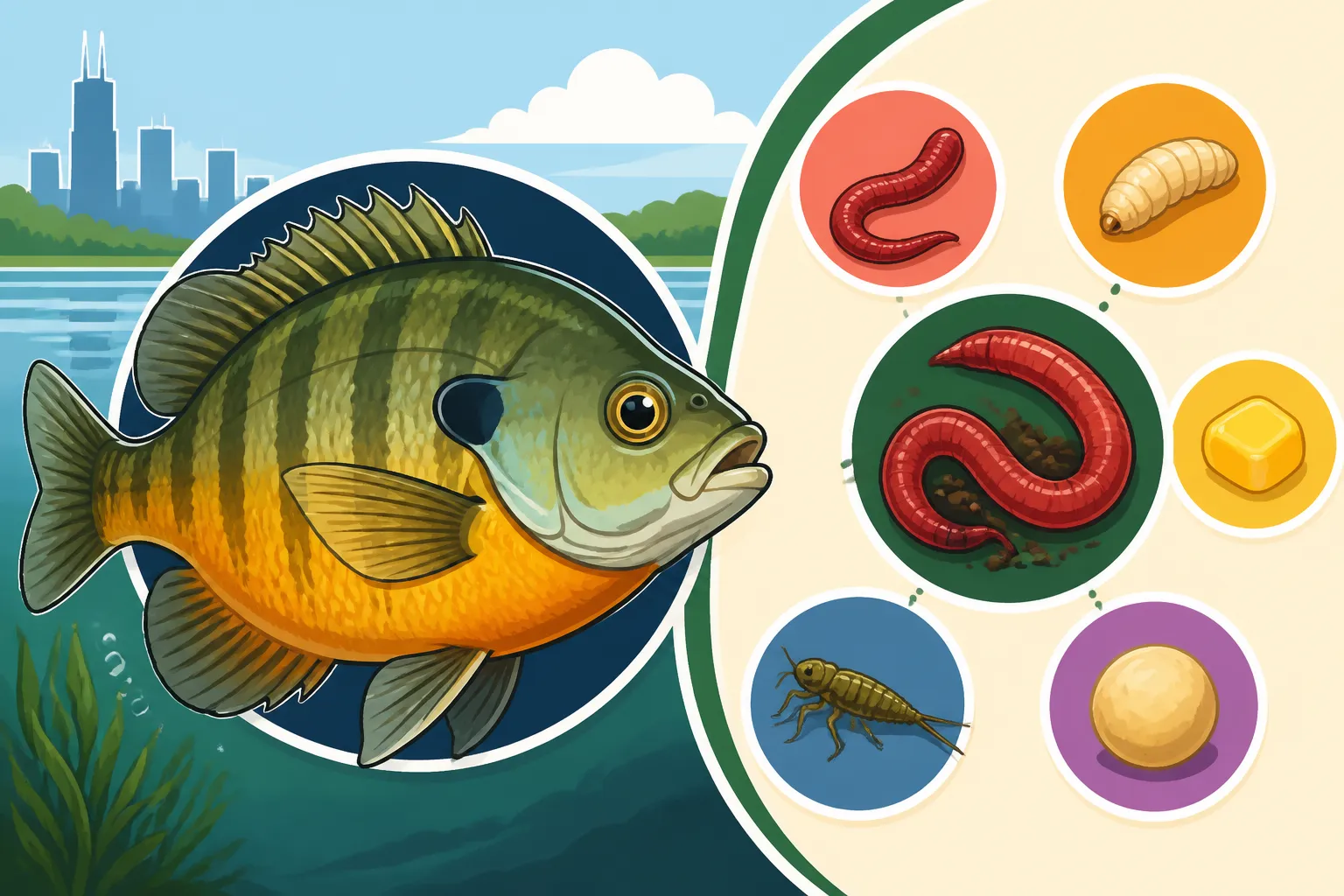
- Worms (Red Wigglers & Nightcrawlers): These are the undisputed champions of bluegill bait. Red wigglers are fantastic because they're smaller, stay lively on the hook, and emit a scent that drives bluegill wild. Nightcrawlers, while larger, can be broken into smaller pieces, with each piece wiggling enticingly. The key is to use a small enough piece to fit into a bluegill's mouth. I've seen countless kids catch their first fish on a piece of worm under a bobber. You can pick up a container of worms at almost any bait shop or even order them online from places like Amazon if you're planning ahead.
- Crickets and Grasshoppers: When summer is in full swing, and insects are buzzing, crickets and grasshoppers become prime bluegill bait. The way they kick and struggle on the surface, especially when fished without a bobber, is irresistible. They make a perfect presentation for bigger bluegill hiding near lily pads or weed lines. Try hooking them lightly through the collar so they stay active.
- Wax Worms and Mealworms: These grubs are another fantastic option, especially when bluegill are a bit more finicky or during cooler water periods. They're small, soft-bodied, and have a subtle movement that bluegill find appealing. They're also less messy than worms, which is a bonus, especially if you're fishing with kids. Wax worms are particularly good when paired with a tiny jig or just a bare hook, as detailed in our guide on How to Rig a Wax Worm Under a Bobber for Bluegill.
- Maggots (Larvae): Yes, maggots! Don't let the "ick" factor deter you. These tiny, squirming baits are incredibly effective, especially for panfish. They're often sold as "spikes" at bait shops and are a go-to for ice fishing, but they work wonders in open water too. Their small size and constant movement are perfect for attracting bluegill that might ignore larger offerings.
Common Household Baits for Bluegill
Sometimes you're just not near a bait shop, or you want to try something a little different. Believe it or not, several items from your kitchen can be surprisingly effective for bluegill.
- Bread Balls: This is an old-school trick that still works! Simply take a small piece of soft white bread, roll it into a tight ball, and press it onto your hook. The bread softens in the water, creating a cloud of appealing particles. It's cheap, readily available, and a great option for bank fishing, especially in heavily pressured waters where bluegill might be wary of traditional baits.
- Kernel Corn: Another classic, especially for panfish. A single kernel of sweet corn hooked through the middle can be very attractive to bluegill. It has a sweet scent and a bright color that stands out. It's often best used in conjunction with a small split shot to get it down to the fish.
- Small Pieces of Hot Dog: While more commonly associated with catfish, a tiny cube of hot dog can sometimes tempt bluegill. It's got a strong scent and stays on the hook well. This is definitely one to try if you're running low on other options or just experimenting.
Here's a quick comparison of some popular natural baits:
| Bait Type | Pros | Cons | Best Use Cases |
|---|---|---|---|
| Red Wigglers | Excellent scent, lively, very effective | Can be messy, smaller for big bluegill | General purpose, good for all seasons |
| Nightcrawlers | Versatile (pieces), readily available | Too large whole for bluegill, less scent | General purpose, cut into small segments |
| Crickets/Grasshoppers | Great surface action, natural feel | Harder to keep alive, can fall off hook | Summer, topwater fishing, near weeds |
| Wax Worms/Mealworms | Clean, good for finicky fish, durable | More subtle action, smaller profile | Cooler water, ice fishing, pairing with jigs |
| Maggots (Spikes) | Small, constant movement, very effective | "Ick" factor, very small target | Finicky fish, ice fishing, small presentations |
| Bread Balls | Cheap, readily available, visual cloud | Falls off hook easily, no scent/movement | Heavily pressured waters, budget fishing |
| Kernel Corn | Cheap, bright color, sweet scent | No movement, less scent than worms | Budget fishing, panfish generally |
Artificial Lures and Flies for Bluegill Anglers
Sometimes, live bait isn't practical or you just prefer the challenge of artificials. Luckily, there's a whole world of tiny lures and flies that bluegill absolutely hammer, especially when they're in an aggressive mood.
Tiny Lures for Aggressive Bluegill
When bluegill are actively feeding, especially in clear water or during the spawn, artificial lures can be incredibly effective and often lead to catching bigger fish.
- Micro Jigs (1/64 to 1/32 oz): These are absolute bluegill magnets. The key is to go small. Pair a tiny jig head with an even tinier plastic body – think grub tails, tubes, or small marabou jigs. Chartreuse, white, black, and pink are often killer colors. The subtle flutter of these jigs as they fall or are barely twitched is often all it takes. You can find a huge variety of these tiny jigs on Amazon, making it easy to stock up. Work them slowly under a small bobber, or cast them out and let them sink, twitching gently.
- Tiny Spinners: Lures like the classic Mepps Aglia or Rooster Tail in sizes #00 to #1 are excellent for covering water and finding active bluegill. The flash and vibration of the spinning blade mimic a small baitfish or insect, triggering an aggressive strike. Cast them out and retrieve them slowly, just fast enough to get the blade spinning. They're particularly effective around cover like submerged timber or weed edges.
- Micro Spoons: Small casting spoons, often designed for trout or crappie, can also be deadly for bluegill. Their wobbling action on the retrieve or flutter on the fall can be very enticing. Again, think small – anything over an inch long is likely too big.
- Small Crankbaits and Jerkbaits: While not as common for bluegill, some ultra-light anglers will use the absolute smallest crankbaits or jerkbaits designed for trout. These can be surprisingly effective for larger bluegill looking for a bigger meal, especially in deeper water. Look for models under 1.5 inches.
Fly Fishing for Bluegill: A Delicate Approach
Fly fishing for bluegill is an incredibly rewarding experience, offering a unique challenge and often leading to some surprisingly large panfish. It requires a different set of gear and a more delicate touch.
- Poppers: These are my personal favorite for summer bluegill on the fly. Poppers float on the surface and, when twitched, create a "pop" and disturbance that drives bluegill crazy. It's pure visual excitement to watch a bluegill smash a topwater popper. Sizes ranging from tiny #10 to #14 hooks are usually perfect.
- Wet Flies and Nymphs: When bluegill are feeding subsurface, wet flies and nymphs are the way to go. Patterns like the Hare's Ear, Prince Nymph, or even a simple Pheasant Tail in sizes #12 to #16 can be incredibly effective. Fish them slowly, letting them sink and drift naturally, mimicking aquatic insects. This can be especially productive when targeting bluegill schooled up in deeper pockets.
- Small Streamers: Believe it or not, tiny streamers that imitate small baitfish or leeches can also catch trophy bluegill. Woolly Buggers in black, olive, or brown, tied on a #10 or #12 hook, are a great choice. Strip them slowly and erratically to mimic a struggling meal.
For anyone looking to introduce someone to the joys of fishing, Easiest Fish to Catch for Beginners definitely puts bluegill at the top of the list, and artificials can be a fun way to engage them once they've mastered casting.
Setting Up Your Bluegill Rig for Success
Having the best bait is only half the battle; how you present it makes all the difference. Bluegill are often wary, and a clunky rig will send them scattering. Simplicity and finesse are your friends.
The Simple Bobber Rig Explained
The bobber rig is quintessential bluegill fishing – it’s easy, effective, and perfect for anglers of all ages. This setup allows you to present your bait at a specific depth and gives you a clear visual indicator of a bite.
- Components: You'll need a light-action rod, a small spinning reel spooled with 4-6 lb test monofilament line, a small bobber (clip-on or slip bobber), one or two small split shot weights, and a small hook. For hooks, a size 8 or 10 Aberdeen or baitholder hook is usually perfect – just small enough for a bluegill's mouth.
- Setup:
- Tie your hook onto the end of your line.
- Pinch one or two small split shot weights about 6-12 inches above your hook. These add just enough weight to cast and help your bait sink.
- Attach your bobber. A clip-on bobber is easiest for beginners; just clip it to your line about 1-3 feet above your hook, depending on how deep you think the bluegill are holding. For more experienced anglers or deeper water, a slip bobber setup is fantastic. A slip bobber slides freely on your line and stops at a small knot you tie at your desired depth, allowing you to cast much further and fish deeper water efficiently. Our guide on Best Beginner Bluegill Fishing Setup offers more details on this.
- Presentation: Cast your rig near cover – docks, lily pads, fallen trees, or weed lines. Watch your bobber closely. Bluegill bites can range from a gentle dip to a complete disappearance. When it goes down, give a gentle tug to set the hook! This setup is fantastic for How to Catch Bluegill From the Bank as well as from a boat.
Finesse Techniques for Tricky Bluegill
Sometimes, bluegill just aren't biting aggressively. This is when you need to employ a bit more finesse, offering your bait in the most natural and subtle way possible.
- Light Line and Small Hooks: This is paramount for finesse. Dropping down to 2-4 lb test line makes your rig much less visible to the fish. Combine this with the smallest hook you can get away with (size 10-14) to ensure your bait looks natural and the hook is easily swallowed. The goal is to make your presentation as invisible as possible.
- No Weight or Minimal Weight: When using a very light bait like a single wax worm or a small cricket, try fishing it with no weight at all. This allows the bait to drift or fall incredibly naturally, mimicking a struggling insect. If you need a little casting distance, use the smallest split shot you can find.
- Slow Retrieve and Drifting: Whether you're using live bait or a micro jig, a slow, often erratic retrieve is key for finicky bluegill. Let the current do some of the work, allowing your bait to drift naturally. If you're jigging, think "micro-movements" – tiny twitches of the rod tip, not big sweeps. Imagine how a natural insect or larva would move.
- Targeting Cover: Even with finesse, bluegill still love cover. They'll hide in submerged brush piles, under docks, or along weed edges. Present your bait as close to this cover as possible, but quietly. A noisy cast can spook an entire school.
- Using a Sensitive Rod: A light-action rod with a fast tip will help you detect those incredibly subtle bluegill bites that might otherwise go unnoticed. This is especially true when fishing without a bobber, relying solely on feel. A good quality ultra-light rod can often be found on Amazon.
Remember, bluegill are schooling fish, so if you catch one, chances are there are more in the same area! Keep working that spot with the bait and technique that proved successful. For more insights on the amazing panfish species in Illinois, check out Illinois' Best Panfish Species: A Complete Guide.
Disclaimer
This article is for general informational purposes only and does not constitute professional advice. Laws, prices and regulations vary by location and change over time. Consult a qualified professional for guidance on your specific situation.