How to Tell a Walleye From a Sauger?
It's happened to all of us: you reel in a beautiful fish, your heart pounding with excitement, only to pause and wonder, "Is this a walleye or a sauger?" This common confusion can be a real headache, especially with Illinois' fishing regulations often differing between species. Don't worry, you're not alone in this struggle, and this guide is here to help you confidently identify your catch, ensuring you stay within the rules and truly understand the fish you're targeting.
The Tale of Two Fish: Why Identification Matters
The waters of Illinois are teeming with incredible fishing opportunities, and among the most sought-after catches are the walleye and the sauger. These two members of the perch family are often found in similar habitats, making their identification a frequent challenge for even seasoned anglers. However, knowing the precise difference isn't just about bragging rights; it's a fundamental part of responsible and legal fishing in our state. Getting it wrong can lead to serious consequences, from fines to the loss of your fishing privileges.
Distinct Species, Distinct Rules
Imagine you're out on the Mississippi River, having a fantastic day, and you've reeled in what you think is your limit of sauger. You head back to the ramp, proud of your catch, only for a conservation officer to point out that several of your fish are, in fact, walleye, and you've exceeded the walleye limit for that body of water. Suddenly, your great day turns sour with a potential citation. This isn't a hypothetical scenario; it happens all too often because anglers don't realize that Illinois Walleye Size and Catch Limits can be quite different from those for sauger.
The Illinois Department of Natural Resources (IDNR) sets specific regulations for each species to manage fish populations effectively. These rules can dictate minimum length, daily creel limits, and even seasonal restrictions. A walleye might have a 14-inch minimum length and a daily bag limit of six, while a sauger in the same waters could have no minimum length and a daily limit of 20. Confusing the two means you could unknowingly violate these rules, putting yourself at risk. Understanding the subtle distinctions is crucial for compliance and for preserving these valuable fish populations for future generations of anglers.
Beyond the Basics: Understanding Their Habitats
While walleye and sauger often overlap in their general range across Illinois, they do tend to favor slightly different environments, which can sometimes offer a preliminary clue to their identity. Think of it like this: if you're pulling a fish out of a deep, clear main lake, your chances of it being a walleye might be higher. Conversely, if you're fishing a muddy, current-laden stretch of river, a sauger might be the more probable catch.
Walleye typically prefer clearer, deeper water in large lakes and reservoirs, as well as the main channels of larger rivers. They often seek out structured areas like rock piles, humps, and submerged timber. Sauger, on the other hand, are generally more tolerant of turbid, current-driven environments, thriving in the murky waters of major rivers such as the Mississippi and Illinois. They'll often hug the bottom, preferring areas with strong current breaks, eddies, and deeper scour holes. Knowing these general preferences can help you start narrowing down your identification before you even get a good look at the fish in your net.
Spotting the Differences: Key Visual Cues
Alright, let's get down to the nitty-gritty of telling these two apart when you've got them in hand. While they share many similarities, there are several reliable visual cues that, once you learn them, will make identification much easier. Forget the old wives' tales and focus on these scientifically sound indicators. This is where you'll really become a fish ID pro!
The Dorsal Fin Detective: Spiny Rays and Spots
This is, without a doubt, the most crucial and easiest way to distinguish a walleye from a sauger. Both fish have two dorsal fins: a spiny front dorsal fin and a soft-rayed rear dorsal fin. The key lies in what you see on that front, spiny dorsal fin.
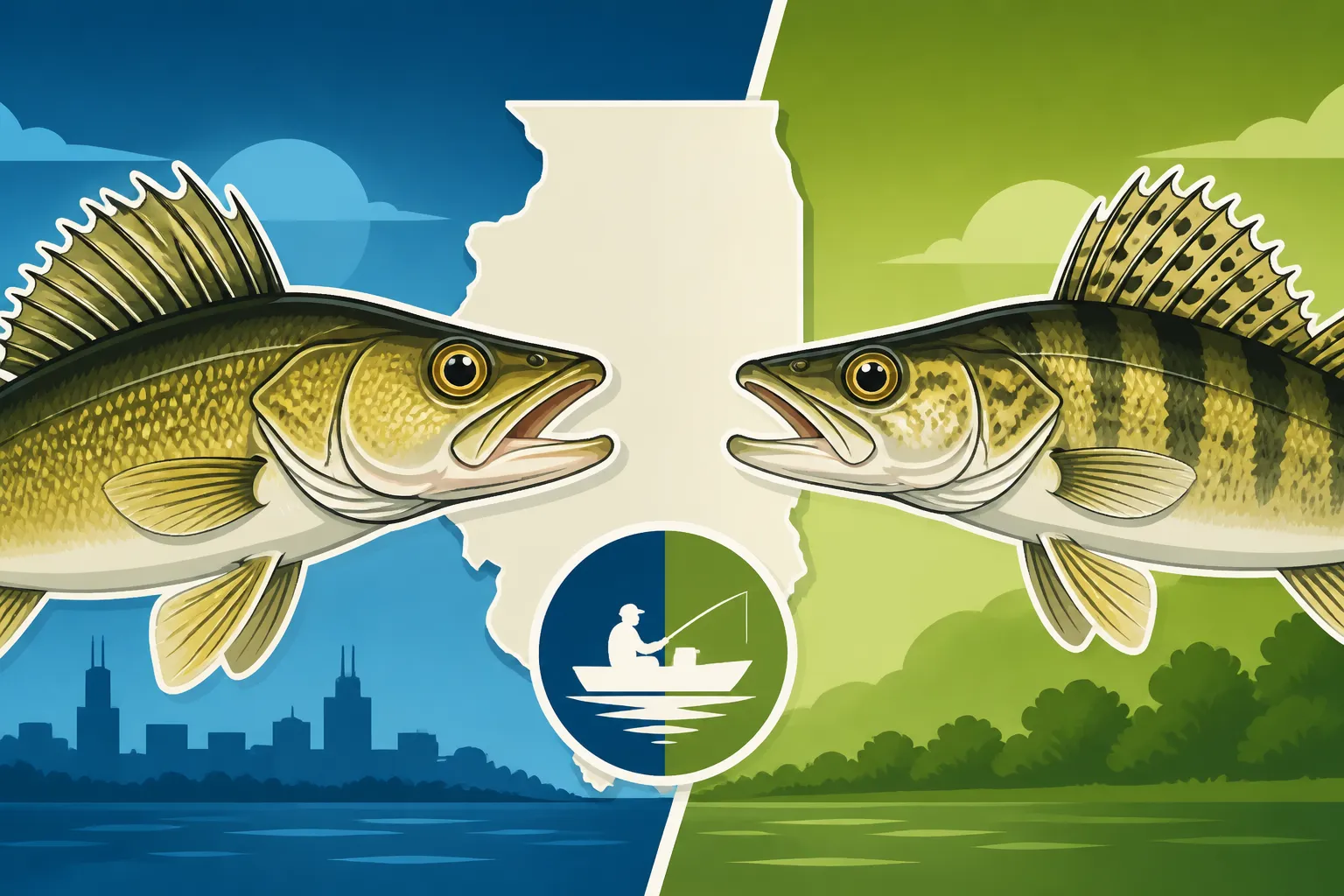
A walleye will almost always have a distinct, dark blotch at the very rear base of its first dorsal fin, where it meets the second dorsal fin. It looks like a thumbprint. The rest of the spiny dorsal fin may be somewhat clear or slightly mottled, but that single, prominent dark spot is your undeniable giveaway. A sauger, however, lacks this single dark blotch. Instead, its entire spiny dorsal fin will be covered in several rows of distinct, small, dark spots, giving it a barred or speckled appearance. This difference is so reliable that once you've seen it a few times, you'll be able to tell them apart almost instantly. If you're ever in doubt, just spread that spiny dorsal fin and look closely. You'll find that for many anglers, learning How to Tell a Walleye From a Sauger by Its Fins is the single most important identification tip.
Body Shape, Coloration, and Overall Appearance
Beyond the dorsal fin, there are other, albeit more subtle, differences in their general appearance that can help round out your identification. Keep in mind that coloration can vary greatly depending on water clarity, diet, and even the fish's mood, so don't rely solely on color.
Walleye generally have a more streamlined, elongated body with a somewhat uniform, olive-green to golden-brown coloration on their backs, fading to a lighter, often yellowish-white belly. They can appear rather sleek. Their sides often have subtle, darker vertical bars or mottling that become less pronounced with age. Their eyes are typically large and cloudy, almost opaque, which helps them see in low light – a characteristic that gives them their name, "walleyed."
Sauger tend to have a slightly more robust or "chunky" appearance compared to a walleye, though this isn't always definitive. Their coloration is usually a darker, more bronze to brown, with distinct, irregular dark blotches or saddle patterns across their back and sides. These patterns often extend down their sides more prominently than on a walleye, almost like tiger stripes. Their eyes are also large, but generally less opaque than a walleye's. If you're comparing two fish side-by-side, the sauger might appear a bit more "river-worn" or patterned.
Tail and Mouth: Subtle but Significant Marks
For those times when the dorsal fin isn't perfectly clear, or if you just want to double-check, there are a couple of other minor points to consider, especially the tail fin.
The lower lobe of a walleye's caudal (tail) fin will typically have a distinct white tip. It's often quite bright and can be easily spotted. This white tip is a consistent feature that helps confirm your identification. In contrast, a sauger almost never has this white tip on its lower tail fin lobe; its tail will generally be uniformly colored, matching the rest of its body or fins.
Inside the mouth, both species have sharp teeth, but if you run your finger along the roof of the mouth (carefully, please!), a walleye will often have a small patch of teeth on the roof (the vomer). While a sauger also has vomerine teeth, the arrangement or prominence can differ slightly, but this is a much less reliable or safe method for field identification. Stick to the dorsal fin and tail tip for your primary cues!
Here's a quick reference table to help you keep these distinctions straight:
| Feature | Walleye | Sauger |
|---|---|---|
| Dorsal Fin | Single dark blotch at rear base of spiny fin | Rows of distinct small dark spots across spiny fin |
| Tail Fin | Distinct white tip on lower lobe | No white tip on lower lobe; uniformly colored |
| Body Color | Olive-green/golden-brown; subtle bars | Bronze/dark brown; distinct, irregular dark blotches |
| Body Shape | More streamlined, elongated | Slightly more robust/chunky |
| Eye Appearance | Typically larger, more opaque/cloudy | Large, but generally less opaque |
| Preferred Water | Clearer, deeper lakes/rivers | Murkier, current-rich rivers |
Where and When You'll Find Them in Illinois
Knowing where you're fishing can often provide a strong hint about which species you're likely to encounter. While their ranges do overlap significantly, especially in boundary waters, understanding their typical preferences will make you a more efficient angler and aid in identification.
Walleye's Preferred Haunts: Clearer, Deeper Waters
Walleye are widely distributed throughout Illinois, but they truly thrive in larger, clearer bodies of water. You'll find them in abundance in many of our big reservoirs and lakes, like Lake Shelbyville Fishing Guide, Clinton Lake, and Lake Decatur. These lakes offer the deeper, cooler water and structural elements that walleye prefer. They're also present in the main channels of major rivers, particularly sections with rock formations, submerged timber, or significant depth changes.
Anglers targeting walleye often focus on points, humps, and submerged islands during the day, where the fish can ambush baitfish. In low light conditions, such as dawn, dusk, or overcast days, walleye will often move shallower, closer to shorelines or flats, to feed. These fish are light-sensitive, so clear water that allows them to move to depth for protection is key. Many excellent fishing spots for walleye are regularly stocked by the IDNR, ensuring good populations year after year.
Sauger's Domain: Murkier, Current-Rich Rivers
If you're fishing the mighty Mississippi River, especially its southern reaches, or the expansive Illinois River, you're primarily in sauger country. These fish are masters of riverine environments, perfectly adapted to the often turbid, current-driven waters. They prefer deep scour holes, current breaks behind wing dams, and the slack water eddies found along main channels. Illinois Sauger Fishing on the Mississippi River is a prime example of where these fish truly dominate.
Sauger are much more tolerant of low light and stained water conditions than walleye, often remaining active throughout the day, particularly when there's good current. They hug the bottom, using their camouflage to blend in with the riverbed and ambush unsuspecting baitfish. If you're working a jig or a bottom-bouncing rig in a river with strong current, and the water is a bit murky, chances are high you're interacting with sauger. Understanding their preference for these specific conditions can greatly inform your fishing strategy and help you anticipate your catch.
Hybrid Confusion: The Saugeye
Just when you think you've got it all figured out, nature throws a curveball: the saugeye. This is a hybrid fish, a cross between a female walleye and a male sauger. These hybrids are often stocked in Illinois waters because they grow faster than sauger and are more tolerant of a wider range of water conditions than pure walleye, making them an excellent game fish for certain environments. What Is a Saugeye and Where Do You Catch One in Illinois? is a common question, as they can really throw a wrench into identification.
Saugeye display characteristics of both parent species, which can make them particularly tricky to identify. They might have some faint dorsal fin spots like a sauger, but also a hint of the white tail tip like a walleye. Their body shape and coloration can also be a mix. When faced with a fish that seems to have conflicting characteristics, it's highly likely you've caught a saugeye. In terms of regulations, saugeye are usually managed under the same rules as walleye in Illinois, so when in doubt, it's always safest to err on the side of caution and treat it as a walleye. Consulting Saugeye vs Walleye: How to Tell Them Apart will give you even more detailed insights into these fascinating hybrids.
Practical Tips for Anglers
Even with all this knowledge, identifying fish on the water can sometimes feel like a high-stakes pop quiz. But don't fret! There are practical steps you can take to make the process smoother, ensuring you're always confident in your catch and compliant with Illinois regulations. Being prepared is half the battle, and it allows you to focus more on the joy of fishing and less on the anxiety of identification.
Carrying a Reference Guide
One of the simplest yet most effective ways to avoid identification errors is to carry a reliable reference guide. These can be small, waterproof field guides that fit easily into your tackle box or boat console. Many excellent fish identification books are available on Amazon and other online retailers, often specifically tailored to freshwater species in regions like the Midwest. A good guide will feature clear photos or illustrations highlighting the key identification features we've discussed, such as dorsal fin markings and tail characteristics.
Consider laminating a printout of the Walleye/Sauger comparison table from this article and keeping it with your gear. Having a visual aid right there in your boat or on the bank, especially one that you can quickly consult without worrying about it getting wet, can be invaluable. This instant access to accurate information removes the guesswork and helps reinforce what you've learned.
Photo Documentation and Online Resources
In today's digital age, your smartphone can be an incredibly useful tool for fish identification. If you're truly unsure about a catch, snap a clear photo! Make sure to get good angles, especially of the dorsal fin spread open and the tail. Then, you can release the fish (if you're planning to, and it's legal to do so), and consult your photos later. There are many online fishing forums and social media groups dedicated to Illinois fishing where experienced anglers are often happy to help with identification if you post a clear picture.
Just be mindful of "possession limits" when taking photos. If you're keeping fish, ensure you're within the legal limits before you put them on a stringer or in a livewell. If you're practicing catch and release, handle the fish gently, take your photo quickly, and release it without delay to minimize stress. Using resources like the official IDNR website is also a great way to double-check information from the source.
Respecting Regulations and the Resource
Ultimately, the goal of accurate fish identification goes beyond avoiding a fine; it's about being a responsible steward of our natural resources. Every angler plays a role in conservation, and adhering to specific species regulations is a big part of that. Understanding Illinois Fishing Regulations Overview for all species you might encounter is fundamental.
If you are ever in doubt, the safest course of action is always to release the fish. It’s better to let one go that might have been legal than to keep one that is definitively illegal. Before heading out, especially to a new fishing spot, take a few minutes to look up the site-specific regulations for that body of water. How to Find the Rules for a Specific Illinois Fishing Spot can save you a lot of grief. The IDNR’s online fishing guide is an excellent resource for this. By making the effort to properly identify your catch, you contribute to sustainable fishing practices and ensure that the thrill of catching walleye and sauger continues for generations of Illinois anglers.
Disclaimer
This article is for general informational purposes only and does not constitute professional advice. Laws, prices and regulations vary by location and change over time. Consult a qualified professional for guidance on your specific situation.