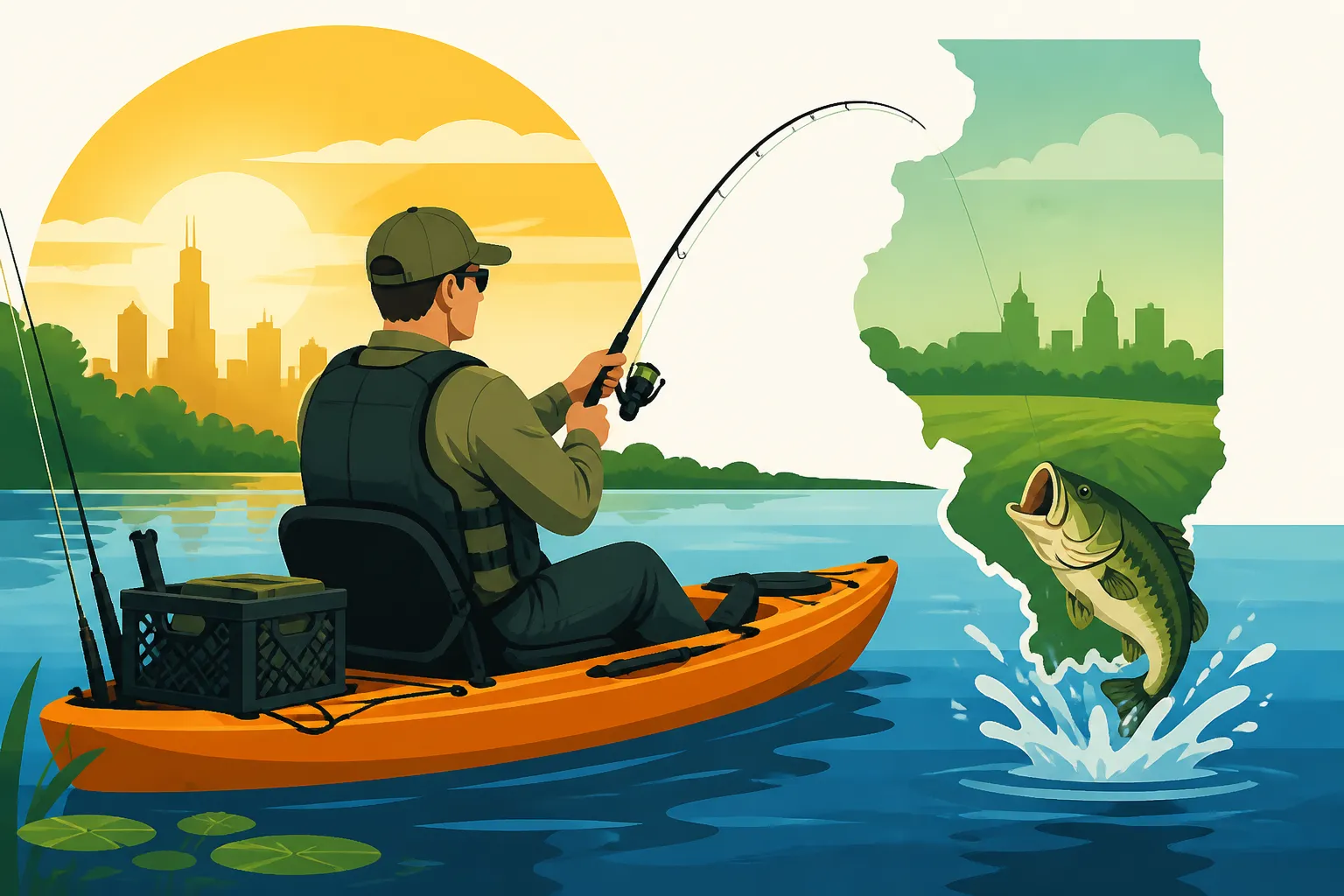
How to Fish From a Kayak
Feeling the itch to get out on the water in Illinois but frustrated by crowded boat ramps, expensive gas, or the sheer bulk of a traditional bass boat? You're not alone. Many anglers dream of reaching those quiet, untouched coves and shallow backwaters that bigger boats just can't access. This guide is all about empowering you to transform that dream into a reality by diving deep into the world of kayak fishing, from choosing your vessel to mastering the subtle art of paddling and casting in Illinois' diverse waters.
Getting Started: The Appeal and Initial Setup
There’s a unique satisfaction that comes with gliding silently across the water, powered by your own paddle, slipping into spots where the fish haven't seen a lure in ages. Kayak fishing offers an intimacy with nature that few other angling methods can match, and it's particularly well-suited for many of Illinois' lakes, rivers, and backwater sloughs.
Why Kayak Fishing in Illinois is a Game Changer
For a long time, serious anglers felt like they needed a big, expensive bass boat to really get after the fish. But that's just not true, especially in a state like Illinois with so many smaller lakes, creeks, and river systems. Kayaks offer unparalleled access. Think about those narrow channels or weed-choked flats where a traditional boat would either get stuck or spook every fish for a mile. A fishing kayak can often navigate these areas with ease, giving you a distinct advantage.
Beyond access, there's the stealth factor. A kayak glides through the water with minimal disturbance, allowing you to approach wary fish without them even knowing you're there. This can be absolutely crucial when you're targeting pressured bass or spooky crappie in clear water. It's also incredibly cost-effective compared to motorboats. You save on fuel, registration, and often storage. Many models are light enough to car-top, eliminating the need for a trailer, which means less fuss at the launch. You're reducing your environmental footprint too, which is a big plus for many of us who love the outdoors. If you’ve ever felt like the prime spots were always taken by bigger boats, a kayak is your ticket to finding your own hidden gems.
Choosing Your First Fishing Kayak
Alright, so you're convinced! Now, where do you start with picking the right kayak? This is where many new anglers get a little overwhelmed, but it doesn't have to be complicated. The first big decision is usually between a sit-on-top (SOT) and a sit-inside (SINK) kayak.
Sit-on-top kayaks are overwhelmingly popular for fishing, and for good reason. They are incredibly stable, making it easier to cast, move around, and even stand up to fish if the design allows. If you happen to flip (and it happens!), it's much easier to right yourself and get back in, as they don't fill with water. Plus, they offer more open deck space for gear. You'll find a huge variety of SOT fishing kayaks on platforms like Amazon, offering everything from basic models to highly specialized ones with pedal drives.
Sit-inside kayaks, on the other hand, offer more protection from the elements, which can be nice on a chilly spring morning in Illinois. They are generally faster and track better, which is great for covering long distances, but they lack the open deck space and stability of SOTs, making them less ideal for casting big baits or carrying a lot of tackle.
Beyond SOT vs. SINK, consider stability, length, and propulsion. Wider kayaks offer more stability, which is essential for fishing, but they're slower. Longer kayaks track better and are faster, but they're less maneuverable in tight spaces. Traditional paddle kayaks are great for simplicity and a workout, but pedal-drive kayaks, like those from popular brands, free up your hands for fishing, which is a huge advantage. They are more of an investment, but many anglers find them worth every penny, especially on windy Illinois lakes. Best Kayak Models for Illinois Fishing can give you an even deeper dive into specific options.
Basic Kayak Modifications for Anglers
Once you've got your kayak, you'll quickly realize that a few key modifications can make your fishing experience infinitely better. Most fishing kayaks come "fishing ready" these days, but there's always room for personalization.
First up, rod holders. Most kayaks will have a few flush-mount holders behind the seat, but you'll likely want at least one or two adjustable rod holders mounted up front where you can easily reach your rod to grab it or quickly set the hook. These can be rail-mounted or track-mounted, offering flexibility.
Next, consider your storage. A milk crate or specialized kayak crate is a godsend for keeping your tackle boxes, soft plastics, and other essentials organized and accessible behind your seat. You can even customize these with additional rod holders, tool caddies, and accessory mounts. Look for waterproof bags or tackle boxes that fit snugly into your chosen storage system to keep everything dry.
Anchoring is another crucial aspect. Whether it's a small grappling anchor for soft bottoms or a stake-out pole for shallow water, having a reliable way to stay put is vital when fighting wind or current. You’ll want to set up an anchor trolley system, which allows you to deploy and retrieve your anchor from either the bow or stern of your kayak without having to reach awkwardly across the boat. This is a game-changer for maintaining position and staying safe. For more specifics, check out Kayak Anchor Setup for Lake Fishing.
Essential Gear for Illinois Kayak Fishing
Getting out on the water safely and effectively means having the right tools for the job. You don't need to break the bank, but investing in quality essentials will enhance your experience and keep you safe.
Paddles, PFDs, and Personal Safety Gear
Let's be clear: safety is paramount when kayak fishing. The number one piece of safety gear is a good Personal Flotation Device (PFD), or life jacket. In Illinois, children under 13 are required to wear a PFD while on a watercraft, but honestly, everyone should wear one in a kayak. You never know when you might take an unexpected dip, and it's much harder to put on a PFD when you're already in the water. Look for a fishing-specific PFD with pockets and attachment points for tools – they’re designed for comfort and functionality. For a deeper dive into the legalities and best practices, read Do You Need a Life Jacket in a Kayak in Illinois?.
Your paddle is your engine, so don't skimp here. A lightweight, durable paddle that's the right length for your height and kayak width will save you a lot of fatigue over a long day. Many anglers carry a spare paddle, either a breakdown model or a short "yak attack" style paddle, just in case the main one goes overboard or breaks.
Beyond the PFD and paddle, think about other personal safety items:
- Whistle: Required by law on many waterways, it's essential for alerting others in an emergency.
- Lights: If you plan to be out at dawn, dusk, or night, a 360-degree white light is often required and always a good idea. Headlamps are also great for rigging up in the dark.
- First-Aid Kit: A small, waterproof kit for minor cuts, scrapes, or hook removals.
- Sun Protection: Hat, sunglasses, sunscreen – the sun reflecting off the water can be intense.
- Communication: A waterproof case for your phone is a must. A marine band radio is a good idea for larger bodies of water like Lake Michigan.
Rods, Reels, and Tackle for Kayak Anglers
When it comes to rods and reels for kayak fishing, compact and efficient is the name of the game. You don't have a lot of deck space, so long rods can be cumbersome. Many kayak anglers prefer shorter rods, typically 6'6" to 7' in length, which are easier to handle in a confined space. Spinning setups are often favored for their versatility and ease of use, especially for beginners.
Consider the species you're targeting. For Illinois bass, a medium-heavy rod with a fast action is a great all-around choice. For crappie and panfish, ultralight setups are perfect for feeling those subtle bites. For those targeting larger fish like catfish or muskie, you'll need heavier gear, but still try to keep the rod length manageable. Best Kayak Rod Holders for Bass Fishing can help you organize your chosen setups.
Tackle management is another big consideration. Small, waterproof tackle boxes that fit into your kayak crate or storage compartments are ideal. Keep your essential lures, weights, and hooks easily accessible. Many anglers use a small, dedicated "day box" with their most-used items to avoid rummaging through a large bag. Don't forget a pair of pliers or forceps for hook removal – hooks can be tricky to get out of a fish's mouth when you're sitting low to the water!
Navigation and Communication Tools
While you might be seeking solitude, having good navigation and communication tools is smart for any Illinois angler.
Fish Finders: A portable fish finder can be a game-changer for kayak anglers. Many modern units are compact, battery-powered, and can be easily mounted on your kayak. They help you find structure, depth changes, and, of course, fish. Models with GPS are excellent for marking waypoints, tracking your route, and finding your way back, especially on larger lakes or complex river systems.
GPS and Maps: Even if your fish finder has GPS, a dedicated waterproof GPS unit or a reliable mapping app on your smartphone (in a waterproof case!) can be invaluable. Pre-downloading maps of your chosen Illinois fishing spot allows you to navigate even without cell service. This is particularly helpful for exploring new areas or complex backwaters.
Communication: As mentioned, a waterproof phone case is non-negotiable. Always let someone know where you're going and when you expect to be back – this is often called leaving a "float plan." If you're on a big body of water or fishing in a group, a marine VHF radio can be more reliable than cell service for communicating with other boaters or emergency services.
Techniques and Safety on the Water
Once you have your gear sorted, it's time to hit the water. But kayak fishing isn't just about casting; it's also about managing your vessel, understanding the environment, and prioritizing safety.
Launching and Landing Your Kayak Safely
Launching and landing can be one of the trickiest parts of kayak fishing, especially when you're new to it or fishing solo.
- Scout Your Launch: Before you even pull your kayak off the car, take a moment to look at the launch site. Are there steep banks? Rocky areas? Soft mud? This will dictate your approach.
- Minimize Gear: Load only essential gear into your kayak before you put it in the water. Keep anything that can easily fall out secured.
- The "Scoot" Method: For many launches, especially from sandy or gravelly banks, you can simply push the kayak partway into the water, then sit down in the cockpit and scoot the rest of the way in.
- Deep Water Launches: If launching from a dock or steep bank, position your kayak parallel to the dock, step in carefully, keeping your weight low and centered. Some anglers prefer to straddle the kayak and then ease into the seat.
- Solo vs. Assisted: While many launches are easily done solo, an extra set of hands can make it much smoother, especially with a heavier, fully loaded fishing kayak. If you're going it alone, consider a kayak cart to transport your vessel from your vehicle to the water's edge.
Landing is essentially the reverse process, often made easier by using momentum to gently glide onto the shore. Be mindful of prop roots, submerged rocks, or other obstacles that could damage your hull.
Paddling and Positioning for Fishing
Effective paddling and boat positioning are what truly set successful kayak anglers apart. It's a skill that develops with practice.
- Paddle Efficiently: Use your core muscles, not just your arms. A smooth, rhythmic stroke conserves energy. Adjust your paddle length as needed for different conditions.
- Stealth is Key: One of the biggest advantages of kayak fishing is stealth. Paddle quietly, avoid bumping your gear, and approach fishing spots slowly. Remember, fish feel vibrations through the water.
- Wind and Current Management: Illinois waters can get windy, and rivers have currents. Learn to use these to your advantage. If the wind is blowing down a bank you want to fish, you can often drift along, making subtle paddle strokes to stay on course. For hands-free fishing in these conditions, a small drift sock or anchor is invaluable.
- "Hands-Free" Fishing: This is where pedal drives really shine, but even with a paddle kayak, you can achieve hands-free fishing. Use your anchor to hold position, or try gentle "sculling" with a paddle to maintain a slow drift. Positioning your kayak correctly before making a cast allows you to fish effectively without constantly adjusting.
Essential Kayak Fishing Safety Practices
Staying safe on the water is non-negotiable. Here are some critical practices to embed in every trip:
- Always Wear Your PFD: We already stressed this, but it bears repeating. It's the most important safety device you have.
- Check the Weather: Illinois weather can change rapidly. Always check the forecast before you launch, and keep an eye on the sky while you're out. Strong winds and thunderstorms can turn a calm lake into a dangerous place very quickly. If conditions deteriorate, get off the water immediately.
- Know Your Limits: Don't venture into waters that are beyond your paddling skill or comfort level. Big lakes on windy days can be treacherous for small kayaks.
- Leave a Float Plan: Tell a friend or family member exactly where you're going, your planned route, and when you expect to return. Give them a contact number for local authorities if you don't check in.
- Stay Hydrated and Fuelled: Especially on warm days, bring plenty of water and snacks. Dehydration and fatigue can impair judgment.
- Understand Reciprocity: If you're fishing border waters like the Mississippi River, be aware of Illinois Fishing License Reciprocity With Iowa or Illinois and Missouri Shared Water Fishing License Rules.
- Secure Your Gear: Anything not tied down can easily become lost if you flip or hit rough water. Leashes for paddles, rods, and critical gear are a smart investment.
- Know Basic Self-Rescue: Practice getting back into your kayak from the water in a safe, controlled environment (like a swimming pool or calm shallow water). It’s much easier to learn when it’s not an emergency.
Choosing Your Illinois Kayak Fishing Spot
Illinois offers an incredible variety of fishing environments, and a kayak unlocks many of the best, most overlooked spots. Knowing where to launch and what to look for can significantly improve your success.
Best Types of Water for Kayak Fishing
The beauty of kayak fishing in Illinois is its versatility. You’re not limited to just big lakes; in fact, some of the best spots are those less-traveled waters.
- Small to Medium-Sized Lakes: These are perfect for kayaks. Lakes like Shabbona, Clinton, or many of the smaller state park lakes offer excellent fishing without the overwhelming size or heavy boat traffic of a Rend Lake or Lake Shelbyville. You can cover a lot of water and thoroughly explore coves and shallow flats. Check out Illinois State Park Fishing Spots for ideas.
- Rivers and Creeks: The Illinois River, Kankakee River, Fox River, and countless smaller tributaries are prime kayak fishing grounds. The current can be an ally, allowing you to drift and cast. You can access areas upstream or downstream from public boat launches that are otherwise unreachable. These often hold fantastic populations of smallmouth bass, crappie, and catfish.
- Backwater Sloughs and Wetlands: This is where kayaks truly shine. Think about the myriad backwaters along the Mississippi River or the Illinois River. These shallow, often weed-choked areas are fish magnets but are inaccessible to most powerboats. A kayak allows you to silently slip into these productive areas for bass, crappie, and northern pike. Many of these remote areas are some of Remote Fishing Spots Illinois Anglers Keep Quiet About.
- Ponds and Small Reservoirs: Don't overlook the humble farm pond or small local reservoir. These can hold surprisingly large fish and are often perfect for a quick kayak trip after work or on a weekend morning. They are also fantastic for beginners or taking kids out. A smaller, more maneuverable kayak is ideal here.
Scouting Locations for Shore Access and Fish Activity
You've picked a type of water, now how do you pick a specific spot? Good scouting is half the battle.
- Online Maps: Before you leave home, use satellite maps to look for potential launch points, shore access, parking, and interesting features like weed lines, points, coves, and river bends. Look for spots where creeks feed into larger bodies of water, as these are often productive.
- Local Knowledge: Talk to other anglers, visit local bait shops, or check online forums for recent reports. Locals often know the best launch spots and current hot bites.
- Look for Public Access: Many Illinois public lands and state parks offer designated kayak or canoe launches that are much easier to use than traditional boat ramps. Some smaller lakes might only have bank fishing access, but with a kayak, that becomes your launch point. Bank Fishing Tips for Beginners can offer advice on identifying good access points, even if they aren't marked as dedicated kayak launches.
- Observe Before You Launch: Once you arrive, take a few minutes to observe the water. Look for signs of baitfish, rising fish, bird activity, or anything that suggests where the fish might be holding. Check the wind direction and strength, and gauge the current if on a river. This pre-launch recon can save you a lot of wasted paddling.
- Target Structure: Just like in larger boats, fish relate to structure. In a kayak, you can often get right up against submerged timber, lily pads, rock piles, or bridge pilings that bigger boats can't safely navigate.
Respecting Other Water Users and the Environment
Part of the beauty of kayak fishing is its low impact, and it's important to maintain that ethos.
- Be Mindful of Others: Share the water responsibly. Give other anglers (whether in kayaks, powerboats, or on shore) plenty of space. Avoid paddling through active fishing areas or unnecessarily close to swimming beaches.
- Stay Alert for Powerboats: On larger lakes and rivers, powerboats can create significant wakes. Always be aware of your surroundings and be prepared to brace for waves. Sometimes, it's safer to avoid heavily trafficked areas during peak times.
- Practice Leave No Trace: Pack out everything you pack in, including fishing line, plastic bait containers, and any other trash. Do not discard fish remains or bait on shore. Protect the natural beauty that drew you to kayak fishing in the first place.
- Know and Follow Regulations: Always carry your Illinois Fishing License Guide for 2026 and be familiar with Illinois Fishing Season and Catch Limit Rules for the specific waters you're fishing. Kayaks are subject to the same regulations as other watercraft regarding PFDs, lights, and registration if they have motors. If you put a trolling motor on your kayak, remember Kayak Registration Rules in Illinois will apply.
Embracing kayak fishing means opening up a whole new world of angling possibilities in Illinois. It's an investment in skill, safety, and a deeper connection with the quiet wildness our state has to offer. Good luck out there, and tight lines!
Kayak Comparison Table
| Feature | Sit-on-Top (SOT) Kayak | Sit-Inside (SINK) Kayak |
|---|---|---|
| Stability | Generally much higher, good for standing | Lower, more prone to tipping |
| Comfort | Open deck, less confining, easy to stretch | Enclosed, better protection from elements |
| Self-Rescue | Easy to re-enter from water | Requires bailing out water, more challenging |
| Deck Space | Ample open space for gear, crates, accessories | Limited, gear stored in hull or small hatches |
| Speed/Tracking | Slower due to width, can be affected by wind | Faster, better tracking, less wind-affected |
| Propulsion Options | Paddle, Pedal drive, Motor mount | Primarily paddle |
| Best For | Fishing, beginners, warm weather, open water | Touring, whitewater, cold weather, efficiency |
| Common Use in IL | Bass, crappie, catfish in lakes & rivers | Exploring small rivers, faster travel |
Disclaimer
This article is for general informational purposes only and does not constitute professional advice. Laws, prices and regulations vary by location and change over time. Consult a qualified professional for guidance on your specific situation.