Best Water Temperature for Crappie Fishing
Have you ever spent a morning on your favorite Illinois crappie lake, casting into every likely spot, only to come up empty-handed? It's a frustrating experience, especially when you know the fish are there. Often, the missing piece of the puzzle isn't your bait or your technique, but simply understanding the water temperature. Crappie are incredibly sensitive to temperature shifts, and knowing their preferred zones can make all the difference between a slow day and a cooler full of slabs. This guide will walk you through the optimal water temperatures for crappie, explaining how these amazing panfish react to different thermal conditions and giving you actionable strategies to find them, no matter the season.
The Crappie's Comfort Zone: Understanding Ideal Water Temperatures
Crappie, whether black or white, are cold-blooded creatures, which means their body temperature directly reflects the water around them. This makes water temperature arguably the most critical factor influencing their metabolism, activity levels, and ultimately, where they choose to hang out. They're always on the hunt for their comfort zone, a thermal sweet spot where they can feed efficiently without expending too much energy.
When the water hits just the right temperature, crappie become more active, moving around to feed and preparing for their annual rituals. If it's too cold, they become sluggish and retreat to deeper, more stable environments. If it's too warm, their metabolism can skyrocket, making them uncomfortable and pushing them to seek cooler, oxygen-rich depths. Ignoring this crucial environmental cue is like trying to find someone who's always seeking shade on a sunny day by looking in direct sunlight – you're just looking in the wrong place!
The Golden Range for Crappie Activity
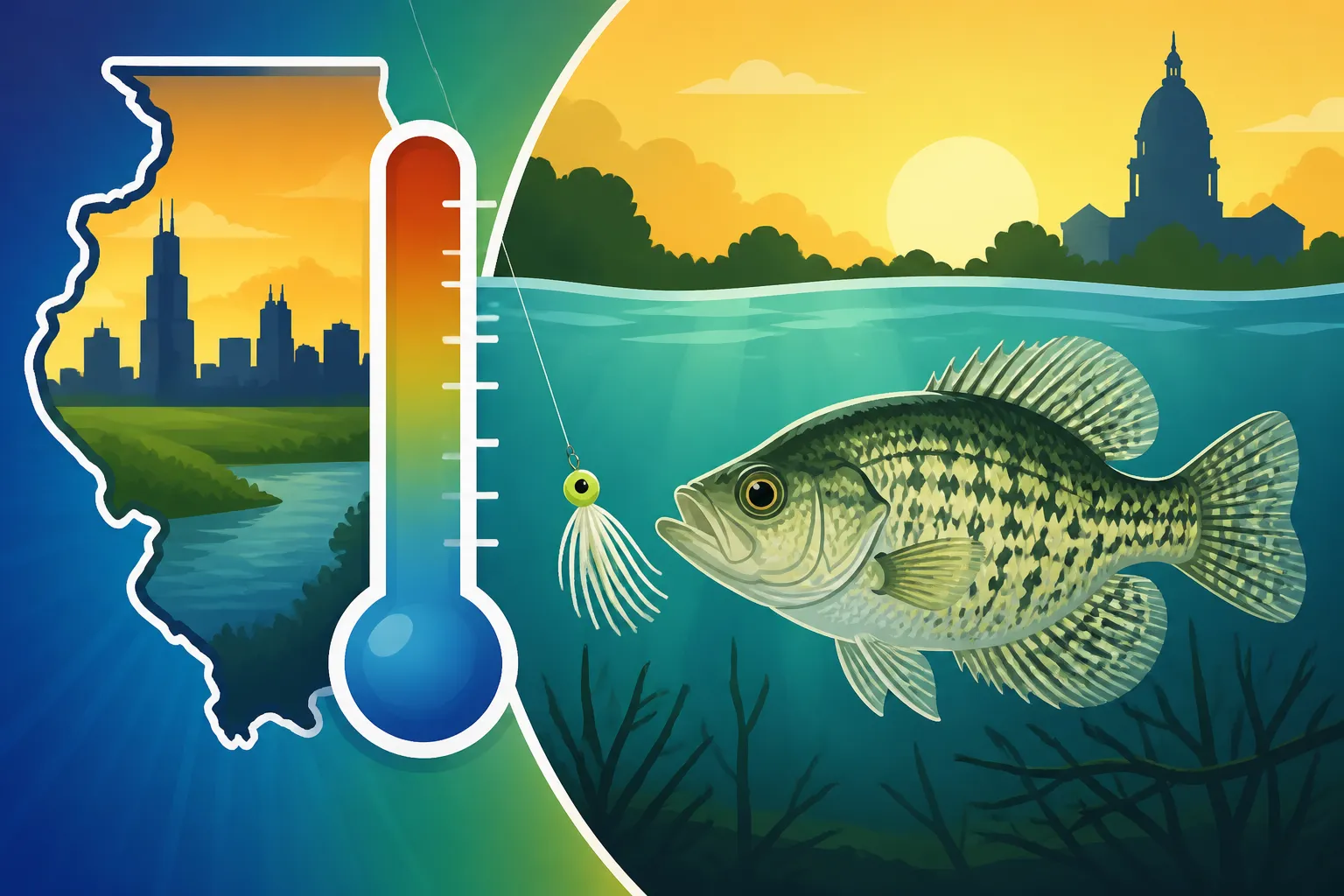
While crappie can survive in a wide range of temperatures, there's a specific "golden range" where they are most active and predictable for anglers. Generally, crappie are most comfortable and feed most aggressively when water temperatures are between 55°F and 70°F (13°C to 21°C). This range typically aligns with their pre-spawn and spawning periods, which are often the most productive times for anglers.
Within this broader range, the true sweet spot for active feeding and spawning is often closer to 60-68°F (16-20°C). When you find water in this zone, you're likely to find crappie. Below 50°F, they become more lethargic, and above 75°F, they tend to get stressed and seek refuge. Understanding this central truth is the foundation of becoming a better crappie angler.
Why Temperature Dictates Crappie Behavior
Think of water temperature as a thermostat for a crappie's entire existence. It affects everything from their digestive rate to their oxygen intake. When the water warms up, their metabolism speeds up, requiring them to eat more frequently. This is why spring fishing can be so incredible – the crappie are moving, eating, and getting ready to spawn. Conversely, in very cold water, their metabolism slows down, and they don't need to eat as much, making them harder to entice.
Temperature also influences the presence and activity of the crappie's prey. Minnows, shad, and insect larvae also have preferred temperature ranges. If the baitfish are concentrated in a certain thermal band, you can bet the crappie won't be far behind. It's a whole interconnected ecosystem, and temperature is the orchestrator.
Crappie Through the Seasons: Temperature-Driven Movements
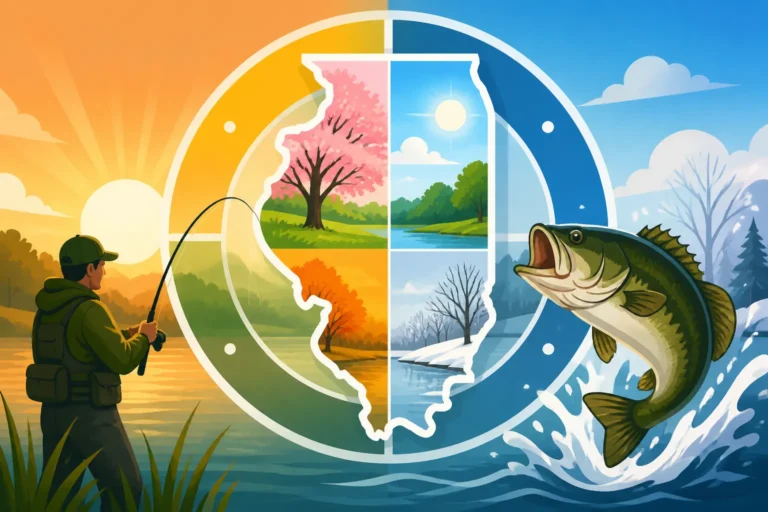
Crappie don't just stay in one spot all year; they're constantly on the move, following temperature gradients and food sources. Their seasonal patterns are largely dictated by how the water heats up and cools down. Understanding these migrations is key to consistently locating them throughout the year in Illinois' diverse waters.
One of the biggest mistakes anglers make is trying to fish the same spot with the same technique year-round. Crappie are not static. By breaking down their movements by season, informed by temperature, you'll be able to anticipate where they'll be and how they'll be behaving.
Spring: The Pre-Spawn and Spawn Frenzy
Spring is arguably the most anticipated time for crappie anglers in Illinois. As the ice melts and the sun begins to warm the shallow waters, crappie start their journey from deeper wintering holes towards the banks.
- Early Spring (45-55°F / 7-13°C): In early spring, when water temperatures are still on the cooler side, crappie will be in a pre-spawn phase. They'll start staging in slightly deeper water adjacent to their eventual spawning grounds. Look for them around submerged timber, brush piles, and creek channels in 10-20 feet of water. They're still a bit sluggish but starting to feed more actively. This is a great time for Crappie Jigging Techniques with small jigs or minnows fished slowly.
- Mid-Spring (55-65°F / 13-18°C): This is when things really start to heat up, literally. As temperatures climb into the mid-50s and low 60s, crappie push into shallower water, typically 3-8 feet deep, to begin their spawning ritual. They'll be found around any kind of cover: brush, docks, lily pads, reeds, and stumps. This is the peak time for many anglers, with fish actively bedding. You can find out more about this critical period in our guide, Illinois Crappie Spawn Season Guide.
- Late Spring (65-70°F / 18-21°C): After the main spawn, crappie may linger in shallow areas for a bit, recovering and feeding aggressively. However, as the water continues to warm, especially on brighter, shallower flats, some will start to retreat slightly deeper to find more comfortable temperatures, often suspending over structure or moving to the edges of deeper cover.
Summer: Seeking Cool, Oxygenated Depths
Summer crappie fishing can be challenging if you don't adjust your strategy. The scorching Illinois sun heats up the shallow water quickly, pushing crappie to seek refuge in cooler, deeper zones where oxygen levels are also more stable.
- Early Summer (70-75°F / 21-24°C): Post-spawn crappie will often move to deeper offshore structures. They might suspend over brush piles, channel edges, or humps in 15-25 feet of water. Look for them around standing timber in the middle of lakes, or along deep drop-offs. Night fishing can also be incredibly effective during these warmer months, as the surface temperatures cool down, and crappie become more active.
- Mid-Summer (75°F+ / 24°C+): When water temperatures really soar, crappie will seek out the thermocline if a lake has one. A thermocline is a layer of water where the temperature changes rapidly with depth, separating warmer surface water from cooler, deeper water. Crappie will often position themselves just above or within this cooler, oxygen-rich layer. This might mean finding them suspended 20-30 feet deep over even deeper water, often related to baitfish schools. Targeting these deeper, suspended fish requires a different approach, often involving vertical jigging or Crappie Tightlining Techniques.
- Late Summer (70-75°F / 21-24°C): As days shorten and nights get cooler, there might be a slight return to shallower feeding in the mornings and evenings, but the crappie will still largely be oriented to deeper, stable structures during the main part of the day.
Fall: The Migration Back to Cover
Fall is another fantastic time for crappie fishing in Illinois, often rivaling spring in terms of action. As water temperatures begin to cool down, crappie start to reverse their summer migrations.
- Early Fall (65-70°F / 18-21°C): As surface temperatures dip, crappie will begin to move from their deep summer haunts back towards shallower cover, often following baitfish that are also moving shallower to feed. They might be found on creek channel bends, secondary points, and brush piles in 8-15 feet of water. This is a great time to fish for them near the same areas they spawned in, just a little deeper.
- Mid-Fall (55-65°F / 13-18°C): This period can be a feeding frenzy as crappie gorge themselves in preparation for winter. They'll be highly active, often found around wood cover and brush in 5-12 feet of water. Look for large schools on fish finders. The fish are putting on weight, and if you find a school, you can often catch many.
- Late Fall (45-55°F / 7-13°C): As temperatures continue to drop, crappie will start to transition towards their winter patterns, moving to deeper, more protected areas. They might still be found in brushy areas but often deeper, perhaps 15-25 feet, or suspending in creek channels.
Winter: Deep and Stable Locations
Winter crappie fishing is a game of patience and precision, heavily reliant on finding those stable, deeper water temperatures.
- Cold Water (Below 45°F / 7°C): When the water gets truly cold, especially with ice cover, crappie will congregate in the deepest, most stable parts of the lake or river. They'll seek out channel swings, deep holes, brush piles, and standing timber in 20-40 feet of water or more, depending on the lake's depth. Their metabolism is very slow, so presentations need to be subtle and slow. They might not move far for a bait, so presenting it right in front of them is crucial. Ice fishing is a popular way to target them during this time, drilling holes directly over known deep structures.
This table provides a quick overview of crappie behavior based on water temperature:
| Water Temperature Range | Crappie Behavior & Location | Fishing Strategy |
|---|---|---|
| Below 45°F (7°C) | Deep, lethargic, schooled tightly on stable structure. | Slow vertical jigging with small baits; ice fishing. |
| 45-55°F (7-13°C) | Pre-spawn staging in deeper water near spawning flats. Still slow. | Slow retrieve jigs, minnows, probing brush piles and channel edges. |
| 55-65°F (13-18°C) | Spawning, highly active in shallow cover (3-8 feet). | Jigs, minnows under a bobber, casting to visible cover. |
| 65-70°F (18-21°C) | Post-spawn, feeding aggressively. Some moving deeper, some still shallow. | Fast retrieve jigs, crankbaits, trolling. Check varied depths. |
| 70-75°F (21-24°C) | Summer pattern, moving to deeper offshore structure, suspending. | Deeper jigging, trolling, targeting thermocline, night fishing. |
| 75°F+ (24°C+) | Stressed, seeking deepest, coolest, oxygenated water. Very deep or thermocline. | Focus on deep structure, thermocline, dawn/dusk, or night fishing. Light bites. |
Essential Tools and Techniques for Temperature-Smart Crappie Fishing
Now that we understand the "why" behind temperature and crappie, let's talk about the "how." How do you actually measure water temperature, and what specific strategies can you employ to use this knowledge to your advantage? It's about combining modern tools with tried-and-true angling wisdom.
You don't need to be a meteorologist or a marine biologist, but having the right gear and knowing how to interpret what it tells you will dramatically improve your success rate.
Measuring Water Temperature Accurately
The first step to temperature-smart crappie fishing is knowing the water temperature. Relying on air temperature alone is a common mistake; water temperatures can fluctuate very differently.
- Handheld Thermometers: A simple, inexpensive handheld water thermometer is a must-have for any crappie angler. Many come on a cord, allowing you to drop them to different depths. You can easily find reliable options on Amazon that fit right in your tackle box. Always check the temperature at various depths, especially if you suspect a thermocline.
- Fish Finders with Temperature Sensors: Most modern fish finders, even entry-level models, come equipped with a temperature sensor built into the transducer. This provides real-time surface temperature readings, which is incredibly helpful. More advanced units can even map temperature changes as you move across the lake. Learning to use your fish finder effectively for this can be a game-changer.
- Probe Thermometers: For those looking for more precise readings at specific depths, some anglers use specialized probe thermometers that can be lowered down. This is particularly useful for identifying the exact depth of a thermocline or a cooler layer of water that crappie might be holding in during summer.
Always remember that temperature can vary significantly even within a small area of a lake or river. Shallow coves warm up faster than main lake basins. Areas with inflowing creeks might be cooler or warmer depending on the source. Don't just take one reading and assume it applies everywhere.
Finding Crappie by Following the Temperature
Once you have your temperature readings, the real work begins: applying that knowledge to find fish.
- Targeting "Transition Zones": Crappie often hang out in areas where temperatures transition from one range to another. This could be the edge of a shallow flat dropping into a deeper channel, or the point where a warm tributary flows into a cooler main lake. These seams are not only thermally interesting but also often concentrate baitfish.
- Focusing on North-Facing Banks in Spring: In early spring, south-facing banks (which receive more direct sunlight) warm up faster. However, as the sun gets higher and temperatures stabilize, north-facing banks might offer more consistent, slightly cooler water that crappie might prefer post-spawn or during a mild summer. This is just one example of how subtle topographical features influence temperature.
- Using Your Boat's Electronics: Your fish finder isn't just for seeing fish; it's also a powerful temperature tool. Pay close attention to the surface temperature reading. If you're moving across a lake and see a sudden change of a few degrees, slow down and investigate. That temperature break could be holding fish. When exploring, keep an eye on your Best Fish Finder for Small Illinois Lakes to detect these critical thermal shifts.
- Reading the Water: Beyond electronics, sometimes just observing the water can give you clues. Clear, shallow water will warm faster. Darker, muddier water might absorb more heat. Wind direction can push warmer surface water to one side of a lake. All these factors contribute to the overall thermal profile that crappie are reacting to. For deeper insights into seasonal patterns, check out our Illinois Fishing Seasons Guide.
Adapting Your Approach to Temperature Fluctuations
The biggest takeaway here is that crappie fishing isn't static. What worked yesterday might not work today, especially if there's been a significant weather change. A cold front rolling through Illinois, for instance, can drop water temperatures quickly and send crappie scurrying.
Being adaptable is the hallmark of a successful crappie angler. Don't be afraid to change your location, your depth, or even your bait and presentation if the fish aren't biting where you expect them.
Adjusting Depth and Presentation
Temperature directly impacts how deep crappie will be and how aggressively they'll feed.
- Colder Water, Deeper Fish, Slower Presentation: When temperatures are on the lower end of the crappie's preferred range (e.g., 45-55°F), crappie will generally be deeper and less active. Your presentation needs to be slow and subtle. Small jigs, perhaps tipped with a minnow, fished vertically right in their face, are often most effective. Consider using lighter line and sensitive rods to detect those subtle bites. You can find excellent ultralight tackle setups for this on Amazon.
- Warmer Water, Shallower Fish, Faster Presentation: As water temperatures rise into the optimal range (e.g., 55-70°F), crappie will move shallower and become more aggressive. This is when you can often catch them casting jigs, small crankbaits, or fishing minnows under a bobber near cover. They're more willing to chase bait, so a slightly faster retrieve can be effective.
- Dealing with the Thermocline: In summer, if you locate the thermocline, crappie will likely be suspended right above it or within it. This means you need to present your bait at that specific depth, often using a single pole or spider rigging to cover different depths until you find the sweet spot. Vertical presentations are usually best here. Learn more about their behavior in Best Time of Year to Catch Crappie in Illinois.
Understanding the Daily and Weather-Related Swings
Water temperature isn't just a seasonal thing; it changes throughout the day and with every weather front.
- Daily Swings: In spring and fall, shallow coves and flats can warm up several degrees over the course of a sunny day, making crappie more active in those areas in the afternoon than in the morning. Conversely, in summer, the coolest temperatures might be at dawn, making early morning or late evening/night fishing more productive.
- Cold Fronts: A strong cold front can plummet water temperatures, especially in shallow areas. After a cold front, crappie often retreat to deeper, more stable water and become notoriously finicky. They'll often hug tightly to cover and be much harder to tempt. When faced with these conditions, slower presentations and downsizing your bait are usually the best bet. You might also look into How to Catch Crappie From a Boat to cover more water and find those reluctant fish.
- Rain and Runoff: Heavy rains can introduce cooler or warmer water (depending on the season) and muddy conditions, which can also affect crappie behavior. Muddy water might warm more slowly but also provides cover, sometimes concentrating crappie near clearer water seams. A trusty water temperature gauge, easily ordered from Amazon, will be your best friend in these situations.
By consistently monitoring water temperature and understanding how crappie react to its fluctuations, you'll gain a significant advantage on the water. It turns crappie fishing from a guessing game into a strategic hunt, and that, my friends, is what truly makes a good angler great.
Disclaimer
This article is for general informational purposes only and does not constitute professional advice. Laws, prices and regulations vary by location and change over time. Consult a qualified professional for guidance on your specific situation.