Water Temperature and Fish Activity Guide
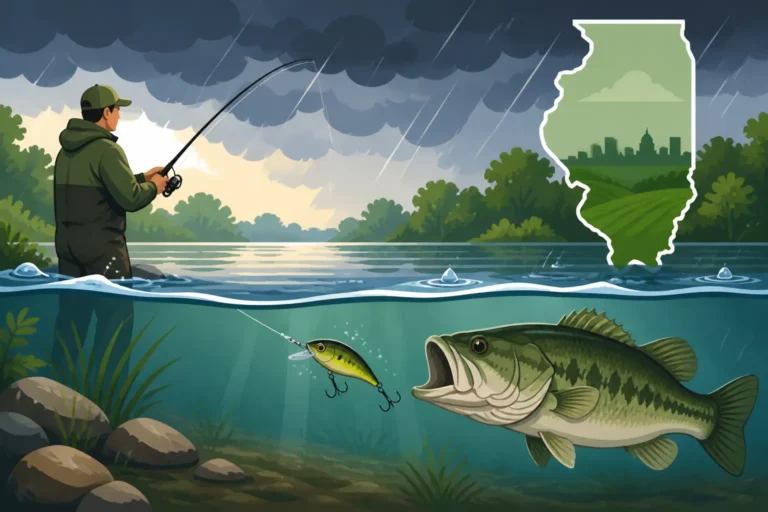
It's incredibly frustrating when you head out to your favorite fishing spot, ready for a day on the water, only to find the fish just aren't biting. We've all been there, wondering what we're doing wrong. More often than not, the secret to a successful day isn't just about the lure you're using or the technique you're trying; it's deeply tied to the water temperature. This guide will unravel the mysteries of how water temperature dictates fish activity in Illinois, helping you understand where the fish are, what they're doing, and how to catch them.
Why Water Temperature Matters More Than You Think
Forget what you think you know about fish being simple creatures. They’re actually incredibly sensitive to their environment, and water temperature is perhaps the single most critical factor influencing their day-to-day lives. It dictates everything from their metabolism to their very survival. If you want to consistently find fish, you have to think like a fish, and that means understanding their thermal world.
The Science Behind Fish Metabolism
Unlike us warm-blooded humans, fish are poikilothermic, meaning their body temperature is the same as the water around them. This fundamental biological fact has massive implications for their metabolism, which is essentially the rate at which their bodies perform all necessary functions – breathing, digesting, growing, and moving. When the water is cold, a fish's metabolism slows down drastically. They become sluggish, need less food, and move much less. Think of it like a car idling in neutral versus roaring down the highway; the fuel consumption is vastly different.
Conversely, when water temperatures rise, so does their metabolism. They become more active, require more oxygen, and need to feed more frequently to sustain their heightened energy levels. This direct correlation between water temperature and metabolic rate is why fish location and feeding behavior change so dramatically throughout the year. Understanding this basic science is the first step to truly mastering your fishing game, as it directly impacts when they're feeding aggressively and when they're simply trying to conserve energy.
Comfort Zones and Stress Points for Fish
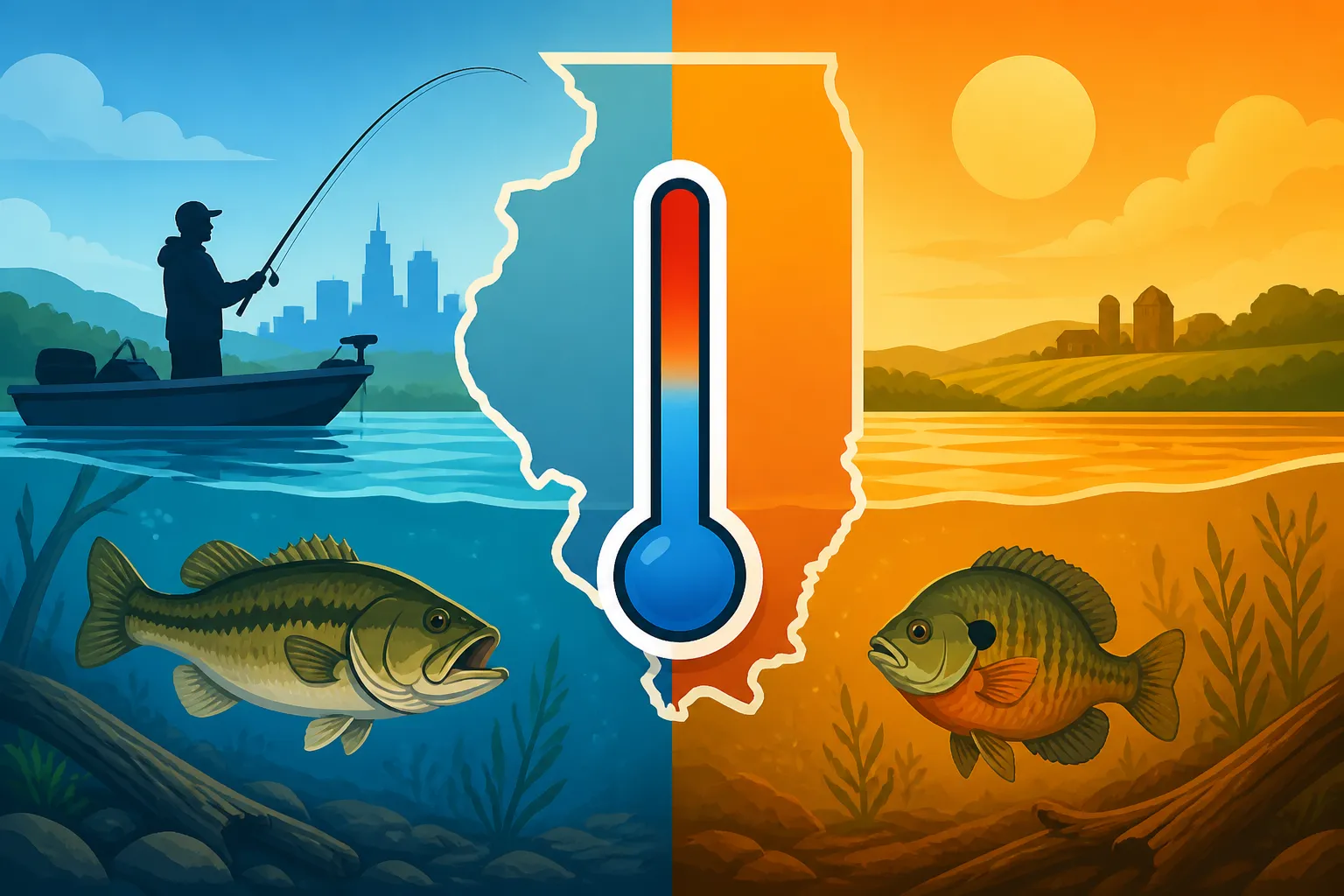
Every fish species has an optimal temperature range where they thrive. This is their "comfort zone," where they're most active, feeding efficiently, and growing well. For a largemouth bass, for instance, that might be a different range than for a walleye or a bluegill. When water temperatures stray too far from this ideal, either too hot or too cold, fish experience stress.
Extreme cold can lead to lethargy, making them almost impossible to entice into biting, as their bodies are focused solely on survival and energy conservation. Extreme heat, on the other hand, can reduce dissolved oxygen levels in the water and put immense strain on their respiratory systems, sometimes leading to fish kills. You'll often find fish seeking thermal refuges – deeper, cooler water in summer, or shallower, slightly warmer water in winter – to escape these stress points. Knowing these critical comfort zones and stress points for the species you're targeting is paramount to locating them effectively.
Seasonal Temperature Shifts and Fish Behavior
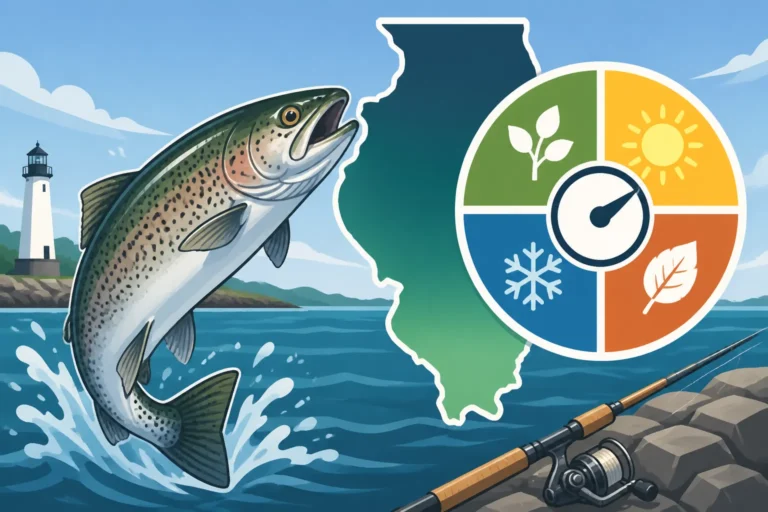
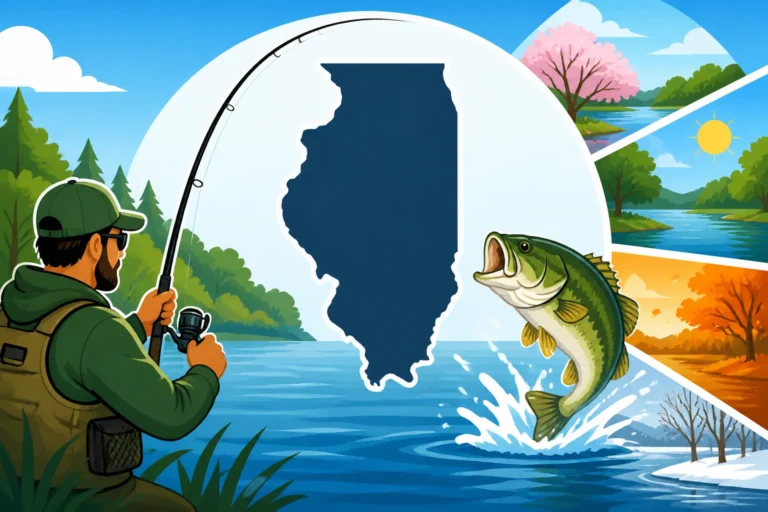
Illinois experiences all four distinct seasons, and with each transition, the water temperatures in our lakes, rivers, and ponds undergo significant changes. These shifts directly trigger predictable patterns in fish behavior, offering both challenges and incredible opportunities for anglers. Understanding these seasonal rhythms is like having a roadmap to where the fish will be and what they'll be doing. You can find a broader overview in our Illinois Fishing Seasons Guide.
Spring: Warming Waters and the Spawn
As the ice melts and the sun climbs higher in the sky, Illinois waters slowly begin to warm, typically from March through May. This is a magical time for many anglers as the fish "wake up" from their winter slumber. Initially, fish will seek out the warmest available water, often in shallow coves, dark-bottomed areas, or north-facing banks that receive direct sunlight. These warmer spots activate their metabolism, leading to a pre-spawn feeding frenzy as they build up energy reserves. If you're looking for bass, these are prime conditions for Spring Bass Fishing Patterns.
As temperatures continue to climb into their species-specific spawning ranges, the annual ritual of reproduction begins. For instance, largemouth bass might start to spawn when water temperatures hit the mid-60s Fahrenheit, while crappie often kick off a bit earlier, usually in the upper 50s. This period is a major draw for anglers because fish are concentrated and often aggressive. For a deep dive, check out How Rising Water Temperature Triggers the Spawn or our dedicated guide on Illinois Bass Spawn Timing Guide. Fish will move into very shallow water, often visible on beds, making them vulnerable, but also easily stressed if not handled carefully.
Summer: Hot Waters and Deep Retreats
Summer in Illinois brings with it consistently high air and water temperatures, often peaking in July and August. While the warmer water fuels a higher metabolism and active feeding, surface temperatures in shallow areas can become too hot for many species. This forces fish to retreat to cooler, deeper water, or to seek out thermal refuges like heavy cover, shade, or areas with cooler inflowing water. Many anglers find themselves struggling in the summer because they're still fishing the shallow areas that were so productive in spring.
During this period, lakes often develop a "thermocline" – a distinct layer in the water column where the temperature changes rapidly. This thermocline acts like a ceiling or floor for fish, as the water below it is typically colder and has less oxygen, while the water above can be too warm. Fish often stack up right on top of or just above this thermocline, especially suspended fish like crappie or walleye. Knowing how to find and fish these deeper zones is key to success during the dog days of summer. We cover more on how to target fish during this period in our Summer Bass Fishing Patterns guide.
Fall: Cooling Down and Feeding Frenzies
As autumn approaches, the days shorten, and the air temperatures drop, leading to a gradual cooling of our Illinois waters, usually from September through November. This transition often triggers a phenomenon known as "turnover" in many lakes, where the cooler surface water sinks and mixes with the deeper, warmer water, equalizing the temperature throughout the water column. While turnover can temporarily make fishing tough due to disoriented fish and murky water, once it settles, fall fishing can be spectacular.
Fish, sensing the approaching winter, enter another aggressive feeding phase, often called the "fall feed." They need to build up fat reserves to sustain them through the lean, cold months ahead. This means they are often more willing to chase baits and can be found actively cruising shallower flats or hunting baitfish in open water. This is a fantastic time for chasing big bass and other species that are bulking up. Our Fall Bass Fishing Patterns article offers excellent strategies for this productive season.
Winter: Cold Waters and Slow Movement
Winter transforms Illinois's fishing landscape, often bringing ice cover and consistently cold water temperatures, from December through February. For open-water anglers, fishing becomes a game of patience and precision. Fish metabolism slows dramatically, and their activity levels are minimal. They typically retreat to deeper, stable water, often near structural elements like humps, points, or channel edges, where water temperatures might be a degree or two warmer than the surrounding areas.
For those brave enough to venture out onto the ice, winter fishing requires specific tactics. Fish are lethargic and bites are subtle. You'll need to present baits slowly and often use smaller offerings to entice a strike. Targeting panfish like bluegill and crappie, or even walleye, through the ice can be incredibly rewarding, but it demands an understanding of how cold water affects their behavior. Our Winter Bass Fishing Tips provides great insights into surviving (and thriving) during the colder months, even if you’re not targeting bass.
Understanding Species-Specific Temperature Preferences
While we talk about general trends, it's crucial to remember that different fish species have their own unique temperature preferences. What's ideal for a largemouth bass might be too warm for a walleye, and vice versa. Knowing these nuances for the fish you're targeting is key to maximizing your success.
Bass (Largemouth, Smallmouth, Spotted)
Bass are generally considered warm-water species, but even among them, there are slight differences. Largemouth bass tend to prefer slightly warmer water, with their optimal feeding range often between 65-75°F. They become active in the low 50s during pre-spawn and typically spawn when water temperatures consistently hold in the mid-60s. In summer, if surface temps hit the 80s, they’ll dive to deeper, cooler water, often holding to structure or dense cover.
Smallmouth bass, often found in rockier lakes and rivers, prefer cooler, clearer water than largemouths. Their optimal range is usually a bit lower, perhaps 60-70°F, and they'll often spawn when temperatures are in the upper 50s to low 60s. Spotted bass, less common but present in some Illinois waters, are somewhat of a hybrid, tolerating a wider range but generally preferring water similar to smallmouths. Understanding these subtle differences can help you target the right species in the right location. For more detailed information, check out Best Water Temperature for Bass Fishing.
Crappie (Black and White)
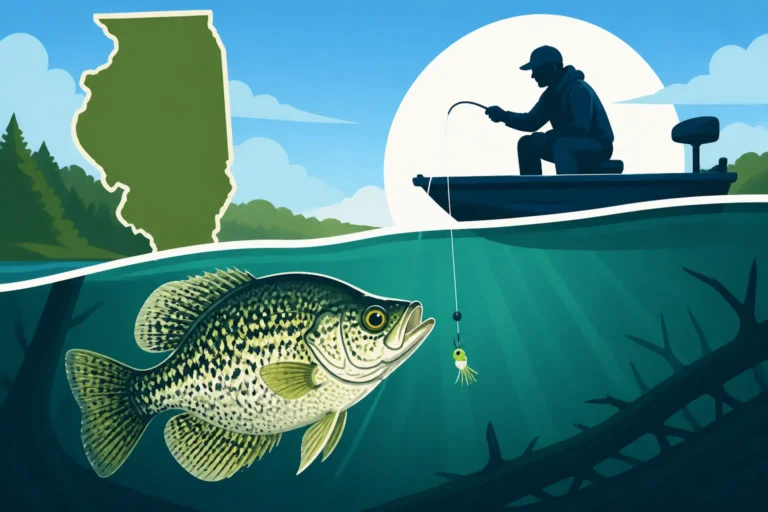
Crappie are beloved panfish in Illinois, known for their aggressive bites and delicious fillets. Both black and white crappie share similar temperature preferences, generally thriving in waters between 60-75°F. Their spring spawn is highly anticipated, typically occurring when water temperatures reach the mid-50s to low 60s. This is when they move into extremely shallow brush piles, flooded timber, or reeds to lay their eggs, making them a prime target for anglers.
During the warmer summer months, crappie will often suspend in deeper water, frequently congregating around the thermocline or holding tight to submerged structures like brush piles or stake beds. In colder water, their metabolism slows significantly, and they tend to hug bottom structure or suspended tight to cover. Knowing their preferred temps and how they use cover throughout the year is vital. We have a comprehensive Illinois Crappie Spawn Season Guide that delves deeper into this exciting time, as well as a dedicated Best Water Temperature for Crappie Fishing resource.
Walleye and Sauger
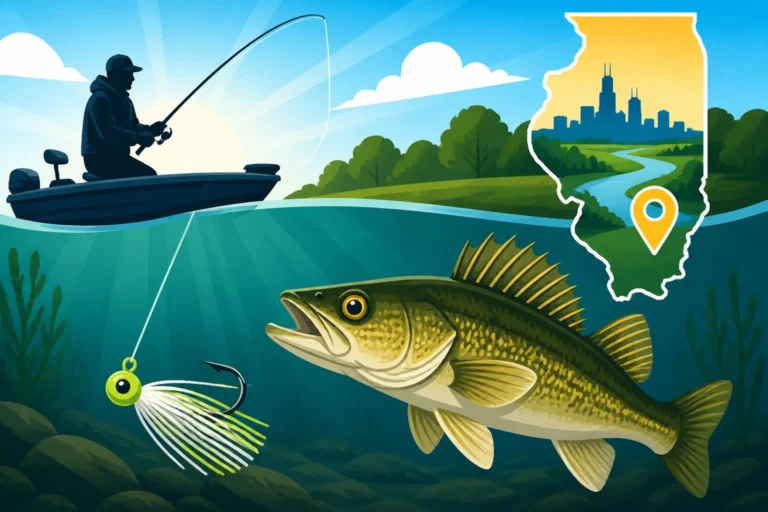
Walleye and their close cousin, sauger, are quintessential cool-water game fish. They prefer water temperatures significantly colder than bass or crappie, with an optimal range typically between 55-65°F. They are incredibly active in early spring and late fall when these cooler temperatures prevail. Their spawn occurs quite early in the spring, often when water temperatures are still in the low 40s, sometimes even under ice. This preference for cooler water means they are often found deeper, especially in large reservoirs, or in current-swept areas of rivers where oxygen levels are higher.
In summer, walleye and sauger will seek out the coolest, most oxygenated water available. This usually means deeper water in lakes, often near the bottom or along breaklines, or in fast-moving current seams in rivers. For river anglers, understanding how current influences both temperature and oxygen is just as important as the temperature itself. You can learn more about their seasonal movements in our Illinois Walleye Fishing Season in Illinois guide.
Catfish (Channel, Blue, Flathead)
Catfish, especially channel cats, are much more tolerant of warm water than many other game species, making them a popular summer target in Illinois. Their optimal feeding range can extend into the 70s and even low 80s Fahrenheit. They become incredibly active as waters warm in late spring and summer, often feeding aggressively both day and night. While they tolerate warm water, they still respond to temperature changes, becoming less active in very cold conditions.
Blue catfish and flathead catfish also thrive in warmer water, with flatheads particularly favoring warmer, current-driven areas in rivers, often holding tight to submerged wood or rock piles. All catfish species will seek out slightly deeper, more stable water during extreme cold. Their sheer resilience and broad temperature tolerance make them a fantastic target for beginners and seasoned anglers alike, especially when other species become finicky due to temperature extremes.
Tools and Techniques for Measuring and Using Water Temp
You can't effectively adapt to water temperature if you don't know what it is! Fortunately, there are several easy and accessible ways to measure water temperature, and just as many ways to put that information to work for you. Don't leave home without one of these crucial tools.
Essential Gear for Temperature Monitoring
The simplest tool for measuring water temperature is a basic fishing thermometer. These are usually inexpensive, reliable, and easy to use. Many anglers keep a small, weighted thermometer attached to a string in their tackle box, dropping it down to various depths to get readings. This gives you a quick snapshot of the temperature at different levels. You can find excellent, durable models on platforms like Amazon, often integrated with other fishing gadgets.
For boat anglers, modern fish finders are a game-changer. Almost all contemporary fish finders, from entry-level units to advanced models like those from Humminbird or Lowrance, come equipped with a temperature sensor built into the transducer. This provides real-time surface water temperature readings as you move, and many advanced units can even display a water column temperature graph, showing you the thermocline and temperature changes at different depths. This real-time data is invaluable for locating fish. Beyond dedicated units, there are also compact, handheld digital thermometers that offer fast, accurate readings, perfect for bank anglers or kayakers.
Interpreting Temperature Readings for Actionable Advice
Once you have those temperature readings, the real fun begins: interpreting them to make informed decisions. First, always compare the current water temperature to the optimal range for your target species. If you're chasing largemouth bass and the surface temp is 85°F, you know they're not going to be in two feet of water. Instead, you'll be looking for deeper structures, shaded areas, or cooler inflowing creeks. Conversely, if it's a chilly 45°F, you'll want to slow down your presentation considerably and target areas with slightly warmer water, even if it's just a degree or two.
Consider the time of year and general Best Time to Fish in Illinois patterns. A 55°F reading in spring might mean fish are in pre-spawn or spawning mode and looking for food, while the same temperature in fall means they’re actively feeding before winter. Use the temperature data to confirm or adjust your assumptions about fish location and activity. For example, if you know crappie spawn at 60°F, and your thermometer reads 58°F in a shallow cove, you know they're probably staging close by and ready to move in. Couple this with selecting the right offerings, as detailed in our Seasonal Bait Selection Guide, and you're well on your way to success.
| Species | Optimal Feeding Range (°F) | Spawning Range (°F) | Behavior in Extreme Cold | Behavior in Extreme Heat |
|---|---|---|---|---|
| Largemouth Bass | 65-75 | 60-68 | Lethargic, deep/stable | Deeper, seeking shade |
| Smallmouth Bass | 60-70 | 55-65 | Lethargic, deep/stable | Deeper, current-rich |
| Black/White Crappie | 60-75 | 55-65 | Slow, tight to cover | Suspend deeper, thermocline |
| Walleye/Sauger | 55-65 | 40-50 | Very slow, deepest | Deeper, current/oxygen |
| Channel Catfish | 70-85 | 70-75 | Slow, deep holes | Highly active, all depths |
| Bluegill | 65-75 | 70-75 | Slow, tight to cover | Active, seeking shade |
Adapting Your Fishing Strategy to Water Conditions
Knowing the water temperature is only half the battle. The real skill lies in adapting your fishing strategy to match what the fish are doing in those conditions. This means adjusting everything from your lure choice to your retrieve speed, and knowing where to cast based on those thermal cues.
Adjusting Lure Presentation and Retrieve Speed
When water temperatures are low, fish metabolism is slow. This means they are less likely to chase a fast-moving bait. Your presentation needs to be agonizingly slow. Think subtle twitches, long pauses, and baits that suspend or sink slowly. Jigging baits, drop shots, and even live bait presented with minimal movement are often effective. For example, in cold water, you might fish a jig and pig almost dead stick, letting it sit for extended periods on the bottom.
As water temperatures warm up and fish become more active, you can speed up your retrieve and use more aggressive presentations. Crankbaits, spinnerbaits, and topwater lures become highly effective when fish are willing to chase. The key is to match the energy level of the fish. In a warm-water feeding frenzy, a fast-moving jerkbait or buzzbait might trigger reaction strikes, whereas in cold water, that same bait would likely be ignored. Don't be afraid to experiment with retrieve speeds until you find what triggers a bite; the fish will tell you what they want.
Locating Fish Based on Thermal Refuges
Fish are constantly seeking their comfort zone, and that means they’ll move to areas offering the most favorable temperatures. In summer, this often means deeper water where it's cooler, or areas with shade from trees, docks, or bridges. Look for submerged springs or inflowing creeks that might be bringing in cooler water. Even thick mats of vegetation can create a cooler, shaded environment underneath. You can also target fish holding near the thermocline in deeper lakes, using your fish finder to pinpoint that critical depth.
Conversely, in early spring or late fall, fish will seek out warmer water. This could be shallow, dark-bottomed coves that absorb sunlight, the sunny side of a lake, or even areas near power plants where discharge waters are warmer. Understanding how structure, depth, and sunlight interact to create these "microclimates" is crucial. By combining your temperature readings with knowledge of the local topography and common fish behavior patterns, you can narrow down your search and focus your efforts on areas where fish are most likely to be active and comfortable.
Local Illinois Hotspots and Temperature Zones
Illinois offers a diverse range of fishing environments, from vast reservoirs to meandering rivers and countless small ponds. Each of these water bodies has its own unique way of heating and cooling, which profoundly impacts the fish within them. Knowing these local nuances can give you a significant edge.
Large Reservoirs vs. Smaller Lakes
Large reservoirs like Rend Lake, Lake Shelbyville, and Carlyle Lake are massive bodies of water that heat up and cool down much slower than smaller lakes or ponds. This thermal inertia means that seasonal transitions are often more gradual. They also tend to stratify more distinctly, forming pronounced thermoclines in summer. In these large lakes, deep main lake points, submerged humps, and the edges of creek channels become key areas where fish can find stable temperatures. For example, Rend Lake Fishing Guide for Illinois Anglers outlines many spots influenced by temperature.
Smaller lakes and ponds, on the other hand, react much more quickly to air temperature changes. A sunny spring day can warm a shallow pond significantly in just a few hours, activating fish quickly. However, these same ponds can overheat rapidly in summer, pushing fish into any available deeper water or dense cover. In winter, they'll freeze solid much faster. Anglers on these smaller waters need to be vigilant about daily temperature swings and how they impact fish location, often finding fish relating to shorelines and shallow cover much more readily than in expansive reservoirs.
Rivers and Streams: Current and Temperature
Illinois rivers and streams, such as the Illinois River or the Kankakee River, present a different dynamic altogether. The constant flow of water moderates temperature fluctuations. While rivers still experience seasonal temperature changes, the current helps to keep water temperatures more consistent throughout the water column, often reducing the stratification seen in lakes. This means fish can be found at various depths more easily, but they will still seek out warmer slack water in winter or cooler, oxygenated current seams in summer.
Current can also create oxygen-rich zones that attract fish, regardless of temperature. For example, in summer, fish in the Mississippi River might hold in deeper holes or scour areas where the current keeps the water cooler and more oxygenated. Conversely, in spring, they might move into shallower backwaters and sloughs that warm up faster and offer sanctuary from the main current for spawning. Always consider both current and temperature when fishing rivers; they are often intertwined factors determining fish activity and location.
Disclaimer
Please remember that fishing regulations, including license requirements and catch limits, can change. Always consult the latest Illinois Department of Natural Resources (IDNR) guides and regulations before heading out on the water. This guide is for informational purposes only and should not replace official sources.