Chicago Pier Spots for Lake Michigan Salmon
Trying to land a feisty Lake Michigan salmon without the expense or hassle of a boat can feel like an impossible dream, leaving many anglers wondering if it's even worth hauling their gear to the shore. But fear not! Chicago's iconic piers offer surprisingly rich opportunities for shore-bound anglers to hook into some truly spectacular fish, and this guide will show you exactly where to go and how to maximize your chances.
Why Pier Fishing for Salmon is a Game-ChChanger
There's something uniquely satisfying about battling a powerful salmon or trout from solid ground. You don't need to worry about boat maintenance, launching, or navigating open water. For many, pier fishing is the most accessible way to experience the thrill of Lake Michigan's world-class fishery. It's an opportunity to connect with nature, enjoy stunning city views, and potentially land a trophy fish, all without a major investment. You'll often find a great community of fellow anglers on the piers, sharing tips and stories, which is a big part of the fun.
Accessibility and Cost-Effectiveness
One of the biggest advantages of pier fishing in Chicago is its sheer accessibility. Many piers are easily reachable by public transportation, bike, or car, often with nearby parking (though be ready for city parking challenges!). This means you can be on the water, lines in, within minutes of arriving, rather than spending hours preparing a boat. The cost savings are also significant. Beyond your basic gear and an Illinois Fishing License Guide for 2026, you won't have fuel costs, docking fees, or the heavy investment of a boat. It’s an ideal option for budget-conscious anglers or those just looking to test the waters before committing to more expensive outings.
Community and Local Knowledge
Chicago's fishing piers are often bustling hubs where anglers of all experience levels gather. This creates a vibrant community where you can learn a lot from seasoned locals. Don't be shy about striking up a conversation! Many experienced pier anglers are more than happy to share insights on what baits are working, the current bite, and even specific nuances of the pier you're on. Observing what others are using and how they're fishing can quickly improve your own success rate. Plus, there’s a shared camaraderie that makes the experience even better, especially when a big fish is hooked and everyone gathers to watch the fight.
Prime Chicago Pier Spots for Lake Michigan Salmon
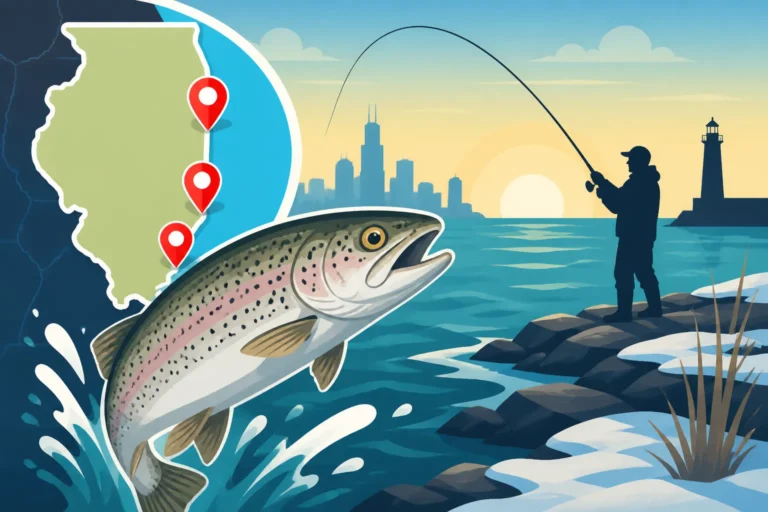
Chicago's sprawling lakefront offers several fantastic piers that consistently produce salmon and trout. Each spot has its unique charm and challenges, but with a bit of local knowledge, you can narrow down your best bets.
Montrose Harbor Revetment (The "Horseshoe")
Located on the city's North Side, the Montrose Harbor Revetment, often affectionately called "The Horseshoe" due to its shape, is arguably one of Chicago's most celebrated shore fishing locations. This spot is particularly famous for its incredible spring coho salmon run. As the ice melts and water temperatures begin to rise, coho move into the warmer, shallower waters of the harbor, making them highly accessible to pier anglers. You'll find anglers lining this concrete structure, casting spoons and stickbaits, especially at dawn and dusk. The key here is to target the edges of the channel and areas where current brings baitfish into the harbor.
During the spring, when the coho are abundant, you might also pick up a stray rainbow trout (steelhead) or even an occasional brown trout. The Montrose area benefits from baitfish concentrations and deeper water access right off the revetment. It's a popular spot, so expect company, especially on weekends and during peak bite times. Having a long-handled net is almost a necessity here, as landing a thrashing salmon from the high walls can be a challenge. Checking local conditions and reports, perhaps even through a service like FishingBooker if they have local guides reporting, can give you an edge before heading out.
Navy Pier
Navy Pier is an iconic Chicago landmark, and while it's a tourist hotspot, it also offers legitimate fishing opportunities, especially for salmon and trout. The pier extends far into Lake Michigan, giving anglers access to deeper waters that fish frequent. It's an excellent spot for casting during the spring and fall runs, and even into summer for Chinook salmon and steelhead. Because it’s so long, you have a lot of real estate to cover and try different depths. The key here is to find quieter sections away from the main pedestrian traffic, often towards the outer edges of the pier.
While the crowds can be a deterrent for some, Navy Pier offers amenities like restrooms and food, which can make a long day of fishing more comfortable. Accessibility is fantastic, with multiple public transit options. Anglers here often cast spoons, crankbaits, or use live bait under a bobber. The sheer length of the pier means fish can be found at various depths and distances from shore, depending on the day and water conditions. It’s a fantastic place to observe Illinois Lake Michigan Trout and Salmon Fishery Explained in action, as different species pass through.
DuSable Harbor and Lakeshore Drive Piers
The area around DuSable Harbor, just north of Millennium Park, features several smaller, less-known piers and jetties that can be incredibly productive. These spots offer a slightly more secluded experience than Navy Pier, though they can still attract a decent crowd. Fish will often hold along these structures, especially during migratory periods. Anglers here typically target coho and Chinook salmon, as well as brown trout. The rock-lined edges provide excellent cover for baitfish, which in turn attracts predatory salmon and trout.
These piers are particularly good for casting smaller spoons and body baits. They are also excellent spots for using spawn sacs or skein under a slip bobber, especially in early spring or late fall when fish are cruising closer to the bottom. The proximity to downtown means easy access, but parking can be tight. It’s worth exploring the various outcroppings and structures along Lakeshore Drive in this vicinity; often, the most unassuming spots can hold the biggest surprises. Always remember to check the Illinois Fishing Season and Catch Limit Rules before you head out.
Burnham Harbor and Museum Campus
Further south, the Burnham Harbor area, encompassing the Museum Campus, also provides excellent pier fishing. The long concrete walkways and jetties extending into Lake Michigan offer ample space for anglers. This area is particularly known for brown trout throughout much of the year, but also sees good runs of coho and Chinook salmon, especially in the spring and fall. The deeper water access and rocky structure provide ideal habitat for these cold-water species.
Many anglers here find success by casting spoons like the Little Cleo or Krocodile, especially in silver or chartreuse, working them slowly along the bottom or jigging them vertically. The area around the Adler Planetarium and Northerly Island can be especially productive. These spots can also offer stunning views of the city skyline while you fish. Like other urban piers, being considerate of other users and practicing good pier etiquette is essential. Sometimes, looking into local fishing forums or even FishingBooker's local guide pages can give you up-to-the-minute reports on these specific spots.
Best Times and Techniques for Pier Salmon Success
Catching salmon from a pier on Lake Michigan isn't just about showing up; it's about understanding the seasonal movements and employing the right tactics. Knowing when and how to fish can dramatically improve your chances.
Seasonal Salmon Movement on Lake Michigan
Lake Michigan salmon and trout are cold-water species, and their behavior is heavily influenced by water temperature. This means their presence near piers changes throughout the year:
- Spring (March-May): This is prime time for coho salmon. As nearshore waters warm up slightly before the main lake, coho move closer to the piers, harbors, and tributary mouths in search of baitfish. Brown trout are also abundant during this period.
- Summer (June-August): As the nearshore waters get too warm for comfort, many salmon species move to deeper, cooler offshore waters. However, you can still catch Chinook (King) salmon and steelhead (rainbow trout) by targeting early morning or late evening bites from the piers, especially after cold fronts or when winds push cooler water closer to shore.
- Fall (September-November): This is another incredible season for pier fishing. Chinook salmon, coho, and steelhead stage near harbors and river mouths as they prepare for their spawning runs. The fishing can be fast and furious, with large fish being a common occurrence.
Understanding these patterns is key. For a more detailed look, you might want to read our guide on Best Time of Year for Lake Michigan Salmon in Illinois. The thrill of a screaming reel as a chrome-sided coho takes your bait in spring is hard to beat!
Effective Pier Fishing Techniques and Baits
Pier fishing for salmon requires a different approach than trolling from a boat. Here are some techniques that consistently produce results:
- Casting Spoons and Stickbaits: This is perhaps the most common and effective method. Spoons like the Little Cleo, Krocodile, or Dardevle, in silver, chartreuse, blue/silver, or orange, are excellent choices. Cast them out, let them sink to various depths, and retrieve with a stop-and-go motion to mimic wounded baitfish. Stickbaits (like Rapala Husky Jerks or Smithwick Rattlin’ Rogues) are also fantastic, especially for coho and brown trout, retrieved slowly or twitched.
- Slip Bobber Fishing with Bait: When fish are holding at a specific depth or being finicky, a slip bobber rig is invaluable. You can use live bait like minnows or smelt (where legal and available), or dead bait such as frozen smelt or alewives. Many anglers also find great success with spawn sacs (salmon eggs tied in mesh) or skein (chunks of salmon eggs), especially during pre-spawn and spawning periods in the fall. The key is to present your bait naturally at the depth where fish are feeding.
- Jigging: Vertical jigging with heavy spoons or blade baits can be effective when fish are concentrated directly under the pier or in deeper channels. Drop the jig to the bottom, then lift and drop it, creating an enticing flash and vibration. This technique is often more effective in colder water or when fish are lethargic.
The choice of bait and technique often depends on the species you're targeting and the time of year. Don't be afraid to experiment, and always keep an eye on what successful anglers around you are doing.
Essential Gear and Tackle for Pier Anglers
When targeting powerful fish like salmon and trout from Lake Michigan piers, your gear needs to be up to the task. Skimping on tackle can lead to heartbreak when that trophy fish snaps your line or straightens your hook.
Rods, Reels, and Line Choices
- Rods: For pier fishing, you'll want a rod that can cast heavy lures a long distance and has enough backbone to handle a powerful fish. A medium-heavy to heavy power spinning rod, anywhere from 7 to 10 feet in length, is ideal. The extra length helps with casting distance and allows for better line control when a fish is running. A faster action tip is good for detecting subtle bites, while the strong backbone gives you leverage.
- Reels: Pair your rod with a reliable spinning reel in the 3000-5000 series size. Look for a reel with a smooth, strong drag system – this is crucial for fighting powerful salmon that make long, fast runs. A good retrieve ratio will help you quickly pick up slack line. Brands like Daiwa or Shimano offer excellent options that can withstand the demands of Lake Michigan fishing. For more general advice, check out Best Rods and Reels for Illinois Anglers.
- Line: Spool your reel with 15-20 lb braided line for your main line. Braid offers incredible strength, sensitivity, and casting distance. However, because salmon have excellent eyesight, you'll want to use a fluorocarbon leader of 10-15 lb test, tied directly to your main line with a strong knot like an FG or Alberto knot. Fluorocarbon is nearly invisible underwater and more abrasion resistant against rocks and fish teeth.
Tackle Box Essentials and Landing Gear
Your tackle box should be stocked with a variety of lures, terminal tackle, and essential tools.
- Lures: Carry a good selection of spoons (Little Cleo, Krocodile, Dardevle) in various sizes and colors (silver, gold, chartreuse, blue/silver, orange). Include some crankbaits/stickbaits (Rapala, Smithwick) that dive to different depths. Blade baits can also be effective for jigging.
- Terminal Tackle: A variety of swivels (barrel or ball-bearing), snap swivels, and lead weights (sinkers) will be necessary, especially if you plan to use bait. Don't forget extra hooks (trebles and single J-hooks), leader material, and bobbers (slip bobbers are a must).
- Tools: A long-handled net is absolutely critical for landing salmon and trout from high piers. Choose one with a wide hoop and a deep, rubberized net to protect the fish. Pliers (needle-nose or multi-tool) are essential for removing hooks and cutting line. A pair of fish grippers can also be very helpful for handling slippery fish safely. Don't forget a stringer or cooler to keep your catch fresh.
- Comfort and Safety: Sunscreen, a hat, sunglasses, comfortable layered clothing, and a good pair of gripping shoes are vital. Piers can be slippery and exposed to the elements.
Remember, organization is key. A well-stocked and organized tackle box ensures you can quickly adapt to changing conditions and spend more time fishing.
Navigating Regulations and Safety on Chicago Piers
Fishing in an urban environment like Chicago, especially on busy piers, comes with its own set of rules and considerations. It's crucial to be informed about regulations and prioritize safety for an enjoyable and responsible experience.
Illinois Fishing Licenses and Stamp Requirements
Before you even make your first cast, you must have the appropriate licenses and stamps. In Illinois, any resident 16 years of age or older needs a valid fishing license. Non-residents also require a license, and the costs can vary. Beyond the general fishing license, if you plan to target trout or salmon, you'll also need a special stamp. For Lake Michigan specifically, this is the Lake Michigan Salmon Stamp Requirements for Anglers. Many anglers overlook this, but conservation officers do check.
It's easy enough to purchase or renew your license online through the Illinois Department of Natural Resources (IDNR) website, or at authorized vendors like sporting goods stores (e.g., Cabela's, Bass Pro Shops) and some bait shops. Always carry proof of your license, whether it's a physical copy or a digital version on your phone. Ignoring these regulations can lead to hefty fines, spoiling an otherwise perfect day on the water. For more information on securing your permit, see How to Buy an Illinois Fishing License Online.
Pier Etiquette and Safety Tips
Fishing from popular piers means sharing the space with other anglers and sometimes even tourists. Good etiquette and safety are paramount.
- Give Space: Try to maintain a reasonable distance from other anglers to avoid tangling lines. If someone is already set up, don't crowd them.
- Be Mindful of Casts: Before casting, always check behind and around you to ensure your line won't hook anyone or tangle with another angler's line. Announce your cast with a clear "Casting!" if it's crowded.
- Manage Your Trash: Pack out everything you pack in. Leave the pier cleaner than you found it. This includes discarded fishing line, which can be hazardous to wildlife and other people.
- Right of Way: When someone hooks a fish, especially a large salmon, give them space and let them fight it. Clear your lines if necessary to avoid tangles.
- Slippery Surfaces: Piers can be incredibly slippery, especially when wet from rain, waves, or fish slime. Wear shoes with good grip, and be cautious when moving around, particularly near the edges.
- Weather Awareness: Lake Michigan weather can change rapidly. Always check the forecast before you go, and be prepared for sudden winds, rain, or even thunderstorms. If lightning is present, pack up and seek shelter immediately.
- Stay Hydrated: Even on cooler days, spending hours in the sun and wind can lead to dehydration. Bring plenty of water.
- Buddy System: Whenever possible, fish with a friend. It's safer, and two heads are better than one when troubleshooting gear or landing a big fish.
Following these guidelines ensures that everyone can enjoy their time fishing on Chicago's beautiful lakefront.
Pier Fishing Outlook for Chicago Lakefront
The future for pier fishing for salmon and trout in Chicago remains bright. The Illinois Department of Natural Resources (IDNR) regularly stocks Lake Michigan with Chinook salmon, coho salmon, rainbow trout (steelhead), and brown trout, ensuring a vibrant and diverse fishery. While factors like baitfish populations and weather patterns can influence the bite, the foundational strength of the fishery is consistently managed.
Anglers should always stay updated on current conditions and any special regulations that might apply to specific areas or species by consulting the annual Illinois Fishing Information Guide. For a broader understanding of statewide rules, including site-specific variations, our article on Why Fishing Rules Vary by Lake and River might be helpful. Whether you're a seasoned angler or just starting out, Chicago's piers offer an incredible opportunity to experience world-class salmon fishing right in the heart of the city.
Lake Michigan Pier Fishing Comparison
Here’s a quick overview of some key aspects of Chicago’s top pier fishing spots for salmon and trout:
| Pier Location | Primary Species Targeted | Best Season(s) | Typical Techniques | Accessibility & Amenities | Notes |
|---|---|---|---|---|---|
| Montrose Harbor Revetment | Coho Salmon, Brown Trout | Spring, Fall | Spoons, Stickbaits, Spawn Sacs | Good public transit, parking nearby (can be busy), restrooms. | Excellent for spring coho. Can be crowded. Long-handled net essential. |
| Navy Pier | Chinook Salmon, Coho, Steelhead | Spring, Fall | Spoons, Crankbaits, Live Bait | Highly accessible, public transit, paid parking, many amenities. | Tourist hotspot, but outer sections productive. Very long pier. |
| DuSable Harbor/Lakeshore Piers | Coho Salmon, Brown Trout, Chinook | Spring, Fall | Smaller Spoons, Slip Bobber, Spawn | Walkable from downtown, limited parking, some restrooms nearby. | More secluded options, good structure. Explore various jetties. |
| Burnham Harbor/Museum Campus | Brown Trout, Chinook, Coho | Spring, Fall | Spoons, Jigging, Live Bait | Public transit, paid parking, scenic views. | Known for brown trout. Good for targeting deeper water. |
Disclaimer
Always check the latest Illinois Department of Natural Resources (IDNR) regulations and advisories before heading out to fish, as rules and conditions can change. This guide is for informational purposes only and does not constitute legal advice.