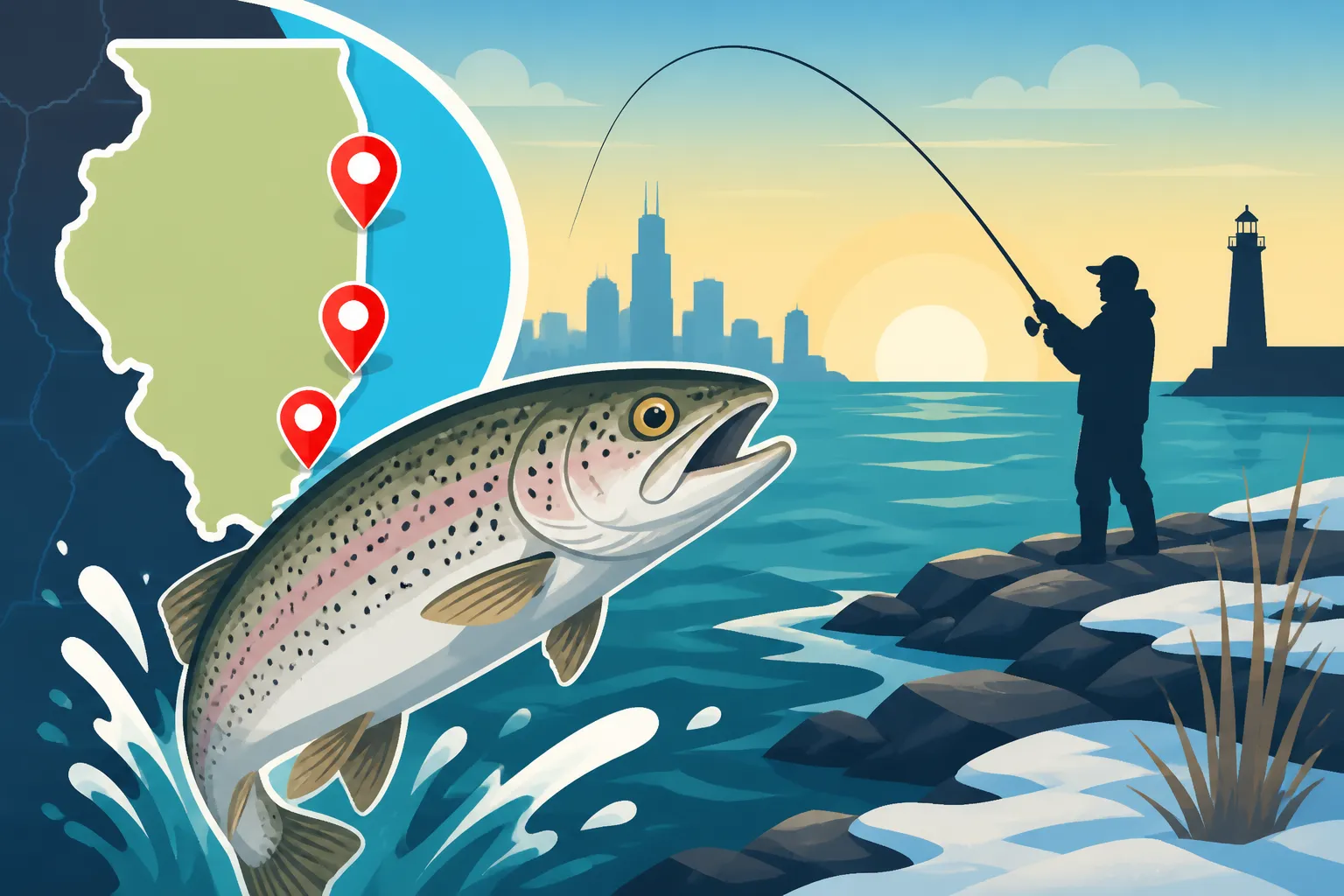
Best Spots for Lake Michigan Trout in Early Spring
Finding those elusive trout on Lake Michigan in early spring can feel like chasing a ghost. The waters are still chilly, the weather can be unpredictable, and many anglers just don't know where to start looking once the ice recedes. This guide is here to cut through the guesswork, offering tried-and-true locations and tactics for targeting brown trout, steelhead (rainbow trout), and even a few lake trout along Illinois's stunning Lake Michigan shoreline as spring begins to unfold.
Understanding Early Spring Trout Behavior in Lake Michigan
Early spring on Lake Michigan is a transitional period, and understanding what trout are up to is crucial for finding them. As the last vestiges of winter melt away, water temperatures are the primary driver of fish behavior. Trout, especially brown trout and steelhead, are highly sensitive to these changes.
The Thermal Advantage: Warmer Water Pockets
One of the biggest factors in early spring is the hunt for warmer water. While Lake Michigan itself remains frigid, certain areas will warm up faster, creating attractive pockets for trout. Tributary mouths, shallow bays, and areas with warm water discharges from power plants or industrial facilities become prime real estate. These warmer spots offer a dual benefit: they make the trout more active, and they attract baitfish, creating a consistent food source. Brown trout, in particular, are notorious for hugging these warmer shorelines and structures. They're often on the prowl, looking for an easy meal, and will be much more cooperative in water a few degrees warmer than the main lake. This is a key insight when planning your outing; don't just cast anywhere, look for areas that naturally hold a slight thermal advantage.
Feeding Patterns and Baitfish Movement
With the increase in water temperature comes increased metabolism and feeding activity. Early spring trout are often looking for shad, alewives, and smelt that might be moving into shallower areas or congregating near warmer currents. These baitfish are themselves seeking comfort and food, creating a chain reaction that brings the trout within reach of shore anglers and those fishing near structure. You'll find that aggressive presentations, mimicking a fleeing baitfish, can be incredibly effective. Don't be afraid to experiment with different lure sizes and colors, as what works one day might not be as effective the next, depending on the prevalent baitfish species and the clarity of the water. Keeping an eye on local fishing reports can give you clues about what baitfish are active and what the trout are keying in on.
Key Shoreline and Pier Locations for Early Spring Trout
Illinois's Lake Michigan coastline, while relatively short, offers some fantastic opportunities for early spring trout, particularly from shore and piers. The urban landscape of Chicago provides unique access, while areas further north offer different dynamics.
Chicago Lakefront Piers and Harbors
The Chicago lakefront is a powerhouse for early spring trout. The numerous harbors and piers retain slightly warmer water than the open lake, especially those with deeper water access and current breaks. Places like Montrose Harbor, Belmont Harbor, and DuSable Harbor are perennial favorites. The concrete structures absorb and radiate a bit of heat, and the protected waters often hold schools of baitfish. Anglers casting from the jetties and harbor walls can find success targeting brown trout right along the structure or casting out into the deeper channel mouths. Later in the spring, you might even start to see steelhead moving through as they begin their journey towards tributaries, or even a resident lake trout cruising deeper water. These locations are particularly accessible, making them ideal for an impromptu fishing trip. For specific insights, check out our guide on Chicago Pier Spots for Lake Michigan Salmon for more pier-specific tips, many of which apply to trout as well.
Waukegan and North Point Marina Areas
Heading north from Chicago, Waukegan Harbor and North Point Marina in Winthrop Harbor are two other stellar locations. Waukegan, in particular, has a reputation for holding excellent numbers of brown trout throughout the colder months and into early spring. The harbor entrance and the public fishing areas around the inner harbor are prime spots. The same principle of warmer, protected water applies here, attracting baitfish and, consequently, trout. North Point Marina, being the largest freshwater marina in the world, offers extensive public access along its breakwalls and surrounding areas. These northern locations often have less fishing pressure than some of the busier Chicago spots, especially on weekdays. Keep an eye on local wind conditions, as these more exposed areas can be tough to fish during strong easterly winds. Our post on Lake Michigan Pier Fishing Near Waukegan, Illinois can provide even more detailed strategies for this fruitful area.
Shoreline Access Points
Beyond the major harbors, there are numerous smaller shoreline access points along the Illinois coast where you can find success. From Evanston's Dempster Street Beach to the various parks in Lake Forest and Lake Bluff, rocky points and areas where current creates eddies can concentrate bait and trout. These spots often require a bit more walking and exploration but can yield excellent results for anglers willing to put in the effort. Focusing on areas with distinct changes in depth or structure, like submerged rock piles or drop-offs, can be very productive. Remember that the Illinois Department of Natural Resources (IDNR) regularly stocks Lake Michigan with trout, ensuring a healthy population for anglers to pursue. When planning a trip, consider checking our guide on Lake Michigan Shore Fishing Access Near Chicago, Illinois for a broader view of accessible shore spots.
Boat Fishing Strategies for Lake Michigan Trout in Early Spring
While shore fishing is popular, having a boat opens up a whole new world of opportunities for early spring Lake Michigan trout. Accessing deeper water, covering more ground, and targeting specific thermal breaks can significantly increase your success rate.
Trolling Near Shoreline Structures and Temperature Breaks
For boat anglers, the early spring often means trolling relatively close to shore. This is particularly true for brown trout, which will hug the shallow contours, breakwalls, and harbor mouths in search of food. Trolling with crankbaits, spoons, or even shallow-diving stickbaits in depths of 10-30 feet can be incredibly productive. Focus on the transition zones where water temperatures might change, or where currents push baitfish along structure. As the spring progresses and the lake warms slightly, you might start to push out a bit deeper, but generally, the trout will be in the top 50 feet of the water column. Utilizing planer boards can help you spread out your lures and cover a wider swath of water, especially in these shallower near-shore areas. If you're looking to book a guided trip, platforms like FishingBooker can help you find experienced captains who know these early season patterns inside and out.
Targeting Deeper Water for Lake Trout and Later-Season Steelhead
As spring truly settles in and the weather stabilizes, often around late April or May, some trout species will begin to move deeper. Lake trout, being cold-water dwellers, will move out into their preferred deeper haunts, often around submerged structure or offshore humps. Steelhead, while often found closer to shore in early spring, will also start to spread out, with some remaining in the nearshore thermal zones and others venturing further out. For these deeper fish, downriggers become essential, allowing you to present lures at precise depths. Spoons, flasher-fly combos, or even live bait on weighted rigs can be effective. Keep an eye on your fish finder for bait balls and active fish. Don't be afraid to adjust your trolling speed and direction until you find what triggers a bite. Many successful Lake Michigan anglers rely on these subtle adjustments to consistently catch fish.
| Species | Typical Early Spring Depth (Illinois) | Preferred Lures/Baits | Prime Locations (Shore/Boat) | Best Water Temp Range |
|---|---|---|---|---|
| Brown Trout | 5-25 feet | Stickbaits, spoons, spawn sacs | Harbors, piers, warm water discharges | 40-50°F |
| Steelhead | 10-40 feet | Spoons, small crankbaits, spawn sacs | River mouths, nearshore current breaks | 45-55°F |
| Lake Trout | 30-70 feet (and deeper) | Heavy spoons, flasher-fly, dodgers | Offshore humps, deep breakwalls, drop-offs | 35-45°F |
Essential Gear and Techniques for Early Spring Lake Michigan Trout
Having the right equipment and knowing how to use it effectively is paramount for success when chasing Lake Michigan trout in the early spring. The conditions can be challenging, so being prepared is key.
Rods, Reels, and Line Choices
For most early spring trout fishing from shore or pier, a medium-light to medium action spinning rod, 7-9 feet long, paired with a reliable spinning reel (size 2500-4000) is ideal. This setup provides enough backbone to fight larger fish but still allows for long casts. For line, 8-12 lb monofilament or fluorocarbon is a good choice for its abrasion resistance and shock absorption. If you prefer braid, a 15-20 lb braid with a 6-8 foot fluorocarbon leader will give you excellent sensitivity and casting distance while maintaining stealth. When it comes to boat fishing, specialized trolling rods with line counter reels are often preferred, typically spooled with 20-30 lb braid or monofilament, depending on the presentation. You'll want sturdy gear capable of handling the power of a hard-fighting lake Michigan fish. Our guide on Best Rods and Reels for Illinois Anglers offers a broader perspective on selecting appropriate gear for various Illinois species.
Lure Selection and Bait Options
Lure choice is critical and often depends on the species and conditions. For brown trout and steelhead close to shore, popular lures include shallow-diving crankbaits like Rapala Husky Jerks or Smithwick Rattlin' Rogues, especially in brighter colors or natural baitfish patterns. Spoons, such as Little Cleos, Dardevles, or Kastmasters, in silver, gold, or orange/chartreuse combinations, are also highly effective. Don't overlook soft plastics or spawn sacs fished under a bobber, especially near tributary mouths where steelhead might be congregating. For boat fishing, a wider array of spoons (e.g., Michigan Stinger, Dreamweaver), dodgers, and flasher-fly combinations come into play, often targeting different depths and mimicking different baitfish. Sometimes, simply finding a local bait shop owner to ask what's been working can be your best bet, as they often have the most up-to-date intel on what the fish are hitting. Consider consulting Illinois Lake Michigan Brown Trout Fishing Tips for more targeted lure recommendations for this popular species.
Reading the Water and Adjusting to Conditions
Lake Michigan is a vast and ever-changing body of water, and early spring conditions can shift rapidly. Pay close attention to water clarity, wind direction, and wave action. After a strong east wind, the nearshore water can become churned up and muddy, making bright-colored lures more visible. Conversely, in calm, clear conditions, subtle natural colors or smaller presentations might be more effective. Look for areas where debris gathers, as these can indicate current breaks and potential feeding zones. Don't be afraid to move if a spot isn't producing, and always be willing to adjust your lure color, depth, or presentation. FishingBooker is a great resource if you're looking for experienced charter captains who have spent years learning to read these specific Lake Michigan conditions. They can often provide invaluable experience and local knowledge that dramatically increases your chances of success. And remember, before you head out, always make sure your Illinois Fishing License Guide for 2026 is current and that you have all the necessary stamps, like the Illinois Trout and Salmon Stamp Requirements.
Disclaimer
The information provided in this guide is for general informational purposes only. Fishing conditions, regulations, and fish behavior can vary greatly depending on specific locations, weather patterns, and time of year. Always consult the latest Illinois Department of Natural Resources (IDNR) fishing regulations and local advisories before heading out. Fishing involves inherent risks; please prioritize safety and practice responsible angling.