Carlyle Lake’s Remote Coves for Fewer Crowds
It's a familiar scenario for many anglers: you wake up early, excited for a peaceful day on the water, only to arrive at your favorite lake and find the boat ramps packed and popular fishing spots already swarming with other boats. That feeling of frustration, of having your tranquil escape interrupted by crowded waters, is something we all want to avoid. If you've been looking for those quiet, out-of-the-way spots on Carlyle Lake where you can truly relax and enjoy some uninterrupted fishing, you've come to the right place. This guide is dedicated to helping you discover and access Carlyle Lake's remote coves, offering a much-needed reprieve from the hustle and bustle, and often, some fantastic fishing opportunities.
Why Carlyle Lake's Secluded Coves Offer a Superior Angling Experience
There's just something inherently satisfying about finding a fishing spot that feels untouched, isn't there? Carlyle Lake, being Illinois's largest man-made lake, presents a unique challenge and opportunity. Its vastness means that while some areas are always buzzing with activity, there are also countless hidden pockets and secluded coves just waiting to be explored. These remote areas aren't just about peace and quiet; they often hold less pressured fish that are more willing to bite, making for a truly memorable day on the water.
Escaping the Weekend Rush and Boat Traffic
Anyone who has spent a summer weekend on a popular lake knows the drill: jet skis whizzing by, pontoons blasting music, and countless bass boats zipping from one waypoint to another. It's a fun atmosphere for some, but for the angler seeking solitude, it can be downright maddening. When you venture into Carlyle Lake's remote coves, you effectively leave that commotion behind. The farther you get from the main lake channels and high-traffic areas, the more the natural sounds of the lake — the birds, the gentle lapping of water against the shore — take over.
This reduction in boat traffic isn't just about peace of mind; it directly impacts the fish. Constant engine noise and boat wakes can spook fish, pushing them deeper or making them hesitant to feed. In a quiet cove, fish are often more relaxed and less wary. This means you can approach with more confidence, make more natural presentations, and increase your chances of a successful catch. It’s like the fish haven't read the script about being hard to catch, simply because they haven't been subjected to relentless pressure. For a comprehensive overview of the lake, you might want to check out our main article on the Carlyle Lake Fishing Guide.
Finding Undisturbed Fish Sanctuaries
Less pressure also often means healthier, more diverse fish populations. In these undisturbed sanctuaries, fish can establish their territories, feed naturally, and aren't constantly being harassed by anglers. This can translate to bigger fish and more consistent bites. These remote coves often boast rich aquatic vegetation, submerged timber, and other structures that provide ideal habitat for various species, from largemouth bass to crappie and even the occasional big catfish.
Consider a spring morning when the bass are moving shallow. In a heavily fished main lake area, those fish might be very skittish. But deep within a quiet cove, perhaps one fed by a small creek, they might be actively cruising and easier to tempt with a subtle presentation. These spots can become true havens, especially during peak fishing seasons when the main lake resembles a freeway. The lack of constant human presence allows the fish to follow their natural instincts, offering a more authentic and rewarding challenge for the angler willing to put in the effort to find them.
Pinpointing Carlyle Lake's Secluded Fishing Havens
Identifying these hidden gems on Carlyle Lake requires a bit of research, a keen eye for detail, and a willingness to explore. The lake's irregular shape, numerous arms, and fluctuating water levels mean that what's remote one day might be slightly less so another, but certain characteristics generally point to secluded spots.
Navigating the Larger River Arms for Hidden Pockets
Carlyle Lake is essentially a flooded section of the Kaskaskia River valley, and its two main river arms – the Kaskaskia River arm on the north and the Hurricane Creek arm on the south – are prime areas to start your search for remote coves. These arms extend for miles, featuring numerous bends, feeder creeks, and small embayments that can be difficult to access from the main lake or popular boat ramps.
Start by looking at detailed maps, either paper topographical maps or digital versions with satellite imagery. Pay attention to areas where the main channel narrows, or where smaller creeks feed into the lake. Follow these smaller waterways on the map, and you’ll often see tiny coves or oxbows branching off. These are the places that deter casual anglers due to their distance or seemingly difficult access. For instance, the upper reaches of the Kaskaskia River arm, particularly north of Boulder, Illinois, are less traveled by recreational boaters and often hold some excellent, secluded fishing. Similarly, the long, winding inlets on the Hurricane Creek arm can lead to very private waters. Our guide on Best Boat Ramps on Carlyle Lake can help you find a starting point, but remember, the goal is to go beyond those popular launches.
Identifying Productive Backwater Structure
Once you're in these general areas, it’s all about spotting the right kind of structure that holds fish. Remote coves are often rich in natural cover, which is precisely why fish gravitate to them. Look for:
- Submerged Timber and Brush Piles: These are classic fish magnets, providing cover from predators and ambush points for feeding. In remote coves, these brush piles are often natural, formed by fallen trees, rather than man-made.
- Lily Pads and Aquatic Vegetation: Healthy weed beds offer oxygen, shade, and a buffet of insects and baitfish. These are particularly prominent in the shallower, calmer waters of secluded coves.
- Rocky Outcroppings and Hard Bottom: While less common in the silty backwaters, any rocky areas can hold smallmouth bass or walleye, though Carlyle is primarily known for its largemouth, crappie, and catfish.
- Depth Changes and Drop-offs: Even in shallow coves, subtle changes in depth, like a small creek channel winding through, can concentrate fish.
Using your fish finder effectively, even a budget model, can help confirm these structures once you're on the water. But rely heavily on visual cues in these calmer, often clearer, remote waters. Remember that these areas aren't always easy to get to, which is part of their appeal. Small jon boats, kayaks, or even canoes are often the best vessels for exploring these areas. You might also find it useful to consult our guide on Shore Fishing Spots Around Carlyle Lake, Illinois if you prefer to hike into some of these less accessible areas from land, though boat access is often preferred for true remoteness.
Tactical Approaches for Remote Cove Angling
Fishing in remote coves often requires a slightly different approach than bombing casts across open water or fishing known hot spots. The fish here may be less accustomed to seeing lures, but they can still be wary of a heavy-handed approach. Stealth, subtle presentations, and the right bait choices are key to success.
Stealth and Subtle Presentation for Unpressured Fish
When you're in a quiet, secluded cove, your presence is far more noticeable to the fish. Loud noises, heavy footfalls on the bank, or even a carelessly dropped tackle box can send fish scattering. Therefore, stealth is paramount.
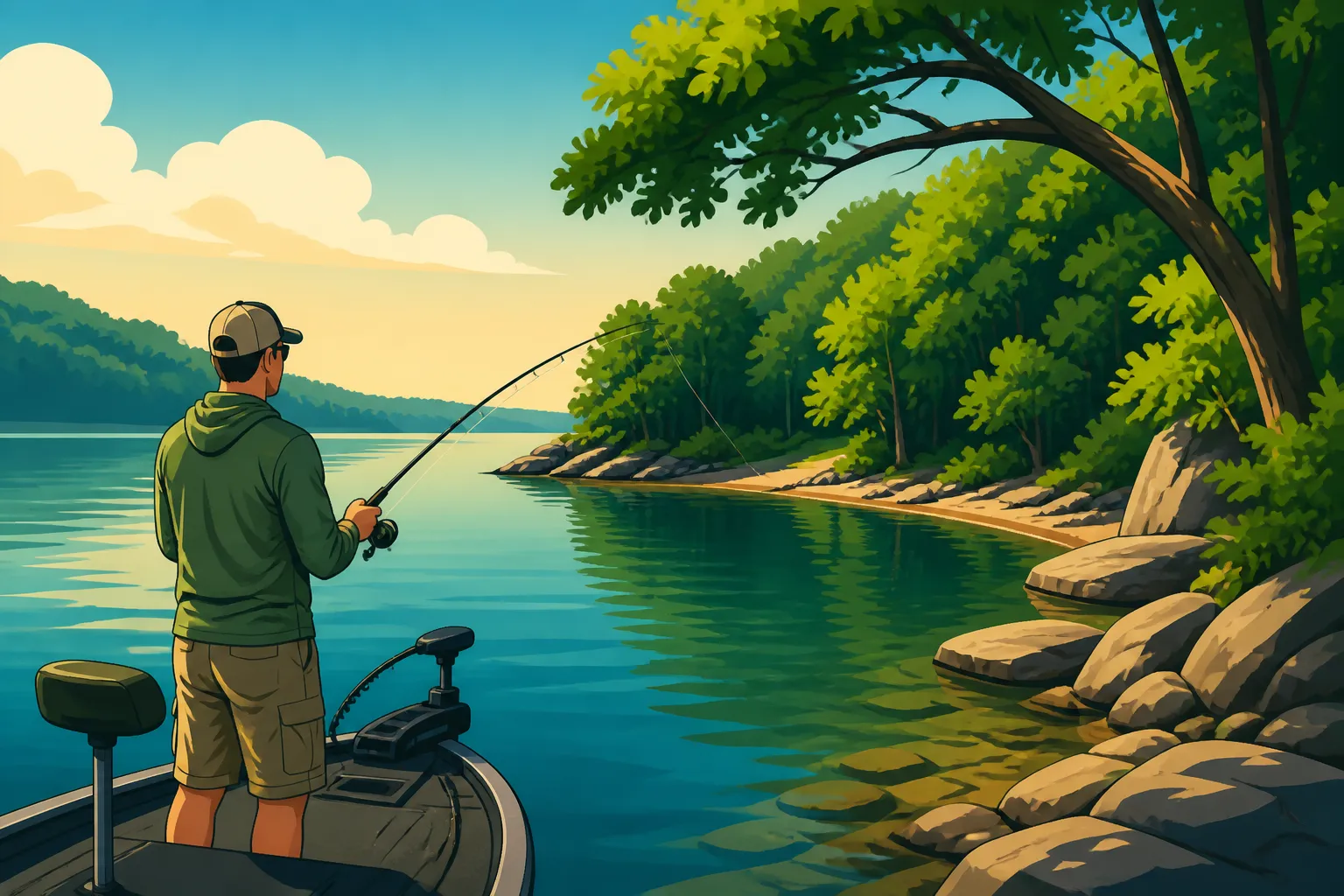
- Approach Quietly: If you're using a boat, approach your chosen cove slowly, using your trolling motor on a low setting or even paddling the last hundred yards. Anchor gently, or use a shallow-water anchor system if you have one. If bank fishing, move slowly and minimize vibrations.
- Cast with Care: Avoid splashing your lure loudly on the water. Aim for soft, accurate casts that land gently near cover. Consider skipping lures under overhanging branches or docks if present, as these areas often hold wary fish.
- Focus on Natural Movements: Remember, these fish haven't seen a parade of lures. Your presentation should mimic natural prey. Slowly retrieve soft plastics, twitch a jerkbait with pauses, or let a jig fall naturally. Overly aggressive or erratic retrieves might look unnatural and spook them.
- Consider Light Line: While not always necessary, using a slightly lighter fluorocarbon or monofilament line can increase your bite ratio, especially if the water is clear and the fish are particularly finicky.
These methods are particularly effective when targeting species like largemouth bass. For more tips on their behavior, you might find our article on Spring Bass Fishing Patterns helpful, as fish in remote coves often follow similar, less-pressured patterns.
Bait and Lure Selection for Hidden Gems
The beauty of fishing remote coves is that sometimes the simplest baits outperform the most advanced lures. Because these fish aren't constantly seeing every new innovation, they often respond well to traditional, natural presentations.
- Soft Plastics: Wacky-rigged Senkos, weightless flukes, and creature baits are excellent choices. Their subtle action and natural fall are irresistible to bass hiding in cover. Texas-rigged worms can be fantastic for working through submerged timber without snagging.
- Spinnerbaits and Buzzbaits: These can be great for covering water quickly and drawing reaction strikes, especially around the edges of weed lines or fallen trees. In stained water, the vibration and flash can really get their attention.
- Jigs: Flipping jigs into heavy cover is a classic technique for a reason. Pair them with a craw trailer for added bulk and action. Again, a softer landing is often more effective than a heavy splash.
- Live Bait: For crappie, bluegill, or even catfish, minnows, crickets, or worms under a slip bobber are often unbeatable. The natural scent and movement of live bait can be a game-changer in a quiet cove where fish might be more focused on natural foraging.
| Fish Species Targeted | Preferred Lure/Bait Type | Retrieval/Presentation Style | Ideal Cove Structure |
|---|---|---|---|
| Largemouth Bass | Wacky Worms, Jigs, Spinnerbaits | Slow, subtle twitches; flipping/pitching | Submerged timber, lily pads |
| Crappie | Small Jigs, Minnows | Vertical jigging; slow retrieve under bobber | Brush piles, fallen trees |
| Catfish | Cut Bait, Worms, Stink Bait | Bottom fishing; near structure | Deep holes, creek channels |
| Bluegill/Panfish | Crickets, Worms, Tiny Jigs | Under a bobber; slow retrieve | Weed lines, shallow brush |
For those looking to target specific species, like catfish, exploring remote coves can be highly productive. Our article on Carlyle Lake's Best Catfish Spots Along the Dam might focus on a more popular area, but applying similar bait and rig principles to secluded, deeper pockets can yield great results.
Navigating Carlyle Lake's Backwaters and Remote Areas
Venturing into the less-traveled parts of Carlyle Lake is incredibly rewarding, but it also comes with its own set of practical considerations. You'll need to think about how you'll get there, what essential gear to bring, and how to stay safe in areas where help might be farther away.
Getting There: Your Vessel of Choice
The type of boat you use will largely dictate which remote coves are accessible to you.
- Kayaks and Canoes: These are arguably the ultimate stealth machines for remote coves. They can navigate extremely shallow water, slip quietly into tight spaces, and are easy to launch from almost anywhere. They require physical effort, but the payoff in peace and quiet is immense. For specific models, check out our guide to Best Kayak Models for Illinois Fishing.
- Small Jon Boats or Aluminum Skiffs: These flat-bottomed boats with small outboards or powerful trolling motors are excellent for navigating shallow river arms and winding into coves. They offer more storage and stability than kayaks but might still struggle with very shallow stretches.
- Larger Bass Boats or Pontoons: While great for the main lake, these larger vessels are generally less suitable for truly remote, shallow coves. Their drafts are often too deep, and maneuvering them in tight spaces can be difficult and risky. If you have a larger boat, consider parking it near the entrance to a series of coves and then deploying a smaller auxiliary craft (like a kayak or inflatable boat) to explore deeper.
When planning your trip, consider the water levels. During periods of lower water, many areas that were previously accessible might become too shallow, stranding boats or making navigation impossible. Always check current lake conditions before heading out.
Essential Gear and Preparedness for Remote Trips
Since you'll be away from crowded areas, self-sufficiency and safety become even more critical.
- Navigation Tools: A good GPS unit (even a reliable app on your phone) with detailed lake maps is invaluable. Mark your starting point and potential hazards. It's easy to get disoriented in winding coves, especially as daylight fades.
- Safety Gear: Don't skimp here. Always wear a properly fitted life jacket, and ensure you have all the required Illinois Life Jacket and PFD Rules safety equipment, including a whistle or horn, and a throwable PFD. Carry a first-aid kit, extra water, snacks, and a fully charged cell phone (though service might be spotty in some remote areas).
- Communication: Let someone know your float plan – where you're going and when you expect to return. This is crucial in case of an emergency.
- Emergency Repair Kit: Basic tools, duct tape, and a small repair kit for your motor or paddle can save a trip.
- Weather Awareness: Check the forecast thoroughly before you go. Remote coves offer little shelter during sudden thunderstorms or high winds. Knowing the Illinois Boater Education Card Requirements can also help ensure you're prepared for any situation on the water.
Sometimes, the best way to explore truly remote areas is with someone who knows the lake intimately. This is where resources like FishingBooker can be incredibly valuable. You can find local guides who specialize in quieter, off-the-beaten-path fishing trips on Carlyle Lake, giving you access to their expertise and knowledge of those secret spots without having to invest in all the specialized gear yourself initially. They can guide you directly to productive coves and ensure a safe, enjoyable experience. Planning a trip with a guide can take the guesswork out of finding "Illinois's Best Big Three Catfish Lakes" or the most secluded bass holes.
Venturing into Carlyle Lake's remote coves is an experience every angler should try. It's an opportunity to connect with nature, test your skills against less-pressured fish, and find that elusive peace and quiet we all crave on the water.
Disclaimer
Please be aware that fishing regulations, water levels, and accessibility can change. Always consult the latest Illinois Department of Natural Resources (IDNR) fishing regulations before your trip. Exercise caution and prioritize safety when exploring remote areas.