Planer Board Setup for Trout and Salmon Trolling
One of the biggest headaches when you're out on the vast expanse of Lake Michigan, especially when you’re chasing those elusive trout and salmon, is covering enough water. Fish don't just sit in one neat little spot, and if you're only dragging lines directly behind your boat, you're missing out on huge swaths of potential hot zones. This guide is all about mastering planer board setups, a game-changer for any angler serious about effectively spreading out their lures and dramatically increasing their chances of a successful day on the water.
What Are Planer Boards and Why Use Them for Trout and Salmon?
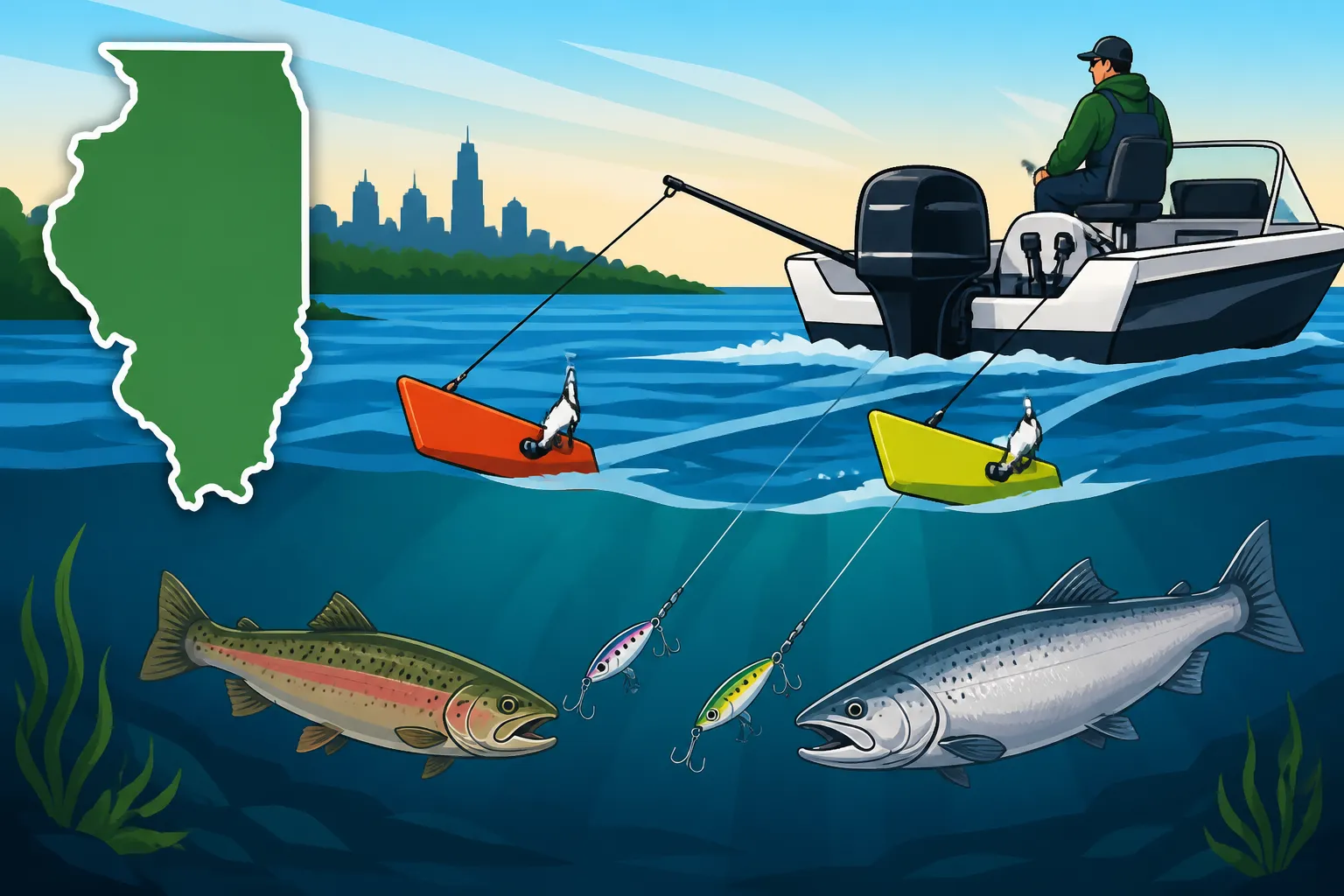
So, what exactly are planer boards? In simple terms, they're like little kites or wings designed to pull your fishing lines away from the direct path of your boat. Imagine trying to fly multiple fishing lines far out to the sides without them getting tangled in your prop wash or in each other – impossible, right? Planer boards make it not only possible but incredibly effective. They create a wide trolling spread, allowing you to present a multitude of lures at varying depths and distances from your boat, mimicking a scattered school of baitfish or covering a broader feeding lane.
Expanding Your Trolling Spread for Maximum Coverage
The primary benefit of planer boards, especially when targeting fish like salmon and trout in the sprawling waters of Lake Michigan, is the sheer expansion of your trolling spread. Picture this: your boat creates a disturbance, a "boat shy" zone directly behind it. Fish, especially wily older ones, often shy away from the boat itself. By deploying lines out to the sides, you're presenting lures in undisturbed water, far from the engine noise and shadow of your vessel. This can make a significant difference in getting bites from cautious fish.
Think about it this way: without planer boards, you might have two or three lines running directly behind you. With them, you can easily run six, eight, or even ten lines, each fishing a unique zone. This dramatically increases your odds, as you're covering more ground and experimenting with different depths and lure presentations simultaneously. It's like turning your single fishing rod into a multi-line attack system, drastically improving your efficiency.
Presenting Lures Naturally and Avoiding Prop Wash
Another huge advantage is how naturally your lures are presented. When lines are pulled directly behind the boat, they can get caught in the prop wash, which is the turbulent water churned up by your propeller. This not only makes your lures act unnaturally but can also deter fish. Planer boards pull your lines outside of this disturbed water, allowing your spoons, stickbaits, or flies to run true and enticingly, just like real baitfish swimming through calm water.
This natural presentation is key for species like coho salmon and lake trout, which can be finicky eaters. When your lure is swimming smoothly and consistently, it's far more appealing. The ability to vary distances and depths across this wider spread also lets you quickly identify patterns – perhaps the fish are biting only on the outside lines, or maybe they prefer a lure running 50 feet off the starboard side. This adaptability is invaluable on a big lake like Michigan. For more on what to chase, check out Trout and Salmon Fishing in Illinois: The Complete Guide.
Types of Planer Boards for Lake Michigan Trolling
When it comes to planer boards, you've generally got two main camps: in-line boards and mast-and-big-board systems. Each has its own strengths and weaknesses, and understanding these will help you decide which setup is best for your particular style of fishing and the conditions you often face on Lake Michigan.
In-Line Planer Boards: Simplicity and Flexibility
In-line planer boards are probably what most anglers picture first. These are individual boards, usually made of plastic or foam, that attach directly to your fishing line. They have a clip at the front that grips your line and a release at the back (or sometimes another clip) that allows the board to detach or slide down to your lure once a fish strikes.
Their biggest advantage is their simplicity and the fact that you can run multiple boards off each side of your boat without needing a specialized mast system. You simply clip them on, deploy your lure, and let out line. When a fish hits, the board either pops off or slides down the line, allowing you to fight the fish directly. They're excellent for smaller boats or for anglers who don't want to invest in a full mast system. You can easily adjust your spread by clipping and unclipping boards as needed. Many anglers find these perfect for targeting actively feeding fish higher in the water column or when trolling in shallower areas. Bass Pro Shops and other sporting goods retailers typically carry a wide array of options for in-line boards.
Mast and Big Board Systems: Heavy Duty Coverage
For those who fish Lake Michigan regularly, especially if you're targeting large numbers of fish or need to run a truly massive spread, a mast and big board system is often the preferred choice. This setup involves a mast mounted to the bow or cabin of your boat, from which two heavy-duty lines (one for each side) extend out to large, rigid planer boards, often called "big boards." Your fishing lines are then attached to these main planer board lines using special release clips.
The advantage here is immense pulling power and stability. Big boards can pull multiple lines (sometimes 8-10 per side!) much farther out and handle rougher water conditions without diving or losing their spread. When a fish hits, your fishing line simply releases from the main planer line, and you fight the fish directly. The big board itself remains out, continuing to pull the other lines. This system is more complex to set up initially, requiring the mast, reels, and the big boards themselves, but once it's dialed in, it offers unparalleled control and coverage. If you're serious about your Lake Michigan Salmon Trolling Setup, you'll likely consider this robust option.
| Feature | In-Line Planer Boards | Mast & Big Board Systems |
|---|---|---|
| Setup | Attaches directly to individual fishing lines | Requires a mast on boat; fishing lines clip to main lines |
| Portability | Very portable, easy to store | Less portable, requires dedicated boat setup |
| Cost | Generally lower initial cost | Higher initial cost for mast, reels, and big boards |
| Line Capacity | Typically 1-3 lines per side (individual boards) | Can run 5-10+ lines per side (heavy duty) |
| Fish Strike | Board detaches or slides down to lure | Fishing line releases from main line; board stays out |
| Rough Water | Can be affected by chop, may dive | Very stable, handles rough water well |
| Boat Size | Ideal for smaller boats or limited space | Best for larger boats with dedicated space |
| Target Species | Versatile for various species, light tackle | Excellent for aggressive trout/salmon, heavy tackle |
Setting Up Your Planer Board System
Getting your planer board system dialed in might seem a bit daunting at first, but with a little patience and practice, you'll be a pro in no time. The key is understanding the sequence and ensuring all your components are working together harmoniously.
Essential Components: Boards, Releases, and Rods
Before you even think about putting lines in the water, you need to make sure you have the right gear. For either in-line or big board systems, you'll need the boards themselves, of course. For in-line boards, choose models known for their buoyancy and tracking. For big boards, ensure your mast is securely mounted and the main lines are spooled onto heavy-duty reels designed for planer board use.
Next up are your line releases. These are absolutely crucial. For in-line boards, you'll have a front clip that attaches to your main line and often a rear pin or clip that helps hold the board in place until a fish strikes. For big board systems, you'll need a good supply of sturdy, adjustable releases that clip onto your main planer board lines. These releases need to be strong enough to hold your lure at trolling speed but sensitive enough to release when a fish bites. Brands like Offshore Tackle or Church Tackle are very popular for their releases, and you can often find replacement clips and accessories on Amazon or at your local Bass Pro Shops.
Finally, your rods and reels. While you don't necessarily need specialized planer board rods, longer, medium-heavy action trolling rods are often preferred. They help keep your lines spread out and provide enough backbone to handle a good-sized king salmon or lake trout. Match them with robust trolling reels spooled with strong monofilament or braided line. For more on appropriate tackle, you might want to look into Best Trolling Rods for Lake Michigan Salmon.
Step-by-Step Deployment for In-Line Boards
Let's walk through deploying an in-line planer board, which is a common setup for many Illinois anglers.
- Prepare Your Lure: First, get your lure or bait ready. This could be a spoon, a dodger and fly combo, or a stickbait. Decide how much line you want between your lure and where the planer board will attach.
- Attach the Front Clip: Take your in-line planer board and attach the front clip to your main fishing line. Make sure it's securely fastened but not crimping your line.
- Deploy the Lure and Board: Let out enough line so your lure is running at its desired depth and distance from the boat. Once that's set, gently toss the planer board into the water on the side you want it to run. The board will begin to pull your line away from the boat.
- Engage the Rear Release (if applicable): For some in-line boards, you'll then let out a bit more line, and once the board has pulled out to your desired distance, you'll attach the rear release clip (or a pin) to your line. This second attachment point helps the board track straight and prevents it from sliding down the line prematurely.
- Set Your Rod: Place your rod in a sturdy rod holder, pointing somewhat towards the direction the board is traveling. Repeat this process for each additional board you want to deploy, staggering their distances behind the boat to avoid tangles. Remember to vary your lure depths if you're trying to figure out where the fish are holding, especially during different Lake Michigan Salmon Season Timing in Illinois.
Managing a Big Board System
Setting up a big board system involves a slightly different approach:
- Deploy the Big Boards: First, you'll deploy your big boards. These are attached to the main lines coming from your mast reels. You'll let them out until they are running at your desired distance from the boat, usually 50-100 feet or more.
- Attach Fishing Lines to Main Line: Once the big boards are tracking, you'll start attaching your individual fishing lines to the main planer board line using your specialized release clips. Again, first, get your lure running at its intended depth and distance behind the boat.
- Clip and Send: Take a release clip, attach your fishing line to it, and then clip it onto the main planer board line. Gently "send" the clip down the main line. As you let out more fishing line, the clip will slide further down the main planer board line, pulling your lure further out to the side. You'll often space these clips out along the main line to prevent tangles.
- Stagger Your Spread: With a big board system, you'll typically run several lines off each side. It's crucial to stagger the distance of each lure behind the boat and its depth to cover the water column thoroughly. For example, your outermost line might be a spoon running deep, while an inside line could be a dodger and fly combo running shallower. This systematic approach is key to understanding When to Chase Salmon vs Trout on Illinois's Lake Michigan Shore.
Tips and Tricks for Effective Planer Board Trolling
Once you've got your planer boards deployed, the real art of trolling for trout and salmon begins. It's not just about getting lines out; it's about making them work for you. There are always little adjustments and techniques that can make a huge difference in your success.
Trolling Speed and Direction Adjustments
Your trolling speed is paramount. For salmon and trout on Lake Michigan, a common speed range is typically between 2.0 and 3.5 miles per hour, but this can vary greatly depending on water temperature, lure type, and fish activity. Pay close attention to how your lures are performing at different speeds. Are your spoons flashing correctly? Are your stickbaits wobbling enticingly? Speed changes can often trigger bites, so don't be afraid to experiment. Use your boat's GPS and speedometer to maintain consistent speeds once you find a productive one.
Turns are also your secret weapon. Instead of just trolling in a straight line, make gradual, sweeping turns. As your boat turns, the lures on the inside of the turn will slow down and drop, while the lures on the outside will speed up and rise. This change in speed and depth can often be the exact trigger that a finicky fish needs to strike. Many experienced anglers will purposefully weave back and forth across a promising area, creating these speed changes and presenting their lures in a more erratic, attractive manner. For an overview of general regulations, see Illinois Fishing Regulations Overview.
Reading Your Boards and Detecting Strikes
One of the most satisfying parts of planer board fishing is watching your boards for action. A healthy, properly deployed planer board will usually be running smoothly and steadily, indicating that your lure is doing its job.
When a fish strikes an in-line board, you'll usually see the board suddenly stop, dive, or often, the rear release will trip, and the board will slide down your line toward the fish. With big boards, you'll see a specific release clip pop off the main line, indicating that a fish has hit. It’s important to react quickly, especially with in-line boards, to avoid tangles with other lines. Don't be too aggressive on the hookset if the board hasn't fully detached or slid down, as you might pull the hook. Let the fish load the rod, then reel steadily. Sometimes, a "stealth strike" happens where a smaller fish might just be riding the lure, so always be alert for even subtle changes in board behavior.
Dealing with Tangles and Snags
Let's be realistic: when you have multiple lines out, tangles are going to happen. It's an inevitable part of planer board fishing, especially in choppy water or during aggressive turns. The key is to manage them efficiently. If you see a tangle starting, don't panic. Slow down your boat. Identify which lines are involved. Often, the easiest approach is to reel in the outermost tangled line first, then work your way in.
Snags can also occur, especially if you're running lures close to the bottom. If a board stops abruptly and doesn't seem to be a fish, it might be a snag. Again, slow down, try to back up slightly to free the lure, or use a "line retriever" tool if it's a deep snag on your main planer line. Being organized with your tackle box and having spare parts for your releases, often picked up from Amazon or Bass Pro Shops, will make these minor frustrations easier to handle. Knowing how to efficiently re-rig and get back into the game is part of the learning curve for Downriggers and Planer Boards for Lake Michigan.
Advanced Planer Board Strategies
Once you're comfortable with the basics, you can start exploring more advanced techniques that can really refine your planer board game on Lake Michigan. These strategies focus on fine-tuning your presentation and adapting to changing conditions to maximize your catch rate for those prized salmon and trout.
Varying Depths and Lure Choices Across the Spread
The beauty of a wide planer board spread is the ability to present a diverse array of lure choices and depths simultaneously. Instead of having all your eggs in one basket, you can experiment. For instance, on your outermost lines, you might run deep-diving crankbaits or heavy spoons to target fish holding deeper. As you move closer to the boat, you might transition to lighter spoons, dodgers, or even flies, which ride higher in the water column.
Consider the time of year and water temperature. In early spring, trout and salmon often feed closer to the surface in warmer thermal pockets. During mid-summer, they might be deeper, seeking cooler, oxygenated water. By strategically deploying lures at different depths across your planer board spread – perhaps using lead core line, copper line, or even small diving planes on some lines – you can effectively "grid" the water column. This helps you quickly pinpoint where the fish are active. For tips on specific fish movements, delve into Best Months for Lake Michigan Trout Fishing in Illinois.
Understanding Water Conditions and Adjusting Your Setup
Lake Michigan is a dynamic environment, and conditions can change rapidly. Wind, waves, current, and even light penetration all affect how fish behave and how your planer boards perform. On windy days with chop, in-line boards might struggle to track straight or might dive too much. This is where big boards truly shine, offering superior stability.
Adjusting your spread based on these conditions is crucial. If the sun is high and bright, fish might be deeper and shyer, necessitating a wider spread and more subtle lure presentations. On overcast days or during low light periods like dawn and dusk, fish might move shallower, and a tighter, shallower spread could be more effective. Pay attention to your fish finder for baitfish schools and temperature breaks, and use your planer boards to put your lures right in front of those targets. Learning about Cold Water Trolling Gear for Illinois's Lake Michigan Shore can help you adapt to colder conditions.
Utilizing Technology: GPS and Sonar Integration
Modern fishing electronics are invaluable tools for planer board anglers. Your GPS isn't just for navigation; it's essential for maintaining precise trolling speeds and logging successful fishing paths. When you hit a hot zone, mark it on your GPS. You can then use your planer board setup to re-trace that productive path, perhaps making slight adjustments to your turns or speed based on past success.
Sonar (fish finders) helps you identify bait balls, thermoclines, and individual fish holding at certain depths. Combine this information with your planer board strategy. If you see a strong thermocline at 30 feet, you'll want to ensure several of your planer board lines are presenting lures effectively at or just above that depth. Some advanced fish finders even have side-imaging capabilities that can help you see your planer boards and lures off to the side, giving you real-time feedback on your spread and lure depth. This level of detail empowers you to make informed decisions about your lure placement and increases your overall efficiency on the water.
Conclusion
Mastering a planer board setup for trout and salmon trolling on Lake Michigan is a journey, not a destination. It takes practice, patience, and a willingness to adapt to the ever-changing conditions of this magnificent fishery. Whether you opt for the simplicity of in-line boards or the robust power of a mast-and-big-board system, the ability to spread your lines wide, present your lures naturally, and cover more water will undoubtedly elevate your fishing game. So, gear up, hit the big lake, and get ready to experience the thrill of multiple rods bending from fish that never even saw your boat coming!
Disclaimer
This article is for general informational purposes only and does not constitute professional advice. Laws, prices and regulations vary by location and change over time. Consult a qualified professional for guidance on your specific situation.