Illinois Walleye Fishing: The Complete Guide
There's nothing quite like the thrill of chasing walleye, a fish known for its elusive nature and delectable white fillets. For many anglers in Illinois, the pursuit of walleye can sometimes feel like a wild goose chase, especially with varying regulations and ever-changing water conditions. This comprehensive guide is here to cut through the confusion, offering you an in-depth look at everything you need to know to successfully target and catch walleye across Illinois' diverse waters, from identifying your quarry to mastering advanced techniques.
Understanding Walleye in Illinois
Walleye are one of Illinois' most prized game fish, known for their sharp teeth, golden-flecked scales, and the glassy, light-sensitive eyes that give them their name. They're a favorite among anglers not just for the challenge they present, but also for their reputation as one of the best-eating freshwater fish. But before you can catch them, you need to understand them.
Identifying Walleye: Walleye vs. Sauger vs. Saugeye
One of the first hurdles new walleye anglers face is telling them apart from their cousins, the sauger and the saugeye. It's not always easy, especially when you're excited about a potential catch! Understanding the subtle differences is key, not just for identification but also because regulations can vary slightly between these species in some waters.
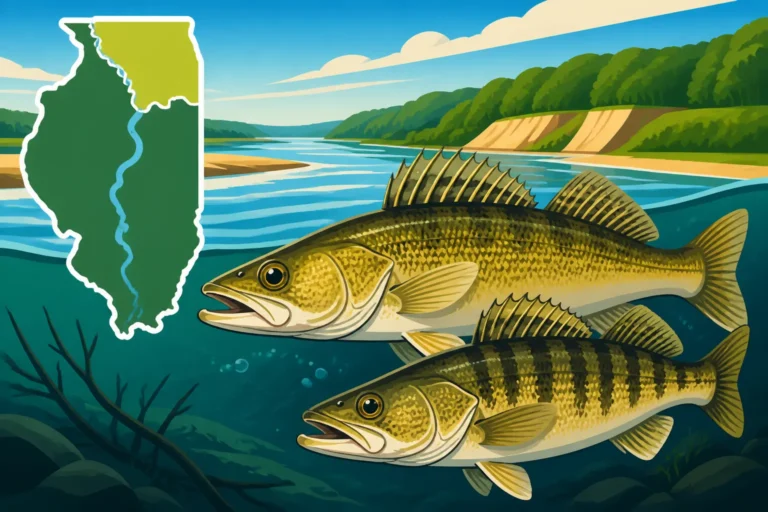
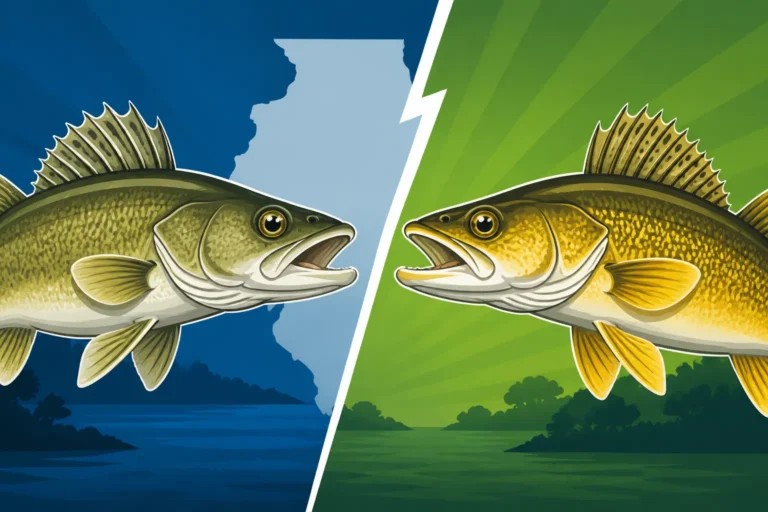
Walleye typically have a large, opaque spot on the lower lobe of their caudal (tail) fin, and their dorsal fin will be mostly clear, perhaps with some faint streaking, but no distinct spots. Their body usually has a more olive-green or golden hue. Sauger, on the other hand, lack the distinct tail spot and will have very obvious, dark spots on their dorsal fin. They tend to be a bit slimmer and often have a more mottled, brassy coloration. Now, the saugeye is where it gets tricky – it's a hybrid of the walleye and sauger, and it can exhibit characteristics of both. Generally, a saugeye might have a less pronounced tail spot than a walleye, and some faint spotting on the dorsal fin, but not as distinct as a pure sauger. It's like the best of both worlds, but visually, it's often a blend. Familiarizing yourself with these details before you hit the water can save a lot of head-scratching. We have a detailed guide on Illinois Walleye vs Sauger vs Saugeye: Key Differences if you want to dive even deeper into identification.
Where Walleye Live: Preferred Habitats
Walleye are masters of camouflage and prefer certain types of underwater structures. They aren't just swimming around aimlessly; they're almost always seeking cover, ambush points, or areas with specific conditions. Knowing these preferences is crucial for locating them.
Generally, walleye love clear to moderately stained water, but they'll avoid overly muddy conditions. They are light-sensitive, which is why you'll often find them deeper during the day, or in areas with heavy cover like submerged timber, rock piles, or weed beds. They're drawn to drop-offs, humps, points, and channel edges where they can easily ambush baitfish moving between deep and shallow water. In rivers, they'll congregate in current breaks, eddies, and behind wing dams, using the slower water to conserve energy while waiting for prey. Large, rocky main lake points and humps that extend into deeper water are often prime real estate for walleye, providing both structure and access to deeper, cooler water.
Walleye Behavior Through the Seasons
Just like us, walleye change their habits and preferences as the seasons shift. What works in spring won't necessarily work in summer, and that can be a real headache if you're not prepared! Understanding these seasonal patterns is like having a secret roadmap to where the fish are and what they're doing.
In spring, as water temperatures rise, walleye move into shallower areas to spawn. This is a crucial time when they become more accessible. They'll often spawn over gravel, rubble, or rock bottoms in rivers or along shallow lake points. After the spawn, they'll move to slightly deeper, but still relatively shallow, feeding areas. Summer sees them retreat to deeper, cooler waters, often suspending over open water or relating to deeper structures like thermoclines and main lake humps. This is when night fishing can become incredibly effective as they move shallow to feed under the cover of darkness. As fall approaches, water temperatures drop, and walleye go on a major feeding binge, bulking up for winter. They'll often be found in medium depths, relating to classic structures like points and humps. Finally, in winter, they slow down, moving to deeper basins or remaining active under the ice, often near bottom structure. Knowing this general calendar for Best Time of Year to Catch Walleye can dramatically increase your success.
Prime Walleye Fishing Spots in Illinois
Illinois might not have a coastline, but it boasts an incredible array of lakes and rivers that offer fantastic walleye fishing opportunities. The key is knowing where to go. Sometimes it feels like you could spend forever just driving around, looking for the right spot!
Top Walleye Lakes and Reservoirs
When people think of walleye fishing in Illinois, certain lakes immediately spring to mind. These larger reservoirs provide the habitat and forage base needed for healthy walleye populations. You'll find a mix of natural reproduction and active stocking programs keeping these fisheries robust.
One of the state's undisputed walleye powerhouses is Lake Shelbyville. This expansive lake in central Illinois is renowned for its excellent walleye fishing. Anglers often target main lake points, submerged humps, and the dam area, especially during transitional periods. Trolling crankbaits over open water humps or jigging spoons around deep timber are common tactics. Carlyle Lake, Illinois' largest man-made lake, also offers significant walleye potential. While it can be a bit more challenging due to its size and often murkier water, the river channels, riprap along the dam, and submerged roadbeds can hold impressive numbers of fish. Rend Lake in southern Illinois, while famous for its crappie and bass, also has a respectable walleye fishery, particularly in areas with riprap and deeper creek channels. These big lakes offer vast opportunities but can also feel overwhelming for beginners. Focus on areas with distinct structure changes or current.
River Walleye Hotspots
Rivers present a different, yet equally exciting, challenge for walleye anglers. The constant flow creates unique habitats that walleye absolutely love. It takes a different approach than lake fishing, but the rewards can be substantial.
The Mississippi River, forming Illinois' western border, is a prime riverine walleye destination. Walleye here often relate to wing dams, current breaks, and deep holes, especially below locks and dams where fish congregate. The northern stretches of the Mississippi are particularly productive, offering both walleye and sauger. The Illinois River also holds a strong walleye population, particularly in its middle and upper sections. Anglers often target deeper holes, feeder creek mouths, and riprap banks. The Kankakee River, another fantastic smallmouth fishery, also offers surprisingly good walleye fishing in its deeper pools and rocky areas, particularly during cooler months. River fishing often means dealing with currents, so heavy jigs and robust lines are essential. Remember that Illinois Walleye Fishing Season on the Mississippi River can vary slightly from lake rules, so always double-check.
Illinois Walleye Stocking Program
Many of Illinois' walleye fisheries are sustained, and even enhanced, by the Illinois Department of Natural Resources (IDNR) stocking program. This is great news for anglers because it means a consistent supply of fish! It takes some of the guesswork out of finding naturally reproducing populations.
The IDNR actively stocks millions of walleye fingerlings and fry into various lakes and rivers across the state each year. These stockings are vital for maintaining healthy populations, especially in waters where natural reproduction is limited. Knowing which lakes are regularly stocked can give you a significant advantage, as these waters often boast higher catch rates and a good population of keeper-sized fish. Lakes like Lake Shelbyville, Carlyle Lake, Clinton Lake, and even some smaller impoundments benefit greatly from these efforts. You can often find information on specific stocking numbers and locations through the IDNR's annual reports, which can really help you plan your trips to waters that are regularly replenished. We dive into more detail in our article, Illinois Walleye Stocked Lakes: Where IDNR Puts Fish Each Year, which outlines many of these fantastic spots.
Essential Walleye Gear and Tackle
You wouldn't go hiking without the right boots, and you shouldn't go walleye fishing without the right gear. Trying to catch a notoriously finicky fish like a walleye with subpar or ill-suited equipment can lead to a lot of frustration and empty livewells. Having the right tools for the job makes all the difference, especially when a subtle bite is the only indication you have.
Rods, Reels, and Line for Walleye
Matching your rod, reel, and line to your target species and fishing style is critical for walleye. It impacts everything from casting distance to bite detection.
For most walleye applications, a medium-light to medium power spinning rod, typically 6'6" to 7'6" in length, is a versatile choice. This allows for sensitive bite detection, especially when jigging or casting lighter lures, while still having enough backbone to handle a decent-sized walleye. Fast or extra-fast action rods are preferred as they transmit subtle bites better and provide quick hook sets. Pair this with a reliable spinning reel in the 2000-3000 size range. Look for smooth drag, as walleye can make strong runs, particularly when they get close to the boat. For line, 6-10 pound test monofilament or fluorocarbon is common. Monofilament offers a bit more stretch, which can be forgiving, while fluorocarbon has less stretch, better abrasion resistance, and is nearly invisible underwater, making it great for clear waters. Many anglers also opt for a braided main line (10-20 lb) for its sensitivity and strength, often adding a 6-10 foot fluorocarbon leader for stealth. You can find some excellent rod and reel combos specifically designed for walleye fishing on Amazon, offering good value and performance.
Lures and Baits That Walleye Can't Resist
Walleye can be picky eaters, but there's a broad arsenal of lures and baits that consistently fool them. It's about having options and knowing when to use them. Don't be afraid to experiment!
Jigs are arguably the most versatile walleye lure. From simple lead head jigs tipped with live bait (minnows, nightcrawlers) to soft plastic paddle tails, grubs, and finesse plastics, jigs can be worked effectively in almost any depth. Colors like chartreuse, white, orange, and natural baitfish patterns are always good starting points. Crankbaits are another walleye staple, especially for trolling or casting in shallower areas. Divers that mimic shad or minnows are incredibly effective, and having a variety of diving depths is key. Popular styles include lipped crankbaits, jerkbaits, and even some lipless crankbaits for vertical jigging. Live bait, of course, is often unbeatable. Fathead minnows, shiners, leeches, and nightcrawlers presented on a simple hook, a slip bobber, or a bottom-bouncing rig are tried-and-true methods. Experiment with different presentations until you find what the walleye are keying in on that day.
Essential Walleye Tackle Box Items
Beyond the main lures and baits, a well-stocked tackle box makes your time on the water more efficient and productive. There's nothing worse than needing a specific tool and realizing you left it at home.
Your tackle box should include a variety of jig heads in different weights (1/8 oz to 1 oz) and colors. Swivels, both barrel and snap swivels, are crucial for preventing line twist and quickly changing lures. A selection of hooks, including Aberdeen hooks for live bait and robust treble hooks for replacing crankbait hooks, is also vital. Sinkers of various sizes, from split shot to slip sinkers for Lindy rigging, are a must. Don't forget pliers for hook removal and cutting line, a quality line cutter, a ruler or measuring tape to check legal lengths, and a small first-aid kit. A headlamp for early morning or night fishing is also invaluable, as walleye are often most active during low-light conditions. Keeping your tackle organized means less fumbling and more fishing, which is always a good thing.
Walleye Fishing Techniques for Every Season
Walleye fishing is a dynamic sport, constantly adapting to the season, water temperature, and fish behavior. What catches fish one month might not get a single bite the next. Learning to adjust your techniques seasonally is one of the most important skills an Illinois walleye angler can develop.
Spring Walleye Techniques: Pre-Spawn and Spawn
Spring is a time of anticipation for walleye anglers, as the fish become more active and move into shallower water for their annual spawning ritual. This period, roughly from late March through April or early May depending on water temperatures, offers some of the best opportunities to target larger fish.
Before the spawn fully kicks in, walleye are gorging themselves to build up energy. They’ll often be found in transitional areas, moving between deeper wintering holes and shallower spawning grounds. Casting crankbaits or jerkbaits along shallow rocky points, riprap banks, or across flats adjacent to deeper water can be incredibly effective. As the water temperature creeps into the 40s and low 50s, the fish will move onto their actual spawning sites – typically gravel, rock, or hard-bottom areas in rivers or along shallow lake shorelines. During the spawn itself, which often happens at night, fishing can be tough due to their focus on reproduction. Post-spawn, however, the fish are often hungry but can be scattered as they recover. Focus on areas where they can quickly access both food and deeper water for recovery. A simple jig tipped with a minnow or a slow-trolled minnow can be very productive as they regain their appetite.
Summer Walleye Techniques: Deep Water and Night Fishing
Summer brings warmer water, and with it, walleye retreat to their preferred cooler, deeper environments. This can be a frustrating time for anglers who stick to shallow water tactics, as the fish seem to vanish! But they haven't disappeared; they've just moved.
During the daytime, look for walleye in deeper lake basins, along the thermocline (the layer of water where temperature changes rapidly), or relating to deep structures like submerged humps, channel edges, and drop-offs. Trolling crankbaits or spinner rigs with nightcrawlers or leeches in these deeper zones is a common and highly effective strategy. Downriggers or lead-core line can help present baits at precise depths. Vertical jigging with heavy spoons or blade baits directly over deep structure can also produce bites. As the sun sets, however, walleye often move much shallower to feed under the cover of darkness. Night fishing can be incredibly rewarding, casting shallow-running stickbaits or even slip-bobbering live bait along weed lines, rocky points, or shallow flats where they hunt baitfish. Always carry your Illinois Boating Safety Equipment Checklist if you plan to be out after dark.
Fall Walleye Techniques: Feeding Frenzy
Fall is a favorite season for many walleye anglers, and for good reason. As water temperatures begin to drop, walleye go into a pre-winter feeding frenzy, trying to pack on as much weight as possible before the cold sets in. This often means aggressive bites and active fish.
During early fall, walleye might still be in summer patterns, but as the water cools, they'll start to spread out, chasing schools of baitfish. Look for them around main lake points, steep drop-offs, and deep weed lines. Trolling deep-diving crankbaits or using bottom-bouncer rigs with crawler harnesses can be very effective as you cover water to find actively feeding schools. As the season progresses and waters cool further, walleye will often move into classic fall river current breaks, eddies, and deeper holes. In lakes, they might congregate on the edges of deep main lake structure or suspended over baitfish schools in open water. This is also a fantastic time for Walleye Jigging Techniques, using vertical jigs, blade baits, or heavy jigging spoons over structure or bait concentrations.
Winter Walleye Techniques: Ice Fishing and Cold Water
When winter truly sets in, and the lakes freeze over, many anglers pack it in. But for dedicated walleye enthusiasts, ice fishing offers a unique and often productive way to catch these elusive fish. Even open water opportunities exist in some river systems.
For ice fishing, safety is paramount. Always check ice thickness and conditions before venturing out. Walleye under the ice tend to gravitate towards deeper water basins, prominent points, or subtle humps. They're often found near the bottom but can suspend if baitfish are present. Jigging spoons, blade baits, and small soft plastics tipped with a minnow head are popular choices. Don't be afraid to drill multiple holes and move around until you find actively feeding fish. Setting up a dead stick with a live minnow under a bobber in a separate hole nearby can also be a highly effective strategy. In rivers that remain open, particularly below dams, walleye will hold in deep current breaks and holes. Vertical jigging with heavy jigs or spoons, or slowly dragging live bait rigs, can coax bites from these cold-water fish.
Illinois Walleye Regulations and Limits
Knowing the rules is just as important as knowing how to fish. Ignorance of the law is never an excuse, and fishing without understanding the regulations can lead to citations, fines, and even losing your fishing privileges. Illinois takes its fishery management seriously to ensure sustainable populations for everyone.
Statewide Walleye Size and Catch Limits
Illinois has specific statewide regulations for walleye, designed to protect the fish population and ensure good fishing for years to come. These are your baseline rules, and you absolutely need to know them before you cast a line.
Generally, for walleye in Illinois, there is a minimum length limit. This means any walleye you catch that is shorter than this length must be immediately and carefully released back into the water. This allows younger fish to grow to maturity and contribute to the spawning population. The statewide minimum length limit for walleye is typically 14 inches. Additionally, there is a daily creel limit, which is the maximum number of walleye you are allowed to keep in a single day. The statewide daily limit is usually six fish. These limits are in place to prevent overharvest and ensure a healthy population. Always measure your fish carefully! An inch can make a big difference. For more information, check out our guide on Illinois Walleye Minimum Size Limit of 14 Inches.
Site-Specific Regulations to Be Aware Of
Here's where it can get a little tricky and where many anglers get caught off guard: while there are statewide regulations, many lakes and rivers in Illinois have site-specific rules that supersede or modify the general statewide limits. This is because each body of water is unique, and management strategies are tailored to that specific fishery.
For example, a lake known for producing trophy walleye might have a slot limit (e.g., you can keep fish under 16 inches and over 20 inches, but nothing in between) or an increased minimum length limit. Conversely, a lake struggling with overpopulation of smaller walleye might have a reduced minimum length or even no length limit at all for a specific period to encourage harvest. You might also find different daily creel limits. It's imperative that you consult the most current Illinois fishing regulations guide (available online from the IDNR or at license vendors) for every single body of water you plan to fish. Never assume that the statewide rules apply everywhere. We explain more about these nuances in Illinois Walleye Six-Fish Daily Limit on Select Waters.
Understanding Trout and Salmon Stamp Requirements
While walleye aren't trout or salmon, there's a specific stamp you need if you plan to fish for these other species, which is something to keep in mind if you're venturing to certain waters in Illinois. It's a small detail that can trip up anglers new to the state or specific fisheries.
In Illinois, if you plan to fish for species like rainbow trout, brown trout, or any of the salmon species in Lake Michigan or in specially stocked inland trout waters, you will need to purchase an Inland Trout Stamp or a Lake Michigan Salmon Stamp, respectively, in addition to your general Illinois fishing license. This revenue directly supports the stocking and management of these valuable fisheries. While you don't need these stamps specifically for walleye, many anglers combine species on their trips. For instance, if you're fishing Lake Michigan for walleye (though it's not a primary walleye fishery), and decide to try for a salmon or trout, you'd need the appropriate stamp. It's always a good idea to know what stamps are required for the species you might encounter, especially in waters with diverse fisheries.
Advanced Walleye Strategies and Tips
Once you've got the basics down, you might feel like you're still missing something. Walleye can be incredibly challenging, and sometimes it takes a little extra finesse and technology to really dial them in. These advanced strategies can give you that edge when the fish are being particularly stubborn.
Using Electronics to Locate Walleye
Modern marine electronics have revolutionized walleye fishing, turning guesswork into informed decisions. If you're not using a good fish finder, you're truly missing out on a powerful tool.
A quality fish finder, whether it's a basic sonar unit or a more advanced side-imaging and down-imaging system, can help you identify structure, depth changes, baitfish schools, and even individual walleye. Look for those tell-tale arches or horizontal lines near the bottom or suspended over deep water. Pay attention to contour lines on your mapping system; walleye often relate to subtle depth changes that aren't visible from the surface. Side imaging is particularly useful for scanning large areas quickly and identifying submerged timber, rock piles, or old roadbeds that might hold fish. Even a simple unit mounted on your kayak or small boat can give you a significant advantage. Learning to interpret what your screen is telling you takes practice, but it's an investment in knowledge that pays off big time. There are many great Fish Finders for Illinois Lake Fishing available, with options for every budget and boat size. On Amazon, you'll find a wide array of models from entry-level to professional-grade.
Mastering Boat Control and Drifting Techniques
Boat control isn't just about steering; it's about precise presentation, especially for walleye. The ability to hold your boat in position or drift at the perfect speed and angle can make or break a walleye trip.
When jigging over structure, using your trolling motor to maintain a precise position is critical. You want to stay directly over the fish you're targeting or the specific piece of cover you're fishing. For drifting, whether it's with live bait rigs, bottom bouncers, or even just jigs, managing your drift speed and direction is paramount. Wind socks or drift socks are indispensable tools for slowing down your boat, especially on windy days, allowing your bait to stay in the strike zone longer. Understanding how wind and current affect your boat and line presentation allows you to make subtle adjustments that often translate into more bites. A common frustration is having your bait drag too fast or too slow; mastering your boat control helps you present your bait naturally to wary walleye.
Adapting to Conditions: Weather and Water
Walleye are incredibly sensitive to changes in their environment. The most successful anglers are those who can quickly adapt their strategies based on the prevailing weather and water conditions. It feels like Mother Nature is constantly throwing curveballs, right?
Cold fronts, for instance, often shut down walleye activity, making them lethargic and less willing to chase. In these situations, slowing down your presentation, using smaller baits, and focusing on deeper, more stable water can pay off. Warm fronts, on the other hand, might trigger a feeding spree. Water clarity also plays a huge role. In clear water, lighter lines, natural bait colors, and stealthy approaches are usually best. In stained or murky water, brighter colors (chartreuse, orange) and lures that create more vibration can be more effective. Wind can be a blessing or a curse; a good chop on the water can break up light penetration, making walleye more active, but too much wind makes boat control impossible. Paying attention to barometric pressure, water temperature, and even lunar phases can give you subtle clues about how walleye might be behaving. Every trip is a new puzzle, and the best walleye anglers are the best problem solvers.
Cooking and Handling Your Walleye Catch
After all that hard work and dedication, there's nothing more satisfying than enjoying the fruits of your labor – a delicious walleye dinner. But how you handle your fish from the moment it comes out of the water to the moment it hits your plate makes a huge difference in taste and quality.
Best Practices for Handling Your Catch
To ensure the best-tasting fillets, proper handling of your walleye begins immediately after you catch it. This is where many people slip up, and it can really impact the flavor.
If you plan to keep your walleye, dispatch it quickly and humanely. The best way to preserve the quality of the meat is to get it on ice as soon as possible. A cooler filled with ice is far superior to a livewell, as a livewell simply keeps the fish alive in warm water, which can degrade meat quality. Bleeding your fish immediately after catching it (by cutting a gill arch) can also significantly improve the taste and appearance of the fillets by removing blood from the muscle tissue. This results in cleaner, milder-tasting meat. Keep the fish completely submerged in ice, not just on top of it, until you're ready to clean it. This rapid chilling prevents bacterial growth and keeps the flesh firm.
Filleting Walleye: A Step-by-Step Guide
Filleting a walleye isn't difficult, but it takes a little practice to get clean, boneless fillets. The goal is to maximize meat yield and minimize waste.
- Preparation: Lay the walleye on a clean, sturdy cutting surface. Use a sharp filleting knife – a flexible blade around 6-8 inches is ideal.
- First Cut (Behind Gills): Make a diagonal cut behind the gill plate, starting just behind the pectoral fin. Cut down until you feel the backbone, but don't cut through it.
- Second Cut (Along Backbone): Turn your knife flat and carefully slice horizontally along the backbone, moving from the head towards the tail. Keep the blade pressed against the bone to maximize meat.
- Third Cut (Rib Cage): Once you've separated the top portion of the fillet, carefully cut downwards, following the curve of the rib cage. You can cut the fillet completely off the fish at this point, or leave a small piece attached near the tail for easier skinning.
- Skinning the Fillet: Lay the fillet skin-side down. Starting from the tail end (if still attached to the fish, hold that part), grip the skin firmly. With your knife angled slightly downwards, carefully slice between the skin and the meat, wiggling the knife back and forth as you work towards the head. Keep the blade flat against the skin to avoid leaving meat behind.
- Removing Pin Bones: Walleye have a small row of "pin bones" along the lateral line. You can remove these by making two V-shaped cuts along either side of the pin bone line and lifting them out, or by using pliers to pull them one by one.
Repeat the process on the other side of the fish. You'll be left with two beautiful, boneless, skinless fillets ready for cooking.
Simple and Delicious Walleye Recipes
Walleye is prized for its mild, sweet flavor and flaky, white meat. It's incredibly versatile and lends itself well to a variety of cooking methods. Don't overcomplicate it – simple preparations often highlight the natural goodness of the fish.
One of the most popular ways to cook walleye is pan-frying. Dredge your fillets in a mixture of seasoned flour (salt, pepper, garlic powder, paprika) or a seasoned breading mix. Fry them in a hot skillet with a mix of butter and olive oil until golden brown and flaky, usually just a few minutes per side. The internal temperature should reach 145°F. Another fantastic option is baking. Place fillets on a baking sheet, drizzle with olive oil, sprinkle with your favorite seasonings (lemon pepper, dill, parsley), and bake at 375°F for 10-15 minutes, or until cooked through. Walleye also excels when grilled, pan-seared, or even used in fish tacos. The key is not to overcook it, as it can dry out quickly. A squeeze of fresh lemon juice is almost always a perfect accompaniment. Enjoying your fresh catch with friends and family is truly the best part of the whole fishing experience.
Disclaimer
This article is for general informational purposes only and does not constitute professional advice. Laws, prices and regulations vary by location and change over time. Consult a qualified professional for guidance on your specific situation.