Best Time of Year to Fish Lake Michigan in Illinois
It can be incredibly frustrating to plan a highly anticipated fishing trip to Lake Michigan, only to arrive and find that the fish just aren't biting because you've missed their prime window. This majestic body of water is a dynamic fishery, and understanding the best time of year to target specific species in Illinois's waters is absolutely essential for a successful and rewarding outing. This comprehensive guide will arm you with the knowledge to time your trips perfectly, significantly increasing your chances of reeling in that dream catch.
The Seasonal Dance of Lake Michigan Fishing
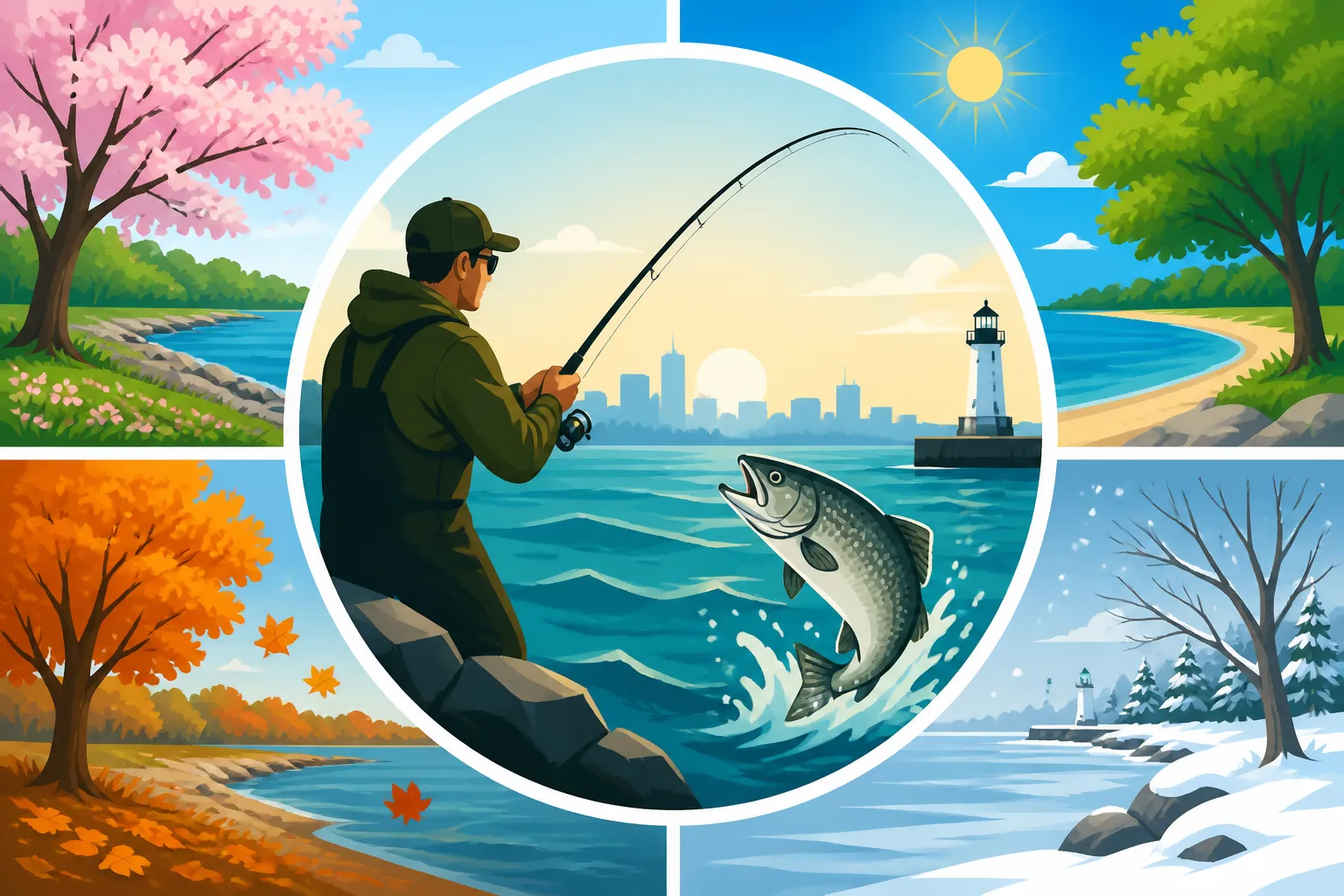
Lake Michigan isn't just a big pond; it's an inland sea with distinct seasons that dramatically affect fish behavior, migration, and feeding patterns. What works in April certainly won't work in August, and knowing these shifts is half the battle. Many anglers get disheartened thinking Lake Michigan fishing is too hard, but often it's just a matter of timing your trip right. Each season presents unique opportunities and challenges that seasoned anglers learn to navigate.
Early Spring: Waking Up from Winter's Slumber (March-April)
As the harsh grip of winter finally loosens and the ice recedes, allowing boat access and opening up pier fishing, Lake Michigan slowly begins to stir. This is a thrilling time for many anglers, especially those targeting cold-water species like trout and salmon. The fish are hungry after a long winter with limited feeding opportunities and often cruise shallower waters as they begin to warm up, seeking out baitfish. You might find success fishing from piers, harbor walls, or very close to shore during this period, particularly on days with sunshine that warms the shallows.
Imagine standing on a pier in Chicago in early April, the wind still carrying a bite, but the sun warming your face enough to make it bearable. The water is still chilly, perhaps in the low 40s Fahrenheit, but you know those brown trout, lake trout, and early coho salmon are starting to become active. The key during this time is patience and paying close attention to water temperature, which can vary significantly even within a few miles along the shoreline. Successful anglers often focus on subtle presentations and slower retrieves.
Late Spring to Early Summer: Explosive Growth and Active Feeding (May-June)
This period is arguably one of the most exciting times to fish Lake Michigan. By late spring, the water has warmed considerably, bringing with it an explosion of baitfish, and all game species are in a strong, aggressive feeding mode. This is when the fishing really heats up, and you'll see a lot more boats out on the water, from small crafts hugging the shore to large charter boats venturing far offshore. Both shore and boat anglers can find great success during these months, offering diverse opportunities.
Think of late May or early June, with the trees fully green and a pleasant breeze on the lake. The water might be in the 50s and 60s Fahrenheit, a comfortable range for many species including growing coho and chinook salmon, various trout, and increasingly active yellow perch. This is when the action really picks up, and you can expect a wide variety of fish to be on the bite. If you're looking for consistent action and a good chance at multiple species, this is prime time to be on the water. Many local charter captains will tell you these are some of their favorite months because the fish are so aggressive and widespread. Our guide to Illinois Fishing Seasons Guide offers a broader look at this time of year.
Mid-Summer: Deep Water Retreat and Thermocline Tactics (July-August)
As the summer sun beats down and surface water temperatures soar, many of the prized salmon and trout species move to deeper, cooler waters to find their preferred temperatures. This can be a challenging time for shore anglers, as the fish are often out of casting range, but boaters with the right gear can still find excellent success by targeting the thermocline – the layer of water where temperature changes rapidly. This layer is where baitfish congregate, and where the predators follow, creating a prime feeding zone.
It's mid-July, the air is hot, and the lakefront is bustling with beachgoers. For serious anglers, this means adjusting tactics significantly. Instead of shallow presentations, you're likely running downriggers at 50, 70, or even 100 feet down, trying to pinpoint the thermocline. This requires specialized gear, but the reward can be big Chinook salmon and lake trout that have grown significantly over the summer. If you need to stock up on new weights, specialized trolling spoons, or deep-diving crankbaits, checking out the wide selection on Amazon is always a reliable option for finding what you need.
Fall: The Spawning Run and Last Hurrah (September-November)
Fall is a spectacular time on Lake Michigan, especially for those chasing salmon. As water temperatures begin their gradual descent, mature salmon (predominantly Chinook and Coho) begin their migration towards spawning rivers and tributaries, offering fantastic opportunities for both shore and boat anglers as these powerful fish stage near river mouths and harbor entrances. Trout also become very active, feeding heavily before winter sets in, fattening up for the lean months ahead.
Imagine the crisp September air, the leaves starting to turn color, and a sense of urgency in the fish. This is the time when massive Chinook salmon, driven by their spawning instincts, move closer to shore and into the harbors. You can often see them jumping, a thrilling sight for any angler. This period can offer some of the most memorable fishing experiences of the year, particularly for anglers seeking a trophy salmon. For more specific details, our guide on Best Months for Lake Michigan Salmon Fishing in Illinois provides excellent timing advice.
Targeting Specific Lake Michigan Species Throughout the Year
While the general seasons provide a good roadmap, understanding the nuances of each species' activity window is crucial for success. Different fish have different preferences for water temperature, spawning habits, and feeding patterns, requiring tailored approaches.
Coho Salmon: Spring Kings and Fall Runners
Coho salmon are often the first salmonid to really get going in the spring. You can start seeing good numbers of them in shallow waters and nearshore areas as early as March and April, especially after a few warm days. This is when many anglers hit the piers and harbors with spoons or spawn sacs, and boaters troll closer to shore. If you're wondering about the precise timing, our guide on Coho Salmon Fishing in Illinois: What to Expect offers a deeper dive into this exciting fishery.
As late spring progresses into early summer (May-June), Coho move further offshore but are still very active, often found in the top 30-50 feet of the water column. They're aggressive feeders and can provide fantastic action. Come fall (September-October), mature Coho return to staging areas near river mouths and harbors for their spawning run, offering another excellent opportunity for anglers before they complete their life cycle.
Chinook Salmon: Summer Powerhouses and Fall Bruisers
Chinook salmon, also known as King Salmon, are the ultimate prize for many Lake Michigan anglers. While some can be caught in late spring, the true peak season for Chinook usually kicks in during mid-summer (July-August) when they are found in deeper, cooler waters, often suspending over significant depths. This is predominantly a boat fishery, requiring downriggers and sometimes planer boards to cover vast areas and present baits at precise depths. If you're curious about specific equipment, exploring Lake Michigan Trolling Gear for Salmon and Trout can be very helpful.
Fall (September-October) brings another incredible opportunity for Chinook, as mature fish migrate closer to shore and into river mouths and harbors for spawning. This is when shore anglers can have a real shot at these powerful fish, although they can be extremely challenging to land from land. The sheer size and fighting ability of a fall Chinook makes them a bucket-list catch for many who target Best Salmon Fishing Spots on Lake Michigan.
Lake Trout and Brown Trout: Year-Round Resilience
Lake trout are true cold-water specialists and can be caught almost year-round in Lake Michigan, though their preferred depths change dramatically with the seasons. In early spring (March-April), they can be found relatively shallow, often near the bottom in 20-60 feet of water. As summer progresses, they retreat to the coldest depths, sometimes 100 feet or more, following the cooler water and baitfish. Fall sees them move shallower again for their spawning period. For an in-depth look at these species, check out Illinois Lake Michigan Trout and Salmon Fishery Explained.
Brown trout, on the other hand, are often more of a nearshore target, especially in spring and fall. They thrive in cooler water but will actively feed closer to the shoreline, particularly in stained water after heavy rains. Many trophy browns are caught by pier anglers or those trolling close to shore during periods of cooler water, like early spring (April-May) and late fall (October-November). They are known for their strong fight and often unpredictable behavior, making them an exciting target when fishing Where to Catch Trout Along Illinois's Lake Michigan Shoreline.
Steelhead (Rainbow Trout): Spring and Fall Leapers
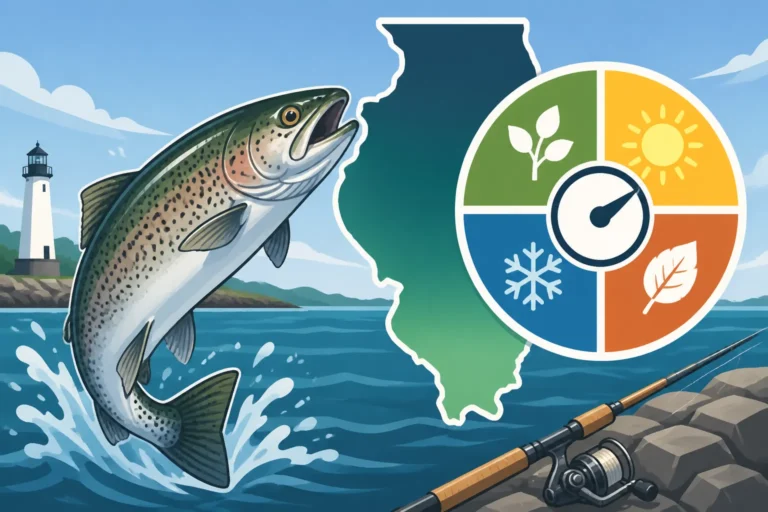
Steelhead, which are migratory rainbow trout, offer thrilling action, particularly in spring (April-May) and fall (October-November). In spring, they migrate towards river mouths and shallower areas of the lake, often leaping spectacularly when hooked. They are aggressive feeders and will hit a variety of lures and baits. Boat anglers often target them by trolling spoons or stickbaits, while pier anglers use spawn sacs or shrimp.
In the fall, another run of Steelhead occurs, offering a final burst of action before winter. These fish are powerful fighters, known for their acrobatic jumps and long runs. They are a highly prized species for many Illinois anglers. Our article on Best Months for Lake Michigan Trout Fishing in Illinois provides excellent timing for these magnificent fish.
Yellow Perch: Summer Staple
Yellow perch are a fantastic target for family fishing trips and provide delicious table fare. Their peak season on Lake Michigan in Illinois is typically from late spring through summer (May-August). During these warmer months, large schools of perch move into shallower waters, harbors, and nearshore structures, making them accessible to both boat and shore anglers. If you're looking for consistent action and a good meal, perch fishing is hard to beat. Our guide to Illinois Yellow Perch Fishing: Where and When to Go provides specific locations and techniques.
They are often caught on small minnows, pieces of nightcrawlers, or tiny artificial jigs fished close to the bottom. It's not uncommon to catch dozens of these feisty panfish in a single outing when you hit a good school, making them a fantastic target for beginners and seasoned anglers alike.
Factors Influencing Your Lake Michigan Fishing Success
Beyond the calendar, other environmental factors play a huge role in determining when and where fish will bite on Lake Michigan. Ignoring these can turn a potentially great day into a frustrating blank. Truly understanding the lake means observing these variables closely.
Water Temperature: The Ultimate Trigger
Water temperature is arguably the most critical factor influencing fish activity in Lake Michigan. Each species has a preferred temperature range where their metabolism is optimal for feeding and growth. For example, Coho and Chinook salmon, along with various trout, prefer cooler waters (generally 40-60°F), moving deeper as surface temperatures rise to find these comfortable zones. Yellow perch, while tolerant of cooler water, become most active and accessible when temperatures are in the 50-70°F range.
Monitoring water temperature using a fish finder, a simple surface thermometer, or even checking online fishing reports can dramatically improve your chances. If you’re targeting cold-water fish in summer, look for areas where cold currents or upwellings bring cooler water closer to the surface. Conversely, in early spring, warmer pockets of water near structure or harbors can hold active fish. Knowing how Water Temperature and Fish Activity Guide helps immensely in fine-tuning your approach.
Wind and Waves: Friend or Foe?
Wind can be both a blessing and a curse on Lake Michigan. A light chop (1-2 foot waves) can often activate fish, breaking up the surface and making lures appear more natural and less intimidating. It can also concentrate baitfish into certain areas, leading predators to follow. However, strong winds can make fishing impossible, creating dangerous waves and current that push fish out of predictable areas and churn the water too much.
On a day with a moderate westerly wind, you might find fish stacked up on the east side of a point or structure, pushed there by baitfish trying to escape the chop. Conversely, a strong north wind might create challenging conditions and push cold water in, shutting down the bite. Always check the marine forecast before heading out, especially if you're boating. If you're planning on fishing from shore, a calm day might mean clear water and spooky fish, while a little ripple can make all the difference, providing cover for both the angler and the fish. For serious shore anglers, having a sturdy rod and reel that can handle long casts in windy conditions is crucial, and you can find many great options on Amazon.
Barometric Pressure: The Subtle Influence
While not as immediately obvious as temperature or wind, changes in barometric pressure can subtly affect fish behavior. A steady or slowly rising barometer is often associated with stable weather and good fishing. Fish tend to feed more actively during these periods, feeling more comfortable in their environment. Conversely, a rapidly falling barometer, often preceding a storm, can make fish less inclined to bite as they feel the pressure change, sometimes causing them to seek deeper water or simply become lethargic.
Think of it like this: a stable weather pattern usually means stable fish behavior. But when a big storm front is rolling in, the fish often sense it, and their feeding patterns can become erratic. Sometimes they feed aggressively right before a major drop in pressure, while other times they shut down completely. Keeping an eye on the weather app and understanding how Does Barometric Pressure Affect Fishing? can give you a slight edge in predicting the bite.
Seasonal Strategies for Maximizing Your Catch
Knowing when to go is just the beginning. Applying specific strategies for each season will help you make the most of your time on the water, turning informed timing into actual fish in the net.
Early Season Techniques: Slow and Shallow
In early spring, when water temperatures are still low, fish metabolisms are slower. This means your presentations should also be slower and more deliberate. Shore anglers often find success with spawn sacs, minnows, or small spoons and stickbaits cast from piers, especially at Chicago Pier Spots for Lake Michigan Salmon. Boaters might troll small spoons or stickbaits closer to shore, targeting the upper water column where fish are cruising for warmer water and baitfish.
For example, when the water is in the 40s, a subtle flutter of a spoon or a slowly retrieved stickbait can be more effective than a fast, erratic retrieve. Fish aren't going to chase down a meal with the same vigor they would in summer; they conserve energy. This is a great time to focus on natural bait presentations or lures that mimic lethargic baitfish.
Mid-Season Strategies: Go Deep, Go Fast
As Lake Michigan warms up in summer, salmon and trout often move offshore and deep to find their preferred cool water. This is when trolling becomes king. Downriggers are essential for presenting lures at precise depths in the thermocline. Spoons, flasher/fly combos, and dodger/fly combos are popular choices, mimicking larger baitfish. Covering water effectively with multiple lines and varying depths is key to finding scattered schools of fish.
During this peak season, you'll often see charters running 6-10 lines off the back of their boats, trying to find the "active" zone. Speed is also a factor; sometimes a faster troll (2.5-3.5 mph) will trigger aggressive strikes from Chinook and Steelhead. If you're new to this, investing in a good fish finder is a game-changer, helping you locate schools of bait and target fish. You can find robust, marine-grade fish finders on Amazon for various budgets and feature sets.
Fall Frenzy: Inshore Action and Spawning Runs
Fall fishing on Lake Michigan is all about the spawning runs. Salmon push into harbors and river mouths, making them accessible to a broader range of anglers, including those without boats. Casting large spoons, crankbaits, or even drifting spawn sacs can be highly effective near these staging areas. For boaters, trolling near river mouths and staging areas can produce incredible action as the fish congregate.
This is a time of year when you don't necessarily need specialized deep-water gear. Many anglers have great success with standard medium-heavy spinning or baitcasting setups. It's also a fantastic time for shore anglers at various Lake Michigan Shore Fishing Access Near Chicago, Illinois. Just be prepared for strong fights, as these fish are at their most powerful and aggressive during this period. Remember to check local regulations for specific areas, as some harbors may have special rules during the fall run. Don't forget to grab some extra leader material from Amazon – these big fish can be hard on your gear!
Winter Opportunities: Ice and Open Water
While much of Lake Michigan fishing slows down in winter, there are still opportunities, especially for hardy anglers. Depending on ice conditions, some protected harbors and embayments can offer excellent ice fishing for perch and panfish. In the main lake, periods of open water can still yield lake trout, often caught by those trolling very slow and deep with specialized cold-water presentations. This is definitely a niche season, but for those who brave the cold, it can be quite rewarding.
Remember, safety is paramount during winter. Always check ice conditions if you're venturing out onto frozen parts of the lake and wear appropriate cold-weather gear and flotation devices. The cold can be unforgiving, so never take unnecessary risks.
| Species | Early Spring (March-April) | Late Spring/Early Summer (May-June) | Mid-Summer (July-Aug) | Fall (Sept-Nov) |
|---|---|---|---|---|
| Coho Salmon | Excellent (Nearshore, Piers) | Excellent (Offshore, Mid-Depth) | Good (Deeper, Offshore) | Excellent (Spawning Runs, Harbors) |
| Chinook Salmon | Fair (Deep, Scattered) | Good (Offshore, Deeper) | Excellent (Deep, Thermocline) | Excellent (Spawning Runs, Harbors) |
| Lake Trout | Good (Nearshore Bottom) | Good (Mid-Depth Bottom) | Excellent (Deep Bottom) | Good (Shallow for Spawning) |
| Brown Trout | Excellent (Nearshore, Piers) | Good (Nearshore) | Fair (Deep, Cool Pockets) | Excellent (Nearshore, Harbors) |
| Steelhead | Excellent (River Mouths, Nearshore) | Good (Offshore, Mid-Depth) | Fair (Deeper, Offshore) | Excellent (River Mouths, Nearshore) |
| Yellow Perch | Fair (Harbors, Slow) | Excellent (Shallow, Harbors) | Excellent (Nearshore, Piers) | Good (Shallower, Declining) |
This table provides a quick overview, but remember, fish are wild creatures, and conditions can change rapidly. Always check local fishing reports and consult the Illinois Department of Natural Resources (IDNR) for the latest information and regulations.
Disclaimer
Always remember that fishing regulations, seasons, and limits are subject to change. Consult the latest Illinois Department of Natural Resources (IDNR) fishing guide before heading out on any fishing trip. Your safety is your responsibility; be aware of weather conditions and boating safety protocols.