Night Fishing Techniques
We've all been there: sweating under the midday sun, battling crowds, and watching fish seemingly ignore every cast. Daytime fishing can be a beautiful experience, but sometimes, the conditions just aren't ideal for landing those lunkers. That's where night fishing comes in, offering a peaceful, often more productive alternative that can transform your angling adventures on Illinois waters. This guide will walk you through everything you need to know to conquer the darkness and find success when the sun goes down.
Why Anglers Embrace the Darkness for Fishing
There’s something truly magical about being out on the water after dusk, with the sounds of the night replacing the usual hustle and bustle. But beyond the serenity, there are some very compelling reasons why seasoned anglers often switch to a nocturnal schedule. It’s not just for the thrill; it’s about understanding fish behavior and maximizing your chances.
The Nocturnal Advantage: Cooler Temps and Less Pressure
One of the most immediate benefits of night fishing, especially during the sweltering Illinois summers, is the significant drop in temperature. Hot summer days can stress fish, driving them deep into cooler, oxygen-rich waters. As the sun sets, the surface waters cool, and the entire water column becomes more comfortable. This often brings fish, especially larger ones, out of their deep-water sanctuaries and into shallower feeding grounds.
Beyond the temperature, the fishing pressure often drops dramatically. Many anglers pack up as the sun dips below the horizon, leaving the lakes and rivers quieter and less disturbed. Less boat traffic, fewer casting shadows, and less noise means fish are more relaxed and often more willing to bite. You’ll find that prime spots that were crowded during the day are now yours for the taking, allowing for more strategic and patient fishing. It’s a chance to truly experience the water on its own terms, free from human interference.
Species That Come Alive After Dark
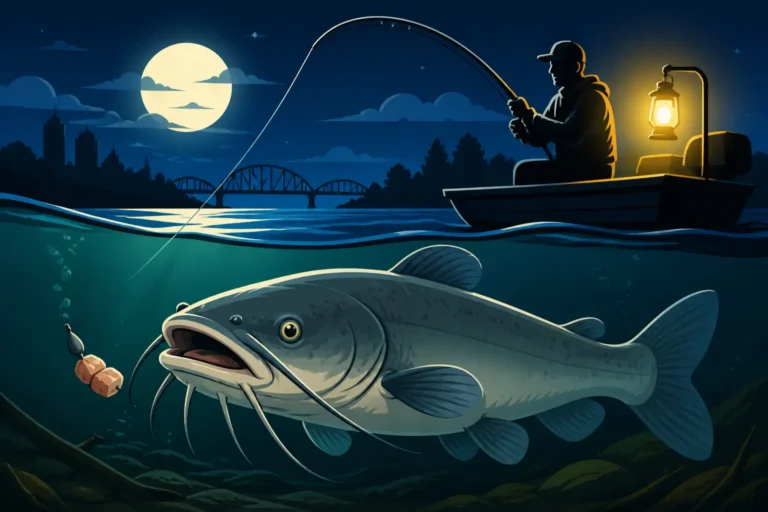
While many fish species will feed at night, some are absolute champions of the darkness. Understanding which fish become more active can significantly boost your success. Catfish, in particular, are notorious nocturnal hunters. Channel catfish, blue catfish, and flathead catfish all rely heavily on their sense of smell and touch, which are not hindered by low light. They'll cruise shallow flats, river channels, and near structure, actively seeking prey. If you're looking for a thrilling fight, night is often the best time to target these whiskered warriors.
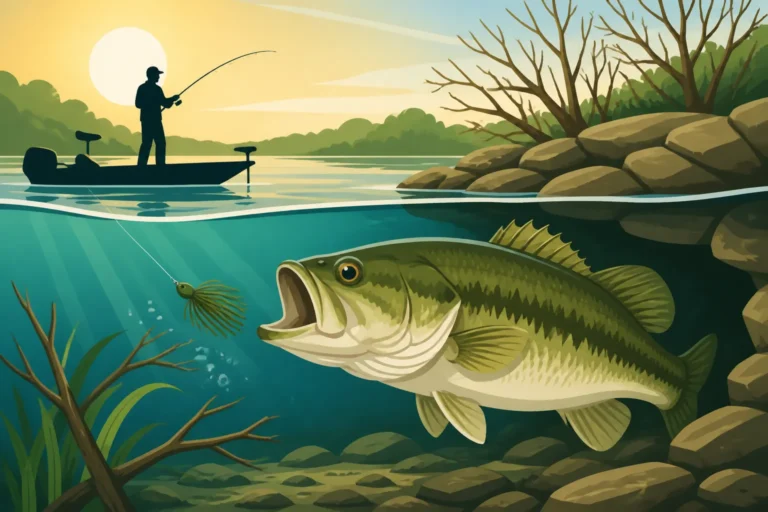
Bass, both largemouth and smallmouth, also become more opportunistic at night. They'll often move from deeper cover into shallower water to ambush baitfish that are also drawn to the shallows or artificial lights. Crappie, too, especially larger slabs, can be found suspending near structure or under lights, feeding aggressively. Even walleye, known for their light-sensitive eyes, often move into shallower rocky areas or along main lake points to feed on minnows during the darker hours. Knowing your target species and their nocturnal habits is key to choosing the right spot and technique. For more insights on when these fish are most active, consider reading about the Best Time of Day to Catch Catfish.
The Sensory Experience of Night Fishing
Beyond the practical advantages, there's an undeniable allure to night fishing that many anglers find deeply satisfying. The world transforms when darkness falls. Your senses heighten – the subtle splash of a fish jumping, the rustle of leaves on the shore, the distant hoot of an owl. You become more attuned to the water and its inhabitants. The visual cues you rely on during the day are replaced by tactile feedback: the thump of a jig, the subtle tug on your line, the vibration of a lure.
Landing a fish in the dark is an entirely different experience. The fight feels more intense, the fish seems stronger, and bringing it to the net under the beam of your headlamp is a triumphant moment. It’s a peaceful, introspective time, free from distractions, allowing you to connect with nature on a deeper level. Many would argue that the quiet solitude and the amplified senses make it an experience far richer than daytime angling, truly proving that for some, the question of Is Night Fishing Better Than Day Fishing? has a clear answer.
Essential Gear for Safe and Successful Night Fishing
Heading out after dark requires a bit more preparation than a typical daytime trip. While the core fishing tackle remains similar, there are crucial additions, particularly when it comes to lighting and safety, that you absolutely cannot overlook. Being well-equipped not only increases your chances of success but, more importantly, ensures your safety and comfort.
Lighting Solutions: More Than Just a Headlamp
When you're fishing at night, good lighting isn't just a convenience; it's a necessity. A reliable headlamp is your primary tool. Look for one with adjustable brightness settings, red-light mode (to preserve night vision), and a comfortable, secure fit. The ability to direct light precisely where you need it, hands-free, is invaluable for tying knots, baiting hooks, and handling fish. Many great options can be found on platforms like Amazon, offering different lumen outputs and battery lives.
But a headlamp shouldn't be your only light source. Consider a larger, portable lantern for illuminating your general fishing area, whether you're on a boat or fishing from the bank. LED lanterns are energy-efficient and provide broad, consistent light. For boaters, navigation lights are non-negotiable for safety and legal compliance. In Illinois, boats are required to display proper navigation lights from sunset to sunrise. Additionally, a powerful spotlight or handheld flashlight can be critical for spotting hazards, navigating unfamiliar water, or signaling in an emergency. Glow sticks or clip-on LED lights for your rod tips can also be incredibly helpful for bite detection, especially if you're using multiple rods.
Choosing the Right Rods, Reels, and Line for Low Light
Your choice of fishing tackle for night fishing largely depends on your target species and preferred techniques, but there are a few considerations specific to low-light conditions. Generally, you want tackle that offers good sensitivity to feel subtle bites, as visual cues are diminished. Medium to medium-heavy action rods with a fast tip are versatile for many nocturnal species like bass and catfish, allowing you to feel light taps but still have the backbone for a solid hookset.
For line, fluorocarbon is often a good choice due to its low visibility and excellent sensitivity. Monofilament, with its stretch, can also be a viable option, particularly for topwater lures where some give can be beneficial. Some anglers even prefer high-visibility braided lines, not for the fish, but for their own ability to see line movement against the dark water, especially when watching for slack line bites. Paired with a smooth, reliable reel, this setup will give you the confidence to cast accurately and detect strikes even when you can barely see your lure hit the water. Don't forget, when you're gearing up, Amazon offers a vast selection of these items.
Specialized Baits and Lures for Night Angling
Fish perceive their environment differently at night. While sight is still a factor, other senses like lateral line vibration, smell, and hearing become more prominent. This means your bait and lure selection might shift from your daytime favorites.
- Vibration and Sound: Lures that create a lot of disturbance in the water are excellent choices. Spinnerbaits with large thumping blades, chatterbaits, and noisy topwater lures like Jitterbugs or Whopper Ploppers are fantastic for bass. The commotion they create helps fish locate them in the dark.
- Scent and Taste: For catfish, scent is paramount. Strong-smelling stink baits, cut bait (like shad or skipjack herring), and live or dead baitfish are highly effective. For crappie, scented soft plastics or live minnows can be irresistible.
- Dark Silhouettes: Sometimes, the simplest approach is best. Dark-colored jigs, worms, or creature baits present a strong silhouette against the moonlit sky or artificial lights, making them easier for predatory fish to spot. Black, blue, and purple are popular choices for bass and crappie jigs.
- Glow and UV: While not always necessary, some anglers swear by glow-in-the-dark or UV-enhanced lures, especially in very dark conditions or deeper water. These can provide an extra visual attractant for species like walleye or even crappie. Experimentation is key to discovering what works best on your particular body of water.
| Light Source Type | Primary Use Case | Pros | Cons | Typical Cost Range (USD) |
|---|---|---|---|---|
| Headlamp | Hands-free task lighting | Portable, directable, essential | Limited beam spread | $15 – $70 |
| Lantern (LED) | Area illumination (boat/bank) | Wide light coverage, energy-efficient | Not hands-free, bulky | $20 – $100 |
| Spotlight | Long-range visibility, hazard | Powerful, emergency signaling | Heavy, short battery life | $30 – $150 |
| Rod Tip Lights | Bite detection | Easy to see strikes, minimal distraction | Can deter some fish, battery needed | $5 – $20 (per pair) |
| Boat Nav Lights | Legal safety for vessels | Required by law, prevents collisions | Requires boat power, fixed | $50 – $300+ |
Top Techniques for Different Species After Dark
Each species, whether it's the aggressive bass, the bottom-dwelling catfish, or the schooling crappie, requires a slightly different approach when you’re fishing under the cover of night. Understanding these nuanced techniques will significantly increase your catch rate.
Nighttime Bass Strategies
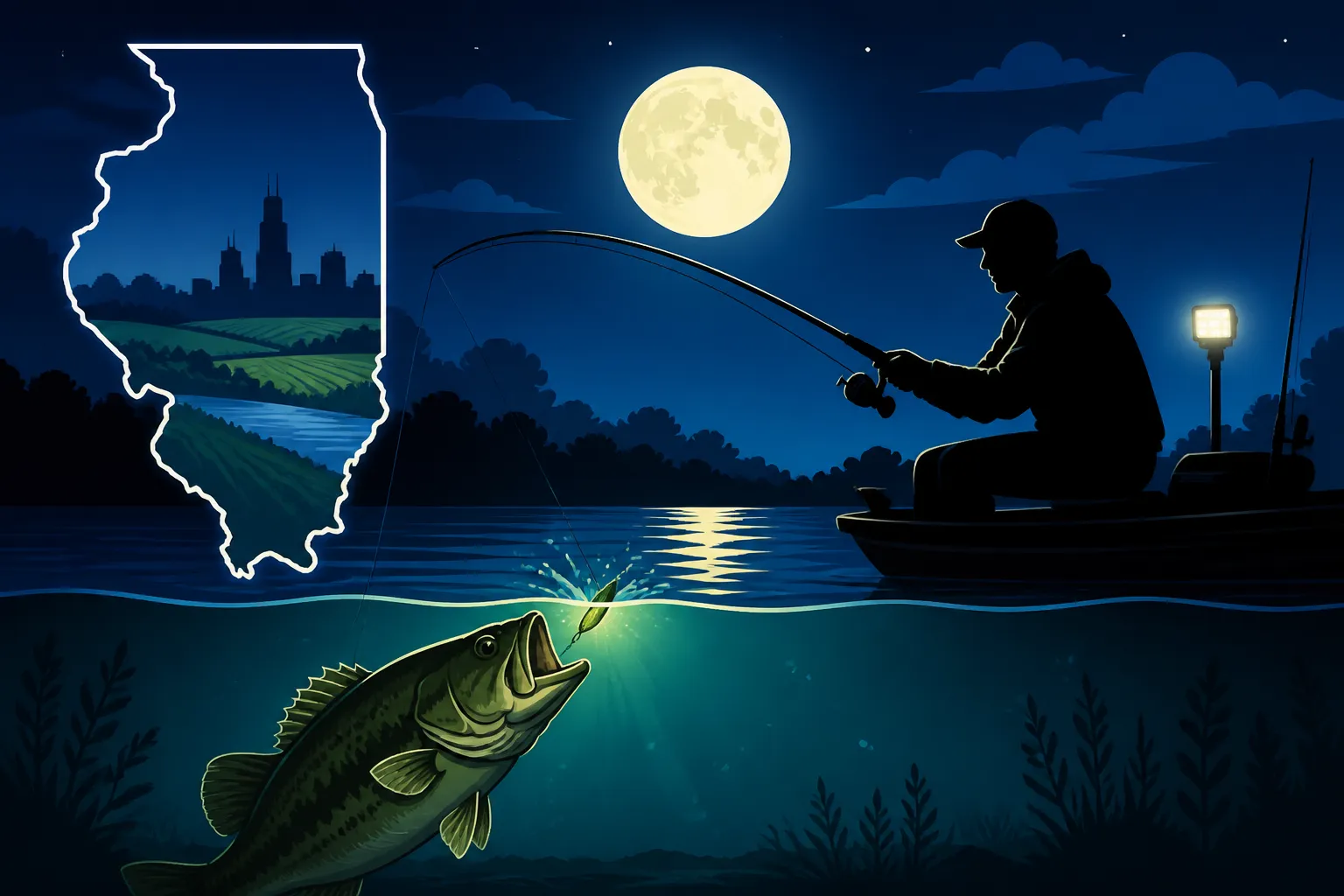
Bass, especially largemouth, become much bolder at night, moving into shallow areas they might avoid during the day due to light and pressure. Their aggression and willingness to strike make them a prime target.
- Topwater Action: This is arguably the most exciting way to catch bass at night. Noisy topwater lures like Jitterbugs, Chug Bugs, or larger Whopper Ploppers are fantastic. Cast them near shallow cover – docks, lily pads, fallen timber, or weed lines – and retrieve them slowly, allowing their gurgling and splashing to draw attention. The strike of a bass exploding on a topwater lure in the dark is an unforgettable experience.
- Slow-Rolling Spinnerbaits and Chatterbaits: When bass aren't committing to topwater, slow-rolling a dark-colored spinnerbait (black and blue are excellent choices) or a chatterbait can be deadly. The thumping vibration is easily detected by a bass's lateral line in low light. Work these lures along deeper edges of cover, points, or over submerged grass. The key is a slow, steady retrieve that keeps the blades or skirt moving.
- Dark-Colored Worms and Jigs: For a more subtle approach, a Texas-rigged plastic worm or a skirted jig with a soft plastic trailer can be highly effective. Stick to dark colors like black, blue, or junebug. Fish these slowly along the bottom near any structure or transition areas. The slower presentation allows bass more time to locate the bait using their scent and lateral line. When you're stocking up on these, remember that Amazon often has competitive prices and a wide selection. For those serious about catching bass, you might want to delve into specifics like the Illinois Statewide Bass Daily Catch Limit of Six Fish to ensure you're compliant with regulations.
Targeting Catfish Under the Stars
Catfish are perhaps the quintessential night fishing target in Illinois. Their incredible sense of smell and touch allows them to dominate the nocturnal feeding scene. Whether you're after channel cats, blue cats, or flatheads, night offers some of the best opportunities.
- Stink Bait and Prepared Baits: For channel catfish, prepared baits and stink baits are incredibly effective. Their strong odor disperses well in the water, attracting catfish from a distance. Use treble hooks or sponge baits designed to hold the bait well. Fish these on the bottom in known catfish haunts like river bends, deep holes, or along reservoir flats.
- Cut Bait for Blues and Flatheads: If you're targeting larger blue catfish or flatheads, fresh cut bait is king. Shad, carp, bluegill, or even hot dogs (for channel cats) are excellent choices. Rig these on a strong circle hook with a heavy sinker to keep it on the bottom. Focus on main river channels, deep scour holes, or below dams where currents concentrate baitfish. Remember, flatheads prefer live bait, so a frisky bluegill or sunfish might be your best bet for these elusive monsters. For a deeper dive into techniques, check out How to Catch Catfish at Night.
- Setting Up for Success: Night catfishing often involves setting multiple rods. Look for areas with a mix of current and slack water, or deep holes adjacent to shallower feeding areas. Use sturdy rod holders and be prepared for a strong fight! Exploring the Illinois Catfish Season Guide can help you plan your trips around peak activity.
Crappie and Panfish After Sundown
While not as commonly associated with night fishing as bass or catfish, crappie and other panfish can offer fantastic action after dark, especially if you know where to find them and how to attract them.
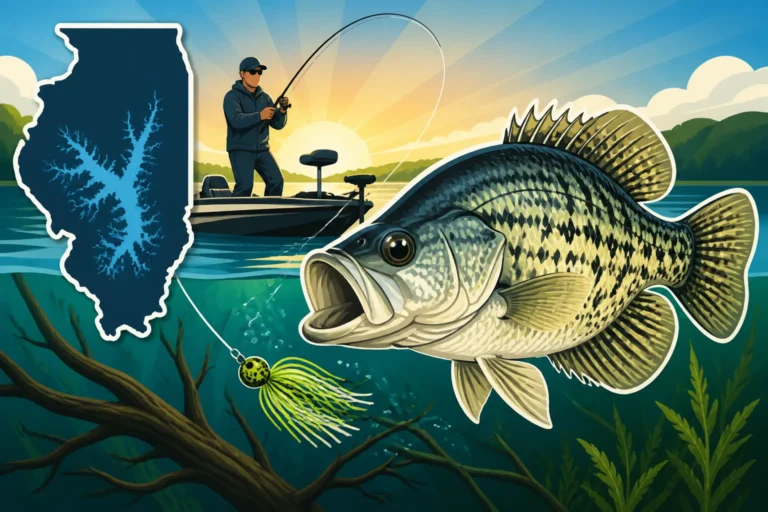
- Lights for Attraction: This is the secret weapon for night crappie fishing. Submersible fishing lights (green or white work well) are deployed into the water, typically off a boat or dock. These lights attract plankton, which then attract minnows and small baitfish, and inevitably, the crappie. The crappie will usually hold just outside the brightest part of the light cone, ambushing bait.
- Jigs and Minnows: Once the crappie are drawn in by the lights, simple tactics work best. Small jigs (1/32 to 1/16 ounce) tipped with a small plastic grub or a live minnow are irresistible. Fish them vertically under a small bobber, or simply tight-line them at various depths until you find the strike zone. White, chartreuse, and black jigs are popular night choices.
- Brush Piles and Structure: Even without artificial lights, crappie will often hold tight to brush piles, submerged timber, or bridge pilings at night, especially during their Illinois Crappie Spawn Season Guide. These areas offer ambush points and protection. Focus your efforts on the edges of these structures, slowly working your jig or minnow through the cover. Remember, crappie can be very depth-sensitive, so adjust your presentation until you find where they're holding.
Finding the Right Spots for Night Fishing
Just like daytime angling, location is everything. But at night, the "right" spot might look a little different, as fish movement patterns shift. Knowing where to focus your efforts will save you valuable time and greatly increase your chances of success.
Structure and Cover Under the Moonlight
Fish, particularly predatory species, are drawn to structure and cover for ambush points and protection during both day and night. At night, these locations can become even more productive as fish move shallower to feed under the cloak of darkness.
- Docks and Piers: These are classic night fishing hotspots. The pilings and submerged structure offer excellent cover, and boat owners often leave lights on that attract baitfish. Bass, crappie, and even catfish will cruise these areas. Cast parallel to the dock, allowing your lure to run alongside the pilings, or skip soft plastics underneath. For pier anglers, the Chicago Pier Spots for Lake Michigan Salmon might be a daytime focus, but many of these piers hold other species at night.
- Submerged Timber and Brush Piles: These underwater jungles are magnets for fish. Bass and crappie love to hold in and around sunken trees or brush piles. Use weedless lures if fishing directly in the cover, or cast jigs and plastics to the edges, slowly working them through. Remember to use heavier line if you plan to extract fish from thick cover.
- Weed Lines and Transition Zones: The edges where aquatic vegetation meets open water are prime feeding areas. Fish will patrol these lines, ambushing baitfish that venture too close. Focus on casting parallel to the weed line, or try a topwater frog fished over matted vegetation. Similarly, any transition where rock meets sand, or a sharp depth change occurs, can be a productive zone as fish move between shallower feeding and deeper resting areas.
The Allure of Artificial Lights
Artificial light sources, whether from docks, marinas, or even streetlights near the water, act like beacons in the darkness, creating miniature ecosystems that attract baitfish and, consequently, predatory species.
- Dock and Marina Lights: As mentioned earlier, these are prime targets. The light attracts zooplankton, which attracts baitfish, which then attract larger game fish like bass, crappie, and even walleye. Position yourself just outside the brightest part of the light cone and cast your lures into the illuminated area, retrieving them back into the darkness. Fish are often waiting in the shadows to ambush.
- Bridge Lights and Pilings: Bridges that span rivers or lakes often have lights that illuminate the water below. The pilings themselves provide excellent current breaks and cover. Bass and walleye are often found around bridge pilings, especially where there's current. Cast jigs, crankbaits, or soft plastics along the pilings and through the eddy currents created by the structure.
- Boat Ramps and Parking Lots: While not always the most peaceful spots, well-lit boat ramps or adjacent parking lots can sometimes concentrate baitfish, drawing in predators. These can be good spots for bank anglers, but be mindful of boat traffic and safety. Many popular boat ramps on lakes like Lake Shelbyville or Carlyle Lake have enough ambient light to create these opportunities.
Current Breaks and Channel Edges
For river anglers, or on lakes with significant current, understanding how fish use current breaks and channel edges at night is crucial. These spots offer feeding opportunities with minimal effort for the fish.
- River Bends and Scour Holes: In rivers, fish will often hold in the slower water of bends or in the deeper scour holes carved out by the current. These areas provide a break from the main current while offering access to food that drifts by. Catfish, in particular, will congregate in these spots. Anchor upriver and drift your baits down, or cast into the slack water pockets. For more on this, look up Mississippi River Catfish Spots in Southern Illinois.
- Confluence Areas (Where two bodies of water meet): The junction of two rivers, or a stream flowing into a lake, is always a high-percentage spot. These areas concentrate baitfish and nutrients, and the varying currents create predictable holding patterns for predatory fish. At night, fish will often move into these areas to feed.
- Main Channel Edges and Drop-offs: On larger lakes and rivers, the edges of the main channel or sharp drop-offs are highways for fish movement. Larger fish will often patrol these depth changes, moving up onto shallower flats to feed at night before retreating to deeper water at dawn. Present your baits along these edges, allowing them to fall or be retrieved along the break.
Safety First: Important Considerations for Night Anglers
While night fishing offers incredible rewards, it also presents unique challenges and increased risks. Prioritizing safety is paramount to ensuring an enjoyable and incident-free experience. Never underestimate the darkness, and always be prepared for the unexpected. When you are planning to How to Fish After Dark Safely, these points are crucial.
Navigation and Hazard Awareness
The most obvious challenge of night fishing is reduced visibility. What might be an obvious obstacle during the day can become an invisible hazard at night.
- Know Your Water: Only fish familiar waters at night, especially if you're boating. If you're venturing somewhere new, make sure to scout it thoroughly during daylight hours, paying close attention to submerged hazards, shallow spots, and potential obstructions. GPS units with detailed mapping are invaluable tools, but don't rely solely on electronics.
- Boat Navigation Lights: For boaters, ensure all navigation lights are functioning correctly and are properly displayed. This is not just a safety measure but a legal requirement in Illinois. Running dark is incredibly dangerous for you and others. Refer to Illinois Life Jacket and PFD Rules for essential guidance on safety gear.
- Slow and Steady: Whether by boat or on foot, slow down. Reduced visibility means you have less time to react. Take your time, proceed cautiously, and use your spotlight to regularly scan the water and shoreline for potential dangers like floating debris, other boats, or unseen banks.
- Bank Fishing Caution: If you’re fishing from the bank, be aware of your footing. Uneven terrain, slippery mud, or unexpected drop-offs can lead to falls. Always use a headlamp, wear sturdy, non-slip footwear, and avoid venturing too close to steep or unstable banks.
Buddy System and Communication
Going alone at night, especially on the water, carries inherent risks. The buddy system is highly recommended for night fishing trips.
- Never Go Alone (If Possible): Fishing with a friend or a group dramatically increases safety. In an emergency, having another person there to assist or call for help can be life-saving. Even a minor fall or equipment malfunction can become a major problem when you're by yourself in the dark.
- Tell Someone Your Plans: If you absolutely must go alone, always inform a trusted friend or family member of your exact fishing location, your estimated departure and return times, and who to contact if you don't check in. This simple step can make all the difference in a search and rescue situation.
- Communication Devices: Always carry a fully charged cell phone in a waterproof bag. Consider a marine VHF radio if you're boating on larger waters, as cell service can be spotty in remote areas. A whistle or air horn is also a good idea for signaling in an emergency. For boaters, understanding Illinois Boater Education Card Requirements is critical, as it covers many safety protocols including communication.
Weather Watch and Emergency Preparedness
Weather can change rapidly, and being caught unprepared in the dark can escalate a minor inconvenience into a dangerous situation.
- Check the Forecast: Before heading out, thoroughly check the weather forecast for the entire duration of your trip. Pay attention to wind speed, chances of thunderstorms, and temperature drops. A calm evening can quickly turn into a windy, choppy nightmare.
- Dress in Layers: Even if it's hot during the day, temperatures can plummet quickly after dark, especially near the water. Dress in layers, including waterproof outer layers, to stay comfortable and prevent hypothermia.
- Essential Safety Gear: Beyond your fishing tackle, your safety kit should include:
- Life Jackets (PFDs): Absolutely mandatory for everyone on a boat in Illinois, especially at night when rescue is more difficult. Wear it! Don't just have it in the boat. This is even more critical if you're using smaller craft like kayaks, where you might want to look into Best Kayak Models for Illinois Fishing for appropriate safety features.
- First-Aid Kit: A well-stocked kit for cuts, scrapes, and minor injuries.
- Emergency Blanket/Foil Blanket: For warmth in an unexpected cold snap or emergency.
- Extra Batteries: For all your lighting devices.
- Tool Kit: Basic tools for minor equipment repairs.
- Anchor and Rope: For boats, crucial if your engine fails or you need to hold position in current or wind.
- Flares/Signaling Device: For extreme emergencies to attract attention.
By taking these precautions seriously, you can ensure that your night fishing adventures are not only productive but also safe and enjoyable for everyone involved.
Disclaimer
The information provided in this guide is for general informational purposes only and does not constitute legal advice. Fishing regulations, licensing requirements, and boating safety rules in Illinois are subject to change. Always consult the latest official Illinois Department of Natural Resources (IDNR) publications or website for the most current and accurate information before engaging in any fishing or boating activities. Personal safety is your responsibility; always exercise caution and good judgment while on the water.