Dusk Fishing Techniques
Many Illinois anglers tend to call it a day when the sun starts to dip below the horizon, but they're often missing out on some of the most phenomenal fishing action. That magical transition from daylight to darkness, known as dusk, creates a unique window where fish often become incredibly active, bold, and hungry. If you've been frustrated by slow daytime bites, this comprehensive guide will illuminate the tactics, essential gear, and crucial safety tips needed to successfully chase Illinois fish as twilight embraces the water.
The Magical Hour: Why Dusk Fishing Excels in Illinois
There's something truly special about being on the water as the day fades into night. The world seems to quiet down, and the fishing often heats up dramatically. It’s not just romantic; there are solid, biological reasons why dusk is often the prime time to cast a line in Illinois.
Reduced Pressure and Cooler Temperatures
Think about a busy summer Saturday on Lake Shelbyville or Rend Lake. Boats are everywhere, jet skis are zipping around, and anglers are lining the banks. All that commotion creates pressure, making fish wary and driving them into deeper, harder-to-reach cover. But as dusk approaches, most of that activity melts away. Pleasure boats head back to the docks, and many anglers pack up, leaving the water to a dedicated few.
This reduction in human presence is a game-changer. Fish feel safer and more comfortable venturing out from their daytime hideouts. On top of that, the declining sun brings cooler air and water temperatures. For both you and the fish, this can be a welcome relief, especially during those sweltering Illinois summers. Cooler water often means increased oxygen levels in certain areas, invigorating fish and kicking their metabolism into high gear. They become more active, less sluggish, and much more willing to chase a meal. This cooler, quieter environment triggers a significant shift in behavior, often leading to more aggressive feeding patterns than you might see at midday.
Enhanced Feeding Windows
Many of Illinois's most sought-after game fish are opportunistic predators, and they thrive under the cover of low light. As the sun sets, the visibility changes dramatically underwater. Baitfish, which might have been scattered and skittish during bright daylight, often become more concentrated or venture into open water as their natural predators become harder to spot. This creates a perfect scenario for species like largemouth bass, walleye, and various catfish to ambush their prey.
For bass, the reduced light allows them to move out from dense cover and actively hunt along weed lines, shorelines, and over submerged structure. Walleye, with their large, light-sensitive eyes, gain a distinct advantage over their prey as the light dims, becoming incredibly efficient hunters. Catfish, relying heavily on their sense of smell and lateral lines, are always active, but the dusk period often sees an increase in their foraging as other species become more vulnerable. This critical feeding window means fish are more likely to strike, often with more vigor, making for a truly exciting angling experience.
The Thrill of the Unknown
Beyond the practical advantages, there's an undeniable allure to dusk fishing. The world transforms as colors deepen, shadows lengthen, and familiar sounds are replaced by the chorus of crickets, frogs, and the distant hoot of an owl. Every splash, every ripple, takes on a heightened sense of mystery. You're relying more on feel and sound, making each tap or thump on your line an electrifying surprise.
The quiet solitude of dusk on an Illinois lake or river can be incredibly peaceful, yet simultaneously thrilling. There’s a raw, primal connection to nature when you’re out there as the stars begin to pepper the sky. You learn to listen to the water, to feel the subtle vibrations, and to anticipate the strike rather than seeing it coming. This unique sensory experience, coupled with the potential for bigger, more aggressive fish, adds an unforgettable dimension to your fishing trips. It’s a chance to see your favorite fishing spots in a completely new light – or lack thereof – and discover a whole new rhythm of the water.
Understanding Twilight Fish Behavior: What Changes When the Sun Sets?
Fish don't just magically decide to bite more at dusk; their entire world shifts as the light fades. Understanding these behavioral changes is key to tailoring your techniques for maximum success. It's about tapping into their natural instincts and adapting to the new environment.
Predatory Advantage in Low Light
Many of the fish we target in Illinois are visual predators, but some species are far better equipped for low-light conditions than others. Walleye, for instance, have exceptionally large eyes with a reflective layer called a tapetum lucidum, which enhances their night vision. As the sun dips, they gain a distinct advantage over their prey, moving from deeper, shaded areas to actively hunt in shallower water where baitfish might be schooling.
Bass, while not having the same night vision as walleye, still use the low light to their advantage. The fading light breaks up their silhouette, making them harder for prey to spot, and conversely, making it harder for prey to see them coming. They transition from waiting in ambush during the day to actively cruising and hunting. Catfish, on the other hand, rely less on sight even in broad daylight. Their barbels (whiskers) are packed with chemoreceptors, allowing them to "taste" the water for food, and their lateral line system detects subtle vibrations. Dusk simply amplifies their existing advantages, as visual predators become less effective, giving catfish a wider range to forage without competition.
Movement from Deeper to Shallower Waters
One of the most significant changes at dusk is the vertical migration of many fish species. During the heat of the day, particularly in summer, many fish retreat to deeper, cooler water or dense, shady cover to escape the sun and heat. As dusk arrives, temperatures begin to drop, and these fish often move into shallower areas to feed.
This can mean largemouth bass moving from submerged timber or dense hydrilla beds out to the edges of weed lines or shallow flats. Crappie, which might have been suspended over deep brush piles during the day, will often move up into the shallower branches of the same cover or even to open water near docks and bridge pilings to chase minnows. Baitfish themselves often move shallower to feed on plankton blooms or find cover, creating a cafeteria effect for predators. Knowing these patterns of movement, anticipating where fish will move to rather than just where they are during the day, is a crucial part of successful dusk fishing. These shallow water zones become incredibly productive as the light fades.
The Role of Sound and Vibration
When sight is diminished, other senses become paramount. Fish rely heavily on their lateral line system, a row of sensory pores along their body, to detect vibrations and pressure changes in the water. This is why lures that create a lot of noise or move a significant amount of water become so effective at dusk and into the night.
Think about a topwater buzzbait churning across the surface, a spinnerbait with large thumping blades, or a crankbait with internal rattles. These lures send out strong vibrations that fish can detect from a distance, even in pitch-black conditions. Catfish, with their acute sense of smell, are also drawn to strong scents, making stinky baits or cut bait highly effective. Even subtle vibrations from a soft plastic jig being dragged along the bottom can be enough to trigger a strike when a fish is relying more on feel than sight. Adapting your lure choice to capitalize on these heightened senses is a fundamental aspect of productive dusk fishing.
Essential Gear for Your Illinois Dusk Fishing Adventures
Successful dusk fishing isn't just about technique; it's also about having the right tools for the job. You're operating in reduced visibility, so certain pieces of gear become not just helpful, but absolutely essential for safety and effectiveness.
Lighting the Way: Headlamps and Lanterns
Let's face it, you can't fish if you can't see, but blinding yourself or other anglers isn't the goal. A good quality headlamp is your most valuable asset. Look for one with multiple brightness settings and, crucially, a red light option. Red light preserves your night vision much better than white light, which can temporarily blind you (and the fish!) and make it harder to see details once you switch it off. Use white light sparingly, perhaps only when re-tying a knot or unhooking a particularly feisty fish. A great selection can be found on Amazon, often with features like waterproof designs and long battery life.
For boat anglers, a small, battery-powered lantern or area light can be invaluable for illuminating your workspace in the boat without casting a harsh glare on the water. On the bank, a lantern can light up your immediate fishing station, making it easier to manage tackle without fumbling in the dark. Always carry extra batteries – you never want to be caught in the dark without a backup.
Lures Designed for Low Light
As discussed, lure choice shifts dramatically at dusk. While some of your daytime favorites might still work during the initial transition, you’ll want to move towards options that excel when visual cues are limited.
- Dark Silhouettes: Lures in solid black, dark purple, or dark blue create a strong silhouette against the lighter sky or water surface, making them easier for fish to see in low light. Think black spinnerbaits, dark topwaters, or black jigs.
- Noisy Lures: Topwater lures like poppers, buzzbaits, and prop baits that create significant commotion on the surface are fantastic for attracting bass at dusk. Crankbaits with internal rattles and chatterbaits also excel at sending out irresistible vibrations.
- Glow-in-the-Dark and UV Lures: While not always necessary, glow-in-the-dark jigs or soft plastics can be particularly effective for walleye and crappie, especially in deeper, darker water. UV-enhanced lures can also appear brighter to fish in low light conditions.
- Large Profiles: Sometimes, simply presenting a larger profile lure can make it easier for fish to detect through their lateral line, even if they can't clearly see it. Think big swimbaits for bass or large minnow imitations for walleye.
Rods, Reels, and Line for Sensitivity
When you can't see a subtle bite, you need to feel it. This means your rod, reel, and line setup should prioritize sensitivity.
For most Illinois species like bass and walleye, a medium-heavy power rod with a fast or extra-fast action is ideal. This combination gives you the backbone for a solid hookset and the sensitivity to detect faint strikes. Graphite rods are generally more sensitive than fiberglass. Pair this with a smooth, reliable spinning or baitcasting reel.
Line choice is critical. Braided line offers superior sensitivity with almost no stretch, transmitting even the lightest taps directly to your rod tip. However, it's highly visible and can be prone to wind knots in the dark. Fluorocarbon line offers a good balance, being virtually invisible underwater and providing excellent sensitivity with low stretch. Monofilament, while more forgiving, is less sensitive and has more stretch, making it a less ideal choice for detecting subtle bites in the dark. Many anglers use braided main line with a fluorocarbon leader for a stealthy and sensitive setup. You can often find great deals on various fishing lines on Amazon, ensuring you're stocked up for all conditions. Remember, having the right gear is just as important as knowing how to use it, especially when you're fishing in the twilight hours. For more on optimizing your tackle, check out our guide on Best Rods and Reels for Illinois Anglers.
Top Dusk Fishing Techniques for Illinois's Favorite Species
Dusk fishing is fantastic because it caters to a wide variety of species found across Illinois. Each fish, however, has its own quirks as the light fades, so adjusting your tactics is key.
Largemouth Bass: Topwater Thrills and Shallow Ambush
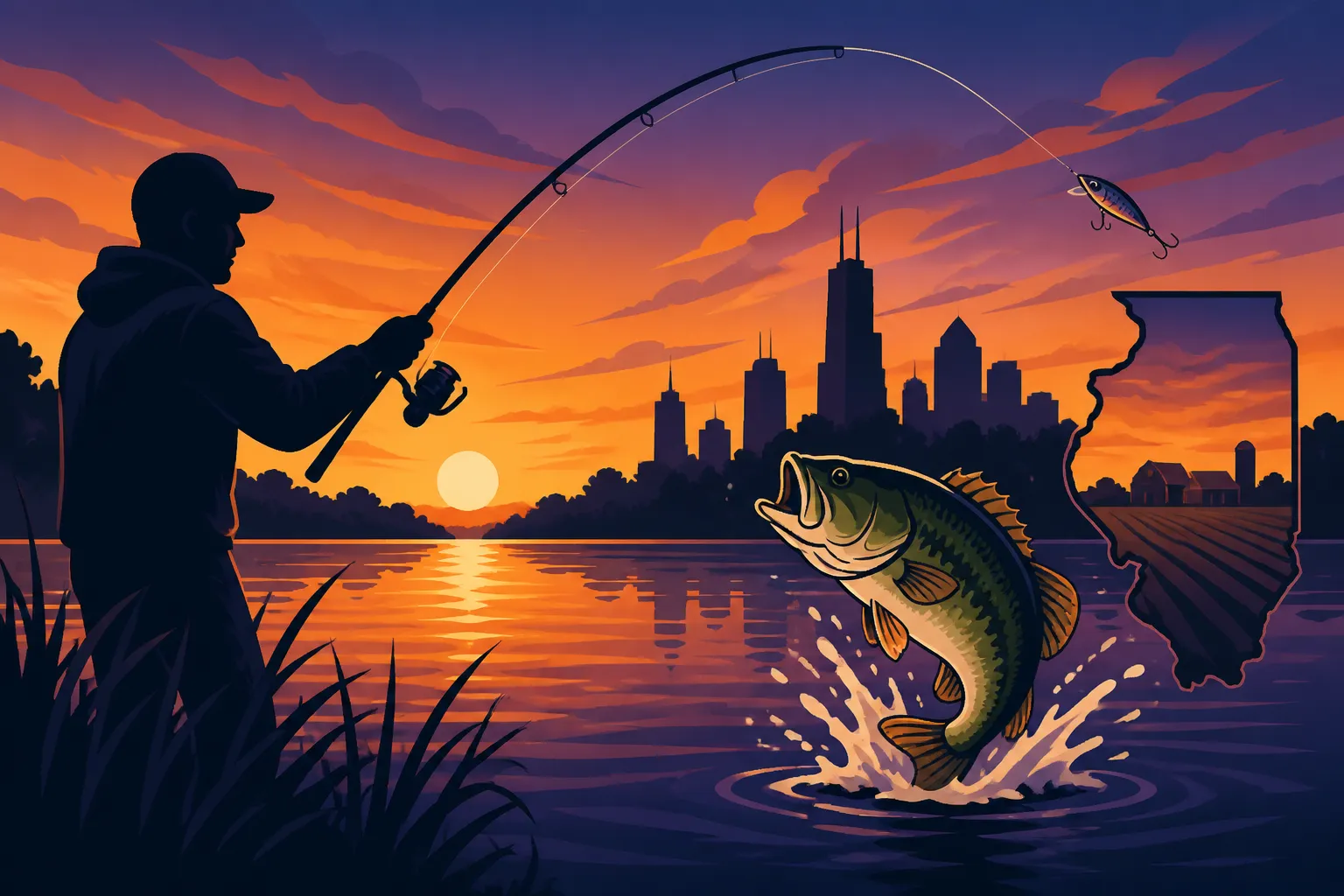
Oh, the joy of a topwater strike at dusk! As the light softens, largemouth bass, especially those bigger, more cautious fish, often move out of their daytime cover and into shallower water to feed aggressively. This is your cue to break out the surface lures.
Start with topwater baits like buzzbaits, poppers, and walking baits (like a Heddon Super Spook). The key is the commotion they make on the surface, drawing bass in with sound and vibration. Cast these lures close to visible cover like lily pad edges, fallen trees, docks, and submerged grass beds. Work them with a slightly slower retrieve than you might during the day, giving the bass time to locate and commit to the lure. The strikes at dusk are often explosive and heart-stopping, making it one of the most exciting ways to catch them. If topwater isn't working, switch to a darker-colored spinnerbait (black or purple) with large thumping blades or a Texas-rigged plastic worm worked slowly along the bottom near cover. For a deeper dive into targeting this popular species, be sure to read our comprehensive Largemouth Bass Fishing in Illinois: The Complete Guide.
Walleye: Jigging and Trolling the Edges
Walleye are perhaps the ultimate dusk and night predators, thanks to their exceptional low-light vision. As the sun sets, these fish become incredibly active, often moving from deeper haunts up onto shallow flats, humps, and along structural edges to feed on baitfish.
One of the most effective techniques for dusk walleye is trolling crankbaits. Choose darker colored crankbaits or those with rattles that dive to the depth of the thermocline or just above the structure you're targeting. Troll slowly along breaklines, points, and channel edges. Pay close attention to your electronics, looking for baitfish schools and walleye congregating. Another highly effective method is jigging. Use jigs tipped with live minnows or scented soft plastics, working them vertically over humps, rocky ledges, or deep water structures. Focus on areas where you know baitfish are present. The subtle thump of a walleye bite can be hard to detect in the dark, so a sensitive rod and braided line are crucial. Learn all about fishing for these elusive fish in our Illinois Walleye Fishing: The Complete Guide.
Catfish: From Bottom Rigs to Jug Lines
Catfish are nocturnal by nature, meaning dusk isn't just a good time; it's often the best time to target them. Channel cats, blue cats, and flatheads all become more active as darkness descends, relying on their incredible sense of smell and lateral line to find food.
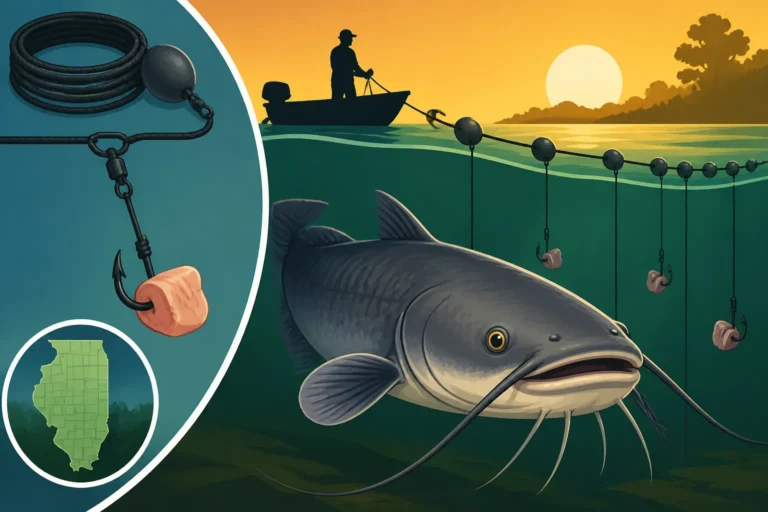
The most common and often most productive technique is bottom fishing. Use a simple slip-sinker rig or a three-way swivel rig with a hook and a heavy sinker. Baits are critical: stink baits (prepared dough baits, blood baits), cut bait (fresh shad or skipjack herring are excellent), nightcrawlers, or even chicken liver are all highly effective. Cast your bait into deeper holes, current seams, along channel edges, or near submerged cover. For larger blue and flathead catfish on bigger water bodies like the Mississippi River or Carlyle Lake, consider setting up trotlines or jug lines where permitted. These passive fishing methods can be incredibly effective overnight. Always check local regulations before using trotlines or jug lines. Our Catfish Fishing Techniques and Bait Guide offers more detailed advice on baits and rigs, and you can get the full rundown on when to target them in our Illinois Catfish Season Guide.
Crappie: Moving Shallow for Panfish
While often considered a daytime fish, crappie can offer some fantastic action at dusk, especially during the warmer months when they follow baitfish into shallower waters. They become particularly vulnerable as the light fades, moving to ambush points.
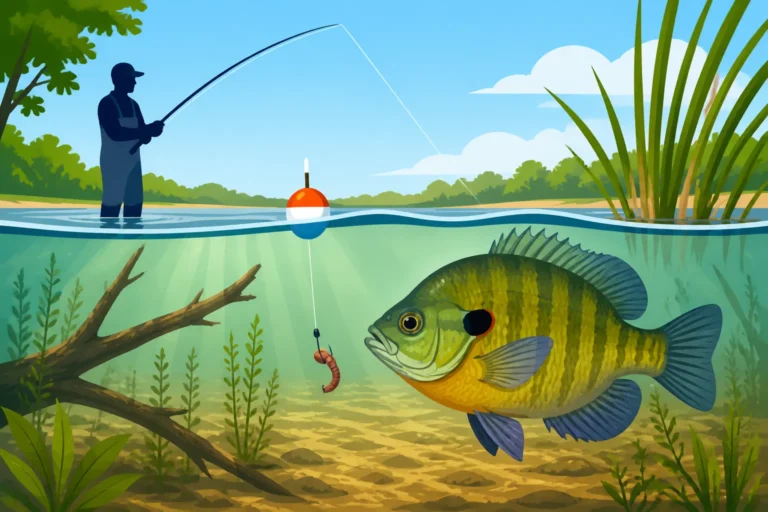
Target areas with submerged brush piles, standing timber, dock pilings, and bridge abutments. These structures provide cover and attract baitfish. The simplest and often most effective method is to use a small minnow suspended under a bobber, set to the depth of the crappie you're marking or the top of the cover. You can also use small jigs (1/32 to 1/16 ounce) tipped with a soft plastic grub or a live minnow. Cast and retrieve slowly, or simply suspend the jig vertically next to cover. Look for slight twitches in your line or subtle dips of the bobber, as crappie bites can be incredibly light. A sensitive ultralight rod is ideal for detecting these subtle takes. Find out more about how to bring in a cooler full of these tasty panfish with our guide to Crappie Fishing Techniques for Spring.
Staying Safe and Sound: Dusk Fishing Safety Tips
Dusk fishing is incredibly rewarding, but the reduced visibility inherently brings increased risks. Prioritizing safety is not just good practice; it's essential for a successful and enjoyable outing. Don't let the excitement overshadow your common sense.
Navigational Awareness and Lighting
If you're fishing from a boat, proper navigation lights are not just recommended, they are legally required. Ensure your bow (red/green) and stern (white) lights are fully functional before you even consider heading out. Even if you're just extending your trip a little past sunset, having them on and visible is critical for preventing collisions. Always assume other boaters might not see you, so be extra vigilant.
Know your waterways intimately before venturing out at dusk or night. Chart plotters and GPS units become invaluable tools for navigating in the dark, allowing you to stay in safe channels and avoid hazards like shallow bars, rock piles, or submerged stumps that are invisible after sunset. Reduce your speed significantly as darkness falls. The familiar landmarks you use during the day disappear, and what seemed clear in sunlight can become a dangerous obstacle in the dark. For a complete list of required safety equipment, consult our Illinois Boating Safety Gear Checklist.
Personal Safety and Preparedness
Being prepared for the unexpected is paramount. Always inform someone of your fishing plans: where you're going, who you're with, and when you expect to return. This simple step can be a lifesaver if something goes wrong.
Your personal gear checklist should include:
- Extra Batteries: For your headlamp, GPS, and phone.
- First-Aid Kit: Accidents can happen, and in the dark, a minor cut can become a bigger issue without proper light and supplies.
- Bug Spray: Mosquitoes and other biting insects often come alive at dusk, making fishing miserable without protection.
- Communication Device: A fully charged cell phone is a must. Consider a marine radio if you're on larger waters like Lake Michigan.
- Warm Clothing: Even on a warm day, temperatures can drop significantly after sunset. Layering is key.
- Drinking Water and Snacks: Stay hydrated and keep your energy up.
- Personal Flotation Device (PFD): Wear your life jacket, especially if you're on a boat. The risk of falling overboard and disorienting yourself in the dark is much higher.
For more detailed strategies on being out after dark, check out our guide on Night Fishing Techniques.
Respecting Regulations and Fellow Anglers
Just because it's dark doesn't mean the rules go out the window. Double-check local and statewide fishing regulations regarding night fishing for the specific body of water you're on. Some lakes or areas have restrictions on hours or specific types of fishing after dark. It's your responsibility to know these rules. Our Illinois Fishing Regulations Overview is a great place to start your research.
Be mindful of other anglers. If someone is already fishing a spot, give them plenty of space. Use your lights responsibly – avoid shining bright white lights directly into other boats or towards the bank where other anglers are casting. Sudden bright lights can ruin their night vision and spook fish. Minimize loud noises. The peace and quiet are part of the allure of dusk fishing, and respecting that atmosphere ensures a pleasant experience for everyone on the water.
Mastering the Transition: Day to Night Angling Strategies
The period just before and after sunset is a dynamic zone. Fish behavior isn't static; it's constantly changing as the light level decreases. Mastering this transition involves a flexible approach, adapting your techniques as day gives way to night.
Gradual Lure and Technique Changes
Don't just flip a switch from daytime lures to nighttime lures the moment the sun dips below the horizon. Instead, make a gradual transition. You might start with your favorite daytime crankbait or soft plastic, but as the light begins to fade, switch to slightly darker colors. As it gets even darker, introduce those noisy topwaters, spinnerbaits with thumping blades, or jigs with rattles.
Another key adjustment is your retrieve speed. Often, a slower retrieve is more effective at dusk and night, giving fish more time to locate your lure by sound or vibration, especially if they're relying less on sight. However, sometimes a quick, erratic retrieve can trigger a reaction strike from a predator ambushing in the low light. Experimentation is crucial. Pay attention to what the fish are telling you. If they're hitting a dark spinnerbait on a slow roll, stick with it. If they're blowing up on a topwater, keep that pattern going. The fish will dictate the pace.
Pre-Scouting Your Spot
There’s a saying: "You can't navigate in the dark what you haven't seen in the light." This couldn't be truer for dusk fishing. Before you even think about casting after sunset, spend some time during the day scouting your chosen fishing spot.
Identify key structures like submerged rock piles, weed lines, drop-offs, and points. Look for potential hazards like shallow flats, stumps, or docks that might be invisible in the dark. Use your electronics to map out contours and depths. Notice where baitfish are congregating during the day, as these areas are likely to attract predators as dusk approaches. If you're bank fishing, walk the shoreline, noting access points, potential tripping hazards, and the best casting lanes. This daytime reconnaissance will not only make your dusk fishing safer but also significantly more productive, allowing you to confidently target specific areas that you know hold fish. For ideas on where to conduct your scouting, check out our guide on the Best Fishing Spots in Illinois.
Understanding Barometric Pressure and Moon Phases
While not as immediate as light or temperature, larger environmental factors like barometric pressure and moon phases can also influence fish activity during twilight. Fish often become more active when the barometric pressure is stable or slowly falling, indicating an approaching front. Conversely, a rapidly rising or falling pressure can put fish off the bite.
The moon phase can also play a role, particularly for truly nocturnal species like catfish, or for any fish that relies on ambient light. A full moon can provide enough light for fish to feed actively throughout the night, sometimes extending the prime "dusk bite" for hours. A new moon, offering minimal light, might concentrate feeding more intensely into the true twilight hours or force fish to rely even more heavily on their non-visual senses. While these aren't always definitive factors, keeping an eye on them can provide an extra edge in predicting fish behavior. For a deeper look at the various timings and their impact, our Illinois Fishing Seasons Guide and Best Time to Fish in Illinois offer more insights.
Comparative Look: Daytime vs. Dusk Fishing
To summarize the key differences and advantages, here's a quick comparison of what you might expect when fishing during bright daylight versus the twilight hours in Illinois.
| Feature | Daytime Fishing (Bright Light) | Dusk Fishing (Low Light to Dark) |
|---|---|---|
| Fish Activity | Often slower, seeking deeper/shady cover | Highly active, feeding aggressively |
| Pressure | High boat traffic, many anglers | Lower boat traffic, fewer anglers |
| Water Temp | Warmer, especially surface layers | Cooling, more comfortable for fish and angler |
| Lure Visibility | Natural, subtle colors, realistic profiles | Darker silhouettes, noisy lures, glow-in-the-dark |
| Fish Location | Deep structure, heavy cover, shaded areas | Shallow flats, weed edges, topwater, ambush points |
| Senses Used | Sight, lateral line | Lateral line, smell, vibration (sight reduced) |
| Key Species | Panfish, bass (can be tough in midday), catfish | Bass, Walleye, Catfish, Crappie (often more active) |
Disclaimer
The information provided in this guide is for general informational purposes only and does not constitute legal advice regarding fishing regulations. Always consult the official Illinois Department of Natural Resources (IDNR) website or the most current Illinois Fishing Information Guide for the latest and most accurate rules and regulations before fishing. Fishing conditions and regulations can change, and it is the angler's responsibility to be aware of all applicable laws.