Illinois Fishing License Reciprocity With Iowa
It can be incredibly confusing trying to figure out which fishing license you need when you're casting lines in waters that border two states. Many anglers want to fish the productive waters of the Mississippi River, but they dread getting caught on the wrong side of the law, unsure if their Illinois license works in Iowa or vice versa. This comprehensive guide will untangle the complexities of Illinois fishing license reciprocity with Iowa, ensuring you understand exactly what you need to fish legally and confidently on shared waters.
The Complex World of Interstate Fishing Agreements
Fishing across state lines, especially on shared river systems like the Mighty Mississippi, often comes with a unique set of regulations that can make even seasoned anglers scratch their heads. It’s not as simple as just having a fishing license; you need to know if your specific state's license is valid in the water you're fishing, even if you’re just a few feet from the bank.
What is Fishing License Reciprocity?
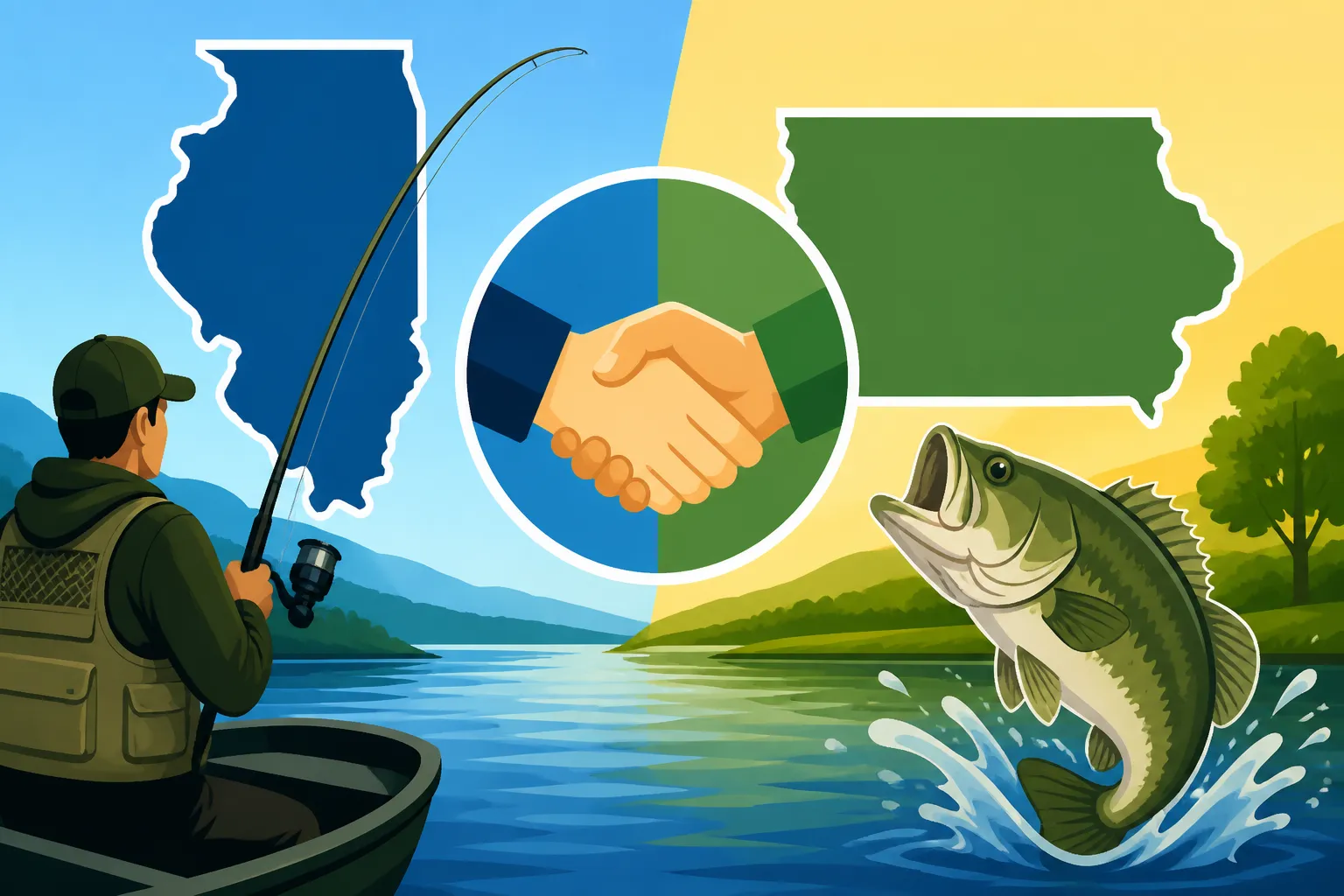
At its heart, fishing license reciprocity is an agreement between two states that allows an angler holding a valid fishing license from one state to legally fish in certain designated waters of the bordering state. Think of it as a handshake agreement between Illinois and Iowa, saying, "Hey, if you've got a valid license from your state, you're good to go on these specific shared waters." The whole point is to make fishing more accessible and less of a bureaucratic nightmare for folks who live near or want to explore these fantastic border fisheries. Without it, you'd be forced to buy two separate licenses just to fish one river, which just doesn't make sense.
However, it's critical to understand that reciprocity is almost never a blanket policy. It usually applies only to very specific bodies of water, typically the main channel of a border river. It rarely extends to tributaries or backwater lakes that might be physically connected but fall entirely within one state's geographical boundaries. This distinction is paramount, as drifting a little too far into a backwater slough could quickly land you in hot water if you're only relying on your reciprocal license. Many anglers have faced the frustration of thinking they're compliant, only to realize too late they crossed an invisible regulatory line.
Why Shared Waters Require Special Rules
Shared waters are a unique challenge because they are, by their very nature, under the jurisdiction of two different state agencies. Imagine the Mississippi River flowing between Illinois and Iowa. Both the Illinois Department of Natural Resources (IDNR) and the Iowa Department of Natural Resources (Iowa DNR) have a vested interest in managing the fish populations, protecting the ecosystem, and regulating fishing activities on that river. If there weren't reciprocal agreements, anglers would need to know the exact midline of the river and literally avoid casting a line into the other state's half, which is practically impossible and completely impractical for fishing.
These special rules ensure that anglers can enjoy the full width and breadth of these shared resources without constantly worrying about which side of an imaginary line their lure is currently on. It also helps with enforcement; conservation officers from both states can focus on ensuring anglers are licensed and following regulations, rather than trying to determine if someone is technically in Illinois or Iowa waters at any given second. The goal is conservation and fair play, making sure the fishing remains good for everyone while also simplifying things for the angler. However, this simplification comes with its own set of nuances, especially when it comes to understanding which specific areas are covered and which aren't.
Illinois and Iowa: Navigating the Mississippi River
When it comes to Illinois and Iowa, the shining example of reciprocal fishing license agreements is undoubtedly the Mississippi River. This majestic waterway forms a significant portion of their shared border, and recognizing its importance, both states have worked to ensure anglers can enjoy it with minimal hassle.
The Core Reciprocal Agreement for the Mississippi
For the vast majority of the Mississippi River that borders Illinois and Iowa, there’s a fantastic reciprocal agreement in place. What this means for you, the angler, is that if you possess a valid, current fishing license from either Illinois or Iowa, you are legally permitted to fish in the shared boundary waters of the Mississippi River between these two states. This covers the main channel, any impoundments created by locks and dams, and many of the contiguous side channels and backwaters directly connected to the main flow. It’s a huge relief for anyone who lives near the river or travels to it regularly, as it avoids the need to purchase two separate licenses. For a more general overview of what you need, check out our Illinois Fishing License Guide for 2026.
This agreement is a testament to cooperation between the Illinois Department of Natural Resources (IDNR) and the Iowa Department of Natural Resources (Iowa DNR). It acknowledges the continuous nature of the river ecosystem and the shared angling experience. So, whether you bought your license online through the IDNR website, picked one up at a local bait shop in Iowa, or ordered a comprehensive fishing guide and related gear from Amazon, as long as it's a valid resident or non-resident license from either state, you're good to go on the Mississippi. This is true whether you’re fishing from a boat, shore, or through the ice. Just be sure to always carry your license with you when you're out on the water.
Identifying the Reciprocal Boundary
While the principle of reciprocity is straightforward, identifying the exact boundaries where it applies can sometimes be a little less so. Generally, the reciprocal agreement between Illinois and Iowa covers the entire width of the Mississippi River itself, from bank to bank, along the entire border it forms between the two states. This includes all the pools created by the locks and dams, which are prime fishing locations for walleye, sauger, and crappie. So, you can confidently cast your line from an Illinois boat ramp and drift towards the Iowa side, or vice versa, without needing to worry about a second license.
However, the "main channel" definition is key. This typically refers to the actively flowing water of the river. It also extends to interconnected sloughs, side channels, and backwater areas that are open to the main channel of the Mississippi. The idea is that if the water is clearly part of the river's main flow and ecosystem, the reciprocity applies. It’s not about an imaginary line down the middle; it's about the entire shared river habitat. Knowing these specifics can save you a lot of headache, and resources like the official state fishing guides or even detailed maps can often illustrate these zones, helping you prepare for your trip. Anglers often find the official publications available digitally or sometimes even hard copies for purchase on platforms like Amazon incredibly helpful for these details.
When Reciprocity Doesn't Apply (Tributaries & Backwaters)
Here's where many anglers can mistakenly run afoul of the law, and it’s a crucial distinction. While your Illinois or Iowa license will generally cover the main stem of the Mississippi River, it absolutely does not extend to tributaries or isolated backwater lakes that lie entirely within one state's borders, even if they're just a stone's throw from the Mississippi.
For example, if you're fishing on the Mississippi River with an Illinois license, and you decide to head up a small tributary stream that flows into the Mississippi on the Iowa side (like the Skunk River or the Iowa River), you cannot fish in that tributary without an Iowa fishing license. The same applies if you have an Iowa license and venture into an Illinois tributary or a land-locked backwater lake that's fully within Illinois territory. These waters are considered "inland" waters of that specific state, and the reciprocal agreement does not apply. You’d need a separate, valid license for the state whose inland waters you are now fishing. This distinction is vital for avoiding potential fines and ensuring a legal and enjoyable fishing trip. Always consult the specific state regulations, often found in the annual fishing guides, to confirm before you venture away from the main river channel. For example, understanding Why Fishing Rules Vary by Lake and River is incredibly important here.
What Your Illinois or Iowa License Covers (and Doesn't)
Having a valid fishing license from either Illinois or Iowa for the reciprocal waters of the Mississippi River is a fantastic start. However, it's not always the complete picture. Anglers often overlook additional requirements that can vary even within reciprocal agreements, leading to frustration or, worse, penalties.
Specific Fish Species and General Fishing Privileges
Your standard annual fishing license from Illinois or Iowa, when used on the reciprocal waters of the Mississippi, grants you the general privilege to fish for most common game and panfish species found in the river. This includes species like largemouth and smallmouth bass, crappie, bluegill, walleye, sauger, northern pike, and a variety of catfish species such as channel, blue, and flathead catfish. Basically, if it's a popular target in the Mississippi, your valid license usually covers it. For more on what's biting, you might want to read about Mississippi River Walleye and Sauger: Illinois' Northern Stretch Explained or Mississippi River Catfish: Why Southern Illinois Waters Produce So Many.
However, even with reciprocity, specific rules for different species—like daily catch limits, size restrictions, and season dates—can still vary slightly between Illinois and Iowa, even on the same body of water. While often harmonized for the main river, there might be subtle differences in how each state manages its resources. It's always prudent to be aware of the more restrictive of the two states' regulations when fishing reciprocal waters, or at least be familiar with the regulations of the state from which you purchased your license. For example, while both states want to protect fish, Illinois might have a slightly different minimum size limit for walleye in certain sections than Iowa.
Additional Stamps and Permits: A Common Overlook
This is a critical area where anglers often stumble. Even if you have a reciprocal agreement for your base fishing license, specialized stamps or permits are typically not covered by reciprocity. This means if you are fishing for a species that requires an additional stamp in either state, you generally need to possess that specific stamp from the state you are licensed in.
For example, neither Illinois nor Iowa currently requires a specific "trout stamp" for fishing the Mississippi River, as it's not typically managed as a primary trout fishery. However, if you were to venture into certain Illinois inland waters or specific Iowa trout streams that are stocked, both states would require a separate inland trout stamp. The key here is to understand that the base fishing license reciprocity doesn't automatically extend to these supplementary permits. Always check the regulations of the state where you bought your license to see if any additional stamps are required for the species you intend to target or the specific type of water you'll be fishing. For a deeper dive into Illinois's specific stamp requirements, you might want to look into Illinois Trout and Salmon Stamp Requirements. These stamps are typically purchased at the same time as your fishing license or can be added on later through official state DNR websites.
Residency and License Types: A Key Distinction
The type of license you hold—resident versus non-resident—is also a fundamental aspect of understanding reciprocity. If you are an Illinois resident, you'll purchase an Illinois Resident Annual Fishing License. If you are an Iowa resident, you'll buy an Iowa Resident Annual Fishing License. These resident licenses are typically more affordable and often come with more options. However, if you are a non-resident of both Illinois and Iowa (e.g., you're visiting from Wisconsin or Missouri), you would need to purchase a non-resident fishing license from either Illinois or Iowa to fish the reciprocal waters of the Mississippi.
You cannot, for example, buy an Illinois Nonresident Fishing License and expect to fish Iowa's inland waters. The reciprocity only applies to the designated shared waters of the Mississippi River. The price difference between resident and non-resident licenses can be significant, so understanding your residency status and the options available is important. For instance, an Illinois resident has access to options like annual licenses, short-term licenses, and even lifetime licenses, all of which are covered in guides like Illinois Fishing License Costs and Types. Non-residents might have fewer options or pay a higher fee for similar durations, and understanding the Illinois Nonresident Fishing License Guide can be very helpful for visitors.
Beyond the License: Other Important Regulations
While knowing your license covers you is a massive step, responsible angling on shared waters like the Mississippi River requires understanding a broader set of regulations. The license is just your entry ticket; the rules of the game still apply, and they can sometimes differ slightly between states.
Site-Specific and Species-Specific Regulations
This is where things can get a little tricky, even on reciprocal waters. While the general reciprocal agreement aims to simplify licensing, it doesn't always completely homogenize all fishing regulations. Both Illinois and Iowa have their own methods for managing fish populations, and this can lead to subtle differences in site-specific or species-specific rules. For example, Illinois might have a slot limit for certain bass in a particular pool of the Mississippi, while Iowa might not, or vice versa. Or the daily bag limit for crappie might differ by a fish or two.
It's common for both states to try and align these regulations on shared waters to prevent confusion, but discrepancies can still exist. Your best bet is always to consult the current year's fishing regulations for both Illinois and Iowa, paying particular attention to the sections pertaining to the Mississippi River. When in doubt, always default to the more restrictive regulation. This practice ensures you're compliant regardless of which state's enforcement officer you might encounter. Websites for the Illinois DNR and Iowa DNR are excellent resources, offering up-to-date digital copies of their fishing guides, which you can even download to your phone for quick reference on the water. Many anglers find a waterproof case for their phone or a printed guide they purchased from a reliable online retailer like Amazon to be invaluable.
Boat Registration, Safety, and Equipment
This is another area where reciprocity generally does not apply. If you're operating a motorized boat on the Mississippi River, it needs to be registered in your state of primary residency, or at least the state where you typically launch and operate it. An Illinois boat registration will not cover a boat owned by an Iowa resident that is exclusively used and kept in Iowa, and vice versa. Each state has its own specific Illinois Boat Registration Requirements Explained including fees, renewal processes, and display rules for registration decals.
Beyond registration, both states also have strict boating safety regulations concerning required equipment. This includes things like the number and type of life jackets (PFDs), fire extinguishers, sound-producing devices, navigation lights, and throwable flotation devices. For instance, Illinois Life Jacket and PFD Rules dictate specific requirements for children and adults. While many of these safety requirements are similar due to federal Coast Guard guidelines, there can be state-specific nuances. Therefore, it's crucial that your vessel complies with the safety requirements of the state your boat is registered in. Again, always carry your boat registration and proof of compliance with safety equipment aboard your vessel.
Understanding Possession Limits and Creel Limits
A "creel limit" (or daily bag limit) refers to the maximum number of a particular species of fish you can catch and keep in a single day. A "possession limit" refers to the maximum number of a particular species of fish you can have in your possession at any one time, including fish stored at home or in your cooler from previous days' catches. On reciprocal waters of the Mississippi River, both Illinois and Iowa typically strive to harmonize these limits for specific species to avoid confusion.
However, anglers should still be diligent in checking the specific regulations for the particular pool or section of the river they are fishing. For example, you might be allowed to catch six walleye per day, but if you have a multi-day trip and keep them, your total possession cannot exceed the state-mandated possession limit, which is often two or three times the daily limit. These limits are in place to ensure sustainable fishing and prevent overharvesting. It's a key part of Illinois Fishing Season and Catch Limit Rules and failing to adhere to them, even inadvertently, can lead to stiff penalties. When fishing with friends or family, ensure everyone understands and adheres to these limits individually.
Staying Compliant and Avoiding Fines on Border Waters
Nobody wants their relaxing day on the water ruined by an unexpected run-in with a conservation officer that results in a citation. Understanding the nuances of reciprocal agreements and being prepared are your best defenses against accidental non-compliance.
Essential Documents to Carry on the Water
This might seem obvious, but it's astonishing how often anglers forget or misplace crucial documents. When fishing the reciprocal waters of the Mississippi River between Illinois and Iowa, you must always carry your valid fishing license (from either state) and a government-issued photo ID (like a driver's license). These two documents are essential for proving your identity and your legal right to fish. Many states, including Illinois, allow digital copies of your license on your smartphone, but it's often a good idea to have a physical copy too, just in case your phone battery dies or you lose signal. A clear, waterproof license holder, readily available on Amazon, is a smart investment to protect your paper license.
If you are operating a boat, you must also have your boat registration on board. If you were born on or after a certain date (January 1, 1998, in Illinois for those operating motors over 10 horsepower), you might also need to carry proof of your boater education certification. Conservation officers have the authority to request these documents at any time while you are engaged in fishing or boating activities. Being unable to produce them can lead to delays, frustration, and potential fines, even if you are otherwise compliant.
Resources for Checking Up-to-Date Regulations
The fishing world isn't static; regulations can and do change from year to year. Relying on old information is a common pitfall. To stay completely up-to-date on Illinois and Iowa fishing regulations for the Mississippi River, always consult the official resources.
Here's where to find them:
- Illinois Department of Natural Resources (IDNR) Website: The IDNR website is your go-to for all Illinois fishing and boating regulations. They typically publish their annual fishing guide online, often in PDF format, which covers everything from licensing to catch limits to specific site regulations.
- Iowa Department of Natural Resources (Iowa DNR) Website: Similarly, the Iowa DNR website provides comprehensive guides and updates on their state's fishing regulations, including the Mississippi River.
- Local Bait Shops and Sporting Goods Stores: Often, these local establishments will have printed copies of the current year's regulations or knowledgeable staff who can answer specific questions about the immediate area. Stores like Bass Pro Shops or Cabela's often stock these guides for free.
- Fishing Apps and Online Forums: While not official sources, many reputable fishing apps and online forums can provide quick access to regulations or discussions about current conditions and rules. Always cross-reference with official sources, though.
Make it a habit to check these resources before your first trip of the year and periodically throughout the season, especially if you're venturing to a new section of the river. This diligence is crucial, as ignorance of the law is rarely an excuse.
Consequences of Non-Compliance: What Could Go Wrong?
Ignoring fishing regulations, even unintentionally, can lead to a range of unpleasant consequences. The severity of the penalty typically depends on the nature of the violation.
Common violations on reciprocal waters include:
- Fishing without a proper license: This is one of the most common and easily preventable offenses. If you're caught without a valid Illinois or Iowa license on the reciprocal stretch of the Mississippi, you could face significant fines. For specific details, read up on Penalties for Fishing Without a License in Illinois.
- Exceeding daily bag limits or possessing undersized fish: These violations are often tied to conservation efforts. Fines can be substantial, and in some cases, you might forfeit your catch and even your fishing equipment.
- Failing to comply with boat registration or safety equipment requirements: This can result in fines and, in some cases, your boat being ordered off the water until deficiencies are corrected.
- Fishing in non-reciprocal waters without the correct state's license: As discussed earlier, venturing into a tributary or backwater completely within one state's borders without the correct license can lead to fines, as reciprocity doesn't apply there.
In more severe cases, repeat offenders or those involved in commercial poaching might face steeper penalties, including loss of fishing privileges for an extended period, seizure of equipment, and even jail time. Conservation officers, often referred to as game wardens, are well-trained and dedicated to protecting natural resources. They patrol the Mississippi River by boat, truck, and even on foot, and they are adept at identifying violations. A simple stop to check your license can quickly escalate if other violations are discovered. The best approach is always to be informed, be prepared, and adhere strictly to all regulations to ensure your time on the water is enjoyable and free from legal troubles.
Disclaimer
Please remember that fishing regulations, license requirements, and reciprocal agreements are subject to change. While every effort has been made to provide accurate and up-to-date information, this guide is for informational purposes only and should not be considered legal advice. Always consult the official websites of the Illinois Department of Natural Resources (IDNR) and the Iowa Department of Natural Resources (Iowa DNR) or their most current printed regulations guides before heading out to fish. Your local bait shops and conservation offices are also excellent resources for the most current information.