Best Fishing Boat for Carlyle Lake Catfishing
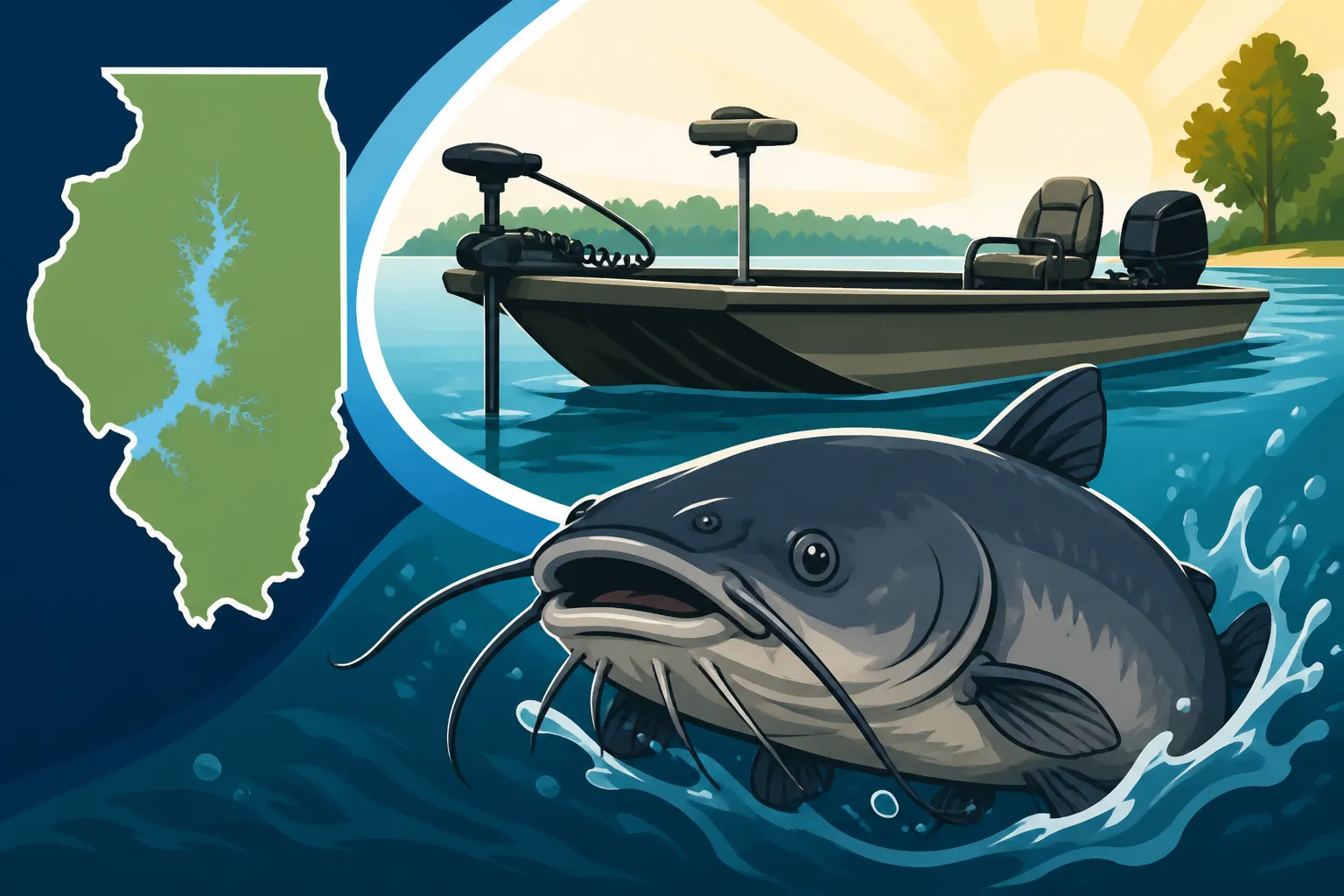
Choosing the right fishing boat for a lake as expansive and diverse as Carlyle Lake can feel like a monumental task. It's not just about getting on the water; it's about having the stability, comfort, and capability to truly enjoy chasing those legendary Carlyle Lake catfish, whether you're battling big blues in open water or targeting flatheads in submerged timber. This guide is here to break down the essential factors and boat types so you can confidently pick a rig that makes your catfishing dreams a reality on Illinois's largest man-made lake.
Understanding Carlyle Lake's Catfishing Challenges
Carlyle Lake isn't just any fishing hole; it's a massive body of water, over 26,000 acres, with a personality all its own. Any seasoned angler knows that the lake itself often dictates the kind of boat you need, and catfishing here presents some unique considerations. You're not just dealing with the fish, but with the elements and the lake's varied topography.
The Vastness of Carlyle Lake and Its Impact on Fishing
Imagine driving across Illinois and seeing what looks like an inland sea – that's Carlyle Lake. Its sheer size means long runs from the ramp to your favorite spots, especially if you're targeting specific areas for big blue catfish or flatheads. This isn't a small farm pond where a simple jon boat will always cut it. You're going to encounter wide-open stretches of water where the wind can whip up quickly, turning a calm morning into a choppy, uncomfortable ride back to shore.
The frustration of being out on Carlyle when a storm rolls in or the wind kicks up can quickly sour a trip if your boat isn't up to the task. You need a vessel that can handle those waves, keep you dry, and get you back safely. Stability is paramount, not just for a comfortable ride, but for standing confidently while you reel in a big channel cat or wrestle a trophy blue. A boat that feels like it's rocking too much when you're setting lines or netting a fish isn't just uncomfortable; it can be downright unsafe, especially if you have kids on board.
Targeting Different Catfish Species and Their Habitats
Carlyle Lake is a haven for all three major catfish species: channel, blue, and flathead. Each has its preferred hangouts, and your boat choice can impact how effectively you can access these areas. Channel cats are often found in a variety of places, from shallow flats to creek channels, and even around riprap. Blues tend to prefer deeper, open water, especially along old river channels and main lake points, often holding near baitfish schools. Flatheads, the true ambush predators, are typically found in or near heavy cover like submerged timber, log jams, and rock piles, particularly in the deeper sections of creek beds.
A boat that's excellent for running the main lake and drifting for blues might not be the easiest to navigate through tight timber for flatheads. Conversely, a shallow-draft boat perfect for getting into skinny water might leave you feeling a bit exposed when the chop picks up on the main lake. You'll need to consider what species you'll be primarily targeting. Are you an open-water blue cat specialist, or do you prefer the challenging hunt for a monster flathead in heavy cover? Your answer will significantly influence the ideal boat features. Illinois Catfish Daily Limits Explained can help you understand what you're legally allowed to keep from these varied habitats.
Navigating Carlyle Lake's Depths and Structure
Beneath Carlyle Lake's surface lies a complex world of old riverbeds, creek channels, submerged timber, roadbeds, and vast mud flats. Catfishing often means focusing on these structural elements. Flatheads, as mentioned, are notorious for hiding in thick cover, and navigating those areas requires a boat that can take a bit of abuse or one nimble enough to weave through tight spots. You don't want a boat that's easily damaged by shallow stumps or submerged logs, which are common in many of the lake's productive areas.
Understanding the lake's depths is also critical. While some areas are quite shallow, others drop off dramatically into the old Kaskaskia River channel. A robust hull is a huge advantage here, providing peace of mind when you might bump something unseen below the surface. Also, having reliable electronics, like a good fish finder and GPS, becomes less of a luxury and more of a necessity for pinpointing these structures and safely navigating back.
Key Boat Features for Carlyle Lake Catfishing Success
When it comes to outfitting yourself for serious catfishing on Carlyle Lake, certain boat features transition from "nice-to-have" to "must-have." These aren't just about comfort; they're about efficiency, safety, and ultimately, your success on the water.
Stability and Deck Space: Essential for Catfish Anglers
Catfishing isn't a passive sport, especially when you hook into a true Carlyle Lake bruiser. You need room to move, cast, set multiple rods, and, crucially, to fight and net large fish without feeling cramped or unstable. A wide beam and a relatively flat, open deck space are gold for catfishermen. Imagine having two or three anglers on board, each running multiple rods. Without ample space, lines get tangled, people trip, and the whole experience becomes less enjoyable.
Look for boats with a broad, stable platform that minimizes rocking when you're standing up or moving around. High gunwales can offer an extra sense of security, particularly when dealing with waves or if you have children on board. The ability to mount several heavy-duty rod holders around the perimeter without interfering with movement is also key. A truly effective catfishing boat turns the entire deck into a functional workspace, allowing you to focus on the fish, not on navigating obstacles.
Power and Durability: Battling Wind and Water
Given Carlyle Lake's size and propensity for choppy conditions, adequate horsepower is non-negotiable. You'll often need to cover significant distances quickly, whether it's to reach a distant fishing spot, chase a schooling bait ball, or make a speedy retreat when unexpected weather rolls in. An underpowered boat will struggle against the wind and waves, making for a long, wet, and uncomfortable ride. Think about what will push your fully loaded boat (with anglers, gear, and potentially a livewell full of bait or fish) efficiently.
Durability goes hand-in-hand with power. The hull construction is a critical factor. Heavy-gauge aluminum boats are often favored by catfishermen for their resilience. They can withstand impacts from submerged timber or shallow rock more readily than many fiberglass hulls, which can be a real concern when exploring flathead haunts or running through less-traveled areas. While fiberglass boats offer a smoother ride in choppy water, the toughness of a well-built aluminum boat can provide peace of mind in Illinois's varying conditions. You want a boat that feels solid beneath you, one that inspires confidence rather than worry when the conditions get a little rough. Consider the Best Fishing Boat for Rend Lake Illinois too, as it shares many characteristics with Carlyle.
Storage, Livewells, and Rod Holders: The Practical Side
A successful catfishing trip involves a lot of gear: multiple rods and reels, tackle boxes, bait buckets, anchors, nets, and safety equipment. Dedicated, accessible storage is vital to keep your deck clear and safe. Look for boats with ample under-deck storage, side lockers, and perhaps even a dedicated rod locker for your longer catfishing rods.
For serious catfishing, a large, aerated livewell is essential. Whether you're keeping shad or sunfish alive for bait, or holding your keepers fresh for the cleaning table, a properly sized and functioning livewell makes a huge difference. You might need something larger than what a typical bass boat offers, as catfish can grow quite large! Many anglers even convert cooler space or add custom bait tanks.
Finally, specialized rod holders are paramount. Catfish hit hard, and you often fish with multiple rods simultaneously. Heavy-duty, adjustable rod holders that can withstand a powerful strike are a must. They should be strategically placed to give you maximum coverage and easy access to your rods. Companies like Bass Pro Shops offer a wide array of heavy-duty rod holders designed specifically for catfishing, allowing you to customize your setup to perfection.
Top Boat Types for Carlyle Lake Catfishing
When we talk about the best boats for Carlyle Lake catfishing, we're not just looking at one ideal model. Different styles of boats offer unique advantages and disadvantages, catering to various fishing styles, budgets, and family needs.
Aluminum Jon Boats and Modified V-Hulls: The Workhorses
For many dedicated catfishermen, especially those who prioritize practicality and affordability, an aluminum jon boat or a modified V-hull boat is the undeniable workhorse. These boats are incredibly versatile and tough.
Jon Boats:
- Pros: They are generally lightweight, making them easy to launch and retrieve, even at less-developed ramps around Carlyle. Their shallow draft allows access to skinny backwater areas, perfect for chasing flatheads in timber or exploring flooded marshy regions. They are also typically the most budget-friendly option, both in initial purchase and ongoing maintenance. Many serious catfishermen appreciate the open, customizable layout, which allows for adding specific rod holder setups, cooler seats, and electronics. You can find robust models at stores like Bass Pro Shops that are built to handle heavier motors and more gear.
- Cons: The flat bottom design means they can deliver a very rough ride in choppy water, which is a frequent occurrence on large bodies like Carlyle Lake. You'll get wet, and your back might feel it after a long day. Stability can also be an issue if too many people are moving around, though wider models mitigate this.
- Best Fit: Jon boats are fantastic for anglers who want a simple, durable, and highly customizable platform for targeting flatheads in heavy cover, or for those on a tighter budget who don't mind sacrificing some comfort for ruggedness and versatility. They're also great for those who primarily fish solo or with one partner.
Modified V-Hulls:
- Pros: These boats offer a compromise between the flat-bottom jon boat and a deeper V-hull. They retain good shallow-water access but offer a much smoother ride in moderate chop than a pure jon boat. They often come with slightly higher sides, providing a bit more security, and more built-in features like livewells and storage.
- Cons: They are generally more expensive than basic jon boats and might not be quite as nimble in extremely shallow, tight cover.
- Best Fit: A fantastic all-around option for anglers who want to fish a variety of Carlyle Lake conditions, from open water for blues to some shallower, timbered areas for flatheads, without breaking the bank.
Fiberglass Bass Boats and Multi-Species Boats: Comfort and Performance
If speed, a smooth ride, and integrated features are high on your list, fiberglass bass boats and multi-species boats offer a more premium experience, which can certainly be adapted for excellent catfishing.
Fiberglass Bass Boats:
- Pros: Renowned for their speed, allowing you to cover vast distances on Carlyle Lake quickly. They offer an incredibly smooth ride in chop, making long runs much more comfortable. Many come equipped with powerful electronics, comfortable seating, and large casting decks that can be adapted for multiple rod holders. Their stable platforms are excellent for standing and fighting large fish.
- Cons: They typically have a shallower deadrise at the transom than true deep-V multi-species boats, meaning they can still get wet in very rough conditions, despite their speed. Their lower profile can also feel less secure in big waves. They are generally more expensive and have a deeper draft than aluminum boats, limiting access to some very shallow areas.
- Best Fit: Ideal for the angler who wants to cover a lot of water quickly, particularly targeting blue catfish in open areas, and values comfort and performance above all else. They might require some customization for optimal catfishing rod holder setups and livewell capacity.
Multi-Species Boats (e.g., Walleye Boats):
- Pros: These boats are often the sweet spot for many large-lake anglers. They feature a deeper V-hull that cuts through chop exceptionally well, providing a much drier and more comfortable ride than almost any bass boat. They have high gunwales, making them feel very secure in rough water, and ample deck space that can be easily set up for multiple catfishing rods. They are designed to handle diverse fishing situations, from trolling for walleye to anchoring for catfish.
- Cons: They are often quite heavy and large, requiring a capable tow vehicle and can be more challenging to launch at some ramps. They are also on the higher end of the price spectrum. Their deeper draft means they can't access extremely shallow water.
- Best Fit: Arguably the best overall choice for serious Carlyle Lake catfishermen who want to fish in all conditions, value comfort and safety, and appreciate a boat that can handle various techniques and target species. Best Boats for Carlyle Lake Fishing will often highlight these types.
Pontoon Boats and Deck Boats: Family-Friendly Catfishing Platforms
For the angler who prioritizes family fun, spaciousness, and a relaxed atmosphere, pontoon boats and deck boats can be surprisingly effective for catfishing on Carlyle Lake.
Pontoon Boats:
- Pros: Unmatched deck space and incredible stability. You can easily have a large group of friends or family on board, everyone with their own rod, without feeling crowded. They offer a very comfortable, smooth ride in calm to moderate conditions and are excellent platforms for anchoring and soaking baits. They often come with amenities like comfortable seating, sun shades, and even grills, making them perfect for a full day of fishing and recreation.
- Cons: They are generally slow and not designed for speed or handling very rough, open water chop. Their large size and deep pontoons mean they have limited shallow-water access and can be difficult to maneuver in tight spots or around heavy timber. Launching and trailering can also be more involved due to their size.
- Best Fit: Excellent for families or groups who want to enjoy a comfortable, social catfishing experience, primarily anchored or drifting in open to moderately structured areas. Not ideal for fast runs or navigating tight cover.
Deck Boats:
- Pros: Offer a hybrid approach, combining the open deck space of a pontoon with a more traditional V-hull. This provides a smoother ride than a pontoon and often more speed, making them better for covering distance on Carlyle. They are very stable and comfortable, with plenty of seating and amenities for a group.
- Cons: While faster than pontoons, they're still not as quick as a bass boat. They can be expensive and still have a relatively deep draft, limiting shallow water access.
- Best Fit: A good option for families or groups who want a comfortable, spacious platform for catfishing but also desire the ability to cover water more efficiently than a pontoon.
Important Considerations Beyond the Boat Itself
Choosing the right hull is a huge step, but a boat is more than just fiberglass or aluminum. To truly maximize your Carlyle Lake catfishing experience, you need to think about the accessories and practicalities that turn a vessel into a complete fishing machine.
Electronics: Fish Finders, GPS, and Trolling Motors
In today's catfishing world, especially on a lake as big and complex as Carlyle, good electronics aren't optional; they're essential. They literally let you "see" beneath the surface and pinpoint exactly where the fish are holding.
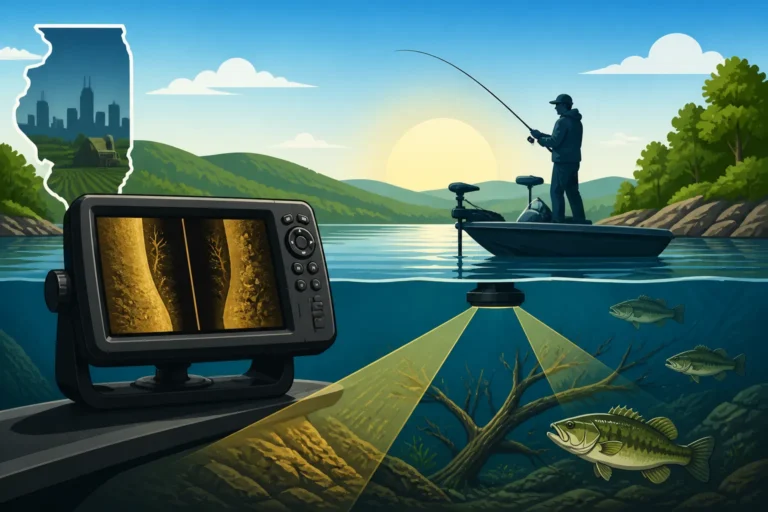
A high-quality fish finder with down-imaging and side-imaging capabilities will be your best friend. It allows you to scan wide swaths of the lake for submerged timber, old creek channels, baitfish schools, and even individual catfish lurking on the bottom. Modern units also integrate GPS mapping, which is invaluable for navigating Carlyle Lake, marking productive spots, and safely finding your way back to the ramp, even in fog or darkness. You can explore a wide range of options, from budget-friendly models to advanced units, and find what suits your needs. For more specific insights, check out Fish Finders for Illinois Lake Fishing.
Equally important for catfishing is a reliable electric trolling motor, preferably one with GPS-controlled spot-lock or anchor mode. This technology allows your boat to hold its position precisely over a piece of structure or a school of fish, even in windy conditions, without having to drop a physical anchor. This is a game-changer for precise bait placement and keeping multiple lines where they need to be. When the bite is on, being able to quickly reposition and "spot-lock" saves precious time and greatly increases your efficiency.
Trailer and Launching: Getting Your Boat to the Water
Even the best boat is useless if you can't get it to the water easily and safely. A properly sized and maintained trailer is crucial. Ensure your trailer has adequate capacity for your boat's weight, plus all your gear, and that the tires, bearings, and lights are in good working order.
Carlyle Lake has numerous boat ramps, but some are busier than others, especially on weekends. Being able to launch and retrieve your boat efficiently is a matter of courtesy and safety. Practice backing up if you're new to trailering! Also, consider the specific types of ramps you'll use. Some might be steeper, or have more shallow water, which could affect how easily you get your boat in and out. Having a good set of trailer guides and a proper winch setup will make the whole process much less stressful. For comprehensive guidance on this, read up on Illinois Boat Trailer and Ramp Tips.
Budgeting for Your Carlyle Lake Catfishing Rig
Beyond the initial boat purchase price, there are several other costs that every aspiring Carlyle Lake catfisherman needs to factor into their budget. It's easy to get excited about the boat itself and forget the rest!
- Registration and Titling: Every motorized boat in Illinois needs to be registered. These fees vary by boat size and engine horsepower. While not exorbitant, they are an annual or multi-year expense.
- Insurance: Protecting your investment is wise. Boat insurance can cover damage, theft, and liability.
- Safety Gear: Don't skimp here. Life jackets for everyone on board (and especially for kids), a fire extinguisher, signaling devices, and a first-aid kit are absolute necessities. You can find essential safety equipment at retailers like Amazon or Bass Pro Shops.
- Fishing Accessories: Rod holders, anchors, drift socks, cast nets, bait tanks, and other specialized catfishing gear can add up. Start with the essentials and build your collection over time.
- Maintenance: Boats require regular maintenance, including engine service, trailer upkeep, and general cleaning. Factor in fuel costs too, especially if you plan on covering a lot of water.
Whether you're looking for a brand-new, fully rigged vessel or a reliable used boat, understanding these associated costs will help you create a realistic budget and avoid any unwelcome surprises down the line.
Carlyle Lake Catfishing Boat Comparison
Here's a quick look at how different boat types stack up for chasing catfish on Carlyle Lake:
| Boat Type | Primary Catfish Target | Ride in Chop | Deck Space & Stability | Shallow Water Access | Durability (Hull) | Cost Range |
|---|---|---|---|---|---|---|
| Aluminum Jon Boat | Flathead, Channel (timber/shallow) | Poor | Good (open) | Excellent | Excellent (tough) | Lower |
| Aluminum Modified V-Hull | All species (versatile) | Fair to Good | Good | Good | Very Good | Mid-Lower |
| Fiberglass Bass Boat | Blue, Channel (open water) | Good | Excellent | Fair | Good | Mid-Higher |
| Fiberglass Multi-Species | All species (all conditions) | Excellent | Very Good | Fair | Very Good | Higher |
| Pontoon Boat | Blue, Channel (anchored/drifting) | Fair | Excellent (massive) | Poor | Good | Mid-Lower to Mid-Higher |
Disclaimer
This article is for general informational purposes only and does not constitute professional advice. Laws, prices and regulations vary by location and change over time. Consult a qualified professional for guidance on your specific situation.