Illinois PFD Storage and Accessibility Rules
It's easy to think that once you've got a life jacket on board, you're all set for a day out fishing on an Illinois lake or river. But the truth is, merely possessing a personal flotation device (PFD) isn't enough to meet safety regulations or truly keep you safe in an emergency. This guide will walk you through the often-overlooked but absolutely critical rules around PFD storage and accessibility in Illinois, helping you understand not just what you need, but how it needs to be ready when it counts.
Why PFD Rules Matter So Much
Let's be honest, nobody likes being told what to do, especially when you're just trying to enjoy a peaceful day on the water. But PFD rules aren't about hindering your fun; they're about preventing tragedy. You might be a seasoned angler who's never had an issue, but accidents can happen in a flash, and a PFD that's stowed away in a locked compartment isn't going to do anyone any good. These rules are in place for real, life-and-death situations.
The Hard Truth About Drowning Incidents
It’s a sobering thought, but drowning is often silent and swift. In many boating accidents, a PFD is on board but simply wasn't worn or couldn't be accessed quickly enough. Picture this: you hit an unexpected wake, someone falls overboard, or your boat takes on water rapidly. In those frantic moments, fumbling for a PFD that's buried under gear or tied down in a storage locker isn't feasible. The statistics consistently show that a significant percentage of drowning victims in recreational boating incidents were not wearing a life jacket. It's a stark reminder that preparation is key.
These regulations are designed to minimize the time it takes to get a PFD on, or at least into the hands of someone who needs it immediately. Think of it as your last line of defense. The Illinois Department of Natural Resources (IDNR) takes these rules seriously because they've seen the consequences when they aren't followed. It's not about being overly cautious; it's about being realistically prepared for the unpredictable nature of open water.
Protecting Yourself and Your Loved Ones
Ultimately, these rules are about protecting you, your family, and your fishing buddies. If you’re out on Rend Lake with your kids, you want to know that in the event of an emergency, everyone has immediate access to a PFD. The peace of mind that comes from knowing you're compliant and genuinely safe is invaluable. It frees you up to focus on the joy of fishing, rather than worrying about what might happen.
Beyond the obvious safety aspect, adhering to PFD rules also keeps you on the right side of the law. Game wardens and conservation police officers frequently patrol Illinois waters, and they are trained to check for PFD compliance. Getting a citation for improper PFD storage or accessibility can certainly put a damper on your fishing trip, not to mention the financial penalty. It's a simple choice: a little planning and proper storage can save you a lot of hassle and, potentially, a life. Illinois Life Jacket and PFD Rules provides a great overview of what's expected.
Illinois PFD Requirements: The Bare Essentials
Before we dive into storage, let's quickly recap what PFDs you actually need on board. It's not just a generic "life vest" requirement; different types of boats and different passengers have specific needs. Understanding these nuances is the first step to ensuring you meet all of Illinois's expectations for safe boating.
The "Wear It" Rule for Kids
This is one of the most important rules, and frankly, one that brings a lot of peace of mind to parents. In Illinois, any child under 13 years of age must wear a U.S. Coast Guard-approved PFD at all times while on a recreational boat that is underway. This applies unless they are below deck in an enclosed cabin or operating on a private lake. "Underway" means the boat is moving under power or sail, not just drifting or at anchor. So, if your little angler is casting lines from the deck of your boat on Lake Shelbyville, they need to have that life jacket on and properly fastened.
There's no debate here, no "I'll just put it on them if we hit rough water" scenarios. The rule is clear because children are especially vulnerable in an unexpected capsize or fall overboard. They might not have the swimming skills, the strength, or the presence of mind to grab a PFD in an emergency. This rule is non-negotiable and designed for their immediate protection. For more details, see Illinois Life Jacket Rules for Children Under 13.
Boats Over 16 Feet: The Throwable PFD
If your boat is 16 feet or longer, you've got an additional requirement: a Type IV throwable PFD. This isn't something you wear; it's designed to be thrown to someone in the water. Think of those square cushions or ring buoys you often see. This PFD must be immediately available for use. It can't be buried in a storage compartment or have gear piled on top of it. It needs to be where you can grab it and toss it in a split second.
The throwable PFD acts as a crucial rescue aid. If someone unexpectedly goes overboard, especially if the boat is still moving or there's current, a throwable PFD can provide immediate flotation while you maneuver the boat back to them. It gives the person in the water something to hold onto, conserving their energy and increasing their visibility. Type IV Throwable PFD Requirements for Illinois Boats elaborates on this specific rule.
Vessel-Specific Requirements
Beyond the general rules, your specific type of vessel can also influence PFD requirements. For example, canoes, kayaks, and stand-up paddleboards are considered vessels and require a U.S. Coast Guard-approved PFD for each person on board, even if they aren't wearing them (unless they are under 13, in which case they must wear it). This is often a surprise for people paddling smaller craft, who might think a PFD is optional.
Even if you're fishing from a small jon boat with an electric trolling motor, you'll need the appropriate PFDs. The idea is that any craft capable of navigation, regardless of its size or propulsion, must have the necessary safety equipment. It’s always best to check the most current regulations for your specific vessel type through the IDNR or the U.S. Coast Guard auxiliary to ensure you're fully compliant before heading out. The general Illinois Boating Safety Gear Checklist can be a great resource.
Accessibility: Not Just About Having It
Having the right number and type of PFDs on board is only half the battle. The other, equally crucial half is ensuring they are readily accessible. This phrase sounds simple, but it has specific implications for how and where you store your life jackets. An inaccessible PFD is almost as useless as no PFD at all in an emergency.
Ready at Hand: What "Readily Accessible" Means
In Illinois, "readily accessible" means that your PFDs must be stowed in such a way that they can be reached, retrieved, and deployed without delay in an emergency. This means no locked compartments, no PFDs buried under a pile of fishing tackle, and certainly no PFDs still in their original packaging under a seat. Imagine a sudden capsize: could you get to that PFD in under 10 seconds? If the answer is no, then it's not readily accessible.
For most recreational boats, this often means PFDs placed on seats, in open racks, or within easy reach of every person on board. If you've got a large boat with multiple storage compartments, you might need to strategically place PFDs in several locations to ensure quick access from any part of the deck. This is particularly important on fishing boats where gear can quickly clutter up space. You want to make sure your PFDs are the first thing you can grab, not the last. Consider how quickly you could grab a PFD if you unexpectedly hit something in the water on the Mississippi River.
Proper Storage: Beyond the Gear Locker
It's tempting to tuck PFDs away in a bow locker or under a bench to keep them out of the elements or simply for aesthetic reasons. However, this often violates the accessibility rule. PFDs should be stored in a manner that protects them from damage (like UV exposure or mildew) but still allows for instant retrieval. Open-mesh bags, dedicated PFD racks, or even simply hanging them in an easily reachable spot are good solutions.
Another common issue is piling other gear on top of PFDs. You might have a PFD neatly folded under a seat, but if that seat is then covered with bait buckets, tackle boxes, and coolers, it's no longer accessible. Take a moment before you launch to visualize an emergency and mentally walk through how you would retrieve each PFD. If there’s any hesitation, rearrange your gear. You can find excellent storage solutions, from mesh bags to hanging racks, at retailers like Bass Pro Shops or online through Amazon. For detailed ideas on optimizing this, check out How to Store Life Jackets for Quick Boat Access.
Checking PFD Condition: It's Not Set It and Forget It
Beyond placement, "accessibility" also implies usability. A PFD that's torn, waterlogged, or has broken buckles isn't truly accessible because it won't perform as intended. Before every outing, take a few moments to inspect your PFDs. Check for rips, tears, or excessive fading in the fabric, which can indicate UV damage that weakens the material. Make sure all buckles, zippers, and straps are in good working order. Give it a squeeze to ensure the flotation material hasn't become compressed or waterlogged.
A PFD that feels significantly heavier than it should, or is visibly moldy, likely has waterlogged foam and has lost buoyancy. These need to be replaced immediately. Remember, these devices are designed to save lives, and their effectiveness is compromised if they are not maintained. It's not enough to just have them; they need to be in good, serviceable condition, ready for action.
Types of PFDs and Their Best Uses in Illinois
Not all PFDs are created equal, and understanding the different types can help you choose the right ones for your specific fishing needs and the Illinois waters you plan to explore. The U.S. Coast Guard classifies PFDs into different types based on their design and intended use, and being familiar with these categories is key to proper selection and compliance.
Type I, II, and III: The Standard Options
- Type I (Off-Shore Life Jackets): These provide the most buoyancy and are designed for all waters, especially rough or remote areas where rescue may be delayed. They're bulky but excellent for keeping an unconscious person face-up in the water. You typically won't see many recreational anglers in Illinois opting for these unless they're heading far out on Lake Michigan or navigating particularly treacherous river sections.
- Type II (Near-Shore Vests): These are good for calmer, inland waters where a quick rescue is likely. They will turn some unconscious wearers face-up in the water. They are less bulky than Type I but still provide substantial flotation. Many standard orange life vests fall into this category.
- Type III (Flotation Aids): These are the most common type for recreational activities like fishing, kayaking, and watersports. They are comfortable for continuous wear and designed for calm, inland waters where there is a good chance of immediate rescue. They offer less flotation than Type I or II and may not turn an unconscious person face-up. They come in many styles, including fishing vests with pockets. This is often the go-to for many Illinois anglers looking for comfort while casting.
Choosing the right type depends on your activity and the water conditions. For most inland fishing on lakes like Clinton Lake or the Fox River, a Type III PFD offers a good balance of comfort and safety. However, if you're venturing onto larger, more unpredictable waters, a Type II might be a safer bet. For more on Coast Guard approvals, read Coast Guard Approved Life Jackets for Illinois Boaters.
Inflatable PFDs: Pros and Cons
Inflatable PFDs have become incredibly popular, especially for anglers, because of their slim, comfortable design. They come in two main types: manually inflatable (you pull a cord to activate) and automatically inflatable (they activate upon immersion in water). These are considered Type V PFDs, but they are often approved for use as a Type II or Type III when worn. This "when worn" distinction is crucial.
The huge pro is comfort – they allow for full range of motion, which is fantastic when you're casting or reeling in a big one. The con is that they require more maintenance than traditional foam PFDs. You need to check the CO2 cylinder and inflation mechanism regularly. Also, if you don't wear it, it doesn't count as an accessible PFD of Type II or III in many situations. This is especially true if it's an automatic model that only inflates on immersion. Always read the label carefully to understand its specific approval and use requirements.
Specialty PFDs for Specific Activities
Beyond the basic types, you’ll find specialty PFDs designed for specific activities. For instance, dedicated fishing vests often incorporate Type III flotation and include multiple pockets for tackle, pliers, and other essentials. These are fantastic for keeping your gear organized and your PFD comfortably on, encouraging continuous wear. Kayak fishing PFDs often have a higher back to accommodate a kayak seat.
There are also PFDs designed for cold weather, offering additional insulation, or those with bright, high-visibility colors for better detection in low light or fog. When selecting a PFD, think about the kind of fishing you do most often. If you spend hours on a kayak, a specialty kayak PFD will be far more comfortable and effective than a bulky standard vest. If you're out with kids, getting them a comfortable, properly fitted PFD (perhaps a fun color or design) will greatly increase the likelihood they'll wear it without complaint. Find guidance on fitting in Proper Life Jacket Fit for Kids Fishing in Illinois.
Common Mistakes and How to Avoid Them
Even with the best intentions, it's easy to fall into common traps when it comes to PFDs. Many anglers make small mistakes that could have big consequences. Being aware of these pitfalls is the first step toward correcting them and ensuring you're genuinely safe on the water.
Outdated or Damaged PFDs
One of the most frequent mistakes is using PFDs that are simply past their prime. Life jackets don't last forever. Sunlight, salt water (if you venture to Lake Michigan), fresh water, and general wear and tear all degrade the materials. Over time, foam can compress, losing buoyancy, and fabric can become brittle, leading to tears. You might pull out a PFD that looks "fine" from a distance, but upon closer inspection, the straps are frayed, the buckles are cracked, or the flotation material is lumpy and hard.
Always conduct a thorough inspection of each PFD before the fishing season begins and periodically throughout the year. Look for:
- Fading or bleaching: Indicates UV damage.
- Rips, tears, or punctures: Compromises integrity and flotation.
- Stretched or frayed straps: May not hold up under stress.
- Cracked or broken buckles/zippers: Makes it difficult or impossible to secure the PFD.
- Mildew or mold: Can weaken fabric and indicate waterlogging.
- Loss of buoyancy: If you can easily compress the foam, it's likely lost its effectiveness. A good test is to put on the PFD and enter shallow water; it should hold you up comfortably with your head above water.
If a PFD shows significant signs of wear or damage, it's time to replace it. Don't gamble with your safety or that of your passengers.
Wrong Size or Type for the Activity
Another common oversight is having PFDs that don't fit correctly or aren't appropriate for the activity. A PFD that's too large will ride up around a person's ears, potentially obstructing their vision and offering inadequate support. One that's too small might be uncomfortable, encouraging the wearer to take it off, or simply won't provide enough buoyancy. PFDs are sized by chest measurement and weight, not just by "S, M, L." Always check the label.
Similarly, using a PFD designed for calm lake fishing in rough river conditions might not be the wisest choice. As discussed, different PFD types offer different levels of buoyancy and turning capability. Ensure the PFD not only fits the person but also matches the environment and activity. For example, a child's PFD must fit snugly, and you should ensure it doesn't ride up when they are lifted by the shoulders. This proper fit is crucial for young anglers.
Ignoring Cold Water Risks
Illinois is home to plenty of cold-water fishing opportunities, from early spring crappie to late fall muskie. A PFD is absolutely essential in cold water, not just for flotation but also for minimizing the effects of cold-water shock and hypothermia. Falling into cold water can instantly cause involuntary gasping, hyperventilation, and disorientation, making it incredibly difficult to swim or even put on a PFD.
In these conditions, wearing your PFD becomes even more critical. Some PFDs offer additional thermal protection, but the primary benefit is immediate flotation, allowing you to focus on self-rescue rather than treading water. Even if you're a strong swimmer, cold water rapidly saps your strength and coordination. Never underestimate the dangers of cold water; a properly worn and maintained PFD is your best defense. This is especially true when pursuing species like walleye on the Mississippi River in cooler months.
Where to Get Your PFDs and Other Gear
Once you understand the requirements and the importance of proper PFD selection and storage, the next step is actually acquiring them. Luckily, Illinois anglers have a variety of options, from local sporting goods stores to online retailers, making it convenient to gear up safely.
Finding Quality PFDs Locally and Online
When it comes to purchasing PFDs, you have excellent choices. For those who prefer a hands-on approach, walking into a physical store allows you to try on different sizes and styles. Retailers like Bass Pro Shops or local tackle shops often have a wide selection of U.S. Coast Guard-approved PFDs, including specialized fishing vests. Trying them on is key, especially for children, to ensure a comfortable and secure fit. Don't be shy about asking staff for fitting advice; they're usually knowledgeable and can help you select the best option for your needs.
If convenience is your priority, online retailers like Amazon offer an enormous selection. The benefit here is often a wider range of brands and prices, and you can have them delivered right to your door. Just be sure to pay close attention to sizing charts, read customer reviews, and confirm that the PFDs are indeed U.S. Coast Guard-approved. Also, remember that while the prices might be appealing, ensure you understand return policies in case the fit isn't quite right. Looking for Best Life Jackets for Lake Fishing on a Budget can also guide your purchase decisions.
Beyond the PFD: Other Essential Safety Gear
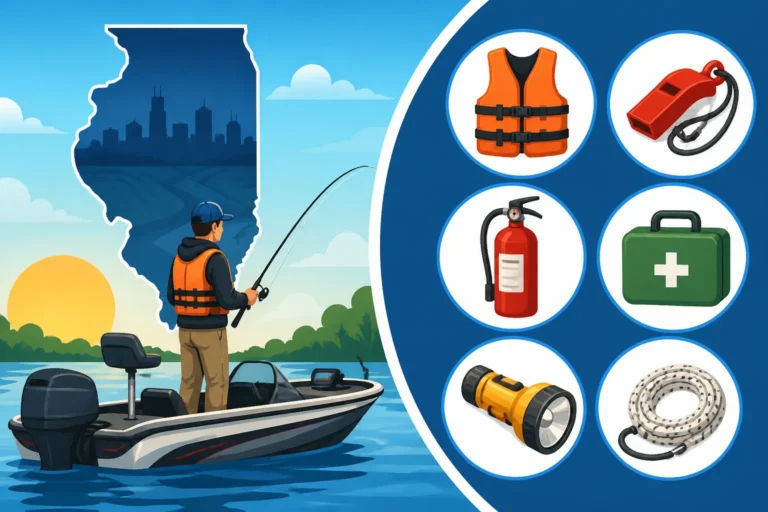
While PFDs are paramount, they're just one piece of the overall boating safety puzzle. Illinois boating regulations require a host of other safety equipment depending on your vessel's size and propulsion. Thinking holistically about your safety gear ensures you're ready for any situation.
Consider items such as:
- Visual Distress Signals: Flares, flags, or electronic signals, especially for larger vessels or night operation.
- Sound Producing Devices: A whistle, horn, or bell to signal other boats or alert for help.
- Fire Extinguishers: Required on boats with enclosed compartments where flammable materials are stored, or on boats with permanently installed fuel tanks.
- Navigation Lights: If operating between sunset and sunrise or in periods of restricted visibility.
- First Aid Kit: Always a good idea for any unexpected scrapes or minor injuries.
- Anchor and Line: Essential for holding position and can be a critical safety device in emergencies.
Making sure your boat is equipped with all the necessary safety gear, beyond just PFDs, is a commitment to responsible boating. This includes ensuring your Illinois Boat Registration Requirements Explained are met, and that if you operate a motorboat, you might need an Illinois Boater Education Card Requirements. A thorough check of What Safety Gear Is Required on an Illinois Boat? will help you cover all your bases.
Taking the time to invest in quality, compliant safety gear, and understanding how to properly store and access it, isn't just about avoiding a fine. It's about empowering yourself and your passengers to enjoy Illinois's beautiful waters with confidence, knowing you're prepared for whatever comes your way.
| PFD Type | Intended Use (Illinois Context) | Buoyancy | Storage Considerations |
|---|---|---|---|
| Type I | Offshore, rough waters (e.g., Lake Michigan far out) | High | Bulky, may require dedicated space. Must be accessible. |
| Type II | Near-shore, calmer waters (e.g., larger inland lakes) | Medium | Less bulky, often found under seats or in open racks. Must be accessible. |
| Type III | General recreational, continuous wear (e.g., most lake/river fishing) | Medium | Most comfortable, can be worn or stored for easy access. |
| Type IV | Throwable device (e.g., square cushion, ring buoy) | High | Must be immediately accessible on boats 16 ft or longer. Cannot be worn. |
| Type V | Specialty use, often inflatables (e.g., kayak fishing vests) | Varies | Must be worn (if inflatable) to count as Type II/III. Requires maintenance. |
Disclaimer
This article is for general informational purposes only and does not constitute professional advice. Laws, prices and regulations vary by location and change over time. Consult a qualified professional for guidance on your specific situation.