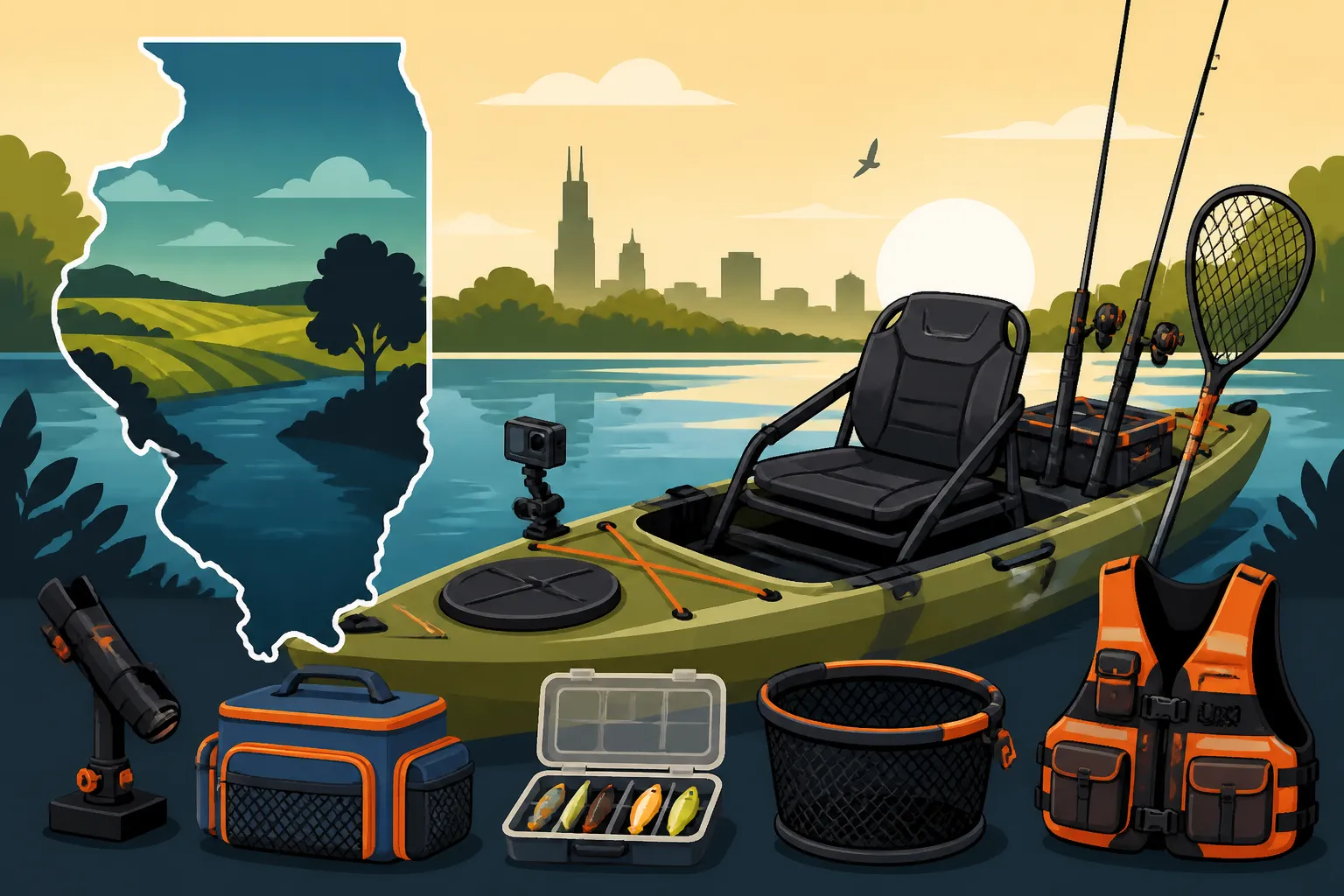
Kayak Fishing Accessories for Illinois Anglers
Many Illinois anglers find themselves wrestling with how to outfit their fishing kayak effectively without breaking the bank or cluttering their limited space. It's a common struggle to balance functionality with portability and cost, especially when navigating everything from wide-open reservoirs to narrow river backwaters. This comprehensive guide will walk you through the essential and highly beneficial kayak fishing accessories designed specifically for the unique challenges and opportunities of Illinois waters, helping you gear up smart for more successful and comfortable trips.
Essential Safety and Navigation Gear for Kayak Anglers
When you're out on the water, especially in a small craft like a kayak, safety is never something to compromise on. Illinois waters, whether it's the vast expanse of Carlyle Lake or the meandering Kankakee River, can present unexpected challenges. Having the right safety and navigation gear isn't just about following regulations; it's about ensuring you can handle whatever comes your way and get back to shore safely. Thinking ahead about these items can make all the difference, especially if conditions change suddenly.
Personal Flotation Devices PFDs
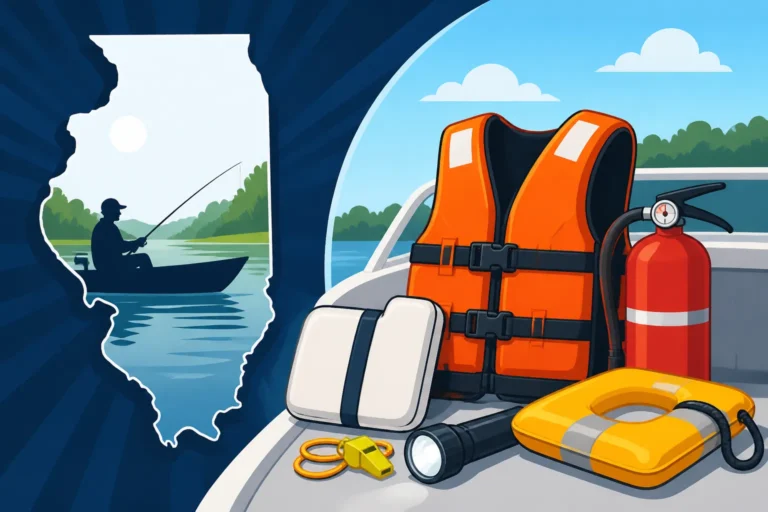
Let's face it, a PFD might not be the "sexiest" piece of fishing gear, but it is unequivocally the most important. Illinois law, like many states, has specific requirements for wearing PFDs, especially for children. Beyond legalities, a comfortable and well-fitting PFD can save your life if you accidentally capsize or fall out of your kayak. Modern PFDs designed for fishing often include pockets, tool attachments, and high-back designs to accommodate kayak seats, making them much more practical than traditional bulky life vests. Investing in a good quality PFD is paramount, and it's a purchase you should never skimp on. Always ensure it's approved by the U.S. Coast Guard.
Consider inflatable PFDs for maximum comfort and freedom of movement, though they require more maintenance and are not suitable for all situations or ages. For instance, inflatable PFDs are generally not approved for persons under 16. A Type III vest that fits snugly but allows for full range of motion while paddling and casting is usually the best bet for kayak anglers. You can often find a good selection at Bass Pro Shops or other major sporting goods retailers, allowing you to try them on and ensure a proper fit before hitting the water. Remember, comfort means you're more likely to wear it, and wearing it means you're safe. For more information on requirements, check out Do You Need a Life Jacket in a Kayak in Illinois?.
Lights, Flags, and Signaling Devices
Picture this: you've been out all day on Lake Shelbyville, the fish are finally biting as the sun dips below the horizon, and you realize you're a long way from the launch. Suddenly, your visibility to other boaters becomes a critical concern. In Illinois, specific regulations govern navigation lights, especially after sunset or in conditions of reduced visibility. A 360-degree white light is typically required, easily attachable to a mast on your kayak. Furthermore, a highly visible safety flag, often orange or bright yellow, mounted on a pole, significantly increases your visibility to powerboats, particularly on larger bodies of water like Lake Michigan.
Beyond lights and flags, having a signaling mirror or a small, bright flashlight can be crucial for attracting attention in an emergency. These small, often overlooked accessories can provide peace of mind and, more importantly, ensure that you're seen by others, preventing potential collisions. Even during daylight hours, a flag can help you stand out against the water, especially if you're fishing in channels or areas with heavier boat traffic, like sections of the Illinois River. These items are compact and lightweight, making them easy additions to your Kayak Fishing Gear Checklist for Illinois Anglers.
Whistles and Emergency Communication
While silent angling is often the goal, sometimes you need to make some noise – for safety, that is. A simple pealess whistle attached to your PFD is a mandatory piece of safety equipment on many waters, including Illinois. It can be heard over the roar of boat engines or across a significant distance, making it invaluable for alerting others to your presence or signaling for help. It’s a small investment that could make a huge difference in an emergency.
Beyond a whistle, consider waterproof communication devices. A dry bag containing your cell phone, or better yet, a dedicated VHF marine radio if you're venturing onto larger lakes or the Mississippi River, can be a lifesaver. These devices allow you to call for assistance or communicate with other vessels and emergency services if you find yourself in trouble. Always ensure your communication devices are fully charged before you leave and protected from water. You might also want to carry a small, basic first-aid kit, waterproofed, just in case of minor scrapes or hook mishaps.
Comfort and Ergonomics for Extended Trips
Kayaking for fishing isn't just about getting to the fish; it's about staying there comfortably for hours on end. The factory-installed seats, paddles, and footrests on many kayaks, while functional for recreational paddling, often fall short for dedicated anglers. Long sessions on the water, especially in Illinois' varying conditions, can lead to fatigue, discomfort, and even pain if your setup isn't optimized. Investing in ergonomic upgrades can transform your kayak into a much more enjoyable and efficient fishing platform, letting you focus on the bite, not your aching back.
Upgraded Seats and Backrests
Let's be honest, those thin, molded plastic seats in many kayaks are brutal after an hour or two. Back pain is a real and common complaint among kayak anglers. Upgrading your seat can be the single most impactful comfort improvement you make. Aftermarket seats designed for fishing kayaks offer thicker padding, higher back support, and often an elevated position, which not only improves comfort but also visibility and casting leverage. Many even allow for height adjustment, letting you paddle efficiently in a lower position and then raise yourself for better sight fishing or easier standing (in stable models).
A good seat provides lumbar support and even ventilation, crucial for those sweltering Illinois summer days on Rend Lake. You’ll be surprised how much longer and more effectively you can fish when you’re not constantly shifting to alleviate pressure points. Look for seats that are easy to install and remove for cleaning or transport. You can often find these specialized seats from brands like Old Town, Wilderness Systems, or even generic options on Amazon, which can significantly improve your experience.
Ergonomic Paddles and Leashes
Your paddle is your engine, and a poorly chosen or ill-fitting one can quickly lead to shoulder and arm fatigue, especially when navigating against currents on the Fox River or covering vast distances on Lake of Egypt. An ergonomic paddle, properly sized for your height and kayak width, can dramatically reduce strain and increase efficiency. Look for lightweight materials like fiberglass or carbon fiber, which reduce the effort needed for each stroke. The blade design also matters; some are better for powerful strokes, while others excel in choppy water or for leisurely cruising.
Don't forget a paddle leash! Losing your paddle in open water is a quick way to turn a fun trip into a dangerous situation. A simple coiled leash keeps your paddle tethered to your kayak, so if you drop it while reeling in a big bass or reaching for your net, it won't float away. Many anglers also find a spare paddle, or at least a compact emergency paddle, a wise addition for longer trips or remote areas. Considering your Best Paddle for All-Day Illinois Kayak Trips is a critical decision that impacts your entire fishing experience.
Foot Pegs and Adjustable Rudder Systems
While often overlooked, your foot pegs (or foot braces) play a crucial role in paddling efficiency and overall comfort. They provide a stable point of contact, allowing you to engage your core muscles for more powerful strokes and better control. If your kayak has fixed foot pegs, consider upgrading to adjustable ones that can be easily repositioned to suit different paddlers or to fine-tune your leg position throughout the day. This is especially important for maintaining circulation and preventing leg cramps.
For longer kayaks or those frequently fishing in windy conditions or strong currents, an adjustable rudder system is a game-changer. It allows you to steer and track straight with minimal paddle corrections, saving energy and allowing you to focus more on fishing. Instead of constantly correcting your course with your paddle, you can use a foot-controlled rudder to navigate, which is a massive advantage when battling a fish or trying to maintain a precise drift. This setup can really make a difference on larger reservoirs like Clinton Lake, where wind can be a constant factor.
Smart Storage and Organization Solutions
One of the biggest challenges in kayak fishing is managing your gear in a small, often wet, space. Clutter can lead to lost tackle, tangled lines, and missed opportunities. Smart storage and organization accessories help you keep everything you need within easy reach, protected from the elements, and secured to your kayak. A well-organized kayak means less time fumbling and more time fishing, which is exactly what we want when chasing those elusive Illinois walleye or crappie.
Tackle Crates and Waterproof Bags
The milk crate is a classic for a reason – it's simple, cheap, and effective for holding tackle boxes and other gear. However, purpose-built fishing kayak crates offer even more. They often feature integrated rod holders, tackle tray slots, and bungee systems to secure items, fitting perfectly into the stern well of many kayaks. These provide a centralized, accessible location for your main tackle selection. For smaller items like soft plastics, spare hooks, or your wallet and phone, waterproof dry bags or small, hard cases are indispensable.
Keeping your sensitive electronics, keys, and snacks dry is paramount, especially when navigating choppy waters or unexpected rain showers. Consider multiple sizes of dry bags to organize different categories of gear – one for electronics, one for extra clothing, one for first aid. This prevents having to rummage through one giant bag to find what you need. A well-designed Kayak Fishing Crates and Storage Setup can make your life on the water infinitely easier.
Rod Holders and Leashes
Unless you’re planning to fish with just one rod all day, dedicated rod holders are a must-have. Most fishing kayaks come with at least a couple of flush-mount rod holders behind the seat, but you'll likely want more versatile options. Adjustable, ram-mount style rod holders can be positioned exactly where you need them – for trolling, for holding a dead stick, or for temporarily stowing a rod while you re-tie. These allow you to set multiple lines, which is especially useful when trolling for salmon on Lake Michigan Salmon and Trout Fishing in Illinois or soaking baits for catfish.
Just as important as rod holders are rod leashes. Dropping a rod overboard can be heartbreaking, not to mention expensive. A simple coiled leash attached from your rod to your kayak provides a safety net. Whether you’re casting aggressively, fighting a strong fish, or just transitioning between spots, a leash ensures your valuable rods stay with your kayak. Look for robust leashes that won't interfere with your casting motion but are strong enough to withstand a pull from a fish or a quick movement. You can find a wide variety of rod holders and leashes suitable for different kayak mounting systems at retailers like Bass Pro Shops. For specific setups, refer to Best Kayak Rod Holders for Bass Fishing.
Anchor Systems and Drift Chutes
Sometimes, you find that perfect spot – a brush pile teeming with crappie, a submerged hump holding walleye, or a riprap bank where bass are lurking. To thoroughly fish it, you need to stay put. That's where an effective anchor system comes in. A small grapnel anchor (1.5-3 lbs) with about 50 feet of anchor line and a quick-release cleat or anchor trolley system is ideal for most kayak fishing. An anchor trolley allows you to deploy and retrieve your anchor from either the bow or stern of your kayak while remaining safely seated, which is a huge advantage in changing conditions. For more on this, check out Kayak Anchor Setup for Lake Fishing.
Alternatively, for covering broader areas or slowing your drift in windy conditions, a drift chute (or drift sock) is an excellent accessory. This parachute-like device deploys in the water, creating drag that slows your kayak's movement. This is invaluable when fishing large flats or shorelines, allowing you to present your lure more effectively over a longer stretch of water without constantly paddling. It’s particularly effective on larger, wind-prone lakes like Carlyle Lake. The choice between an anchor and a drift chute often depends on the specific fishing scenario and water body.
Specialized Fishing Accessories for Better Success
Once your safety and comfort are dialed in, it's time to think about the gear that directly impacts your ability to find, catch, and land fish from your kayak. These specialized accessories leverage technology and smart design to give you an edge, turning your kayak into a formidable fishing machine capable of tackling many of Illinois' diverse fishing opportunities. From seeing what's beneath the surface to safely bringing in your catch, these items enhance your angling capabilities.
Fish Finders and Transducer Mounts
A fish finder is no longer just for big boats; compact, waterproof units are perfect for kayaks. Having a sonar display allows you to see depth, water temperature, structure (like submerged trees or rock piles), and, of course, fish. This is incredibly helpful for locating promising spots, especially when you're exploring new waters or targeting species like walleye or crappie that often relate to specific depths and structures. Many popular brands offer small, affordable fish finders ideal for kayak mounting.
You'll also need a proper transducer mount. Some kayaks have a dedicated "transducer-ready" scupper hole, making installation a breeze. Otherwise, suction cup mounts or custom-built solutions allow you to position the transducer in the water without drilling holes. Paired with a small, sealed lead-acid or lithium battery (more on that in the power section), a fish finder can dramatically increase your catch rate. For anglers wanting to know more, Best Fish Finder for Small Illinois Lakes delves deeper into these options.
Landing Nets and Measuring Boards
Bringing a feisty fish into a small, unstable kayak can be tricky. A good landing net is essential, especially for larger fish like a hard-fighting largemouth bass or a trophy muskie from Kinkaid Lake. Look for nets with a long handle (but not so long it’s unwieldy) that allows you to reach out, and a rubberized, knotless mesh to protect the fish's slime coat and prevent hooks from getting tangled. This makes for safer fish handling and easier release, if that's your intention.
A measuring board or bump board is equally important, especially if you plan to keep fish or participate in catch-and-release tournaments. Illinois has specific length limits for many species, and an accurate, easy-to-read measuring device ensures you comply with regulations and track your trophy catches. Many modern measuring boards float, which is a definite plus for kayak fishing! Consider one that can be easily stored or attached to your kayak.
Trolling Motors and Battery Systems
For those who want to cover more water with less effort or maintain a precise speed for trolling, a kayak-specific trolling motor can be a fantastic addition. These compact electric motors attach to the stern or bow of your kayak and are often controlled with a remote or foot pedal. They allow you to hold a position in current, fight wind, or simply motor to your next spot without paddling, saving your energy for fishing. While some smaller kayaks might feel a bit overloaded, many larger fishing kayaks are designed to accommodate these motors.
Remember that adding a trolling motor means you'll also need a suitable battery system. Deep-cycle marine batteries (traditional lead-acid or lighter lithium options) are necessary, along with a waterproof battery box and appropriate wiring. This introduces more weight and complexity but significantly expands your kayak's capabilities. Before investing, ensure you understand Kayak Registration Rules in Illinois as some motorized kayaks may have additional registration requirements.
Transport and Launching Aids for Easy Access
Getting your kayak from your vehicle to the water can sometimes feel like a workout before you even start paddling, especially if you're dealing with heavy gear or difficult terrain. Investing in the right transport and launching accessories makes the entire process smoother, safer, and less strenuous, allowing you to conserve your energy for the actual fishing. Illinois offers a huge variety of launch points, from well-maintained boat ramps to rugged river banks, and having the right tools makes them all accessible.
Kayak Carts and Dollies
A kayak cart, or dolly, is perhaps one of the most underrated kayak fishing accessories. These simple wheeled devices allow you to easily roll your kayak over various terrains – from gravel parking lots to sandy beaches or grassy paths – making solo launching and retrieval much more manageable. Instead of dragging your fully loaded kayak, potentially damaging it or exhausting yourself, you can simply strap it onto the cart and push it to the water's edge.
There are various styles, including traditional strap-on carts and scupper carts that insert into the kayak's drain holes. Consider the type of terrain you'll most frequently encounter; larger, pneumatic tires are excellent for soft sand or rough ground, while solid wheels are fine for paved surfaces. This is a real back-saver, especially for larger, heavier fishing kayaks that might weigh well over 100 pounds once loaded with gear.
Roof Racks and Truck Bed Extenders
Unless you have a pickup truck long enough to simply slide your kayak into the bed, you'll need a way to transport it on your vehicle. Roof racks are the most common solution for cars, SUVs, and even some smaller trucks. There are various styles, from basic foam blocks that strap down to dedicated kayak carriers with cradles or J-hooks that securely hold your boat in place. The key is to choose a system that is robust, easy to load, and provides adequate support to prevent damage during transit, especially on long drives to places like Lake Shelbyville.
For pickup truck owners with shorter beds, a truck bed extender is an invaluable accessory. This metal frame slides into your truck's hitch receiver and extends the support for the kayak, preventing it from hanging too far out and ensuring it's properly supported. Always use a red flag on any overhang to comply with road safety regulations. Properly securing your kayak for transport is critical not just for your boat's safety, but for the safety of everyone else on the road.
Tie-Downs and Security Systems
Having a good set of cam buckle straps or ratchet straps is essential for securing your kayak to your roof rack, truck bed extender, or trailer. Never rely solely on bungee cords; they are not designed for securing heavy loads at highway speeds. Use at least two straps over the hull of the kayak, and consider bow and stern tie-downs to prevent shifting and "oil canning" (where the hull can flex and potentially deform from wind pressure).
For added security, especially if you leave your kayak unattended on your vehicle overnight or at a remote launch, consider a cable lock system. These can thread through scupper holes or around the grab handles and secure your kayak to your roof rack or vehicle frame, deterring casual theft. Protecting your investment ensures you'll have many more enjoyable days fishing on Illinois waters.
Powering Your Kayak Electronics
As kayak fishing embraces more technology, powering those gadgets becomes a crucial consideration. From fish finders to navigation lights and even trolling motors, many of the accessories discussed rely on a reliable power source. Understanding your options for batteries and charging solutions will ensure your electronics stay online throughout your entire fishing trip, from dawn to dusk.
Portable Power Stations and Batteries
The heart of your kayak's electrical system is its battery. For most fish finders and smaller electronics, a compact, sealed lead-acid (SLA) battery (often 7Ah or 12Ah) is sufficient and relatively inexpensive. These are robust and can be easily housed in a small, waterproof box. However, for those running multiple devices, larger fish finders with side imaging, or especially a trolling motor, a larger deep-cycle battery is necessary.
Lithium iron phosphate (LiFePO4) batteries are becoming increasingly popular for kayak fishing despite a higher upfront cost. They are significantly lighter, offer more power in a smaller footprint, have a longer lifespan, and maintain a more consistent voltage output, which is great for sensitive electronics. Whatever your choice, ensure the battery is housed in a waterproof container, easily accessible, and secured to prevent shifting or loss during transport or unexpected capsizes.
Solar Chargers and Wiring Kits
While the battery stores the power, a charging solution keeps it topped up. For day-to-day use, a standard smart charger plugged into a wall outlet is perfect for recharging your batteries after each trip. However, for multi-day excursions or remote camping trips, a small, portable solar charger can be invaluable. These compact panels can trickle charge your smaller batteries or even provide a boost to your phone or GPS unit, ensuring you don't run out of juice in the middle of nowhere.
Proper wiring is also critical for safety and performance. Use marine-grade, appropriately gauged wire for all your connections, ensuring they are protected from water and corrosion. Inline fuses are essential to protect your electronics from power surges or short circuits. If you're not comfortable with electrical work, it's worth having a professional help you set up your kayak's electrical system. Many outfitters at Bass Pro Shops or specialized marine electronics stores can offer advice or even installation services, ensuring your power setup is safe and reliable.
| Accessory Type | Purpose | Key Benefits | Essential/Optional | Where to Find |
|---|---|---|---|---|
| Personal Flotation Device | Safety in case of capsize | Life-saving, comfort, pockets | Essential | Bass Pro Shops, Outdoor Retailers |
| Paddle Leash | Prevent loss of paddle | Keep paddle secured, easy reach | Essential | Amazon, Kayak Shops |
| Rod Leashes | Prevent loss of fishing rods | Secure rods during casting/fighting fish | Essential | Amazon, Tackle Shops |
| Kayak Cart/Dolly | Easy transport to/from water | Saves energy, protects kayak | Essential | Kayak Shops, Outdoor Retailers |
| Tackle Crate/Organizer | Organized tackle storage | Keeps gear accessible, prevents clutter | Essential | Bass Pro Shops, Fishing Stores |
| Anchor System | Hold position in water | Stay on fish, precise lure presentation | Essential | Amazon, Marine Supply Stores |
| Landing Net | Securely land fish | Safer fish handling, prevents loss | Essential | Fishing Tackle Stores |
| Measuring Board | Measure fish size for regulations/records | Compliance with laws, track catches | Essential | Fishing Tackle Stores |
| Fish Finder | Locate fish, structure, depth | Increased catch rate, efficient scouting | Highly Beneficial | Bass Pro Shops, Marine Electronics |
| Trolling Motor | Propel kayak, maintain speed | Saves paddling effort, precise trolling | Optional | Marine Supply Stores, Specialized Kayak Shops |
| Safety Flag/Light | Increase visibility to other boaters | Prevents collisions, enhances safety | Essential | Amazon, Marine Supply Stores |
| Dry Bag/Box | Protect electronics & valuables | Keeps items dry, organized | Essential | Outdoor Retailers, Amazon |
| Upgraded Seat | Enhanced comfort for long trips | Reduces fatigue, improves posture | Highly Beneficial | Kayak Shops, Online Retailers |
| Ergonomic Paddle | Efficient, less fatiguing paddling | Saves energy, improves control | Highly Beneficial | Kayak Shops, Outdoor Retailers |
| Rudder System | Hands-free steering, better tracking | Reduces paddle corrections, saves energy | Optional | Kayak Shops, Specialized Installers |
Disclaimer
This article is for general informational purposes only and does not constitute professional advice. Laws, prices and regulations vary by location and change over time. Consult a qualified professional for guidance on your specific situation.