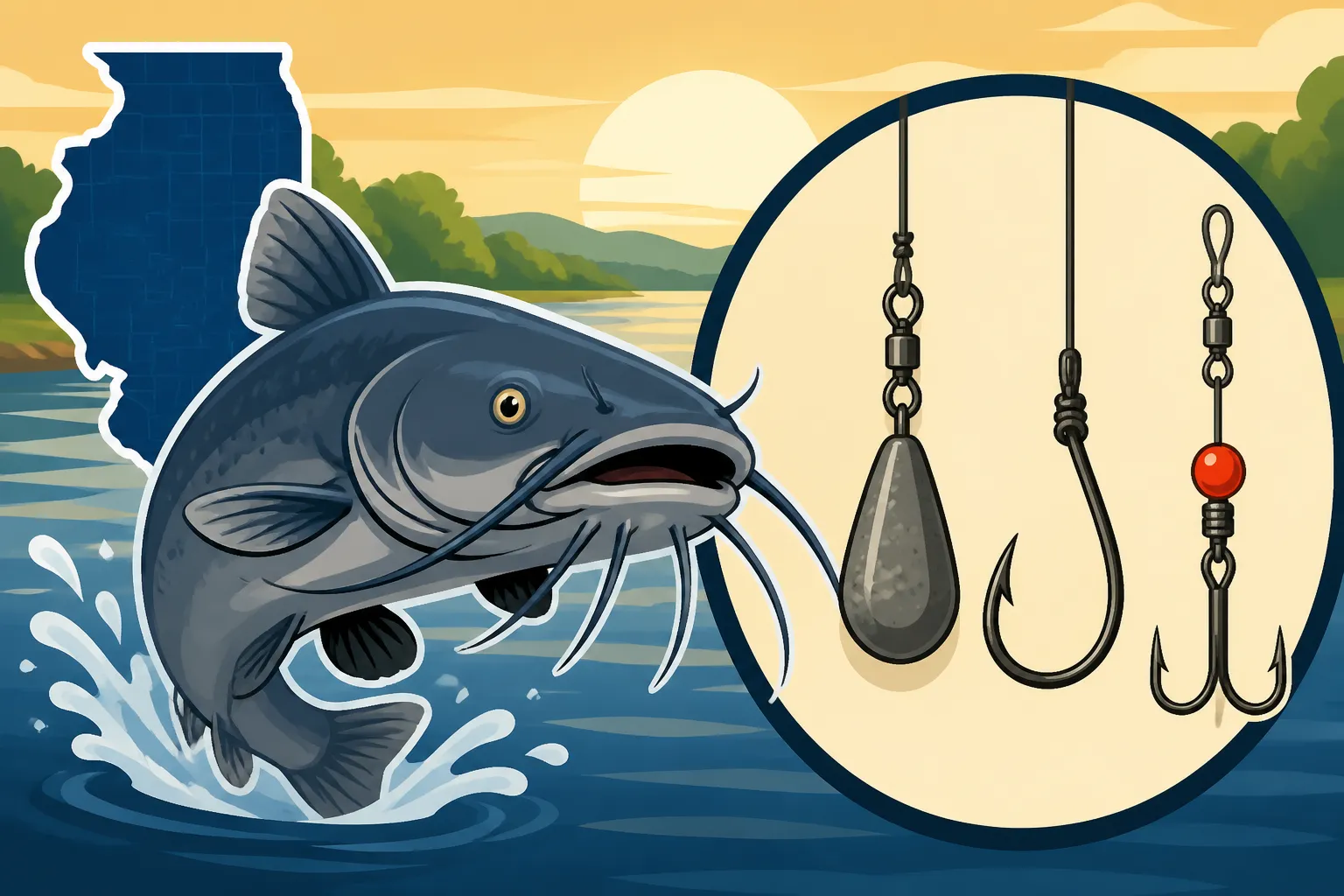
Illinois Catfish Rigs for the Mississippi River
Fishing the mighty Mississippi River for catfish can be one of the most rewarding experiences in Illinois, but let's be honest, it can also be incredibly frustrating. The powerful currents, submerged snags, and sheer size of the river often lead to lost tackle, broken lines, and missed opportunities, leaving many anglers wondering if they're using the right setup. This guide is here to untangle those frustrations, diving deep into the most effective catfish rigs specifically designed for the challenges and opportunities the Mississippi River presents, helping you land those legendary river monsters.
Understanding the Mississippi River's Unique Catfish Challenges
The Mississippi River isn't your average farm pond or serene reservoir. It's a living, breathing, and often unforgiving waterway that demands specialized approaches, especially when you're targeting its robust catfish population. Ignoring these unique characteristics is a sure path to frustration and empty stringers.
Current and Snags: The River's Natural Obstacles
One of the first things any angler notices about the Mississippi River, particularly in its main channel, is the relentless current. This isn't just a gentle flow; it's a powerful force that can easily sweep away lightweight tackle, tangle lines, and make it nearly impossible to keep your bait in the strike zone. Trying to fish a standard lake rig in these conditions is like trying to hold onto a kite in a hurricane – it's just not going to work. Many a good piece of tackle has been lost to the unforgiving flow and the snags it carries.
Beyond the current, the Mississippi is riddled with natural and man-made obstacles. Submerged trees, old stumps, rock piles, concrete debris, and even forgotten fishing line all lurk beneath the surface, eagerly waiting to claim your sinker, hook, and sometimes, your entire rig. It's a constant battle, and if your rig isn't designed to minimize snags or, at the very least, allow for easier retrieval of parts, you'll spend more time re-tying than fishing. This is why understanding the riverbed and adapting your approach becomes paramount.
Diverse Catfish Species: Tailoring Rigs to the Target
The Mississippi River is a catfish paradise, home to three main species: the Channel Catfish, the Blue Catfish, and the Flathead Catfish. While they're all "catfish," their preferred habitats, feeding behaviors, and sheer size differences mean that a one-size-fits-all rig simply isn't going to cut it if you want consistent success. Knowing your target species is half the battle.
Channel catfish are often found in a variety of habitats, from main channel current breaks to calmer backwaters. They're opportunistic feeders, known for eating almost anything, from stink bait to cut bait. Blue catfish, on the other hand, are true river dwellers, preferring strong currents and deeper holes, often near structure. They grow to immense sizes and are primarily piscivorous, meaning they prefer fresh cut bait or live bait. Flathead catfish are ambush predators, often found near heavy cover like log jams or rock piles, and almost exclusively feed on live fish. Tailoring your rig means choosing components strong enough for a potential giant, yet subtle enough to present your bait naturally to the species you're after. Illinois Catfish Daily Limits Explained gives you a good overview of what you can keep, but first, you have to catch them!
Essential Components of a Mississippi River Catfish Rig
Success on the Mississippi River doesn't just happen; it's built on a foundation of robust, reliable gear. When targeting catfish, especially the bigger blues and flatheads that lurk in those powerful currents, your choice of rod, reel, line, and terminal tackle is absolutely critical. Skimping here will only lead to heartbreak.
Rods and Reels: Power for River Monsters
For Mississippi River catfishing, you'll need gear that can handle serious abuse. Forget those flimsy panfish rods; we're talking about heavy-duty setups that can withstand powerful runs and the strain of pulling a big fish out of strong current or heavy cover. Your rod needs to have a strong backbone, often rated as medium-heavy to heavy power, with a fast or moderate-fast action to give you enough leverage. A longer rod, perhaps 7 to 9 feet, can help with casting heavy rigs and controlling fish in the current, keeping your line clear of snags near the boat or bank. You'll find a wide selection of suitable rods at retailers like Bass Pro Shops.
Matching that rod, you'll need a reel with a robust drag system and excellent line capacity. Baitcasting reels are often preferred by experienced river catfishermen for their power and ability to cast heavy weights accurately. Look for models designed for saltwater or heavy freshwater use. Spinning reels can also work, especially larger sizes, but ensure they have metal gears and a smooth, strong drag that won't give out when a trophy blue cat decides to make a run. A reel that can hold at least 200 yards of 20-30 pound monofilament or 50-80 pound braided line is a good starting point. Heavy Tackle for Mississippi River Catfish in Illinois further emphasizes the need for this kind of setup.
Hooks, Swivels, and Leaders: The Critical Connections
Every component in your rig is a link in a chain, and the weakest link will always be the first to break. This is especially true for hooks, swivels, and leaders. For hooks, circle hooks are almost universally recommended for catfishing. They’re designed to hook fish in the corner of the mouth, which is not only better for the fish if you plan to release it, but also reduces gut-hooking and leads to a higher hook-up ratio when used correctly. Sizes typically range from 5/0 to 10/0, depending on the bait size and target species. Make sure they are super sharp and strong, capable of holding up to powerful jaw pressure.
High-quality swivels are also non-negotiable. Barrel swivels or, even better, heavy-duty ball-bearing swivels, are crucial for preventing line twist, especially when drifting baits or in strong currents. They also act as a strong connection point between your main line and leader. As for leaders, they provide an extra layer of protection against abrasion from the fish's rough mouth or underwater structure. Heavy monofilament (40-80 lb test) or fluorocarbon (40-60 lb test) are excellent choices. Fluorocarbon offers more abrasion resistance and is less visible, which can be an advantage in clearer water. Leader length can vary, but typically 12 to 36 inches is a good range, depending on the rig and conditions.
Top Catfish Rigs for the Mississippi River
When you’re staring down the vastness and power of the Mississippi River, knowing which rig to tie on can make all the difference between a productive day and a frustrating one. These three rigs are tried-and-true favorites among Mississippi River catfish anglers, each designed to tackle specific challenges and present bait effectively to different species.
The Santee Cooper Rig: A Floating Bait Presentation
The Santee Cooper rig is an absolute workhorse for river catfishing, particularly when you want to keep your bait slightly off the bottom and visible above submerged debris. It’s essentially a Carolina rig with a buoyant float added to the leader, making it incredibly effective for targeting blues and channels that might be cruising a foot or two off the riverbed. This rig is fantastic for fishing over shell beds, gravel, or areas with light snags where you want to minimize your bait getting buried or lost.
To set it up, you'll slide a heavy sinker (a no-roll or flat bell sinker from 2-8 ounces is common for the Mississippi's current) onto your main line, followed by a bead to protect the knot. Then, tie on a heavy-duty barrel swivel. To the other end of the swivel, attach a leader, typically 12-24 inches of 40-60 pound monofilament or fluorocarbon. About halfway down that leader, you'll crimp or knot a small, buoyant foam or cork float. Finally, tie on your strong circle hook (5/0 to 8/0 generally works well). This float will lift your bait, such as a piece of fresh cut shad or skipjack, just off the bottom. Imagine you're drifting your boat over a deep hole where the current is sweeping just above some submerged logs. Your heavy sinker holds the bottom, while your bait, lifted by the float, dances enticingly just above the snag, making it an irresistible target for a cruising blue catfish. This presentation also prevents your bait from being scavenged by smaller fish directly on the bottom.
The Slip Sinker Rig (Carolina Rig Variant): Versatility for Varying Conditions
The classic slip sinker rig, essentially a beefed-up Carolina rig, is a fundamental setup for good reason: it’s incredibly versatile and allows for a natural bait presentation that river catfish can't resist. This rig excels when you need your bait to sit directly on the bottom, allowing fish to pick it up without feeling the weight of the sinker. It’s particularly effective for flathead catfish that often hug the bottom near cover, and for channel cats foraging in calmer pockets.
To construct this rig, thread a slip sinker (again, a no-roll or flat bell sinker, or even an egg sinker, typically 2-8 ounces) onto your main line. The key here is "slip," meaning the line can freely run through the sinker. Follow the sinker with a protective bead, then tie your main line to one end of a heavy barrel swivel. To the other end of the swivel, attach a leader of 12-36 inches of heavy mono or fluorocarbon (40-60 lb test is common), and finally, your strong circle hook (again, 5/0 to 10/0 depending on your target and bait). When a fish bites, the line slides through the sinker, allowing the fish to take the bait without immediately feeling the resistance of the weight. This provides a more natural feel, making it less likely for wary catfish to drop the bait. Consider you're casting this rig near a subtle drop-off or a sand flat in a less turbulent section of the river. The sinker settles, while your large piece of cut bait or a lively bluegill sits right on the bottom, appearing as an easy meal. This rig is straightforward but incredibly effective for a wide range of Mississippi River conditions.
The Three-Way Swivel Rig: Ideal for Heavy Current and Structure
When you encounter truly brutal current, rocky bottoms, or thick structure on the Mississippi River, the three-way swivel rig (also sometimes called a "dropper rig") becomes your best friend. This rig is designed to keep your bait suspended off the bottom, or in a specific part of the water column, while using a sacrificial sinker that can be easily broken off if it snags. This saves your main line and your fish if the weight gets wedged. It’s perfect for fishing riprap banks, bridge pilings, or deep scour holes where snags are inevitable.
Setting it up involves a specific type of swivel. Your main line ties to one eye of a three-way swivel. To a second eye, you tie a short dropper line, typically 6-12 inches of lighter mono (say, 20-30 lb test), with your sinker attached to the end of this dropper line. This lighter line is designed to break before your main line. To the third eye of the swivel, you tie your leader (18-36 inches of 40-60 lb mono or fluorocarbon), and then your hook (5/0 to 10/0 circle hook). The beauty of this rig is that your bait is presented away from the snag-prone bottom, and if your sinker gets stuck, you can apply pressure, break the lighter dropper line, and still retrieve your fish and the rest of your rig. Imagine you're anchored above a rocky point where strong current rips through. You cast your three-way rig upstream, letting the current carry your bait, perhaps a live perch or a large chunk of cut shad, down into a deep eddy. Your sinker bounces along the bottom, but your bait stays up, clear of the immediate snags, and ready for a hungry flathead or blue. This rig is also commonly used with Catfish Jug Fishing Techniques though for active rod and reel fishing, its strength and snag-resistant qualities are unmatched.
Bait Selection for Mississippi River Catfish
No matter how perfectly tied your rig is, it's nothing without the right bait. Mississippi River catfish, especially the trophy-sized blues and flatheads, are particular creatures, and knowing their dietary preferences is key to filling your cooler. Matching your bait to your target species and conditions is just as important as your rig itself.
Natural Baits: The Tried and True Options
For serious catfishing on the Mississippi, natural baits are often the most effective. These are what the fish are accustomed to eating, making them irresistible. Freshness is paramount; "stale" or frozen bait just doesn't compare to bait that's recently been alive or cut.
Cut Bait: This is a go-to for both blue and channel catfish, especially the larger specimens. Shad, skipjack herring, gizzard shad, and even carp are excellent choices. The blood and oils released by cut bait in the current create an enticing scent trail that catfish can follow from a distance. For blues, a large chunk of fresh cut bait, particularly the bloody belly or a large fillet section, presented on a Santee Cooper or slip sinker rig, is incredibly effective. Channel cats will also devour cut bait, though they might prefer smaller pieces. Make sure your cut bait is firm and stays on the hook through casts and current.
Live Bait: If you're chasing trophy flathead catfish, live bait is almost non-negotiable. Flatheads are ambush predators that prefer to strike live, struggling prey. Small bluegill, sunfish, or carp (check local regulations for baitfish size and species rules) hooked through the back or lips are perfect. The livelier the bait, the better. Presenting a feisty 4-6 inch bluegill on a heavy slip sinker or three-way rig near heavy cover, like a log jam or rock pile, is often the most effective way to entice a lurking flathead. Best Live Bait for Flathead Catfish emphasizes this further. The movement of a live baitfish is a powerful attractant that manufactured baits simply can't replicate.
Worms: While not typically used for the largest blue or flathead catfish, a big nightcrawler or a wad of earthworms can be incredibly effective for channel catfish, especially smaller to medium-sized ones, and when fishing in calmer waters or backwaters. They are easy to come by and often a great fallback when other baits aren't available. When threaded onto a hook, worms provide scent and subtle movement that channel cats find appealing.
Prepared Baits and Scents: When to Use Them
While natural baits often rule the roost for big river cats, there's definitely a place for prepared baits and artificial scents, particularly when targeting channel catfish or trying to enhance your natural offerings. These options can be highly effective under the right circumstances.
Stink Baits and Dip Baits: These highly pungent concoctions are practically synonymous with channel catfishing. Made from a variety of ingredients, they create an incredibly strong scent slick in the water, drawing in channel catfish from considerable distances. Stink baits usually come in solid forms that you can mold onto a hook, while dip baits are designed to be applied to a special bait holder or sponge on your hook. They are most effective in warmer water and calmer currents where their scent can disperse slowly. Brands like Catfish Charlie or Secret 7 are popular choices, often found at your local bait shop or online at retailers like Amazon. While less effective for large blues or flatheads, they can absolutely fill a stringer with channel cats on a good day. Best Bait for Illinois Channel Catfish highlights these specifically.
Dough Baits: Similar to stink baits in their use, dough baits are often a blend of ingredients that form a paste, sometimes with added attractants. They are molded around a hook and are particularly popular for targeting channel catfish in ponds and slower-moving river sections. They offer a good balance of scent and ease of use, and can be a great option for younger anglers.
Scents and Attractants: Even when using natural baits, adding an extra boost of scent can sometimes make a difference. Sprays, gels, or liquids infused with fish-attracting odors can be applied to cut bait, live bait, or even artificial lures. This can be especially useful in muddy or turbid water where fish rely heavily on their sense of smell to locate food. A little extra scent might just be the edge you need to get a wary cat to commit to your offering.
Adapting Your Rigs for Different River Sections
The Mississippi River isn't a monolithic entity; it's a dynamic system with diverse environments. The challenges you face in a swift, rock-lined northern stretch will be vastly different from those in the wide, slower-moving southern sections or serene backwater areas. True river masters know how to adapt their rigging strategies to these varying conditions.
Upstream Sections: Navigating Faster Currents and Rocky Bottoms
As you move into the more northern reaches of the Mississippi River in Illinois, you'll often encounter sections characterized by stronger currents, deeper channels, and rockier bottoms, especially near dams, wing dams, and riprap banks. These areas are prime habitat for large blue catfish and can also hold impressive flatheads, but they demand a robust approach. The key here is to keep your bait stable and visible in the face of relentless flow, and to minimize snagging on sharp rocks.
In these conditions, you'll want to lean heavily on the Three-Way Swivel Rig or a heavily weighted Santee Cooper Rig. The Three-Way Swivel is exceptional because it allows you to use a lighter, sacrificial sinker on a dropper line. This means if your weight gets wedged in a rock crevice, you can break it off without losing your entire main line, leader, and potentially, your fish. You'll need to use heavier sinkers – often 4, 6, or even 8 ounces – to ensure your rig stays on the bottom or in the desired depth. Consider your target species: large blue cats love current and will often hold just behind current breaks or in deep holes. Presenting a large piece of fresh cut bait on a Santee Cooper rig, with the float lifting it just above the rocky substrate, can be deadly. Mississippi River Walleye and Pike Fishing in Northern Illinois touches on the nature of these northern waters, which also applies to catfish. Your rods and reels must be stout, capable of handling not only the heavy weights but also the immense power of a big catfish fighting in a swift current.
Downstream Sections: Dealing with Softer Bottoms and Backwaters
Conversely, as the Mississippi River broadens and slows down in its more southern Illinois stretches, you'll often find softer, muddier bottoms, numerous islands, and extensive backwater areas. These sections offer a different kind of catfishing experience, often with less current but potentially more submerged vegetation or silty conditions. Here, the emphasis shifts from fighting extreme current to presenting baits effectively on softer bottoms or in calmer, structured areas. Mississippi River Catfish Spots in Southern Illinois details many of these areas.
The Slip Sinker Rig really shines in these calmer, softer-bottomed areas. Because there's less current, you won't need as heavy of a sinker; often 1-3 ounces will suffice to hold bottom. The slip design allows your bait to settle naturally and allows fish to pick it up without much resistance. This is ideal for flathead catfish lurking in log jams within backwater sloughs or channel catfish rooting around in the mud for food. If you're fishing areas with significant vegetation, you might still use a Santee Cooper rig to elevate your bait above the weeds. For dead-sticking or fishing multiple rods from an anchored position, these rigs are perfect for covering different depths and spots. The "no-roll" style of sinker is still a good choice here to prevent your bait from drifting too far, even in minimal current. Lighter tackle might be appropriate for smaller channel cats, but always be prepared for a potential trophy blue or flathead that can still reside in these waters.
| Rig Type | Ideal Conditions | Target Species | Pros | Cons |
|---|---|---|---|---|
| Santee Cooper | Moderate to heavy current, light snags, shell beds | Blue Catfish, Channel Catfish | Lifts bait off bottom, reduces snags, good visibility | Float can get hung up in heavy debris, requires heavier sinkers |
| Slip Sinker | Light to moderate current, soft or clean bottoms | Flathead Catfish, Channel Catfish, Blue Catfish | Natural presentation, fish don't feel weight, versatile | Bait can get buried in mud, prone to snags on rough bottom |
| Three-Way Swivel | Heavy current, rocky bottoms, heavy structure | Flathead Catfish, Blue Catfish, Channel Catfish | Sacrificial sinker, keeps bait off bottom, adjustable depth | More components, can tangle if not tied carefully |
Tips for Success and Avoiding Common Rigging Mistakes
Landing a trophy catfish from the Mississippi River is a phenomenal experience, but it often requires more than just tying on a rig and hoping for the best. Paying attention to the finer details, and learning from the mistakes many anglers make, can significantly increase your success rate and minimize frustrating moments. The river is a demanding teacher, but a patient student will be rewarded.
Knot Tying and Line Management: Don't Skimp on Strength
This might sound like a basic lesson, but it’s astonishing how many lost fish and broken lines are attributable to weak knots or poorly maintained line. On the Mississippi River, with its powerful currents and strong-fighting fish, a faulty knot is a guarantee for disappointment. Always use strong, proven knots like the Palomar knot, improved clinch knot, or snell knot for connecting your hooks and swivels. Practice tying them until you can do it quickly and confidently, even in dim light or adverse conditions. Lubricate your knots with saliva before tightening to ensure they cinch down properly and don't weaken the line with friction.
Beyond the knots themselves, pay close attention to your fishing line. Regularly inspect your main line and leader for any nicks, abrasions, or frayed spots, especially after fishing near structure. Even a small imperfection can compromise the line's integrity under pressure. Replace your line periodically, as UV exposure and general wear and tear can degrade its strength over time. Spooling your reel properly, ensuring even line distribution, also prevents tangles and enhances casting performance. Ignoring these seemingly small details can lead to the "one that got away" story you never wanted to tell.
Experimentation and Observation: The Key to Mastering River Catfishing
The Mississippi River is a vast and ever-changing fishery, and what works one day or in one spot might not work the next. The most successful river catfish anglers are those who are constantly observing, adapting, and experimenting. Don't be afraid to try different rigs, varying leader lengths, or changing your sinker weight. If the current is ripping harder than you expected, perhaps a three-way swivel rig with a heavier sinker is needed instead of your slip sinker. If you're getting snagged frequently, maybe a Santee Cooper rig to lift your bait is the solution. Why Fishing Rules Vary by Lake and River explains how different conditions lead to different rules and, implicitly, different techniques.
Pay close attention to what the river is telling you. Are fish biting on the bottom, or are they suspended? Is the current stronger or weaker in certain spots? Are other successful anglers using a specific type of bait or presentation? Water temperature, clarity, recent rainfall, and even barometric pressure can all influence how catfish are feeding and where they are holding. Keep a mental (or even physical) log of what works and what doesn't. Catfishing on the Mississippi is a journey of continuous learning, and by embracing experimentation and keen observation, you'll develop a deeper understanding of this incredible river and its fantastic catfish population. It’s not just about the gear; it's about the knowledge you gain and apply.
Disclaimer
This article is for general informational purposes only and does not constitute professional advice. Laws, prices and regulations vary by location and change over time. Consult a qualified professional for guidance on your specific situation.