Illinois Life Jacket and PFD Rules
One of the most common worries I hear from fellow anglers, especially those new to boating or taking their families out on the water, is navigating the maze of life jacket regulations. It can feel overwhelming trying to figure out who needs to wear what, when, and what specific type of personal flotation device (PFD) is actually required. No one wants to be caught off guard by a conservation police officer, but more importantly, everyone wants to ensure their loved ones are safe. This comprehensive guide is here to untangle all the Illinois life jacket and PFD rules, ensuring you have a clear understanding before your next fishing adventure.
Understanding the Basics: What is a PFD and Why Does Illinois Care?
Before we dive into the nitty-gritty of who needs to wear what and when, let's get on the same page about what we're actually talking about. The term "life jacket" is often used broadly, but legally and for safety, the correct term is "personal flotation device," or PFD. These aren't just pool noodles; they are engineered pieces of safety equipment.
What Exactly is a PFD?
A PFD is any device designed to keep a person afloat in the water. The U.S. Coast Guard classifies PFDs into different types (Type I, II, III, IV, and V), each with specific design features, buoyancy levels, and intended uses. For instance, a Type I PFD offers the most buoyancy and is designed to turn an unconscious person face-up in the water, making it ideal for offshore or rough conditions where rescue might be delayed. A Type III, on the other hand, is popular for recreational activities like fishing because it offers comfort and freedom of movement, though it may not turn an unconscious wearer face-up.
Illinois law, mirroring federal guidelines, refers to these types and their requirements. It's crucial to understand that simply having a PFD on your boat isn't enough; it must be approved by the U.S. Coast Guard, be in good serviceable condition, and be the appropriate type for your vessel and activity. When you're browsing for new gear, whether online or at a store like Bass Pro Shops, always look for that USCG approval stamp.
The "Why" Behind the Rules: Safety First
The rules around PFDs aren't there to make your life harder; they are there to save lives. Drowning is a leading cause of accidental death, and a significant percentage of those incidents involve individuals who were not wearing a life jacket. Picture this: you're out on Lake Shelbyville, a gust of wind catches your boat unexpectedly, and someone goes overboard. In the chaos of the moment, trying to grab a stowed PFD and put it on can be nearly impossible, especially if you're injured or disoriented from the fall.
Wearing a PFD, or having one immediately accessible and in proper condition, drastically increases survival rates. It provides immediate buoyancy, reduces fatigue, and helps rescuers spot you in the water. Think of it as insurance you wear – you hope you never need it, but you'll be profoundly grateful if you do. This proactive approach to safety is why the Illinois Department of Natural Resources (IDNR) takes these regulations so seriously, and why every angler should too.
Illinois' Authority on Boating Safety
In Illinois, the Department of Natural Resources (IDNR) is the primary agency responsible for enforcing boating and PFD regulations on state waters. Their conservation police officers patrol lakes, rivers, and even the Lake Michigan shoreline, ensuring that all boaters are complying with the rules. These state laws often align closely with federal regulations set by the U.S. Coast Guard, ensuring a consistent safety standard across different waterways.
It's important to remember that these officers are not just looking to issue tickets; their main goal is public safety. They are trained to educate boaters and intervene when they see unsafe practices. Understanding their authority and the rationale behind the laws can help you appreciate the importance of compliance, rather than viewing it as a burdensome hurdle. If you're ever stopped for a safety check, being prepared and compliant makes the interaction smooth and quick, allowing you to get back to fishing faster.
Mandatory Life Jacket Requirements for All Vessels
This is where the rubber meets the road. Every vessel operating on Illinois waters, from a tiny kayak to a large cabin cruiser, has fundamental PFD requirements. It's not just about having them; it's about having the right ones, in the right condition, and in the right place.
Every Boat Needs a PFD
The most basic rule is that every vessel must have at least one readily accessible, U.S. Coast Guard-approved wearable PFD for each person on board. That means if you're taking your spouse and two kids out on the Illinois River, you need four wearable PFDs. It's not enough to have one PFD for "emergencies" if you have multiple people. Each person must have their own designated, properly sized life jacket.
Consider a scenario where you're fishing a quiet backwater slough on the Mississippi River. It might feel calm, but currents can be unpredictable, and snags can cause sudden capsizing. Having a PFD for every person means that if the unexpected happens, everyone has a chance to stay afloat immediately. This rule applies uniformly across all waters in Illinois, whether it's a small farm pond or the vast expanse of Lake Michigan. It's a non-negotiable aspect of safe boating.
The "Readily Accessible" Rule Explained
What does "readily accessible" actually mean? It doesn't mean buried under a pile of tackle boxes, stowed in a locked compartment, or shoved deep into the bow storage. It means the PFDs must be immediately available for use. Think about being able to grab it and put it on within a few seconds, even in an emergency situation. This often means PFDs are placed on seats, in open storage bins, or hanging where they can be quickly reached by anyone on board.
Imagine you hit a submerged log on Rend Lake, and your boat starts taking on water. Precious seconds matter. If your PFDs are in a sealed dry bag under a full cooler, they aren't readily accessible. A conservation officer checking your boat will be looking for PFDs that are within arm's reach for each person. This rule is directly tied to the "why" of safety: if you can't get to it instantly, it can't save you. So, when you're loading up your boat, always prioritize PFD placement. You can find convenient storage solutions for keeping PFDs accessible at retailers like Amazon.
Condition Matters: Inspecting Your Life Jackets
A PFD is only as good as its condition. Illinois law requires all PFDs to be in good, serviceable condition. This means they must be free of tears, rips, or other damage that could affect their performance. The straps and buckles should be functional, and the flotation material shouldn't be waterlogged, stiff, or compressed. A faded, brittle PFD that looks like it's been left out in the sun for years isn't going to offer reliable flotation.
Before every outing, get into the habit of giving your life jackets a quick inspection. Check the fabric for holes, ensure all zippers and buckles work, and squeeze the flotation material to feel for any signs of degradation. A PFD that has lost its buoyancy is no better than not having one at all. If a PFD shows signs of wear and tear, it's time to replace it. A good practice is to cycle out older PFDs every few years, especially if they see heavy use or are stored in harsh conditions. You want your Illinois Boating Safety Gear Checklist to be impeccable.
Special Rules for Children Under 13
Children are often the most vulnerable on the water, and Illinois has specific, strict rules in place to protect them. These rules go beyond merely having a PFD available; they dictate when and where children must actually wear one. As parents and guardians, understanding and adhering to these requirements is paramount.
Age and Wearing Requirements
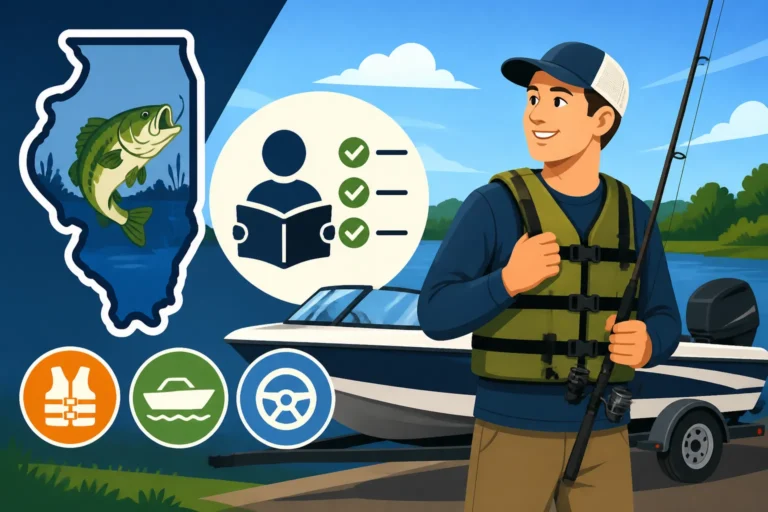
In Illinois, any child under the age of 13 must wear a U.S. Coast Guard-approved PFD while on any vessel less than 26 feet in length, at all times the vessel is underway. This rule is designed to provide maximum protection for young passengers, who might panic, be unable to swim, or be too small to grab a PFD in an emergency. "Underway" means the boat is not anchored, moored, or aground. It applies whether you're motoring, drifting, or even paddling.
So, if you're taking your 8-year-old nephew fishing for bluegill on a local state park lake in your 18-foot bass boat, he needs to have his PFD on the entire time the boat is moving. This applies even if he's sitting quietly, fishing off the side. It's a non-negotiable rule. Many parents find it easier to simply have their children wear their PFDs from the moment they step onto the dock until they are safely back on shore, eliminating any confusion or potential for non-compliance. You can find more details in our guide on Illinois Life Jacket Rules for Children Under 13.
Exemptions and Specific Scenarios
While the general rule for children under 13 is quite broad, there are a couple of specific exemptions to be aware of. The most common exception is when a child is inside an enclosed cabin. If your boat has a fully enclosed cabin, and the child is within that cabin, they are not required to wear a PFD while the vessel is underway. However, the PFD must still be readily accessible to them.
Another less common exemption applies to certain specific, sanctioned events like regattas or parades, though these are typically handled on a case-by-case basis with specific permits. For recreational fishing, the enclosed cabin rule is usually the only practical exception you'll encounter. Even with these exemptions, it's always wise to err on the side of caution. An enclosed cabin offers some protection, but in a severe accident, being inside might not always prevent injury or the need for flotation. Safety should always be the top priority, and wearing a PFD offers the best protection.
Finding the Right Fit for Your Little Anglers
Getting kids to wear PFDs is one thing; getting them to wear one that fits correctly and comfortably is another challenge entirely. A PFD that is too large can ride up around a child's ears, obstructing their vision and potentially slipping off in the water. One that's too small will be uncomfortably tight and restrict movement, making them less likely to wear it. The key is finding a U.S. Coast Guard-approved PFD that is appropriate for their weight and chest size.
When trying on a child's PFD, make sure all straps are buckled, and then lift the child by the shoulders of the PFD. If it rides up past their chin or ears, it's too big. The fit should be snug but comfortable, allowing for movement without chafing. Many kids' PFDs come with crotch straps to prevent them from riding up, which is a fantastic safety feature. Letting kids pick out their own brightly colored PFD can also increase their willingness to wear it. Retailers like Bass Pro Shops often have a wide selection of children's PFDs, making it easier to find the perfect fit. Learning about Proper Life Jacket Fit for Kids Fishing in Illinois is a smart move.
Type IV Throwable PFDs: The Often-Forgotten Rule
Beyond wearable PFDs, many vessels are also required to carry a specific type of PFD designed for throwing to someone in the water. This is the Type IV throwable device, and it's a critical, yet frequently overlooked, component of Illinois boating safety regulations.
What is a Type IV PFD and Why Do You Need One?
A Type IV PFD is a device designed to be thrown to a person in the water, not worn. Common examples include ring buoys, boat cushions, or horseshoe buoys. Unlike wearable PFDs, it's not intended for continuous wear or for keeping an unconscious person face-up. Its purpose is to provide immediate temporary flotation for a conscious person who has gone overboard, allowing them to grab onto something while the vessel maneuvers to pick them up.
Why is this needed? Imagine a situation where someone falls into frigid water. The shock alone might make it difficult to put on a wearable PFD, even if it's readily accessible. A throwable device can be deployed instantly, giving them something to hold onto while they recover or wait for assistance. It acts as a bridge between the initial accident and getting the person back into the boat or a wearable PFD. It's a quick, deployable tool for immediate aid.
When and Where a Throwable PFD is Required
Illinois law requires that all vessels 16 feet in length or longer, except for canoes and kayaks, must have at least one U.S. Coast Guard-approved Type IV throwable PFD on board. Similar to wearable PFDs, this throwable device must be readily accessible and in good, serviceable condition. This means it shouldn't be stowed away in a locker where it takes time to retrieve. It should be easily grabbed and thrown.
So, if you have a 16-foot fishing boat, you'll need a wearable PFD for everyone on board, plus at least one throwable cushion or ring buoy. If you're out in a smaller Jon boat or a kayak, you're exempt from the throwable requirement, though it's still a good piece of safety equipment to have if space allows. Always double-check your vessel's length and ensure you meet this requirement. Many boaters simply keep a throwable cushion on their deck or seat for quick access. Our article Type IV Throwable PFD Requirements for Illinois Boats elaborates on this often-missed rule.
Placement and Accessibility for Emergencies
Just like wearable PFDs, a throwable PFD is useless if you can't get to it quickly when disaster strikes. "Readily accessible" for a throwable means it should be in an open area of the boat, such as on a seat, on the deck, or in an open compartment that can be reached without having to unlock anything, dig through gear, or move heavy objects. It needs to be available for immediate deployment.
Consider this: you're cruising down the Fox River, and someone in your party leans over a little too far, falling in. You need to be able to instinctively grab that cushion and toss it to them without hesitation. If it's buried under the anchor rope and a cooler, those critical seconds are lost. Many boaters attach a short line to their throwable PFDs, making it easier to retrieve or to keep control of it while a person is holding on. Ensuring proper placement is a simple step that can make a huge difference in an emergency.
Specific Vessel Types and Their PFD Needs
While the general rules apply to most boats, certain types of vessels have unique characteristics that lead to slightly different PFD requirements or practical considerations. Knowing these specifics can help you prepare properly for your particular watercraft.
Canoes, Kayaks, and Paddleboards
For canoes, kayaks, and stand-up paddleboards (SUPs), the rule is straightforward: each person on board must have a U.S. Coast Guard-approved wearable PFD. However, unlike larger vessels, there is no requirement for a Type IV throwable device. The key here is "wearable" and "on board." While Illinois law doesn't always mandate wearing it for adults on these smaller craft, it's highly, highly recommended. On a kayak or SUP, falling overboard is easy, and getting back on can be tricky, especially in current or wind.
Many kayakers and paddleboarders choose a Type III PFD, often an inflatable vest, because it's less bulky and allows for greater freedom of movement. It's important that these inflatable PFDs are in good working order and that you have the necessary CO2 cartridges. If you're paddling on a remote lake like Kinkaid Lake, or a busy stretch of the Kankakee River, wearing your PFD is just common sense. It’s a small inconvenience for a massive safety net.
Personal Watercraft (PWCs) and Their Unique Rules
Personal Watercraft (PWCs), often called Jet Skis or WaveRunners, have a very specific and strict PFD requirement. Anyone operating or riding on a PWC must wear a U.S. Coast Guard-approved wearable PFD. This is not optional, regardless of age or swimming ability. This rule is in place because PWCs are inherently fast, maneuverable, and often involve riders being ejected into the water.
The force of hitting the water at speed can be disorienting, and a PFD provides immediate flotation and some impact protection. Most PWC riders opt for a Type III vest, which offers good mobility and comfort for active riding. Ensure the PFD fits snugly so it doesn't ride up when you're moving at high speeds. The PWC rule is one of the clearest and most consistently enforced PFD regulations in Illinois. If you're on a PWC, your PFD must be on.
Larger Motorboats and Sailboats
For larger motorboats and sailboats, particularly those over 26 feet, the PFD requirements generally remain the same as for smaller boats: a wearable PFD for each person, and a Type IV throwable device if 16 feet or longer. However, the type of PFD might vary based on your boating activity. For example, if you're venturing far out onto Lake Michigan for salmon and trout, a Type I or Type II PFD might be a more prudent choice, as they offer greater buoyancy and are designed for extended time in the water and for turning an unconscious person face-up.
While comfort is important, for offshore or overnight trips, maximum safety is key. Additionally, if your larger vessel has specific "special purpose" PFDs (Type V) designed for certain activities like waterskiing or kayaking, these can count towards your requirements only if they are worn and approved for the activity in question. Always review the specific labels on Type V PFDs to ensure they meet the legal requirements for your intended use. Don't forget to review your general Illinois Boating Safety Gear Checklist before heading out.
Important Exemptions and Less Common Scenarios
While the rules we've covered apply to the vast majority of recreational anglers and boaters in Illinois, there are a few niche scenarios and exemptions that are worth noting. These typically apply to very specific circumstances and aren't common for everyday fishing trips.
Commercial Vessels and Licensed Operators
If you're operating a commercial vessel, such as a chartered fishing guide boat, a tour boat, or a ferry, the PFD regulations can be different and often more stringent. Commercial vessels are typically subject to different federal and state regulations, often falling under U.S. Coast Guard commercial vessel guidelines, which might require specific types of PFDs, additional safety equipment, and routine inspections.
Similarly, licensed operators, like captains holding a Coast Guard Master's License, often have a higher standard of care and responsibility for their passengers and crew. For recreational anglers, these commercial rules usually don't apply directly to their personal boats, but it's good to be aware that the rules aren't universally identical for all vessels on the water.
Racing Events and Designated Areas
Participating in sanctioned boat races, regattas, or other competitive aquatic events can sometimes come with specific PFD rules that differ from standard recreational boating. Event organizers, often in conjunction with regulatory bodies, may have specific requirements for PFD types, colors, or even wearing mandates for participants. These rules are usually clearly outlined by the event's governing body.
For instance, a high-speed powerboat race might require specific impact-resistant PFDs, while a kayak race might simply mandate a worn Type III. These exceptions are typically limited to the designated area and duration of the event. Once outside the event boundaries or after the event concludes, standard Illinois PFD rules would apply. Most anglers will never encounter this exception unless they are specifically participating in a competitive event.
When Fishing Tournaments Have Special Rules
While fishing tournaments generally follow standard Illinois PFD rules, some might have additional safety guidelines imposed by the tournament organizers. For example, a bass tournament might require all participants to wear their PFDs while the boat is on plane or traveling at high speed, even if they are over 13 years old. These additional rules are often for the safety of the participants, especially during competitive situations where focus might be intensely on fishing rather than immediate safety.
It's crucial for any angler participating in a tournament to read and understand the specific rules and safety guidelines provided by the tournament directors. These are usually communicated during the pre-tournament briefing. While these rules might exceed the state's minimum requirements, they are put in place for a good reason – to keep everyone safe during the competition. Being aware of Illinois Tournament Angler License Rules can help you prepare for these events.
Penalties and Consequences for Non-Compliance
Ignoring Illinois' life jacket and PFD rules isn't just a minor oversight; it carries real legal and safety consequences. Conservation police officers are diligent in enforcing these regulations, and the penalties can range from warnings to significant fines. More importantly, the human cost of not having proper PFDs can be immeasurable.
The Cost of Ignoring the Rules
If you're caught violating Illinois PFD regulations, such as not having enough PFDs, having them in unserviceable condition, or not having a child under 13 wear one when required, you could face a citation. These citations typically involve fines, which can add up quickly, especially if there are multiple violations. The exact amount of the fine can vary, but it's always far more expensive than simply buying the correct PFDs in the first place.
Imagine being pulled over on Clinton Lake, only to find out your kids' PFDs are too small, and you don't have a throwable cushion for your 16-foot boat. That could mean multiple violations and a hefty sum out of your pocket, effectively ruining your day on the water. Beyond the initial fine, repeated offenses could lead to more severe penalties. It's truly not worth the risk, both financially and in terms of peace of mind.
Enforcement on Illinois Waters
Conservation police officers, often seen on patrol boats, are the primary enforcement authority for PFD and boating safety rules in Illinois. They have the right to stop vessels to conduct safety checks, which include verifying PFD compliance. They are specifically trained to look for common violations, such as children not wearing PFDs, insufficient numbers of PFDs, or PFDs that are damaged or inaccessible.
During a routine stop on the Mississippi River, an officer will likely ask to see your registration, your boater education card (if required), and then immediately check your PFDs. Being cooperative, having your paperwork in order, and clearly demonstrating compliance with PFD rules will make the interaction brief and pleasant. Officers aren't looking to harass boaters; they're looking to ensure everyone on the water is safe. Knowing your Illinois Boater Education Card Requirements and generally understanding Illinois Boat Registration Requirements Explained will also make these checks go smoothly.
Beyond Fines: The Real Risks of Not Following PFD Rules
While fines are a tangible consequence, the most significant risk of ignoring PFD rules isn't financial—it's potentially fatal. Drowning is silent and swift, and it can happen to anyone, regardless of swimming ability. In the event of an unexpected capsizing, fall overboard, or collision, having a properly fitting, U.S. Coast Guard-approved PFD can be the difference between life and death.
Consider a scenario on a cold spring day on Lake of Egypt. Water temperatures can be dangerously low, and even strong swimmers can quickly succumb to hypothermia and lose muscle control. Without a PFD, survival time is drastically reduced. The rules are not arbitrary; they are the result of extensive safety research and tragic lessons learned. Ultimately, PFD rules are about ensuring that you, your family, and your friends come home safely after a day of enjoying Illinois' beautiful waterways. It's the most basic, yet most important, piece of safety gear you can have.
Choosing and Maintaining Your PFDs
With all these rules in mind, it's clear that having the right PFDs and keeping them in top shape is crucial. But how do you choose among the many options, and what's the best way to make them last?
Different Types of PFDs and Their Best Uses
As mentioned earlier, there are generally five types of U.S. Coast Guard-approved PFDs, each with specific design characteristics and ideal uses:
| PFD Type | Description & Buoyancy | Best Use Cases | Key Characteristics |
|---|---|---|---|
| Type I | Offshore Life Jacket; Most buoyant (22 lbs adults). Designed to turn unconscious person face-up. | Offshore, rough seas, remote areas where rescue may be delayed. | Bulky, high visibility, less comfortable for active wear. |
| Type II | Near-Shore Buoyancy Vest; Less buoyant than Type I (15.5 lbs adults). May turn unconscious person face-up. | Near-shore, calm waters, where quick rescue is likely. | Less bulky than Type I, still somewhat restrictive, good for general purpose. |
| Type III | Flotation Aid; Similar buoyancy to Type II. Designed for comfort and freedom of movement. wearer must usually put themselves face-up. | Most popular for recreational boating, fishing, watersports. | Comfortable, comes in vest or jacket styles, good for active use. |
| Type IV | Throwable Device; (16.5 lbs buoyancy). Not designed to be worn. | For tossing to conscious person overboard in immediate need of flotation. | Cushions, ring buoys, horseshoe buoys. Must be readily accessible. |
| Type V | Special Use Device; Varies. Approved for specific activities or conditions (e.g., deck suits, work vests, inflatable PFDs). | Kayaking, waterskiing, commercial fishing, certain competitive sports. | Must be worn to be counted. Often offers specialized features. |
For most recreational anglers, a Type III PFD is the most common and comfortable choice for wearable devices, while a Type IV cushion covers the throwable requirement for vessels 16 feet and over. If you're fishing on Lake Michigan, a Type II might offer a bit more peace of mind due to the larger water and potential for rougher conditions. Our guide on Coast Guard Approved Life Jackets for Illinois Boaters can help you differentiate further.
Shopping for PFDs: Brands and Features
When you're ready to buy new PFDs, whether you're replacing old ones or outfitting a new boat, you'll find a wide variety of brands and features. Major retailers like Bass Pro Shops and Cabela's carry a huge selection, allowing you to try on different styles and sizes. Online stores such as Amazon also offer competitive pricing and a vast array of options, though you'll need to be mindful of sizing charts and return policies.
Look for PFDs that are clearly marked as U.S. Coast Guard-approved. Consider features like adjustable straps, ample pockets for small fishing essentials, and comfortable materials that won't chafe. For children, bright colors and fun designs can make them more willing to wear their PFD. Inflatable PFDs, popular with many experienced anglers for their low profile and comfort, require periodic inspection and sometimes CO2 cartridge replacement, so factor that into your decision. Ultimately, the best PFD is the one that fits properly, is comfortable enough to wear, and meets the legal requirements for your activity. Don't forget to consider Best Life Jackets for Lake Fishing on a Budget if cost is a concern.
Essential Maintenance for Longevity and Safety
Proper care and maintenance will ensure your PFDs remain effective and compliant for many seasons. Here are a few tips:
- Rinse After Use: After saltwater exposure (like Lake Michigan) or heavy freshwater use, rinse PFDs with fresh water to remove salt, dirt, and fish slime.
- Air Dry Completely: Always hang PFDs to air dry thoroughly before storing them. Storing them wet can lead to mildew, odors, and material degradation.
- Store in a Dry, Ventilated Area: Keep PFDs out of direct sunlight when not in use, as UV rays can break down the fabric and flotation material over time. Store them in a cool, dry, well-ventilated area, away from chemicals or sharp objects.
- Regular Inspections: Make a habit of inspecting your PFDs at the start of each fishing season and before every outing. Check for tears, punctures, mildew, broken buckles or zippers, and any signs of wear that could compromise their buoyancy.
- Test Inflatables: If you use inflatable PFDs, follow the manufacturer's instructions for periodic inspection and re-arming the CO2 cartridge. Test them annually to ensure they inflate correctly.
By following these simple maintenance steps, you can extend the life of your PFDs and ensure they are always ready to protect you and your passengers. A well-maintained PFD is a reliable PFD, giving you peace of mind on every Illinois fishing trip. You can also learn more about How to Store Life Jackets for Quick Boat Access to help with maintenance and accessibility.
Disclaimer
This article is for general informational purposes only and does not constitute professional advice. Laws, prices and regulations vary by location and change over time. Consult a qualified professional for guidance on your specific situation.