Catfish Species Comparison: Channel vs Blue vs Flathead Size and Taste
Oh, the humble (or not so humble!) catfish! If you've spent any time on Illinois waters, you know the thrill of a heavy tug on your line and the anticipation of seeing what whiskered wonder you've hooked. But sometimes, when that fish finally comes to the boat or bank, you might find yourself scratching your head. Was that a channel cat, or something bigger? What about the taste? It can be genuinely confusing to tell the different species apart, and even harder to know which one to keep for the dinner table. This guide is here to clear up all that confusion, helping you understand the key differences in size and taste among Illinois's most popular catfish: the Channel, Blue, and Flathead.
Understanding Illinois's Big Three Catfish
Illinois is home to some incredible fishing, and for many, that means chasing catfish. While there are a few other whiskered dwellers out there, these three species are the ones you're most likely to encounter and the ones that really get anglers talking. Each has its own personality, its own preferred haunts, and its own unique appeal, whether you're looking for a fun fight or a delicious meal.
Channel Catfish: The Widespread Favorite
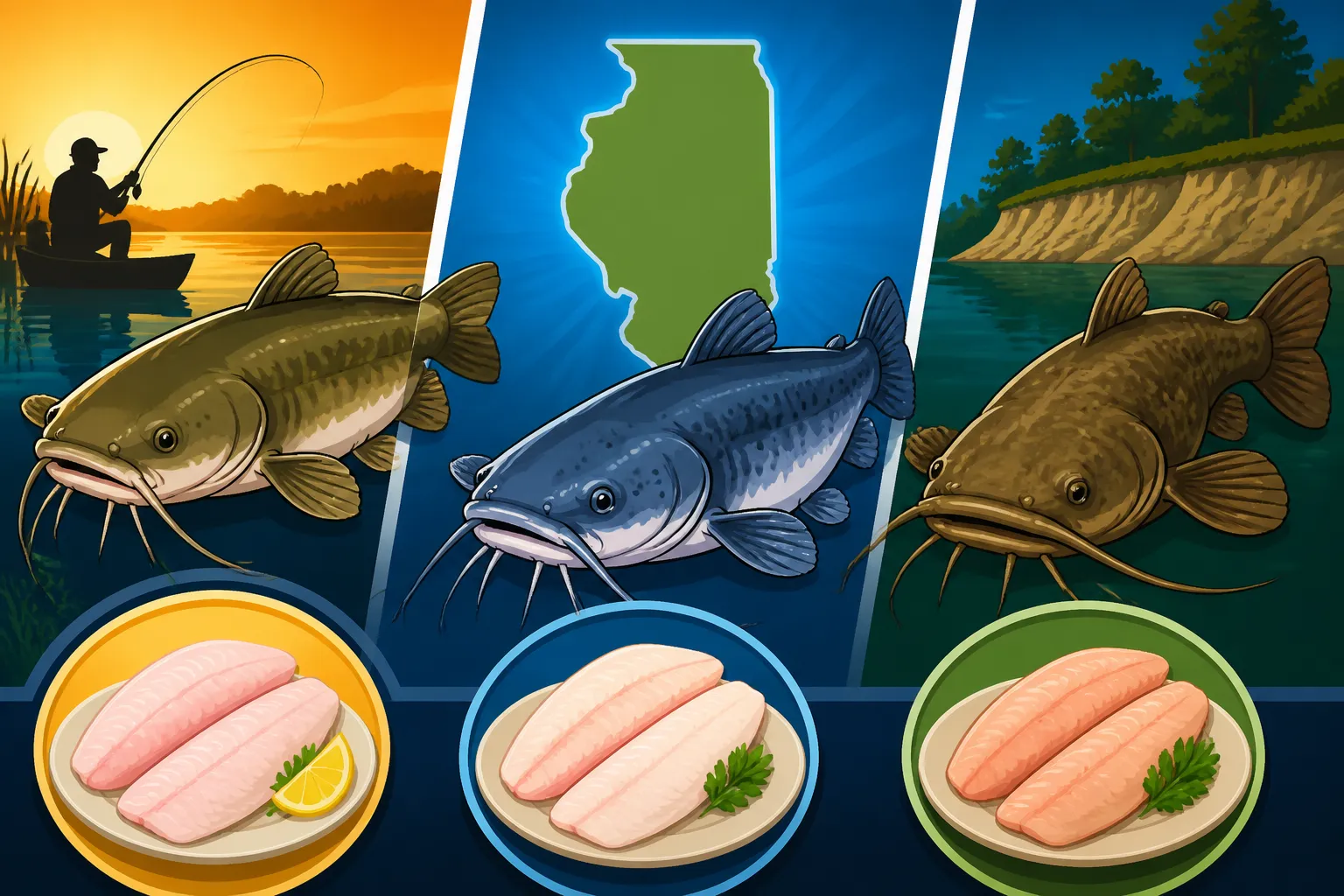
The channel catfish is, without a doubt, the most ubiquitous and recognizable catfish in Illinois. You'll find them almost everywhere – from small farm ponds and creeks to large rivers and reservoirs. They're incredibly adaptable and can thrive in a wide range of conditions, which is why they're often the first catfish species new anglers encounter. Most channel cats you'll pull in will be in the 1 to 5-pound range, making them a perfect size for a good fight and an even better meal. They have a sleek, streamlined body with a deeply forked tail, and their skin is usually a greenish-gray to silvery color, often with scattered dark spots on their sides, especially when they're younger.
Their diet is pretty varied; they're opportunistic feeders, munching on everything from insects and crayfish to smaller fish and even decaying organic matter. This varied diet can sometimes influence their taste, but generally, they're known for a mild, pleasant flavor. Many anglers prefer to keep channel cats in the 1 to 3-pound range for eating, as these tend to have the best texture and flavor. They’re a fantastic target for a relaxing day of bank fishing, perhaps with some trusty nightcrawlers or stink bait, which you can easily find on Amazon. If you're wondering How Illinois Fishing License Prices Break Down by Age and Residency, remember a license is usually needed to pursue these widespread fish.
Blue Catfish: The River Monsters
Now, if you're looking for a true heavyweight, the blue catfish is your champion, especially if you're fishing the big rivers. While they can be found in some of our larger reservoirs, their true kingdom is expansive river systems like the Mississippi and the lower Illinois River. Blue cats are built like tanks, with a stocky body, a slightly humped back, and a deeply forked tail, much like a channel cat, but without the spots. Their coloration is typically a slate-blue to gray on top, fading to a silvery-white belly. The real difference, though, is their size potential. While a 10-pound channel cat is a trophy, a 10-pound blue cat is just getting started. These fish can grow absolutely massive, pushing into the tens, and even hundreds, of pounds in prime conditions.
Their diet primarily consists of fish, crayfish, and mussels, making them formidable predators. This diet, especially from the colder, cleaner waters of large rivers, often gives them a reputation for having a premium taste. Many connoisseurs consider blue cat to be the best eating among the three, often described as firm, white, and exceptionally flaky. Targeting these giants often requires heavy tackle and a lot of patience, but the reward of landing a huge blue cat is second to none. Before heading out, be sure to review Illinois Catfish Daily Limits Explained to understand the regulations for these impressive fish.
Flathead Catfish: The Ambush Predators
The flathead catfish is truly a unique creature among Illinois's whiskered residents. These aren't your typical scavenger cats; flatheads are pure ambush predators, preferring live bait and often lurking in heavy cover like submerged timber, logjams, and rocky crevices in rivers and larger lakes. You'll find them in places like the Mississippi River, the Illinois River, and even some of our larger lakes like Lake Shelbyville and Rend Lake. Their most distinguishing feature, as their name suggests, is their noticeably flat, broad head. Unlike channel and blue cats, their tail is squared or slightly rounded, not deeply forked, and their lower jaw protrudes beyond the upper jaw, giving them a grumpy, determined look. Their coloring is mottled brown and yellow, often with dark blotches, allowing them to blend perfectly into their snaggy environments.
Flatheads are known for their impressive size, often growing as large, if not larger, than blue catfish. A 20-pound flathead is a respectable catch, and they can easily exceed 50 pounds, offering an incredibly powerful fight. Because they are strict predators that feed on live fish, their meat is renowned for being very firm, white, and exceptionally mild, with none of the "fishy" taste some associate with bottom feeders. For many, a flathead fillet is a top-tier culinary experience. If you're targeting these tough fighters, you'll need robust gear and a good understanding of their habits, which you can often research on sites like Amazon for specialized tackle. You might also want to check out Best Bait for Flathead Catfish before your next trip.
Size and Growth Potential: Who Gets Biggest?
When it comes to bragging rights and the sheer thrill of a monster catch, not all catfish are created equal. While even a small channel cat can put a smile on your face, some species in Illinois have the potential to grow into true giants, offering a once-in-a-lifetime angling experience.
Average Catch Sizes Across Species
For the casual angler in Illinois, the size of your typical catch will vary significantly depending on the species.
- Channel Catfish: Most channel cats you'll encounter and keep will fall into the 1 to 5-pound range. These are often called "pan-sized" for a reason – they're perfect for frying up whole or as fillets. While they can certainly grow larger, with 10 to 15-pounders not uncommon in nutrient-rich waters like some sections of the Illinois River, anything over 20 pounds is generally considered a trophy for the species. They are consistently caught, making them a reliable target for many.
- Blue Catfish: This is where the numbers start to jump! While you can catch smaller blue cats, especially in areas where they've been recently stocked, the average catch in prime river habitats is often in the 5 to 20-pound range. Many anglers specifically target blues hoping for fish weighing 30, 40, or even 50 pounds. These fish are powerful, and even a 15-pound blue will give you a fight to remember.
- Flathead Catfish: Flatheads also get impressively large. Your average flathead catch from a decent river or lake might be between 8 and 25 pounds. Like blues, they have the potential to grow much larger, with fish regularly caught weighing over 40 pounds. They are incredibly strong, and hooking into a big flathead often feels like you've snagged a submerged log that suddenly decides to fight back!
State Records and True Giants
While we can't talk about specific weights or recent records, it's widely known that both blue and flathead catfish have a much greater potential to reach truly gargantuan sizes compared to channel catfish. The state record books for catfish in Illinois are usually dominated by these two species, highlighting their ability to grow into genuine leviathans.
Imagine the thrill of tangling with a fish that could outweigh a small child! Targeting these true giants isn't for the faint of heart. It requires specialized heavy-duty gear, often including stout rods, large capacity reels loaded with strong braided line, and oversized hooks. Anglers who dedicate themselves to trophy catfishing spend countless hours studying river currents, bottom structures, and bait preferences, understanding that patience and persistence are key. It's a different kind of fishing, less about filling a cooler and more about the ultimate challenge of landing a monumental fish. When planning for such an endeavor, consider checking out guides like Heavy Tackle for Mississippi River Catfish in Illinois for equipment recommendations.
Factors Influencing Catfish Size
So, why do some catfish get so much bigger than others, even within the same species? It boils down to a few critical factors:
- Water Body Size and Habitat: Larger rivers and reservoirs with ample deep water, abundant cover, and strong current provide the ideal environment for catfish to grow large. These expansive systems offer more territory, diverse food sources, and often less fishing pressure on individual large fish.
- Food Availability: This is huge! A catfish needs a consistent, rich food supply to pack on the pounds. For blue and flathead cats, this means a healthy population of baitfish like shad, carp, or even other panfish. Channel cats thrive where there's plenty of invertebrate life and available forage.
- Age: Simply put, older fish are generally larger fish. Catfish are long-lived, and a blue or flathead that has survived many seasons in a prime habitat will naturally be much bigger than a younger fish.
- Fishing Pressure: In heavily fished areas, larger fish might be removed from the population more frequently, leading to a lower average size. More remote or challenging-to-access areas often hold a higher proportion of older, larger fish.
- Genetics: Like all animals, there's a genetic component to growth potential. Some individual fish are just wired to grow bigger and faster than others.
Understanding these factors can help you decide where and when to target your next potential trophy. For instance, if you're looking for Illinois Blue Catfish: Where the Biggest Fish Are Caught, you'll definitely want to focus on our mighty river systems.
Taste Test: Which Catfish Reigns Supreme?
Let's be honest, for many of us, fishing is as much about the eating as it is about the catching! Catfish have earned a well-deserved place on dinner tables across Illinois, and each of our three main species offers a slightly different culinary experience. The flavor and texture can vary based on factors like the fish's diet, the water quality it came from, and even its size.
Channel Catfish Flavor Profile
Channel catfish are often considered the "classic" catfish on the plate. Their meat is generally mild, slightly sweet, and firm but flaky. It's what most people think of when they hear "fried catfish." Because channel cats are opportunistic feeders, sometimes their diet can influence their flavor. Fish from muddy or stagnant waters might occasionally have a slightly "earthy" or "muddy" taste, though this is less common in flowing rivers or cleaner lakes.
Many anglers agree that the smaller to medium-sized channel cats (1-3 pounds) offer the best eating. Their fillets are tender, cook up beautifully, and are perfect for breading and frying, or even grilling with a little seasoning. They take on marinades and spices wonderfully, making them incredibly versatile. If you're new to cooking catfish, a channel cat is an excellent place to start.
Blue Catfish Culinary Qualities
When it comes to flavor, many serious catfish anglers and chefs consider the blue catfish to be the creme de la creme. Especially blue cats caught from cooler, clean, flowing river waters, their meat is consistently described as very firm, white, and exceptionally flaky. It has a clean, mild flavor that some compare to cod or even a delicate whitefish, with almost no "fishy" taste.
The premium taste of blue catfish is largely attributed to their diet, which consists mainly of other fish, crayfish, and mussels. This diet results in very lean, clean-tasting flesh. Again, smaller to medium-sized blues (up to around 10-15 pounds) are often preferred for their tenderness and flavor, though larger fish can also be excellent if handled and cleaned properly. Blue catfish fillets hold up well to grilling, baking, or pan-frying and are a true treat. Want to know more about preparing these delicious fish? Look up Is Blue Catfish Good to Eat?.
Flathead Catfish Texture and Taste
Flathead catfish are another species that receives high marks in the taste department. Similar to blue catfish, their diet of live fish and crustaceans results in very firm, white meat with a remarkably mild and clean flavor. Many describe flathead meat as being even firmer and denser than channel or blue catfish, making it excellent for holding its shape during cooking. It's often praised for its "non-fishy" taste, which appeals even to those who are sometimes wary of eating other freshwater species.
Because of its firm texture, flathead catfish is incredibly versatile in the kitchen. It can be fried, baked, grilled, smoked, or even used in recipes that call for a sturdier fish, like stews or tacos. The fillets are hearty and satisfying. Like the other species, younger, smaller flatheads tend to be a bit more tender, but even larger fish yield fantastic fillets, provided they are cleaned quickly and thoroughly. If you're curious about different catfish flavors, you might also be interested in a broader comparison like Catfish Species Comparison: Channel vs Blue vs Flathead Size and Taste.
| Feature | Channel Catfish | Blue Catfish | Flathead Catfish |
|---|---|---|---|
| Typical Size | 1-5 lbs (up to 20+ lbs) | 5-20 lbs (up to 100+ lbs) | 8-25 lbs (up to 100+ lbs) |
| Primary Habitat | Widespread: ponds, lakes, rivers, creeks | Large rivers, main channels, some large reservoirs | River snags, logjams, heavy cover, large lakes |
| Taste Profile | Mild, classic "catfish" flavor, somewhat versatile | Very firm, white, mild, clean, often premium flavor | Very firm, white, mild, clean, "non-fishy" |
| Diet | Opportunistic: insects, crayfish, small fish, detritus | Fish, crayfish, mussels | Live fish, crayfish |
| Tail Shape | Deeply forked | Deeply forked | Squared or slightly rounded |
| Head Shape | Relatively narrow, rounded | Large, somewhat humped back | Distinctly flat, broad head |
| Jaw | Upper jaw often protrudes slightly | Upper jaw often protrudes slightly | Lower jaw protrudes beyond upper jaw |
| Coloration | Greenish-gray to silvery, often with spots | Slate-blue to gray, silvery belly, no spots | Mottled brown/yellow, dark blotches |
Identification Made Easy: Telling Them Apart
Beyond their potential size and taste, knowing how to identify these three catfish species on the fly is a critical skill for any Illinois angler. Not only does it help you adhere to specific regulations, but it also deepens your understanding of the fish you're catching. Sometimes, a quick glance is all it takes, but other times, you need to know what subtle features to look for.
Key Visual Differences
Let's break down the most reliable visual cues for distinguishing between Channel, Blue, and Flathead catfish. You can even find laminated fish identification cards on Amazon that make this easy to do on the water!
- Tail Shape: This is often the easiest and most definitive feature.
- Channel Catfish: Have a deeply forked tail, almost like a swallow's tail.
- Blue Catfish: Also have a deeply forked tail, very similar to the channel cat, but typically even more pronounced on larger specimens.
- Flathead Catfish: Their tail is squared off or only very slightly notched/rounded, never deeply forked. This is a dead giveaway!
- Head Shape and Jaw:
- Channel Catfish: Have a relatively narrow, rounded head. Their upper jaw usually protrudes slightly over the lower jaw.
- Blue Catfish: Possess a large, somewhat conical head with a slight hump on their back just behind the head. Their upper jaw also typically protrudes slightly.
- Flathead Catfish: As their name implies, they have a distinctly broad, flat head. Critically, their lower jaw protrudes noticeably beyond their upper jaw, giving them a perpetual frown.
- Coloration and Spots:
- Channel Catfish: Typically greenish-gray to silvery, often with scattered dark spots on their sides, especially when younger. These spots can fade on older, larger fish.
- Blue Catfish: Usually a uniform slate-blue or gray on their back and sides, fading to a silvery-white belly. They do not have spots.
- Flathead Catfish: Have a mottled appearance with shades of brown, yellow, and olive, often with distinct dark blotches or patterns. This camouflage helps them blend into their preferred snaggy habitats.
- Anal Fin: While a bit trickier to count on a wriggling fish, the length and ray count of the anal fin (the fin along the bottom rear of the fish) can be diagnostic.
- Channel Catfish: Have an anal fin with a rounded margin and usually between 24-29 rays.
- Blue Catfish: Their anal fin is very long and straight-edged, often looking like a comb, with typically 30-36 rays.
- Flathead Catfish: Have a much shorter, more rounded anal fin with fewer rays, usually 14-17.
Habitat Clues for Identification
Sometimes, where you catch a catfish can give you a strong hint about its identity, even before you get a good look. This is because each species tends to prefer slightly different environments.
- Channel Catfish: If you're fishing a smaller pond, a slow-moving creek, or the calmer areas of a larger lake, chances are good you're going to pull in a channel cat. They're everywhere and adapt well to a variety of water conditions, from clear to murky. If you're just starting out and need a Best Beginner-Friendly Fish Species for Kids Fishing in Illinois, channel cats are a prime candidate.
- Blue Catfish: Hooking into a big cat in the main channel of the Mississippi River, especially in strong current or deep holes, strongly suggests you've got a blue cat. These fish thrive in big river environments. If you're fishing areas with Mississippi River Catfish: Why Southern Illinois Waters Produce So Many, you're very likely to encounter blues.
- Flathead Catfish: If your bait is near a massive logjam, a pile of submerged timber, or rocky structure in a river or large lake, and you get a powerful, dogged fight, you're probably wrestling a flathead. They are intimately tied to heavy cover, using it for ambush points. Targeting Flathead Catfish Fishing Tips for Illinois Anglers often means knowing how to fish these snag-laden areas.
By combining visual identification with knowledge of their preferred habitats, you'll become a true catfish expert on Illinois waters in no time! Always remember to keep safety in mind, especially when handling larger fish, and respect the local regulations for each species.
Disclaimer
This article is for general informational purposes only and does not constitute professional advice. Laws, prices and regulations vary by location and change over time. Consult a qualified professional for guidance on your specific situation.