How to Identify a Spotted Gar
There’s nothing quite like the thrill of reeling in a truly unique freshwater fish, but sometimes, figuring out exactly what you’ve caught can be a bit of a head-scratcher. If you've ever found yourself staring at a long, toothy creature with a primordial vibe, especially here in Illinois, chances are you've encountered a gar. This guide is all about helping you confidently identify a spotted gar, cutting through the confusion of similar species and ensuring you know what's on the end of your line.
The Distinctive Marks of an Illinois Spotted Gar
Spotted gar are truly fascinating fish, remnants of an ancient lineage that has graced our Illinois waters for millennia. Their unique appearance is a big part of their allure, but it can also make them tricky to distinguish from their gar relatives. Let's dive into the tell-tale signs that scream "spotted gar!"
Spotting the Spots: Key Visual Cues
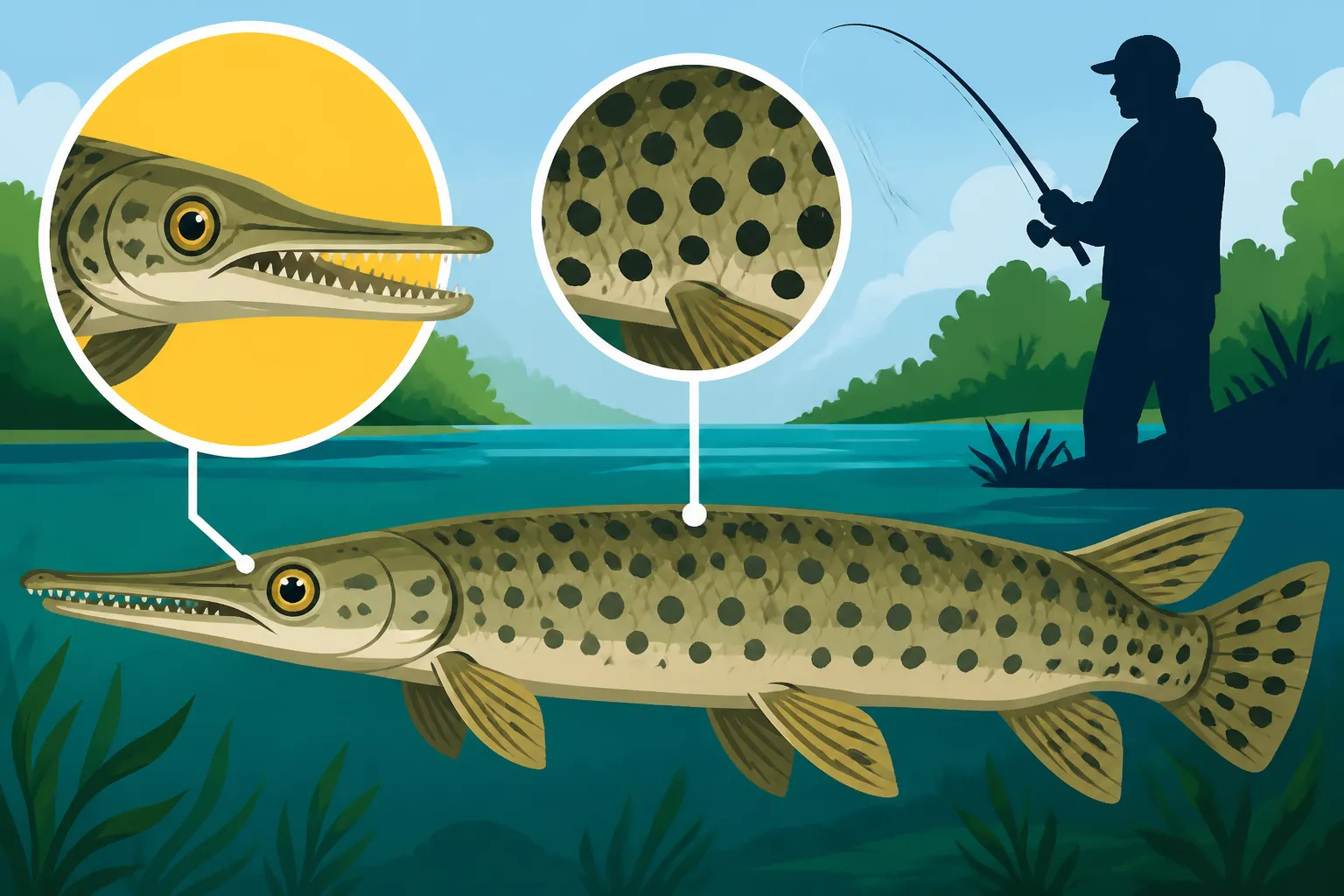
The most obvious clue, as their name suggests, lies in their spots – but it’s where those spots are located that truly matters. A spotted gar will have distinct, dark spots not just on its body, but critically, on its head and on all of its fins. This is a crucial differentiator. Imagine you’ve just hauled one up from a slow-moving backwater. You’ll notice these dark, roundish spots scattered across its olive-brown back, fading to a lighter, almost white, belly. But don't stop there. Look closely at its paddle-like pectoral fins, its dorsal fin, and especially its caudal (tail) fin – if you see those same dark spots peppering all of them, you're almost certainly looking at a spotted gar. Many anglers even carry a small, waterproof field guide, easily found on platforms like Amazon, that specifically details these visual distinctions to confirm their catch on the water.
Beyond the spots, take a moment to observe its overall coloration. They tend to be a dull olive to brown on their backs and sides, gradually lightening to a white or cream on their undersides. This natural camouflage helps them blend seamlessly with the submerged logs and aquatic vegetation they often lurk among. When comparing gar species, always remember to check the head and all fins for those defining dark spots. It's the most reliable visual characteristic you'll find.
Body Shape and Fin Placement
While the spots are the star of the show, the spotted gar's body shape and fin structure also offer important clues. They typically possess a moderately elongated, cylindrical body, a bit more robust than some of the other gar species you might encounter. Their snouts are relatively broad and short compared to, say, a longnose gar. This snout is flattened, like a duck's bill, and adorned with many sharp, conical teeth – perfect for ambushing unsuspecting prey.
The dorsal and anal fins on a spotted gar are set far back on the body, almost directly opposite each other, and very close to the caudal fin. This posterior placement of fins is characteristic of gar species and aids in their burst-and-ambush hunting style. Their tail fin is rounded, sometimes slightly forked, and as mentioned, will also feature those prominent dark spots. These fins are incredibly strong, allowing them to make sudden, powerful lunges through the water. It’s an ancient design, and it works wonderfully. Remember, every part of the fish, from its snout to its tail, plays a role in its identification, and observing the overall silhouette along with the spots will help confirm your suspicions.
How Spotted Gar Differ from Their Gar Cousins in Illinois
Illinois is home to several fascinating gar species, and while they all share that unmistakable "prehistoric" look, there are crucial differences that can help you tell them apart. It’s easy to get them mixed up, especially when you’re excited about a catch, but a little knowledge goes a long way.
Comparing with Longnose and Shortnose Gar
The two most common gar species in Illinois, besides the spotted gar, are the longnose gar and the shortnose gar. The key to telling them apart often lies in their snouts and, you guessed it, their spots – or lack thereof.
The longnose gar is perhaps the most distinct. Its snout is incredibly long and slender, much like a needle, and it's noticeably longer than the rest of its head. Imagine a long, narrow pencil, and you're getting close to its profile. Unlike the spotted gar, the longnose gar generally lacks prominent dark spots on its body or fins, or if they are present, they are much fainter and usually not on all fins. Its body is also more streamlined and torpedo-shaped. When you see a longnose, that incredibly elongated snout is the dead giveaway; you won't confuse it with a spotted gar once you've seen one. You can find excellent visual comparisons in guides like Illinois Fishing Information Guide Covers April 2026 Through March 2027 or similar publications that showcase the differences.
The shortnose gar can be a bit trickier, as its name suggests a shorter snout, bringing it closer in appearance to the spotted gar. However, the shortnose gar's snout, while short, is still relatively narrow and pointed, not broad and flattened like the spotted gar. More importantly, the shortnose gar typically lacks spots on its head and fins, or if spots are present on the body, they don't extend consistently to all fins. If you pull in a gar with a relatively short, pointed snout and a body that's mostly uniformly colored without distinct spotting on the head and fins, you've likely found a shortnose. Paying close attention to the presence or absence of spots on the head and all fins is the golden rule here.
Differentiating from Alligator Gar
Now, for the big one: the alligator gar. While less common in many parts of Illinois, especially central and northern regions, they are present in the very southern reaches, particularly in the Mississippi River drainage. Catching one is a truly monumental event, and they are much larger than any other gar species. The primary difference is simply size. Alligator gar are absolute behemoths, often growing to over five feet in length and weighing well over a hundred pounds. They have a massive, broad, alligator-like head with two rows of formidable teeth in their upper jaw (most other gar only have one). Their snout is very short and wide, almost shovel-like, resembling that of an alligator.
While they do have some blotches or spots, they are usually much larger and less defined than the distinct, round spots of a spotted gar, and they don’t typically cover all fins in the same way. An alligator gar's body is typically greenish-brown on top, fading to a lighter belly, but it's their sheer bulk and that incredibly powerful, reptilian head that makes them unmistakable. If you're fishing waters known for them, like the very southern tip of Illinois on the Mississippi, and you hook into something that feels like a Volkswagen, it might just be one! For those fishing the vast expanse of the Mississippi, knowing your gar species is key, as highlighted in Mississippi River Fishing in Illinois: Which Species Live Where.
Gar Species Comparison Table
To make distinguishing these magnificent fish a little easier, here's a quick comparison table focusing on the key identification features:
| Feature | Spotted Gar | Longnose Gar | Shortnose Gar | Alligator Gar |
|---|---|---|---|---|
| Snout Shape | Moderately broad and short, duck-bill like | Very long and slender, needle-like | Shorter, somewhat pointed, but not broad | Very broad and flattened, alligator-like |
| Spots on Body | Distinct, dark spots over entire body | Few to no spots, or very faint | Few to no spots, or small and indistinct | Large, irregular blotches, greenish-brown |
| Spots on Head | Yes, prominent | No (or very faint) | No | No (or very faint blotches) |
| Spots on Fins | Yes, prominent on all fins (dorsal, anal, caudal) | No (or very faint) | No | No (or very faint blotches) |
| Upper Jaw Teeth | Single row | Single row | Single row | Double row |
| Typical Size | Up to 3 feet | Up to 6 feet | Up to 3 feet | Up to 10 feet or more |
| Distribution | Widespread in sluggish backwaters and lakes | Widespread in large rivers and open lakes | Widespread in murky, slow-moving waters | Lower Mississippi River, extreme Southern Illinois |
This table should be a handy reference point the next time you're trying to figure out if you've got a spotted gar or one of its fascinating relatives.
Where to Find Them and What They Act Like
Knowing where fish like to hang out and how they behave can often give you strong clues about their identity even before you get a close look. Spotted gar, with their unique physiology and hunting style, have very specific preferences when it comes to habitat and demeanor.
Preferred Habitats and Water Conditions
Spotted gar are truly creatures of the slow lane. You won't typically find them in fast-moving, clear rivers. Instead, they thrive in the tranquil, often murky, backwaters of large rivers, oxbow lakes, sluggish streams, and marshy areas across central and southern Illinois. Think about those parts of the Mississippi River backwaters or the slow-moving portions of the Illinois River – that’s prime spotted gar territory. They particularly love areas with abundant aquatic vegetation, submerged logs, and brush piles. These features provide them with excellent ambush points and camouflage, allowing them to blend in perfectly while they wait for an unsuspecting meal to swim by. They're not too picky about water clarity, often inhabiting turbid waters where other fish might struggle.
They are also incredibly tolerant of low oxygen levels, a testament to their ancient lineage and their ability to breathe air using a primitive lung-like swim bladder. This adaptation means they can survive in stagnant pools and shallow, warm water where many other game fish simply wouldn’t last. If you’re fishing a shallow, weedy cove on a hot summer day and see a long, spotted fish slowly break the surface for a gulp of air, you can be fairly confident it’s a gar, and quite possibly a spotted gar based on their preferred habitat. Knowing this can help you target specific areas if you're hoping to encounter one, or mentally prepare for an encounter if you’re fishing these types of spots for other species, perhaps for Illinois Spotted Gar Fishing: What You Need to Know.
Behavioral Clues to Gar Identification
Beyond their physical appearance and habitat, the way a spotted gar moves and hunts can also give you insight into its identity. They are primarily ambush predators, perfectly designed to lie motionless, blending into their surroundings, until prey comes within striking distance. You'll often see them suspended just beneath the surface, perfectly still, resembling a floating stick or log. This patient hunting style is characteristic of many gar species, but the spotted gar excels at it in their preferred, vegetated environments.
When they do decide to strike, it's a lightning-fast sideways snap of their head, impaling their prey on those needle-sharp teeth. They typically feed on smaller fish, crustaceans, and even insects. Don't expect them to be chasing lures across open water like a bass; their strikes are usually quick and precise. They're not generally known for long, drag-screaming runs, though a large one can certainly put up a spirited fight if hooked. Their fighting style tends to be more about powerful headshakes and often aerial acrobatics, trying to throw the hook with their bony mouths. If you observe a fish exhibiting this patient, ambush behavior, especially in a weedy, shallow backwater, it’s a good indicator you might be dealing with a gar, and those distinct spots will then help confirm it as a spotted gar.
Gear Up and Handle with Care: Practical Tips
So, you've identified a spotted gar – congratulations! Now comes the next part: handling it safely, both for you and for the fish. Gar are unique, and their physical attributes require a bit of thought when it comes to gear and handling techniques.
Essential Gear for Catching and Identifying Gar
Catching gar often requires robust gear. While they might not be the hardest fighters, their bony mouths and sharp teeth can make landing them tricky. A medium-heavy to heavy action rod with a strong reel spooled with at least 15-20 lb test monofilament or braid is a good starting point. Unlike many fish that inhale a bait, gar often "slash" at it, grabbing it sideways. This means a tough, wire leader or heavy fluorocarbon leader (around 40-80 lb) is highly recommended to prevent bite-offs from their needle-like teeth. Many experienced gar anglers forgo traditional hooks and use frayed nylon rope or pieces of pantyhose for bait, which tangles in their teeth without impaling them, making for easier release. However, if using hooks, sturdy treble hooks or large single hooks are preferred.
For identification, having a measuring tape (a flexible one is great, often available on Amazon) can help you gauge length, especially if you're trying to distinguish between sizes of gar. But more importantly, once you’ve landed one, protecting yourself is paramount.
Safe Handling Practices for Gar Species
Gar, especially the spotted gar, are armed with rows of incredibly sharp, conical teeth. These are not fish to lip like a bass! Their bony plates also make them a bit like a medieval knight, so holding onto them firmly can be challenging.
Here’s how to handle them safely:
- Gloves are your friend: Always wear a good pair of puncture-resistant gloves. Heavy-duty fishing gloves or even welding gloves can offer great protection against their teeth and abrasive skin. This is probably the most critical piece of safety gear you can have when targeting gar, and a quick search on Amazon will show you many options.
- Use a net or gripper: A large, rubberized landing net can help subdue the fish and prevent it from thrashing. Alternatively, specialized fish grippers can securely hold their lower jaw, keeping your hands away from their teeth.
- Control the head: Once you have the gar in hand or in a net, always try to control its head first. A thrashing gar can quickly turn into a dental hazard.
- Careful unhooking: Gar have very bony mouths, and hooks can be difficult to remove. Long-nosed pliers or even bolt cutters might be necessary to snip hooks if they’re deeply embedded. If you’re planning on catch and release, consider using barbless hooks or the aforementioned frayed rope method.
- Minimize out-of-water time: Gar can breathe air, but prolonged exposure out of water is still stressful. Try to handle them quickly and gently, especially if you plan to release them. Their tough, diamond-shaped scales (ganoid scales) are quite robust, but their internal organs are still delicate. For more on handling these unique creatures, you might want to read Are Spotted Gar Safe to Handle?. Knowing these tips will not only protect you but also ensure the health of these ancient fish so they can continue to thrive in Illinois's waters.
By understanding their identifying features, their preferred haunts, and how to safely handle them, you'll be well-prepared for your next encounter with an Illinois spotted gar. These are truly magnificent fish, and learning to appreciate their place in our ecosystem makes every catch even more rewarding.
Disclaimer
This article is for general informational purposes only and does not constitute professional advice. Laws, prices and regulations vary by location and change over time. Consult a qualified professional for guidance on your specific situation.