Green Sunfish: A Common Backwater Catch in Illinois
There's nothing quite like the simple joy of fishing, but sometimes, the pursuit of trophy bass or elusive walleye can overshadow the charm of smaller, more common species. If you've ever found yourself in an Illinois backwater, casting into shallow, weedy areas, chances are you've encountered the feisty green sunfish. This guide will help you understand, appreciate, and effectively target this abundant and often overlooked panfish, turning those "junk fish" moments into genuine angling fun.
What Exactly is a Green Sunfish? Understanding This Common Illinois Panfish
When you're out on the water, especially in smaller ponds or slow-moving creeks, you've probably caught a sunfish that wasn't quite a bluegill and not quite a crappie. More often than not, you've met the green sunfish. These little warriors are incredibly prevalent across Illinois, thriving in places where other fish might struggle. They might not get the same glamour as a largemouth bass, but they offer a ton of action, especially for a relaxed afternoon trip.
Identifying the Green Sunfish: Key Features and How They Differ
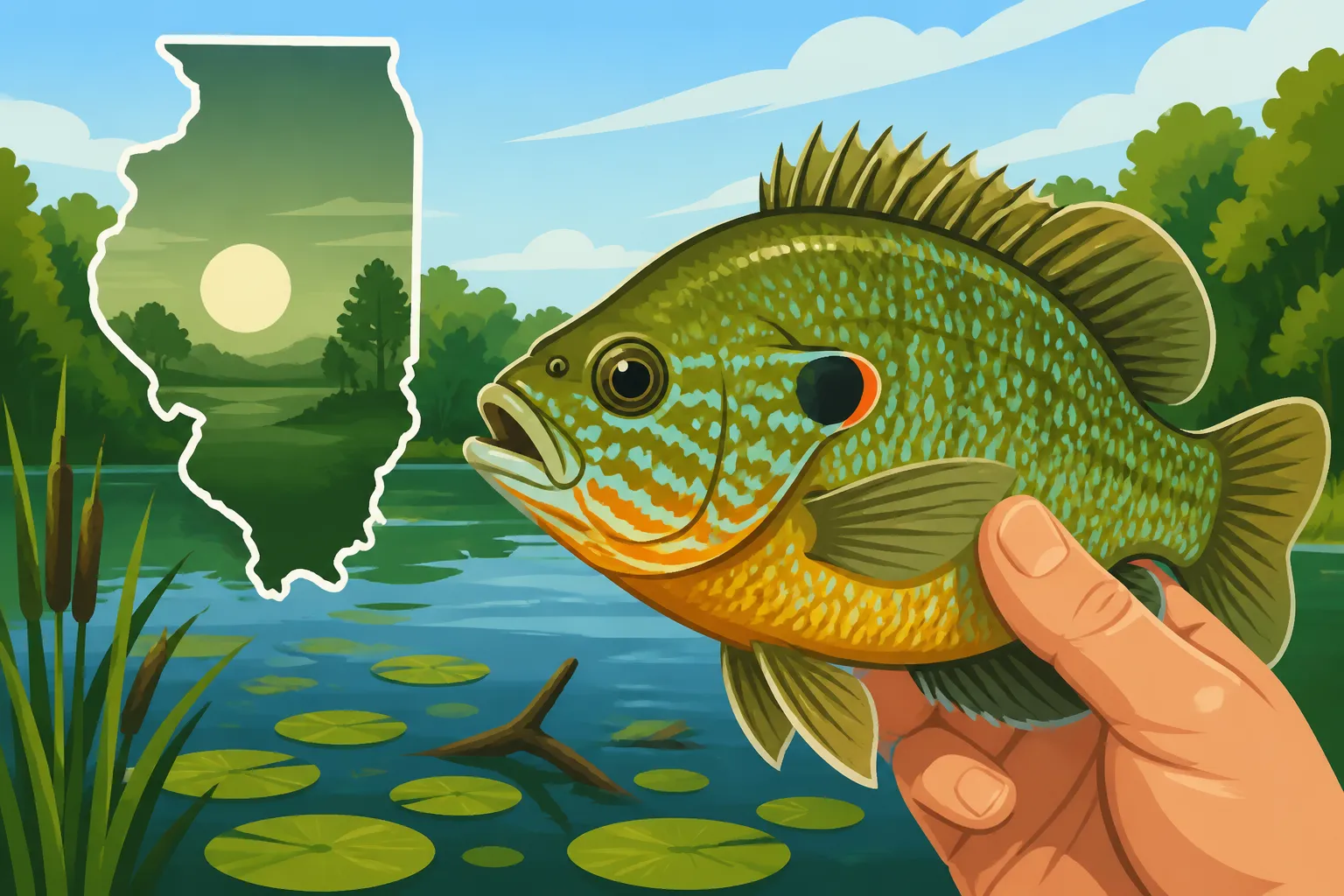
The green sunfish (Lepomis cyanellus) is a member of the sunfish family, but it has some distinct characteristics that set it apart. They typically have a more robust, chunkier body compared to the flatter, more disc-shaped bluegill. One of the easiest ways to identify them is by their larger mouth, which extends back to at least the middle of their eye, sometimes even past it. This is a crucial difference from a bluegill, whose mouth is noticeably smaller. Their color can vary quite a bit, from olive green to yellowish-brown, often with iridescent blue or emerald green spots and wavy lines on their cheeks and gill covers.
Another tell-tale sign is the prominent black spot on the rear edge of their opercle, or gill flap, which is usually bordered by a lighter, yellowish or orange margin. Their dorsal fin spines are generally more numerous and sharper than a bluegill's, and their pectoral fins are shorter and more rounded. While they might not be as strikingly colored as some of their sunfish cousins, those subtle iridescent markings can be quite beautiful up close. Understanding these visual cues can help you quickly distinguish them from other panfish you might encounter, like the bluegill or even a rock bass. For a deeper dive into differentiating these common catches, you might find Illinois Best Panfish Species: A Complete Guide helpful.
Where Green Sunfish Call Home in Illinois Waters
Green sunfish are true survivors and aren't particularly picky about their accommodations, which is why you find them almost everywhere. They excel in what many anglers call "marginal" waters – places with murky water, heavy vegetation, and even some pollution. Think small farm ponds, drainage ditches, shallow backwater areas of larger rivers like the Mississippi or Illinois, and the slower sections of creeks and streams. They absolutely love dense cover, whether it's submerged logs, thick lily pads, cattail edges, or brush piles.
These fish are incredibly adaptable and can tolerate warmer water and lower oxygen levels better than many other sport fish. This hardiness means they can often be the dominant panfish species in smaller, less managed bodies of water. You'll frequently find them hugging the banks, especially in areas with a soft or muddy bottom where they can root around for insects and small crustaceans. If you're exploring the quieter, less traveled spots on our Illinois waterways, particularly those accessible from the bank, you're almost guaranteed to stumble upon a population of green sunfish. For fishing these types of spots, check out our guide on Mississippi River Backwater Fishing for Crappie and Bass, Illinois.
The "Hybrid" Conundrum: Green Sunfish and Their Relatives
One fascinating aspect of green sunfish is their strong tendency to hybridize with other sunfish species, most notably bluegill. This often happens in ponds or lakes where both species are present, and their spawning seasons overlap. The resulting "hybrid sunfish" can be a mix of features from both parents, sometimes making identification a bit tricky even for experienced anglers. These hybrids often grow faster and larger than purebred green sunfish or bluegill, which can be a fun surprise catch.
While some anglers might find these hybrids confusing, they're generally excellent catches and can provide a lot of sport. The propensity for hybridization is a testament to the adaptability of these fish and their ability to thrive in varied environments. Knowing that you might catch a pure green sunfish or a hybrid adds another layer of excitement to your panfishing adventures. If you're curious about these unique crosses, our article What Is a Hybrid Sunfish and How Do You Catch One? offers more information.
Why Target Green Sunfish? More Than Just a "Trash Fish"
It's easy to dismiss smaller fish as less desirable, especially when you're dreaming of a wall-hanger bass. However, the green sunfish offers a truly enjoyable angling experience that shouldn't be overlooked. They might not be giants, but they pack a punch and contribute to the overall health of our aquatic ecosystems in Illinois.
The Fun Factor: An Excellent Catch for Beginners and Kids
If you're looking for a fish to introduce a child to the joys of angling, or just want a guaranteed bite to shake off the rust, the green sunfish is your best friend. They are incredibly aggressive for their size and will readily strike at a wide variety of baits and lures. This eagerness makes them perfect for teaching basic casting, bait presentation, and the thrill of a tug on the line. There's nothing quite like seeing a kid's face light up after reeling in their first fish, and a green sunfish is often that first fish.
Their abundance means you're rarely waiting long between bites, which is crucial for keeping young anglers engaged. They fight hard for their size, providing a spirited battle on ultralight tackle. This consistent action helps build confidence and fosters a love for the outdoors. Truly, they are one of the Easiest Fish to Catch for Beginners and an ideal target for a family outing. When you're considering a fishing trip with the little ones, don't underestimate the humble green sunfish; they deliver pure, unadulterated fun.
Green Sunfish as Table Fare: Are They Worth Keeping?
Despite their smaller size, green sunfish are surprisingly good to eat. While they don't grow to the same proportions as a bluegill or crappie, their firm, white, flaky meat has a mild flavor that many anglers enjoy. Just like any panfish, the key is to catch enough of them to make a meal and to clean them properly. Frying them up whole, or filleting the larger ones, can result in a delicious plate of fish. You might need to catch quite a few to feed a crowd, but the effort is often rewarded.
Of course, their bony nature can be a deterrent for some, but the flavor is there. Think of them as smaller versions of other popular panfish. If you're already keeping bluegill or crappie for the pan, don't hesitate to add a few green sunfish to the cooler, especially the larger ones you might catch. It's a great way to utilize a plentiful resource and enjoy the fruits of your labor right from Illinois waters.
Ecological Role and Management in Illinois
Green sunfish play an important role in the aquatic ecosystems of Illinois. They are opportunistic feeders, consuming a wide range of insects, small crustaceans, and even tiny fish, which helps keep insect populations in check. In turn, they serve as a food source for larger predatory fish like largemouth bass, channel catfish, and even herons and other wading birds. They are an integral part of the food web, converting smaller organisms into energy for larger predators.
Due to their hardiness and prolific breeding habits, green sunfish can sometimes overpopulate smaller ponds, especially if there aren't enough larger predators to keep their numbers in balance. When this happens, they can become stunted, meaning they don't grow to a desirable size. In such cases, selective harvesting by anglers can actually be beneficial to the pond's ecosystem, helping to thin out the population and allow the remaining fish to grow larger. Their robust nature means they often thrive where other species might struggle, solidifying their place in many of our state's water bodies.
Gear and Techniques for Catching Green Sunfish in Illinois
You don't need fancy, expensive gear to have a blast catching green sunfish. In fact, one of the best things about targeting these fish is how accessible it is. A simple setup and some basic knowledge of their habits will put you on fish in no time.
Simple Gear: What You Need to Get Started
For green sunfish, simplicity is king. An ultralight spinning rod and reel combo, spooled with 4-pound or 6-pound monofilament line, is absolutely perfect. The light tackle allows you to feel every nibble and makes even a small sunfish feel like a trophy. You can find these affordable ultralight combos easily online; for example, a quick search on Amazon will show you dozens of suitable options from brands like Ugly Stik or Shakespeare.
Beyond the rod and reel, you'll need a handful of small hooks (size 8 or 10 Aberdeen or similar), some split-shot sinkers to add a little casting weight, and a bobber. A slip bobber can be great for adjusting depth easily, but even a simple clip-on bobber will do the trick. A small tackle box with these essentials, a pair of needle-nose pliers for de-hooking, and a stringer or cooler if you plan to keep fish, rounds out your basic setup. For more insights on setting up your tackle, check out Tackle Box Organization for Panfish Trips.
Best Baits and Lures for Green Sunfish
Green sunfish are not picky eaters, which is fantastic news for anglers. Live bait is almost always a surefire bet. Red worms, nightcrawlers (cut into smaller pieces), crickets, grasshoppers, and even small grubs or mealworms are incredibly effective. Just thread a small piece onto your hook, add a split shot a few inches above it, and cast it out under a bobber. The visual cue of the bobber disappearing underwater is always exciting!
If you prefer artificials, small jigs (1/32 to 1/16 ounce) tipped with a tiny plastic grub or a piece of Berkley PowerBait are excellent choices. White, chartreuse, and black are often productive colors. Tiny inline spinners, like those from Mepps or Rooster Tail, can also entice aggressive strikes, especially if you're retrieving them slowly along weed lines. For live bait, local bait shops are always best, but if you're looking for small jigs or spinners, Amazon has an endless selection. A good resource for similar species is Best Bait for Bluegill Fishing, as many of the same principles apply.
Finding Their Lairs: Backwater Tactics and Locating Schools
Green sunfish are creatures of cover. To find them, look for areas with submerged vegetation, fallen trees, brush piles, docks, or rocky banks. These spots offer both ambush points for feeding and protection from larger predators. In ponds, focus on the edges where aquatic plants meet open water, or any visible structure. In rivers or creeks, target slack water areas, eddies, and backwater sloughs where the current is minimal.
A common tactic is to cast your bait or lure close to the cover and let it sit for a moment, or retrieve it very slowly. Green sunfish are not afraid to dart out from cover to grab a meal. If you catch one, chances are there are more in the immediate vicinity, as they often congregate in small schools. Work the area thoroughly before moving on. Experiment with different depths – sometimes they're right on the surface, other times a foot or two down, especially on sunny days. Persistence in these covered, shallow zones is often key to a successful green sunfish outing.
Responsible Angling for Green Sunfish
While green sunfish are abundant, practicing responsible angling ensures these feisty fighters remain a common and enjoyable catch for generations to come. It’s not just about catching fish; it’s about respecting the resource.
Illinois Regulations: What You Need to Know
For most panfish species, including green sunfish, Illinois typically has very liberal regulations. There usually isn't a statewide size limit or a strict daily catch limit for sunfish species collectively. However, this is one of those times when it's absolutely crucial to remember that regulations can, and often do, vary by specific lake or river. Some managed lakes might have special rules in place to protect or enhance their fish populations, so it’s always wise to consult the latest Illinois Department of Natural Resources (IDNR) fishing regulations guide or check the signs at your specific fishing spot.
It's tempting to think that since they're so common, you don't need to worry about rules, but that's not the case. Always make sure your fishing license is current; if you're an Illinois resident, this is an easy process, and if you're visiting, you'll need a nonresident license. Familiarize yourself with the general guidelines in the Illinois Fishing Regulations Overview, but always double-check for site-specific variations. This small effort helps maintain healthy fisheries for everyone.
Handling and Releasing Green Sunfish
Even though green sunfish are tough little fighters, proper handling is still important, especially if you plan to release them. Their spiny dorsal fins and gill plates can be sharp, so handle them carefully to avoid getting pricked. A small pair of pliers or a de-hooking tool (easily found on Amazon or at any sporting goods store) can be invaluable for quickly removing hooks, minimizing stress to the fish. Always wet your hands before handling fish to protect their slime coat, which is their natural defense against disease.
If you're releasing them, do so gently. Place them back in the water headfirst, allowing water to flow over their gills, and give them a moment to regain their bearings before letting them go. If a fish is bleeding heavily or appears severely stressed, it's often best to keep it for the pan, if legal, rather than releasing it to die. Practicing these simple techniques ensures that more fish survive to be caught another day, contributing to a vibrant and healthy fishery.
Incorporating Green Sunfish into Your Angling Adventures
Don't let the pursuit of larger, more glamorous species overshadow the pure enjoyment that green sunfish can provide. They are an amazing species for getting beginners hooked on fishing, for enjoying a relaxing afternoon on the water, or for providing some tasty fillets for dinner. Their aggressive nature and widespread abundance make them an accessible target for almost any angler in Illinois, regardless of their skill level or available gear.
Next time you're heading out, consider dedicating some time to these underrated fighters. Head to a local pond, a quiet backwater, or a slow-moving stream, armed with some worms and an ultralight rod. You might just find that the humble green sunfish delivers some of the most consistent and exciting action of your fishing season, reminding you that sometimes, the best fish are the ones that are simply eager to bite. Make them a part of your regular fishing rotation, and you'll always have a fun outing to look forward to.
Disclaimer
This article is for general informational purposes only and does not constitute professional advice. Laws, prices and regulations vary by location and change over time. Consult a qualified professional for guidance on your specific situation.