Does a Hunting License Include Fishing Privileges Too?
It’s a super common question that often trips up even seasoned outdoor enthusiasts in Illinois: "If I have my hunting license, does that mean I’m good to go fishing too?" I get it, the thought of a single permit for all your outdoor adventures sounds incredibly convenient. Unfortunately, when it comes to the Land of Lincoln, the answer isn't quite as straightforward as we might hope. This guide is here to clear up that confusion, explain the Illinois Department of Natural Resources (IDNR) requirements, and ensure you're fully licensed for whichever pursuit calls to you.
The Straight Answer: Hunting and Fishing Licenses Are Distinct in Illinois
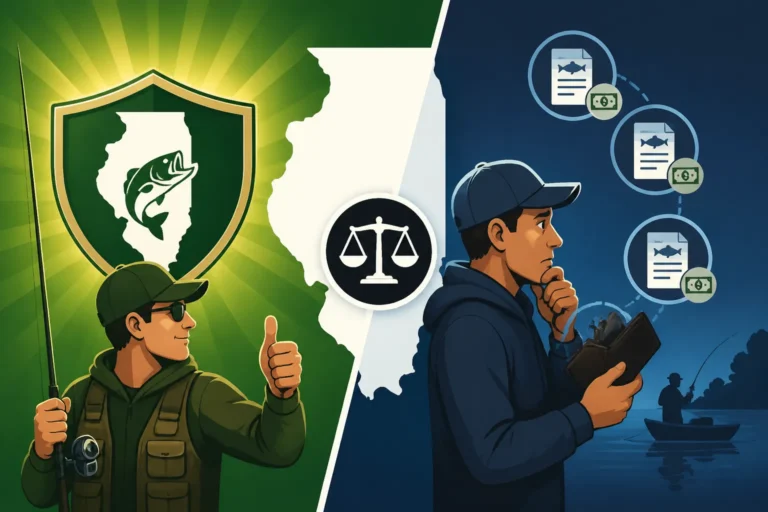
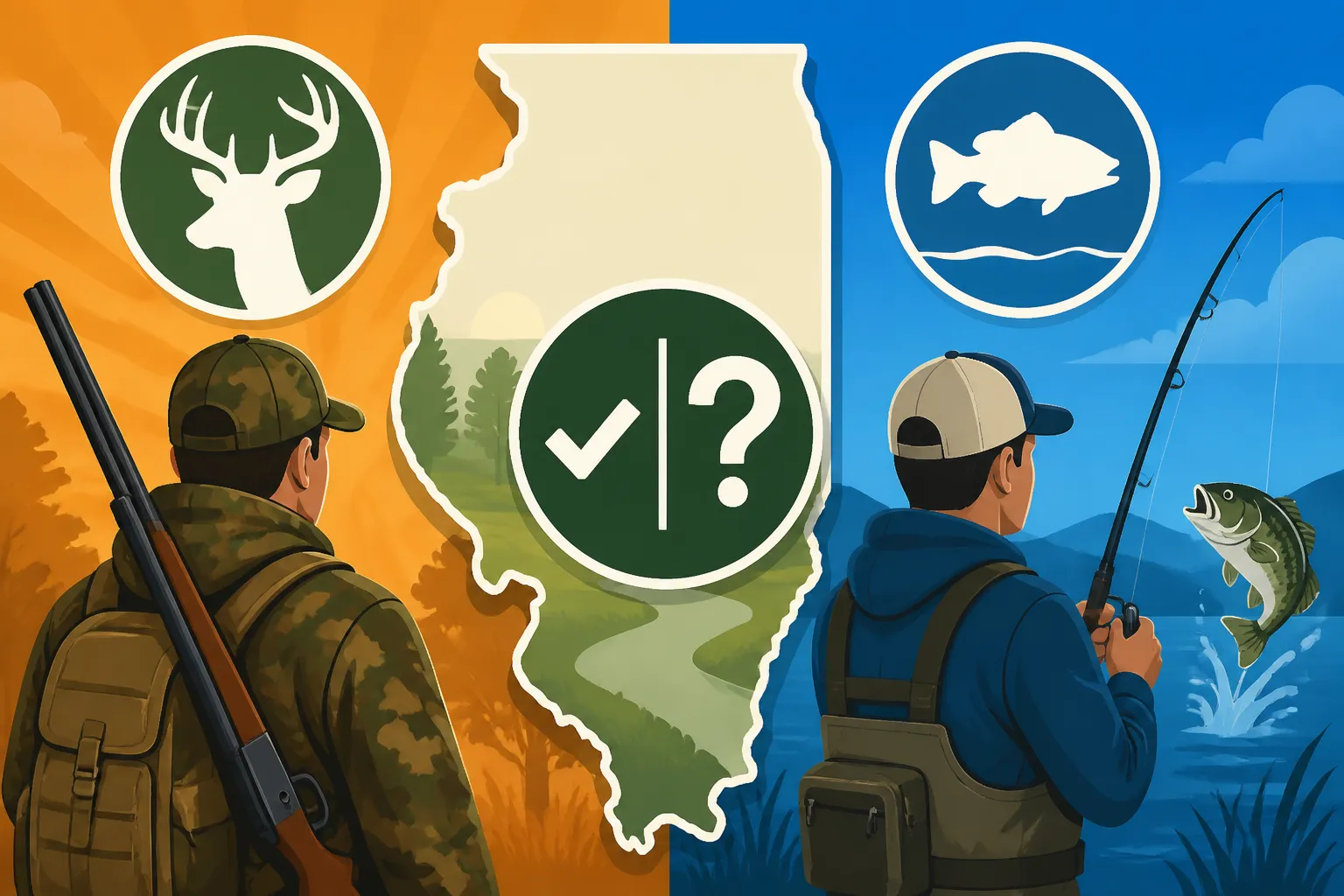
Let’s get right to it: in Illinois, a hunting license does not grant you fishing privileges, nor does a fishing license allow you to hunt. While both are issued by the Illinois Department of Natural Resources (IDNR) and fall under the umbrella of wildlife management, they are entirely separate legal requirements, each with its own set of rules, regulations, and associated fees. It’s a classic case of two different paths, even if they sometimes lead to the same beautiful outdoor settings.
No Combo Platter Here
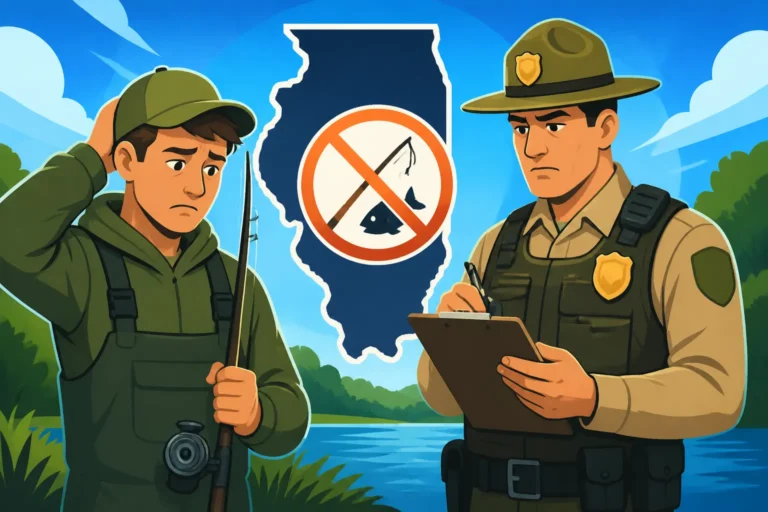
Imagine you've just spent a peaceful morning in a tree stand, patiently waiting for deer, and then later in the day, you spot an incredible fishing hole right by the river. The temptation to drop a line can be immense, especially if you already have your hunting license wallet. However, if you haven't also purchased a valid Illinois fishing license, you would be breaking the law. Each activity — hunting and fishing — requires its own specific authorization. It's not about being an "outdoorsman" in a general sense; it's about being licensed for the specific activity you're engaged in.
This distinction is crucial because the fines and penalties for fishing without a license in Illinois can be quite hefty, even if you genuinely believed your hunting license covered you. Conservation Police Officers regularly patrol public lands and waters, and they are well-versed in checking for the appropriate documentation for each activity. It’s a scenario no one wants to find themselves in, especially when a few minutes spent getting the correct license could have prevented the hassle.
The Specifics of Each Permit
To further clarify, let’s quickly look at what each type of license generally covers in Illinois. An Illinois Fishing License Guide for 2026 will detail everything you need for angling.
- Illinois Hunting License: This license is your ticket to legally pursue various game animals and birds within the state’s designated hunting seasons and areas. Depending on what you intend to hunt, you’ll also need a Habitat Stamp (unless exempt) and potentially specific permits for species like deer, turkey, or waterfowl. For example, chasing ducks requires a federal migratory waterfowl stamp in addition to your state hunting license and habitat stamp. These permits are tailored to specific species and often have limited quotas or lottery systems.
- Illinois Fishing License: This permit allows you to fish in Illinois's public waters for various fish species, adhering to the state’s size and catch limits. Just like hunting, certain types of fishing require additional stamps. If you plan on trying your luck for trout at one of the state's many stocked lakes or streams, you'll need an Illinois Inland Trout Stamp Requirements. Similarly, if you're venturing out onto Lake Michigan with dreams of landing a Coho or Chinook salmon, a Lake Michigan Salmon Stamp Requirements for Anglers is mandatory. These stamps are not just extra fees; they are vital contributions to the specific conservation and stocking programs for those popular fisheries.
As you can see, the regulatory frameworks are quite different, reflecting the distinct management needs of Illinois's diverse wildlife populations.
Understanding Why Illinois Requires Separate Licenses
The separate licensing structure isn’t just about making things complicated; it’s rooted deeply in effective wildlife management, conservation funding, and the unique challenges each outdoor pursuit presents. The Illinois Department of Natural Resources (IDNR) oversees a vast array of natural resources, and differentiating licenses is a critical tool in their arsenal.
Management and Conservation Efforts
Think of it this way: the IDNR is tasked with ensuring healthy populations of both fish and game animals for future generations. These are two incredibly distinct ecosystems and populations, each with specific biological needs, habitats, and pressures.
- Fisheries Management: For fish populations, the IDNR often relies on data gathered from fishing license sales to understand angler participation and to project funding needs for stocking programs, habitat restoration in lakes and rivers, and disease monitoring. Projects like improving water quality in the Illinois River or stocking channel catfish in Rend Lake are directly funded by fishing license dollars. Understanding the angler base also helps the IDNR make informed decisions about catch limits, size restrictions, and fishing seasons, which are all part of the Illinois Fishing Regulations Overview.
- Wildlife Management: On the hunting side, license fees support wildlife habitat improvement, disease control (like chronic wasting disease in deer), population surveys, and land acquisition for public hunting areas. The funds derived from hunting licenses are earmarked for these specific programs. For example, maintaining critical pheasant habitat or managing deer herds in state parks requires dedicated resources that are separate from what’s needed to sustain a healthy walleye fishery.
By keeping the licenses separate, the IDNR can more accurately track participation in each activity, allocate funds to where they are most needed, and implement targeted conservation strategies that directly benefit the specific resource being utilized. It’s a highly efficient, though sometimes inconvenient for us, way of safeguarding our natural heritage.
Different Skill Sets and Regulations
Beyond the ecological reasons, the practicalities of hunting and fishing are worlds apart. The skills, safety considerations, and legal frameworks governing each activity require distinct educational and regulatory approaches.
- Distinct Regulations: The regulatory guides for hunting and fishing are thick for a reason! Hunting regulations involve things like firearm safety, archery equipment specifications, legal hunting hours (dawn/dusk), blaze orange requirements, and intricate rules for transportation and tagging of game. Fishing regulations, on the other hand, focus on tackle restrictions, bait rules, daily bag and possession limits for various species (like Illinois Walleye Size and Catch Limits or Illinois Catfish Daily Limits Explained), and methods like trotlines or jug fishing. Trying to merge these two complex sets of rules into a single document or license would be unwieldy and potentially unsafe.
- Safety and Education: While both activities require a strong sense of responsibility, the safety training for each is specialized. Hunter safety courses focus on firearm handling, tree stand safety, and blood-trailing techniques. Boater education courses (often related to getting to prime fishing spots) cover navigation, right-of-way, and emergency procedures on the water. Even the equipment differs dramatically, from high-powered rifles and bows to delicate ultralight fishing rods and sophisticated fish finders. The separation reflects the need for specialized knowledge and adherence to distinct safety protocols.
How to Ensure You're Legally Ready for Both Hunting and Fishing
Navigating the licensing requirements for both hunting and fishing in Illinois doesn't have to be a headache. With a little planning, you can easily obtain the necessary permits and enjoy all the outdoor opportunities the state has to offer.
Acquiring Your Illinois Fishing License
Getting your Illinois fishing license is a straightforward process, designed to be as accessible as possible. Most anglers find it easiest to buy their licenses online through the How to Buy an Illinois Fishing License Online portal on the IDNR website. This allows you to print your license immediately or save a digital copy on your phone, which is perfectly acceptable as proof. Just make sure your phone battery doesn't die when the Conservation Police Officer asks to see it!
Alternatively, you can purchase licenses in person at various authorized vendors across the state. These include most bait and tackle shops, larger sporting goods stores like Bass Pro Shops or Cabela's, and even some county clerk offices. When you go, be prepared to provide proof of residency (if applicable) and your driver's license or state ID.
Here are some common license types and their associated costs, though it’s always best to check the IDNR website for the most current pricing:
| License Type | Resident (16-64) | Resident Senior (65-74) | Nonresident Annual | Nonresident 3-Day |
|---|---|---|---|---|
| Annual Fishing License | ~$15.00 | ~$7.75 | ~$31.50 | ~$15.50 |
| 24-Hour Fishing License | ~$5.50 | ~$5.50 | ~$5.50 | ~$5.50 |
| Trout & Salmon Stamp (add-on) | ~$6.50 | ~$6.50 | ~$6.50 | ~$6.50 |
| Habitat Stamp (Hunting) | ~$5.50 | ~$5.50 | ~$5.50 | ~$5.50 |
Note: Prices are approximate and subject to change. Always verify current costs with the IDNR.
Remember that the Illinois license year operates on a different cycle than a calendar year. Your fishing license will typically be valid from April 1st through March 31st of the following year. So, if you buy a license on September 1st, it's good until March 31st. This is an important detail to keep in mind, and you can learn more about How the Illinois License Year Works to ensure you're always covered.
Carrying Proof and Avoiding Penalties
Once you have your license, the most important thing is to carry it with you whenever you're engaging in the activity. Whether it's a physical card from a vendor or a digital copy on your smartphone, having it readily accessible is non-negotiable. Conservation Police Officers have the authority to request proof of your license, and not having it can lead to a citation. Ignorance of the law is generally not a valid defense.
Even if you genuinely have a license but forgot it at home, you could still face consequences. It's much simpler to double-check before you leave. I like to keep a digital copy on my phone and a laminated physical copy in my tackle box and hunting pack, just to be safe. It’s worth noting that children under the age of 16 generally do not need a fishing license in Illinois, making it a great, low-barrier activity for families, as detailed in Illinois Fishing License Rules for Kids and Seniors. Illinois also offers Illinois Free Fishing Days and License-Free Weekends where no license is required for anyone, which are fantastic opportunities to introduce new anglers to the sport.
Exploring Combined Options
While Illinois maintains separate licenses for the privileges of hunting and fishing, they do offer a convenient "Sportsman's License" which bundles the annual resident hunting license and the annual resident fishing license into a single, slightly discounted purchase. This is detailed further in Combined Fishing and Hunting License Options in Illinois. It's not a single license that covers both with one fee if you only wanted one activity, but rather a package deal if you intend to do both throughout the year.
If you’re an active outdoorsperson who enjoys both hunting and fishing, opting for the Sportsman’s License can simplify the purchasing process and save you a few dollars. It's a smart choice for those who are regularly out in the woods or on the water, whether you're chasing bass on Lake Shelbyville or deer in Shawnee National Forest.
Once you have your licenses in hand, you can then focus on the fun part: stocking up on gear. Whether it's a new tackle box, fresh line, or specific lures for the season, retailers like Amazon offer a vast selection to get you ready. Don't forget the essentials! Beyond your license, a good pair of pliers, a fishing multi-tool, and a reliable first-aid kit can all be found easily online, including on Amazon, ensuring you're prepared for anything on the water. For more specific gear needs, like a new rod, you can explore resources like Best Rods and Reels for Illinois Anglers. Being prepared means having both your legal documents and the right equipment to make your outdoor adventure safe and successful.
Disclaimer
Please remember that fishing and hunting regulations can change. While I strive to provide the most up-to-date information, it is always your responsibility to consult the official Illinois Department of Natural Resources (IDNR) website or their current Fishing Information Guide and Digest of Hunting and Trapping Regulations for the most accurate and recent rules before engaging in any activity. This article is for informational purposes only and should not be considered legal advice.