Can You Keep a 27-Inch Walleye You Just Caught?
There’s nothing quite like the thrill of a heavy tug on your line, fighting a fish that feels like a real giant, only to bring it to the boat or shore and realize it’s a magnificent walleye. But then, the excitement can quickly turn to a moment of panic or confusion: "Can I actually keep this fish?" This question becomes even more pressing when you've landed a true trophy, like a 27-inch walleye in Illinois. The fishing regulations here can sometimes feel like a maze, with statewide rules, site-specific exceptions, and special limits that make you second-guess every decision. This guide aims to clear up that confusion, specifically addressing what happens when you catch a jumbo walleye in Illinois waters and whether it's destined for your cooler or a careful release.
Understanding Illinois Walleye Regulations
It's a common misconception that fishing regulations are always uniform across an entire state. In Illinois, especially when it comes to prized game fish like walleye, that simply isn't the case. While there are some general guidelines, the real nuances lie in the rules for individual lakes and rivers. This variation is often a good thing for the fishery, but it definitely keeps us anglers on our toes!
Statewide Walleye Size and Daily Catch Limits
Generally speaking, if you're fishing for walleye in Illinois, there's a good chance you're looking at a 14-inch minimum size limit. This means any walleye shorter than 14 inches from the tip of its snout to the tip of its tail needs to be released immediately and unharmed. The idea behind this is to give younger fish a chance to grow and spawn at least once, contributing to the overall health of the population.
Beyond size, there's also a daily creel limit or daily catch limit, which specifies how many walleye you can keep in a single day. Statewide, this is often set at six fish. However, and this is where it gets tricky, these "statewide" rules aren't always universally applied. They act more as a baseline, and many specific bodies of water will have their own, often stricter, regulations. So, while a 14-inch minimum and a six-fish daily limit might be good to keep in mind, don't let it be the only rule you rely on. Always assume there might be a local variation that takes precedence.
Site-Specific Exceptions for Walleye
Here’s where your 27-inch walleye question really comes into play. Illinois is home to a fantastic diversity of fishing spots, from the sprawling waters of Lake Michigan to countless smaller reservoirs, rivers, and state park lakes. The Illinois Department of Natural Resources (IDNR) manages these fisheries very closely, tailoring regulations to the unique needs of each body of water. This means that a lake might have a different minimum size, a different daily limit, or even a completely different type of regulation known as a "slot limit" for walleye.
For example, a lake might have a 16-inch minimum size and a four-fish daily limit. Another might have a protected slot limit where fish between certain sizes must be released, but those smaller or larger than the slot can be kept. It's these specific regulations that will dictate whether your magnificent 27-inch walleye is a keeper or a mandatory release. These site-specific rules are not just suggestions; they are legally binding, and ignorance of them is not an excuse if a conservation police officer checks your catch. Before you even cast your first line, it's paramount to know the rules for that specific lake or river. You can often find this information in the annual Illinois Fishing Information Guide Covers April 2026 Through March 2027, which is available online and at many bait and tackle shops.
Let's look at some hypothetical examples of how walleye regulations can differ:
| Body of Water (Hypothetical) | Walleye Minimum Length | Daily Catch Limit | Special Regulations |
|---|---|---|---|
| Lake Angler's Dream | 14 inches | 6 fish | None |
| River Silver Streak | 18 inches | 3 fish | None |
| Reservoir Trophy Hope | 16 inches | 4 fish | Protected Slot: No harvest of walleye between 20-24 inches. Only one fish over 24 inches allowed. |
| Pond Beginner's Luck | 12 inches | 8 fish | None |
| Lake Big Bite | 15 inches | 5 fish | Only two fish over 22 inches allowed. |
As you can see from this table, a 27-inch walleye would be subject to very different rules depending on where you caught it. In "Lake Angler's Dream," it would be a keeper. In "Reservoir Trophy Hope," it would be a keeper, but you'd only be allowed one of that size. These examples highlight why checking the local rules is non-negotiable.
Why Walleye Limits Vary Across Illinois Waters
You might wonder why the IDNR can’t just make it simple with one set of rules for the whole state. The truth is, fishing management is a complex science, and these variations are carefully planned to ensure healthy fish populations and quality fishing experiences. Different lakes have different characteristics: some are large reservoirs, some are smaller natural lakes, and others are rivers with varying currents and habitats.
Factors that influence these specific regulations include:
- Natural Reproduction Rates: Some waters have excellent natural walleye spawning success, while others rely heavily on stocking efforts. Regulations are set to complement these natural processes.
- Forage Base: The availability of food (like shad or minnows) impacts how fast walleye grow. Lakes with abundant forage might produce larger fish, leading to different slot limits to protect those trophy-sized specimens.
- Fishing Pressure: Popular fishing spots experience more pressure. Regulations can be adjusted to reduce overharvesting and distribute the catch more evenly.
- Habitat Diversity: Lakes with diverse habitats can support different population structures. A lake with extensive shallow weed beds might have different management needs than a deep, clear quarry lake.
- Trophy Management Goals: For certain waters, the goal might be to produce truly large, "trophy" walleye. In these cases, protected slot limits are often implemented to allow mid-sized fish to grow into giants, offering anglers a chance at a truly memorable catch. This is particularly relevant for that 27-inch walleye you're asking about. The Illinois Walleye Size and Catch Limits are designed with these goals in mind.
Understanding these reasons can help anglers appreciate why the rules aren't always straightforward. It's all part of a larger plan to ensure sustainable and exciting fishing for generations to come.
The 27-Inch Walleye Dilemma: Keep or Release?
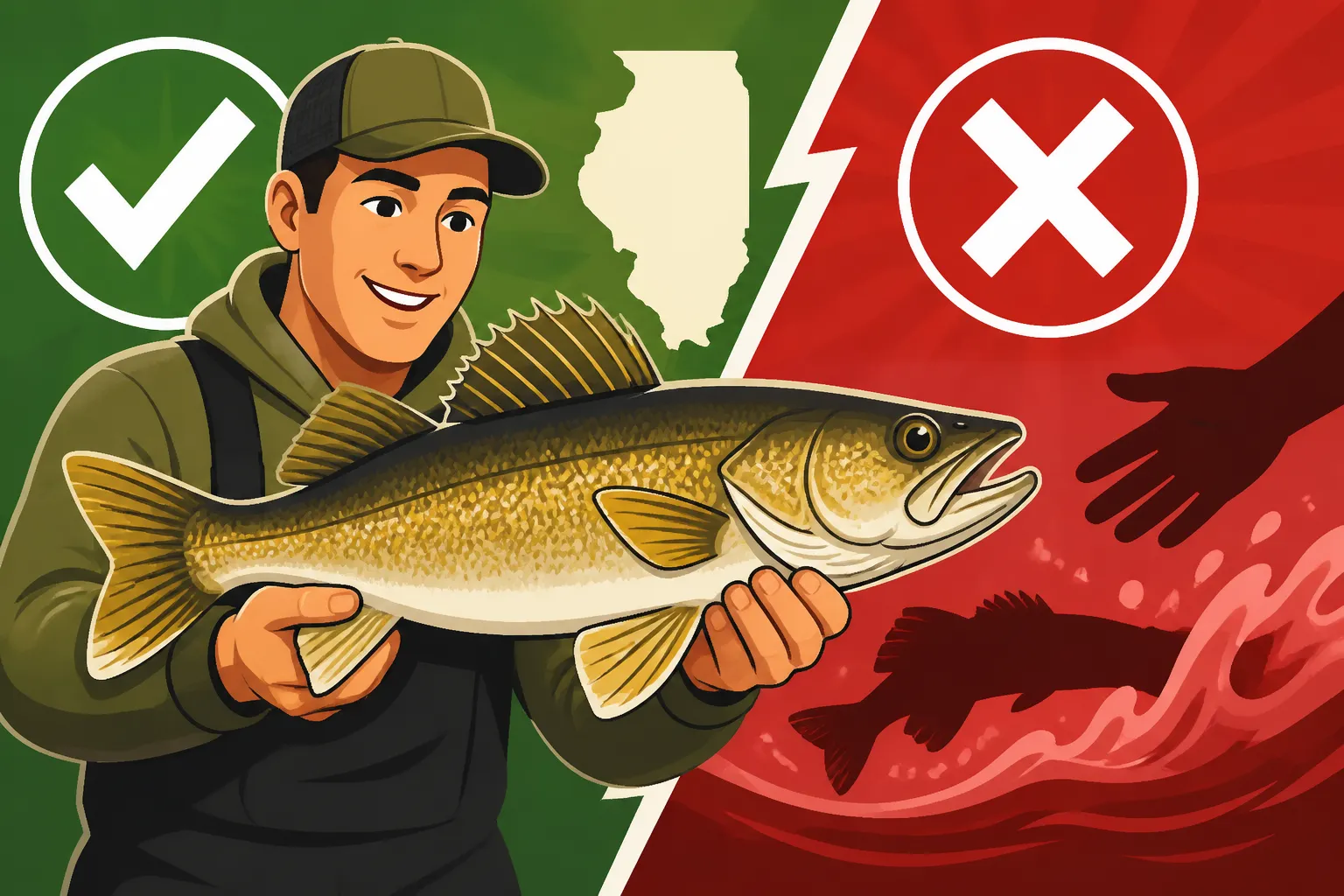
So, you've landed that magnificent 27-inch walleye. It's a gorgeous fish, a true fighter, and you're beaming with pride. Now comes the moment of truth. Is it going home with you for dinner, or is it getting released back into the water to fight another day? The answer, as frustrating as it might be, boils down to one thing: the specific regulations for the body of water you're fishing.
The "Protected Slot Limit" Concept
For a fish of 27 inches, especially a walleye, the most common regulation you'll encounter that would dictate its fate is a protected slot limit. This is a management tool designed to enhance the quality of a fishery. Here’s how it typically works:
- Minimum Size: You cannot keep fish below a certain length (e.g., 14 inches). This protects young fish.
- Protected Slot: Fish within a certain size range (e.g., 18 to 24 inches, or perhaps 20 to 26 inches) must be released. This protects the prime breeding-age fish, ensuring they continue to reproduce and contribute to the population.
- Maximum Size/Over-Slot Fish: Fish above the protected slot (e.g., over 24 inches, or over 26 inches) can be kept, often with a limit of only one or two such fish per day.
If the lake you're fishing has a slot limit like "no harvest of walleye between 20 and 26 inches, only one fish over 26 inches," then your 27-inch walleye would be a legal keeper, but you'd only be allowed one of that size. If the slot was, say, "no harvest between 14 and 28 inches," then your 27-inch walleye would have to be released. This is why a detailed check of the local regulations is so important. A 27-inch walleye is definitely in that prime "trophy" category, and many of Illinois' top walleye lakes implement slot limits to foster such impressive fish.
Consulting the Illinois Fishing Information Guide
There's no substitute for checking the official source. The Illinois Fishing Information Guide is your bible for understanding regulations. This guide is updated annually and lists all statewide and site-specific regulations for every public body of water in Illinois. You can usually pick up a physical copy at bait shops, outdoor recreation stores like those offered by Bass Pro Shops or Cabela's, or IDNR offices. More conveniently, it’s available as a downloadable PDF on the official Illinois Department of Natural Resources (IDNR) website.
Before you head out, make it a habit to:
- Identify your fishing location: Know the exact name of the lake, river, or stream you plan to fish.
- Look it up in the guide: Navigate to the section for your specific body of water.
- Read carefully: Pay close attention to the walleye regulations, looking for minimum lengths, daily limits, and any special slot limits or trophy restrictions.
Even if you’ve fished a spot for years, rules can change. A quick check before each season can save you from potential fines and ensures you're fishing legally and responsibly. This guide also details other important information, like Illinois Fishing License Guide for 2026 and requirements for Illinois Trout and Salmon Stamp Requirements.
Real-World Scenarios and Consequences
Let's imagine a couple of scenarios to really drive this home:
- Scenario A: Lake Shelbyville
You're fishing on Lake Shelbyville, a popular walleye spot. You check the regulations and see that Lake Shelbyville has a 14-inch minimum length limit and a six-fish daily limit for walleye, with no special slot limits beyond that. You reel in your 27-inch walleye. In this case, congratulations! Your 27-inch walleye is well over the 14-inch minimum, and you can legally keep it as part of your six-fish daily limit. - Scenario B: Clinton Lake
Now, let's say you're on Clinton Lake. The IDNR guide states that for walleye on Clinton Lake, there's a 14-inch minimum length limit, and a six-fish daily limit, but only one fish can be 20 inches or longer. You land that 27-inch walleye. In this situation, while you can keep up to six walleye, only one of them can be 20 inches or longer. Your 27-inch walleye fits this criteria, so it's a keeper, but you've now used your "one over 20 inches" allowance for the day. You couldn't keep another 20-inch+ walleye, even if you hadn't hit your six-fish total yet. - Scenario C: A Hypothetical "Trophy Walleye" Lake
Consider a hypothetical lake known for producing massive walleye, perhaps called "Lake Trophy Haul." The regulations read: "Walleye: 16-inch minimum length. No harvest of walleye between 20-28 inches. Daily limit of 3 fish, only one of which may be over 28 inches." You catch a 27-inch walleye here. Based on these rules, a 27-inch walleye falls squarely within the protected slot (20-28 inches) and must be released. Even though it's a huge fish, it's illegal to keep it. The only way to keep a walleye from this lake that's close to that size would be if it were 28 inches or longer.
The consequences of violating these regulations can range from a stern warning to significant fines, confiscation of your catch and gear, and even the suspension of your fishing privileges. Penalties for Fishing Without a License in Illinois are serious, and so are those for violating catch limits. It's simply not worth the risk. Always measure your fish carefully and adhere to the specific rules of the water you are fishing. A reliable tape measure (many anglers use adhesive measuring tapes on their boats or Kayak Fishing Gear for Illinois Anglers) is an essential piece of equipment. You can find good quality, durable measuring devices on sites like Amazon.
Beyond Walleye: General Illinois Fishing Regulation Tips
While this article focuses on the 27-inch walleye question, the underlying principles apply to all species and all fishing trips in Illinois. Being a responsible and well-informed angler is key to enjoying our beautiful waterways and ensuring healthy fish populations for everyone.
Always Check Site-Specific Rules
I cannot stress this enough: always check the site-specific regulations! This is not just a walleye thing; it applies to bass, crappie, catfish, muskie, and every other species you might target. Lakes often have different size and catch limits for various fish species than the statewide averages. For instance, Illinois Statewide Bass Fishing Limits might be 14 inches and six fish, but a specific lake might have a 12-16 inch slot for bass. Or the Illinois Catfish Daily Limits Explained might differ significantly on the Mississippi River compared to a smaller inland lake.
Think of it this way: the statewide rules are like the speed limit on a highway, but site-specific rules are like the speed limits in a school zone or construction area – they supersede the general rule and are strictly enforced for very good reasons. Before you head out, confirm the specific regulations for your chosen fishing spot.
Carrying Your Fishing License and Knowing Its Validity
Beyond knowing the catch limits, you absolutely need to have a valid Illinois fishing license in your possession. Conservation police officers frequently check licenses, whether you're on the bank, in a boat, or on a pier. Your license serves as proof that you've contributed to the conservation efforts that help maintain Illinois' fisheries.
It's also crucial to understand How the Illinois License Year Works. Fishing licenses in Illinois generally run from March 1st of one year to March 31st of the following year. This means a license purchased in April 2025 would be valid until March 31, 2026. Don't get caught out with an expired license! You can easily How to Buy an Illinois Fishing License Online or Renewing an Illinois Fishing License Online if you're not near a vendor. Digital proof on your phone is usually accepted, but having a printed copy or a physical card in your wallet is always a good backup.
The Role of the Illinois Department of Natural Resources IDNR
The Illinois Department of Natural Resources (IDNR) is the primary agency responsible for managing the state's natural resources, including its fish populations. They conduct extensive research, monitor fish health, manage stocking programs, and, crucially, set the fishing regulations that we all follow. The biologists and conservation police officers working for the IDNR are dedicated to ensuring sustainable fishing opportunities. They are the ones who put together the detailed information in the fishing guide and enforce the rules to protect our resources.
By understanding their role, you can appreciate that these regulations aren't arbitrary. They are science-based decisions aimed at balancing recreational fishing with ecological health. If you ever have a question about a regulation that isn't clear in the guide, the IDNR website is a great resource, and you can often find contact information for local fisheries biologists who are happy to help.
Disclaimer
The information provided in this guide is intended for general informational purposes only and is subject to change. While we strive to offer accurate and up-to-date advice, fishing regulations, license requirements, and other related details are frequently updated by the Illinois Department of Natural Resources (IDNR). It is always the angler's responsibility to consult the most current official Illinois Fishing Information Guide or the IDNR website directly before engaging in any fishing activities to ensure full compliance with all applicable laws and regulations. Relying solely on third-party information may lead to violations.