Muskie Fishing in Illinois: The Complete Guide
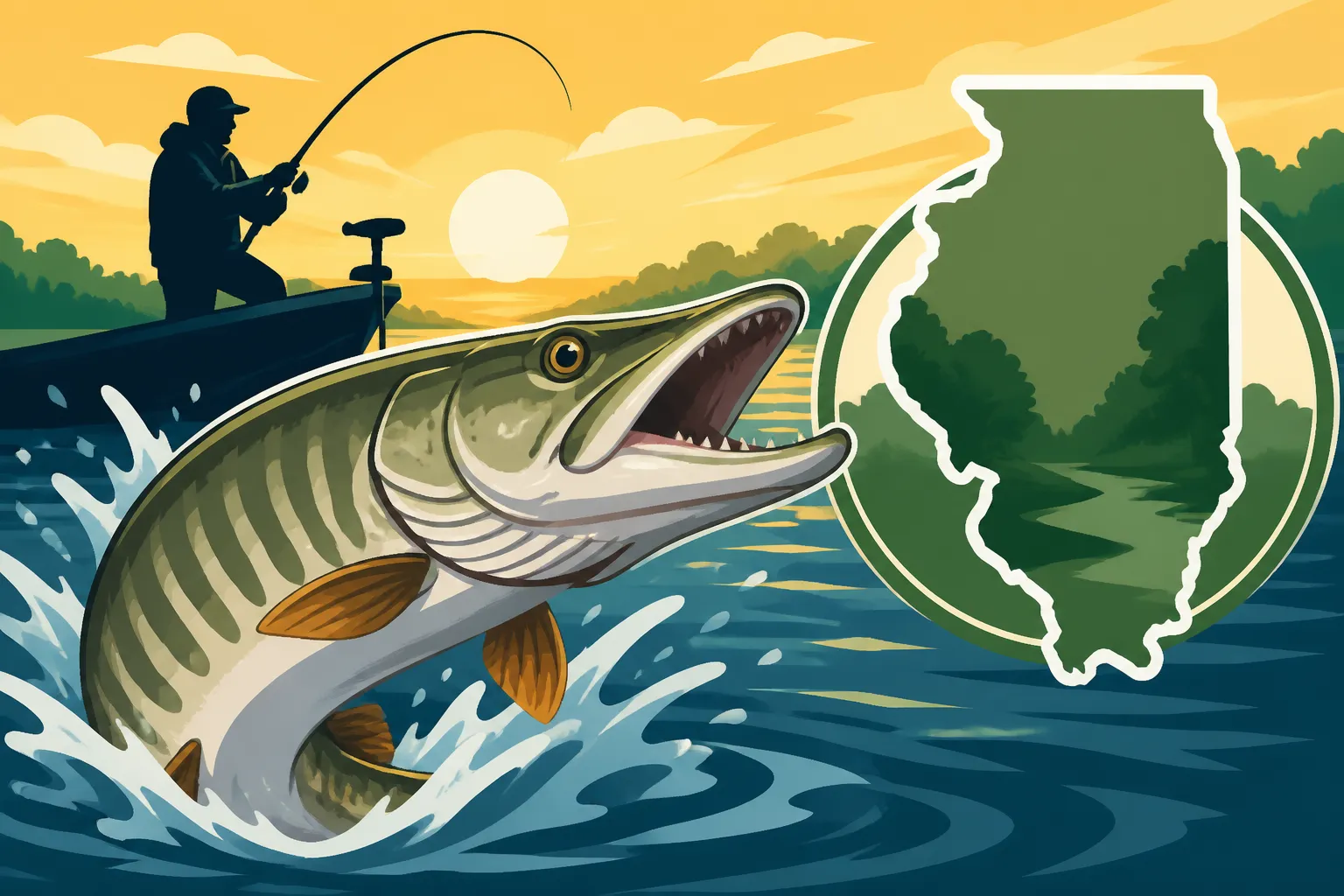
There's a special kind of angler out there, one who isn't intimidated by the long hours, the often-frigid temperatures, or the infamous "fish of 10,000 casts" moniker. If you've ever dreamt of battling a true freshwater apex predator right here in the Prairie State, you know the allure of muskie fishing in Illinois. This guide is your deep dive into everything you need to know about chasing these incredible fish, from where to find them to the specialized gear and techniques that just might help you land one.
What Makes Muskie Fishing in Illinois So Unique and Challenging?
Let's be honest, muskie fishing isn't for the faint of heart or the impatient. It's a sport that demands dedication, persistence, and a certain level of obsession. But for those who embrace the challenge, the rewards are truly unforgettable. Illinois offers a unique blend of dedicated muskie fisheries and unexpected opportunities, making it a compelling destination for seasoned muskie hunters and curious newcomers alike.
The Allure of the "Fish of 10,000 Casts"
That nickname isn't just a catchy phrase; it's a badge of honor in the muskie world. It speaks to the incredible difficulty in not just locating, but actually coaxing one of these elusive giants to strike. Muskie are intelligent, often solitary, and incredibly picky predators. They're not like bass that might hit anything that moves, or panfish that are often eager to bite. A muskie will follow your lure to the boat, eyeball it, and often, with a flick of its tail, simply disappear back into the depths, leaving you with a racing heart and a story of "the one that got away." This constant game of cat and mouse, the sheer mental fortitude required, is precisely what draws so many anglers to the sport. It’s a pursuit where success is measured not just in fish caught, but in the lessons learned and the sheer thrill of the chase.
The allure also lies in their sheer size and power. When a muskie finally commits and strikes, it's an explosion of raw energy. They hit hard, fight dirty, and test every piece of your gear and every fiber of your angling skill. Landing a muskie is a monumental achievement, a culmination of hours, days, sometimes even years, of effort. This makes every single catch, no matter how small, feel like a true trophy. It’s a testament to patience and perseverance, and that feeling is what keeps anglers coming back for more, cast after arduous cast.
Why Illinois is a Muskie Destination
While states further north often get all the glory for muskie fishing, Illinois has quietly established itself as a legitimate contender, thanks to strategic stocking programs and fantastic habitat management. Our state's fisheries biologists have put a tremendous amount of effort into creating and maintaining viable muskie populations in select lakes and river systems. This isn't just about throwing a few fish in the water; it's about creating self-sustaining or regularly supplemented fisheries that provide consistent opportunities for anglers.
We might not have the glacial lakes of Wisconsin or Minnesota, but Illinois offers diverse waters, from large reservoirs with vast open water to smaller, more intimate lakes and flowing rivers. This variety means different fishing conditions and challenges, catering to various angling preferences. Plus, many of our muskie lakes are relatively accessible, making it easier for anglers to hit the water without traveling hundreds of miles. The Illinois Department of Natural Resources (IDNR) regularly publishes updates on stocking and surveys, giving anglers valuable insights into where to focus their efforts and showcasing why Illinois is a growing muskie hotspot.
Identifying Illinois Muskellunge: What to Look For
Before you can even think about catching a muskie, it's crucial to know what you're looking for, especially since they share some striking similarities with their pike cousins. Misidentifying your catch can lead to serious legal troubles if you accidentally keep a protected species or violate size limits. Trust me, you don't want to explain that to a conservation officer after a long day on the water.
Muskie vs. Northern Pike: Key Differences
This is perhaps the most common identification challenge for many anglers. Both muskie and northern pike are long, slender, toothy predators with a dorsal fin set far back on their body. However, there are a few key characteristics that will help you tell them apart. The most reliable method is to examine the scales on their cheek and gill covers. A true muskie will have scales on the upper half of its cheek and gill cover, while the lower half will be bare. Think of it as a half-scale pattern.
Northern pike, on the other hand, have scales fully covering both their cheeks and gill covers. Another tell-tale sign is the number of pores on the underside of their jaw: muskie usually have 6-9 pores per side, while pike typically have 5 or fewer. Beyond these anatomical differences, muskie often have a darker body coloration with spots or bars on a lighter background, whereas pike tend to have lighter, bean-shaped spots on a darker background. While not foolproof, these visual cues combined with the scale pattern will generally give you a confident identification. Understanding these distinctions is vital for adhering to Illinois Muskie Regulations: Size and Possession Limits Explained.
Spotted vs. Barred Patterns
Even among muskellunge, there can be some variation in their appearance, which can sometimes throw off an angler who’s used to seeing one particular pattern. The most common muskie found in Illinois are often referred to as "spotted" or "barred" muskie. These are typically the Great Lakes strain or pure muskie. Spotted muskie, as the name suggests, will have distinct dark spots or blotches on a lighter, often greenish or brownish body. These spots can range from small and numerous to larger, more irregular splotches. This pattern often helps them blend into rocky bottoms or areas with submerged vegetation.
Barred muskie, while less common in some waters, exhibit distinct vertical bars or stripes along their flanks. These bars can be subtle or quite pronounced, offering excellent camouflage in areas with reeds, logs, or shadow-dappled cover. It's also worth noting that muskie coloration can change depending on their environment and diet, sometimes making identification a little trickier, especially in different lighting conditions. Always double-check the cheek and gill plate scale patterns and jaw pores if you're ever in doubt, as these are the most consistent identifying features regardless of the fish’s specific pattern.
Where to Find Muskie in Illinois: Top Lakes and Rivers
You can’t just cast a muskie lure into any body of water in Illinois and expect to hook into one. Muskie thrive in specific environments, and thanks to dedicated stocking efforts by the IDNR, certain lakes and river systems have become legitimate muskie hotbeds. Knowing where to go is half the battle when you're targeting these elusive fish.
Dedicated Muskie Lakes Worth the Drive
Illinois has several lakes that are specifically managed for muskie, and these are often your best bet for success. Places like Illinois Muskie Fishing: Best Lakes to Try such as Lake Shelbyville, Fox Chain O'Lakes, Kinkaid Lake, and Spring Lake (Tazewell County) are regularly stocked and have established populations of healthy, often very large, muskie. Lake Shelbyville, for instance, is a massive reservoir known for producing some truly impressive fish, though it can be a challenging body of water due to its size and varying depths. Anglers here often focus on vast flats, submerged timber, and deep points.
The Fox Chain O'Lakes, a series of interconnected lakes in northeastern Illinois, offers a different experience with diverse structure, including weed beds, channels, and plenty of boat traffic. Kinkaid Lake in southern Illinois is another gem, boasting clear water and excellent muskie habitat, often drawing anglers looking for a more pristine fishing experience. Spring Lake offers a more intimate setting, but don’t let its size fool you; it holds some real brutes. Each of these lakes presents its own set of challenges and rewards, but they all share one thing: the potential for a trophy muskie. Always check the IDNR fishing reports and site-specific regulations for these waters, as conditions and hot spots can change seasonally.
River Systems Holding Muskie
While lakes are often the primary focus, Illinois's river systems also offer intriguing muskie opportunities, especially for those who enjoy the challenge of current and riverine structure. The Fox River, particularly the stretches north of the Fox Chain O'Lakes, holds a viable muskie population, often featuring fish that have migrated from the lakes or were stocked directly into the river. These river muskie can be incredibly aggressive, reacting differently to lures than their lake-dwelling counterparts due to the constant flow. Look for them in deeper holes, around current breaks, fallen timber, and bridge pilings.
The Illinois River, while more known for its catfish and Asian carp, also occasionally yields muskie catches, especially in backwater lakes and sloughs connected to the main channel where they might find refuge from strong currents. Fishing a river for muskie requires a different approach, often favoring smaller, faster presentations or targeting specific ambush points. The constant flow can also make boat control more demanding, so be prepared for a more active angling experience. It's truly an exciting prospect, exploring these dynamic environments where a muskie could be lurking around any bend or behind any piece of cover.
Lesser-Known Spots and Stocking Programs
Beyond the marquee muskie lakes, Illinois has several other, sometimes lesser-known, bodies of water that also receive muskie stockings or have smaller, naturally occurring populations. These can be fantastic opportunities for anglers looking to escape the crowds or try a new challenge. Lakes like Lake Evergreen near Bloomington, Otter Lake in Macoupin County, and Shabbona Lake in DeKalb County are good examples of waters that have been part of the IDNR's muskie program. While they might not produce the sheer numbers of fish as the bigger lakes, they can still hold impressive specimens.
The IDNR actively manages these fisheries, and their annual stocking reports are a goldmine of information for dedicated muskie anglers. These reports detail which lakes received fish, how many, and what size. This data can help you identify emerging fisheries or confirm where established populations are being maintained. Don't be afraid to do a little research and explore these smaller or regional options; you might just discover your next favorite muskie spot. Information on these programs and specific lake details can often be found on the IDNR website, which is an invaluable resource for any serious Illinois angler.
Essential Muskie Gear for Illinois Waters
Muskie fishing is not a place to skimp on your tackle. These are big, powerful fish with razor-sharp teeth, and they will exploit any weakness in your gear. Investing in quality equipment is not just about catching fish; it's about doing so safely and ensuring the fish has the best chance of survival after being caught and released. Think of it as preparing for a heavyweight boxing match, where your gear is your protective equipment and your weapon.
Rods, Reels, and Line Built for Battle
When it comes to muskie, you need heavy-duty gear. Forget your bass setup; we're talking about rods designed to handle massive lures and powerful fish. A typical muskie rod is at least 7 to 9 feet long, often even longer, with a heavy or extra-heavy power rating and a fast action. This length helps cast large baits a significant distance and provides leverage during the fight. Brands like St. Croix, G. Loomis, and Abu Garcia make excellent muskie-specific rods that can withstand the abuse. You can find a wide array of options on platforms like Amazon if you're starting your search. The robust backbone of these rods allows you to set hooks firmly into a muskie's bony mouth and control a thrashing fish boat-side.
Pair that rod with a high-quality baitcasting reel, specifically a low-profile or round-profile reel designed for heavy line and big fish. Look for reels with strong drag systems, a high line capacity, and durable internal components. Gear ratios can vary, with some anglers preferring faster retrieves for burning baits and others opting for slower ratios for crankbaits. For line, braided superlines are the standard. You'll want at least 80-100 pound test braid, not because the fish will necessarily break it, but because it handles the shock of violent strikes, reduces line stretch for better hooksets, and is resistant to abrasions from rocky structure or the fish's teeth. Always use a heavy fluorocarbon or wire leader, typically 80-130 pound test, to prevent bite-offs. A leader is non-negotiable for toothy fish like muskie and pike. Need more detail on what to choose? Check out Best Rod and Reel Combo for Illinois Muskie.
Lures That Entice These Apex Predators
Muskie lures are a sight to behold—often large, elaborate, and surprisingly expensive. You'll need a variety to cover different depths, presentations, and muskie moods. Bucktails are perhaps the most iconic muskie lure. These big spinners with flashy blades and flowing deer hair create a ton of vibration and visual appeal, often triggering aggressive strikes. Large jerkbaits and glide baits, which are fished with a rhythmic rod retrieve to create an erratic, wounded-baitfish action, are also incredibly effective, especially for wary fish. These can often be found in a range of sizes and patterns.
Crankbaits, both shallow and deep-diving models, are essential for covering water and targeting specific depths. Choose larger sizes (6-10 inches or more) in realistic baitfish patterns or bright, aggressive colors. Soft plastic swimbaits, sometimes weighted, can also be deadly, mimicking large forage fish. Finally, topwater lures, like prop baits or walk-the-dog style baits, offer some of the most exciting and explosive strikes you'll ever witness. It’s important to have a selection that allows you to experiment with different actions, sizes, and colors until you find what the muskie are keying in on that particular day. Always ensure your hooks are sharp and strong enough to withstand the incredible pressure a muskie can exert.
Landing Gear and Safety Equipment
This is where safety comes in, both for you and the fish. Muskie are long, heavy, and extremely powerful, with a mouth full of sharp teeth. Trying to land one barehanded or with inadequate tools is a recipe for disaster. The most crucial piece of landing gear is a large, muskie-specific landing net. These nets have extra-large hoops, deep, knotless, rubberized mesh (to protect the fish's slime coat and prevent hooks from tangling), and strong handles. Do not try to use a standard bass or walleye net; it's simply not big enough or durable enough.
Beyond the net, you’ll need a long-nosed pair of pliers or jaw spreaders to safely remove hooks from their mouth. Remember, these fish have teeth everywhere, not just at the front. A heavy-duty pair of bolt cutters is also highly recommended in case a hook is deeply embedded or the fish is too agitated, allowing you to quickly cut the hook and release the fish with minimal harm. Finally, a pair of cut-resistant gloves can save your hands from unexpected nips or abrasions. Prioritizing proper landing and handling gear demonstrates respect for these magnificent creatures and increases their chances of survival, especially since muskie fishing is almost exclusively catch-and-release.
Mastering Muskie Techniques: From Casting to Landing
Catching a muskie is a blend of art and science, requiring specific techniques that go beyond just casting and reeling. These fish are masters of their environment, and you need to be a master of yours to consistently entice them to strike. It’s all about presentation, persistence, and proper execution, especially when that moment of truth arrives.
Covering Water: Casting and Retrieving Strategies
Unlike many other forms of fishing, muskie angling is often a high-energy, active pursuit. You're not typically sitting in one spot, waiting for a bite. Instead, you're constantly casting, retrieving, and moving to cover as much prime habitat as possible. Long casts are essential to cover expansive flats, weed edges, and open water, maximizing the amount of time your lure spends in the strike zone. Think about making fan casts, covering every angle around your boat or position before moving on. The goal is to present your lure to any lurking muskie without spooking them with your boat.
Retrieval speeds and patterns are just as critical. Sometimes muskie want a slow, methodical retrieve; other times, they prefer a lightning-fast burn. Vary your retrieve, incorporating pauses, twitches, and sudden bursts of speed. Many anglers develop a specific cadence or "rip and pause" technique that can be incredibly effective. Pay attention to how the lure feels in the water and how the muskie might be reacting. If you get a follow, but no strike, try changing up your retrieve on the next cast. The constant experimentation is part of the fun (and frustration!) of muskie fishing.
Figure-Eights and Boat-Side Strikes
This is perhaps the single most important and iconic muskie technique, and it's what often separates successful muskie anglers from casual ones. A large percentage of muskie strikes occur not out in the main water column, but right at the boat, often after a muskie has followed your lure the entire way in. When your lure approaches the boat, instead of simply pulling it out of the water, immediately transition into a figure-eight pattern alongside the boat. This means plunging your rod tip into the water and tracing a large figure-eight with your lure, keeping it moving and varying speeds.
The goal is to keep the muskie engaged and give it one last, desperate chance to strike. Many times, a muskie that has been leisurely following will suddenly erupt and smash the lure just inches from your rod tip. These boat-side strikes are incredibly exciting and will test your reflexes. Practice this maneuver until it becomes second nature, regardless of whether you've seen a follow or not. You never know when a giant might emerge from the depths for that last-ditch attack. Mastering this technique can dramatically increase your chances of landing one of these elusive fish and is a critical part of the Illinois Muskie Fishing: The Complete Guide repertoire.
Handling and Releasing Your Catch Responsibly
As mentioned, muskie fishing is almost entirely a catch-and-release sport in Illinois, given the effort required to maintain these fisheries and the desire to grow trophy-sized fish. Responsible handling is paramount to ensure the muskie swims away healthy and can be caught again. Once you’ve successfully netted a fish, keep it in the water as much as possible. Minimize its time out of the water, especially in warm weather. Have your tools (pliers, hook cutters, measuring tape, camera) ready before the fish is in the net.
When removing hooks, use your jaw spreaders if necessary to open its mouth wide enough to access the hooks safely. If a hook is deeply embedded or the fish is thrashing excessively, don't hesitate to cut the hook instead of trying to pry it out. After hook removal and a quick photo, gently support the fish in the water, holding it horizontally by the tail and under the belly, until it vigorously kicks its tail and swims away on its own power. Never hold a large muskie vertically by its head or jaw, as this can severely damage its internal organs and spinal column. Proper handling is a sign of respect for these magnificent fish and helps ensure their future in Illinois waters.
Illinois Muskie Regulations: What Every Angler Needs to Know
Fishing for muskie in Illinois isn't just about the thrill of the chase; it also means adhering to specific rules and regulations designed to protect and enhance these valuable fisheries. Ignoring these rules can result in hefty fines and penalties, so it's critical to be informed before you hit the water. These regulations are in place for a good reason, ensuring that muskie populations remain healthy and continue to grow.
Size and Possession Limits
The Illinois Department of Natural Resources sets specific length limits and daily possession limits for muskie, which can vary by water body. Generally, muskie are managed with a high minimum size limit, often 48 inches or greater, to allow the fish to reach sexual maturity and contribute to the population before being harvested. For instance, many of our dedicated muskie lakes might have a 48-inch minimum length, while others could be 42 inches or even catch-and-release only. This is why it's so important to check the current fishing guide for the specific lake you plan to fish.
The possession limit for muskie is almost universally one fish per day, but again, this can be even more restrictive on certain waters, sometimes limiting anglers to only one trophy-sized fish per year from specific bodies of water. The philosophy behind these strict limits is to promote catch-and-release, which is widely practiced by muskie anglers anyway, and to allow a select few very large, mature fish to be harvested. Always consult the official Illinois Fishing Information Guide Covers April 2026 Through March 2027 or visit the IDNR website for the most up-to-date and site-specific regulations, as they can and do change.
Specific Lake Rules and Slot Limits
Beyond the general statewide regulations, many of Illinois’s premier muskie lakes have their own unique set of rules. These site-specific regulations are often tailored to the particular muskie population in that water body, taking into account stocking success, growth rates, and angler pressure. For example, a lake might have a minimum size of 48 inches, or even a slot limit. A slot limit means you can keep fish below a certain size (e.g., under 36 inches) or above another size (e.g., over 48 inches), but fish within a "slot" (e.g., 36-48 inches) must be released. This is designed to protect prime spawning-aged fish and to encourage the harvest of smaller, more numerous fish while allowing the largest fish to continue growing.
It's not uncommon for a lake to be designated "catch-and-release only" for muskie, indicating an intensive management strategy focused solely on maintaining a robust trophy fishery. Before you launch your boat, make it a habit to check the signs at the boat ramp or consult the IDNR’s official regulations for that specific lake. Ignorance of the law is never an excuse, and a conservation officer will expect you to know the rules for the water you're fishing. Being prepared with this knowledge is just as important as having the right lures, especially when fishing for valuable game fish like muskie.
Catch-and-Release Practices and Their Importance
Given the incredibly low natural recruitment rates of muskie and the high cost and effort involved in stocking them, catch-and-release is not just a recommendation; it's practically a requirement for the continued health of Illinois's muskie fisheries. Every muskie released alive is an opportunity for another angler to experience the thrill, and for that fish to grow larger and potentially spawn, contributing to future generations. This shared conservation ethic among muskie anglers is a cornerstone of the sport.
Implementing proper catch-and-release techniques is crucial. This includes minimizing fight time, keeping the fish in the water as much as possible, using a large, knotless net, having all your hook removal tools ready, and properly reviving the fish before release. Remember, a muskie might look fine when it swims away, but improper handling can cause delayed mortality. So, take the extra minute or two to ensure the fish is fully recovered before letting it go. This commitment to conservation is what allows us to enjoy muskie fishing in Illinois year after year. For those interested in Illinois Muskie Regulations: Rules and Regulations for This Game Fish, catch-and-release is an integral part of understanding how we manage these incredible fish.
Understanding Muskie Behavior and Seasonal Patterns
Muskie are creatures of habit, and understanding their seasonal movements and feeding patterns is absolutely essential for consistent success. Just like any other fish, their behavior is heavily influenced by water temperature, forage availability, and spawning cycles. Knowing what to expect during different times of the year can dramatically increase your chances of finding and enticing these elusive fish.
Springtime Opportunities and Pre-Spawn Activity
As the ice melts and water temperatures begin to rise in early spring, muskie start to become more active, moving out of their deep wintering holes and into shallower areas. This pre-spawn period is a fantastic time to target them, as they are often hungry and aggressive, trying to pack on weight before the rigors of spawning. Look for them in bays, shallow flats, and around the mouths of tributaries that warm up faster than the main lake. These areas will also be attracting baitfish, which are a primary food source for muskie.
As the water warms further into the mid-50s Fahrenheit, muskie will move to their spawning grounds, which are often shallow, vegetated areas. Fishing during the actual spawn can be challenging and is generally discouraged, as it can disrupt their reproductive cycle. After the spawn, muskie can be lethargic and dispersed as they recover. The key during this time is to target transitional areas, where they might be staging before and after the spawn. Using smaller, more subtle lures can sometimes be effective for these post-spawn fish, which might not be ready to chase a giant bucktail.
Summer Strategies for Active Fish
Summer sees muskie move into deeper, cooler water, often associating with dense weed beds, submerged timber, offshore humps, and thermoclines. They are highly active feeders during this period, but also very efficient, meaning they don't have to eat constantly. The warmest months are a time for big lures and fast retrieves, especially in low-light conditions like dawn, dusk, or overcast days. Look for surface activity from baitfish, as muskie will often be patrolling the edges of these schools.
During the heat of summer, targeting muskie can involve working large crankbaits over deep structure, burning bucktails along weed lines, or even throwing topwater lures in the early morning or late evening. Night fishing can also be highly productive during summer, as muskie become more active under the cover of darkness. The challenge in summer is finding the "needle in the haystack" – locating the specific areas where these fish are feeding and ambushing prey in vast bodies of water. Understanding concepts like Water Temperature and Fish Activity Guide is crucial for effective summer muskie fishing.
Fall Feeding Frenzies and Winter Challenges
Autumn is often considered the prime time for trophy muskie fishing, and for good reason. As water temperatures begin to drop, muskie enter a crucial feeding phase, gorging themselves to build up fat reserves for the long winter ahead. This is when they are most aggressive and willing to chase large baits. They will often be found shallower than in summer, but still relating to prominent structure like deep weed edges, rocky points, and steep drop-offs. This period is when many anglers switch to larger, heavier baits, including big soft plastics, crankbaits, and even dead baits in some areas.
The bite can be incredible in the fall, with muskie often making multiple passes at a lure before committing. This is why the figure-eight at the boat is so vital during this season. As winter approaches and water temperatures plummet into the 30s and low 40s, muskie activity slows significantly. They retreat to deep wintering holes, often becoming lethargic. Ice fishing for muskie is a specialized and rare pursuit in Illinois, though not impossible, requiring incredibly heavy tip-ups and patience. For most anglers, the muskie season effectively tapers off as the water freezes, making autumn your last big push for a trophy.
The Challenge and Reward of the Illinois Muskie
Ultimately, muskie fishing in Illinois is about more than just catching a fish; it's about the journey, the dedication, and the respect for a truly magnificent creature. It's a sport that builds character, tests patience, and offers some of the most exhilarating moments an angler can experience.
The Dedication Required
Let's not sugarcoat it: muskie fishing requires a serious commitment. It means spending countless hours on the water, often in less-than-ideal conditions. It means investing in specialized, heavy-duty gear that can handle the power of these fish. It means learning the nuances of different lakes and rivers, understanding seasonal patterns, and constantly adapting your techniques. There will be days, many days, when you cast for hours without even a follow, let alone a strike. The "fish of 10,000 casts" isn't a myth; it's a reality that every muskie angler confronts.
But this dedication is precisely what makes the sport so rewarding. Every cast is an act of hope, a belief that this might be the one. The friendships forged on the water, the stories shared of colossal follows and heart-stopping strikes, and the sheer mental fortitude developed through persistence—these are all part of the muskie angler's journey. It's a testament to the idea that true reward often comes from hard-earned effort, and the pursuit of a muskie embodies that spirit.
The Unforgettable Strike
Then there's the strike. All the waiting, all the casting, all the dedication culminates in that one explosive, unforgettable moment. Whether it's a muskie engulfing your topwater bait in a violent splash, or a powerful jerk on your line as it slams a bucktail deep underwater, a muskie strike is unlike anything else in freshwater fishing. The sheer power, the aggressive intent, and the suddenness of it all will send a jolt through your entire body. It's a moment that can be described as chaos and controlled mayhem, all at once.
Even a follow, where a muskie trails your lure to the boat before turning away, is enough to get the adrenaline pumping and leave you trembling. These fish have an almost magnetic presence. When you finally connect, and the rod bends deep, the drag screams, and the water erupts, you'll understand why muskie anglers endure the "10,000 casts." That single moment, that battle, and the triumphant (and safe) release of a magnificent Illinois muskie, makes every bit of the effort worthwhile. It's an experience that transcends mere fishing; it's a primal dance with an apex predator, and it's waiting for you on the waters of Illinois.
| Illinois Muskie Lakes Comparison | Primary Features | Typical Size Range | Best Time to Fish | Accessibility |
|---|---|---|---|---|
| Lake Shelbyville | Large reservoir, deep, abundant structure | 30-50+ inches | Fall, Spring | Good boat ramps, resorts |
| Fox Chain O'Lakes | Chain of interconnected lakes, diverse habitat | 30-45 inches | Spring, Summer | Many access points, busy waters |
| Kinkaid Lake | Clear water, steep drop-offs, timber | 35-50+ inches | Fall, Spring | Good ramps, more remote |
| Spring Lake (Tazewell Co.) | Smaller, fertile lake, good weed growth | 30-40+ inches | Spring, Summer, Fall | Moderate access, quieter |
| Lake Evergreen | Reservoir, good structure, less pressured | 30-40 inches | Spring, Fall | Good ramps, parks |
Disclaimer
This article is for general informational purposes only and does not constitute professional advice. Laws, prices and regulations vary by location and change over time. Consult a qualified professional for guidance on your specific situation.