How Water Temperature Affects Fish Activity
There's nothing quite as frustrating as heading out for a day of fishing, excited and prepared, only to find the fish just aren't biting. You've got the right bait, the perfect lure, and you're at your favorite spot, but still nothing. Often, the unseen culprit is something as fundamental as water temperature. Understanding how water temperature affects fish activity can transform a frustrating day into a successful one, giving you the knowledge to predict where fish will be and how they'll behave in Illinois' diverse waters.
The Fundamental Link Between Water Temperature and Fish Metabolism
Imagine trying to run a marathon in freezing temperatures without the right gear, or trying to eat a huge meal in oppressive heat – you just wouldn't be very effective, right? Fish experience similar challenges, though their bodies are specially adapted to aquatic environments. Being "cold-blooded" means their internal body temperature is directly influenced by the water around them, and this simple fact dictates nearly everything about their behavior.
Why Fish Care About Temperature (Ectotherms and Metabolism)
Fish are ectotherms, meaning they cannot generate their own internal heat to maintain a stable body temperature. Instead, their body temperature mirrors that of the water they inhabit. This direct relationship means that as the water warms up, a fish's metabolism speeds up, and as it cools down, their metabolism slows to a crawl. Think of it like a car engine: it runs efficiently within a specific temperature range, but it struggles when it's too cold or overheated.
When a fish's metabolism is active and running optimally, it needs more energy, which means it needs to eat more frequently and aggressively. This is when they're most likely to strike your lure or bait. Conversely, in very cold water, their metabolism slows drastically, and they become lethargic, conserving energy and eating much less often. The same goes for excessively hot water, where metabolic stress can also reduce feeding. Beyond metabolism, temperature also impacts dissolved oxygen levels. Colder water holds more oxygen, while warmer water holds less. If water gets too warm, fish can become stressed not just from the heat, but from lack of sufficient oxygen, further depressing their activity and pushing them to seek out cooler, more oxygenated areas.
The "Comfort Zone" and Stress Zones
Every species of fish has an ideal "comfort zone" or optimal temperature range where their metabolism functions at its peak, and they are most active and inclined to feed. This range is also crucial for spawning, growth, and overall survival. When water temperatures fall within this sweet spot, fish are generally more aggressive, easier to locate, and more willing to chase prey. They're actively feeding to fuel their heightened metabolic rate and grow.
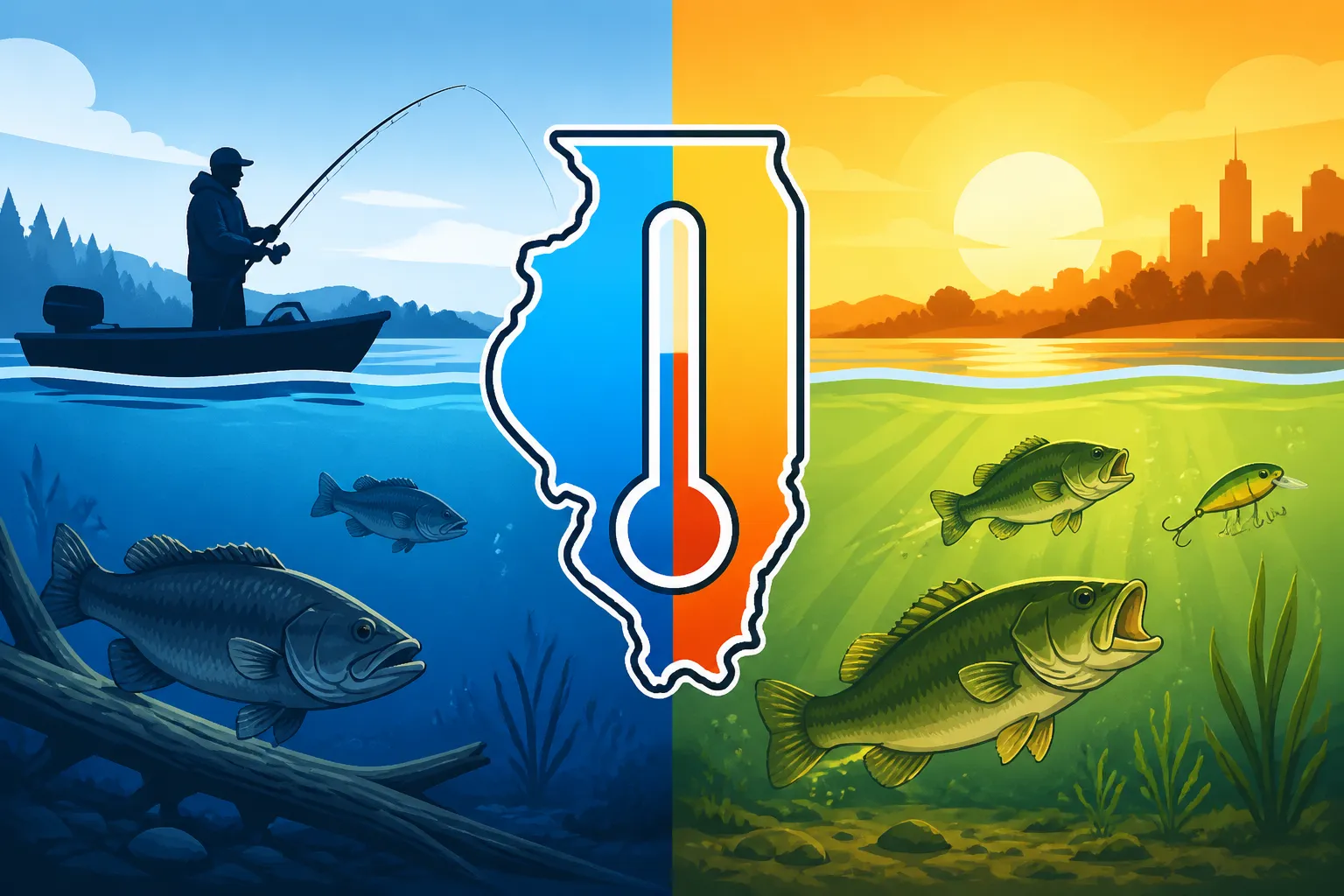
However, once water temperatures deviate significantly from this comfort zone, fish enter a "stress zone." In water that's too cold, fish become sluggish, seeking deeper, sometimes slightly warmer water, or congregating around structure to conserve energy. Their feeding window shrinks, and they might only nibble at bait. Conversely, when water temperatures climb too high, especially during the peak of summer, fish can become stressed, their oxygen uptake becomes difficult, and they'll seek refuge in cooler, deeper pockets, under dense cover, or near spring-fed areas. In these conditions, they might only feed during cooler parts of the day, like dawn or dusk, and often require a slower, more deliberate presentation. Understanding these zones is key to adjusting your tactics, whether you're targeting specific areas or changing your lure presentation.
Optimal Temperature Ranges for Key Illinois Fish Species
While the general principles of water temperature apply to all fish, each species has its own unique preferences and tolerances. What makes a bass happy might send a walleye packing, and knowing these specifics for Illinois' most popular game fish is paramount to consistent success.
Largemouth and Smallmouth Bass Preferences
Illinois bass anglers know that these prized fish are temperature-sensitive. Largemouth and smallmouth bass generally thrive and are most active in water temperatures ranging from the mid-50s to the low 70s Fahrenheit (around 13-23°C). Within this window, their metabolism is buzzing, and they are actively feeding, preparing for or recovering from spawning, and defending their territories. The peak of their spring and fall activity often falls squarely within this range. When the water first starts to warm up in spring, you'll find bass moving shallow to feed and prepare for the spawn. For more on this, check out our guide on Illinois Bass Pre-Spawn Fishing Patterns.
As water temperatures push above the low 70s in summer, bass tend to retreat to deeper, cooler water, or seek out shade provided by docks, lily pads, or submerged timber. They might become more active during low-light conditions early mornings or late evenings. Conversely, when water temperatures dip below the mid-40s in late fall and winter, bass become quite lethargic. They'll often hold tight to deep structure, conserving energy, and you'll need a very slow, subtle presentation to tempt them. Knowing the Best Month to Fish for Bass in Illinois can help you time your trips for peak activity.
Crappie and Panfish Sweet Spots
Crappie, bluegill, and other panfish are incredibly popular targets in Illinois, and they too have distinct temperature preferences. These species really come alive when water temperatures rise into the 60s Fahrenheit (15-20°C). This is their prime spawning temperature, which triggers those famous spring crappie and bluegill runs to shallow, protected areas. If you're looking to capitalize on this, our Illinois Crappie Spawn Season Guide offers excellent insights.
Outside of the spawn, panfish will adjust their depth based on the temperature. In summer, they'll often hold around structure in slightly deeper, cooler water, though they remain accessible to anglers using lighter tackle near shaded cover. In winter, they congregate in deep holes or around submerged brush piles where water temperatures are more stable, and they can be caught through the ice with tiny jigs and slow movements. These fish are generally active feeders, but their location and willingness to chase bait are still heavily influenced by subtle temperature changes throughout the day and across seasons.
Walleye and Catfish Tolerances
Walleye are a bit different from bass and panfish, often preferring cooler water. Their optimal feeding range typically falls between the high 40s and mid-60s Fahrenheit (around 9-18°C). This makes them excellent targets in early spring, late fall, and even through the ice in winter, as well as in deeper sections of lakes and rivers during the summer months. Walleye are often found near current breaks, rocky points, and submerged humps where cooler, oxygenated water is available. They're well-known for their sensitivity to light, so low-light conditions or stained water can also make them more active, especially in their preferred temperature range. For specific insights into where to find these elusive fish, check out our guide on the Illinois Walleye Fishing Season on the Mississippi River.
Catfish, on the other hand, are remarkably tolerant of a wide range of water temperatures, which is part of what makes them such a popular and accessible target year-round in Illinois. Channel, blue, and flathead catfish are all generally active in water temperatures from the mid-60s to the low 80s Fahrenheit (18-28°C), making them prime targets during the warmer summer months when other species might be less active. They'll actively feed in cooler water as well, but their metabolism will slow down, meaning they might be less inclined to chase fast-moving baits. In very hot water, like other species, they may seek deeper holes or areas with current to find more oxygenated conditions. Even with their broader tolerance, extreme cold will send them into lethargy, concentrating them in deep wintering holes.
| Species | Optimal Feeding Temperature Range (°F) | General Behavior |
|---|---|---|
| Largemouth Bass | 60-75 | Active, aggressive, shallow in spring/fall, deeper in summer/winter. |
| Smallmouth Bass | 55-70 | Active, aggressive, prefers rocky areas, current. |
| Crappie | 60-70 | Very active, shallow for spawn, moves deeper in summer/winter. |
| Bluegill | 65-75 | Active, shallow for spawn, widespread through water column. |
| Walleye | 48-68 | Prefers cooler water, deeper lakes/rivers, dawn/dusk feeding. |
| Channel Catfish | 70-85 | Very active in warm water, broad tolerance, scavenger. |
| Flathead Catfish | 70-85 | Prefers warm water, often near structure, predatory. |
Reading the Water: Seasonal Temperature Shifts and Fishing Tactics
The changing seasons in Illinois bring dramatic shifts in water temperature, and successful anglers understand how to "read" these changes to predict fish behavior and adjust their tactics. It’s not just about knowing the average temperature, but how fish respond to the trends of warming or cooling water.
Spring Turnover and Warming Trends
Ah, spring! After the long winter, the ice finally gives way, and Illinois waters begin their slow warm-up. This period often starts with what’s known as "spring turnover" in many lakes, where the entire water column mixes as surface ice melts and water temperatures equalize. As the sun gets higher and days grow longer, the shallow waters – particularly north-facing banks or dark-bottomed coves – are the first to absorb heat. These slightly warmer pockets become magnets for baitfish and, consequently, hungry game fish. Bass, crappie, and even some walleye will begin to move out of their deeper wintering grounds and push shallow to feed aggressively in preparation for their upcoming spawn. Even a few degrees difference in water temperature can concentrate fish into specific areas, making them easier to target.
During this time, fish are often eager to feed and regain energy lost over winter. You'll find them around newly emerging vegetation, shallow wood, or rocky points. This is a fantastic time for active presentations, but always be mindful of cold fronts, which can quickly drop water temperatures and shut down the bite. For a detailed look at what to expect, our Spring Fishing Calendar for Illinois Anglers is an invaluable resource. Knowing how to target fish after a sudden chill is crucial; our guide on How to Fish After a Cold Front can certainly help you adapt.
Summer Stagnation and Deep Water Retreats
Summer in Illinois means hot, often stagnant water, especially in shallower lakes and ponds. As the surface water heats up significantly, many lakes experience thermal stratification, creating distinct layers: a warm, oxygen-rich upper layer (epilimnion), a rapidly changing middle layer (thermocline), and a cold, low-oxygen bottom layer (hypolimnion). Game fish, particularly bass and walleye, will often seek refuge in or just above the thermocline, where the water is cooler and still holds sufficient oxygen. This often means fishing deeper structure, submerged cover, or around deeper points and ledges during the hottest parts of the day.
Shoreline cover like dense lily pads, overhanging trees, and deep docks can also provide crucial shade and slightly cooler water, attracting fish. Catfish, with their higher temperature tolerance, often remain more active throughout the summer, though even they might retreat to deeper holes or areas with good current flow during peak heat. Dawn and dusk become prime fishing times, as the surface water cools slightly, and fish may move shallower to feed. If you're struggling to find those elusive summer bass, our article on How to Find Bass in Summer Heat provides some excellent strategies.
Fall Turnover and Feeding Frenzies
Just as spring brought turnover, the cooling temperatures of autumn bring "fall turnover." As the surface water cools and becomes denser, it sinks, mixing with the deeper water until the entire lake is once again a uniform temperature. This process can sometimes temporarily disorient fish and spread them out, but once it settles, fall fishing can be spectacular. As water temperatures drop from their summer highs into the optimal feeding ranges for many species (think the 50s and 60s for bass), fish recognize that winter is coming. This triggers an aggressive feeding frenzy as they pack on calories for the lean months ahead.
You'll often find fish more widely distributed throughout the water column during fall, actively chasing baitfish in open water and along shorelines. Bass, crappie, and walleye can all be caught in shallower to mid-depth ranges, often in areas they haven't frequented since spring. The key is to cover water and find those actively feeding schools. This is a time when aggressive presentations like crankbaits, spinnerbaits, and even topwater lures can be highly effective. To maximize your fall success, consult our Fall Fishing Calendar for Illinois Anglers for species-specific tips.
Winter Chill and Ice Fishing Strategies
When winter truly sets in and Illinois lakes freeze over, water temperatures stabilize at their coldest points, typically around 39°F (4°C) at the bottom, where water is densest. Fish metabolism slows dramatically, and they become quite lethargic, conserving energy. During this time, they often congregate in deeper holes, near subtle humps, or around dense cover like brush piles. Their feeding windows are short, and they are less likely to chase aggressively.
Ice fishing demands a different approach, focusing on slow, subtle presentations with small baits and jigs. The slightest twitch or lift can be enough to trigger a strike from a cold, sluggish fish. While bass might be harder to tempt, panfish like bluegill and crappie, along with walleye, can still be caught consistently if you can locate their wintering areas. Understanding How to Catch Bass in Cold Water provides valuable insights, even if you're not ice fishing, as bass often exhibit similar behavior in near-freezing open water during late winter.
Gear and Techniques for Temperature-Sensitive Angling
Knowing how water temperature impacts fish is one thing, but translating that knowledge into successful angling requires the right tools and adaptable techniques. From monitoring the water to choosing the perfect lure, every aspect of your fishing strategy needs to align with the temperature conditions.
Essential Temperature Monitoring Tools
You can't effectively respond to water temperature if you don't know what it is! That's why essential tools for any serious Illinois angler include some form of temperature monitoring. A simple, inexpensive handheld water thermometer can be invaluable, especially for bank anglers or those wading. You can drop it into the water at various depths and locations to get a quick reading. Many modern fish finders, even entry-level models, come equipped with a transducer that provides real-time surface water temperature readings. More advanced units can even help you identify the thermocline, which is critical for finding fish in the summer.
Investing in a quality fish finder that accurately displays water temperature and depth contours can be a game-changer. These devices, readily available on platforms like Amazon, allow you to scan areas for temperature breaks – subtle differences that can concentrate fish. For instance, finding a shallow flat that's just a few degrees warmer than the surrounding water in spring can reveal a hotspot for pre-spawn bass or crappie. In summer, identifying the depth of the thermocline can tell you exactly where to present your bait for cooler-water species.
Adjusting Lures and Presentation
Once you know the water temperature, you can tailor your lure choice and presentation. In cold water (below 50°F or 10°C), fish are slow and conserve energy. This means you need slow-moving baits that require minimal effort from the fish. Think jigs, slow-rolled spinnerbaits, or subtle soft plastics presented on a How to Fish a Texas Rig for Bass or Carolina rig, fished excruciatingly slowly along the bottom or near structure. Bait colors might also be more subdued, or you might opt for natural bait like minnows or worms. Our guide on Best Bass Lures for Cold Water offers specific recommendations for these conditions.
Conversely, in warm, active water (mid-60s to mid-70s for many species), fish are aggressive, and their metabolism demands food. You can use faster retrieves, more erratic actions, and larger, flashier baits. Crankbaits, topwater lures, chatterbaits, and faster jigging actions can all elicit powerful strikes. In very hot water (above 80°F), even though metabolism is high, fish can be stressed and might prefer slower, more methodical presentations, or respond better to natural baits. They might also be concentrated in shady areas or deeper water, requiring you to get your lure down to them effectively.
Locating Fish Based on Temperature Zones
The ultimate goal of understanding water temperature is to locate fish. Fish don't just randomly swim around; they actively seek out their comfort zones. In spring, as water warms, look for those shallow, dark-bottomed coves or north-facing banks that warm up first. These areas, often sheltered from cold winds, will attract baitfish and hungry predators. Conversely, if you're fishing a large lake like Lake Michigan, understanding the specific temperature breaks is crucial for species like salmon and trout, as detailed in Best Time of Year to Fish Lake Michigan in Illinois.
In summer, fish will often hold tight to deeper structure like creek channels, humps, ledges, or submerged timber, where they can find cooler water below the thermocline. Pay attention to areas with freshwater springs or current, as these can provide pockets of cooler, more oxygenated water. In winter, fish tend to group up in the deepest, most stable areas of a lake or river, often near vertical structure or brush piles. Using your fish finder to mark temperature breaks and identify promising depths, then targeting structure within those depths, is a highly effective strategy for all seasons.
No matter the time of year or the species you're chasing, knowing how water temperature influences fish activity is a foundational skill for any Illinois angler. It's a continuous learning process, but one that will undoubtedly lead to more successful and enjoyable days on the water. Be sure to consult the Illinois Fishing Season Calendar by Species to align your temperature knowledge with species-specific activity throughout the year.
Disclaimer
This article is for general informational purposes only and does not constitute professional advice. Laws, prices and regulations vary by location and change over time. Consult a qualified professional for guidance on your specific situation.