How to Find Crappie Beds in Spring
The arrival of spring brings an almost palpable excitement to anglers, but for crappie enthusiasts, it’s a specific kind of anticipation: finding those elusive crappie beds. There’s nothing quite like the thrill of discovering where these panfish are staging to spawn, but it can also be incredibly frustrating when you’re out on the water, seeing nothing but open water, and wondering where everyone else is catching them. This guide is here to cut through that frustration, offering practical, real-world advice to help you locate crappie beds in Illinois waters this spring.
Understanding the Spring Crappie Migration and Spawn
Before you can pinpoint those coveted crappie beds, you need to understand the crappie’s annual spring dance. It’s not just a random dart to the shallows; it’s a methodical movement dictated by water temperature and the biological imperative to reproduce. Knowing this pattern is half the battle.
The Crappie's Pre-Spawn Movement
As winter’s icy grip loosens and the sun starts to warm the shallow coves and creek arms, crappie begin to stir from their deeper, lethargic winter homes. They don't just swim straight to the bank; they move in stages. Think of it like a gradual migration. In early spring, when water temperatures are still in the upper 40s to low 50s Fahrenheit, crappie will often move from the main lake basin into creek channels, main lake points, and deeper brush piles adjacent to future spawning grounds. These are their "staging areas" – places where they gather, feed heavily, and wait for the water to reach that magic temperature.
If you’re out too early, casting into knee-deep water, you might be missing them entirely in these staging zones. They're still relatively deep, sometimes 10-15 feet, but they're positioned closer to the shallows. Look for any kind of submerged structure here: old roadbeds, channel bends, significant brush piles, or even standing timber that provides a bit of shelter. This pre-spawn period is fantastic for catching some of the biggest, fattest crappie of the year, as they're actively feeding to bulk up for the spawn. Understanding these nuances is key to maximizing your Best Time to Catch Crappie in Illinois success.
Identifying Spawning Temperature Ranges
Water temperature is the undisputed king when it comes to predicting crappie movement, especially for the spawn. While there can be slight variations based on the specific body of water and whether you're targeting black or white crappie, the general rule of thumb is quite consistent. Black crappie often prefer slightly cooler water for spawning, typically starting in the mid-50s F, while white crappie might wait until the upper 50s or even low 60s F. However, both species will be actively spawning once the water consistently reaches the 60-68 degree Fahrenheit range.
This doesn't mean you just need to measure the surface temperature in the middle of the lake. Instead, focus on the shallow, protected coves and backwater areas that warm up fastest. A few degrees difference can make all the difference. For instance, a main lake arm might still be 52 degrees, but a shallow, muddy-bottomed cove that catches a lot of sunlight could already be 58 degrees, making it a prime crappie hot spot. It’s a good idea to invest in a reliable water thermometer, which you can easily find on sites like Amazon, and regularly check the temperature in different areas of your chosen lake or river. Consistent temperatures in the target range, especially after several days of warm, sunny weather, are usually a strong indicator that crappie are on the beds or very close to it.
Prime Locations for Spring Crappie Beds in Illinois
Once you know what the crappie are doing, the next step is knowing where they're going to do it. Crappie aren't picky about what they spawn on, as long as it offers some protection and stability for their eggs. The key is finding those shallow, sheltered spots that meet their needs.
Shallow Cover and Structure
Crappie are masters of camouflage and seek out cover that provides both protection from predators (like bass and northern pike) and a stable substrate for their eggs to adhere to. When you're looking for crappie beds, think "shallow and sheltered." They love wood: submerged brush piles, downed trees, old stump fields, and even flooded timber. These offer intricate nooks and crannies where they can build their nests and where the males can guard the eggs. Docks, especially those with brush piles sunk underneath them, are also prime real estate. In later spring, as vegetation begins to bloom, look for emerging lily pads, cattails, or dense weed lines that offer similar protection.
The best crappie beds are often found in areas with a combination of these elements, typically in water depths ranging from 1 to 5 feet, depending on water clarity and sunlight penetration. In clear lakes, they might spawn a bit deeper, while in murkier water, they'll be shallower. Consider small, isolated coves, the backs of larger creek arms, and protected bays that are shielded from strong winds and boat traffic. These areas warm up faster, stay warmer, and offer the calm conditions crappie prefer for nesting. If you're bank fishing, these are precisely the areas you should be targeting, and there are many effective How to Catch Crappie From the Bank strategies tailored for these scenarios.
Illinois's Crappie Hotspots and Their Nuances
Illinois boasts a fantastic variety of waters that are renowned for their crappie fishing, and each one has its own characteristics that dictate where crappie will bed. For example, some of the most famous crappie destinations include Rend Lake, Lake Shelbyville, and Carlyle Lake.
- Rend Lake: This southern Illinois gem is known for its sprawling shallow flats, abundant standing timber, and numerous protected coves. When the crappie spawn hits, these timbered flats and the backs of coves like the Big Muddy arm become crappie magnets. Look for submerged wood structure and areas where the old creek channels intersect with shallow flats. Many anglers find the Rend Lake's Best Spots for Early Spring Crappie to be highly productive.
- Lake Shelbyville: Another excellent central Illinois option, Shelbyville has a mix of standing timber, laydowns, and artificial fish attractors. The crappie often gravitate towards the backs of creek arms like Sand Creek or Wolf Creek, particularly around submerged brush. The Best Crappie Coves on Lake Shelbyville often hold significant numbers of spawning fish, especially when the water temperature is right.
- Carlyle Lake: As Illinois’s largest man-made lake, Carlyle offers vast expanses of water. Here, crappie will seek out similar cover – submerged trees, brush piles, and shallow bays. The northern reaches of the lake and the numerous stump fields become prime bedding areas. Knowing Where to Find Crappie on Carlyle Lake often means looking for those subtle changes in bottom contour and available cover in protected areas.
Don't forget about river systems like the Mississippi River and its backwaters, or the Illinois River. These areas often have flooded timber, oxbow lakes, and sloughs that warm up quickly and provide ideal spawning habitat. Always check the Illinois Department of Natural Resources (IDNR) site-specific regulations for the body of water you plan to fish, as rules can vary regarding length limits and daily creel limits.
| Location Type | Typical Depth Range (feet) | Preferred Cover/Structure | Key Considerations |
|---|---|---|---|
| Shallow Coves/Bays | 1-4 | Submerged brush, downed trees, docks, weed lines | Warm up fastest, protected from wind, less current. Look for dark bottoms. |
| Creek Channel Bends | 3-6 | Brush piles, stumps, old roadbeds, subtle drop-offs | Crappie stage here before moving shallower. Good for pre-spawn. |
| Standing Timber/Stump Fields | 2-5 | Old trees, stumps, root systems | Excellent egg adhesion, provides vertical cover. Can be tricky to navigate. |
| Docks/Piers | 1-3 | Pilings, sunken brush under structures | Man-made cover, often holds heat. Check for fishing pressure. |
| Backwater Sloughs | 1-3 | Flooded grass, lily pads, laydowns, natural debris | Very shallow, warm up quickly, can be oxygen-depleted later in spring. Accessible for How to Catch Crappie From the Bank. |
Techniques and Tools for Locating Crappie Beds
Finding crappie beds isn't always about blindly casting. It involves a combination of observation, strategic probing, and smart use of modern fishing electronics.
Visual Cues and Observation
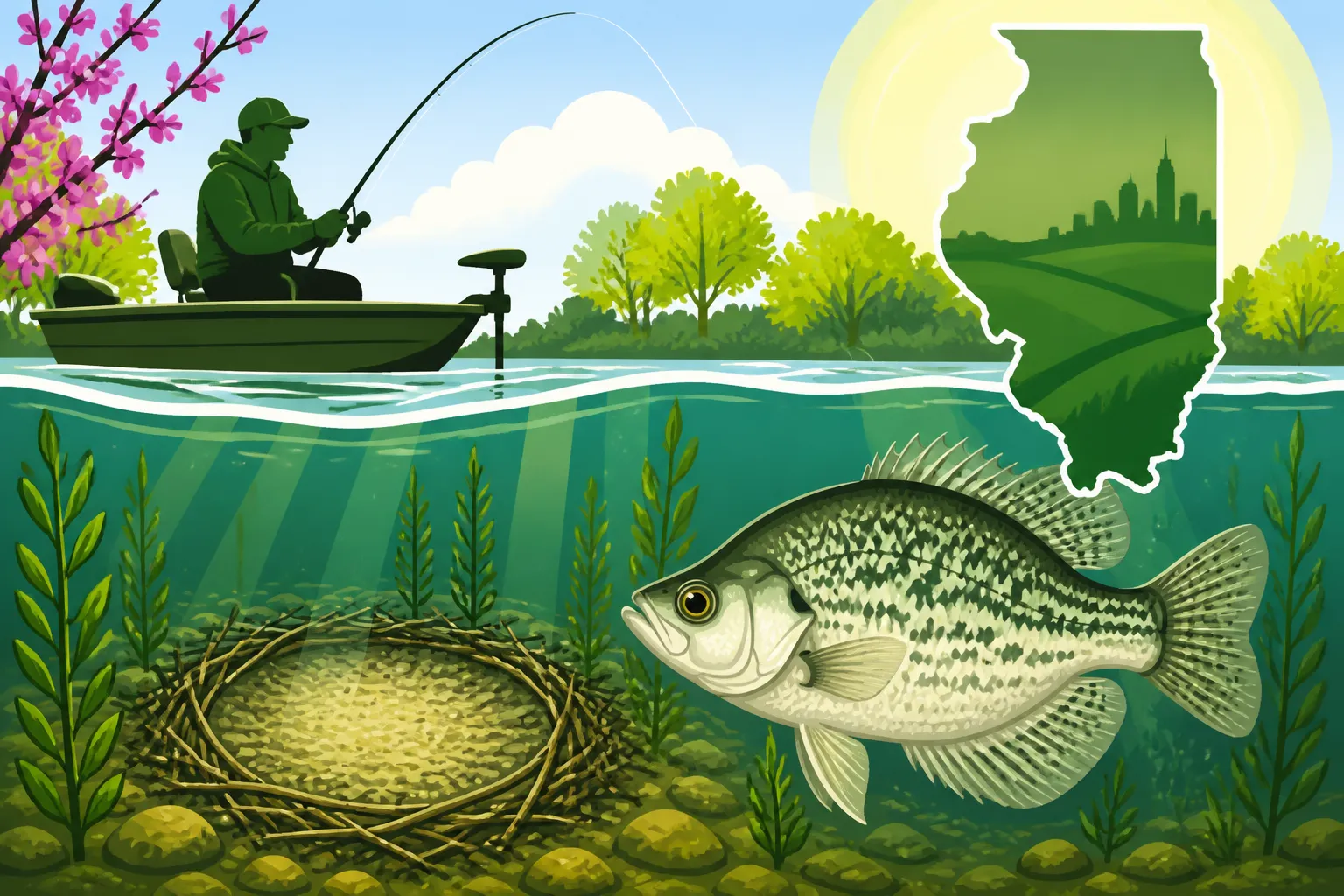
Sometimes, the best tool you have is your own two eyes. On clear days, especially in lakes with decent water clarity, you can often see crappie beds. These beds appear as lighter, swept-out circular patches on the bottom, usually about 1-2 feet in diameter. Male crappie actively fan away debris and sediment to create a clean spot for the eggs, making these areas stand out against a darker bottom. You might even spot male crappie guarding their nests, darting aggressively at anything that comes too close.
This is where a good pair of polarized sunglasses becomes invaluable. They cut the glare off the water, allowing you to peer beneath the surface. Slowly motor or troll through suspected shallow areas, paying close attention to any bottom disturbance or fish activity. Look for subtle movements in the water, splashes, or even schools of minnows that might be attracting crappie. Don't be afraid to pull out your trolling motor and go slow, especially in those protected coves. Being stealthy and observant is a prime strategy for any angler seeking to effectively use Crappie Jigging Techniques on active fish.
Utilizing Electronics and Probing
While visual cues are fantastic, they're not always an option, especially in murky water or on overcast days. This is where your fishing electronics really shine. Modern fish finders with down imaging and side imaging capabilities can be game-changers. Down imaging will show you detailed structure directly beneath your boat, allowing you to distinguish between a single log and a dense brush pile that might be holding a crappie bed. Side imaging allows you to scan a much wider area, revealing brush piles, stumps, and even schools of fish off to the sides of your boat. Many excellent options are available from retailers like Amazon, making advanced fish finders more accessible than ever.
Beyond the high-tech gadgets, sometimes the old-school methods are still the best. A long, stout rod or a dedicated "crappie pole" can be used to literally "feel" the bottom. By slowly moving through shallow areas and dragging your pole along, you can identify changes in bottom composition – from soft mud to hard gravel or wood. This is especially effective for finding hidden brush piles that don't show up well on sonar due to depth or density. For boat anglers, spider rigging, which involves multiple long rods fanned out, allows you to cover a wide swath of water, dragging jigs or minnows at various depths until you hit that sweet spot. Remember, crappie are often schooling fish, so where you find one, you're likely to find many more. Equipping yourself with the right gear, whether it’s a simple pole or a sophisticated fish finder, can make all the difference in How to Catch Crappie From a Boat.
Ethical Considerations and Smart Angling
As exciting as it is to find those crappie beds, it's our responsibility as anglers to approach this period with respect for the fish and the environment. The spring spawn is crucial for future fish populations.
Minimizing Disturbance to Spawning Fish
When crappie are actively on their beds, they are in a vulnerable state. Males are aggressively guarding the nests, making them easy to catch. While it's tempting to fill your livewell, consider practicing selective harvest during the spawn. This means releasing the larger females (which carry the most eggs) to ensure they can contribute to future generations. Focus on keeping smaller, eater-sized crappie if you intend to take fish home. Handle fish gently and release them quickly to minimize stress. Using a landing net can reduce handling time and prevent fish from thrashing on the boat deck.
Avoid unnecessarily disturbing spawning areas by constantly running your big motor over them or anchoring directly in the middle of a bed. Use your trolling motor for stealthy approaches. Excessive pressure on a spawning bed can cause fish to abandon their nests, leading to a failed spawn for that area. Be mindful of your wake and noise, especially in small, protected coves where fish are most sensitive to disturbance.
Understanding Illinois Regulations
One of the most important aspects of responsible angling is knowing and adhering to the current fishing regulations for Illinois. While this guide provides general information, specific rules can vary greatly by lake, river, or even by species. The Illinois Department of Natural Resources (IDNR) publishes a comprehensive fishing guide annually, which is your go-to resource for current length limits, daily creel limits (the number of fish you can legally keep), and any site-specific regulations. You can often pick up a physical copy at bait shops or sporting goods stores, or find a digital version on the IDNR website.
For crappie, typical statewide regulations might include a daily limit, but many popular crappie lakes in Illinois have special size or harvest restrictions to manage their populations. For instance, some lakes might have a 9-inch minimum length limit or a reduced daily creel limit to protect smaller fish and promote the growth of larger crappie. Always consult the official Illinois Fishing Regulations Overview before heading out. Fishing without knowledge of these rules could lead to Penalties for Fishing Without a License in Illinois, which nobody wants. Staying informed ensures you’re fishing legally and contributing to the conservation of Illinois's fantastic crappie fishery.
Disclaimer
Always ensure you have a valid Illinois fishing license and are familiar with the current regulations set by the Illinois Department of Natural Resources (IDNR) before heading out. Fishing conditions and regulations can change, so it's essential to stay informed.