Boat Fishing Techniques
For many Illinois anglers, standing on the bank with a rod and reel feels limiting. You cast out, maybe get a bite or two, but that vast expanse of water just out of reach whispers promises of bigger fish and untouched honey holes. This guide is all about breaking free from the shore, diving deep into boat fishing techniques, and unlocking those hidden spots to dramatically increase your catch in Illinois' diverse waterways.
Why Boat Fishing Transforms Your Illinois Angling Experience
Let's be honest, bank fishing has its charm, but it also has its undeniable frustrations. You're limited to whatever the shore offers, often competing for space, and the best structure, deep pockets, or active schools of fish are often just beyond your casting range. That's where boat fishing comes in, completely revolutionizing your approach and opening up a world of possibilities that land-locked anglers can only dream of.
Accessing Unreachable Waters and Structure
One of the most significant advantages of boat fishing is the sheer amount of water it puts within your grasp. Think about those hidden coves on Rend Lake or the deeper channels in the Mississippi River; these are often inaccessible by foot. With a boat, you can glide over shallow flats to reach secluded backwaters, explore submerged timber, or navigate to deep offshore humps where trophy fish often reside. This expanded access means you're no longer limited to the pressured areas near public access points, allowing you to discover pristine spots where fish are less wary and more likely to bite.
Imagine finally being able to reach that specific weed line that always looks so promising from afar, or positioning yourself directly over a submerged rock pile that you’ve only ever seen on a contour map. This ability to precisely position your presentation is a game-changer, especially when targeting specific species known to hold tight to cover. You can work an area from multiple angles, something nearly impossible from the bank.
Enhancing Presentation and Technique Diversity
Boat fishing allows for a much wider array of fishing techniques that simply aren't feasible from the shore. Trolling, for instance, becomes a powerful tool, letting you cover vast stretches of water at controlled speeds, presenting lures to active fish. You can run multiple lines, each at a different depth or with a different lure, effectively covering the water column until you find what the fish are keying in on.
Beyond trolling, the ability to anchor, drift, or use a spot-lock enabled trolling motor means you can precisely work structures like bridge pilings, deep ledges, or underwater brush piles. You can maintain your position against current or wind, making it easier to vertically jig or drop shot directly onto a target. This precision vastly improves your chances, allowing for subtle presentations that would be swept away or missed entirely from the bank.
Essential Boat Fishing Gear for Illinois Waters
Stepping into boat fishing requires a bit more gear than your average bankside setup, but it’s an investment that pays dividends in comfort, safety, and catch rates. Having the right tools makes all the difference, transforming a potentially frustrating day into a productive and enjoyable one.
The Right Boat for Your Angling Style
Choosing the right boat depends heavily on where and how you plan to fish in Illinois. Are you mostly sticking to smaller, calmer lakes like those found in state parks, or do you dream of tackling the vast expanses of Lake Michigan or the powerful currents of the Mississippi River? A small jon boat or a stable fishing kayak might be perfect for calm inland waters, offering easy maneuverability and shallow water access. However, for bigger waters, you'll want something more substantial.
For those venturing onto larger reservoirs like Carlyle Lake, Lake Shelbyville, or Rend Lake, a bass boat or a multi-species V-hull boat provides the speed to cover ground and the stability to handle choppy conditions. These boats often come equipped with livewells, ample storage, and mounting options for electronics. If your sights are set on the giants of Lake Michigan, a robust deep-V boat capable of handling rough waves and equipped with specialized gear like downriggers is a must. Remember, Illinois has specific Illinois Boat Registration Requirements Explained, so make sure your vessel is compliant.
Safety Equipment Beyond the Basics
Safety is paramount on the water. Beyond the legally required items, which you can read more about in guides like Illinois Boating Safety Gear Checklist, it’s smart to consider additional safety gear. Always carry extra water, snacks, a first-aid kit, sun protection, and a fully charged cell phone. A marine radio is also a wise investment, especially on larger lakes or rivers where cell service can be spotty.
Don't forget the proper personal flotation devices (PFDs). While Illinois Life Jacket and PFD Rules outline the legal minimums, ensure everyone on board has a comfortable, well-fitting life jacket that they're willing to wear. A throwable PFD (Type IV) is also a requirement and can be a lifesaver. On Amazon, you can find a wide range of PFDs, from basic foam vests to more comfortable inflatable options, ensuring you're compliant and safe.
Key Electronics and Navigational Tools
Modern boat fishing is greatly enhanced by marine electronics. A good fish finder with GPS and mapping capabilities is almost non-negotiable. It allows you to see underwater structure, identify schools of fish, and mark waypoints for productive spots. Side imaging and down imaging technologies take this a step further, providing incredibly detailed views of the bottom and surrounding cover.
Beyond fish finders, a reliable GPS unit (often integrated into the fish finder) is essential for navigation, especially on unfamiliar waters. It helps you stay in legal fishing zones, avoid hazards, and get back to your launch point safely, even in low light or fog. Learning to use these tools effectively will dramatically improve your success, helping you scout new areas and return to known hot spots with precision.
Mastering Diverse Boat Fishing Techniques for Illinois Species
Boat fishing opens up a treasure trove of techniques that can be tailored to target virtually any species found in Illinois waters. From aggressive bass to elusive walleye and powerful catfish, having a boat allows you to adapt and conquer.
Precision Bass Fishing from a Boat
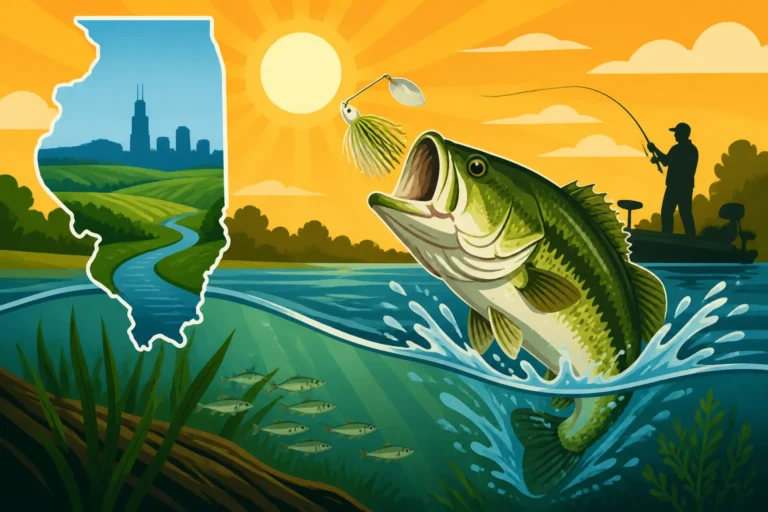
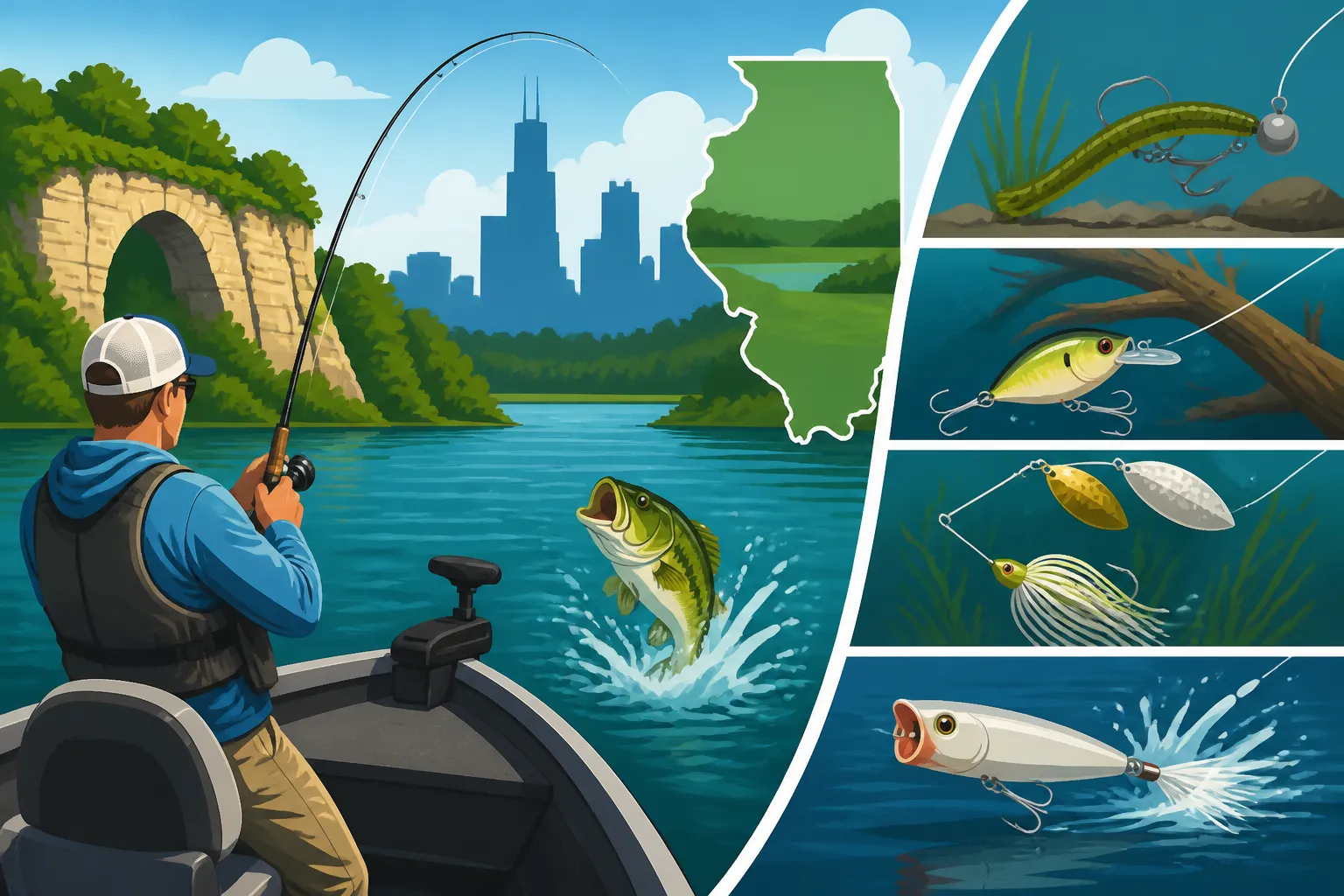
When it comes to bass, a boat allows for unparalleled precision. You can hug the shoreline, pitching jigs and soft plastics into dense cover like fallen trees or lily pads that are impossible to reach from the bank. Bass boats, with their powerful trolling motors and shallow drafts, are ideal for this. You can slowly creep along, dissecting every piece of cover.
Consider using a spot-lock enabled trolling motor, a feature found on many modern Minn Kota or Lowrance units. This incredible technology acts like a virtual anchor, holding your boat precisely in place with the push of a button, even in wind or current. This is invaluable when working a productive submerged hump or a particularly brushy laydown for largemouth bass. You can cast repeatedly to the exact same spot, ensuring your lure hits the strike zone every time. For tips on where to find these elusive fish, check out our guide on Best Bass Fishing Lakes in Illinois.
Effective Crappie and Panfish Strategies
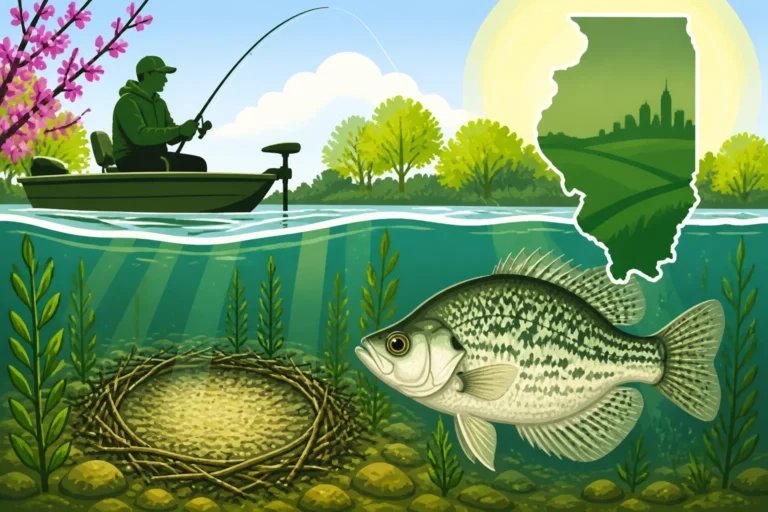
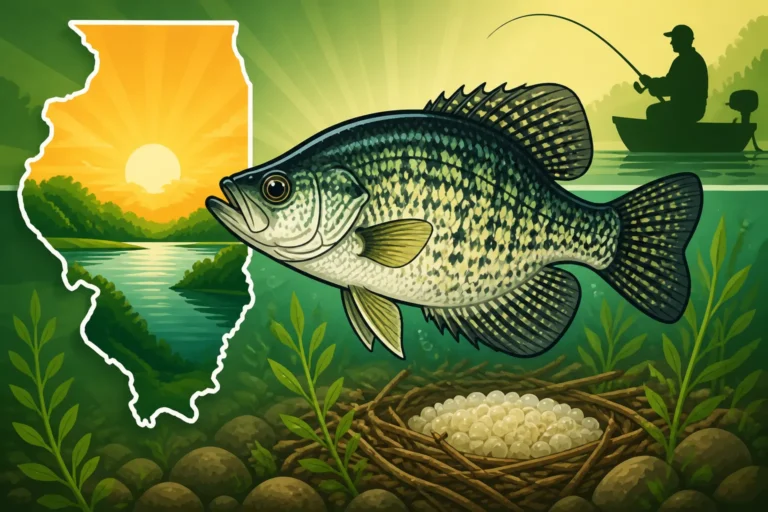
Crappie and other panfish like bluegill and redear sunfish are schooling fish, and a boat is key to finding and staying on these schools. In spring, crappie will move into shallow brush and timber to spawn, and a boat allows you to quietly navigate these areas, using small jigs or minnows under a bobber. In summer and fall, they often retreat to deeper brush piles, submerged timber, or bridge pilings.
Spider rigging is a popular crappie boat technique, particularly effective on lakes like Rend Lake. This involves running multiple long rods off the bow and stern of the boat, each rigged with a jig or live minnow, to cover a wide swath of water at varying depths. You motor slowly, often using a trolling motor, over known crappie haunts, presenting a buffet of baits until you find the active depth. For more insights on these tasty panfish, explore our Crappie Jigging Techniques guide.
Targeting Catfish from Your Boat
Illinois is a fantastic state for catfish, especially on its larger rivers and reservoirs. While bank fishing for catfish is popular, a boat allows you to access prime river channels, deep holes, and current seams that hold the biggest blues and flatheads. For channel catfish, anchoring up current from a deep hole or an eddy is a classic boat technique. You can then cast cut bait, punch bait, or stink baits into the current, letting it wash downstream to waiting fish.
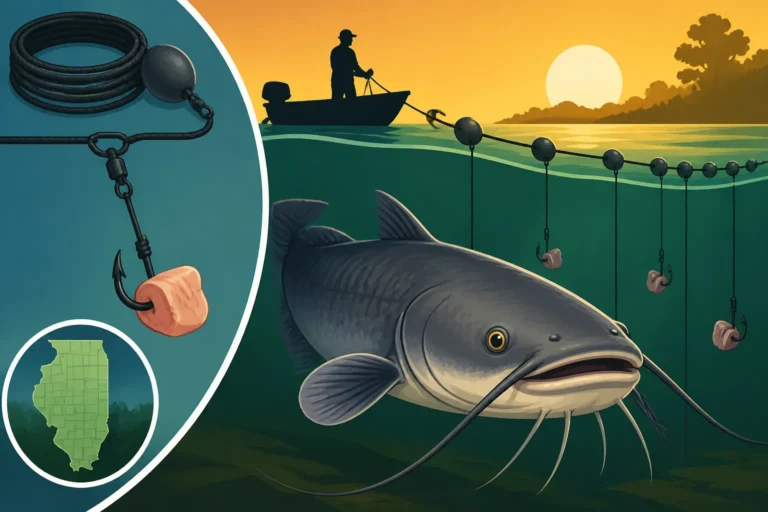
For larger blue and flathead catfish on the Mississippi or Illinois Rivers, running trotlines or jug lines from a boat is an incredibly effective method, though it requires knowledge of local regulations. If you're using rods and reels, focus on presenting large live or cut baits directly on the bottom in deep holes, along ledges, or near log jams. The ability to precisely drop heavy anchor ensures your boat stays put, even in strong river currents, allowing for a stable platform to wrestle with these powerful fish. Our article on Best Catfish Fishing Spots in Illinois provides excellent locations to try these techniques.
Walleye and Sauger Tactics from a Boat
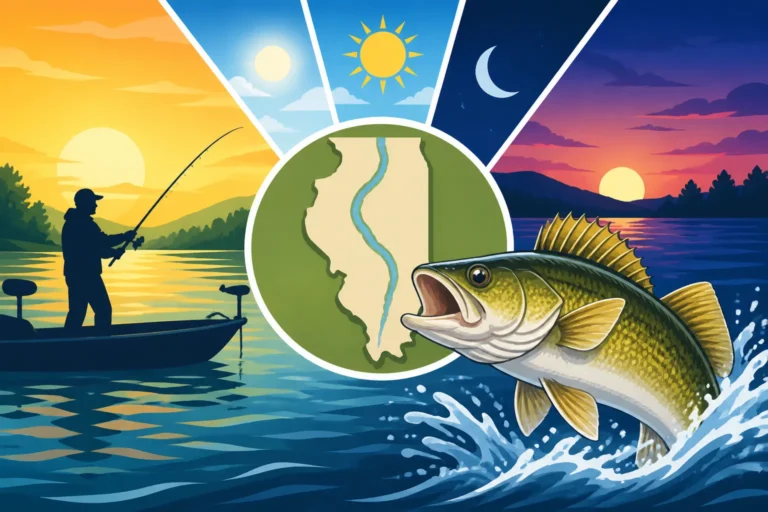
Walleye and sauger fishing often demands a boat due to their preference for deeper water, current, and specific structures. Trolling is a hugely popular and effective method for walleye, allowing you to cover vast areas of main lake basins or river channels. You can use crankbaits, spinner rigs, or even live bait rigs behind planer boards to spread out your presentation and cover a wider path.
Jigging is another staple for walleye anglers, particularly when fishing rivers or known humps. From a boat, you can position directly over structure, using your fish finder to locate fish, and then vertically jig spoons, blade baits, or lead-head jigs tipped with minnows or plastics. This precise presentation is difficult, if not impossible, to achieve from the shore. For detailed strategies, our Walleye Trolling Techniques guide offers more tips on how to maximize your success.
Strategic Boat Positioning: Anchoring, Drifting, and Spot-Lock
The key to successful boat fishing isn't just about what lure you throw, but where you throw it from. Mastering boat positioning allows you to present your bait effectively and repeatedly to prime fish-holding areas.
The Art of Anchoring
Anchoring seems simple, but there's an art to it, especially in rivers or windy conditions. You generally want to anchor upstream or upwind of the spot you intend to fish. This allows your boat to settle back, positioning you perfectly to cast into the productive zone without disturbing the fish. For river fishing, a heavy anchor (like a box anchor or grapple anchor) and plenty of rope are essential to hold against strong currents.
When anchoring, factor in the depth and current/wind. You'll need more anchor rope (typically a 5:1 to 7:1 scope ratio, meaning 5-7 feet of rope for every foot of water depth) to ensure the anchor bites effectively. If you're fishing a precise structure like a rock pile, try to anchor so your casts land just past it, allowing your lure to work its way back over the target. This minimizes spooking fish that might be holding directly on the structure.
Effective Drifting Strategies
Drifting is an incredibly effective technique for covering water and finding active fish, especially on large lakes or open flats. It involves allowing your boat to be carried by the wind or current, presenting your baits naturally as you move. This is particularly good for walleye, crappie, or even bass that are spread out.
To control your drift, consider using a drift sock (also known as a drift anchor or sea anchor). This parachute-like device deploys into the water, creating drag that slows your boat's movement. You can deploy one or two drift socks off different sides of the boat to control both your speed and direction, allowing for a more controlled and effective drift over promising areas. When using multiple rods, drifting helps you cover a wide swathe of water, increasing your chances of finding scattered fish.
The Power of Spot-Lock Technology
As mentioned before, spot-lock technology on modern electric trolling motors is a revolutionary tool for boat anglers. Instead of constantly adjusting an anchor or battling wind with your foot pedal, a spot-lock system uses GPS to automatically hold your boat’s position, often within a few feet. This frees you up to focus entirely on fishing.
Imagine you're jigging a deep channel bend on the Illinois River, and you find a school of walleye. With spot-lock, you can hit a button, and your boat stays put, allowing you to thoroughly work that school until the bite dies down. It's equally valuable when flipping heavy cover for bass, as you can meticulously pick apart a log jam without drifting away. Investing in a quality spot-lock trolling motor, easily found on Amazon, can greatly enhance your efficiency and enjoyment on the water, making those precise presentations much easier to execute.
Navigating Illinois Lakes and Rivers by Boat
Operating a boat for fishing is about more than just getting from point A to point B; it's about safe and strategic navigation that enhances your fishing success. Understanding the nuances of Illinois waterways will elevate your entire experience.
Reading the Water and Utilizing Maps
Learning to read the water is a skill developed over time, but it’s invaluable for boat fishing. Look for subtle cues like current breaks, eddies, changes in water color, points of land, or surface disturbances that might indicate fish activity or hidden structure. On rivers, understanding current flow is critical – fish often hold in calmer water adjacent to strong current, conserving energy while waiting for bait to be swept by.
Modern marine electronics with detailed mapping are your best friend. Navionics and LakeMaster charts, often built into your fish finder, provide incredibly precise contour lines, highlighting submerged humps, channels, drop-offs, and even individual brush piles. Study these maps before you launch to plan your attack, marking potential fishing spots, and safe travel routes. This pre-trip planning can save you a lot of time and fuel, guiding you directly to productive areas.
Understanding Buoys, Markers, and Navigation Rules
Illinois waterways, especially the larger lakes and rivers, are often marked with navigational aids. Understanding these buoys and markers is crucial for safety and for staying in legal boating channels. Red buoys typically mark the right side of the channel when returning from the sea (or going upstream on a river), while green buoys mark the left. Non-lateral markers provide information, warnings, or indicate specific zones.
Beyond navigation, many fishing areas have specific rules or restrictions indicated by buoys. For example, some areas might be idle-only zones, no-wake zones, or even fishing restrictions. Always familiarize yourself with the local regulations for the body of water you're visiting. Ignorance of the rules, even minor ones, can lead to unpleasant encounters with law enforcement or conservation officers. Additionally, it's wise to be aware of requirements such as the Illinois Boater Education Card Requirements to ensure you're fully compliant with state law.
Adapting to Weather and Water Conditions
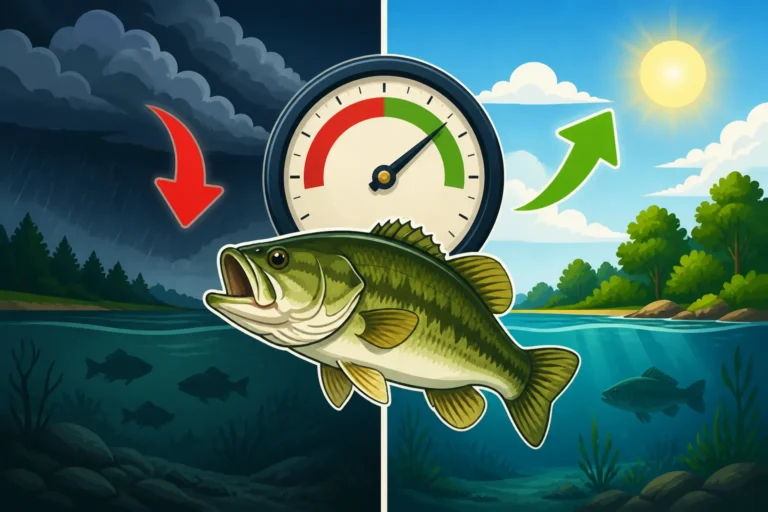
Weather and water conditions can change rapidly in Illinois, and a responsible boat angler is always prepared. A sudden cold front can shut down a bite, while heavy rains can muddy the water and change fish locations. Always check the forecast before heading out, paying close attention to wind speed and direction, as well as potential for thunderstorms.
On the water, be vigilant. If the wind picks up significantly, or dark clouds gather, it's often best to seek shelter or head back to the ramp. For fishing, adapt your techniques to the conditions: use brighter lures in muddy water, slow down your presentation during cold fronts, and consider deeper presentations in clear, calm conditions. Being flexible and knowing when to adjust your plan is a hallmark of an experienced boat angler.
Specific Trolling Techniques for Boat Anglers
Trolling from a boat is an incredibly effective way to cover large expanses of water, particularly for species like walleye, crappie, and the various salmon and trout in Lake Michigan. It allows you to present multiple baits at different depths and speeds, mimicking natural forage.
Trolling for Walleye on Inland Lakes and Rivers
Walleye are often found suspended over deeper main lake basins or cruising river channels. Trolling allows you to put your lures right in front of them. On inland lakes like Lake Shelbyville, crankbaits are a popular choice. Use a depth chart for your specific crankbaits, or employ a line counter reel, to know exactly how deep your lure is running. Vary your speed until you find what triggers bites, typically between 1.5 to 2.5 miles per hour.
In rivers, current plays a significant role. Trolling with the current allows for faster coverage, while trolling against it offers a slower presentation, allowing lures to dive deeper and spend more time in the strike zone. You might also use bottom bouncers with spinner rigs or worm harnesses, particularly in areas with a somewhat consistent bottom, to present live bait effectively. For more detailed insights on these methods, our Walleye Trolling Techniques guide is a great resource.
Lake Michigan Salmon and Trout Trolling
Lake Michigan is a trolling angler's paradise, home to coho salmon, chinook salmon, lake trout, and brown trout. Targeting these fish effectively almost always requires a boat and specialized trolling gear. The vast, deep waters necessitate techniques that get lures down to specific depths.
Downriggers are essential for Lake Michigan trolling. These devices allow you to precisely control the depth of your lure, sending it down hundreds of feet if necessary. Planer boards are another crucial tool, deploying your lines out to the sides of the boat, covering a much wider path and avoiding spooking fish directly beneath the boat. Flashers, dodgers, and spoons are common lure choices, often combined to create an enticing action and flash. You can explore this exciting fishery further in our guide on Lake Michigan Salmon and Trout Fishing in Illinois.
Trolling for Crappie and Other Panfish
While often associated with bass and walleye, trolling can also be deadly effective for crappie and other panfish, especially when they are suspended in open water or scattered along drop-offs. "Long-lining" small jigs or crankbaits behind the boat can be very productive.
On large reservoirs, crappie often suspend over submerged brush piles or along channel edges. By slowly trolling small jigs (1/16 to 1/8 ounce) or tiny crankbaits, you can cover these areas, presenting your lure to active schools. Again, a line counter reel helps immensely in replicating successful depths. This is particularly effective in late spring and early summer when crappie transition from their shallow spawning grounds to deeper, more open water.
Disclaimer
Fishing inherently carries risks, and adherence to all local, state, and federal regulations is the sole responsibility of the individual angler. Always prioritize safety, wear appropriate personal flotation devices, and be aware of weather and water conditions. This guide provides general information and should not replace professional advice or official regulations.