Catfish Bottom Fishing Techniques
Catching catfish can sometimes feel like a game of hide-and-seek, especially when they're hunkered down in their favorite deep-water haunts. You spend hours casting, and if your bait isn't presented exactly where they're feeding, it can be incredibly frustrating. This comprehensive guide is here to unravel the mysteries of catfish bottom fishing, equipping you with the techniques, gear, and insider knowledge to consistently land these powerful fish in Illinois waters.
The Undeniable Appeal of Bottom Fishing for Catfish
There’s a reason why bottom fishing remains a tried-and-true method for targeting catfish, especially the larger ones. It aligns perfectly with their natural behavior and feeding patterns, giving you a significant edge even on tough days.
Why Catfish Prefer the Bottom
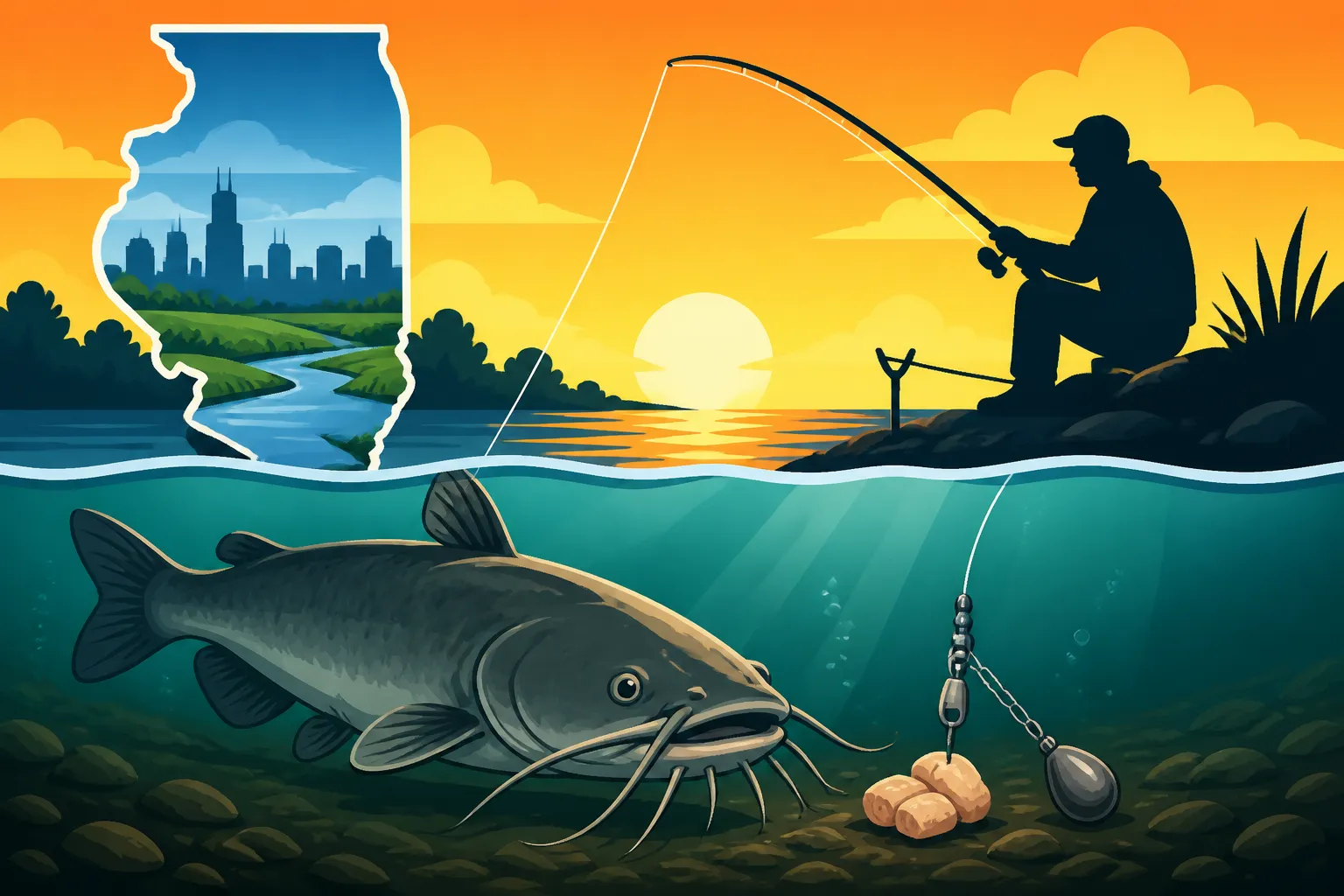
Catfish, whether we're talking about channel cats, blue cats, or flatheads, are predominantly bottom feeders. They're built for it, with their barbels—those whisker-like appendages—acting like highly sensitive detectors, sweeping the riverbed or lake bottom for food. They use these to sniff out decaying organic matter, small crustaceans, insects, and even unfortunate baitfish that have settled to the bottom. It’s their natural diner, a place of safety and abundant food sources.
Think about it from a catfish's perspective. The bottom offers protection from overhead predators, especially in clearer waters, and it’s where a lot of their preferred food sources accumulate. Dead shad, fallen insects, and crayfish all congregate on the bottom. It’s not just a preference; it’s a biological imperative. They’re scavengers by nature, always on the prowl for an easy meal that has sunk out of reach of fish feeding higher in the water column. So, when you place a juicy piece of cut bait or a potent stink bait directly on the bottom, you’re putting it right in their wheelhouse, maximizing your chances of a bite.
Advantages Over Other Catfishing Methods
While other methods like bobber fishing, jug fishing, or even noodling have their place, bottom fishing offers some distinct advantages. For starters, it’s incredibly simple to set up and manage. You don't need a lot of specialized gear beyond a good rod, reel, and some basic terminal tackle. This makes it accessible for beginners and seasoned anglers alike. It’s also incredibly effective for targeting those trophy-sized catfish that often hug the deeper contours of lakes and rivers. These bigger fish are often more cautious and less likely to chase a bait suspended mid-water. A stationary, scent-rich bait on the bottom is often too tempting to resist.
Another major benefit is consistency. Once you’ve located a productive spot, bottom fishing allows you to saturate that specific area with multiple baits, increasing your odds. You can set up several rods, each with a different bait or rig, and cover a wider footprint of the bottom. While active methods like drift fishing can be productive, bottom fishing lets you anchor down and patiently wait for the fish to come to you, which is often how you entice the really big ones. The main downsides? It can be prone to snags in heavily structured areas, and it's definitely a more passive style of fishing. However, for sheer effectiveness in putting bait where the catfish live, bottom fishing is hard to beat.
Essential Gear for Your Illinois Catfish Bottom Rig
Having the right equipment makes all the difference when you're battling a hard-fighting catfish. You don't need to break the bank, but investing in reliable gear will save you frustration and lost fish.
Rods, Reels, and Line Choices
When it comes to rods for bottom fishing for catfish, think tough and powerful. You'll want a rod that's anywhere from 7 to 10 feet long, with a medium-heavy to heavy power rating and a fast to moderate-fast action. The length helps with casting heavier baits and rigs, and provides leverage for fighting big fish, especially when bank fishing or making long casts from a boat. Popular brands like Ugly Stik are renowned for their durability and affordability, making them a favorite among catfish anglers. A sensitive tip is also a plus, allowing you to detect those subtle bites even when fishing in current.
For reels, both baitcasting and large spinning reels are excellent choices. Baitcasting reels, especially those designed for heavier lines, offer incredible cranking power and control over larger fish. Many seasoned catfishermen prefer them for their precision and robust build. However, a good quality, large-spooled spinning reel (size 5000 or larger) will also serve you well, especially for easier casting and for anglers less accustomed to baitcasters. Look for reels with a smooth, reliable drag system, as this is crucial for tiring out powerful catfish without snapping your line. You might find a great selection of robust reels for various budgets on platforms like Amazon.
Line choice is critical. You'll typically be looking at either monofilament or braided line. Monofilament, in the 15-to-30-pound test range, offers good shock absorption, which can be forgiving during sudden runs, and it's generally more affordable. However, it has more stretch, which can make hooksets less direct over long distances. Braided line, in the 30-to-65-pound test range, has virtually no stretch, providing excellent sensitivity and powerful hooksets. It also has a smaller diameter for its breaking strength, allowing you to spool more line. The trade-off is that it’s less abrasion-resistant against sharp objects on the bottom and can be more expensive. Many anglers opt for braided mainline with a monofilament or fluorocarbon leader to get the best of both worlds.
Terminal Tackle You Can't Live Without
Terminal tackle is where your rig truly comes together, and selecting the right components is key to a successful outing.
- Hooks: For catfish bottom fishing, circle hooks are highly recommended, especially when using larger cut or live baits. Sizes from 4/0 to 8/0 are common, depending on the bait and target species. Circle hooks are designed to hook fish in the corner of the mouth, reducing gut-hooking and making for easier, safer releases. They’re incredibly effective – just let the fish take the bait and reel in; no dramatic hookset needed. J-hooks (offset or straight shank, 3/0-7/0) are also used, particularly with stink baits where a quicker, more aggressive hookset is desired.
- Weights: Sinkers are what keep your bait on the bottom. Egg sinkers (1/2 oz to 3 oz) are popular for their streamlined shape, allowing them to roll slightly with the current without snagging too often. Pyramid sinkers (1 oz to 4 oz or more) are excellent in stronger currents, as their shape helps them dig into the bottom and stay put. Sinker slides are indispensable for creating slip sinker rigs, allowing the line to run freely through the weight so fish don't feel resistance when they bite.
- Swivels: Heavy-duty barrel swivels (size 2 to 4/0) are used to prevent line twist, especially when fishing in current or with baits that might spin. They're also crucial for creating a clean break between your mainline and leader on a Carolina rig. A quality swivel ensures your rig functions as intended.
- Other Essentials: Don't forget a good pair of pliers for removing hooks, especially from toothy fish or deep-set hooks. Line cutters are a must-have for quick rig changes. A sturdy fish gripper or lip gripper, easily found on Amazon, can be invaluable for safely handling large, slippery catfish, protecting both you and the fish. Having a small tackle box or bag dedicated to these essentials will make your time on the water much more efficient and enjoyable.
Crafting the Perfect Bottom Fishing Rigs
The beauty of bottom fishing for catfish lies in the simplicity and effectiveness of its rigs. While there are many variations, mastering a few core setups will cover almost all your Illinois catfishing scenarios.
The Classic Carolina Rig for Catfish
The Carolina rig is arguably the most popular and versatile bottom fishing rig for catfish, and for good reason. It’s simple, effective, and allows the fish to pick up the bait without feeling the resistance of the weight, leading to more confident bites.
Here's a step-by-step breakdown of how to tie a classic Carolina rig:
- Mainline First: Start by threading your mainline (which comes from your rod and reel) through an egg sinker or a specialized no-roll sinker. The weight should be heavy enough to hold your bait on the bottom in the prevailing current.
- Add a Bead: After the sinker, slide a small plastic or glass bead onto your mainline. This bead protects the knot of your swivel from being damaged by the sinker repeatedly hitting it during casts or when a fish is on.
- Tie on a Swivel: Next, tie a sturdy barrel swivel to the end of your mainline using a strong knot, like a Palomar or improved clinch knot. This swivel serves two purposes: it prevents line twist and acts as the connection point for your leader.
- Attach the Leader: To the other end of the swivel, tie your leader line. Your leader should typically be 1 to 3 feet long, made of monofilament or fluorocarbon, and generally a few pounds lighter than your mainline. This lighter leader acts as a "breakaway" if you get snagged, saving your main line and rig.
- Secure the Hook: Finally, tie your chosen hook (usually a 4/0 to 8/0 circle hook) to the end of your leader.
The Carolina rig excels in many environments, from the slow currents of the Illinois River to the vast open waters of Carlyle Lake or Rend Lake. It allows your bait to move naturally with subtle currents, while the weight keeps it in the strike zone. This rig is particularly effective when fishing near structure like submerged timber or along channel edges, as the slip-sinker design minimizes snags compared to fixed weight rigs.
The Slip Sinker Rig: A Versatile Workhorse
While often confused with the Carolina rig due to their similarities, the slip sinker rig (sometimes just called a "fish finder rig") is a slight variation that offers incredible sensitivity and versatility. The core principle is the same: allowing the line to "slip" through the weight.
The main difference lies in how it's constructed, often simplifying the bead and swivel setup or using a specialized "fish finder" slide that clips onto your mainline, rather than threading a sinker directly. This allows you to easily change sinker weights without retying your entire rig.
To set up a slip sinker rig:
- Attach the Weight: Thread an egg sinker or a no-roll sinker directly onto your mainline. Alternatively, use a "fish finder" slide clip, which is a plastic sleeve that holds your sinker and has a small loop for your mainline to pass through.
- Tie the Swivel: Tie a barrel swivel to the end of your mainline, directly after the weight/slide.
- Add the Leader and Hook: Attach your leader (typically 12-24 inches) and hook to the other end of the swivel, just like the Carolina rig.
This rig is a true workhorse. It’s fantastic for situations where you want fish to pick up the bait and swim a short distance without feeling any resistance from the heavy sinker, giving them time to fully commit to the bite. It’s also excellent for adapting to changing conditions; if the current picks up, you can quickly slide off a lighter sinker and clip on a heavier one without having to cut and re-tie. This setup is perfect for targeting various catfish species, from the aggressive channel cats to the more discerning blue catfish. If you're wondering about specific regulations, it's always good to consult the Illinois Department of Natural Resources, especially concerning Illinois Catfish Daily Limits Explained.
Three-Way Rig for Multi-Bait Presentations
When you're fishing in strong currents or want to present multiple baits at different depths just off the bottom, the three-way rig, also known as a "dropper rig," really shines. It's a bit more complex than the previous two but offers distinct advantages.
Here’s how you assemble a three-way rig:
- Attach the Three-Way Swivel: Tie your mainline directly to one eye of a three-way swivel. These swivels have three rings, forming a 'T' shape.
- Add the Sinker Line: To a second eye of the swivel, tie a short piece of line (usually 6-12 inches) with your sinker attached to the end. This is your dropper line, and it should be lighter than your mainline and leader so that if the weight gets snagged, you only lose the sinker, not the entire rig.
- Attach the Leader and Hook: To the third eye of the swivel, tie your main leader, which can be anywhere from 12 inches to 3 feet long, with your hook at the end. You can even extend this by adding a second leader off the main leader, effectively creating two bait presentations at once, though you must check local regulations for hook limits.
The three-way rig is a fantastic choice for fishing deep river channels, along dam structures, or in any area with significant current where you need your bait to stay precisely in place without rolling. The main line comes down to the swivel, then one line goes to the sinker on the bottom, and another line (your leader) extends horizontally with your bait, allowing it to flutter enticingly just off the bottom. This means your bait is kept out of the immediate debris on the bottom while still being directly in the catfish's preferred feeding zone. It's an excellent option when you're targeting big blue cats on the Mississippi River, for example, where a strong current is almost a given.
| Rig Type | Key Features | Ideal Conditions | Advantages | Disadvantages |
|---|---|---|---|---|
| Carolina Rig | Slip sinker, bead, swivel, leader, hook. | Lakes, slower rivers, structured areas. | Allows fish to take bait freely; minimizes snags. | Can be tricky to adjust weight quickly. |
| Slip Sinker Rig | Similar to Carolina, often uses a fish-finder slide. | Versatile for various conditions, especially current. | Easy weight changes; good bite detection. | Requires a specialized slide or careful setup. |
| Three-Way Rig | Three-way swivel, sinker dropper, bait leader. | Strong currents, deep channels, multiple bait depths. | Keeps bait off bottom; excellent in current. | More complex to tie; more components to snag. |
Decadent Baits That Drive Catfish Wild
Catfish are opportunistic eaters with an incredible sense of smell. Offering them the right bait, especially one that emits a strong scent trail, is paramount to your bottom fishing success.
Natural Live and Cut Baits
When it comes to tempting big catfish, nothing beats natural live or cut baits. These are often the most effective, as they mimic the natural food sources catfish encounter daily.
- Cut Bait: This is a top choice for all catfish species. Shad (like gizzard shad or threadfin shad), skipjack herring, carp, and even fresh bluegill (check local regulations on using game fish as bait) are excellent options. The key is to cut them into chunks or strips that release their oils and blood into the water, creating an irresistible scent trail. For larger fish, don't be afraid to use bigger chunks. A 2-3 inch piece of cut bait on a large circle hook can be deadly for a trophy blue cat. The fresher the cut bait, the better, so bring a cooler with ice to keep your bait in prime condition. Many anglers swear by fresh, oily cut bait when targeting flatheads, as these predatory cats often prefer live or very fresh dead bait.
- Live Bait: Live minnows, shiners, or small sunfish (again, check local bait regulations, as some states restrict the use of certain live fish as bait) can be incredibly effective, especially for flathead catfish which prefer live prey. Presenting a lively baitfish on a slip sinker rig allows it to swim freely, attracting attention from nearby predators. Always ensure your live bait is healthy and active for the best results.
If you're specifically targeting certain species, consider that Best Bait for Channel Catfish often includes stink baits and cut bait, while Best Bait for Blue Catfish and Best Bait for Flathead Catfish tend to prefer fresh cut bait or live bait, respectively.
Prepared and Stink Baits
While natural baits are highly effective, prepared and stink baits offer convenience and their own unique allure for catfish, particularly channel catfish.
- Commercial Stink Baits: These are a staple for many channel cat anglers. They come in various forms: dip baits (thick pastes that you "dip" a sponge or worm into), punch baits (moldable doughs that adhere to treble hooks), and pre-formed nuggets. Brands like Sonny's Super Sticky Catfish Bait or Catfish Charlie are popular choices, and you can find a huge variety of options, from blood-flavored to cheese-based, on platforms like Amazon. The strong, pungent odor of these baits is designed to attract catfish from a distance, leveraging their keen sense of smell. They're often very effective in murky water where visibility is low.
- Homemade Recipes: Many anglers have their own secret homemade concoctions, often involving chicken liver, aged cheese, garlic, and even hot dogs. These can be incredibly potent and cost-effective. The downside is they can be messy to prepare and handle, and their effectiveness can vary widely depending on the ingredients and freshness.
The main advantage of prepared baits is their ease of use and long shelf life. They’re less messy than live or cut bait (usually!), and you can keep a jar or tub in your tackle box for months. However, they tend to be most effective for channel catfish and smaller blues. While a giant flathead might occasionally hit a stink bait, they generally prefer fresher, more natural offerings. Experimentation is key here – what works wonders at one lake might not be as effective at another, so bring a few options.
Reading the Water and Positioning for Success
Finding the fish is half the battle, and when it comes to bottom fishing for catfish, understanding where they hide and how to position your bait is crucial. It’s not just about casting aimlessly; it’s about strategic placement.
Identifying Catfish Hangouts in Lakes and Rivers
Catfish are creatures of habit and structure. They gravitate towards areas that offer cover, current breaks, and readily available food.
In Lakes:
Look for features that provide depth changes or structure.
- Drop-offs and Humps: Catfish often stage on the edges of sharp drop-offs or congregate around submerged humps. These areas act as ambush points and provide thermal refuge.
- Creek Channels: Old creek beds that wind through a lake's bottom are superhighways for catfish. They use these channels to move between shallower feeding flats and deeper holding areas.
- Submerged Timber and Brush Piles: Woody cover offers protection and attracts baitfish, which in turn attracts catfish. Fishing tight to these snags can be challenging but highly rewarding.
- Points: Submerged points extending into the lake can act as current breaks or ambush points for passing bait.
- Dam Areas: The base of dams or spillways can hold large numbers of catfish, especially when water is flowing, creating current and washing food into the area.
In Rivers:
Current is the defining factor in river catfishing.
- Eddies and Current Breaks: Catfish will often tuck into eddies behind obstructions or downstream of wing dams, where they can rest out of the main current but still ambush food being swept past.
- Log Jams and Fallen Trees: These offer prime cover and attract insects and baitfish. They can be snaggy, but often hold the biggest flatheads.
- Deep Holes: Any significant depression in the riverbed will attract catfish, especially during periods of high sun or cold weather.
- Confluence of Streams/Tributaries: Where a smaller stream enters a larger river, it often creates a wash-out hole and brings in fresh food sources, making it a catfish magnet.
Places like the Mississippi River in Southern Illinois or the deep pools of the Illinois River are prime examples of where these features hold massive amounts of catfish. For more specific location insights, you might want to check out articles like Best Catfish Fishing Spots in Illinois to pinpoint some prime areas. Remember, catfish move, so don't be afraid to try different spots until you find a concentration of fish.
Strategic Placement and Patient Waiting
Once you’ve identified a promising area, the way you present your bait and your patience are key.
- Fan Casting: If you're bank fishing or anchored in a boat, don't just cast in one spot. Fan cast your baits across a wider area to cover different depths and structures. For instance, if you're targeting a point, cast one rig on top of the point, one off to the side, and one into the deeper water around it. This helps you locate where the fish are actively feeding.
- Anchoring vs. Drifting: For bottom fishing, anchoring is often preferred, allowing your scent trail to build in one spot. However, if you're struggling to find fish, a slow drift over a productive area (like a river channel or a large flat) can help you cover more ground until you get a bite.
- The Scent Trail: Catfish rely heavily on smell. Every time you cast a piece of cut bait or a glob of stink bait, you're creating a scent trail. Let this work for you. Give your baits time to disperse their attractants. Many experienced anglers believe that the longer a bait soaks, the more potent its scent becomes, especially for larger, more cautious fish.
- Patience is a Virtue: Catfishing is often a game of patience. Don't expect a bite every minute. Set your rods in holders, keep your drag set appropriately, and wait. Watch your rod tips for the tell-tale taps or the sudden, dramatic bend that signals a powerful catfish has taken the bait. It's during these patient waits that many anglers enjoy the serene beauty of Illinois's fishing landscapes. You'll also need to keep an eye on the time to ensure you don't exceed your Illinois Catfish Daily Limits Explained.
Advanced Tactics and Troubleshooting Your Setup
Bottom fishing for catfish isn't just about dropping a bait; it's about making subtle adjustments and understanding fish behavior to maximize your success, especially when conditions change.
Adjusting for Current, Depth, and Structure
The environment you're fishing in is rarely static, and successful bottom fishing often comes down to adapting your rig to match the conditions.
- Current Adjustment: In rivers or windy lakes, current can be your biggest challenge. If your bait is washing downstream or rolling too much, you need to increase your weight. Don't be afraid to go up to 3 or 4 ounces, or even heavier in very strong currents like those found on the Mississippi River. Pyramid sinkers are excellent for digging into the bottom and staying put. Conversely, if there's no current, a lighter weight (1/2 to 1 ounce) might be sufficient, allowing for more natural bait movement.
- Depth Considerations: While you're primarily fishing the bottom, the exact depth can matter. Catfish might be hugging the very bottom in deep holes during cold weather or high sun, but they might suspend a few feet off the bottom along a channel edge during low light. Your leader length on a Carolina or slip sinker rig can help here. A shorter leader (1-foot) keeps the bait right on the bottom, while a longer leader (2-3 feet) allows the bait to drift slightly above any muck or to present to fish that might be looking up.
- Structure Navigation: Fishing around snags like log jams or rock piles is where the big ones often live, but it also means a higher risk of losing your tackle. Consider using a leader line that is slightly lighter than your mainline. If you get snagged, you might only lose the hook and leader, saving your main line and expensive weight. Also, paying attention to how your weight settles can tell you a lot. A soft thud usually means mud or sand, while a sharper tap-tap-tap indicates rock or shell, which can be prime catfish territory. Different seasons also dictate where fish might be. Understanding the Illinois Catfish Season Guide can help you anticipate their movements relative to structure.
The Art of the Hookset and Landing Catfish
The way you react to a bite and fight a catfish can mean the difference between a triumphant catch and a heartbreaking loss.
- Circle Hook Technique: If you're using circle hooks (and you really should be for bottom fishing), resist the urge to rear back with a forceful hookset. This will often pull the hook right out of the fish's mouth. Instead, when you feel a sustained pull or see your rod tip bend steadily, simply pick up the rod, reel down to take up the slack, and apply steady pressure. The circle hook is designed to rotate and lodge itself in the corner of the fish's jaw as it tries to swim away. It's a subtle but incredibly effective technique that also greatly reduces gut-hooking.
- J-Hook Technique: For traditional J-hooks, a more conventional hookset is required. When you feel a bite, give the fish a moment to take the bait, then sweep the rod upwards and to the side with authority to drive the point home.
- Landing the Fish: Once hooked, keep steady pressure on the fish. Avoid horsing it in, especially if it's a larger specimen. Let your rod and reel's drag do the work. When the fish makes a run, let it take line, then pump the rod (lift and reel down) to gain line back when it pauses. For large catfish, a sturdy landing net or a lip gripper is invaluable for safe landing. When fishing from the bank, as detailed in How to Catch Catfish From the Bank, make sure you have clear, open access to safely land and handle the fish.
Night Fishing for Enhanced Catfish Success
Catfish are primarily nocturnal predators, and fishing after dark can dramatically increase your catch rates, especially for larger fish. The cover of darkness makes them bolder and more active.
- Why Night Fishing Works: Many catfish species, particularly flatheads and blue cats, become much more active hunters and scavengers after sunset. The reduced light gives them an advantage over their prey and makes them feel safer venturing into shallower areas to feed. The water often cools down, making fish more comfortable and energetic.
- Special Considerations: Night fishing requires a few extra precautions and pieces of gear. A reliable headlamp or a couple of lanterns are essential for tying knots, baiting hooks, and safely navigating your fishing spot. Glow sticks or clip-on light-up indicators attached to your rod tips can help you detect bites in the dark. Always let someone know where you're going and when you expect to be back. Be mindful of your surroundings, as wildlife is also more active at night. Bring bug repellent, and dress in layers as temperatures can drop quickly. If you're using a boat, ensure all navigation lights are working and you have a spotlight. For more in-depth tips on fishing after sundown, check out How to Catch Catfish at Night.
By making these adjustments and understanding the nuances of catfish behavior, you’ll not only catch more fish but also gain a deeper appreciation for the art of bottom fishing in Illinois. Comparing your catches to species like walleye, you'll find that Catfish Limits Compared to Walleye Limits in Illinois sometimes allow for a more generous harvest, reflecting their abundance and popularity.
Disclaimer
Fishing inherently carries risks, and regulations can change. Always consult the latest Illinois Department of Natural Resources (IDNR) fishing guide for current rules, regulations, license requirements, and safety guidelines before heading out. This guide is for informational purposes only and does not supersede official IDNR publications. Be aware of your surroundings, practice safe boating, and always put personal safety first.