Fishing License Requirements for Shore Anglers
It's a common scene: you're standing on the bank of a beautiful Illinois lake or river, enjoying the peace and quiet, maybe casting a line or two. Then, a little nagging thought pops into your head: "Do I actually need a fishing license if I'm not in a boat?" It's a question many shore anglers grapple with, often leading to confusion or, worse, an unexpected chat with a conservation officer. This guide is here to clear up all that doubt, ensuring your next bankside adventure is relaxing and compliant with Illinois fishing regulations.
Do You Need an Illinois Fishing License for Shore Fishing?
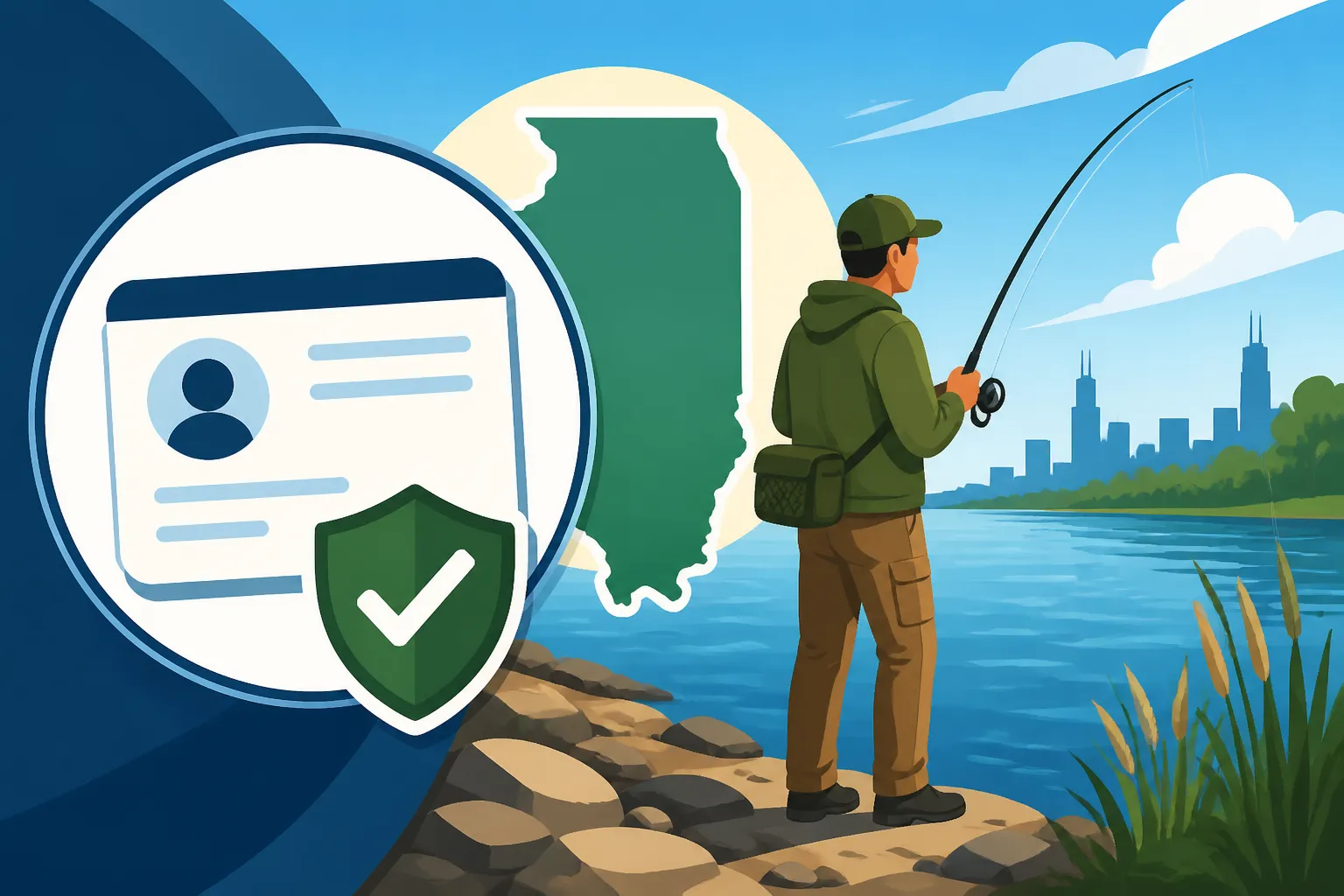
Let's cut right to it: for most adult anglers in Illinois, yes, you absolutely need a fishing license, even if you're fishing from the shore. The Illinois Department of Natural Resources (IDNR) regulations generally don't differentiate between fishing from a boat, a pier, or the bank when it comes to licensing. The requirement is about who is fishing and where, not how they're accessing the water.
The General Rule: Yes, Almost Always
Think of it this way: the fish don't know (or care!) if you're in a fancy bass boat or sitting on a folding chair by the water's edge. The act of attempting to catch fish in public waters is what triggers the license requirement. This rule applies to nearly all public lakes, rivers, streams, and ponds across Illinois. Whether you're targeting big catfish on the Mississippi River, casting for bass in a local forest preserve lake, or simply trying to catch some panfish for dinner, if you're 16 years of age or older and not otherwise exempt, you need that license.
There are a few key exceptions, which we'll delve into shortly, but the baseline understanding should always be: assume you need a license. It's better to be prepared than to face potential penalties for fishing without a license in Illinois. Conservation officers are out there, ensuring everyone is following the rules, and they patrol shorelines just as diligently as they do the water.
Clarifying Age and Residency for Shore Anglers
The primary factors that might exempt a shore angler from needing a license are age and, for some specific discounts, residency.
- Children Under 16: This is perhaps the most widely celebrated exemption. If you're under the age of 16, you do not need an Illinois fishing license. This is fantastic news for families and a great way to introduce young ones to the joys of angling without the extra paperwork or cost. It encourages kids to get outside and experience nature, fostering a love for fishing from a young age. So, feel free to take kids fishing in Illinois without buying a license for them, but remember, once they hit that 16th birthday, it's time to get licensed up! You can find more details in the guide, Illinois Fishing License Rules for Children.
- Illinois Residents 65-74 Years Old: If you're an Illinois resident and you're 65 years old but not yet 75, you're eligible for a significantly discounted senior fishing license. It's a wonderful perk for our seasoned anglers, making it more affordable to enjoy the sport. This isn't a free pass, but it's a very cost-effective way to stay legal. The specific price and how to obtain it are covered in Illinois Senior Fishing License Discounts for Ages 65 to 74.
- Illinois Residents 75 Years Old and Up: For Illinois residents who have reached the age of 75 and older, the license cost becomes incredibly minimal. We're talking about a very small fee, essentially making fishing almost free. It's a testament to valuing our elder community members and their love for the outdoors. If this applies to you, make sure you look into the Illinois Super Senior Fishing License for Ages 75 and Up to enjoy these benefits.
It's crucial to remember that these age-based discounts and exemptions primarily apply to Illinois residents. If you're a non-resident visiting Illinois, the rules are different, and generally, you'll need a license regardless of your age, unless it falls within the statewide free fishing days.
Understanding Free Fishing Days
One of the best times for anyone, including shore anglers, to enjoy Illinois waters without the need for a license is during the designated Free Fishing Days. These special days are a fantastic opportunity for individuals and families to try fishing for the first time or for experienced anglers to introduce friends without the initial barrier of purchasing a license.
Typically, Illinois holds its Free Fishing Days over a long weekend in June, often aligning with Father's Day. For example, the Illinois Free Fishing Days 2026 Dates are usually set around the third weekend of June. During this specific period, everyone – residents and non-residents, young and old – can fish in Illinois waters without needing a state fishing license. This applies whether you're casting from a boat, a pier, or, yes, your favorite spot on the riverbank.
However, even during Free Fishing Days, there are some important nuances to keep in mind:
- Trout and Salmon Stamps: While the general fishing license is waived, special stamps like the Inland Trout Stamp or the Lake Michigan Salmon Stamp might still be technically required if you are specifically targeting those species in waters where the stamps apply. For most shore anglers, especially those not actively pursuing stocked trout in designated sites or fishing Lake Michigan for salmon, this won't be an issue. But if you plan to visit a recently stocked trout pond during Free Fishing Days, it’s always wise to double-check the specific regulations for that site.
- Other Regulations Still Apply: Importantly, all other fishing regulations remain in effect during Free Fishing Days. This includes species-specific size and catch limits, methods of take, and site-specific rules. Don't assume that because the license is waived, all other rules are too. Always consult the current Illinois Fishing Information Guide for the most up-to-date regulations for the waters you plan to fish. You can find more information on this topic in the Illinois Free Fishing Days and License-Free Weekends guide.
Where the Rules Might Get Confusing for Shore Anglers
While the general rule is clear, there are specific situations that often lead to confusion for shore anglers. Understanding these nuances can save you a headache (and potentially a fine!).
Private Ponds Versus Public Waters
This is a big one. Many people assume that if they're fishing in a private pond, they don't need a license. This is partially true, but with very important caveats.
- Truly Private Ponds: If a pond is entirely located on private land, has no connection to public waterways (meaning no streams flowing in or out that connect to a public system), and you have explicit permission from the landowner to fish there, then typically you do not need an Illinois fishing license. These are often farm ponds or small, isolated impoundments. The key here is "truly private" and "explicit permission."
- Private Land, Public Water Connection: Here's where it gets tricky. Many ponds or small lakes, even if they appear to be on private property, might be fed by or drain into public streams, rivers, or larger lakes. If there's any direct connection to a public water system, or if the water body itself is considered "public" (even if the access is private), then an Illinois fishing license is required. For example, a subdivision pond that's part of a larger watershed system would likely still require a license.
- The "Does a Fishing License Cover Private Ponds Too?" Question: The straightforward answer is that your public water fishing license doesn't implicitly grant you permission to fish on private property. It merely makes you legal to fish in public waters. If you're on private land, even if it's connected to public waters, you still need the landowner's permission. The license and landowner permission are two separate requirements. Always clarify with the property owner before casting a line.
It’s always safest to err on the side of caution. If you're unsure about the status of a pond, assume it requires a license, or seek clarification from the landowner or the IDNR.
Pier Fishing and Lakefront Access
For those who love the urban angling experience, pier fishing along major bodies of water like Lake Michigan or large rivers is a popular choice. The perception might be that because you're on a man-made structure attached to land, the rules are different. However, this is largely a misconception.
- Pier Fishing Requires a License: Fishing from a pier or jetty that extends into a public body of water, such as those found along the Lake Michigan shoreline in Chicago or other public lakes, absolutely requires an Illinois fishing license. These piers are considered public access points to public waters, and thus, the standard licensing rules apply. The convenience of pier fishing doesn't negate the need for a license.
- Chicago Lakefront Example: The bustling Chicago lakefront, with its numerous piers, harbors, and seawalls, is a prime example. Anglers flock to these spots to catch everything from perch to salmon. Every adult angler here needs a valid fishing license. This is detailed further in Fishing License Requirements for the Chicago Lakefront. In addition, if you're targeting specific species like salmon or trout, you'd also need the appropriate stamp, even from the pier, as outlined in Lake Michigan Salmon Stamp Requirements for Anglers.
- Always Check Local Rules: Some specific local ordinances might have additional rules for pier fishing (e.g., restricted hours, allowed bait types), but these are always in addition to the state's licensing requirements, not in place of them.
Boundary Waters with Neighboring States
Illinois shares borders with several states, and many major rivers form these boundaries: the Mississippi River with Iowa and Missouri, the Wabash River with Indiana, and the Ohio River with Kentucky. For shore anglers along these boundary waters, the question of which state's license is valid can be confusing.
- Reciprocity Agreements: Illinois has reciprocity agreements with some neighboring states for fishing on shared waters. This generally means that if you have a valid fishing license from either state, you can legally fish in the shared boundary waters. However, it's critical to understand the specifics of each agreement, as they can vary.
- Mississippi River: For example, if you're fishing the Mississippi River from the Illinois bank, an Iowa fishing license might be valid if you stay within the agreed-upon boundary waters. Similarly, an Illinois license works if you are legally fishing from the Missouri bank. Detailed information can be found in Illinois Fishing License Reciprocity With Iowa and Illinois Fishing License Reciprocity With Missouri.
- Wabash River: The Wabash River forms part of the border with Indiana. If you're fishing the Wabash River from the Illinois side, having an Indiana license can sometimes suffice, but it's essential to check the precise terms. Refer to Fishing the Wabash River With an Indiana License for more in-depth information.
- Ohio River: Along the Ohio River, which borders Kentucky, similar reciprocity arrangements exist. For specifics, see Crossing Between Illinois and Kentucky to Fish the Same Water.
- Key Takeaway: While reciprocity is common, it's never a given for every inch of a boundary water. Always verify the specific agreements for the exact section of river you plan to fish. It's usually outlined in each state's fishing regulations guide. When in doubt, holding an Illinois fishing license will always make you legal on the Illinois side of these boundary waters, regardless of reciprocity.
What Kind of License Do You Need as a Shore Angler?
So, you've determined you need a license for your shore angling adventure. Now, which one? Illinois offers several options, and the best choice depends on how often you plan to fish and your residency status.
Standard Annual Fishing License
For most resident shore anglers who plan to fish regularly throughout the year, the standard Annual Fishing License is the most straightforward and cost-effective option.
- Comprehensive Coverage: This license covers you for the entire Illinois license year, which typically runs from March 1st through the end of February the following year. It allows you to fish for all legal species, using all legal methods, from any public access point – including, of course, the shore.
- Best Value for Frequent Anglers: If you anticipate going shore fishing more than a few times a year, the annual license almost always pays for itself compared to buying multiple short-term licenses. It provides peace of mind that you're always covered when the urge to cast hits.
- Ease of Renewal: Once you have one, renewing an Illinois fishing license online is a breeze, making it easy to stay legal year after year.
- Cost Details: The specific costs vary slightly for residents versus non-residents, and of course, those senior discounts come into play for Illinois residents. You can get a full breakdown of options and prices in Illinois Fishing License Costs and Types.
Short-Term and Specialty Licenses
If you're an occasional shore angler, a non-resident visiting Illinois for a brief period, or targeting specific species, Illinois also offers specialized licenses that might better suit your needs.
- 24-Hour Licenses: Illinois offers a 24-hour fishing license for residents. This is perfect if you only plan to fish for a single day, perhaps on a spur-of-the-moment trip to a local pond or river. It's a quick, affordable way to get out on the water without committing to an annual pass. You can check the Illinois Resident 24-Hour Fishing License Cost for current pricing.
- Nonresident Short-Term Options: For out-of-state visitors who want to enjoy Illinois's shore fishing, there are options like the Nonresident 24-hour fishing license or the Nonresident 3-Day fishing license. These are ideal for vacationers or those passing through who want to squeeze in some angling. While the cost is higher than for residents (as discussed in Illinois Fishing License Costs for Out-of-State Anglers), these short-term licenses are still much more affordable than a full annual nonresident license if you're only visiting for a long weekend. See Illinois Nonresident 3-Day Fishing License Cost for current details.
- Trout and Salmon Stamps: While the general fishing license covers most species, if you intend to fish for specific species like trout or salmon in waters where they are stocked or naturally present, you'll need an additional stamp. For shore anglers, this is most relevant if you're visiting one of the designated inland trout stocking sites or if you're fishing the Lake Michigan shoreline for salmon and trout. For example, to legally keep trout from an inland stocked pond, you'd need an Inland Trout Stamp. Similarly, if you hook into a salmon from a Lake Michigan pier, you'd need a Lake Michigan Salmon Stamp. These stamps are an "add-on" to your base fishing license. For more information, you can check out Illinois Inland Trout Stamp Requirements or Lake Michigan Salmon Stamp Requirements for Anglers.
How to Get Your Illinois Fishing License
Getting your Illinois fishing license is a straightforward process, no matter if you're a seasoned boat captain or a first-time shore angler. The IDNR has made it quite accessible, with options both online and in person.
Online Purchase and Digital Proof
The easiest and often most convenient way to purchase your Illinois fishing license is online, directly through the Illinois Department of Natural Resources (IDNR) website.
- 24/7 Access: You can purchase your license anytime, anywhere, as long as you have an internet connection. This is incredibly helpful if you decide on a last-minute fishing trip or realize your license has expired right before heading out.
- Instant Access: Once purchased, you'll receive a printable copy of your license and usually digital proof that you can save to your phone. This digital proof is generally accepted by conservation officers as proof of your license. However, it's always wise to ensure your phone is charged! You can find a detailed guide on the process in How to Buy an Illinois Fishing License Online.
- Required Information: You'll typically need to provide some personal information, including your full name, date of birth, address, and an Illinois driver's license or state ID number if you're a resident. Non-residents will need similar identification from their home state.
In-Person Options
If you prefer a more traditional approach or need to ask questions, purchasing your license in person is also widely available.
- Local Vendors: Most sporting goods stores (like your local Cabela's or Bass Pro Shops), many bait and tackle shops, and even some hardware stores throughout Illinois are authorized vendors for fishing licenses. These locations usually have staff who are knowledgeable about local regulations and can assist you with the purchase.
- IDNR Offices: You can also purchase licenses at various IDNR offices across the state, though their hours might be more limited than retail stores.
- The Same Process: The information required for an in-person purchase is the same as online, and you'll typically receive a physical printout of your license on the spot. This is a great option if you're not comfortable with online transactions or just enjoy the traditional feel of a physical license in your wallet.
What to Carry While Shore Fishing
Regardless of how you obtain your license, there are a few essential items every shore angler should always have with them:
- Your Fishing License: Whether it's a physical copy in your wallet or a digital version clearly displayed on your phone, always have proof of your valid Illinois fishing license. This is crucial if a conservation officer approaches you. Remember, Can Game Wardens Check Your Fishing License on the Water? also applies to shore anglers.
- Photo Identification: Carry a valid form of photo ID, such as your driver's license or state ID. This helps verify your identity and residency, especially if you're fishing with a senior or youth exemption.
- Knowledge of Regulations: While not a physical item, knowing the current fishing regulations for the specific body of water you're fishing is just as important as having your license. Daily catch limits, size restrictions, and specific bait rules can vary significantly from one lake or river to another. The Illinois Fishing Information Guide is available online and at license vendors and is an invaluable resource.
By being prepared with your license, ID, and an understanding of the rules, you can focus on the relaxing enjoyment of shore fishing without any worries.
Shore Angler License Requirements at a Glance
| Scenario | License Required? | Notes | Relevant Internal Link |
|---|---|---|---|
| Illinois Resident, Age 16-64 | Yes | Standard annual license. | Illinois Resident Annual Fishing License Cost |
| Illinois Resident, Age 65-74 | Yes (discounted) | Senior annual license at a reduced rate. | Illinois Senior Fishing License Discounts for Ages 65 to 74 |
| Illinois Resident, Age 75+ | Yes (minimal fee) | Super Senior annual license at a very low cost. | Illinois Super Senior Fishing License for Ages 75 and Up |
| Under 16 Years Old | No | No license required for children under 16. | Illinois Fishing License Rules for Children |
| Nonresident, Age 16+ | Yes | Annual, 3-day, or 24-hour nonresident license options available. | Illinois Nonresident Annual Fishing License Cost |
| Fishing During Illinois Free Fishing Days | No | No general fishing license required during these specific days (usually a June weekend). Other regulations still apply. | Illinois Free Fishing Days and License-Free Weekends |
| Fishing from a Public Pier (e.g., Lake Michigan) | Yes | Considered public water access; standard license rules apply. May need stamp for salmon/trout. | Fishing License Requirements for the Chicago Lakefront |
| Fishing a Truly Private Pond (no public water connection, landowner permission) | No | If genuinely isolated and on private land with permission, no license needed. Always verify pond's status. | Does a Fishing License Cover Private Ponds Too? |
| Fishing Illinois side of Mississippi River (IL Resident) | Yes | Illinois license required. Reciprocity with IA/MO for shared waters generally means their license is also valid, but check specifics. | Illinois Fishing License Reciprocity With Missouri |
| Targeting Trout at a Stocked Inland Lake | Yes (plus Trout Stamp) | Standard fishing license plus an Inland Trout Stamp is required. | Illinois Inland Trout Stamp Requirements |
Disclaimer
The information provided in this guide is for general informational purposes only and is not intended as legal advice. Fishing regulations in Illinois can change, and site-specific rules may apply. Always consult the most current Illinois Fishing Information Guide published by the Illinois Department of Natural Resources (IDNR) or check their official website before engaging in any fishing activities to ensure full compliance with all applicable laws and regulations.