Does Lake Michigan Salmon Fishing Require a Stamp?
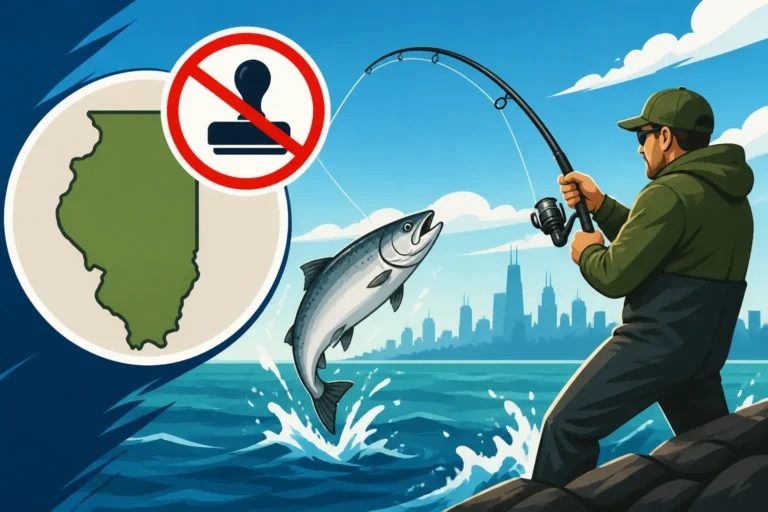
One common point of confusion for anglers, especially those just getting into the exciting world of Great Lakes fishing or visiting from out of state, is figuring out exactly which permits you need. Many people mistakenly think that to chase those majestic salmon on Lake Michigan, you'll need a special "salmon stamp" on top of your regular fishing license. It's a valid question, given how complex fishing regulations can feel sometimes, but I'm here to clear up that particular worry for Illinois anglers.
The Truth About Lake Michigan Salmon Stamps in Illinois
Let's cut right to it and save you some stress and a potential extra purchase: No, you do not need a separate salmon stamp to fish for salmon or trout in the Illinois waters of Lake Michigan. This is a common misconception, and it's completely understandable why folks might think otherwise, especially if they've fished in other states or heard rumors.
The Inland Trout Stamp vs. Lake Michigan
The primary source of confusion for many anglers often stems from the existence of the "Inland Trout Stamp." In Illinois, if you plan to fish for trout in inland waters – think of the smaller lakes and streams that the Illinois Department of Natural Resources (IDNR) regularly stocks with rainbow trout or brown trout, particularly during the spring and fall trout seasons – then, yes, you absolutely need to purchase an Inland Trout Stamp in addition to your standard fishing license.
However, the key distinction here is "inland." Lake Michigan, despite being a massive freshwater body, is treated differently under Illinois fishing regulations. The game fish within Lake Michigan, including its impressive salmon and trout populations (Coho, Chinook, Lake Trout, Brown Trout, and Rainbow Trout/Steelhead), do not require this specific inland stamp. So, while you definitely need to understand your Illinois Inland Trout Stamp Requirements, you can breathe easy knowing it doesn't apply to your Lake Michigan salmon adventures. This often comes as a pleasant surprise to anglers who are used to stacking on various stamps for different species in other states.
What You Do Need for Lake Michigan Salmon
While a salmon stamp isn't on the list, a valid Illinois fishing license is non-negotiable for anyone aged 16 and older. This is your fundamental entry ticket to any public waters in the state, including the expansive Illinois shoreline of Lake Michigan. Depending on your residency and how long you plan to fish, you'll need either an annual resident or non-resident fishing license, or perhaps a shorter-term option if you're just visiting for a quick trip. For example, a non-resident might opt for an Illinois Nonresident 3-Day Fishing License Cost for a long weekend, or a full Illinois Nonresident Annual Fishing License Guide if they plan multiple trips throughout the year.
It's crucial to remember that your fishing license needs to be current. The Illinois fishing license year runs from April 1st through March 31st of the following year. So, if you're heading out in May, make sure your license from last year hasn't expired! You can easily check the dates or even buy a new one online through the IDNR website, or stop by a local sporting goods store like a Bass Pro Shops or even many bait shops. Keeping a digital copy on your phone or a printed copy with you is always a good idea in case a conservation officer checks your credentials.
Why the Confusion? A Look at Other States
The reason so many anglers get hung up on the idea of a "salmon stamp" for Lake Michigan often comes from a perfectly logical place: other states. Many states, particularly those with significant salmon runs or specific conservation programs, do indeed require additional stamps or endorsements. For instance, in some parts of the Pacific Northwest, specific salmon and steelhead endorsements are mandatory. Even within the Great Lakes region, some states might have slightly different rules or revenue generation strategies that include additional stamps for certain high-value fisheries.
For example, our neighbors might have different requirements. If you've ever fished the Michigan side of Lake Michigan, you'd know their system can be different. The Illinois approach for Lake Michigan's salmon and trout is a bit more straightforward, requiring only the base fishing license. This simplicity is actually a boon for anglers, making it easier to comply with regulations and get out on the water faster. It's a testament to the IDNR's management that a separate stamp for Lake Michigan salmon isn't deemed necessary for funding or regulatory purposes beyond the general license fees.
Understanding Illinois Fishing Licenses
Now that we've cleared up the salmon stamp myth for Lake Michigan, let's dive a little deeper into the types of fishing licenses you will encounter in Illinois. Getting the right license is the first step to a worry-free day on the water, whether you're targeting salmon on the big lake or bass in a local pond.
Resident vs. Non-Resident Licenses
The most fundamental distinction in Illinois fishing licenses is between residents and non-residents. This is pretty standard across the country, as states often offer discounted rates to their own citizens who contribute to the state's tax base and conservation efforts through other means.
- Resident Licenses: If you've lived in Illinois for at least 30 consecutive days immediately prior to applying for a license, you're generally considered a resident. Resident licenses are significantly cheaper. For example, an annual resident fishing license is typically around $15. You might also explore options like the Illinois Lifetime Resident Fishing License Price if you're a passionate angler committed to the state for the long haul.
- Non-Resident Licenses: For anyone not meeting the residency criteria, a non-resident license is required. These are naturally more expensive, reflecting the fact that visitors aren't contributing to the state's resources in the same ongoing way. A non-resident annual license is usually closer to $31. However, Illinois does offer flexible short-term options for visitors, which we'll discuss next. It’s worth noting that if you're a non-resident, your Illinois Fishing License Costs for Out-of-State Anglers will always be higher than for a local, but the options are still there to suit your trip length.
Short-Term vs. Annual Options
Illinois understands that not everyone can commit to a full year of fishing. That's why they provide several options to fit various fishing plans, from a quick afternoon trip to a seasonal commitment.
- Annual License: This is the most common and often the most cost-effective option for regular anglers. It covers you from April 1st through March 31st of the next year. If you plan on fishing more than a couple of times, this usually pays for itself.
- 24-Hour License: Perfect for spontaneous trips or if you're just dipping your toes into fishing. Both residents and non-residents can purchase these. They're a great way to legally test the waters without a big commitment. You can check the Illinois Resident 24-Hour Fishing License Cost or the Nonresident 24-Hour Fishing License Cost to see if it fits your budget for a single day out.
- 3-Day Non-Resident License: Specifically designed for visitors, this license offers a cost-effective way to enjoy a long weekend of fishing. If you're coming to Illinois for a few days to try out the Lake Michigan salmon fishery, this is likely your best bet. You might wonder, Is a 3-Day License Worth It for Visiting Anglers? – for many, it absolutely is, providing flexibility without the annual price tag.
Where to Purchase Your License
Gone are the days when you had to drive miles out of your way just to get a license. Illinois has made purchasing a fishing license incredibly convenient.
- Online: The easiest and often quickest way is through the official IDNR website. You can purchase and print your license or save it digitally to your phone within minutes. This means no more scrambling at the bait shop just before dawn!
- Licensed Vendors: Many sporting goods stores, bait and tackle shops, and even some Walmarts and K-Marts are licensed to sell Illinois fishing licenses. Places like Cabela's also serve as convenient locations. These offer a great opportunity to grab any last-minute tackle or bait you might need. Sometimes, you can even find gift cards for these stores on Amazon, making it easy to budget for your fishing supplies.
- IDNR Offices: While less common for everyday purchases, you can also acquire licenses at official IDNR offices around the state.
No matter where you buy it, ensure you keep proof of your license with you while fishing. A printed copy, a screenshot on your phone, or the digital confirmation email all work. The convenience of buying online means you can avoid delays and get right to the water.
Beyond the License: Other Important Lake Michigan Regulations
While the lack of a specific salmon stamp for Lake Michigan is a relief, it doesn't mean you can just throw caution to the wind. Lake Michigan is a vast and complex fishery, and there are other crucial regulations you need to be aware of to ensure a legal and enjoyable experience. These rules protect the fishery and ensure its health for future generations of anglers.
Catch Limits and Size Restrictions for Salmon and Trout
One of the most vital aspects of responsible fishing is adhering to daily catch limits and size restrictions. These rules are put in place by the IDNR to maintain healthy fish populations and prevent overharvesting. For Lake Michigan, these regulations are particularly important given the popularity of the salmon and trout fishery.
For most salmon and trout species on Lake Michigan, anglers can keep a combined daily bag limit. This typically means you can keep a certain number of fish in total, rather than a specific limit for each individual species. For example, the combined daily limit for Chinook Salmon, Coho Salmon, Lake Trout, Brown Trout, and Steelhead (Rainbow Trout) is usually 5 fish. However, there can be specific nuances:
- Lake Trout: Often, there's a sub-limit for Lake Trout, meaning of your 5-fish combined limit, only a certain number (e.g., 2) can be Lake Trout. Always double-check the current regulations for any specific Lake Trout rules.
- Size Limits: Minimum size limits also apply to many of these species to ensure fish have a chance to spawn at least once before being harvested. For instance, Chinook and Coho salmon often have minimum length requirements around 10 inches, while Lake Trout might be 16.5 inches. It's critical to know these numbers before you hit the water. If you're new to the area, a quick search on Amazon for a decent fish measuring board can save you a lot of trouble!
These limits can change, so always consult the most current Illinois Fishing Information Guide or the IDNR website before each season. Ignorance of the law is never an excuse, and game wardens are out there protecting the resource. Penalties for exceeding your daily catch limit can be steep, ranging from fines to confiscation of your catch and gear.
Fishing Methods and Gear Restrictions
Lake Michigan is a diverse fishery, and while many methods are allowed, there are some restrictions, especially concerning commercial netting or certain types of bait. For the recreational angler, these generally aren't overly burdensome, but they're still good to know.
- Number of Poles: Recreational anglers typically have a limit on the number of poles or lines they can use simultaneously. In Illinois, this is usually two poles and lines. This prevents individuals from setting up excessive amounts of gear, which can quickly lead to snagging other lines or overharvesting.
- Downriggers and Planer Boards: For those serious about salmon and trout fishing on Lake Michigan, trolling with downriggers and planer boards is a common and effective technique. The good news is that these are perfectly legal and widely used. If you're new to this, there are tons of resources online and specialized gear available on Amazon to get you started, like the Scotty or Cannon brand downriggers. For more in-depth knowledge, you might want to look into Lake Michigan Trolling Gear for Salmon and Trout.
- Live Bait Restrictions: While live bait is generally allowed, there can be restrictions on the type of live bait, especially when it comes to preventing the spread of invasive species. Using local bait or commercially acquired bait is generally safe, but transporting bait from one body of water to another can be risky.
Boating and Safety Requirements
For many, Lake Michigan salmon fishing means heading out in a boat. This brings a whole new set of regulations related to boating safety and vessel registration.
- Boat Registration: Any motorized boat operating on Illinois waters, including Lake Michigan, must be registered with the state. This includes boats with even small trolling motors. You'll need to know your Illinois Boat Registration Requirements Explained. This process involves a fee and renewing it periodically.
- Life Jackets (PFDs): Absolutely critical. All vessels must carry a sufficient number of U.S. Coast Guard-approved Personal Flotation Devices (PFDs) for everyone on board. Children under a certain age (typically under 13) are usually required to wear a PFD at all times when the vessel is underway. Neglecting Illinois Life Jacket and PFD Rules is not only illegal but incredibly dangerous on a large body of water like Lake Michigan.
- Boater Education: Depending on your age and the horsepower of your boat, you might be required to possess an Illinois Boater Education Card. This ensures you have a basic understanding of boating laws and safety. You can find more details on Illinois Boater Education Card Requirements.
- Other Safety Gear: Beyond PFDs, boats generally need to carry other safety equipment, such as a fire extinguisher, a sound-producing device (like a whistle or horn), navigation lights if operating after sunset, and a throwable flotation device. For a comprehensive list, check out the Illinois Boating Safety Gear Checklist.
Practical Tips for Lake Michigan Salmon Anglers
Fishing Lake Michigan for salmon and trout is an experience unlike any other in Illinois. It requires specific approaches, gear, and knowledge, but the reward of hooking into a powerful Chinook or a feisty Coho is truly unforgettable. Here are some practical tips to help you succeed.
Essential Gear for Lake Michigan
Getting your gear right is paramount for Lake Michigan. This isn't your average farm pond fishing. The fish are bigger, the water is deeper, and the conditions can change rapidly.
- Rods and Reels: You'll want sturdy, medium-heavy to heavy action rods, typically 7-9 feet long, paired with robust baitcasting or spinning reels capable of handling heavy line (20-30 lb test monofilament or braided line) and powerful runs. Many anglers prefer specific trolling rods designed for downriggers. For deeper dives, lead core or copper line setups are common.
- Lures and Baits: Salmon and trout on Lake Michigan are typically caught using a variety of artificial lures. Spoons are incredibly popular, often in bright, flashy colors like silver, blue, green, and orange. Plugs, flasher-fly combinations, and dodger-fly setups are also highly effective. Natural baits like alewives or smelt are sometimes used, but artificials dominate. You can find a huge selection of these specific lures and brands on Amazon, often with detailed reviews from other Great Lakes anglers.
- Electronics: A reliable fish finder and GPS unit are almost essential for success. They help you locate baitfish, identify thermoclines where salmon and trout tend to congregate, and mark successful fishing spots. Modern units often combine both functions and can be critical for safety and navigation on such a large body of water.
Best Times and Spots to Target Salmon
Timing and location are crucial on Lake Michigan. The salmon and trout fishery is highly seasonal, and fish move throughout the lake in response to water temperature and bait availability.
- Spring (April-May): Coho Salmon are often the first to become active, cruising near the surface in warmer waters, often relatively close to shore. This is a great time for "nearshore" trolling. Brown Trout also become very active in the shallower, warmer waters, often close to river mouths or harbors.
- Summer (June-August): As the lake stratifies and deeper, colder water becomes available, Chinook Salmon move out to deeper offshore areas. This is prime time for downrigger fishing in the open lake, targeting thermoclines. Lake Trout will also be found in these deep, cold zones.
- Fall (September-November): Salmon, particularly Chinook, begin their migration back towards river mouths in preparation for spawning. This offers exciting opportunities for both boat and pier anglers as fish move closer to shore. Brown Trout and Steelhead also become very active during this period. For specific timing, you might want to look into Best Time of Year for Lake Michigan Salmon in Illinois.
- General Spots: While fish move, popular starting points include the harbors along the Chicago lakefront (like Montrose Harbor or Jackson Park Harbor), Waukegan, and North Point Marina. These areas offer good boat access and are known staging grounds for salmon and trout. For local knowledge, always check in with bait shops near these marinas; they often have the most up-to-date information on what's biting and where.
Planning Your Lake Michigan Trip
A successful Lake Michigan trip involves more than just casting a line.
- Weather is Key: Lake Michigan is huge and can turn nasty quickly. Always check the marine weather forecast before heading out. High winds can make conditions unsafe, even for larger boats.
- Safety First: Beyond the required PFDs, always tell someone your float plan, including where you're going and when you expect to return. Consider carrying a marine radio and a fully charged cell phone.
- Licenses and Regulations: As discussed, ensure your fishing license is current and you understand all the catch limits and boating regulations. Don't let a misunderstanding ruin your day.
- Boat Maintenance: Before any big lake trip, ensure your boat is in top shape – engine checked, fuel tanks full, all lights working, and safety gear accessible.
- Community: Don't be afraid to talk to other anglers at the boat ramps or in online forums. The Lake Michigan fishing community is often very welcoming and willing to share tips, especially about current conditions or patterns.
| License Type | Residency | Cost (Approx.) | Valid For | What it Covers | Does it include Lake Michigan Salmon? |
|---|---|---|---|---|---|
| Annual Fishing License | Resident | $15 | April 1 – Mar 31 | All fish species in all public waters | Yes |
| Annual Fishing License | Non-Resident | $31 | April 1 – Mar 31 | All fish species in all public waters | Yes |
| 24-Hour Fishing License | Resident | $5 | 24 hours from purchase | All fish species in all public waters | Yes |
| 24-Hour Fishing License | Non-Resident | $10 | 24 hours from purchase | All fish species in all public waters | Yes |
| 3-Day Non-Resident License | Non-Resident | $15 | 3 consecutive days | All fish species in all public waters | Yes |
| Inland Trout Stamp | All | $6.50 | April 1 – Mar 31 | Stocked trout in inland waters ONLY | No (Not for Lake Michigan) |
| Lake Michigan Salmon Stamp | N/A | N/A | N/A | Not a required stamp in Illinois | N/A (Not required) |
Disclaimer
The information provided in this guide is intended for general informational purposes only and may not reflect the most current regulations. Fishing and boating regulations are subject to change by the Illinois Department of Natural Resources (IDNR). Always consult the official IDNR website or the latest Illinois Fishing Information Guide for the most up-to-date and complete rules before engaging in any fishing or boating activities.