Fishing Border Waters With a Wisconsin License
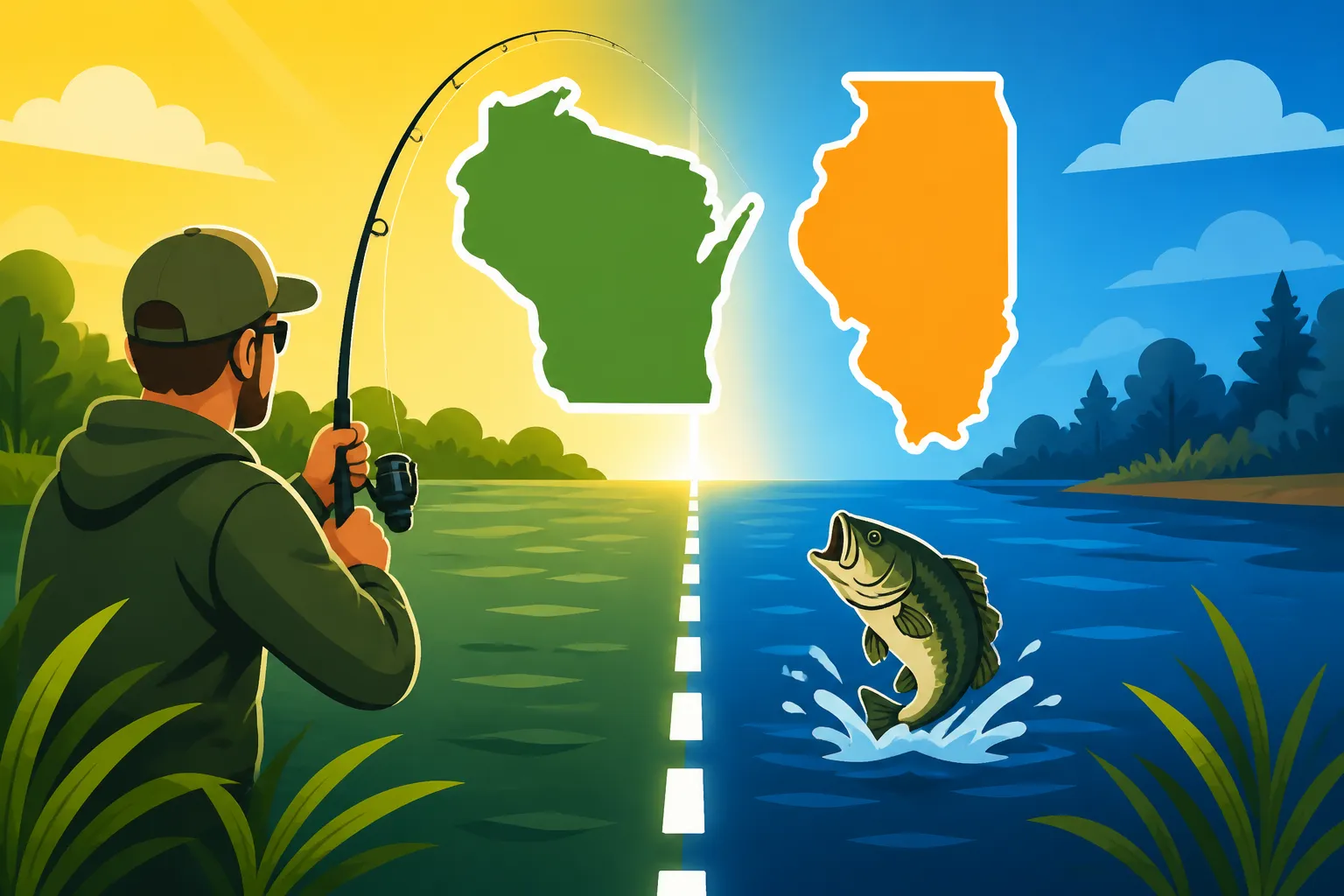
It’s incredibly frustrating when you’re standing at the water's edge, gear in hand, looking at what seems like perfectly fishable water, but then that little voice in your head pipes up: "Wait, am I even allowed to fish here with my Wisconsin license?" Boundary waters can be a real headache, with rules that often feel like they were written to confuse rather than clarify. This guide is here to clear up that confusion, specifically focusing on what your Wisconsin fishing license covers when you're casting lines near or on the Illinois border.
Understanding Border Water Reciprocity Agreements
Fishing across state lines, especially when a river or lake is the state line, can feel like navigating a legal minefield. Many anglers simply assume their license from one state automatically covers them everywhere on shared waters, and while that's often the case, the specifics can be tricky. Reciprocity agreements are put in place precisely to prevent anglers from needing two licenses for what is essentially the same body of water, but these agreements aren't universal, nor are they always identical from state to state. Illinois has different agreements with its neighboring states, and understanding the Illinois fishing regulations overview, especially concerning shared borders, is crucial.
Illinois-Wisconsin Border Waters: Where Do They Meet?
When we talk about Illinois and Wisconsin, the primary border water that comes to mind for many is, of course, the majestic Mississippi River. However, there are other important areas where these two states share aquatic boundaries that anglers frequent. The Mississippi River forms a significant portion of the western border of Illinois and the southwestern border of Wisconsin, creating a vast and popular fishery. Further east, while Lake Michigan is a massive shared resource, the specific reciprocal agreements for fishing on its waters can be different than for rivers. Smaller, lesser-known rivers or even certain backwater sloughs along the main stem might also fall under these agreements, but it's always worth a double-check.
The Specifics of the Agreement
For the mighty Mississippi River, there's a long-standing understanding between Illinois and Wisconsin that aims to make life easier for anglers. Generally speaking, if you possess a valid fishing license from either Illinois or Wisconsin, you are permitted to fish the main stem of the Mississippi River from bank to bank within the shared boundary. This means a Wisconsin license holder can fish the Illinois side of the main river, and vice-versa, without needing a separate license. This agreement typically covers all contiguous backwaters and sloughs of the Mississippi River that are accessible by boat from the main channel, as well as the waters between the railroad tracks and the main channel.
However, it's vital to note that this reciprocity typically does not extend to tributaries or wholly internal waters of the adjacent state. For instance, if you venture off the main Mississippi River and into a creek that is entirely within Illinois, your Wisconsin license won't cover you there. The same applies if you were to fish a lake completely surrounded by Illinois land that feeds into the Mississippi. For specific details on other border states, you might look into topics like Illinois Fishing License Reciprocity With Iowa to understand how these agreements can vary.
Navigating the Rules: What Your Wisconsin License Covers (and Doesn't)
While the reciprocity on the Mississippi River sounds straightforward, the devil, as always, is in the details. It's not just about having a license; it's about understanding the nuances of where that license is truly valid and under what conditions. The last thing you want is a run-in with a conservation officer who isn't impressed with your assumptions.
Fishing from the Wisconsin Side vs. Illinois Side
The key to understanding where your Wisconsin license is valid on the Mississippi is realizing it primarily applies to the shared waters. This means the vast expanse of the main river channel and its immediately connected backwaters. If you're physically standing on the Illinois bank of the Mississippi River, you are considered to be in Illinois. While your Wisconsin license might allow you to fish the waters from that bank if it's the main river channel under the reciprocity agreement, you need to be acutely aware of any specific bank fishing regulations that Illinois might impose.
Conversely, if you launch your boat from a ramp in Wisconsin and fish the main channel, your Wisconsin license covers you. But what if you drift over to an island that is clearly designated as Illinois territory and decide to get out and fish from its shore? That’s where things get murky. The reciprocity often applies to the act of fishing from a boat on shared waters, or fishing the shared water itself, not necessarily stepping foot and fishing from the land of the opposite state. Always carry identification and, if possible, physical proof of your license. Sometimes, it’s just easier to grab an Illinois Nonresident Fishing License Guide if you plan to spend significant time on Illinois soil.
Shared Water vs. State-Specific Water
Let's break down what "shared water" really means. For the Mississippi River, it generally refers to the main channel and any oxbows, sloughs, or backwaters that are directly connected to the main channel without obstruction. If you can boat into it directly from the river, it's usually considered shared.
However, certain embayments, marinas, or land-locked lakes that are technically part of a river system but have become separated (even by a narrow strip of land or a road) might fall under state-specific jurisdiction. These areas would then require the license of the state in which they are located. It's crucial to consult the most current fishing regulations guide from both the Illinois Department of Natural Resources (IDNR) and the Wisconsin Department of Natural Resources (WDNR) before heading out. These guides often include maps or specific descriptions of the reciprocal zones.
Here's a simplified look at the typical reciprocity on the Mississippi River between Illinois and Wisconsin:
| Feature/Activity | Wisconsin License Holder on Main Mississippi River | Illinois License Holder on Main Mississippi River |
|---|---|---|
| Fishing from a boat | Yes (within shared boundary) | Yes (within shared boundary) |
| Fishing from Illinois bank | Yes (if main river under reciprocity) | Yes |
| Fishing from Wisconsin bank | Yes | Yes (if main river under reciprocity) |
| Fishing in Illinois tributary | No (requires Illinois license) | Yes |
| Fishing in Wisconsin tributary | Yes | No (requires Wisconsin license) |
| Fishing in designated Illinois state lake | No (requires Illinois license) | Yes |
Remember, this table summarizes general reciprocity. Always check the official regulations before you cast.
Potential Pitfalls and How to Avoid Them
Even with reciprocity, there are nuances that can quickly turn a peaceful day of fishing into a legal headache. It's not just about if your license is valid, but what other rules apply.
Unexpected Deviations in Lake Michigan Rules
Lake Michigan is a beast of its own. Unlike the Mississippi River, the reciprocity agreements for Lake Michigan between Illinois and Wisconsin are often not as straightforward for general fishing. While both states share a portion of the lake, a Wisconsin license typically does not cover you for fishing the Illinois waters of Lake Michigan, and vice-versa, unless specific, limited exceptions are made (which are rare for general recreational fishing). This means if you launch your boat in Kenosha, Wisconsin, and troll south into Illinois waters, you absolutely need an Illinois fishing license and potentially an Illinois Trout and Salmon Stamp Requirements if you're targeting those species.
This is a critical distinction, as many anglers assume that since Lake Michigan is so vast and shared, a single license would suffice. This is rarely the case across all the Great Lakes states. Always, always verify the specific rules for Lake Michigan, especially if you plan to cross imaginary state lines while fishing. It’s also wise to be familiar with rules regarding Lake Michigan Salmon Stamp Requirements for Anglers if you're chasing those prized fish.
Knowing Local vs. Statewide Regulations
Here's another curveball: even when your Wisconsin license is valid on shared Mississippi River waters, you still have to abide by the more restrictive regulations between the two states, or sometimes, site-specific regulations for the particular species you're targeting. For example, if Illinois has a stricter size limit on a certain species of bass than Wisconsin, and you’re fishing the shared Mississippi River, you must adhere to the Illinois size limit. This often applies to daily catch limits, possession limits, and even fishing methods.
This means you can’t just know your Wisconsin rules; you need to be aware of Illinois's rules too. This is particularly true for popular species like bass, walleye, and catfish. Topics like Illinois Statewide Bass Fishing Limits or Illinois Walleye Size and Catch Limits are vital resources to consult. Before any trip, print out or save the relevant sections of both the Illinois and Wisconsin fishing regulation guides. You can find many useful guidebooks for this purpose on Amazon, helping you stay informed.
The Importance of Carrying Both Licenses (Just in Case)
While the reciprocity on the Mississippi River is generally reliable, having both licenses (if you frequently cross borders or fish areas where reciprocity is unclear) can save you a lot of hassle. Conservation officers have the ultimate discretion, and a simple misunderstanding could lead to a citation or, worse, confiscation of your catch and gear. It’s better to be overly prepared than underprepared. Think of it as an insurance policy for your fishing trip.
Even if you don't plan to buy an Illinois license, always carry your valid Wisconsin license and a form of photo ID. If you're thinking about fishing with children, remember to check Illinois Fishing License Rules for Children as well, because age requirements can differ.
Practical Tips for a Smooth Border Water Fishing Trip
Fishing border waters can be some of the most rewarding experiences, offering diverse fisheries and stunning scenery. But to truly enjoy it, a little preparation goes a long way.
Planning Your Trip: Research is Key
The absolute best advice for fishing border waters is to do your homework before you leave the house. Don't rely on word-of-mouth or outdated information.
- Check Official DNR Websites: Visit both the Illinois Department of Natural Resources (IDNR) and the Wisconsin Department of Natural Resources (WDNR) websites. Look specifically for their current fishing regulation digests and sections on interstate or boundary water agreements. These are updated annually.
- Consult Local Bait Shops: These are goldmines of information. Locals who fish these waters regularly often have the most up-to-date intel on regulations, recent enforcement, and where the fish are biting. Plus, they might have maps detailing specific zones. Many smaller bait shops even sell licenses, though you can also How to Buy an Illinois Fishing License Online if needed.
- Study Maps: Use detailed maps (physical or digital) to identify the precise boundaries, main channels, and any connected vs. isolated backwaters. Online satellite maps can be particularly helpful for this. You can find excellent waterproof maps and navigation tools on Amazon to help you understand the waterways.
Remember, rules can change. What was valid last year might have been updated. Staying current prevents a lot of headaches, including potential Penalties for Fishing Without a License in Illinois.
What to Do If You Encounter a Warden
It’s an inevitable part of fishing: eventually, you’ll encounter a conservation officer or game warden. These dedicated professionals are there to protect natural resources and ensure everyone follows the rules, which benefits all of us. When they approach:
- Be Courteous and Respectful: A positive attitude goes a long way. They are just doing their job.
- Provide Requested Documents: Have your fishing license, photo ID, and any relevant stamps (like a trout or salmon stamp) readily available. If you're on shared waters with a Wisconsin license, calmly explain you understand the reciprocity agreement.
- Cooperate with Inspections: They may want to check your cooler for catch limits, measure fish, or inspect your gear. Allow them to do so without resistance.
- Ask Questions Respectfully: If you're unsure about a rule or why you're being questioned, politely ask for clarification. They are often happy to educate anglers.
- Know Your Rights: While cooperating, also know you have rights. If you believe you’re being unfairly targeted or treated, calmly make a note of the officer's badge number and the situation, and address it through official channels later.
By being prepared, respectful, and knowledgeable, your interactions with wardens will likely be brief and pleasant, allowing you to get back to enjoying your time on the water. Many anglers find good waterproof license holders on Amazon to keep their documents safe and accessible.
Disclaimer
Please remember that fishing regulations can change frequently. While this guide provides comprehensive information, it is always your responsibility to consult the most current official regulations from the Illinois Department of Natural Resources (IDNR) and the Wisconsin Department of Natural Resources (WDNR) before engaging in any fishing activities. This article is for informational purposes only and does not constitute legal advice.