Smallmouth Bass Rules Explained for Illinois Anglers
It's a common story: you're out on a beautiful Illinois waterway, the smallmouth bass are biting, and you're having a blast. Then, a thought crosses your mind – "Am I really following all the rules for these feisty fighters?" Navigating fishing regulations can sometimes feel like trying to untangle a bird's nest of fishing line, especially when it comes to specific species like smallmouth bass. This comprehensive guide is here to clear up all the confusion, detailing the specific rules and guidelines Illinois anglers need to know to legally and responsibly enjoy chasing these incredible fish.
Understanding Illinois Smallmouth Bass Regulations
Fishing for smallmouth bass in Illinois is a truly exhilarating experience. These fish are known for their incredible fight and acrobatic jumps, making them a favorite among many anglers. However, just like any other game fish, they come with a set of rules designed to ensure their populations remain healthy and thriving for generations to come. It’s not enough to just know where the fish are; you’ve got to know the legal ins and outs, too. You can find a complete rundown of all the statewide regulations in the main Illinois Fishing Regulations Overview guide, but let's break down the smallmouth specifics.
Statewide Size and Creel Limits for Smallmouth Bass
When it comes to smallmouth bass, Illinois has some clear statewide guidelines that act as a baseline. The Illinois Department of Natural Resources (IDNR) sets these rules with conservation in mind, balancing angler opportunity with species protection. For most waters across the state, the general rule of thumb for smallmouth bass is a daily creel limit of six fish. This means you can legally keep up to six smallmouth bass in any given day. It’s important to note that this six-fish limit usually applies to black bass in general, meaning largemouth, smallmouth, and spotted bass combined. So, if you catch three smallmouth and three largemouth, you've hit your limit.
What about size? This is where it gets interesting. Many anglers might assume there's a statewide minimum length, but for smallmouth bass, that's not always the case. In a large number of Illinois waters, there is actually no statewide minimum length limit for smallmouth bass. You could technically keep a very small legal-to-harvest smallmouth if it's within your daily creel limit and you're fishing a body of water without specific length restrictions. This lack of a statewide length limit can sometimes surprise anglers, especially those used to the stricter regulations applied to species like walleye. The rationale often ties into local population dynamics; in some areas, harvesting smaller fish might help manage the overall health and growth rates of the population.
However, a critical point to remember is that these are statewide guidelines. Think of them as the default settings. But Illinois is a state with incredibly diverse waterways, and what applies to one river might not apply to a lake just a few miles away. This leads us directly to the next crucial consideration: site-specific rules. Always double-check the local regulations before you cast your line, as catching more than your limit or keeping an undersized fish can lead to a hefty fine and the loss of your fishing privileges.
Site-Specific Rules: When Limits Change
This is perhaps the most important detail to grasp when fishing for smallmouth bass in Illinois: statewide regulations are just the starting point. Many, many, individual lakes, rivers, and even specific stretches of rivers will have their own unique, site-specific regulations that supersede the general statewide rules. This is why it feels like every waterbody has its own distinct set of instructions! It’s also why you’ll often hear discussions about Why Fishing Rules Vary by Lake and River from seasoned anglers. These localized rules are put in place by the IDNR or local park districts based on detailed scientific surveys and management goals for that particular body of water.
For smallmouth bass, these site-specific rules can include things like a minimum length limit (e.g., "14-inch minimum length limit for smallmouth bass"), slot limits (where fish within a certain size range must be released, but those outside it can be kept), or even catch-and-release only periods. Some popular spots might have a 14-inch minimum and a two-fish daily limit, a stark contrast to the statewide "no length limit, six fish" rule. You might even find special seasonal restrictions, such as "catch-and-release only from March 1 to June 15" to protect spawning bass. This is particularly common in some of the state’s premier smallmouth streams, like sections of the Kankakee River.
How do you find these crucial site-specific regulations? Your absolute best resource is the annual Illinois Fishing Information Guide published by the IDNR. This guide lists every public body of water in the state and its specific rules. You can find it online on the IDNR website, often at local bait shops, or even sometimes on retail sites like Amazon if you prefer a physical copy. Additionally, look for signage at public access points, boat ramps, and park offices – these signs are legally binding and will outline any special regulations for that specific location. Always check before you go, and if in doubt, err on the side of caution. It’s always better to release a fish you’re unsure about than to risk a citation.
Identifying Smallmouth Bass to Avoid Violations
Let's be honest, distinguishing between some fish species can be tough, especially when they look similar. Smallmouth bass, largemouth bass, and even spotted bass can be easily confused by an untrained eye, and misidentification can lead to inadvertently breaking fishing regulations. Trust me, explaining to a conservation police officer that you "thought it was a largemouth" when you're over the smallmouth limit won't usually get you off the hook! It’s crucial to know your catch, particularly when size and creel limits vary by species.
Key Differences Between Smallmouth, Largemouth, and Spotted Bass
These three members of the black bass family are often caught in the same waters, but they each have distinct features that set them apart. Knowing these differences is your first line of defense against accidentally violating regulations. Here’s a quick breakdown:
-
Largemouth Bass: The most common bass in Illinois. Its jaw extends beyond the rear of its eye when its mouth is closed. It has a pronounced lateral line (a dark stripe running horizontally along its body) that can sometimes be broken or blotchy. Its dorsal fin (the one on its back) appears deeply notched, almost like two separate fins. Largemouths tend to be greener in color and prefer weedy, slower-moving water.
-
Smallmouth Bass: Known for its bronze or brownish-green coloration and distinct vertical bars or blotches along its sides, rather than a solid lateral line. Its jaw typically does not extend beyond the rear of its eye. The dorsal fin is only slightly notched, making it appear more continuous than the largemouth's. Smallmouths prefer clearer, rockier, cooler water with current, like rivers and deep, rocky lakes.
-
Spotted Bass: Often mistaken for a smallmouth. Its jaw extends to or slightly beyond the rear of the eye, similar to a largemouth but usually not as far. The key identifier is a patch of small teeth on its tongue, which neither largemouth nor smallmouth bass possess. It also has dark spots below its lateral line, which give it a "spotted" appearance. Its dorsal fin is moderately notched. Spotted bass are less common in Illinois but can be found in some southern and western parts of the state.
Here’s a handy table to help you keep them straight:
| Feature | Largemouth Bass | Smallmouth Bass | Spotted Bass |
|---|---|---|---|
| Upper Jaw | Extends beyond eye | Does not extend beyond eye | Extends to or slightly beyond eye |
| Dorsal Fin | Deeply notched, appears almost separated | Slightly notched, appears continuous | Moderately notched |
| Lateral Line | Distinct, often dark, horizontal stripe | Vertical bars or blotches, no distinct stripe | Distinct, often dark, horizontal stripe |
| Tongue | Smooth | Smooth | Rough, with a patch of teeth |
| Coloration | Green with dark lateral line | Bronze to brownish-green with vertical bars | Green with dark lateral line and spots below |
| Preferred Habitat | Weedy, still, murky water | Clear, rocky, cool water with current | Clearer waters, often in deeper, less current |
Getting familiar with these distinctions is vital. If you’re ever unsure, take a moment to look closely. Many anglers even carry a small laminated guide or use an app to help them out. Learning Largemouth Bass vs Smallmouth Bass vs Spotted Bass: How to Tell Them Apart is a valuable skill for any Illinois angler.
What Happens If You Misidentify Your Catch
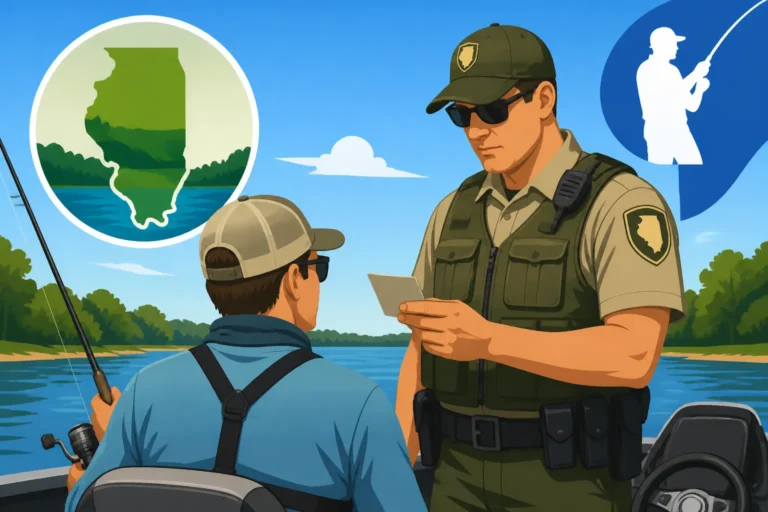
Ignorance of the law is never an excuse, and that applies just as much to fishing regulations as it does to traffic laws. If a conservation police officer (CPO) checks your cooler or livewell and finds that you have exceeded the creel limit for smallmouth bass, or kept an undersized fish according to site-specific rules, you will likely face a citation. These aren't minor infractions. The penalties for fishing without a license in Illinois, or for violating catch limits, can range from significant fines to the confiscation of your gear, and even the suspension of your fishing privileges.
Imagine you're fishing a river with a 14-inch minimum length limit and a two-fish daily creel for smallmouth, but you accidentally keep three 12-inch smallmouth, thinking they were largemouth bass with no size limit. That's three violations right there. Not only could you face fines for each undersized fish, but also for exceeding the daily limit. CPOs are trained professionals who know their fish, and they're dedicated to protecting Illinois's natural resources. It's your responsibility as an angler to be knowledgeable about the rules of the water you're fishing and to correctly identify your catch. When in doubt, it's always best to practice catch-and-release, especially if you're not confident in your identification skills or the specific regulations of that body of water.
Licenses and Stamps Required for Smallmouth Fishing
Before you even think about dropping a line for smallmouth bass, you need to make sure your paperwork is in order. It's the absolute first step for any responsible angler in Illinois. You wouldn't drive without a license plate, and you shouldn't fish without the proper credentials. The requirements are pretty straightforward once you understand them, but missing even one detail can lead to an unexpected encounter with a conservation officer.
General Illinois Fishing License Requirements
The most fundamental requirement for fishing smallmouth bass (or any fish, for that matter) in Illinois is a valid fishing license. Generally, if you are 16 years of age or older and plan to fish in Illinois waters, you need to purchase an Illinois fishing license. There are specific exemptions, of course, such as those fishing during Illinois Free Fishing Days and License-Free Weekends or certain disabled individuals, but for the vast majority of anglers, a license is mandatory.
Residents of Illinois enjoy a lower annual license fee compared to non-residents, and there are also options for shorter durations, like 24-hour licenses, which can be perfect for a quick trip. For our younger anglers, it's important to remember that Illinois Fishing License Rules for Children exempt kids under 16 from needing a license. However, even if your child doesn't need a license, you as the supervising adult still need yours if you're 16 or older and actively participating in the fishing.
You have several convenient options for purchasing your Illinois fishing license. The quickest and often easiest way is to buy it online directly through the IDNR website. Many local bait and tackle shops, sporting goods stores like those found at a local Bass Pro Shops, and even some county clerk offices also sell licenses. You can even find resources on How to Buy an Illinois Fishing License Online if you prefer the digital route. Just make sure you have your Illinois driver's license or state ID handy if you're a resident, or comparable identification if you're a non-resident. It’s always good practice to carry a physical or digital copy of your license with you when fishing, ready to present if requested by a CPO. Don't risk facing Penalties for Fishing Without a License in Illinois – it's just not worth it. And make sure you know Consequences of Letting Your Illinois Fishing License Expire as well.
Special Stamps Rarely Needed for Smallmouth, But Good to Know
While a basic Illinois fishing license covers you for smallmouth bass, it's worth understanding that some other species in Illinois do require additional stamps. This is a common point of confusion for new anglers, so let's clear it up. For smallmouth bass, you generally do not need any special stamps. You won't be asked to purchase a "Smallmouth Bass Stamp" in Illinois. Your standard fishing license is all you need for them.
However, it's good practice to be aware of when these stamps are required, just so you don't accidentally pursue another species without the proper documentation. The most common additional stamps in Illinois are the Inland Trout Stamp and the Lake Michigan Salmon Stamp. If you plan on chasing rainbow or brown trout in one of the state's many stocked trout waters, or if you're heading out to Lake Michigan to target coho or Chinook salmon, then you will need the respective stamp in addition to your fishing license. You can learn more about these specific requirements in guides like Illinois Trout and Salmon Stamp Requirements. These stamps are typically quite affordable and contribute directly to the stocking and management programs for those specific fisheries. For your smallmouth bass adventures, though, just focus on that core fishing license, and you'll be all set!
Ethical Angling and Conservation of Smallmouth Bass
As anglers, we're not just consumers of a resource; we're stewards. The future of smallmouth bass fishing in Illinois rests heavily on how we conduct ourselves on the water. Beyond simply following the rules, ethical angling practices and a strong commitment to conservation are paramount to ensuring these vibrant fish continue to thrive. It’s about more than just catching fish; it’s about appreciating and protecting the entire ecosystem.
Practicing Catch-and-Release Effectively
Smallmouth bass are particularly susceptible to stress, especially during warmer months or after a long fight. If you plan to release your catch, whether due to personal preference, a desire to release larger breeding fish, or because of mandatory catch-and-release regulations, doing so effectively is crucial for the fish's survival. A poorly handled release can be just as fatal as keeping the fish.
Here are some best practices for catch-and-release that every smallmouth angler should adopt:
- Minimize Fight Time: Use appropriate tackle for the size of fish you're targeting. Don't "baby" a fish with too light a line; get it to the boat or shore quickly to reduce exhaustion.
- Handle with Wet Hands: Always wet your hands before touching a fish. Dry hands can remove the fish's protective slime coat, making it vulnerable to disease.
- Support the Fish: If you must remove the fish from the water for a quick photo, support its body horizontally. Never hold a bass by just the jaw in a vertical position, as this can severely damage its spine and internal organs, especially with larger fish.
- Use Barbless Hooks (Optional but Recommended): Barbless hooks make removal much easier and quicker, causing less damage to the fish's mouth. If you don't use barbless hooks, have a good pair of pliers or forceps ready for quick hook removal.
- Minimize Air Exposure: Keep the fish in the water as much as possible. If taking a photo, do it quickly and get the fish back in the water within seconds. Every second out of water is stressful for a fish.
- Revive the Fish: If the fish seems sluggish after being released, gently hold it upright in the water, facing into a mild current, or move it slowly back and forth to force water over its gills. Release it only when it can swim away under its own power.
- Consider Water Temperature: In extremely warm water (above 80 degrees Fahrenheit), catch-and-release can be highly detrimental due to low oxygen levels. Consider refraining from fishing for smallmouth during peak summer heat, or switch to targeting other, more heat-tolerant species.
By consciously practicing these techniques, you significantly increase the chances of your released smallmouth bass surviving and growing to fight another day, contributing to healthy populations in waters that often feature some of the Best Fishing Spots in Illinois.
Reporting Violations and Protecting Our Waters
Conservation isn't just about what we do; it's also about ensuring everyone else is doing their part. Unfortunately, violations of fishing regulations do occur, whether intentionally or out of ignorance. As responsible anglers, we have a role to play in protecting Illinois's natural resources by reporting suspected illegal activities. This isn't "snitching"; it's conservation in action.
The Illinois Department of Natural Resources (IDNR) Conservation Police Officers (CPOs) are on the front lines, but they can't be everywhere at once. If you witness someone violating fishing regulations – such as exceeding catch limits, keeping undersized fish, fishing without a license, or any other illegal activity – it's important to report it.
You can typically report violations by calling the IDNR's Tip Hotline or a local IDNR office. When reporting, try to gather as much information as possible without putting yourself in danger:
- Location: Be as specific as possible (lake name, nearest landmark, road, etc.).
- Time: Note the date and time of the incident.
- Description of Activity: What exactly did you see?
- Description of Individuals: Number of people, clothing, physical characteristics if safely observable.
- Vehicle Information: License plate number, make, model, color of any vehicles involved.
- Boat Information: Boat registration number, type, color.
Your identity can remain anonymous, but the information you provide is invaluable to CPOs in their efforts to protect our fisheries. Smallmouth bass, like all game fish, are a shared resource, and it takes a community effort to ensure they remain abundant for future generations of anglers to enjoy. By adhering to Illinois Fishing Season and Catch Limit Rules and being vigilant, we can all contribute to a thriving Illinois fishing scene.
Disclaimer
The information provided in this guide is for general informational purposes only and does not constitute legal advice. Fishing regulations are subject to change, and it is the sole responsibility of the angler to consult the most current Illinois Department of Natural Resources (IDNR) Fishing Information Guide and all applicable local, state, and federal laws before engaging in any fishing activities. Always verify regulations with official IDNR sources.