Consequences of Letting Your Illinois Fishing License Expire
It’s happened to the best of us, hasn't it? You’re geared up for a fantastic day on the water – rods prepped, bait ready, that perfect spot in mind – only to realize, with a sinking feeling, that your Illinois fishing license might just have expired. That gut punch of uncertainty can instantly sour a planned outing. This guide is here to walk you through exactly what happens when your Illinois fishing license expires, what the real consequences are, and crucially, how you can avoid this frustrating and potentially costly oversight in the future.
The Harsh Reality of an Expired License
Many anglers operate under the assumption that an expired license is a minor issue, a simple lapse that can be quickly corrected. However, the reality is far less forgiving. When your Illinois fishing license expires, you are, in the eyes of the law, fishing without a license, plain and simple. This isn't a technicality; it's a direct violation of state regulations, and the consequences can be significant. It’s critical to understand that the date on your license isn't just a suggestion—it's a hard cutoff for legal angling in Illinois.
Why an Expired License is Just Like No License at All
Imagine you’re driving your car, and your driver’s license expired last week. Would you still be allowed to drive? Absolutely not. The same principle applies directly to your fishing license. An expired license offers no legal protection or authorization to fish in Illinois waters. The Illinois Department of Natural Resources (IDNR) sets clear dates for when licenses are valid, and once that period passes, your privilege to fish is revoked until you renew. It doesn't matter if it expired yesterday or six months ago; the legal standing is identical to someone who never purchased a license in the first place.
This means that all the rules and penalties associated with fishing without a license apply equally to an expired one. It's not a "half-off" penalty because you almost had a valid license. This can be a tough pill to swallow, especially if you’ve been a responsible angler for years and simply forgot a renewal date. But from a legal perspective, intent often matters less than compliance. Your valid fishing license is your permit to enjoy Illinois' incredible fishing opportunities, and without it, you're technically trespassing on those privileges.
The Immediate Risks on the Water
When you're out on the lake or river with an expired license, you’re essentially playing a game of chance with significant stakes. The immediate risk is encountering a Conservation Police Officer (CPO) or game warden. These dedicated professionals patrol Illinois waters diligently, ensuring that everyone is following the rules, from catch limits to proper licensing. Their job is to protect Illinois' natural resources and ensure fair play for all anglers.
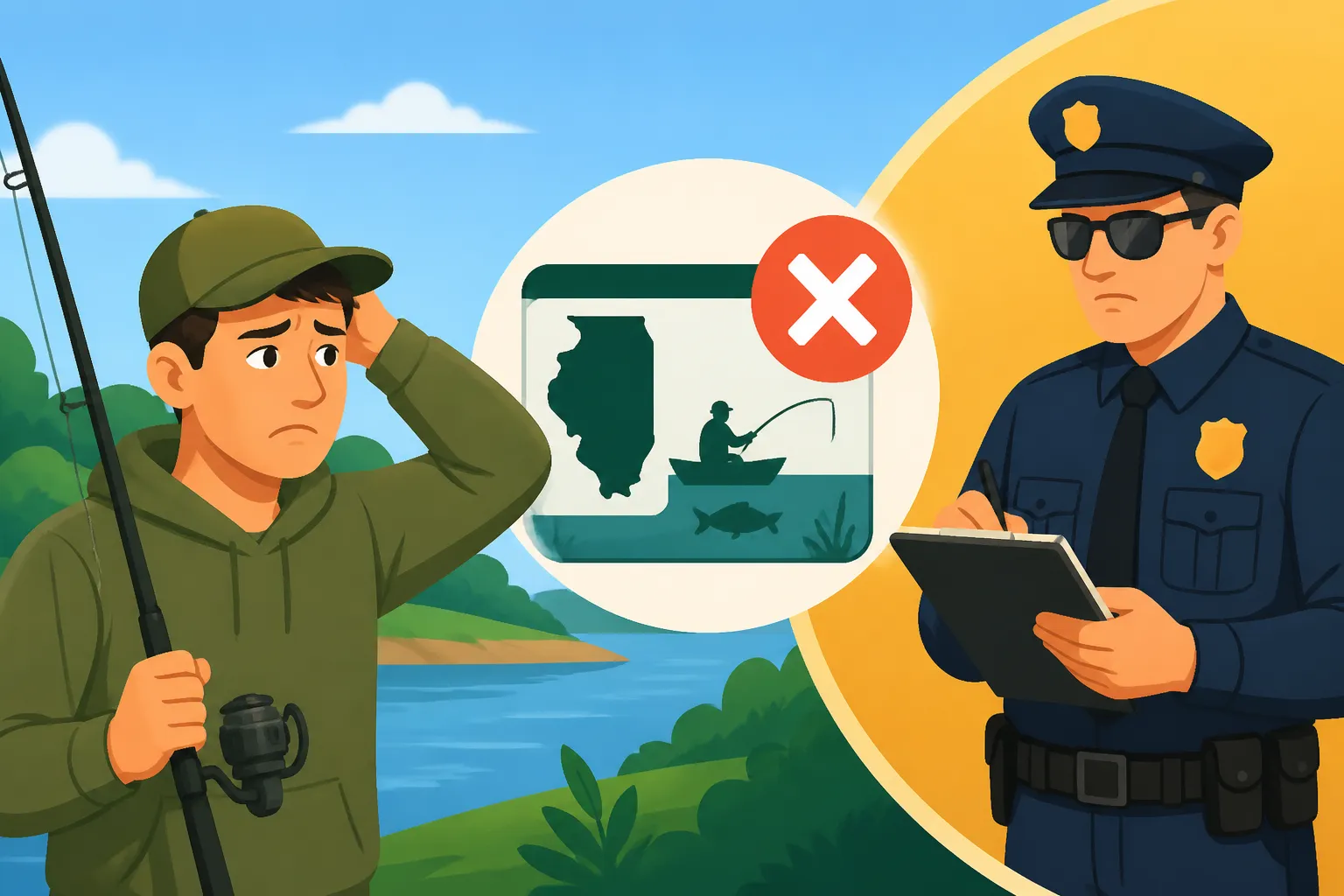
If a CPO approaches you and requests to see your license – which they absolutely have the right to do – and yours is found to be expired, you will face immediate repercussions. This isn't usually a warning situation; it's a direct path to a citation. The peaceful morning you envisioned could quickly turn into a stressful encounter, complete with paperwork, explanations, and the very real possibility of being told to pack up your gear and leave the water. It can also be incredibly embarrassing, not just for you but for anyone fishing with you, especially if you're out with family or friends. Remember, these officers are trained to identify legitimate anglers from those who are deliberately breaking the law, and an expired license falls under the latter category, even if it was an honest mistake.
Understanding the Legal Ramifications
The initial encounter with a CPO is just the beginning. The legal ramifications of fishing with an expired license can extend far beyond a polite conversation or a simple reminder to renew. These consequences are designed to deter illegal activity and ensure compliance with fishing regulations. It’s not just about paying a fine; there can be long-term impacts on your ability to enjoy fishing in Illinois.
Fines and Court Costs You Could Face
Getting caught with an expired fishing license in Illinois will likely result in a ticket, officially known as a Notice to Appear or a Citation. The specific fine amount can vary depending on the judge, the county, and whether you have any prior offenses. However, it's generally categorized as a Class B misdemeanor for a first offense. While the base fine itself might be in the range of $75-$120, you also need to factor in additional court costs, administrative fees, and state-mandated surcharges. These extra charges can quickly double or even triple the initial fine, pushing the total cost potentially into the hundreds of dollars.
Think about it this way: a basic Illinois resident annual fishing license costs around $15. If you're hit with a fine of $200-$300 for an expired license, that's a significant financial blow that could have been entirely avoided. You'd also likely be required to appear in court, which means taking time off work or other commitments, adding to the overall cost and inconvenience. Even if you try to pay the fine without appearing, many jurisdictions still tack on court costs. It's a stark reminder that staying compliant is not just about following the rules, but also about protecting your wallet and your valuable time.
| Violation Type | Initial Offense (Estimate) | Court Costs (Estimate) | Total Potential Cost (Estimate) |
|---|---|---|---|
| Fishing without a valid license | $75 – $120 | $100 – $200 | $175 – $320+ |
| Exceeding daily catch limit | $75 – $150 | $100 – $200 | $175 – $350+ |
| Using illegal fishing methods | $150 – $300 | $150 – $250 | $300 – $550+ |
| Fishing during a closed season | $100 – $200 | $100 – $200 | $200 – $400+ |
Note: These are estimated figures and actual fines and court costs can vary significantly by jurisdiction and judge. They do not include potential restitution for illegally taken fish or loss of privileges.
Potential Loss of Fishing Privileges and Confiscation
Beyond the financial hit, there are other serious consequences that can arise from fishing with an expired license. In more severe cases, or for repeat offenders, your fishing privileges in Illinois could be suspended or even revoked. The IDNR has the authority to deny you the right to purchase a fishing license for a specified period, ranging from one year to several years, depending on the severity and frequency of the offenses. This means you wouldn't be able to legally fish in Illinois, even if you wanted to buy a new license.
Furthermore, a CPO has the discretion to confiscate your fishing gear, including rods, reels, and even your boat, if they deem it necessary, especially if there are other violations involved or if you are uncooperative. While this is more common for egregious violations like poaching or using illegal equipment, an expired license as part of a pattern of non-compliance could lead to such drastic measures. Imagine losing your prized fishing rod or having your boat impounded, all because of an expired piece of paper. It's a sobering thought and a powerful motivator to ensure your license is always up-to-date. This also highlights why it's so important to understand the broader Illinois Fishing Regulations Overview, not just your license status.
How Enforcement Works in Illinois
You might think you can slip under the radar, especially on vast waterways like the Mississippi River or a busy reservoir like Rend Lake. But Conservation Police Officers in Illinois are well-trained, equipped, and incredibly dedicated. They use a variety of methods to ensure compliance, and a seemingly innocent day on the water can quickly turn into an inspection. Understanding their methods can help you appreciate why staying licensed is so crucial.
Game Wardens and License Checks in the Field
Conservation Police Officers have a wide range of authority, and one of their primary duties is to verify fishing licenses. They can approach you on the shore, in your boat, or even at a weigh-in station for a tournament. You don't need to be actively reeling in a fish for them to ask to see your license; simply being in possession of fishing gear on or near the water implies you are engaged in or about to engage in fishing. They are highly visible in many popular spots, but they also use unmarked vehicles and plain clothes to observe activity, especially in areas prone to violations.
They are proficient at spotting irregularities and can often tell by your behavior or setup if something might be amiss. When they do approach, they will typically identify themselves and politely ask to see your license, often along with any fish you may have caught. It’s always best to be courteous and cooperative. Trying to evade them or being uncooperative can escalate the situation and lead to additional charges. Many anglers are surprised by just how thorough these checks can be, even for something as seemingly minor as an expired license. If you're ever curious about their authority, it’s good to know that Can Game Wardens Check Your Fishing License on the Water? is a common question, and the answer is a resounding yes.
Common Scenarios Leading to a Citation
It's not always a high-speed chase or an obvious infraction that leads to a citation. Often, it's a simple, everyday scenario that puts anglers in hot water. One common instance is simply forgetting the renewal date. Illinois fishing licenses typically run from March 1st of one year to March 31st of the following year. This means your license isn't valid for a full calendar year from purchase, which can trip up many people. Many anglers might think, "I bought it in August, so it's good until next August," but that's a common misconception. The Illinois Fishing License Year Starts on March 1, 2026 and runs consistently, regardless of when you purchased it.
Another scenario is moving from out-of-state and not understanding the specific Illinois requirements, or perhaps simply misplacing a physical license and not having proof on hand. While CPOs can sometimes verify licenses electronically, it’s always best to have your physical license or digital proof readily available. Sometimes, you might be fishing with a group, and everyone else is legal, but your license slipped your mind. The CPO won't overlook your individual expired license because your buddies are compliant. It's an individual responsibility, and even if you're just enjoying the Illinois Free Fishing Days and License-Free Weekends, those specific dates are the only times you can fish without a valid license.
Avoiding the Hassle: Staying Compliant
Nobody wants to face fines, court dates, or the potential loss of fishing privileges. The good news is that avoiding an expired license is incredibly easy with a little proactive planning. A few simple steps can ensure your fishing trips remain stress-free and within the bounds of Illinois law.
Simple Steps to Renew Your Illinois Fishing License
The most straightforward way to avoid an expired license is to simply renew it on time. The IDNR makes this process very convenient. You can renew your Illinois fishing license online through the IDNR website, which is often the quickest and easiest method. Just head to their licensing portal, enter your information, and with a few clicks, you can purchase your new license. You'll receive a digital copy immediately, which you can save to your phone or print out. For those who prefer a more traditional approach, licenses are also available at hundreds of vendor locations across the state, including bait shops, sporting goods stores like those found in larger retail chains, and even some government offices.
When you're ready to renew, make sure you have your current license number or a form of identification like your driver's license handy. You can usually find your license number easily through the IDNR portal if you’ve purchased one before. The process for Renewing an Illinois Fishing License Online is designed to be user-friendly, taking just a few minutes of your time. If you're ever in doubt about what type of license you need or what additional stamps might be required (like the Inland Trout Stamp), the IDNR website also provides comprehensive information on Illinois Fishing License Costs and Types.
Setting Reminders and Planning Ahead
Given that Illinois fishing licenses follow a set cycle that doesn't always align with a calendar year from purchase, setting reminders is key. Mark your calendar for late February or early March as a prompt to check your license status. You could even set a recurring annual reminder on your phone or computer. Better yet, consider subscribing to email notifications from the IDNR if they offer them for license renewals. Some states do, and it’s a convenient way to get a nudge.
Another helpful tip is to associate your license renewal with other annual fishing preparations. When you're cleaning out your tackle box after the season, or stocking up on new lures and lines (perhaps ordered from Amazon for convenience), make it a habit to check your license. You can even consider purchasing a durable, waterproof license holder from Amazon to keep your physical license and any necessary stamps safe and easily accessible in your tackle box or boat. If you’re a serious angler, looking into an Illinois Lifetime Fishing License Guide might be a long-term solution that eliminates the annual renewal worry altogether, though it's a larger upfront investment. Don't forget that if you need to quickly figure out How to Get an Illinois Fishing License before a spur-of-the-moment trip, knowing the online option is your best bet.
Common Questions and Clarifications
Anglers often have similar questions about licenses, especially when it comes to renewals and what exactly makes a license "valid." Let's clear up some of those common uncertainties.
Does an Illinois Fishing License Expire on a Set Date?
Yes, absolutely. An Illinois fishing license does expire on a set date each year, specifically March 31st, regardless of when you originally purchased it during the previous license year. So, if you bought your license in August, it's not valid for a full 12 months from that purchase date. Instead, it will still expire on March 31st of the following calendar year. This is a crucial detail that often catches anglers off guard. The Illinois Fishing License Year Starts on March 1, 2026 for the new season and runs through March 31st of the next year.
This consistent expiration date helps standardize the licensing period across the state. It simplifies enforcement and ensures that all anglers are operating on the same annual cycle. Always remember this March 31st deadline. If you plan to fish on April 1st, you need to have a new license for the new season. Understanding How Long a Fishing License Stays Valid Before Renewal is fundamental to avoiding any issues.
What if I Forgot My License at Home but it's Valid?
This is a common predicament. You remember you bought it, you know it's valid, but it's sitting on your kitchen counter. While a CPO might be more understanding in this situation than with an expired license, it's still technically a violation to be unable to produce proof of your license when requested. Many CPOs now have the ability to look up licenses electronically on site, especially if you have a state ID or driver's license. However, this isn't guaranteed, and the system might not always be instantly accessible due to connectivity issues in remote areas.
The best practice is to always carry your physical license or have a digital copy saved on your phone. Many anglers print their digital license and laminate it, keeping it with their fishing gear. Others ensure they have a digital copy easily accessible in their photos or a dedicated app. Don't rely on the officer's ability to look it up; it's your responsibility to carry proof. You can find convenient options for waterproof phone cases on Amazon to ensure your digital proof stays safe and dry.
Is an Expired License Different from Fishing Without a License?
Legally, in Illinois, there is no practical difference between fishing with an expired license and fishing without ever having purchased one. Both are considered violations of the same statute (520 ILCS 5/2.4) and carry the same potential penalties. The law doesn't differentiate between someone who made an honest mistake and someone who deliberately chose not to buy a license. While a CPO might subjectively view an expired license as a less egregious personal oversight, their legal obligation is to enforce the law as written.
This means you’ll be facing the same fines, potential court appearances, and risk of losing privileges as someone who simply decided to ignore the licensing requirements altogether. This emphasizes why it’s so important to treat your license expiration date seriously. The consequences for Penalties for Fishing Without a License in Illinois are quite clear and apply to both scenarios.
Final Thoughts on License Compliance
It's easy to get caught up in the excitement of fishing, but neglecting your license can quickly turn a great day into a frustrating and expensive ordeal. In Illinois, keeping your fishing license current isn't just a recommendation; it's a legal requirement with real consequences if overlooked. From fines and court costs to potential loss of your fishing privileges, the repercussions of an expired license are substantial and entirely avoidable. Take a moment to check your license right now, set those reminders, and enjoy the peace of mind that comes with knowing you’re fully compliant and ready for your next adventure on the water.
Disclaimer
The information provided in this guide is for general informational purposes only and does not constitute legal advice. Fishing regulations and penalties can change, and specific situations may vary. Always consult the official Illinois Department of Natural Resources (IDNR) regulations and, if necessary, seek legal counsel for specific legal questions regarding fishing licenses and violations.