What a Visiting Angler Pays for a Long Weekend of Illinois Fishing
Planning a fishing trip to a new state can be exciting, but the logistics, especially figuring out licenses and regulations, often feel like trying to untangle a bird's nest of fishing line. For those of you visiting Illinois and hoping to cast a line over a long weekend, it's easy to get confused about what permits you actually need and how much it's all going to set you back. This guide is designed to cut through that confusion, giving nonresident anglers a clear breakdown of the costs involved for a memorable Illinois fishing adventure.
Understanding Illinois Nonresident Fishing Licenses
When you're an angler from out of state, Illinois has specific provisions for your fishing adventures, and they differ quite a bit from what residents pay. It’s not just about getting a license; it's about getting the right license for the length and type of fishing you plan to do. The goal is to make sure you're legally covered without overspending for a short visit.
The Different License Options for Visitors
Illinois offers a few different options for nonresidents, each catering to various trip lengths. It's crucial to pick the one that best fits your itinerary to avoid unnecessary costs or, worse, getting caught without the proper permit. Let's break down the main choices available:
- The Nonresident Annual Fishing License: This is your all-access pass for an entire Illinois license year, which typically runs from April 1st through March 31st of the following year. As of the current season, this license costs $31.50. It’s ideal if you foresee yourself making multiple trips to Illinois within that 12-month period, or if your "long weekend" somehow stretches into weeks! While it might seem like a bigger upfront cost, it offers maximum flexibility. You can learn more about the full requirements in our comprehensive Illinois Nonresident Fishing License Guide.
- The Nonresident 3-Day Fishing License: Ah, the sweet spot for many weekend warriors! This license provides fishing privileges for three consecutive calendar days. This is usually the go-to for someone planning a Friday-Sunday or Saturday-Monday trip. Currently priced at $19.50, it offers excellent value for a focused short-term visit. It’s designed specifically for those who know their fishing window will be brief but impactful.
- The Nonresident 24-Hour Fishing License: If your "long weekend" only includes a single, intensive day of fishing, or if you're just dipping your toes into Illinois waters, this is your most economical choice at $5.50. It's valid for 24 hours from the time of purchase, giving you a full day to hit the water. This option is particularly useful if you're passing through or have very limited time but still want to experience some Illinois angling. This is often the cheapest Illinois fishing license option for a two-day trip if your fishing is concentrated into one 24-hour period.
Choosing between these options really depends on your exact plans. Don't just grab the cheapest one without considering if it covers your entire trip! A quick calculation of your actual fishing days will guide you to the best option.
Why Nonresidents Pay More Than Residents
It's a common point of frustration for visiting anglers: why do nonresidents pay more than double an Illinois resident for an annual license, and significantly more for short-term options? The answer, while sometimes unpopular, is fairly straightforward and common across many states. Fishing license fees, regardless of where you buy them, are critical funding sources for state conservation efforts. These funds go towards fish stocking programs, habitat restoration, public access development, scientific research, and enforcement by the Illinois Department of Natural Resources (IDNR).
Residents, through their state taxes, are already contributing to the state's infrastructure and services, including conservation efforts. Nonresidents, on the other hand, are primarily visiting to utilize these resources without the ongoing tax contribution. Therefore, the higher license fees for out-of-state anglers are designed to help offset the costs of managing and maintaining Illinois's diverse fisheries for everyone to enjoy. It’s about ensuring that the waters remain healthy and productive for future generations, irrespective of where you call home. You can read more about this in our article, Why a Nonresident Pays More Than Double an Illinois Resident.
How to Choose the Right License for Your Weekend
Deciding on the perfect license isn't rocket science, but it does require a little foresight. For most "long weekend" trips, the Nonresident 3-Day Fishing License is the sweet spot. Let's say you arrive Friday afternoon and plan to fish Friday evening, all day Saturday, and Sunday morning before heading home. That's three calendar days, even if you're not fishing for 24 hours each day. The 3-day license covers this perfectly.
However, consider these scenarios:
- Extended Stay: What if your "long weekend" turns into a 5-day mini-vacation? In this case, two 3-day licenses would cost $39.00 ($19.50 x 2), while an annual license is $31.50. Suddenly, the annual license looks like the better deal. It's crucial to do the math based on your actual stay duration.
- Targeting Specific Species: If your long weekend focuses solely on crappie fishing at a spot like Rend Lake, the 3-day license is likely enough. But if you’re planning a multi-species attack across different waters over a longer period, an annual license offers peace of mind.
- A "Barely There" Trip: Perhaps you’re only fishing one specific day for a few hours, then hitting some tourist spots. The 24-hour license at $5.50 would be your most cost-effective solution, allowing you to pay for just one day of fishing in Illinois. Just make sure your 24-hour window covers your entire fishing session.
Ultimately, your best bet is to look at your calendar, mark down the exact days you plan to have a line in the water, and then compare the total costs of the various options. Don’t forget to consider travel time and whether you’ll actually be fishing on your arrival or departure day.
Additional Costs: Stamps and Special Waters
Just when you think you’ve got the license figured out, Illinois throws a couple of potential curveballs your way in the form of stamps. These aren't just decorative; they're mandatory endorsements for targeting specific species or fishing in particular waters. Overlooking these can lead to fines, so it’s essential to understand when and where they apply, especially for a visiting angler looking to make the most of their trip.
The Inland Trout Stamp: When It's Required
If your long weekend fishing plans include chasing rainbow trout or brown trout in any of Illinois’s regularly stocked inland lakes or streams, you're going to need an Inland Trout Stamp. This stamp costs $6.50 and is valid for the same license year as your fishing license. The IDNR maintains a robust trout stocking program, especially in spring and fall, to provide excellent fishing opportunities in waters that might not naturally sustain these species year-round.
Key points about the Inland Trout Stamp:
- Specific Waters: You only need this stamp if you're fishing in waters specifically designated and announced by the IDNR as trout stocking locations. These are often smaller lakes, ponds, or certain river stretches. It's not required for all inland waters, just those where trout are actively stocked and managed for recreational fishing.
- Target Species: As the name suggests, it’s for trout. If you’re targeting bass, crappie, catfish, or walleye in inland waters, you don’t need it.
- Availability: You purchase it alongside your regular fishing license. It's an add-on, not a standalone permit. You can also purchase this as an extra stamp fee on top of an Illinois fishing license.
Before you head out, if trout fishing is on your agenda, always double-check the current IDNR fishing guide or website for the specific locations and dates of trout stockings. This ensures you're prepared with the right stamp. Many anglers often overlook this requirement, especially if they’re used to states where trout are more naturally widespread.
The Lake Michigan Salmon Stamp: For the Big Lake Experience
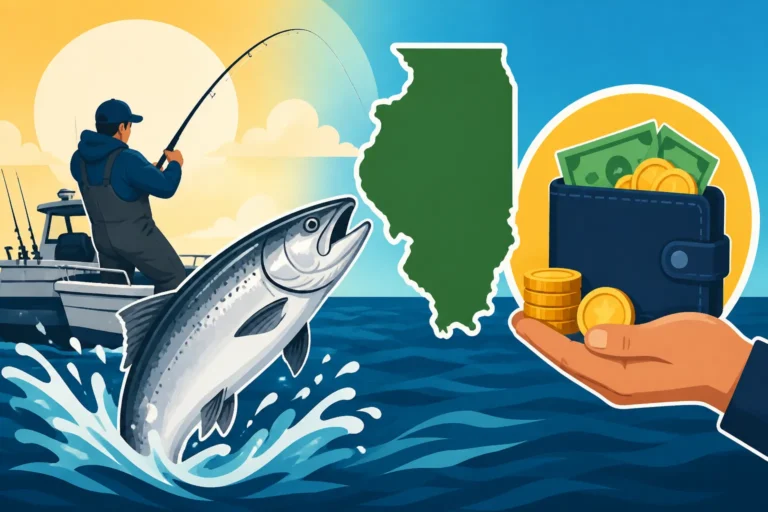
If your long weekend fishing trip involves heading up to the majestic waters of Lake Michigan for coho salmon, Chinook salmon, or even the lake trout that call it home, then you absolutely need the Lake Michigan Salmon Stamp. Like the Inland Trout Stamp, this endorsement costs $6.50 and is valid for the current license year.
Important considerations for the Lake Michigan Salmon Stamp:
- Lake Michigan Only: This stamp is strictly for fishing the Illinois portion of Lake Michigan. If you're staying on inland lakes or rivers, even if you're targeting other species, you won't need this particular stamp.
- Specific Salmonid Species: It covers all species of trout and salmon found in Lake Michigan, including Coho, Chinook, Atlantic Salmon, Rainbow Trout (Steelhead), Brown Trout, and Lake Trout. So, if you're hoping to catch some Lake Michigan salmon or trout, you'll need this stamp.
- Charter Trips: Even if you're going out on a guided charter boat on Lake Michigan, you, as the individual angler, are still required to possess your own valid fishing license and the Lake Michigan Salmon Stamp. The charter captain's license doesn't cover you.
- No Stamp for Perch/Other Species: If your Lake Michigan plans only involve fishing for yellow perch or other non-salmonid species from a pier or boat, you do not need the Salmon Stamp. However, you still need your basic Illinois fishing license. This clarifies what anglers pay extra to fish for salmon on Lake Michigan in Illinois.
Many visiting anglers come specifically for the world-class salmon and trout fishing Lake Michigan offers, especially near the Chicago lakefront or areas like Waukegan. Make sure this stamp is part of your budget if that's your target. Our guide on Lake Michigan Salmon Stamp Requirements for Anglers provides even more detail.
Exemptions and Specific Scenarios
It’s easy to get bogged down by all the rules, but there are a few scenarios where these stamps (or even a basic license!) might not apply, or where specific rules supersede the general ones.
- Free Fishing Days: Illinois typically hosts a Free Fishing Days weekend, usually coinciding with Father's Day in June. During this period, both residents and nonresidents can fish without a license or stamps! This is a fantastic opportunity for families or beginners to try fishing without the initial cost barrier. While this article focuses on paid licenses, it's a great "exemption" to be aware of. You can find more information about Illinois Free Fishing Days and License-Free Weekends.
- Private Waters: If you are fishing in a wholly private lake or pond that is entirely owned by one individual or a single entity and that water does not have any connection to public waterways (i.e., fish cannot naturally migrate in and out), you generally do not need a license. However, this is quite rare for most fishing destinations, and it’s always best to confirm directly with the property owner. Does a fishing license cover private ponds too? Generally yes, if they're connected to public waters.
- Children: In Illinois, kids under the age of 16 typically do not need a fishing license. This also means they don't need any stamps either. This makes it super easy to take kids fishing in Illinois without buying a license, which is wonderful for family outings! Our article on Illinois Fishing License Rules for Kids and Seniors provides a full breakdown.
Always remember that fishing regulations can vary, sometimes even by specific body of water (Why fishing rules vary by lake and river). The best practice is always to consult the current Illinois Fishing Information Guide published by the IDNR before your trip. A quick check can save you a lot of hassle.
Calculating Your Total for a Long Weekend
Now let's bring it all together and figure out the actual financial outlay for a visiting angler planning a typical long weekend fishing trip to Illinois. Understanding the base license cost and any necessary stamps will help you budget effectively and avoid any surprises when you hit the water.
Hypothetical Scenario: A 3-Day Crappie Trip
Imagine you're coming from Indiana to Rend Lake for a long weekend, specifically from Friday to Sunday, to target some of those famous Rend Lake crappie. You're staying for three calendar days, so the Nonresident 3-Day Fishing License is your primary requirement.
Here's the breakdown:
- Nonresident 3-Day Fishing License: $19.50
- Inland Trout Stamp: Not needed, as you're targeting crappie in an inland lake, not stocked trout.
- Lake Michigan Salmon Stamp: Not needed, as you're not fishing Lake Michigan.
Total Estimated Cost for this Trip: $19.50
This is a pretty straightforward scenario, and for many anglers, this will be their total cost. It’s important to note that if you decide to extend your trip by just one more day, say until Monday morning, you would technically need another 24-hour license ($5.50) to cover that additional day, or you could have bought an annual license if your total days extended enough to make it cost-effective.
Hypothetical Scenario: Extended Stay or Specific Target Species
Let's consider a more complex long weekend. You're visiting from Wisconsin and plan a four-day trip (Thursday through Sunday). You want to spend two days trying for smallmouth bass on the Kankakee River and two days fishing for salmon on Lake Michigan near Chicago.
Here’s how the costs could stack up:
- Option 1: Two 3-Day Licenses? No, this isn't possible as they must be consecutive.
- Option 2: One 3-Day License and One 24-Hour License? Potentially, but it would be cumbersome. Let's say you fish Thursday-Saturday (3-day license: $19.50) and then Sunday (24-hour license: $5.50). This totals $25.00 for the base license.
- Option 3: Nonresident Annual Fishing License: $31.50. Given you are fishing for four days, this might actually be simpler and only slightly more expensive than two short-term licenses, with the added benefit of allowing you to return anytime within the license year.
Now, let's factor in the stamps for our Lake Michigan salmon fishing:
- Lake Michigan Salmon Stamp: $6.50 (required for the two days on Lake Michigan).
- Inland Trout Stamp: Not needed, as you're not targeting stocked trout in inland waters.
Let's assume you go with the annual license for simplicity and potential future trips:
- Nonresident Annual Fishing License: $31.50
- Lake Michigan Salmon Stamp: $6.50
Total Estimated Cost for this Trip: $38.00
This shows how quickly the costs can add up if you diversify your fishing locations or targets. Always compare the annual license cost to the combined costs of multiple short-term licenses plus stamps, especially if your "long weekend" creeps past three days. This also illustrates total license and stamp costs for a serious Illinois angler.
Here's a quick table to help visualize the costs:
| License Type | Cost | When to Consider It |
|---|---|---|
| Nonresident 24-Hour License | $5.50 | For a single day of focused fishing. |
| Nonresident 3-Day License | $19.50 | Ideal for a standard Friday-Sunday or Saturday-Monday trip. |
| Nonresident Annual License | $31.50 | Best for trips longer than 3-4 days, or if you plan multiple visits within the license year (April 1 – March 31). |
| Inland Trout Stamp | $6.50 | ADD-ON: Required if targeting trout in IDNR-stocked inland waters. |
| Lake Michigan Salmon Stamp | $6.50 | ADD-ON: Required if targeting salmon or trout in Lake Michigan. |
| Combined 3-Day + Salmon Stamp | $26.00 | For a 3-day trip focused on Lake Michigan salmon/trout. |
| Combined Annual + Salmon Stamp | $38.00 | For annual license holders planning to fish Lake Michigan salmon/trout. |
| Combined 3-Day + Inland Stamp | $26.00 | For a 3-day trip focused on inland stocked trout. |
| Combined Annual + Inland Stamp | $38.00 | For annual license holders planning to fish inland stocked trout. |
| Annual + Both Stamps | $44.50 | For annual license holders who will fish both inland stocked trout and Lake Michigan salmon/trout at different times. |
Where to Purchase Your License and Stamps
Once you've decided on the right license and any necessary stamps, purchasing them is usually a breeze. You have several convenient options:
- Online via the IDNR Website: This is by far the easiest and most recommended method. Simply visit the Illinois Department of Natural Resources (IDNR) website, navigate to their licensing portal, and follow the prompts. You can purchase your fishing license and any required stamps, pay with a credit card, and usually print a temporary license immediately. They will also email you a permanent digital copy, which you can carry on your phone (digital proof of your fishing license on your phone is usually accepted). This means you can even buy it on your way to the lake! Our guide on How to Buy an Illinois Fishing License Online has a step-by-step process.
- Authorized License Vendors: Many sporting goods stores, bait and tackle shops, and even some Walmarts or K-Marts across Illinois are authorized to sell fishing licenses. This can be a great option if you prefer to purchase in person, want to ask questions, or need to pick up some last-minute bait and tackle at the same time. Places like Cabela's or local Ace Hardware stores often serve as vendors. When buying an Illinois fishing license at a local bait shop, you also get local advice.
- IDNR Offices: You can also purchase licenses directly from various IDNR offices located throughout the state. However, for a quick weekend trip, this is often less convenient than online or a local vendor.
While you're budgeting for your trip, don't forget the essentials! Beyond the license, you might need new lures, extra line, or a tackle box refresh. You can find a huge selection of fishing gear on Amazon, often with convenient delivery directly to your home before you even leave for Illinois. For example, grabbing a new spinnerbait or some extra hooks on Amazon can be a smart move, ensuring you're fully equipped for Illinois waters. Also, consider any specific gear you might need for particular species; if you’re heading for Lake Michigan, specialized trolling gear might be on your Amazon wishlist!
Always keep proof of your license on your person while fishing. A printed copy, a screenshot on your phone, or the official IDNR mobile app are all acceptable. Game wardens can check your fishing license on the water, so be prepared.
Disclaimer
Please note that fishing regulations, license fees, and requirements are subject to change by the Illinois Department of Natural Resources (IDNR). While we strive to provide the most current and accurate information, it is always recommended to consult the official IDNR website or their annual Fishing Information Guide before heading out on your trip. This guide is for informational purposes only and should not be considered legal advice.