No Minimum Size for Largemouth Bass in Illinois Waters
It can be incredibly confusing to navigate fishing regulations, especially when you're used to strict size limits for popular sportfish in other states. Many anglers are surprised, even a little taken aback, to learn that in much of Illinois, there's no minimum size limit for largemouth bass. This guide is here to clear up that confusion, explain the nuances of the rules, and help you understand exactly what you can and can't keep when chasing those coveted green fish in Illinois waters.
Understanding the Illinois Largemouth Bass Regulations
The concept of a statewide "no minimum size" limit for a prominent game fish like the largemouth bass often throws anglers for a loop. It's a key part of how the Illinois Department of Natural Resources (IDNR) manages fish populations, but it doesn't mean you can just fill your cooler with every bass you catch. There's more to it than that, and knowing the specifics can prevent a lot of headaches out on the water.
The Statewide "No Minimum Size" Rule for Largemouth Bass
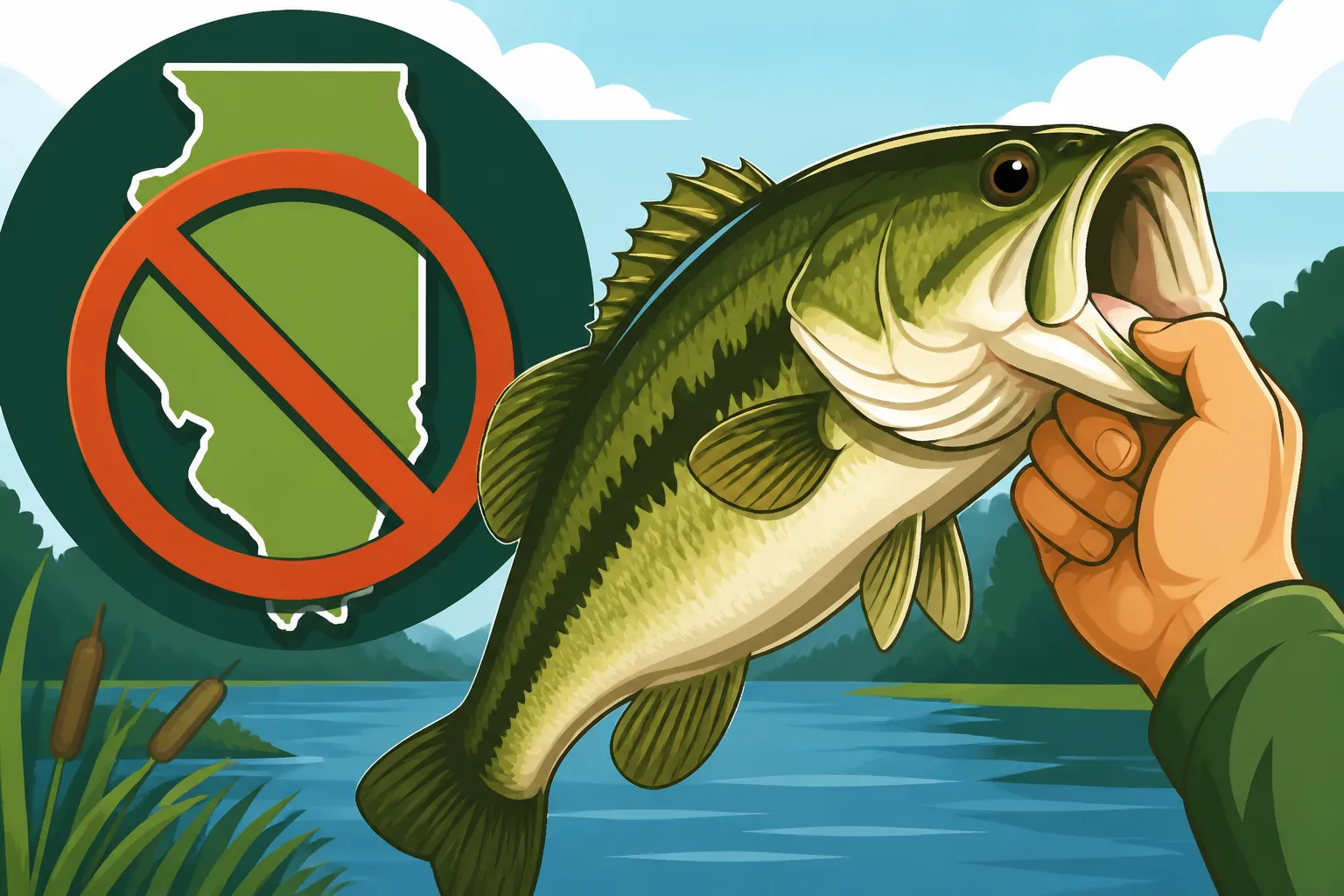
For the vast majority of lakes, ponds, and rivers across Illinois, if you hook a largemouth bass, there isn't a required minimum length it needs to be to legally keep it. This means whether it's a feisty 8-inch yearling or a plump 12-inch eater, as long as you stay within the daily creel limit, it's fair game. This often contrasts sharply with neighboring states or even private ponds where a 14-inch or 15-inch minimum is the norm.
The rationale behind this statewide approach is deeply rooted in fisheries science. In many Illinois waters, especially smaller lakes and ponds, largemouth bass can become overpopulated. When there are too many bass, they compete intensely for food, which can lead to stunted growth. Imagine a crowded dinner table where everyone only gets a tiny bite – no one gets big! By allowing anglers to harvest smaller bass, the IDNR aims to reduce competition, improve the growth rates of the remaining fish, and create a healthier overall population. This management strategy helps prevent a scenario where all the bass are small, creating space for some fish to reach larger sizes.
Statewide Daily Catch Limits for Largemouth Bass
While the minimum size might be absent, the daily catch limit is very much in effect across Illinois. For largemouth bass, the statewide daily creel limit is six fish per angler. This means that regardless of size (unless a site-specific rule states otherwise, which we'll get into), you can only keep a total of six largemouth bass per day. This limit is crucial for sustaining the population, even with the "no minimum size" rule. It ensures that while anglers can harvest smaller fish, they can't decimate a population in a single outing.
It’s about striking a balance. You're allowed to keep some fish for dinner, which helps manage the population, but you're prevented from overharvesting. This applies to all anglers, whether you’re fishing from shore, a kayak, or a fancy bass boat. Always remember that these rules are in place to ensure good fishing for everyone, for years to come. Understanding the Illinois Statewide Bass Daily Catch Limit of Six Fish is just as important as knowing the size rules, or lack thereof.
Site-Specific Exceptions: Where Minimums Do Apply
Here's where it gets a little more complex, and where many anglers can mistakenly assume the statewide rule applies everywhere. Despite the general "no minimum size" rule, many individual lakes, reservoirs, and specific river stretches in Illinois do have their own unique, site-specific regulations for largemouth bass. These can include minimum size limits, slot limits, or even catch-and-release only periods. Ignoring these local rules can lead to fines and citations, so it's absolutely critical to do your homework before you cast your first line.
How to Check Site-Specific Rules
The most important tool in any Illinois angler's tackle box, after a good pair of pliers, is the current Illinois Fishing Information Guide. This guide is published annually by the IDNR and contains all statewide and site-specific regulations. You can pick up a physical copy at bait shops, sporting goods stores like those found on Amazon, or IDNR offices. Critically, it’s also available for free download on the IDNR website.
Before heading to any body of water in Illinois, make it a habit to look up that specific location in the guide. The "Site-Specific Regulations" section will list any deviations from the statewide rules for largemouth bass, as well as other species. This often means scrolling through dozens of entries, but it’s non-negotiable for responsible fishing. Thinking you know the rules based on a past trip or general knowledge is a common mistake that can cost you. Don't risk getting a citation; a quick check can save you a lot of trouble. For more details on finding these specific rules, check out our guide on How to Find the Rules for a Specific Illinois Fishing Spot.
Examples of Common Site-Specific Regulations
To illustrate just how varied these local rules can be, let's look at some hypothetical but common scenarios you might encounter:
- Standard Minimum Length Limits: Some lakes will have a straightforward minimum length, such as a 14-inch or 15-inch limit. For instance, a lake known for its developing trophy potential might impose a 15-inch minimum to protect those fish and allow them to grow. If you catch a bass shorter than 15 inches, it must be immediately released, regardless of its health.
- Slot Limits: These are a bit more nuanced. A slot limit might specify that you can keep bass under, say, 12 inches and over 16 inches, but you cannot keep fish within the 12-16 inch "slot." This is often used to protect a specific size class of fish (e.g., spawning females or fish in their prime growth phase) while still allowing harvest of smaller, more abundant fish and larger, older fish that might have declining growth rates. A classic example might be a 12-15 inch slot limit where only one fish over 15 inches can be kept, along with five fish under 12 inches.
- Catch-and-Release Only: Certain lakes or specific periods might be designated as "catch-and-release only" for bass. This means all bass caught, regardless of size, must be immediately and safely returned to the water. These rules are often implemented during critical spawning periods or in waters where the IDNR is trying to rebuild a struggling fishery. You'll find specific details on these scenarios in posts like Catch-and-Release Bass Seasons on Some Illinois Lakes.
| Regulation Type | Statewide Rule for Largemouth Bass | Common Site-Specific Example (Hypothetical) | Purpose of Regulation |
|---|---|---|---|
| Minimum Size Limit | None (Statewide) | 14-inch or 15-inch minimum | Protects young fish, allows them to reach maturity/size |
| Daily Catch Limit | 6 fish | Still 6 fish, but size rules apply | Prevents overharvesting, sustains population |
| Slot Limit | None (Statewide) | 12-16 inch slot, only one over 16" | Protects prime breeding fish, allows harvest of others |
| Catch-and-Release | None (Statewide) | All bass must be released | Rebuilds populations, protects during critical times |
The Rationale Behind Illinois Bass Regulations
The IDNR doesn't just pull these rules out of a hat. There's a lot of science, data analysis, and long-term planning that goes into setting fishing regulations. While it might seem counterintuitive to have "no minimum size" for a prized species, it's often a highly effective management strategy tailored to the unique characteristics of Illinois' diverse aquatic environments.
Managing Largemouth Bass Populations
One of the primary reasons for the statewide "no minimum size" rule is to actively manage bass populations, particularly in systems prone to overpopulation and stunting. Many smaller lakes, ponds, and even some larger reservoirs in Illinois are highly productive, leading to a boom in largemouth bass numbers. If every bass caught below a certain size had to be released, it could exacerbate the problem of too many fish competing for limited food resources.
When bass populations become too dense, their growth rates slow dramatically. You end up with a lake full of skinny, unhealthy bass that rarely reach a desirable size for anglers. By allowing anglers to keep smaller bass, the IDNR encourages the removal of these more abundant, slower-growing fish. This thins the herd, so to speak, reducing competition and freeing up food for the remaining bass. The result is often a healthier population with faster growth rates and a higher chance for some fish to become true trophies. This approach is a cornerstone of Largemouth Bass Fishing in Illinois: The Complete Guide.
Balancing Harvest and Trophy Management
Fisheries management is all about balance. On one hand, you want to provide opportunities for anglers to harvest fish for food and enjoy the bounty of Illinois waters. On the other hand, you want to ensure the long-term health of the fishery and, in some cases, cultivate opportunities for catching truly large, trophy-sized fish. The various regulations for largemouth bass are designed to achieve these different goals.
- No Minimum Size (Statewide): This strategy prioritizes population control and general harvest opportunity. It's often used in waters where stunting is a concern, or where the goal is to provide consistent action for anglers, even if the fish aren't giants.
- Standard Minimum Length Limits: When a lake has a good forage base and specific conditions that favor rapid growth, a minimum size limit (e.g., 14 or 15 inches) might be imposed. This is done to protect juvenile bass and ensure they reach a sexually mature size, allowing them to contribute to the next generation before being harvested. This strategy aims to produce a higher proportion of larger fish.
- Slot Limits: These are specifically designed to protect a particular size class, typically the most productive breeding stock. By releasing fish within the slot, those valuable breeders are allowed to continue reproducing and growing. Harvest of smaller fish helps reduce competition, while harvest of larger, older fish can sometimes remove slow-growing individuals, further benefiting the middle-sized fish. The goal here is often to produce a balanced population with good numbers of quality-sized fish and potential trophies.
It's a dynamic system, and the regulations for a particular lake can change over time based on IDNR surveys, angler feedback, and environmental conditions. That's why consulting the Illinois Fishing Information Guide Covers April 2026 Through March 2027 is so essential every season.
Practical Tips for Largemouth Bass Anglers in Illinois
Navigating the regulations is just one part of successful bass fishing in Illinois. Knowing what to throw and how to approach the water can make all the difference, whether you're targeting small keepers or hoping for that once-in-a-lifetime lunker.
Gear and Techniques for Largemouth Bass
Largemouth bass are aggressive predators and will strike a wide variety of baits and lures. Your choice often depends on the season, water clarity, and the type of cover you're fishing.
- Spring: As water temperatures rise into the 50s and 60s, bass move into shallower areas for their pre-spawn and spawning activities. This is a fantastic time for Spring Bass Fishing Patterns. Try lipless crankbaits, spinnerbaits, and ChatterBaits to cover water, or slow down with jigs and plastic worms (like a Texas rig) around cover. You might find great deals on these essential lures on Amazon.
- Summer: When the heat sets in, bass often retreat to deeper, cooler water or seek refuge in dense cover during the day. Early morning and late evening topwater action can be incredible. During the day, flip and pitch jigs or soft plastics into heavy cover like lily pads, submerged timber, or thick grass. Deep diving crankbaits and Carolina rigs are also effective for targeting fish in deeper offshore structure.
- Fall: As temperatures drop, bass become highly active, feeding heavily in preparation for winter. This is a prime time for power fishing with crankbaits, spinnerbaits, and jerkbaits around points, creek channels, and secondary breaks. They'll be putting on the feedbag, so don't be shy with your presentations.
- Winter: Bass fishing slows down significantly in winter. Fish will generally be deep and lethargic. Focus on slow presentations with small jigs, blade baits, or suspending jerkbaits in deep water near structure. Think finesse and patience.
For rods and reels, a medium-heavy baitcasting setup is versatile for most bass fishing techniques, handling everything from jigs to crankbaits. If you prefer spinning gear, a medium-action spinning rod with a fast tip works well for lighter lures and finesse presentations. Check out our detailed guide on Best Rods for Illinois Largemouth Bass for more specific recommendations.
Ethical Angling and Conservation
Regardless of the regulations, always practice ethical angling. If you're planning to release fish, handle them with care:
- Minimize Air Time: Keep fish in the water as much as possible. Prolonged exposure to air is stressful and can be fatal.
- Wet Hands: Always wet your hands before handling a fish to avoid removing their protective slime coat.
- Support Their Weight: Support the bass horizontally, especially larger fish. Avoid hanging them vertically by their jaw, which can damage their spine and jaw.
- Use Barbless Hooks: Consider using barbless hooks or pinching down barbs, especially if you're primarily catch-and-release fishing. This makes hook removal quicker and less damaging.
- Know Your Limits: Even if you plan to keep fish, stick to the daily limits and only keep what you'll realistically eat. Waste not, want not.
Remember, the goal is to enjoy the outdoors and the thrill of fishing while ensuring that future generations have the same opportunities. Staying informed about regulations, practicing responsible angling, and supporting conservation efforts are all part of being a good steward of Illinois' natural resources. Make sure your Illinois Fishing License Guide for 2026 is always current and that you understand Penalties for Fishing Without a License in Illinois to avoid any issues.
Disclaimer
Please note that fishing regulations can change. While this guide provides comprehensive information, it is your responsibility to consult the most current Illinois Fishing Information Guide or the Illinois Department of Natural Resources (IDNR) website for the latest rules and regulations before heading out to fish. This article is for informational purposes only and should not be considered legal advice.