Best Rods for Deep Water Walleye Fishing
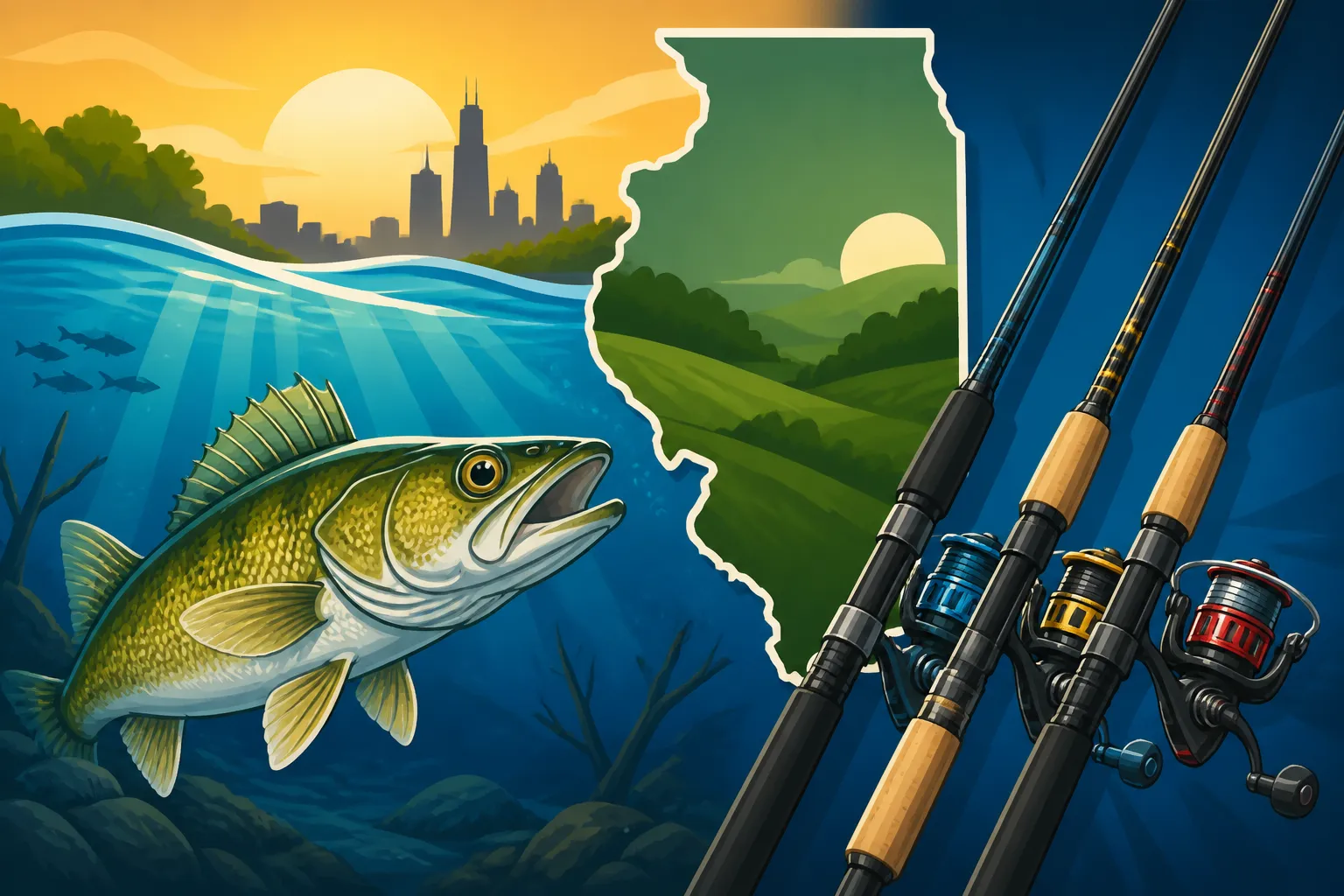
Trying to pull walleye out of deep water in Illinois can feel like you're fishing blindfolded, especially when those subtle bites are nearly impossible to detect. The sheer depth, combined with current and the weight of your presentation, often means you miss out on connecting with those finicky eaters. This guide is all about shedding light on how to choose the absolute best fishing rods designed specifically for deep water walleye, helping you feel every bump, tic, and true strike.
Understanding Deep Water Walleye Fishing Challenges
Walleye in deeper water present a unique set of challenges that can frustrate even the most seasoned angler. It’s not just about getting your bait down there; it’s about maintaining control, feeling the lightest strike, and having the power to bring a strong fish up through all that water. We’re talking about targeting fish in reservoirs, large lakes, and even sections of the Mississippi River where they might be holding in 20, 30, or even 40 feet of water.
The Battle Against Depth and Current
When you're trying to fish deep, you're constantly fighting against environmental factors. Water resistance on your line, current pushing your bait off course, and the sheer weight of your lure or rig all conspire to mute the feedback your rod provides. Imagine trying to feel a tiny nibble on a line that's sagging significantly in the water – it's incredibly difficult. This means your rod needs to be a highly sensitive conduit, transmitting those faint signals from hundreds of feet away. Rivers like the Illinois River or stretches of the Mississippi can add significant current to the equation, making it even harder to keep your presentation vertical and feel what’s happening below.
Identifying a Walleye Bite in Deep Water
Unlike a bass that might hammer a crankbait, a walleye bite, especially in deep water, can be incredibly subtle. It might feel like a slight "tick," a sudden cessation of resistance, or just a little bit of added weight. If your rod is too soft or too heavy, these subtle cues get absorbed and never make it to your hands. Many times, what feels like a snag or a weed is actually a walleye mouthing your bait. Recognizing these almost imperceptible changes is crucial, and it's where the right rod truly shines, acting as an extension of your nervous system. You'll want to review your knowledge on Best Walleye Lures for Cold Water for additional insights into bite detection.
The Importance of Sensitivity and Backbone
For deep water walleye, sensitivity isn't a luxury; it's a necessity. This primarily comes from the rod's blank material and construction. A rod with excellent sensitivity allows you to feel the bottom composition, detect subtle changes in current, and, most importantly, discern those soft walleye bites. But sensitivity alone isn't enough. Once you do hook into a nice walleye, you need sufficient backbone, or power, in the rod to drive the hook home and muscle the fish up through the water column. A rod that is too soft will struggle to set the hook firmly in a walleye's tough mouth, especially with a long line out, leading to lost fish.
Key Rod Characteristics for Deep Water Walleye
When you walk into a store like Bass Pro Shops or browse online retailers like Amazon, the sheer number of rod options can be overwhelming. But for deep water walleye, we can narrow it down significantly by focusing on a few critical characteristics that will make all the difference.
Rod Length: Reach, Leverage, and Control
For deep water applications, rod length plays a significant role in your success. Generally, you'll want a longer rod, typically in the 6'6" to 7'6" range, sometimes even longer for specific trolling setups. A longer rod offers several advantages:
- Increased Casting Distance: While not always critical for deep vertical jigging, it's beneficial when casting from the bank or reaching certain structures from a boat.
- Better Line Control: A longer rod helps you manage line slack more effectively, keeping your lure in the strike zone longer and providing a more direct connection to your bait. This is crucial for detecting those light bites.
- Improved Hooksets: With more rod length, you get greater leverage, which translates to stronger, more effective hooksets, especially when you have a lot of line out. Imagine pulling a rope versus a short stick; the longer stick gives you more power to move the end of the rope.
- Shock Absorption: The longer blank can also act as a shock absorber, cushioning sudden runs from a hooked fish and reducing the chance of a pulled hook.
However, there's a trade-off. Overly long rods can be cumbersome in smaller boats or when fishing tight quarters. Find a length that balances these advantages with your comfort and fishing style.
Rod Power: Matching Strength to the Fight
Rod "power" refers to the amount of force it takes to bend the rod blank. For deep water walleye, you'll generally be looking at rods in the Medium-Light (ML), Medium (M), or Medium-Heavy (MH) power range.
- Medium-Light (ML): Excellent for feeling those super light bites and for presenting smaller jigs or baits. This is often preferred for finesse jigging in deep clear waters where walleye are extra finicky.
- Medium (M): A great all-around choice. It provides enough sensitivity for most deep water techniques while still offering the backbone to handle decent-sized walleye and heavier lures. Many anglers find this to be their go-to power.
- Medium-Heavy (MH): Best for heavier presentations, like substantial bottom-bouncing rigs, large crankbaits for trolling, or when fishing in strong current on rivers like the Mississippi. This power gives you the muscle to bring up bigger fish or to effectively work larger, heavier lures.
Choosing the right power ensures you can handle both the weight of your tackle and the fight of the fish without being under-gunned or overpowering the presentation. For understanding the species, check out Illinois Walleye Fishing: The Complete Guide.
Rod Action: Feeling the Subtle Bites
Rod "action" describes where the rod bends along its length when pressure is applied. For deep water walleye, you'll want to prioritize Fast or Extra-Fast action.
- Extra-Fast Action: The rod bends primarily in the tip section, giving you incredible sensitivity to detect the lightest bites. This quick taper also means that the rod quickly transitions to the stiffer backbone, allowing for lightning-fast, powerful hooksets. This is ideal for vertical jigging and feeling those "ticks" in deep water.
- Fast Action: Similar to extra-fast but with a slightly longer bending section in the tip. It offers excellent sensitivity and hook-setting power, providing a bit more forgiveness than an extra-fast rod while still being highly effective.
Slower actions (Moderate or Slow) are generally not ideal for deep water walleye. They absorb too much of the subtle bite, making detection difficult, and their slower power transfer leads to weaker hooksets when you have a lot of line out. When considering Walleye Jigging Techniques, a fast or extra-fast action rod is almost always preferred.
Handle Design and Comfort
While often overlooked, a comfortable and functional handle can significantly impact your fishing experience, especially during long days of deep water fishing.
- Grip Material: EVA foam and cork are the most common. Cork often provides a slightly more sensitive feel, as vibrations travel well through it. EVA foam is durable and comfortable, particularly in cold weather. Many rods combine both.
- Handle Length: A longer handle (often split grip) can provide better leverage for two-handed casting and fighting larger fish, which is helpful when battling a big walleye from the depths. However, for constant jigging, a shorter, more compact handle might be preferred for comfort and maneuverability.
- Reel Seat: Ensure the reel seat securely holds your chosen reel and is comfortable in your hand. An exposed blank design on the reel seat can also enhance sensitivity by allowing direct contact with the rod blank.
Ultimately, the handle should feel balanced with your reel, allowing for hours of fishing without fatigue. Before buying, always make sure to hold the rod with a reel attached to feel its true balance.
Recommended Rod Types and Setups
With the basic characteristics understood, let's dive into the actual rod types and how they typically get paired for deep water walleye.
Spinning Rods for Jigging and Live Bait
Spinning rods are often the go-to choice for vertical jigging, drop-shotting, and fishing live bait rigs in deep water. Their open-face reel design makes them incredibly easy to use, and they excel at presenting lighter lures and baits.
- Typical Setup: A 6'6" to 7'3" Medium-Light or Medium power, Extra-Fast or Fast action spinning rod. This setup provides the sensitivity to feel delicate bites and the quick tip response for fast hooksets.
- Why They Excel: Spinning reels handle lighter lines and small baits exceptionally well, which is often crucial when walleye are finicky. They are also very forgiving for beginners and prevent backlashes, which can be a real pain when you're trying to get a lure to the bottom quickly. For many anglers, this is the ideal setup for precise presentations right over those deep walleye schools. Don't forget to check Best Reels for Illinois Walleye Fishing for a perfect match.
Baitcasting Rods for Trolling and Heavier Lures
Baitcasting rods and reels are powerhouses, excelling in applications that require heavier line, larger lures, or the controlled release of line that trolling demands.
- Typical Setup: For deep water trolling, you might look at longer rods, often 7'6" to 9'0" or more, in Medium to Medium-Heavy power with Moderate-Fast or Fast action. These longer, more forgiving actions help keep the lure running true while trolling and provide a good cushion when a fish strikes at speed. For vertical presentations with heavier jigs or bottom bouncers, a 6'6" to 7'0" Medium to Medium-Heavy power, Fast or Extra-Fast action baitcaster might be preferred.
- Why They Excel: Baitcasting reels offer superior cranking power and line capacity, making them ideal for handling bigger fish and heavier tackle. They are also more precise for heavy casting and offer excellent control for specific trolling techniques, like using lead core line or deep-diving crankbaits. For serious walleye trolling on large bodies of water like Lake Michigan or the larger Illinois reservoirs, a baitcasting setup is often indispensable. This setup is particularly effective when employing Walleye Trolling Techniques.
Considering Rod Materials: Graphite vs. Composites
The material your rod is made from has a huge impact on its performance characteristics.
- Graphite (Carbon Fiber): This is the gold standard for sensitivity. High-modulus graphite rods are incredibly lightweight and transmit vibrations extremely well, making them perfect for feeling those subtle deep water walleye bites. The downside can be their brittleness; they can be more prone to breaking if mishandled or if subjected to excessive stress. Many top-tier deep water walleye rods are made primarily of graphite.
- Fiberglass: Much more durable and flexible than graphite, fiberglass rods are excellent for trolling applications where a softer, more forgiving bend is desired. However, they lack the sensitivity of graphite, making them less ideal for jigging where bite detection is paramount.
- Composites: These rods combine graphite and fiberglass (or other materials) to achieve a balance of sensitivity, durability, and specific actions. Many popular walleye rods are composites, offering a "best of both worlds" scenario – good sensitivity with added toughness. For a versatile deep water rod, a well-designed composite can be an excellent choice.
For maximum sensitivity in deep water jigging, aim for a higher percentage of graphite. For heavy trolling or if you prioritize durability, a composite or even fiberglass (for specific trolling applications) might be better.
Pairing Your Rod with the Right Reel and Line
A great deep water walleye rod is only as good as the reel and line you pair it with. These components work together to form a cohesive system, and optimizing each part will enhance your overall effectiveness.
Reel Types and Gear Ratios for Deep Water
Matching your reel to your rod and fishing technique is vital.
- Spinning Reels: For deep water spinning setups, choose a reel size that balances well with your rod, typically a 2000-3000 series. Look for smooth drag systems, which are essential when fighting a powerful walleye. A moderate gear ratio (around 5.0:1 to 6.2:1) is generally versatile, offering enough power for retrieving heavy jigs and a decent retrieve speed.
- Baitcasting Reels: For baitcasting, particularly for trolling or working heavy rigs, you'll want a reel with good line capacity and a strong, smooth drag. Lower gear ratios (e.g., 4.7:1 to 5.3:1) provide more cranking power, which is beneficial when pulling deep-diving crankbaits or battling big fish against resistance. Higher gear ratios (6.4:1 to 7.1:1) are great for quickly retrieving line or picking up slack after a bite, especially when jigging.
- Line Counters (for Trolling): For deep water trolling, a line counter reel is a game-changer. It allows you to precisely replicate your trolling depth and pattern, ensuring your lures are consistently in the strike zone. This consistency can dramatically increase your success rate.
A balanced outfit not only feels better in your hands but also performs more efficiently, helping you detect more bites and land more fish.
Line Choices: Braided, Fluorocarbon, or Monofilament?
Your choice of fishing line is perhaps the most critical factor in deep water sensitivity, even more so than the rod material itself.
- Braided Line: This is often the top choice for deep water walleye. Braided line has virtually no stretch, meaning every little vibration from your lure and every subtle bite is transmitted directly to your rod tip. It's also incredibly strong for its diameter, allowing you to use lighter lines for better feel while still having the power to battle big fish. The main drawback is its visibility (though a fluorocarbon leader solves this) and its tendency to "cut" soft rod guides if not handled properly (though modern guides largely prevent this). For many deep water applications, braided line with a fluorocarbon leader is the ultimate combination.
- Fluorocarbon Line: Fluorocarbon has very low stretch, good abrasion resistance, and is nearly invisible underwater. It's an excellent choice for deep water, particularly as a leader material paired with braided main line. Some anglers use it as a main line, but its stiffness can sometimes lead to coiling issues on spinning reels, and its cost can be higher for large spools.
- Monofilament Line: Monofilament has significant stretch, which makes it less ideal for detecting those subtle deep water walleye bites. While it's more affordable and forgiving, the stretch acts like a shock absorber, dulling the transmission of vital information. It might be suitable for certain trolling applications where stretch can be beneficial to absorb strikes, but for vertical jigging or sensitive presentations, it's generally avoided.
To ensure you're feeling every single subtle bite in deep Illinois waters, a high-quality braided line as your main line, tied to a fluorocarbon leader, is often your best bet.
Here's a quick comparison of rod characteristics for deep water walleye fishing:
| Characteristic | Spinning Rod (Jigging/Live Bait) | Baitcasting Rod (Trolling/Heavy Lures) |
|---|---|---|
| Length | 6'6" – 7'3" | 7'0" – 9'0"+ (Trolling) / 6'6" – 7'0" (Heavy Jigging) |
| Power | Medium-Light to Medium | Medium to Medium-Heavy |
| Action | Extra-Fast or Fast | Moderate-Fast to Fast (Trolling) / Fast to Extra-Fast (Heavy Jigging) |
| Material | High-modulus Graphite or Composite | Composite or Graphite |
| Primary Line | Braided with Fluoro Leader | Braided or Mono/Fluoro (Trolling) |
| Benefits | Sensitivity, easy casting, light lure control | Power, line capacity, precise trolling |
Choosing the right rod for deep water walleye fishing isn't just about grabbing the first thing you see. It’s about understanding the unique challenges of depth, current, and subtle bites, and then selecting a rod that is specifically designed to overcome them. By focusing on length, power, action, and pairing it with the right reel and line, you’ll transform your deep water experience from frustrating misses to confident hooksets. So, whether you're exploring the depths of Lake Shelbyville or navigating the currents of the Mississippi River, arm yourself with the right gear and get ready to feel that satisfying thump of a deep water walleye. For a deeper dive into the specific rules for the species, check out Illinois Walleye Size and Catch Limits. You might also find How to Find Walleye in Current helpful. Good luck out there, and may your cooler be heavy!
Disclaimer
This article is for general informational purposes only and does not constitute professional advice. Laws, prices and regulations vary by location and change over time. Consult a qualified professional for guidance on your specific situation.