Boat Trailer Maintenance Tips for Anglers
There’s nothing worse than waking up before dawn, cup of coffee in hand, boat hitched up, only for your trailer to decide it's had enough, stranding you and your fishing plans right in the driveway. A broken tail light, a flat tire, or worse, seized wheel bearings, can turn a promising day on Rend Lake or the Mississippi River into a frustrating mess. This guide is all about helping Illinois anglers avoid those headaches by diving deep into practical boat trailer maintenance, ensuring your rig is always ready to roll when the fish are biting.
Why Trailer Maintenance is Non-Negotiable for Illinois Anglers
Many of us spend so much time focusing on our boats and fishing gear that the humble trailer gets overlooked. It's just a way to get the boat to the water, right? Wrong! Your trailer is an integral part of your fishing setup, and neglecting it can lead to far more problems than just a missed fishing trip.
The Cost of Neglect: More Than Just Money
Think about it: a breakdown on the side of I-57 on your way to Carlyle Lake isn't just an inconvenience; it can be downright dangerous. Beyond the safety aspect, you're looking at tow truck fees, emergency repair costs that are almost always higher than planned maintenance, and the crushing disappointment of losing a precious fishing day. Imagine driving all the way to Lake Shelbyville, only for your lights to fail at the ramp, preventing you from legally launching or retrieving after dark. Illinois Boating Safety Equipment Checklist includes critical items, and working trailer lights are right up there with life jackets when it comes to legal requirements.
Then there's the long-term financial impact. A trailer that isn't maintained properly will rust faster, develop worn-out components, and generally degrade much quicker than one that receives regular attention. This means you'll be replacing parts more often, or even needing a whole new trailer sooner than anticipated, which can be a significant investment. From potential tickets for non-working lights to the hassle of replacing a rusted-out frame, the "cost" extends far beyond just dollars and cents – it impacts your peace of mind and your ability to enjoy the sport you love.
Extending Your Trailer's Lifespan
Your boat trailer is an investment, plain and simple. Whether it’s a simple single-axle trailer for a john boat or a heavy-duty tandem for a big bass boat, taking care of it protects that investment. Illinois weather, with its humid summers and harsh, salty winters (if you boat on roads that have been salted), can be tough on metal. And let’s not forget the constant dunking into lake water, which, while freshwater, still contains minerals and can accelerate wear and tear, especially if you’re fishing at different locations across the state.
Regular maintenance, even simple tasks, goes a long way. This includes everything from ensuring proper tire inflation to keeping your wheel bearings well-greased. A well-maintained trailer isn't just safer and more reliable; it also holds its resale value better if you ever decide to upgrade. When you treat your trailer with the same care you give your fishing rods and reels, it will repay you with years of trouble-free service, getting you to those prime fishing spots without a hitch.
Essential Pre-Trip and Post-Trip Checks You Can Do
The beauty of many trailer maintenance tasks is that they don't require special tools or expertise. A few minutes of diligent checking before and after each trip can prevent major headaches down the road.
Before You Hit the Road: A Quick Walk-Around
Before you even pull out of the driveway, take five minutes to do a quick inspection. This isn't about deep repairs; it's about spotting obvious problems before they become roadside emergencies.
- Tires: Check the tire pressure with a gauge. Under-inflated tires can overheat, blow out, and significantly reduce fuel efficiency. Over-inflated tires can lead to a harsh ride and uneven wear. Look for any visible bulges, cracks, or excessively worn tread. Don't forget your spare tire! Many anglers keep a spare tucked away, only to find it flat when they actually need it.
- Lights: Plug in your trailer wiring and have someone check all the lights – running lights, brake lights, and turn signals – while you operate them from the driver's seat. A simple loose connection or a burnt-out bulb is easy to fix at home, but a real pain on the road.
- Coupler and Safety Chains: Ensure your coupler is securely latched onto your hitch ball and locked. Give it a good tug to make sure it won't pop off. Cross your safety chains under the coupler, ensuring they're properly attached to your tow vehicle. This is your last line of defense if the coupler fails.
- Lug Nuts: Quickly eyeball your lug nuts to make sure none appear loose or missing. If you've had a tire replaced recently, or if you hit a big pothole, it's a good idea to double-check their tightness with a lug wrench.
These simple steps can genuinely save your trip. Imagine leaving for a long weekend on Lake of Egypt and noticing a soft tire right before you hit the highway. Catching it early prevents a much bigger ordeal.
After the Launch (and Retrieval): Wash Down and Inspection
Your trailer takes a beating every time it hits the water. Whether it's the muddy banks of a small pond or the vastness of Lake Michigan, water and contaminants can wreak havoc.
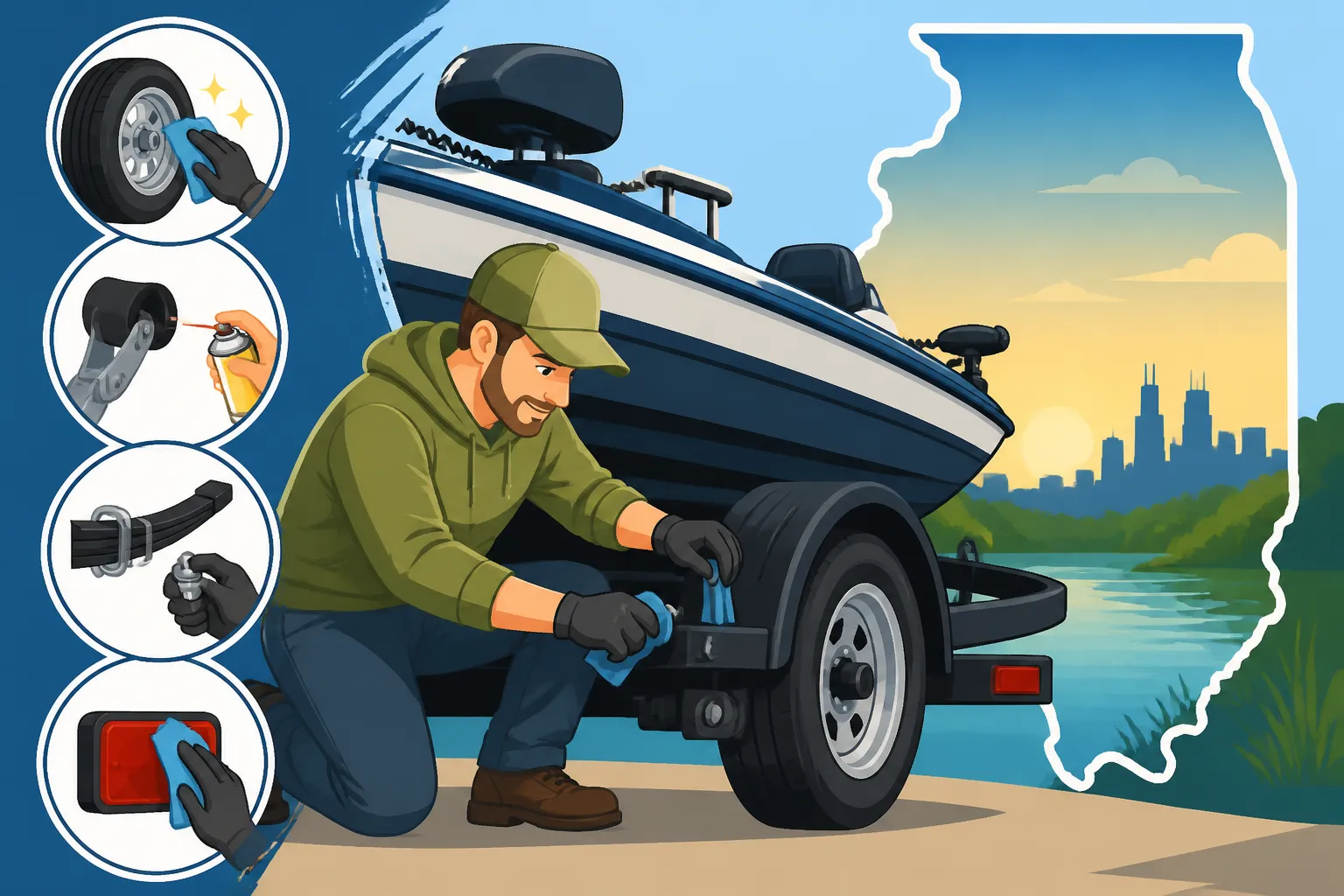
- Rinse, Rinse, Rinse: As soon as you retrieve your boat, or at the very least when you get home, thoroughly rinse your entire trailer with fresh water. Pay special attention to the wheel hubs, leaf springs, and any electrical connections. Even freshwater lakes contain algae, silt, and minerals that can lead to corrosion and grime buildup. If you ever happen to brave the actual "salt belt" of Lake Michigan for salmon or trout fishing, this rinse becomes absolutely critical. Lake Michigan Salmon and Trout Fishing in Illinois can lead to some amazing catches, but that big lake water can be tough on trailers if not rinsed.
- Quick Visual: While rinsing, do another quick visual inspection. Look for any new dents, scratches, or loose components that might have occurred during transit or launching. Check for any signs of grease leaking from the wheel bearings or frayed wires. This is also a good time to check that your boat is securely tied down and nothing has shifted.
This routine, though quick, ensures that accumulated grime and potential corrosive elements are removed before they can cause long-term damage. It’s like giving your trailer a refreshing shower after a hard day’s work.
Key Components for Regular, Deeper Maintenance
Beyond the quick checks, certain parts of your trailer demand more focused, periodic attention. These are the components that, if neglected, are most likely to cause a catastrophic failure.
Trailer Bearings: The Heartbeat of Your Wheels
If there's one component that gives Illinois anglers the most grief with their trailers, it's often the wheel bearings. These little guys are constantly submerged in water, then heated up by friction on the road, creating a perfect storm for water intrusion and eventual failure. When a bearing seizes, your wheel stops turning, often leading to it locking up or even coming completely off the axle – a terrifying and dangerous scenario.
The key to preventing bearing failure is proper lubrication and sealing. Many modern trailers come equipped with "Bearing Buddies" or similar systems that allow you to easily pump grease into the hub, creating positive pressure that helps keep water out. If your trailer has these, make it a habit to give them a few pumps of marine-grade grease before each major trip, or at least seasonally. If you have conventional hubs, you'll need to remove the wheel and hub assembly to inspect and re-pack the bearings with fresh grease. This is usually a yearly task, especially if you dunk your trailer frequently. You can find quality marine grease and even Bearing Buddies at places like Bass Pro Shops, or order specific types online from retailers like Amazon.
Tires: More Than Just Air
While we talked about checking pressure, let's dive a bit deeper into trailer tires. Unlike your car, which gets driven daily, trailer tires often sit for extended periods, then are subjected to heavy loads and high speeds. This unique use case makes them prone to specific issues.
- Dry Rot: Even with good tread, trailer tires can develop dry rot – cracks in the sidewall caused by UV exposure and age. Inspect your tires carefully for these cracks. If you see them, it's time to replace the tires, regardless of tread depth.
- Load Rating: Ensure your tires have the correct load rating for your boat and trailer's combined weight. Overloading can lead to rapid tire wear and blowouts.
- Storage: When storing your trailer for the off-season, try to keep the tires off the ground if possible, or at least rotate them periodically to prevent flat spots. Covering them can also help protect them from UV damage.
Proper tires are crucial for both safety and smooth towing. Remember, a tire blowout on a busy highway is not just an inconvenience; it can lead to a loss of control, especially with a heavy boat in tow.
| Component | Pre-Trip Check | Post-Trip Check | Seasonal Maintenance | Potential Issues if Neglected |
|---|---|---|---|---|
| Tires | Pressure, visible damage, lug nuts | Visual inspection, re-check pressure | Check for dry rot, proper load rating, UV protection | Blowouts, uneven wear, loss of control |
| Wheel Bearings | Listen for noise, feel for heat | Listen for noise, feel for heat | Grease/repack (yearly/semi-annually), inspect seals | Seized wheels, overheating, wheel detachment |
| Lights/Wiring | Test all lights | Visual for damage, connection integrity | Inspect for corrosion, replace faulty bulbs/wires | Tickets, accidents, poor visibility |
| Coupler | Secure latch, safety chains | Visual for damage, wear | Lubricate moving parts, inspect for rust/cracks | Trailer detachment, accidents |
| Frame/Axle | Visual for damage, rust | Rinse, visual for new damage | Inspect for deep rust, stress cracks, paint touch-ups | Structural failure, reduced lifespan |
| Brakes | Test operation (if applicable) | Visual for fluid leaks | Check fluid, pads/shoes, hydraulic lines, surge mechanism | Reduced stopping power, overheating, failure to stop |
Lights and Wiring: Staying Legal and Safe
Trailer lights seem simple, but they are a frequent source of frustration. The constant exposure to water, road grime, and sun can lead to corrosion in electrical connections, frayed wires, and failed bulbs.
- Corrosion is the Enemy: The most common culprit for non-working lights is corrosion at the wire connections or inside the light housings. Use dielectric grease on all electrical connections to help prevent moisture intrusion.
- Grounding Issues: Many trailer light problems are due to poor grounding. Ensure all ground wires are securely fastened to a clean, bare metal surface on the trailer frame.
- Routine Testing: Make it a habit to test your lights before every trip. If a light isn't working, check the bulb first, then the connections, and finally the wiring itself. Sometimes a simple wiggle of the connection can fix it, but a lasting repair might require cleaning the terminals or replacing a section of wire. Investing in waterproof LED lights can significantly reduce these issues, as they are much more durable than incandescent bulbs.
Having functional lights isn't just a courtesy; it's a legal requirement and a critical safety feature. Getting caught with non-working lights on the road can result in a citation, delaying your trip even further.
Brakes: Critical for Safety
If your boat and trailer weigh over a certain amount (this varies by state, but generally around 3,000 lbs combined), you'll likely have trailer brakes. These are incredibly important, especially when towing heavy loads on Illinois highways or boat ramps.
- Surge Brakes: Most boat trailers use surge brakes, which activate when your tow vehicle slows down, causing the trailer to "push" on the hitch.
- Inspection: Regularly inspect the brake fluid reservoir (if applicable) and check for any leaks in the brake lines. For drum or disc brakes, you'll want to periodically check the pads or shoes for wear, similar to your car. If you're not comfortable with this, a reputable mechanic can perform the inspection.
- Testing: Test the brakes gently in a safe, open area before hitting the main roads. You should feel the trailer brakes engaging smoothly. If they feel spongy, grabby, or make unusual noises, get them inspected immediately. Illinois Boater Education Card Requirements cover safety aspects for boaters, and understanding how your trailer brakes work is a huge part of safe towing.
Neglecting your trailer brakes is playing a dangerous game. When you need to stop quickly, those trailer brakes can make all the difference, preventing a jackknife situation or even a collision.
Seasonal Maintenance and Storage Tips for Illinois Winters
Winter can be brutal in Illinois, and proper off-season storage is key to ensuring your trailer is ready for action come spring.
Preparing for Winter Storage
When the last fish of the season has been caught and your boat is prepped for winter, your trailer needs some love too.
- Thorough Cleaning: Give the entire trailer a deep clean. Wash off all mud, grime, and any residual salt (especially if you've been on roads treated with de-icing agents). A pressure washer can be effective, but be careful around bearings and electrical connections.
- Grease and Lubricate: Re-grease your wheel bearings generously. Lubricate all moving parts: the coupler mechanism, tongue jack, and winch. Use a silicone spray or light oil on leaf springs and pivot points.
- Tire Care: Inflate tires to the maximum recommended pressure to help prevent flat spots during storage. If possible, lift the trailer off the ground using jack stands. If you have surge brakes, check if your system uses brake fluid that needs winterizing or if it contains anti-freeze; consult your trailer's manual.
- Cover and Protect: If storing outdoors, cover the trailer with a tarp or a dedicated trailer cover to protect it from UV rays, snow, and ice. This also helps keep critters from nesting in wiring harnesses or other nooks and crannies.
Taking these steps before the first snow flies means less work and fewer surprises when spring rolls around. It’s an investment in your future fishing trips. How the Illinois License Year Works ensures you're ready for the new season, and so should your trailer!
Spring De-Winterization Checks
As the ice melts and the anticipation for open water grows, it's time to bring your trailer back to life.
- Remove Covers and Inspect: Take off any covers and give the trailer a good visual once-over. Look for any damage that might have occurred over winter, like critter nests in the wiring or unexpected rust.
- Check Tires Again: Re-check tire pressure and adjust to the correct operating pressure. Give them a visual inspection for any new cracks or bulges.
- Re-lubricate: Give all moving parts another shot of lubricant, especially the tongue jack and winch.
- Test Everything: Re-connect your trailer to your tow vehicle and test all lights, signals, and brakes. This is your chance to find any issues before you’re trying to launch your boat at a busy ramp like those at Best Boat Ramps on Lake Shelbyville. It's always better to discover a faulty brake light in your driveway than at the ramp, trust me!
By following these seasonal routines, you'll minimize the chances of a breakdown and maximize your time on the water. A little proactive care goes a long way in ensuring your boat trailer is a reliable workhorse, not a source of constant frustration.
Disclaimer
This article is for general informational purposes only and does not constitute professional advice. Laws, prices and regulations vary by location and change over time. Consult a qualified professional for guidance on your specific situation.