Best Kayak Rod Holders for Bass Fishing
Let's be real, juggling a fishing rod, a paddle, a net, and maybe even a sandwich while trying to navigate your kayak and spot bass can feel like you need three hands. It's a common struggle for kayak anglers who want to stay mobile and effective on the water, but still keep their valuable gear safe and accessible. This guide is all about simplifying your life on the water by exploring the best kayak rod holders for bass fishing, helping you stay focused on reeling in that next big Illinois largemouth.
Why Kayak Rod Holders Are a Game-Changer for Bass Anglers
If you've ever found yourself in a sticky situation on the water, maybe a sudden gust of wind caught your kayak while you were trying to re-tie a lure, or a monster bass decided to hit when your rod was awkwardly wedged between your legs, you know the frustration. Kayak rod holders aren't just a luxury; for serious bass anglers, they're a necessity. They fundamentally change how you interact with your gear and the water, transforming a chaotic juggling act into a smooth, efficient fishing experience.
Hands-Free Control and Safety
The most immediate and obvious benefit of a good rod holder is the ability to free up your hands. Imagine paddling through a narrow section of the Kankakee River Smallmouth Bass Spots or maneuvering around submerged timber on one of Illinois's larger impoundments like Best Bass Fishing Lakes in Illinois. With your rods securely in holders, you can focus on propulsion, steering, and maintaining balance without worrying about dropping an expensive rod and reel combo overboard. This isn't just about convenience; it's a significant safety upgrade. If you suddenly need to brace yourself against a wave or reach for something, your rods are out of harm's way. Plus, when that big bass finally hits, you can grab your rod confidently without fumbling, giving you a better chance to set the hook and fight the fish effectively.
Maximizing Rod Management and Efficiency
Bass fishing often requires versatility. One minute you might be pitching a jig into heavy cover, the next you're casting a crankbait along a weed line, and then you see some surface activity and need a topwater lure. Trying to swap rods or keep multiple rods at the ready in a kayak without proper holders is a recipe for tangles, broken tips, or worse, losing a rod. Rod holders allow you to keep several different setups rigged and ready, each perfectly positioned for quick deployment. This means less downtime fumbling with gear and more time with your lure in the strike zone. You can have a heavy-action rod for flipping, a medium-action for spinnerbaits, and a finesse setup for delicate presentations, all within easy reach. This efficiency becomes paramount when you're trying to cover water and adapt to changing conditions, truly maximizing your time on the prime bass waters of Illinois. Having multiple lines ready also lets you quickly switch up your approach when the Best Bait for Largemouth Bass Fishing in Spring suddenly changes.
Types of Kayak Rod Holders for Bass Fishing
When it comes to outfitting your kayak with rod holders, you'll quickly discover there's a world of options out there, each with its own benefits and considerations. Choosing the right type depends largely on your kayak's design, your fishing style, and how permanent you want your setup to be. Understanding the differences will help you make an informed decision for your Illinois bass adventures.
Flush Mount Rod Holders
Flush mount rod holders are often what people think of first when they picture a rod holder on a boat. These are typically installed by drilling a hole into the kayak's deck and inserting the holder, which then sits flush with the surface. They’re super clean-looking and tend to be very secure once installed correctly. The main drawback is their fixed angle; once they're in, that's their position. This makes them fantastic for rod storage when you're paddling long distances across a lake like Rend or Carlyle, or for trolling in a straight line behind you, keeping your rod tips pointed directly astern. They're excellent for keeping a rod out of the way when you're actively casting with another, or for securely holding a net. However, for active bass fishing where you might need to quickly adjust the rod's angle to deal with a fighting fish or to present a lure differently, their fixed nature can be a limitation.
Track Mount Rod Holders
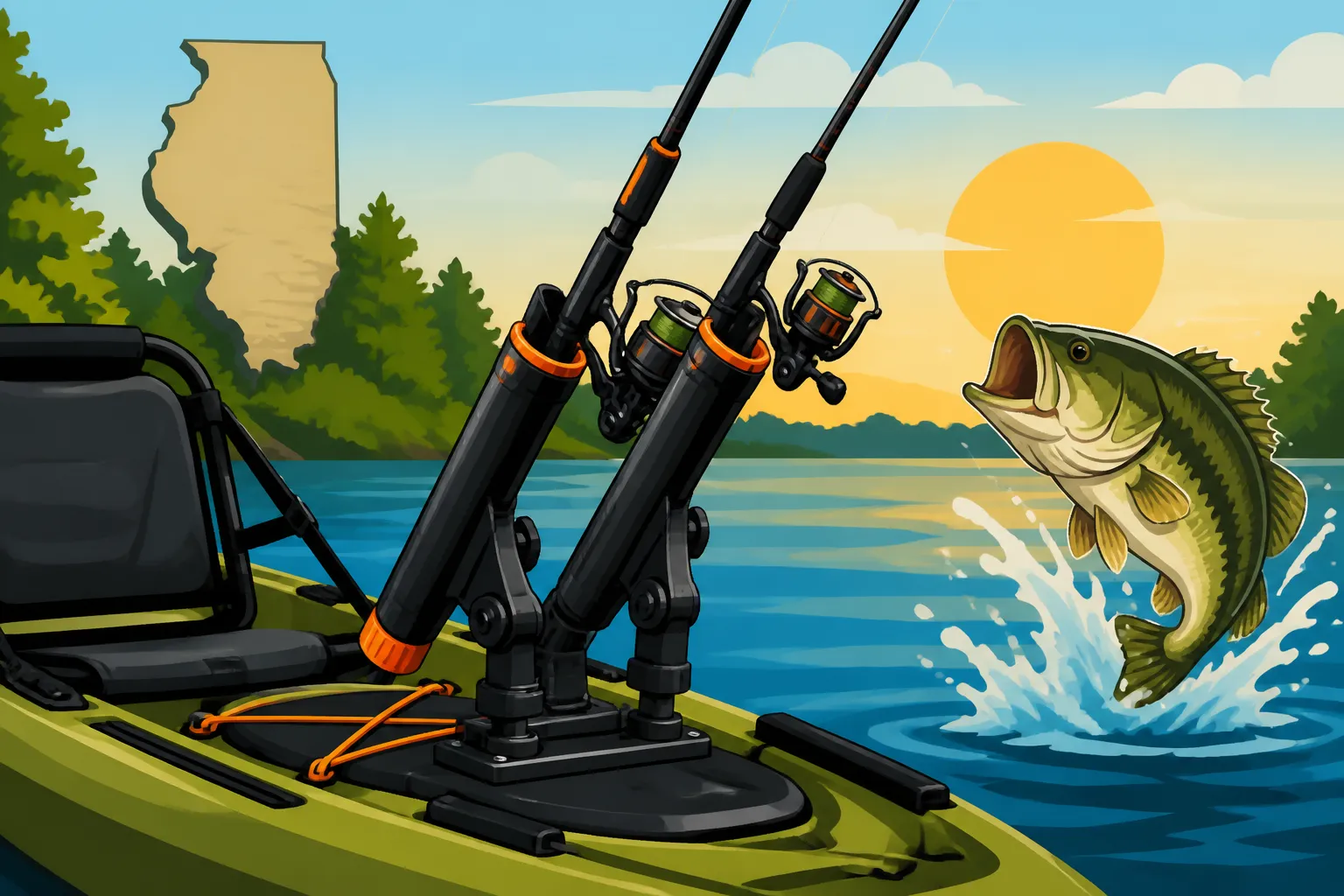
Track mount rod holders offer incredible versatility and are often favored by serious kayak anglers. These holders attach to a rail or track system that is either built into your kayak or can be added to it. The beauty of a track system is that it allows you to slide your rod holders back and forth along the track and adjust their angles (both horizontally and vertically) with incredible ease. This means you can quickly reconfigure your setup to troll, cast, or simply store your rods, all without drilling new holes. For targeting bass in diverse environments like Kinkaid Lake's Clear-Water Spots for Smallmouth Bass where you might be casting at structure one minute and drifting open water the next, this adjustability is invaluable. While they might be a bit bulkier than flush mounts and require the initial investment in a track system if your kayak doesn't have one, the flexibility they provide often outweighs these considerations, allowing for dynamic changes to your fishing presentation.
Clamp-On/Surface Mount Rod Holders
For anglers who prefer not to drill into their kayak, or those who want maximum flexibility in placement, clamp-on or surface mount rod holders are an excellent choice. These holders typically attach to a rail, gunwale, or another secure point on your kayak using a strong clamp or a simple bolt-on base that sits on the surface. They can often be installed and removed quickly, making them great for temporary setups, borrowed kayaks, or if you simply want to experiment with different rod holder positions before committing to a permanent mount. While generally less robust than flush mounts and potentially a bit more prone to wiggling under extreme pressure, modern clamp-on designs are surprisingly sturdy. They’re a fantastic option for beginners who are just getting into kayak fishing or for those who use their kayak for multiple purposes and don't want permanent fixtures. You can often find a great selection of these convenient options at a place like Bass Pro Shops or online through Amazon.
Key Features to Look for in Bass Fishing Rod Holders
Once you understand the basic types, it’s time to dive into the nitty-gritty of what makes a particular rod holder stand out for bass fishing. Not all rod holders are created equal, and paying attention to certain features can significantly impact your on-water experience and success. The ideal rod holder for bass fishing needs to be more than just a place to stick your rod; it needs to be an extension of your fishing strategy.
Adjustability and Versatility
For bass fishing, adjustability is king. You’re not just holding a rod; you’re positioning it to detect subtle bites, troll a specific depth, or keep it out of your casting arc. Look for rod holders that offer multiple points of adjustment:
- Angle Adjustment: Can you tilt the rod tip up or down? This is crucial for managing line slack, keeping your lure at the right depth when trolling, or preventing your rod from hitting overhead obstacles.
- Rotation: Can the holder swivel side-to-side? This is incredibly useful for covering different angles from a stationary kayak, or for quickly swinging a rod into position when a fish strikes.
- Height Adjustment: Can you raise or lower the rod holder? This impacts ergonomics and clearance, ensuring your rod is comfortable to reach and doesn’t interfere with paddling or other gear.
A highly versatile rod holder allows you to adapt to various Spring Bass Fishing Patterns, lure presentations, and changing conditions on the water. It ensures that whether you're actively casting a How to Rig a Jig for Bass Fishing or slow-trolling a crankbait, your rod is always in the optimal position.
Durability and Material
Your kayak rod holder is going to be exposed to the elements constantly: scorching sun, driving rain, freezing temperatures, and the occasional splash of fish slime. It also needs to withstand the sudden, jarring force of a powerful bass strike. Therefore, durability is non-negotiable.
- UV-Resistant Plastics: Many rod holders are made from high-strength, marine-grade plastics. Ensure they are UV-stabilized to prevent degradation and brittleness from prolonged sun exposure. Cheap plastics will crack and fade quickly.
- Marine-Grade Metals: For components like mounting hardware, screws, and certain adjustable arms, look for marine-grade aluminum, stainless steel, or brass. These materials resist corrosion, which is vital in both freshwater and especially if you ever venture onto Lake Michigan for other species.
- Robust Construction: The entire assembly should feel solid with minimal flex. Pay attention to locking mechanisms and pivot points; these are often the first areas to fail if they are made from flimsy materials. A well-built rod holder will serve you reliably for years, protecting your expensive rods and reels.
Ease of Installation and Removal
While some anglers prefer a permanent setup, others value the ability to easily install, remove, or reconfigure their rod holders. This ease of use ties into your kayak fishing style and maintenance habits.
- Tool-Free Adjustments: Can you adjust the angles and positions without needing a wrench or screwdriver? This is a huge time-saver on the water.
- Simple Mounting Systems: If you're using track mounts, how easy is it to slide them on and off the track? For clamp-on models, is the clamping mechanism quick and secure?
- Permanent vs. Temporary: Decide if you're comfortable drilling holes for flush mounts or if you prefer a non-invasive option. Even if you choose a permanent mount, ensure the installation process is straightforward and well-documented.
You'll want to consider where you plan to purchase these items. Stores like Bass Pro Shops usually have a helpful staff who can explain the installation process for various models, or you can find extensive reviews and tutorials online through retailers like Amazon before you commit. The easier your rod holders are to manage off the water, the more time you'll spend enjoying them on the water.
Here’s a quick comparison of the most common types:
| Rod Holder Type | Pros | Cons | Best Use for Bass Fishing |
|---|---|---|---|
| Flush Mount | Very secure, low profile, clean look | Fixed angle, requires drilling, permanent | Rod storage, subtle trolling for bass |
| Track Mount | Highly adjustable, versatile, no drilling (with track) | Can be bulkier, requires track system | Active casting, multiple rod setups, adapting to conditions |
| Clamp-On/Surface Mount | Easy installation, removable, portable | Less secure than fixed mounts, can be clunky | Temporary use, rail mounting, experimenting with placement |
Setting Up Your Kayak Rod Holders for Optimal Bass Fishing
Getting the right rod holders is only half the battle; knowing how to set them up for your specific bass fishing needs is where you truly unlock their potential. Strategic placement can make all the difference in comfort, efficiency, and ultimately, your catch rate. Think about how you typically fish, the kind of waters you frequent, and what species you're targeting beyond just bass—though for our purposes here, bass is king!
Strategic Placement for Different Techniques
The best position for your rod holder isn't static; it changes based on what you're trying to achieve.
- For Trolling: If you're pulling baits or lures behind your kayak for cruising bass, you'll want your rod holders positioned towards the stern (rear) of your kayak, angled to keep your lines clear of your paddle strokes. This keeps the rod tips low to the water to minimize slack and maximize lure action. Many anglers like to have two holders here, one on each side, to cover a wider swath of water or pull different baits. This is especially useful on larger, open waters where bass might be suspended.
- For Casting & Active Fishing: When you're actively casting at structure, shorelines, or submerged cover, you'll want rod holders that keep your backup rods easily accessible but out of your way. Often, these are positioned slightly forward and to the sides of your seat, angled slightly outwards. This allows for quick grabs when you want to switch lures or pick up a different rod for a specific presentation. You want them close enough to reach without straining, but far enough away that they don't impede your casting motion or paddle strokes.
- For Rod Storage & Landing Fish: Even if you're only actively fishing with one rod, you need a safe place for others. Flush mounts are often perfect for this, keeping spare rods secure and out of the cockpit. Additionally, having a dedicated holder for your net or a rod that's ready for a quick bait switch (like if you're going after the Illinois Statewide Bass Daily Catch Limit of Six Fish) can make landing a fish much smoother. Consider the overall balance of your kayak too; too many rods on one side can impact stability, especially in choppier waters.
Maintenance and Care
Just like any other piece of fishing gear, your kayak rod holders will last longer and perform better with a little TLC. Neglecting them can lead to corrosion, stiffness, and ultimately, failure when you least expect it.
- Rinse After Every Trip: Even if you're only fishing freshwater, a quick rinse with fresh water after each outing will remove any mud, algae, or grit that can accumulate. This is crucial for preventing corrosion on metal components and keeping moving parts smooth.
- Check for Wear and Tear: Regularly inspect all parts of your rod holders. Look for cracks in plastic components, rust on screws or bolts, and any signs of looseness in the mounts. Tighten any fasteners that feel wobbly. Replace any worn-out parts before they become a problem.
- Lubricate Moving Parts: If your rod holders have adjustable joints or pivots, a light application of a marine-grade lubricant (like silicone spray) can keep them operating smoothly and prevent seizing, especially after prolonged exposure to the elements.
- Secure Your Rods: Always use the built-in safety straps or bungee cords that come with most rod holders. This simple step is critical for preventing your rod from bouncing out on choppy water or being pulled out by a powerful fish strike. Losing a rod and reel in the depths of an Illinois lake is a heartbreaking experience that's easily preventable. Proper care of your rod holders is a small investment of time that protects a much larger investment in your fishing gear, ensuring your Kayak Fishing Gear Checklist for Illinois Anglers is always top-notch.
Disclaimer
This article is for general informational purposes only and does not constitute professional advice. Laws, prices and regulations vary by location and change over time. Consult a qualified professional for guidance on your specific situation.