Cold Water Trolling Gear for Illinois’s Lake Michigan Shore
There's nothing quite like the crisp air and the thrill of the chase on Lake Michigan, but when those water temperatures drop, fishing changes dramatically. Anglers often face the frustrating challenge of adapting their entire setup to entice cold-blooded salmon and trout that become sluggish and hold to specific thermal bands. This guide is all about equipping you with the right cold water trolling gear for Illinois's Lake Michigan shore, helping you understand why certain tackle becomes essential, and how to stay comfortable and effective when the mercury plummets.
Understanding the Unique Demands of Cold Water Trolling
Fishing in the chilly waters of Lake Michigan is a different beast entirely compared to fair-weather angling. The cold isn't just a matter of personal comfort; it fundamentally alters fish behavior, bait presentation, and even the performance of your gear. If you head out with your summer setup, you're likely going to be left wondering why the fish aren't biting and why your equipment feels sluggish.
Lake Michigan's Unique Challenges in Cold Conditions
When we talk about cold water trolling on Lake Michigan, we're usually focusing on the periods outside of peak summer, especially early spring, late fall, and sometimes even into mild winter days. During these times, the lake itself undergoes significant changes. The surface water might be frigid, but thermoclines (layers of water with different temperatures) still exist, just often deeper or less defined than in summer. These thermal variations dictate where salmon and trout will hold. How Water Temperature Affects Fish Activity is a major factor. The sheer size of Lake Michigan means that weather can turn on a dime, and cold fronts can make conditions brutal very quickly. You're not just fighting the fish; you're often battling wind, waves, and spray that can freeze on your boat and gear. The vastness also means that locating scattered schools of cold-stressed fish requires more precision.
Another challenge is the boat itself. Batteries perform less efficiently in the cold, electronics can fog up, and lines can become stiff and prone to memory. Handling cold, wet lines with numb fingers is no fun, and it can lead to dropped fish or tangles. The reduced boat traffic in colder months can be a blessing for solitude, but it also means less immediate help if you run into mechanical trouble. That’s why having reliable, cold-hardy gear isn't just about catching fish; it's about a safer, more productive outing.
Cold Water Fish Behavior and Why Gear Adaptation Matters
Salmon and trout are cold-blooded, which means their metabolism slows down considerably as water temperatures drop. They become less active, their feeding windows are shorter, and they tend to concentrate in areas where the water temperature is most comfortable for them and where baitfish are present. This often means deeper water, or very specific thermal pockets closer to shore or structures. They might not chase a fast-moving lure like they would in warmer water; instead, they prefer slower, more subtle presentations.
This change in behavior directly impacts your gear choices. Heavier, stiffer rods might mask the subtle strikes of a lethargic trout. Thick, high-memory lines can hinder the natural action of a small bait. And if your lures aren't designed to work effectively at slow speeds or in deep, dark water, you might as well be dragging a brick. The goal of cold water trolling gear is to enhance your sensitivity, maintain proper lure presentation at slower speeds, and stand up to the harsher environmental conditions, allowing you to detect those light bites and bring those powerful fish to the boat. It’s a game of finesse and brute strength, all at once.
Essential Rods, Reels, and Lines for Cold Water Trolling
When the temperature drops on Lake Michigan, your fishing setup needs to become a finely tuned instrument. You can't just grab any rod and reel; specific characteristics become paramount to detect the subtle takes of cold-blooded fish and to handle the conditions you'll encounter.
Rod Power and Action for Cold Water Strikes
For cold water trolling on Lake Michigan, you're primarily targeting Chinook (King) salmon, Coho salmon, and various species of trout like lake trout, brown trout, and rainbow (steelhead) trout. These fish, especially in cold water, can have a very light bite. This means you need a rod that can absorb that subtle tug without snapping back too quickly.
Look for trolling rods with a medium to medium-heavy power rating and a moderate to fast action. A moderate action rod will have a more parabolic bend, flexing further down the blank. This provides a softer tip that can absorb those light strikes without pulling the lure away from the fish, and it acts as a shock absorber during the fight, preventing hooks from tearing out of a fish's mouth, which can be particularly delicate in cold water. A fast action rod, on the other hand, will flex mostly in the top third, offering more sensitivity at the tip to detect those subtle cold-water bumps. Many anglers will mix and match, perhaps using a moderate action rod for downrigger presentations where the rod loads up more slowly, and a fast action rod for dipsy divers or planer boards where quick detection is key. For brands, you'll find excellent options from manufacturers often carried at places like Bass Pro Shops, designed specifically for Great Lakes trolling. Best Trolling Rods for Lake Michigan Salmon delves deeper into specific models.
Length is also important. Trolling rods are typically longer than casting rods, ranging from 7 to 10 feet. This added length helps spread your lines out, preventing tangles when you're running multiple baits, and also provides a better leverage point when fighting larger fish. In colder weather, longer rods can also help keep your line further away from the boat, reducing the chances of ice buildup on the guides and line during freezing spray conditions.
Reel Performance in the Cold
Your reel for cold water trolling needs to be robust, reliable, and capable of handling significant line capacity. Line counter reels are almost universally preferred for trolling on Lake Michigan, especially in cold water. Why? Because consistency is key. When you find a productive depth or distance behind the boat, a line counter allows you to precisely replicate that setup for other rods, or on subsequent passes. This becomes even more critical when fish are holding to a very specific thermal band or structure in cold conditions.
For salmon and trout, a reel in the 20 to 30 size class is generally appropriate. You want a smooth, reliable drag system that won't freeze up or become inconsistent in cold temperatures. A powerful retrieve ratio is helpful, but not as critical as a buttery smooth drag. Corrosion resistance is paramount, as the cold, wet environment of Lake Michigan can be brutal on internal components. Look for reels with sealed bearings and robust gearing. Many quality trolling reels from trusted brands offer excellent cold-weather performance. While you might splurge a bit on a reel, considering its importance in fighting powerful fish in challenging conditions, it's an investment that pays off.
Line Choices for Sensitivity and Strength
Choosing the right fishing line is perhaps one of the most critical decisions for cold water trolling. The line is your direct connection to the fish, and its performance in cold temperatures can make or break your day. Monofilament, fluorocarbon, and braided lines all have their place, but each comes with considerations for cold water.
- Monofilament: Often preferred for its stretch, which acts as an additional shock absorber. This can be beneficial when fighting powerful fish that might make sudden runs. However, monofilament can become stiff and suffer from increased memory in very cold temperatures, especially if it's been on the spool for a while. If using mono, opt for a high-quality, supple co-polymer line in the 20-30 lb test range. It's generally more forgiving for beginners.
- Fluorocarbon: Excellent choice for leader material due to its low visibility and abrasion resistance. It has less stretch than monofilament and is more sensitive. While main lines of fluorocarbon are used, they can be quite stiff in the cold and are also more expensive. Typically, anglers will use a fluorocarbon leader (15-25 lb test) tied to a braided main line.
- Braided Line: This is a fantastic main line choice for cold water trolling because it has virtually no stretch, offering maximum sensitivity to detect even the lightest bites. Its thin diameter for its breaking strength also cuts through the water better, allowing your lures to dive deeper with less resistance. The downside is its lack of stretch means you need a good rod and a well-tuned drag to absorb shock. It also absorbs water, which can potentially freeze on the spool or guides in extreme conditions, though modern braids are less prone to this. Paired with a fluorocarbon leader, braided line (30-50 lb test) offers an unbeatable combination of sensitivity and strength for cold water trolling.
No matter which line you choose, regularly check for nicks, abrasions, and ice buildup, which can weaken the line or affect its performance. Consider keeping your line fresh by spooling new line before the cold water season.
Terminal Tackle and Lure Selection for Icy Depths
Once you've got your rods, reels, and lines sorted, it's time to focus on what goes in the water. In cold water, salmon and trout tend to be more finicky, so your terminal tackle and lure choices become even more critical. It’s all about presentation, depth, and matching the forage. Tackle Box Setup for Illinois Species might give you some general ideas, but here we’re focusing on the cold.
Popular Lures for Cold Water Salmon and Trout
When targeting cold water salmon and trout on Lake Michigan, it's generally accepted that smaller, more subdued presentations often outperform aggressive ones. Fish are less willing to chase, so lures that mimic struggling or easy prey are key.
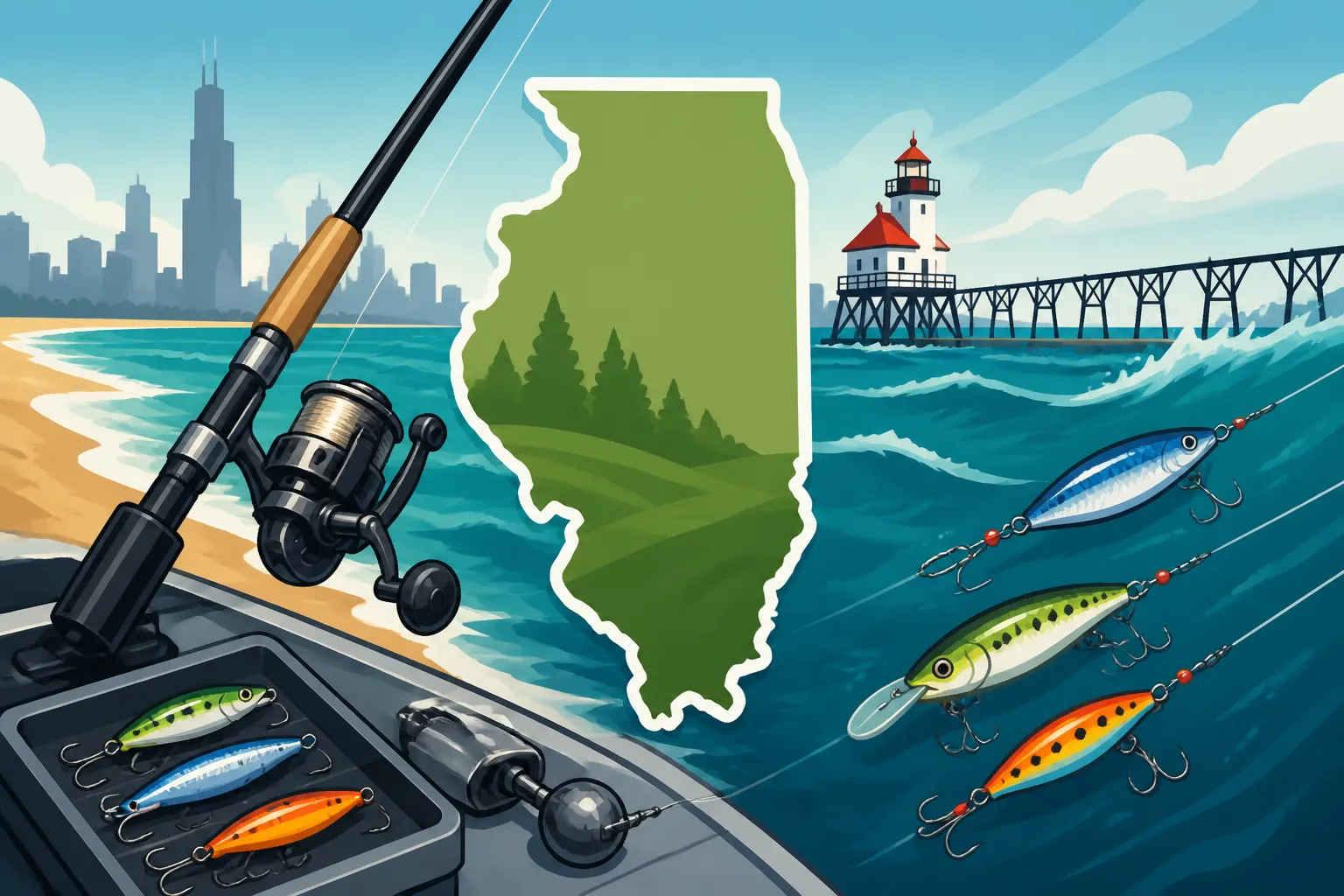
- Spoons: These are perennial favorites for Lake Michigan, and they shine in cold water. Lighter spoons that have a broad, fluttering action at slower trolling speeds are excellent. Colors tend to lean towards natural baitfish patterns like silver, blue/silver, green/silver, or even glow patterns for deeper or low-light conditions. Brands like Michigan Stinger, Dreamweaver, and Silver Streak are staples in many anglers' tackle boxes. The slower action of spoons in cold water can imitate a dying alewife or smelt, which salmon and trout simply can't resist.
- Plugs/Stickbaits: Jointed or shallow-running stickbaits can also be effective, particularly for Coho salmon and brown trout that might be cruising shallower depths or near structure. Again, natural patterns and sizes that mimic the available baitfish are best. You want plugs that have a tight wobble or a slow, seductive roll when trolled slowly.
- Flasher/Fly Combos: For Chinook salmon especially, a flasher or dodger paired with a fly or squid skirt is incredibly effective. The flasher creates vibration and visual attraction, while the trailing fly (often in colors like green, white, or blue) imitates a small baitfish. In cold water, ensure your flasher isn't too large or aggressive. A smaller flasher with a more subtle rotation might be better. This setup allows for very precise depth control, often necessary when targeting fish in specific thermal layers. Best Time to Catch Coho Salmon on Lake Michigan in Illinois and Illinois Lake Michigan Brown Trout Fishing Tips offer species-specific insights.
Rigging for Success: Speed, Depth, and Presentation
The biggest difference in cold water trolling is often the speed and precision of your presentation. Salmon and trout are often lethargic, meaning they won't chase a bait moving too fast.
- Slower Trolling Speeds: While summer trolling might see speeds of 2.5-3.5 mph, cold water often calls for much slower speeds, sometimes as low as 1.5-2.0 mph, or even less for some presentations. This slower speed allows the fish more time to react and investigate your lure. It also imparts a different action on many lures, often a more subtle and natural one. Experimentation is key, but always start slow in cold water.
- Depth Control: Precision in depth control is paramount because fish are often stacked in very specific thermal layers or near bottom structure. This is where tools like downriggers, dipsy divers, and lead core lines truly shine. Downriggers and Planer Boards for Lake Michigan are indispensable. Downriggers allow you to place your lure at an exact depth and keep it there, even when changing speed or direction. Dipsy divers or other directional planers allow you to get lures out to the side and down, covering a wider swath of water.
- Leader Lengths: When using flashers and flies, adjusting leader length can significantly impact your success. In cold water, fish might be more easily spooked, so a longer leader (20-30 inches or more) can create a more natural separation between the flasher and the fly. Test different lengths to see what the fish prefer on any given day.
Scent and Attractants for Finicky Fish
When fish are less active and more finicky in cold water, any advantage you can get is worth pursuing. Scent and attractants can play a significant role. These products, typically gel or liquid, are applied directly to your lures or bait to entice fish with an olfactory appeal.
Many popular scents mimic common forage like alewives, smelt, or even general fish attractant formulas. The idea is that even if a fish isn't actively feeding aggressively, the scent might trigger a curiosity bite or encourage them to hold onto the lure longer. Apply scent generously and reapply frequently, especially after catching a fish or if you haven't had a bite in a while. You can find a wide range of these products at most sporting goods stores or online retailers like Amazon. While not a magic bullet, in tough cold water conditions, every little bit helps in convincing a hesitant salmon or trout to strike.
Crucial Accessories and Safety for Cold Water Anglers
Going out on Lake Michigan in cold weather isn't just about the fishing gear; it's about being prepared for the environment itself. Staying warm, safe, and efficient on the water requires a host of additional accessories and a heightened awareness of safety protocols.
Downriggers, Dipsy Divers, and Planer Boards
These tools are essential for effectively presenting your lures at specific depths and distances, which is critical when fish are holding tight to thermal bands in cold water.
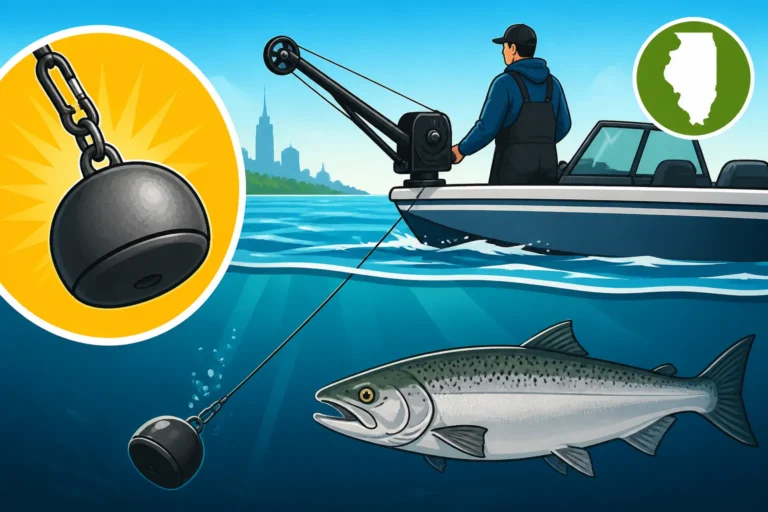
- Downriggers: These are perhaps the most precise tools for depth control. A downrigger uses a heavy ball (cannonball) to carry your fishing line, clipped into a release, to a precise, measured depth. When a fish strikes, the line releases, and you fight the fish directly. In cold water, salmon and trout often hug very specific depths, and downriggers allow you to put your lure exactly where they are. You can find manual or electric downriggers. Electric models are a godsend in cold weather, saving your hands from cranking heavy weights. Downriggers and Planer Boards for Lake Michigan offers more detail on these systems.
- Dipsy Divers (or Jet Divers): These are dive-and-planer devices that attach to your main line and take your lure out to the side of the boat and down to a set depth. They have an adjustable trip mechanism that releases when a fish strikes. They're excellent for covering wider swaths of water, which can be useful when fish are scattered. They don't offer the pinpoint depth accuracy of downriggers but are highly effective and add more lines to your spread without tangles.
- Planer Boards: These devices carry your fishing line far out to the side of the boat, away from the prop wash and boat noise. Often used with multiple lines per board, they help create a wide, stealthy presentation. In cold, clear water, fish can be spooky, and getting your lures away from the boat can make a big difference. They allow you to troll effectively in shallower zones without spooking fish directly under the boat.
Electronics for Locating Fish and Structure
Modern marine electronics are your eyes and ears beneath the cold, dark waters of Lake Michigan. Without them, finding fish in these vast waters becomes a monumental task.
- Fishfinders/Sonar: A quality fishfinder is non-negotiable for cold water trolling. Look for units with high-frequency CHIRP sonar, which provides incredibly detailed images of fish, baitfish schools, and underwater structure. Side imaging and down imaging are also invaluable, allowing you to scan wide areas to either side of your boat and directly beneath it, respectively, to locate schools of baitfish (like alewives or smelt, which are key forage for salmon and trout) and the predators that follow them. In cold water, fish often stack up tightly, and your sonar will show you these "arches" or "blobs" so you can adjust your trolling passes.
- GPS/Chartplotter: Knowing where you are and where you've been is just as important as knowing what's below. A GPS chartplotter allows you to mark productive waypoints, create trolling tracks, and navigate safely, especially when conditions are foggy or visibility is poor – common occurrences in cold weather. It helps you stay on course and return to productive areas. Many modern units combine fishfinder and GPS capabilities into one display.
- Water Temperature Gauge: While often integrated into your fishfinder, a dedicated or easily accessible water temperature reading is vital. Finding that optimal thermal band for salmon and trout is often the key to success in cold water. If your unit doesn't have one, consider adding a transom-mounted or portable temperature sensor.
Personal Safety and Comfort Gear
Your personal comfort and safety cannot be overstated when fishing in cold water conditions on Lake Michigan. Hypothermia is a real and dangerous threat.
- Layered Clothing: Dress in layers, starting with a moisture-wicking base layer, followed by insulating mid-layers (fleece, wool), and topped with a waterproof and windproof outer shell. Avoid cotton, as it loses its insulating properties when wet.
- Thermal Protection: Insulated bibs or float suits are excellent investments, providing warmth and, in the case of float suits, extra buoyancy and thermal protection if you go overboard. Don't forget a warm hat that covers your ears, insulated gloves (often fingerless for dexterity, with covers), and waterproof, insulated boots.
- Life Jackets (PFDs): This isn't optional; it's absolutely critical. In cold water, falling overboard without a life jacket can quickly lead to incapacitation. Illinois Life Jacket and PFD Rules are serious, and for good reason. Always wear an approved PFD. Inflatable PFDs are comfortable and allow for a full range of motion, but ensure they are properly maintained.
- Emergency Gear: Beyond your standard Illinois Boating Safety Equipment Checklist for New Owners, consider extra provisions for cold weather: a thermos of hot coffee or soup, extra blankets, hand warmers, and a dry change of clothes in a waterproof bag. A working VHF radio and a fully charged cell phone (in a waterproof case) are also essential for communication.
Cold water trolling on Lake Michigan is an exhilarating experience that can yield some incredible fish. By being prepared with the right gear, understanding fish behavior, and prioritizing safety, you can turn a potentially uncomfortable outing into a rewarding adventure.
Disclaimer
This article is for general informational purposes only and does not constitute professional advice. Laws, prices and regulations vary by location and change over time. Consult a qualified professional for guidance on your specific situation.