Illinois Type IV Life Jacket Requirements for Longer Boats
It's incredibly frustrating trying to keep up with all the ins and outs of boating regulations, especially when you just want to get out on the water and enjoy some peaceful Illinois fishing. One of the most common areas of confusion for boaters, particularly those upgrading to larger vessels, revolves around life jackets – specifically, the often-overlooked Type IV throwable personal flotation devices (PFDs). This guide is here to clear up exactly when and why your longer boat in Illinois needs a Type IV PFD, making sure you stay safe and compliant.
Understanding Life Jacket Types and Why Type IV is Unique
When we talk about life jackets, many people picture the vests they wear. But the world of PFDs is a bit more nuanced, and understanding these differences is key to grasping the specific requirements for Illinois boaters. The U.S. Coast Guard classifies PFDs into various types, each designed for a particular use and level of flotation.
The Different Flavors of Life Jackets: A Quick Rundown
Before diving into Type IV, let's quickly review the most common wearable PFD types you might encounter. Each is engineered for different conditions and levels of buoyancy.
- Type I PFDs (Offshore): These are the heavy-duty champions. They provide the most buoyancy and are designed to turn an unconscious person face-up in the water. You'll typically find these on offshore vessels or in situations where rescue might be delayed. They're bulky, but for serious emergencies, they offer the best protection.
- Type II PFDs (Near-Shore Buoyant Vests): A bit less bulky than Type I, these are good for calm, inland waters where a quick rescue is likely. They might turn an unconscious person face-up, but it's not guaranteed. Think of them as your standard fishing vest or general-purpose PFD.
- Type III PFDs (Flotation Aids): These are often the most comfortable and popular for recreational activities like waterskiing, kayaking, or casual fishing. They offer good flotation but are designed for situations where the wearer can help themselves into a face-up position. Many fishing vests fall into this category because of their comfort and freedom of movement, and you'll find a huge selection at places like Bass Pro Shops.
- Type V PFDs (Special Use Devices): This category includes PFDs designed for specific activities or conditions, like whitewater rafting vests, work vests, or deck suits. They often have specific requirements for how they must be worn to count as a PFD.
Each of these types serves a crucial purpose, but they all share one thing in common: they're designed to be worn. This is where the Type IV stands apart.
What Exactly is a Type IV Throwable PFD?
Unlike the wearable PFDs, a Type IV is not meant to be worn. It's a throwable device, specifically designed to be tossed to someone who has fallen overboard. Think of it as a last-ditch effort to provide flotation to someone in the water, especially if they are unconscious, injured, or simply too far away to grab quickly.
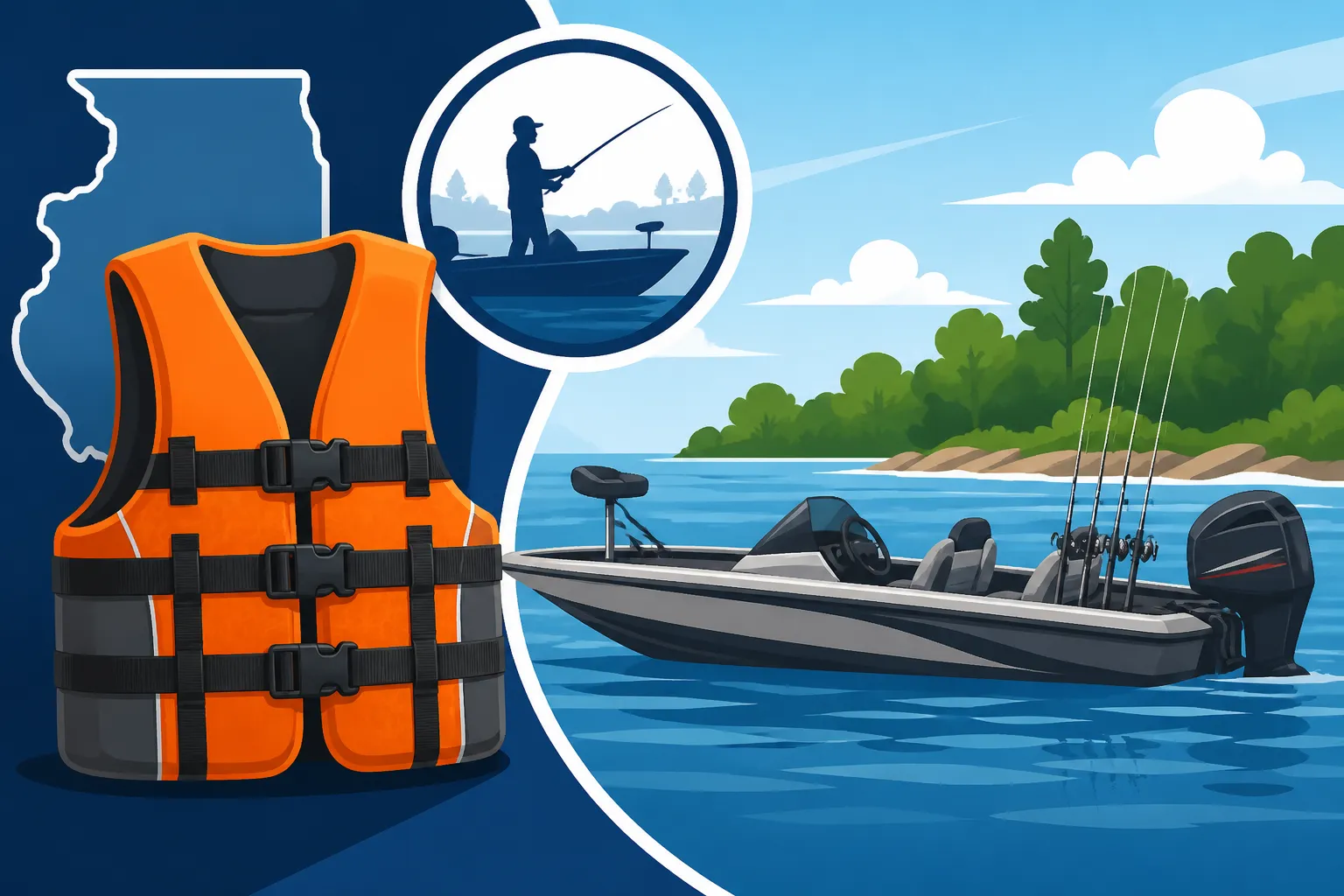
The most common forms of Type IV PFDs are cushion-style devices or ring buoys. These are typically brightly colored (often orange or yellow) to make them highly visible in the water. They are built to be easily thrown, to be held onto, or to cradle a person's head for support. The key here is "throwable." You don't strap it on; you launch it to someone in distress. This distinction is incredibly important because it means a Type IV doesn't count towards the "one wearable PFD per person" rule, but it is an additional requirement for certain boats.
Illinois Regulations: When Longer Boats Need a Type IV
Understanding the different PFD types sets the stage for grasping Illinois' specific regulations. Many anglers are diligently making sure everyone on board has a wearable PFD, which is fantastic, but they often overlook the supplemental requirement for a Type IV throwable device, especially as their boat length increases.
The "Underway" Rule and Vessel Length Thresholds
First, let's establish the baseline. In Illinois, if your boat is "underway"—meaning not anchored, moored, or aground—you must have a U.S. Coast Guard-approved wearable PFD for every person on board, regardless of the boat's length. This is a non-negotiable safety fundamental. You can learn more about these general rules in guides like Illinois Life Jacket and PFD Rules or Illinois Life Jacket Rules for Children Under 13.
However, the Type IV requirement kicks in when your boat hits a certain size. Specifically, any vessel that is 16 feet in length or longer (excluding canoes and kayaks) must carry at least one U.S. Coast Guard-approved Type IV throwable PFD on board. So, if you've got a bass boat, a pontoon, or a larger fishing rig that measures 16 feet from bow to stern or more, you need that throwable cushion or ring buoy. This often catches people by surprise, especially those who've recently upgraded from smaller craft that didn't have this additional stipulation.
It's a common scenario: a family upgrades from a modest 14-foot fishing skiff to a 17-foot center console. They diligently buy enough wearable PFDs for everyone, but they forget that crucial throwable device. Game wardens and marine police officers in Illinois are well aware of this rule, and not having the proper equipment can lead to a citation. It’s not just about avoiding a ticket, though; it’s about providing an extra layer of safety.
Accessibility, Condition, and Quantity: Meeting the Letter of the Law
It's not enough to simply have a Type IV PFD on your 16-foot or longer boat; it also needs to meet certain criteria regarding its placement and condition. The regulations specify that the throwable PFD must be "readily accessible" and in "serviceable condition."
- Readily Accessible: This means the device can be retrieved and deployed quickly in an emergency. It shouldn't be stuffed deep in a storage compartment, under a pile of gear, or in a zippered bag that takes precious seconds to open. Ideally, it's on deck, within arm's reach of the helm, or prominently displayed where anyone can grab it in a hurry. Imagine someone falling overboard unexpectedly; you don't have time to rummage around. This accessibility is paramount. You can find more tips on proper storage in resources like How to Store Life Jackets for Quick Boat Access and Illinois PFD Storage and Accessibility Rules.
- Serviceable Condition: A throwable PFD is only useful if it actually works. This means it must be free from tears, punctures, waterlogging, or severe sun damage that could compromise its buoyancy. The straps should be intact, and any handles should be firmly attached. A waterlogged cushion that barely floats won't do anyone any good in an emergency. It’s important to inspect your Type IV PFD periodically throughout the season, especially if it’s stored outdoors or in a locker where moisture might accumulate.
- Quantity: For boats 16 feet or longer, the requirement is for at least one Type IV throwable PFD. This is in addition to the wearable PFDs for everyone on board. So, if you have four people on a 20-foot boat, you need four wearable PFDs plus at least one throwable Type IV device. While the law only requires one, many seasoned anglers, especially those frequenting busy waters like Lake Michigan, opt to carry two or more, placing them at different points on the boat for maximum accessibility.
The Coast Guard approval is also non-negotiable. Always look for the U.S. Coast Guard approval number and label on your PFD. This ensures it meets the rigorous safety standards required. For more details, check out Coast Guard Approved Life Jackets for Illinois Boaters.
Why This Requirement Exists: Real-World Safety Benefits
While regulations can sometimes feel like an endless list of rules, each one, especially in boating safety, is designed with a critical purpose: to save lives. The Type IV throwable PFD requirement is a perfect example of a small item that can make a monumental difference in a genuine emergency.
The Critical Role of Throwable Devices in Rescue Situations
Imagine this scenario: You're out on Lake Shelbyville on a beautiful summer day, a gentle breeze rustling the trees along the shore. Suddenly, a friend leaning over the side to net a fish loses their balance and tumbles into the water. In a moment of surprise, they might gulp water, disorient themselves, or even hit their head on the way in. In such a chaotic situation, they might not be able to swim back to the boat, let alone manage to put on a wearable life jacket that's now floating near them.
This is precisely where the Type IV throwable PFD becomes a lifesaver. You can grab that brightly colored cushion or ring buoy that's stored right by the helm, and in one swift motion, toss it directly to the person in the water. It provides immediate flotation, allowing them to collect themselves, catch their breath, and regain composure while you maneuver the boat for a safe recovery. It's often quicker and safer to throw a device to someone than it is to try and hand them a wearable one, especially if the boat is still drifting or if there's any current.
Another critical situation where these devices excel is if you have an unconscious person in the water. A throwable device can be placed under their head and shoulders to keep their airway clear until a more complete rescue can be performed. It's a bridge, a momentary anchor, that can turn a terrifying accident into a successful rescue.
Beyond the Law: Best Practices for Enhanced Safety
While Illinois law mandates at least one Type IV PFD for boats 16 feet and over, thinking beyond the minimum can significantly enhance safety for you and your passengers. Consider these best practices:
- More Than the Minimum: On larger boats, or if you frequently have multiple passengers, having two or even three throwable devices strategically placed around the deck can be incredibly beneficial. One near the helm, one at the stern, and perhaps one midship ensures that no matter where an accident happens, a throwable PFD is close at hand. This is particularly true if you are fishing on big water, like Lake Michigan, where conditions can change rapidly and a swift response is crucial.
- Practice Makes Perfect: It might sound silly, but practice actually throwing your Type IV PFD. Get a feel for its weight and how it flies. Know how far you can accurately throw it. In an actual emergency, every second counts, and having that muscle memory can be invaluable. Even better, run through a "man overboard" drill with your usual crew so everyone knows their role and where the safety equipment is located.
- Choosing the Right Type IV: While any Coast Guard-approved Type IV is legal, some are easier to throw or more buoyant than others. Cushions are versatile, providing both flotation and something a person can hug. Ring buoys, especially those with an attached line, are excellent for retrieving a person once they've grabbed hold. When you're shopping on Amazon or at a local marine supply store, consider the type of boating you do and the potential scenarios you might face.
- Educate Your Passengers: Make sure anyone who regularly fishes with you knows where the Type IV PFD is located and understands its purpose. The more people who are aware of the safety equipment and how to use it, the safer everyone will be. This is part of being a responsible boat captain and ensuring everyone has a good time on the water.
By not just complying with the law, but actively thinking about how to best use and prepare your Type IV PFD, you're investing in the safety and peace of mind for everyone aboard your vessel. This proactive approach is a hallmark of truly responsible boating. For a complete list of essentials, refer to Illinois Boating Safety Equipment Checklist.
Choosing and Maintaining Your Type IV PFD
When it comes to outfitting your boat, especially a longer one, choosing the right Type IV throwable PFD and keeping it in top shape is just as important as selecting the perfect rod for Largemouth Bass Fishing in Illinois: The Complete Guide. It's not a set-it-and-forget-it item; it requires a bit of thought and ongoing care.
What to Look For When Buying a Type IV PFD
Navigating the options for PFDs can feel a bit overwhelming, but for a Type IV, the choices are generally straightforward. Here’s what you should consider:
- Coast Guard Approval: This is, without question, the absolute first thing to look for. Ensure the device has a clearly visible U.S. Coast Guard approval stamp or label. No approval, no compliance, no safety guarantee. You'll find a wide array of approved options, whether you're at Bass Pro Shops browsing their aisles or comparing models online through Amazon.
- Visibility: When someone is in the water, especially in choppy conditions or low light, you want that throwable PFD to stand out. Opt for bright, fluorescent colors like orange, yellow, or lime green. These colors contrast sharply with most water conditions, making it easier for the person in the water to spot and for you to track.
- Buoyancy: While all approved Type IVs meet a minimum buoyancy standard, some might offer slightly more. Check the label for the stated buoyancy in pounds. More buoyancy generally means it can support a heavier person or provide more stable flotation in rougher conditions.
- Style: The two most common styles are the ring buoy and the cushion.
- Ring Buoys: These are excellent for long throws and are easy for someone in the water to slip over their head or hold onto. Many come with a tether line for easier retrieval. They're often seen on larger vessels or commercial boats.
- Cushions: These are versatile and often dual-purpose – they can be used as a seat cushion when not needed as a PFD. They are generally easy to throw and comfortable to hold onto. However, ensure that if you use it as a cushion, it's not subject to damage or deterioration that would render it unserviceable in an emergency.
- Durability: Look for robust materials that can withstand exposure to sun, saltwater (if you're on Lake Michigan), and general wear and tear. Reinforced stitching and UV-resistant fabrics will help your Type IV PFD last longer and remain effective.
Don't just grab the cheapest option. Think of your Type IV PFD as a vital piece of emergency equipment, not just another accessory.
Keeping Your Throwable PFD "Serviceable" and Ready
Having a Type IV PFD on board is one thing; ensuring it's ready to perform its life-saving duty when needed is another. Proper maintenance and storage are crucial.
- Protection from the Elements: UV rays from the sun are a major enemy of PFD materials, leading to fading, brittleness, and degradation of the outer fabric and even the foam inside. When not in use, store your throwable PFD out of direct sunlight. While it needs to be "readily accessible," it can still be stored in a covered, yet easily reachable, compartment. Likewise, keep it dry to prevent mildew growth, which can weaken materials and make it unpleasant to handle.
- Regular Inspections: Make it a habit to inspect your Type IV PFD at the beginning of each boating season and periodically throughout. Check for:
- Tears, rips, or punctures in the fabric.
- Faded or brittle fabric, indicating UV damage.
- Loose or frayed straps (if applicable on certain designs).
- Molding or mildew, which can compromise material integrity.
- Waterlogging: Squeeze the PFD; if it feels heavy or squishy, it might have absorbed water, significantly reducing its buoyancy. A waterlogged PFD is no longer serviceable and needs to be replaced immediately.
- Don't Use it as a Fend-Off: While tempting, don't use your throwable cushion to push off docks or other boats. This kind of rough treatment can quickly damage its structural integrity and compromise its ability to float effectively.
- Cleanliness: If your PFD gets dirty, clean it gently with mild soap and water, then allow it to air dry completely before storing. Avoid harsh chemicals or machine washing, as these can damage the flotation material and outer shell.
By taking these steps, you ensure that your Type IV PFD is always ready to save a life, providing a critical piece of your overall boating safety plan, which should also include knowing your Illinois Boater Education Card Requirements and all Illinois Boat Registration Requirements Explained.
| PFD Type | Primary Use | Key Feature | Buoyancy (min) | Best For |
|---|---|---|---|---|
| Type I | Offshore | Turns unconscious wearer face-up; highest buoyancy | 22 lbs | Rough, remote waters, delayed rescue |
| Type II | Near-Shore Buoyant Vest | May turn unconscious wearer face-up | 15.5 lbs | Calm, inland waters, quick rescue likely |
| Type III | Flotation Aid | Comfortable, designed for conscious wearers | 15.5 lbs | Recreational boating, active sports |
| Type IV | Throwable Device | Designed to be thrown, not worn | 16.5 lbs | Emergency aid for person in water, supplemental |
| Type V | Special Use Device | Specific activities; must be worn for approval | Varies | Whitewater, specific work tasks |
Disclaimer
This article is for general informational purposes only and does not constitute professional advice. Laws, prices and regulations vary by location and change over time. Consult a qualified professional for guidance on your specific situation.