Trailer Boat or Jon Boat for Small Lakes
Trying to decide between a simple jon boat and a more feature-rich trailer boat for your adventures on Illinois's smaller lakes can feel like a real head-scratcher. You want something that's easy to launch, fits your budget, and gets you to where the fish are biting without a ton of fuss. This guide will walk you through the distinct advantages and disadvantages of each option, helping you confidently choose the perfect vessel for navigating those quiet, often overlooked fishing havens in our beautiful state.
Understanding Your Fishing Needs on Small Illinois Lakes
Before you even start looking at boat types, it's crucial to really dig into what you'll be doing with your boat on Illinois's smaller bodies of water. These aren't Lake Michigan, after all, and what works for massive reservoirs won't necessarily be the best fit for a local lake with a 10 horsepower limit. Your personal fishing style, the types of fish you target, and how often you plan to hit the water all play a huge role in this decision.
What Defines a "Small Lake" in Illinois?
When we talk about "small lakes" in Illinois, we're generally thinking about those public access lakes, often found within state parks or smaller county parks, that might have specific restrictions. Many of these lakes, like those in the Chain O'Lakes area or smaller state park lakes such as Shabbona Lake or Clinton Lake, will have horsepower limits, idle-only zones, or even "no wake" rules that impact what kind of boat is practical. You might encounter shallow launching ramps, tight coves, and dense weed beds, which all factor into your boat choice. These aren't the places where you'll typically be ripping across miles of open water at high speeds.
These smaller waters often mean less boat traffic, especially during weekdays, and a more intimate fishing experience. You're likely dealing with shorelines that can be difficult to access without a small craft, and waters that warm up quickly in the spring, leading to excellent shallow-water fishing opportunities. Knowing these characteristics helps you prioritize things like maneuverability and shallow-draft capability over sheer speed or offshore stability. Always check the specific rules for the lake you plan to visit, as they can vary greatly from one body of water to another. Why Fishing Rules Vary by Lake and River is an excellent resource for understanding these local nuances.
Common Fish Species and Fishing Styles
On smaller Illinois lakes, you're primarily going after popular freshwater species like largemouth bass, various panfish (think bluegill and crappie), and often some channel catfish. These species tend to inhabit shallower waters, structure along the shore, and weed lines, meaning you'll be doing a lot of casting, jigging, and perhaps some light trolling. You're less likely to need heavy offshore tackle or sophisticated sonar for deep-water trolling in these environments, though a good fish finder can certainly help.
For bass anglers, stealth and the ability to get into tight spots are key. You'll want a boat that allows you to quietly approach cover and cast accurately. Panfish enthusiasts often seek out brush piles, docks, and submerged timber, requiring a stable platform for vertical jigging or setting bobbers. Catfish anglers might be anchored in a coves or along a gradual drop-off, needing space for multiple rods and bait. Your chosen boat needs to facilitate these techniques comfortably and efficiently, rather than being overpowered or too large for the task.
The Classic Jon Boat: Simple, Sturdy, and Practical
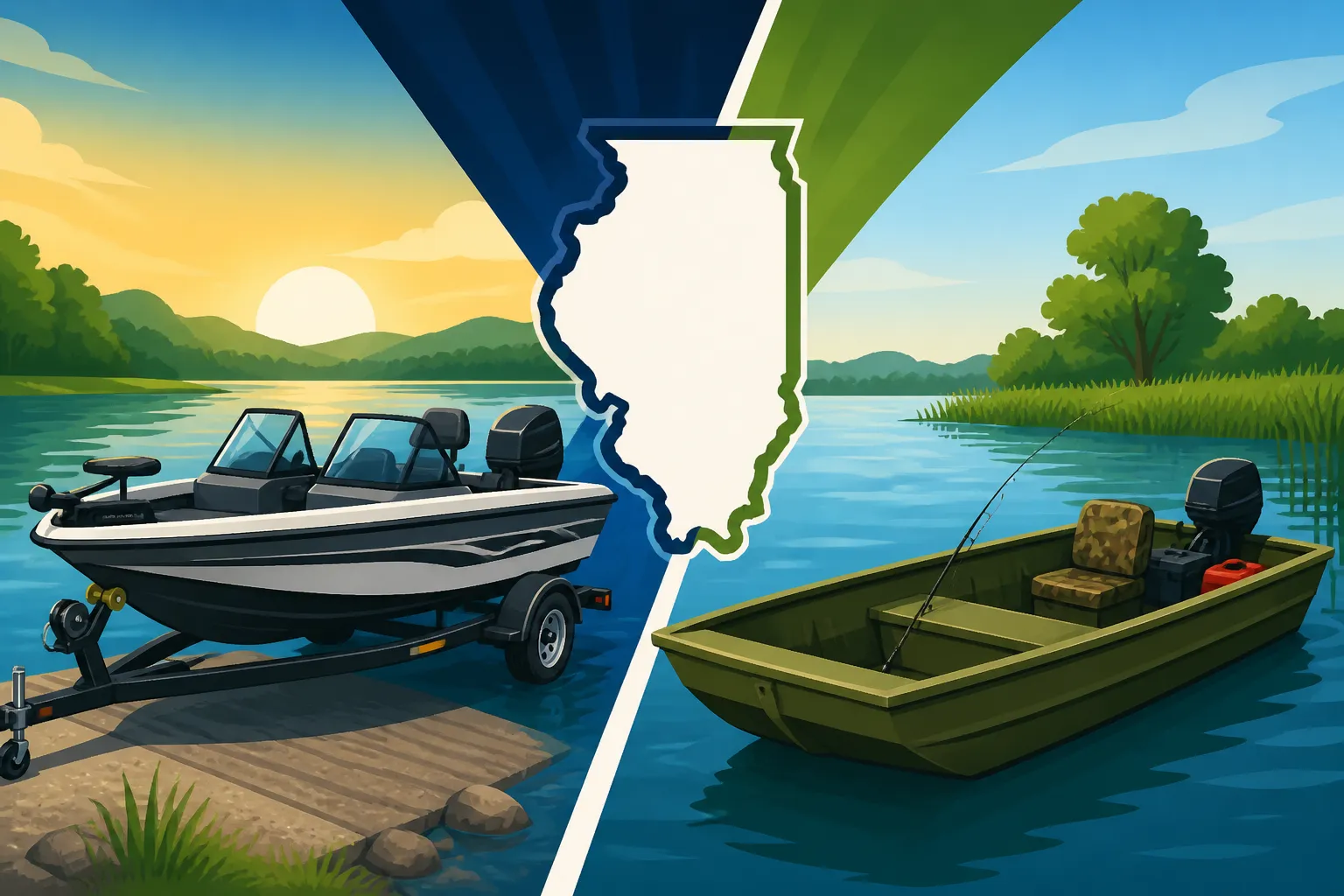
Ah, the humble jon boat! It's practically synonymous with freshwater fishing in America, especially on those smaller, quieter waters. These boats are known for their flat bottoms, which offer excellent stability in calm water and allow them to glide into incredibly shallow areas where other boats dare not tread. They're often made of aluminum, making them relatively lightweight and incredibly durable, able to withstand a few bumps and scrapes against rocks or stumps without too much fuss. Many an Illinois angler started their boating journey in a trusty jon boat.
Pros and Cons of Jon Boats for Small Lake Fishing
One of the biggest advantages of a jon boat is its sheer simplicity. There are fewer moving parts, less complex wiring, and generally, less to go wrong. This translates to lower maintenance costs and an easier time troubleshooting any issues that might pop up. They are also incredibly versatile platforms; you can customize them with decking, seating, and storage as your needs evolve, or keep them bare-bones for quick, no-frills trips. Their flat bottom means they draw very little water, making them perfect for navigating skinny water or pulling up to unimproved banks for a shore lunch. You won't find many boats that offer easier access to hard-to-reach fishing spots.
However, that flat bottom also has its drawbacks. While stable in calm conditions, a jon boat can get pretty bouncy and wet in choppy water. If you're on a small lake that sees a lot of recreational traffic, or if an unexpected storm rolls in, you'll feel every wave. They also typically have less built-in storage and fewer amenities than dedicated fishing boats, meaning you might have to get creative with your gear organization. Speed isn't their strong suit either; they're designed for efficient movement with smaller outboards or electric trolling motors, not for racing across the lake.
Ideal Scenarios for Choosing a Jon Boat
A jon boat shines brightest when you prioritize simplicity, shallow-water access, and budget. If you're frequently visiting lakes with horsepower restrictions, or if your primary fishing involves quiet coves, backwaters, and tight channels, a jon boat is hard to beat. They're fantastic for solo anglers or pairs who value portability and the ability to launch from nearly any spot, even those without developed boat ramps. Many anglers use them as a "workhorse" boat for duck hunting in the fall, too, showcasing their rugged versatility.
Think of those crisp spring mornings when the crappie are staging in two feet of water, or summer evenings when bass are busting bait along a weed edge accessible only by a shallow-draft craft. For these scenarios, a jon boat with a reliable trolling motor and a small outboard is an absolute dream. If you're a DIY enthusiast, you can spend endless hours customizing a bare hull to your exact specifications, adding rod holders, a casting deck, or even a small livewell. Best Kayak Models for Illinois Fishing is a good read if you're looking for even more minimalist options.
Essential Gear for Outfitting a Jon Boat
Outfitting a jon boat can be as simple or as elaborate as you want, but some core pieces of gear are almost universally beneficial. A reliable electric trolling motor is a must-have for silent propulsion and precise boat positioning, especially when targeting wary fish in shallow water. You'll need at least one deep-cycle battery to power it, and possibly a second if you plan for longer outings. A good quality anchor system, whether it's a traditional anchor with plenty of rope or a shallow-water pole anchor, will keep you in place on those windy days.
For seating, many opt for simple pedestal seats or even just coolers that double as benches, prioritizing open deck space. Portable electronics, like a basic fish finder that you can clamp onto the transom, are also popular, as they can be easily removed for transport. You might find a wide selection of these essential items at stores like Bass Pro Shops, or readily available online through Amazon, allowing you to compare options and build your ideal setup piece by piece. Don't forget safety gear like life jackets, a throwable PFD, and a whistle. Illinois Boating Safety Equipment Checklist for New Owners can guide you on requirements.
The Versatile Trailer Boat: More Comfort, More Features
When we talk about "trailer boats" in the context of small lakes, we're generally referring to anything from small fiberglass bass boats and aluminum multi-species boats to even small center consoles or runabouts. These boats are designed to be towed behind a vehicle, launched from a ramp, and often come with more built-in features, greater comfort, and more powerful engine options than a typical jon boat. They bridge the gap between simple utility and dedicated recreational craft, offering a broader range of capabilities.
Pros and Cons of Trailer Boats for Small Lake Fishing
The primary advantages of a dedicated trailer boat often revolve around comfort and convenience. They typically offer more spacious layouts, dedicated storage compartments for rods and tackle, built-in livewells, and comfortable seating. Many come equipped with more powerful outboards, allowing for faster travel across larger sections of a lake, which can be a huge time-saver if you're covering a lot of water. The deeper V-hull designs of many trailer boats, especially fiberglass options, also handle chop significantly better than a flat-bottom jon boat, providing a smoother, drier ride in less-than-ideal conditions.
However, this increased comfort and capability come with trade-offs. Trailer boats are generally more expensive to purchase and maintain. They require a more substantial tow vehicle, and launching can be trickier, demanding a proper boat ramp and a bit more skill in backing up a trailer. Their deeper draft means you can't access extremely shallow water as easily as a jon boat, and their larger size can make navigating tight coves or dense timber more challenging. Storage at home also becomes a bigger consideration, as they take up more space. Illinois Boat Trailer Tips for First-Time Owners offers great advice on handling your new trailer.
When a Trailer Boat Makes More Sense
A trailer boat becomes a much more attractive option if your fishing trips involve multiple anglers, require covering longer distances, or if you simply value a higher level of comfort and convenience. If you enjoy bringing along a cooler full of drinks and snacks, needing dedicated space for multiple tackle boxes, or having a sophisticated electronics setup, a trailer boat provides the infrastructure for that. They're also a great choice if you plan on occasionally venturing onto larger bodies of water, like some of Illinois's larger reservoirs or even a calm day on Lake Michigan.
For families or groups, the extra seating and space are a huge plus. If you want the ability to run from one end of a lake to the other quickly to chase a bite, or if you regularly fish tournaments where speed and efficient movement matter, a trailer boat with a higher horsepower motor is the clear winner. The added stability and ability to cut through waves can also make for a much more pleasant experience on windy days or when contending with boat wakes.
Key Considerations When Buying a Trailer Boat
When you're in the market for a trailer boat, there are several critical factors to consider beyond just the price tag. First, think about the size and weight. Can your vehicle comfortably and safely tow it? Does it fit in your garage or designated storage space? The engine size is another major point; ensure it meets the horsepower limits of your favorite lakes while still providing enough power for your needs. Fuel efficiency can also vary significantly between different engine types and sizes.
Look at the layout and features: Does it have enough rod storage? Is the livewell adequate for the species you target? Are the seats comfortable for long days on the water? Don't forget about the trailer itself – make sure it's in good condition, properly sized for the boat, and includes features like surge brakes if needed. You can often find a wide array of options and accessories for trailer boats, from advanced fish finders to comfortable seating upgrades, at specialty retailers like Bass Pro Shops, or by browsing comprehensive selections on Amazon for parts and accessories. Best Fishing Boats for Illinois Lakes provides further insights into different boat types.
Direct Comparison: Jon Boat vs. Trailer Boat
Deciding between a jon boat and a trailer boat often comes down to a direct comparison of their practical applications on Illinois's small lakes. Each has its distinct strengths and weaknesses that appeal to different types of anglers and different fishing scenarios. It's not about one being inherently "better" but rather about which one is better for you and your specific needs.
Maneuverability and Access
When it comes to getting into the tightest spots and navigating shallow backwaters, the jon boat almost always wins. Its flat bottom allows it to float in mere inches of water, and its typically smaller size makes it incredibly nimble. You can often push a jon boat through dense vegetation or over submerged obstacles that would hang up a deeper-hulled trailer boat. Launching a jon boat is also generally easier; you can often "slide" it into the water from undeveloped shorelines where a conventional ramp isn't available, providing unparalleled access.
Trailer boats, with their deeper hulls and often larger dimensions, are more restricted to established boat ramps and deeper channels. While they can still fish shallow areas, they can't sneak into the same skinny water as easily. Their larger turning radius can also be a hindrance in very tight coves or around crowded docks. However, on larger small lakes, their ability to cover ground quickly and maintain a steady course in open water gives them an advantage.
Cost and Maintenance
Generally speaking, a new jon boat setup (boat, small outboard, trolling motor, and basic trailer) will be significantly less expensive than a comparable new trailer boat package. The simpler construction of jon boats also translates to lower long-term maintenance costs. There are fewer complex systems to service, and repairs for aluminum hulls are often straightforward. Insurance costs, if you choose to get it, will also typically be lower for a jon boat.
Trailer boats, with their more complex engines, electrical systems, and often more intricate fiberglass construction, come with a higher initial price tag. Maintenance, especially on larger outboards, can be more costly and require specialized technicians. Fuel consumption will also be a greater expense, as larger engines naturally burn more. Over time, the cumulative cost of ownership for a trailer boat can be substantially higher. If you're looking for the Lowest-Cost Way for a Resident to Start Fishing in Illinois, a jon boat is likely it.
Comfort and Features
If comfort is high on your priority list, a trailer boat will usually come out ahead. They offer more cushioned seating, often dedicated casting platforms, and usually more stable footing when moving around the boat. Built-in storage, including rod lockers, tackle compartments, and insulated coolers, is a standard feature on many trailer boats, keeping your gear organized and out of the way. Integrated livewells, navigation lights, and sophisticated electronics mounts are also common, enhancing the overall fishing experience.
Jon boats, in their most basic form, offer minimal comfort. Seating might be a simple bench or a cooler, and storage is often limited to what you bring in portable containers. While they can be customized with these features, it adds to the cost and complexity. The flat bottom, while great for stability in calm waters, can transmit more vibration and impact from waves, leading to a less comfortable ride in anything but glass-smooth conditions.
Here's a quick comparison of the two boat types:
| Feature/Consideration | Jon Boat | Trailer Boat (e.g., small bass boat, multi-species) |
|---|---|---|
| Primary Use Case | Shallow water, quiet coves, small lakes | Medium to larger small lakes, covering distance |
| Hull Type | Flat bottom | V-hull or modified V-hull |
| Draft (Shallow Access) | Excellent (very shallow) | Good (moderate depth needed) |
| Stability (Calm Water) | Excellent | Good to Excellent |
| Stability (Choppy Water) | Poor (bouncy, wet ride) | Good to Excellent (smoother ride) |
| Maneuverability | High (nimble, tight turns) | Moderate to High (wider turns, more powerful) |
| Launch/Retrieve Ease | Very Easy (can use unimproved access) | Moderate (requires proper ramp) |
| Initial Cost | Lower | Higher |
| Maintenance Cost | Lower | Higher |
| Engine Options | Small outboards (low HP), electric trolling | Larger outboards (higher HP), electric trolling |
| Comfort/Features | Basic (customizable) | More (built-in storage, seating, livewell, electronics) |
| Storage Requirement | Less space needed | More space needed |
Ultimately, the choice hinges on your priorities. If getting into the absolute skinny water, keeping costs down, and valuing simplicity are paramount, a jon boat is likely your best bet for Illinois's small lakes. But if comfort, speed, built-in amenities, and the ability to handle a bit more chop are more important for your fishing style and frequent fishing partners, then a trailer boat will offer a more encompassing experience. Think about where you fish most often, what species you chase, and who you usually bring along. That honest assessment will lead you to the right decision for your next fishing season.
Disclaimer
This article is for general informational purposes only and does not constitute professional advice. Laws, prices and regulations vary by location and change over time. Consult a qualified professional for guidance on your specific situation.