Best Small Boat for Illinois Farm Ponds
There's nothing quite like the allure of a small, private farm pond, is there? These hidden gems in Illinois often hold some fantastic fish, but let's be honest, trying to fish them solely from the bank can be a real exercise in frustration. You spend half your time fighting overgrown weeds, spooking fish with every step, and just wishing you could reach that perfect-looking submerged brush pile in the middle. This guide is all about helping you cut through that hassle and find the ideal small boat to unlock the full potential of your favorite Illinois farm pond.
Why a Small Boat is a Game-Changer for Farm Ponds
For many anglers, farm ponds represent a unique opportunity – often less pressured than public waters, brimming with hungry bass or hefty bluegill. But the very nature of these intimate settings also presents challenges that a well-chosen small boat can absolutely transform.
The Limitations of Bank Fishing on Farm Ponds
Think about it: how many times have you been staring at a promising patch of lily pads just out of casting range, or watched a trophy bass swirl in a pocket of water you simply couldn't get to? Bank fishing, while a time-honored tradition, often limits your reach and presentation. You're confined to the accessible shoreline, which might be muddy, overgrown, or simply not where the fish are holding. Every step you take along the bank sends vibrations through the water, especially in clear, shallow ponds, often spooking the very fish you're trying to catch. Furthermore, your casting angles are restricted, making it hard to work lures effectively around structure or retrieve from different directions.
Imagine trying to reach that old submerged fence line that you know holds big crappie, but it's 30 feet offshore. Or that perfect weed bed on the far side of the pond. Without a boat, these spots might as well be on another planet. You end up exhausting your prime casting areas quickly and then resorting to less productive water.
Advantages of Getting on the Water
Getting a small boat onto a farm pond immediately expands your possibilities exponentially. Suddenly, those unreachable pockets of cover, deep holes, and far shorelines become prime targets. One of the biggest advantages is stealth. With a paddle or a quiet electric trolling motor, you can approach fish-holding structure silently, slipping into position without broadcasting your presence. This is especially crucial in smaller, clearer ponds where fish are often more wary.
Being on the water also allows you to cover significantly more ground. Instead of walking the perimeter, you can quickly move from one promising area to another, targeting brush piles, submerged timber, weed lines, and creek channels with precision. It gives you the ability to present baits from multiple angles, working around obstacles and truly exploring the contours of the pond. You can fish into the wind more easily, manage your line better, and stay over fish longer, rather than constantly recasting from a fixed position on shore. It's a completely different fishing experience, turning frustration into opportunity.
Types of Small Boats Perfect for Illinois Farm Ponds
When it comes to choosing a small boat for those intimate Illinois farm ponds, you've got a few fantastic options, each with its own set of charms and considerations. It's not about finding the "best" boat universally, but the best boat for your specific needs and the ponds you frequent.
Jon Boats: The Workhorse of Shallow Waters
Jon boats are probably what first comes to mind for many anglers thinking about a small, stable platform. These flat-bottomed vessels are incredibly popular for a reason, especially in shallower waters like many farm ponds. Their wide, flat bottom provides exceptional stability, making it easier to stand and cast, or to move around without feeling like you're going to tip over. This stability is a huge plus, especially if you're bringing kids along or tend to carry a lot of gear.
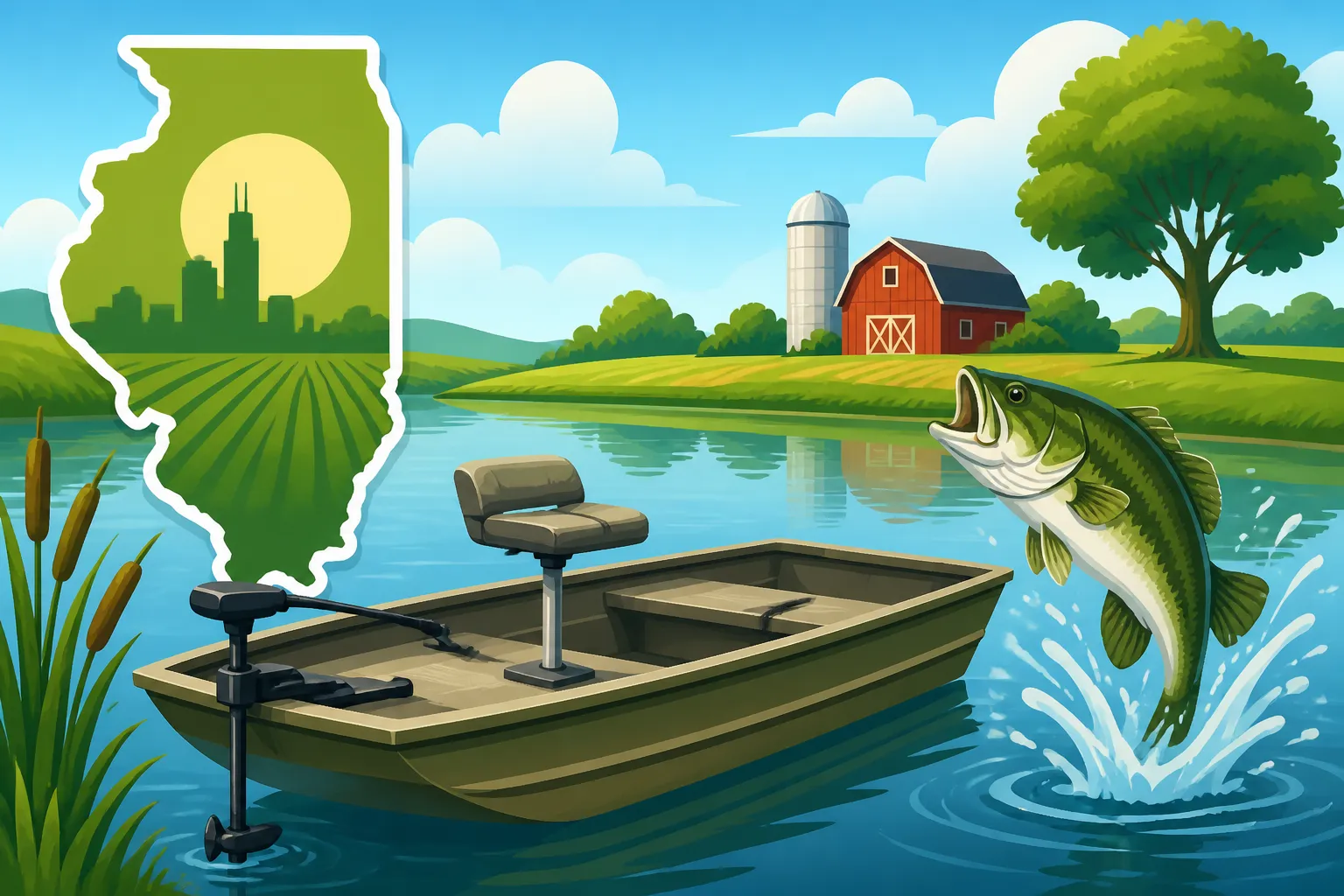
Most Jon boats are made from aluminum, which makes them durable, relatively lightweight for their size, and able to withstand bumps and scrapes from stumps or rocky shorelines. They range in size, but for farm ponds, something in the 10 to 14-foot range is usually ideal. They're often very easy to modify, too – adding swivel seats, rod holders, or even a small deck can turn a basic Jon boat into a personalized fishing machine. They pair perfectly with a small electric trolling motor, allowing for quiet, precise maneuvering around cover. The main downsides can be their weight if you need to portage them short distances, and their flat bottom can make for a rougher ride in choppy conditions, though this is less of a concern on protected farm ponds. Best Fishing Boat for Rend Lake Illinois discusses boat types for larger waters, but the principles of stability and maneuverability often translate.
Fishing Kayaks: Stealth and Accessibility
If stealth and access to the tightest corners are your top priorities, a fishing kayak might just be your new best friend. Kayaks have exploded in popularity among anglers because they offer an incredibly quiet, low-profile way to get on the water. Imagine paddling silently into a narrow cove, barely disturbing the water, and casting to bass that have never seen a lure from that angle before. It's pure magic.
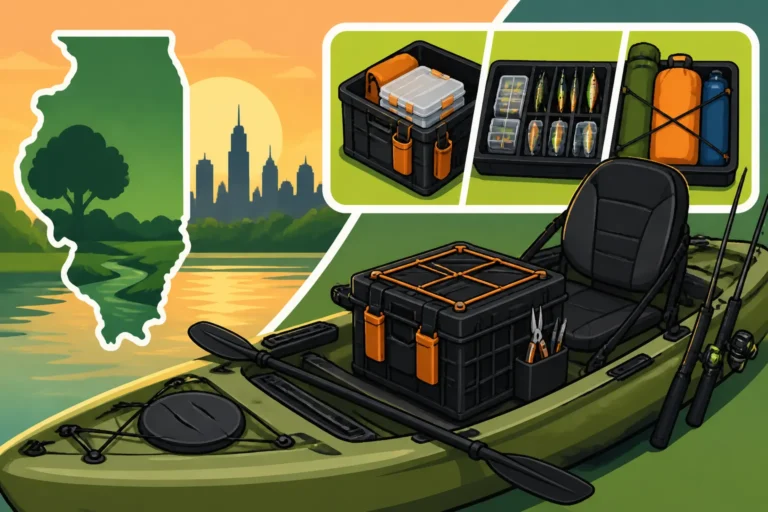
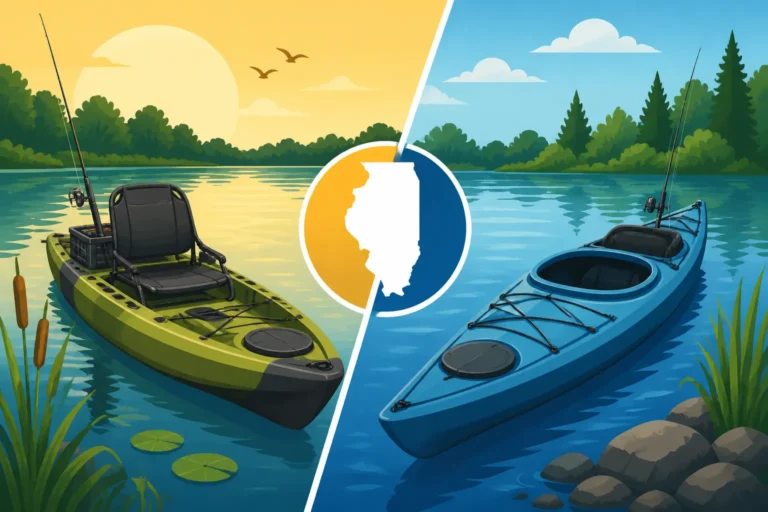
Fishing kayaks are typically designed to be more stable than recreational kayaks, often featuring wider beams and specialized hull designs. You'll find both sit-on-top and sit-in models, with sit-on-tops generally offering more stability and easier entry/exit, though sit-ins can keep you drier. Many modern fishing kayaks come equipped with rod holders, gear tracks, and even pedal drives, which free up your hands for casting and reeling. They are lightweight enough to be car-topped or easily transported in the bed of a pickup truck, making them perfect for ponds without dedicated boat ramps. The exercise you get from paddling is a nice bonus too! The primary trade-off is often storage space and overall stability compared to a Jon boat, but for a solo angler or a duo willing to go light, they're hard to beat. Check out Kayak Fishing Gear Checklist for Illinois Anglers for more on equipping your kayak.
Canoes: Traditional and Versatile
The classic canoe holds a special place in the hearts of many outdoors enthusiasts, and for good reason. For farm pond fishing, a canoe can offer a versatile and often more budget-friendly option. They are generally lightweight, making them easier to launch and retrieve than many Jon boats, especially if you're dealing with overgrown banks. A canoe is excellent for two anglers, allowing one to paddle while the other casts, and they can carry a surprising amount of gear.
Modern fishing canoes often feature more stable designs than their recreational counterparts, sometimes even with a square stern to accommodate a small electric trolling motor. This versatility allows you to paddle for quiet exploration or motor when you need to cover more distance. They glide through the water efficiently, making them a good choice for larger ponds where you might need to travel a bit. The main consideration with canoes is their inherent stability, which is generally less than a Jon boat or even many fishing kayaks. Standing to cast can be tricky for beginners, and care must be taken when moving around. However, with a little practice, a canoe can be a fantastic way to enjoy a day on the pond.
Inflatable Boats: Portable Powerhouses
For those who prioritize ultimate portability and storage, inflatable boats are an often-overlooked but highly effective option for farm ponds. Imagine being able to pack your entire boat into the trunk of your car, drive to a remote pond, and have it ready to fish in minutes. That's the power of an inflatable. Made from durable PVC or Hypalon, these boats are surprisingly robust and designed to withstand the rigors of fishing.
While the thought of a puncture might make you nervous, quality inflatable fishing boats are built with multiple air chambers, meaning a small puncture in one chamber won't sink the boat. They offer decent stability once inflated, with some models even featuring solid floorboards for a more secure standing platform. They're typically lightweight and incredibly easy to store, making them ideal if you don't have garage space for a rigid boat or a trailer. They pair well with small electric trolling motors, providing silent propulsion. The main drawbacks are the setup and takedown time (inflation/deflation), and while durable, they do require more care against sharp objects than a hard-sided boat. For those truly remote ponds, or for anglers with limited storage, they are a fantastic solution. Remember, no matter what kind of boat you choose, safety first: Do You Need a Life Jacket in a Kayak in Illinois? covers essential PFD requirements.
Key Features to Consider for Farm Pond Boats
Choosing the right small boat for Illinois farm ponds goes beyond just picking a type. You need to think about the practicalities of how you'll use it, transport it, and maintain it. These details can make all the difference between a great fishing experience and a frustrating one.
Portability and Transport
Many farm ponds, especially private ones, might not have convenient boat ramps. This means you'll likely be launching from an unimproved bank or even carrying your boat a short distance from your vehicle. Therefore, portability is paramount.
Consider the weight of the boat and how you plan to get it to and from the water. Can you car-top it on your vehicle's roof rack? Will it fit in the bed of your pickup truck? Or do you need a small, lightweight trailer? For solo anglers, a fishing kayak or a smaller, lighter Jon boat (perhaps 10-12 feet, made of aluminum) might be manageable for a roof rack. If you usually fish with a partner, a slightly heavier canoe or Jon boat becomes more feasible as a two-person carry. Even inflatable boats, while requiring inflation, offer unmatched portability for storage and transport, fitting into a duffel bag or car trunk. Think about your physical capabilities and the typical access points of the ponds you plan to fish.
Durability and Maintenance
Farm ponds often have hidden obstacles: submerged stumps, rocky bottoms, or even old fence posts. Your small boat needs to be tough enough to handle these encounters without constant worry.
- Aluminum Jon Boats: These are incredibly durable. They can take a beating and keep going. While they might dent, they rarely puncture. Maintenance is minimal; a rinse after use and occasional cleaning.
- Roto-molded Plastic Kayaks/Canoes: Most fishing kayaks and many canoes are made from high-density polyethylene. This material is remarkably tough, shrugging off impacts with rocks and logs. It's also UV-resistant, so it won't degrade quickly in the sun. Cleaning is usually just a simple wash.
- Inflatable Boats: Modern inflatables use multi-layer PVC or Hypalon, which are much tougher than old-school rubber rafts. While not impervious to punctures, they can handle a lot. Carrying a repair kit is always a good idea, and proper cleaning and drying before storage are crucial to prevent mold and extend life.
Choosing a material that matches the ruggedness of your fishing environment will save you headaches and keep you on the water longer.
Stability and Safety
Fishing involves casting, sometimes standing, and potentially battling a big fish, so stability is key, especially in a small boat. You want to feel secure on the water, not constantly worried about tipping over.
- Jon Boats: With their flat bottom and wide beam, Jon boats offer excellent initial stability. You can often stand and cast comfortably, which is a huge advantage for sight fishing or simply getting a better vantage point.
- Fishing Kayaks: Modern fishing kayaks are designed with stability in mind, often featuring pontoon-style hulls or wider bases. While generally stable, some models are more so than others. Many allow for comfortable sitting, and some even enable stand-up casting. Always test stability before committing to standing in a new kayak.
- Canoes: Traditional canoes can be less stable, especially if you try to stand. However, wider, flatter-bottomed fishing canoes offer improved stability. Practicing balance is essential if you plan to move around.
No matter the boat, safety should always be your top priority. Always wear a properly fitted life jacket, especially when fishing alone or in unfamiliar waters. Remember to review Illinois Life Jacket and PFD Rules before you head out, ensuring everyone on board is compliant and safe.
Power Options: Paddles, Trolling Motors, and Small Outboards
How you plan to move your small boat around the pond is another critical decision, and many farm ponds have specific regulations you'll need to be aware of.
- Paddles: For kayaks and canoes, paddles are your primary propulsion. They offer the quietest approach, perfect for stealthy fishing. Choose a paddle that's the right length for your height and boat width to minimize fatigue.
- Electric Trolling Motors: These are fantastic for farm ponds. They're quiet, emit no fumes, and many ponds have "electric motors only" rules. A small transom-mount trolling motor can be easily added to a Jon boat or a square-stern canoe, and many kayaks have mounts for bow-mounted options. Consider the thrust needed (usually sufficient with 30-55 lbs for small boats) and battery life, especially for all-day trips. Don't forget, Do Trolling Motor Boats Need to Be Registered in Illinois? explores the rules around these popular devices.
- Small Outboards: While less common on small farm ponds, some larger private lakes might allow small gas outboards (e.g., 2.5 HP to 9.9 HP). These offer more speed and power, but they come with more noise, maintenance, and potential fuel restrictions on certain waters. Always check local regulations before considering a gas motor.
For most Illinois farm ponds, the combination of paddles for quiet sneaking and a reliable electric trolling motor for covering distance will be your winning setup.
Setting Up Your Farm Pond Fishing Rig
Once you've picked out the perfect small boat, it's time to deck it out for maximum fishing efficiency and enjoyment. A few well-chosen accessories can truly transform your boat into a personalized fishing platform.
Essential Accessories
You don't need to break the bank to equip your small boat, but some accessories are definitely "must-haves" for a smooth fishing trip.
First up, an anchor. For farm ponds, you often don't need a heavy, elaborate anchoring system. A small grappling anchor (folding fluke style) with about 30-50 feet of anchor rope is usually plenty. For super shallow, soft-bottomed ponds, a shallow water anchor pin can be a game-changer – it's basically a sturdy pole you stick into the bottom to hold your position. This is invaluable when you want to hold your boat over a specific brush pile or weed line. Kayak Anchor Setup for Lake Fishing offers more detail on these handy devices.
Next, rod holders. Even if you only bring one rod, having a dedicated spot to secure it while you're paddling, re-tying, or unhooking a fish is incredibly helpful. There are flush-mount, rail-mount, and clamp-on options to suit any boat type.
A small cooler for drinks and snacks, and perhaps to keep your catch on ice, is also essential. For electronics, a portable fish finder with a small transducer that attaches to your transom or hull can help you locate structure and fish in unfamiliar ponds. Finally, don't forget the basic safety gear: a bailing bucket, a whistle or horn, and a first-aid kit.
Finding the Right Gear
Now that your boat is ready, let's talk about the gear you'll be using from it. For farm pond fishing, versatility is key. You'll likely encounter bass, bluegill, crappie, and catfish, so having a setup that can handle a range of species is smart.
A medium-light to medium action spinning rod, around 6'6" to 7' long, paired with a reliable spinning reel spooled with 6-10 lb test line, is a fantastic all-around choice. This setup is sensitive enough for panfish but has enough backbone to handle a decent bass or channel cat.
When it comes to lures and bait, keep it simple and effective. A selection of small jigs (1/16 to 1/8 oz) in various colors, soft plastic worms and creature baits for bass, some inline spinners, and maybe a few topwater poppers will cover most situations. Live bait like worms, crickets, or minnows can be incredibly effective for panfish and catfish.
You can find a fantastic selection of lightweight fishing kayaks, like those from Pelican or Perception, at Bass Pro Shops, or even explore various inflatable options on Amazon. For a sturdy Jon boat or even just a good trolling motor, many anglers start their search at Bass Pro Shops, known for its wide selection and knowledgeable staff. You'll also find a huge array of accessories, from rod holders to anchors, that can be easily ordered from Amazon for convenience. The convenience of online shopping makes it easy to compare features and read reviews before making a purchase. Remember, the goal is to enhance your fishing, not overcomplicate it.
Small Boat Comparison for Illinois Farm Ponds
To help you visualize the choices, here's a quick comparison of the most popular small boat types for farm ponds:
| Boat Type | Key Pros | Key Cons | Ideal Use Cases | Avg. Price Shape (Boat Only) |
|---|---|---|---|---|
| Jon Boat | Very stable, durable, customizable, open floor | Heavier to transport, can be noisy, less agile | General purpose, multi-angler, standing to cast | Entry-level to Moderate |
| Fishing Kayak | Highly stealthy, lightweight, very accessible | Less storage, single/double angler focused, slower | Solo/duo, tight spots, quiet approach, exercise | Moderate to High |
| Canoe | Lightweight, good for two, versatile (paddle/motor) | Less stable than Jon boats, can be cumbersome | Multi-purpose, scenic paddling, two anglers | Entry-level to Moderate |
| Inflatable Boat | Extremely portable, easy storage, surprising stability | Puncture risk, setup time, not as durable | Limited storage, remote access, very small ponds | Entry-level to Moderate |
This table provides a snapshot, but always dive deeper into specific models and features that align with your personal fishing style and the characteristics of the ponds you'll be exploring.
Disclaimer
This article is for general informational purposes only and does not constitute professional advice. Laws, prices and regulations vary by location and change over time. Consult a qualified professional for guidance on your specific situation.