Do You Need a Boater Education Card if Born After 1998 in Illinois?
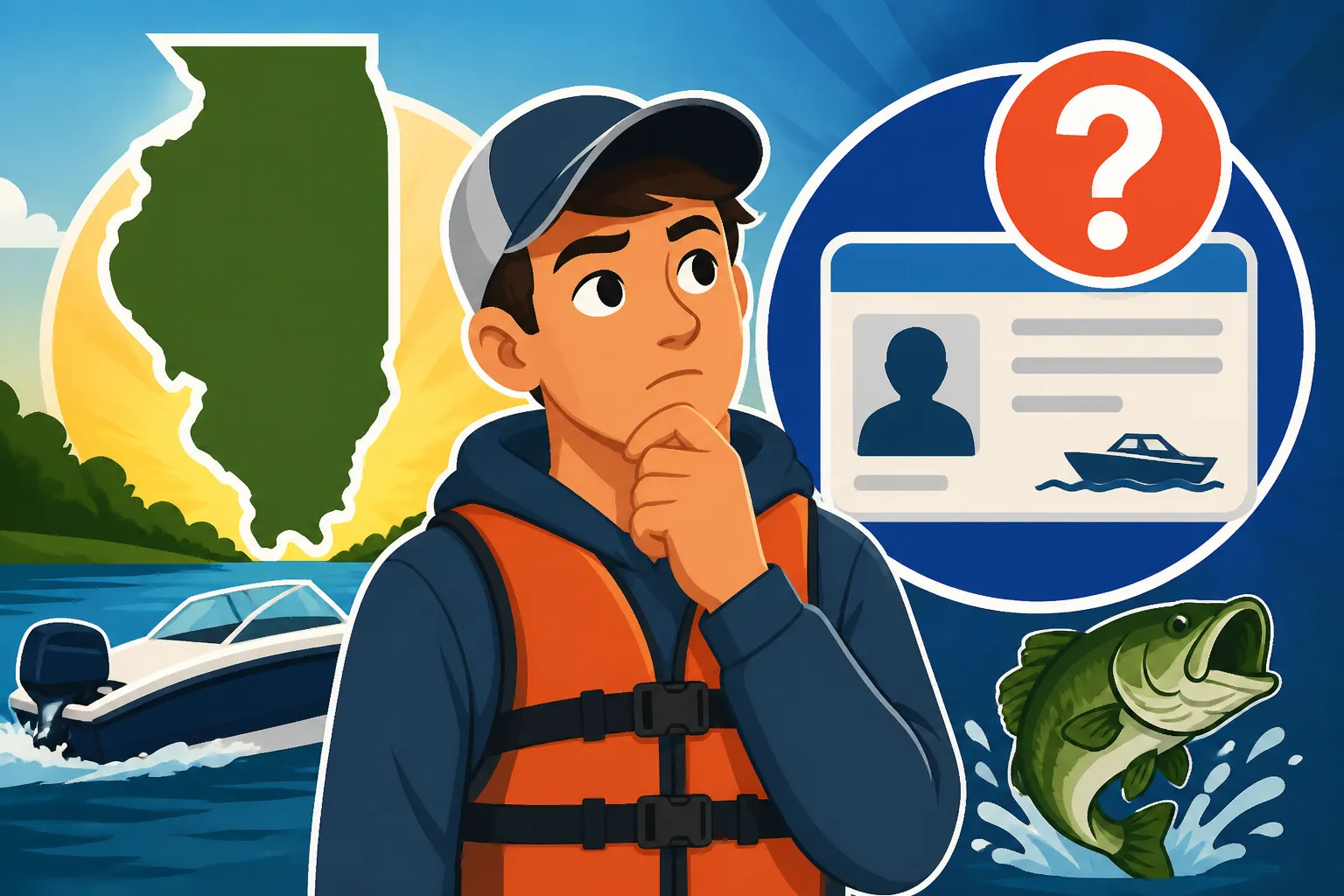
It's a common question, especially for those who are just getting into the wonderful world of Illinois fishing and boating: do I need another card just to operate my boat? With so many regulations to keep track of, it's easy to feel overwhelmed. However, if you were born after a specific year, the answer is a clear yes, and understanding this requirement is crucial for staying safe and legal on Illinois waterways. This guide will clarify exactly who needs a boater education card, focusing on the often-confusing "born after 1998" rule, and walk you through how to get yours.
The Core Rule: Who Needs the Card and Why
Understanding the Age Cutoff
Let's cut right to the chase, because this is where many new boaters, especially younger ones, get tripped up. In Illinois, if you were born on or after January 1, 1998, you are legally required to possess a valid Boating Safety Certificate when operating any motor-powered vessel with 10 horsepower or more. This isn't just a recommendation; it's a strict mandate under the Illinois Boat Registration and Safety Act. This means if you're a college student home for the summer, a young parent introducing your kids to the joys of the lake, or anyone in between who fits that birthdate criteria, you need this card if your boat has a motor of 10 HP or more.
It can feel a bit like you're constantly needing another piece of paper, but this rule is pretty straightforward. Whether you're piloting a sleek bass boat across Lake Shelbyville, a sturdy pontoon for family outings on Rend Lake, or even just a small jon boat with a modest outboard for a day of fishing the backwaters, if that motor hits 10 horsepower or more, you're in the clear only with that certificate in hand. Don't assume that because your boat is small or you're "just fishing," the rule doesn't apply. The horsepower is the key factor here, alongside your birth year.
The Illinois Department of Natural Resources (IDNR) enforces this rule to promote safety on our busy waterways. Conservation Police Officers (CPOs) are regularly out on the water, checking for everything from proper Illinois Life Jacket and PFD Rules to valid boater education cards. Getting caught without the required certification can lead to fines and disruptions to your much-anticipated day of fishing or boating. It’s far better to be prepared than to have your fun cut short by a simple oversight.
The "Why" Behind Boater Education
Some might see this as another bureaucratic hurdle, but the truth is, boater education programs are fundamentally about saving lives and preventing accidents. Illinois's lakes and rivers, especially popular spots like Carlyle Lake, can become quite crowded, particularly during peak seasons. You'll have anglers, waterskiers, tubers, kayakers, and even commercial traffic all sharing the same space. Without a common understanding of navigation rules, safety protocols, and emergency procedures, the risk of collisions and other dangerous incidents skyrockets.
These courses cover a wide array of crucial topics. You'll learn about essential navigation rules, such as right-of-way, aids to navigation (like buoys and markers), and safe speeds. You'll also delve into boating terminology, understanding how your boat operates, and even basic maintenance tips. Beyond the operational aspects, the courses teach you how to react in emergencies—what to do if someone falls overboard, how to handle a capsized boat, or what steps to take if your engine fails far from shore. They also emphasize responsible boating, like being mindful of environmental impacts and observing proper etiquette.
By requiring boater education, Illinois is investing in the safety of its citizens and visitors. A well-educated boater is a confident boater, more capable of making sound decisions under pressure and contributing to a safer environment for everyone enjoying our beautiful natural resources. It fosters a culture of responsibility on the water, which ultimately makes every trip more enjoyable and secure, whether you're targeting Illinois Walleye Fishing: The Complete Guide or simply cruising with family.
How to Get Your Illinois Boater Education Card
Online Course Options and What to Expect
For many busy folks, the flexibility of online learning is a godsend, and thankfully, getting your Illinois Boater Education Card can be done entirely online. There are several approved online course providers that offer comprehensive programs designed to meet Illinois's requirements. These courses are typically self-paced, allowing you to log in and out as your schedule permits, making it incredibly convenient for those balancing work, family, or other commitments.
When you choose an online course, you'll usually navigate through various modules covering all the essential topics: boating laws, safe operation, emergency procedures, environmental responsibilities, and more. Most programs incorporate interactive elements, videos, and quizzes to reinforce your learning. Once you've completed all the instructional material, you'll take a final exam. Upon successfully passing this exam, you'll be able to print a temporary certificate almost immediately, allowing you to get on the water legally. Your permanent, hard-copy Boating Safety Certificate will then be mailed to you.
Before enrolling, always double-check that the online provider is approved by the Illinois Department of Natural Resources (IDNR). A quick search for "Illinois boater safety course" will usually lead you to official resources or links to approved third-party providers. While you might find study guides or related boating safety items at retailers like Bass Pro Shops or even general online marketplaces like Amazon, remember that the actual certification course must be taken through an official, approved channel to be recognized by the state. This convenient option truly helps make the Illinois Boater Education Card Requirements accessible to a wider audience.
In-Person Classes and Hands-On Learning
While online courses are fantastic for convenience, some people prefer or simply learn better in a traditional classroom setting, and Illinois offers those opportunities too. In-person boater education classes are often taught by certified instructors, who might even be current or retired Conservation Police Officers (CPOs) or members of organizations like the U.S. Coast Guard Auxiliary. These classes provide a structured learning environment, direct interaction with an expert, and the chance to ask questions in real-time.
These classroom courses are typically offered through local park districts, community centers, schools, or even certain marinas and yacht clubs across Illinois. They might run for a full day on a weekend or be spread out over a few evenings. The advantage of an in-person class is the immediate feedback and the potential for group discussions, where you can learn from the questions and experiences of others. Instructors often bring local knowledge to the table, discussing specific challenges or regulations pertinent to popular Illinois fishing spots or rivers you might frequent.
Both online and in-person methods cover the same core curriculum, ensuring you receive comprehensive training that adheres to both state and national boating safety standards. The choice really comes down to your personal learning style and schedule preferences. If you thrive in a classroom environment, appreciate direct instruction, or prefer to minimize screen time, an in-person course might be the perfect fit for you. Check the IDNR website or local recreational guides for schedules and locations of upcoming classes.
Exemptions and What Happens if You Don't Have One
Who Might Be Exempt
While the rule for those born after 1998 is quite broad, there are a few specific exemptions where you might not need an Illinois Boater Education Card. Knowing these can save you unnecessary effort, but it’s critical to verify if you truly qualify. One common exemption is for individuals who hold a valid Merchant Marine Credential issued by the U.S. Coast Guard. These are professional mariners, and their extensive training already far exceeds the recreational boater education requirements.
Another important exemption applies to non-residents visiting Illinois. If you're from out-of-state and already possess a valid boating safety certificate or license issued by your home state, and that state's requirements are substantially similar to Illinois', you typically do not need to obtain an additional Illinois certificate. So, if you're planning a fishing trip to the Mississippi River from Iowa or Missouri, and you have your home state's card, you should be good to go. However, always carry that proof with you!
There are also temporary exemptions, such as operating a boat under the direct, on-board supervision of another person who is at least 18 years old and holds a valid Illinois Boating Safety Certificate. This is often the case when a certified adult is teaching a new boater the ropes. Additionally, individuals actively enrolled in an approved boating safety course (like a U.S. Coast Guard Auxiliary or U.S. Power Squadrons course) might be temporarily exempt until course completion. However, these are specific scenarios, and it's vital to ensure you meet all conditions. When in doubt, it’s always safest to just get the card yourself rather than risking a misinterpretation of the rules. The Illinois Boater Education Card Age Requirement article dives deeper into this topic.
The Consequences of Non-Compliance
Ignoring the boater education card requirement, especially if you fall into the "born after 1998" category and operate a 10 HP+ motorboat, is not advisable. If you're stopped by an Illinois Conservation Police Officer (CPO) and found to be in violation, you will likely receive a citation. This isn't a friendly suggestion; it's a legal notice that can carry penalties, similar to the Penalties for Fishing Without a License in Illinois. The consequences typically involve fines, and in some cases, it could even lead to a requirement to complete a boater education course within a certain timeframe or face further penalties.
Beyond the immediate legal and financial repercussions, there’s the much more significant risk to safety. Boating without proper education means you might not understand critical navigation rules, right-of-way protocols, or how to react in emergency situations. This lack of knowledge significantly increases your chances of being involved in an accident, which can result in serious injuries, property damage, or even fatalities. Imagine being caught in a sudden storm on Lake Michigan or having a mechanical failure on the Illinois River; without the proper training, a manageable situation can quickly become life-threatening.
The boater education card is more than just a piece of plastic or paper; it represents a fundamental understanding of responsible and safe boating practices. It's an investment in your safety, the safety of your passengers, and the safety of everyone else enjoying Illinois’s beautiful waterways. Don't let a simple oversight turn a pleasant day on the water into a regrettable and costly experience. Get your certification and boat with confidence.
Here's a quick look at who needs a Boater Education Card in Illinois for motorboats 10 HP or greater:
| Birth Year Category | Boater Education Card Required? | Notes |
|---|---|---|
| Born on or after Jan 1, 1998 | Yes | This is the primary group for whom the card is mandatory. |
| Born before Jan 1, 1998 | No | Generally exempt based on age, though education is always recommended for safety. |
| Non-Resident with Approved Out-of-State Card | No | Must be from a state with substantially similar boater education requirements. Carry proof! |
| Operating under 18+ Certified Supervisor | Potentially Temporary | Must be under direct, onboard supervision of a certified adult. This is not a permanent exemption. |
Beyond the Card: Staying Safe on Illinois Waters
Essential Safety Gear You'll Need
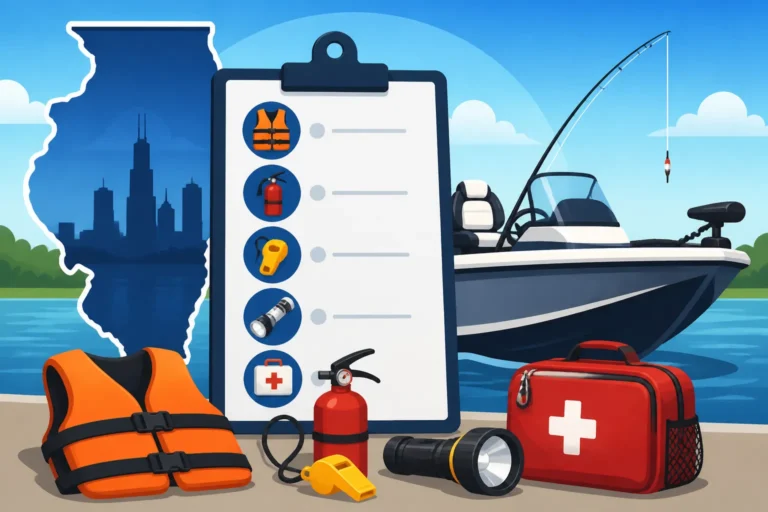
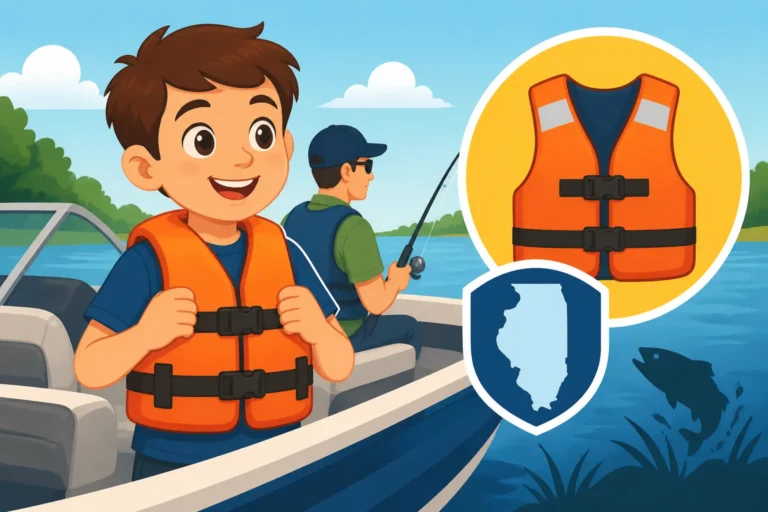
Obtaining your boater education card is a fantastic accomplishment, marking you as a responsible operator. However, the card is just the beginning of truly safe boating. Every time you leave the dock, you need to ensure your vessel is properly equipped with all the necessary safety gear. This isn't just about adhering to the law and avoiding fines; it's about being prepared for any unexpected situation on the water. Foremost among these are personal flotation devices (PFDs), or life jackets. The law mandates that you must have one Coast Guard-approved PFD for every single person on board your boat. More strictly, children under 13 must wear their PFDs at all times while the boat is underway, unless they are safely inside an enclosed cabin. These rules save lives, plain and simple.
Beyond life jackets, if your boat is 16 feet or longer, you'll also need a throwable Type IV PFD, like a ring buoy or a buoyant cushion, immediately accessible for emergencies. Navigation lights are crucial for operating during periods of reduced visibility, whether it's dawn, dusk, fog, or if you're enjoying some Night Fishing Techniques. A sound-producing device, such as a horn or whistle, is also mandatory for signaling other vessels and alerting for hazards. Depending on your boat's size and fuel system, a marine-rated fire extinguisher is also often required. You hope you'll never need it, but if a problem arises, it’s indispensable.
It's a smart habit to regularly inspect all your safety gear. Check life jackets for wear and tear, test your lights, and ensure your fire extinguisher is charged and within its expiration date. You can easily find all the required Illinois Boating Safety Equipment Checklist for New Owners at major retailers like Bass Pro Shops, or browse a wide selection of brands and models online via Amazon. Investing in quality safety gear is just as important as investing in your fishing tackle. For more detailed information on PFDs, make sure to read up on Illinois PFD Storage and Accessibility Rules.
Good Boating Practices for Everyone
Even with your boater education card and a boat fully stocked with safety gear, the foundation of safe boating truly lies in good practices and common sense. One of the most important habits is constant situational awareness. Always keep a vigilant lookout for other boats, swimmers, submerged hazards, and rapidly changing weather. Illinois weather, especially during the spring and summer, can be notoriously unpredictable. A calm, sunny morning can quickly devolve into a dangerous thunderstorm, so monitor weather forecasts and watch the sky for any signs of trouble. If conditions deteriorate, heading back to shore should always be your top priority.
It’s also crucial to remember that operating a boat under the influence of alcohol or drugs is strictly prohibited and extremely dangerous. Much like driving a car, boating while impaired significantly compromises your judgment, reaction time, and overall ability to operate safely, dramatically increasing the risk of accidents. Always designate a sober operator if you plan to consume adult beverages on the water. Furthermore, demonstrating courtesy and respect for fellow boaters, anglers, and property owners is essential. Adhere to "no wake" zones, maintain safe distances from other vessels, and keep noise levels reasonable, particularly in residential areas or during early morning and late evening hours. Whether you are navigating the Illinois River Fishing Guide or cruising a smaller lake, being a courteous boater enhances the experience for everyone.
Finally, a simple yet highly effective safety measure is to always file a float plan. Inform a trusted friend or family member on shore about your itinerary: where you're going, your estimated return time, and who is accompanying you. This simple step can be a lifesaver, providing crucial information to search and rescue teams if you become unexpectedly overdue. By combining your boater education knowledge, proper gear, and these responsible practices, you’ll ensure many safe and enjoyable trips on Illinois's magnificent waterways.
Disclaimer
This article is for general informational purposes only and does not constitute professional advice. Laws, prices and regulations vary by location and change over time. Consult a qualified professional for guidance on your specific situation.