Best Boats for Lake Shelbyville Fishing
Lake Shelbyville is a truly incredible fishery, but let's be honest, it can be a real challenge to navigate, especially when you're trying to figure out the perfect vessel to get you to those elusive fish. With its vast open water, stump fields, and constantly changing conditions, picking the right boat isn't just a preference; it's a strategic decision that can make or break your day on the water. This guide is all about helping you understand the different types of fishing boats that shine on Lake Shelbyville, so you can confidently choose the one that fits your angling style and budget.
Understanding Lake Shelbyville's Unique Challenges
Before we even talk about specific boats, we have to acknowledge what makes Lake Shelbyville such a special, yet demanding, body of water. It's not a calm farm pond or a small, predictable river. This sprawling reservoir, managed by the U.S. Army Corps of Engineers, presents a diverse range of fishing environments that demand versatility from your watercraft. Ignoring these factors can lead to frustrating days and even damage to your equipment.
The Vastness and Wind Factor
Lake Shelbyville is truly expansive, stretching over miles with vast open water that can turn choppy very quickly. One moment it's calm, and the next, a stiff breeze picks up, creating significant waves. This means a smaller, lighter boat might feel like a toy in certain conditions, making it uncomfortable or even unsafe to cross large expanses to reach your preferred fishing grounds. You want a boat that feels solid underfoot, even when the lake is kicking up.
Think about those days when you're trying to fish a specific humpor channel edge, and the wind is just pushing you around relentlessly. A boat with a good hull design for cutting through chop, or one that offers superior stability at rest, becomes invaluable. This isn't just about comfort; it's about being able to effectively present your bait and stay on your spot without constantly fighting the elements.
Navigating Stumps and Shallow Water
Beneath the surface of Lake Shelbyville lies a submerged forest of timber, especially in certain coves and creek arms. While these stump fields are magnets for bass, crappie, and other species, they are also notorious for prop damage and hull scrapes. A boat with a shallow draft or one that can easily navigate around obstacles without too much concern for lower unit damage is a huge plus. This is where experience on the lake really helps, but even seasoned anglers appreciate a boat that can handle a bump or two.
When you're trying to sneak into a shallow backwater area where the crappie are stacked in the brush, having a boat that draws little water and can be propelled by a trolling motor through tight spots is a game-changer. It allows you to access areas that other, deeper-drafting vessels simply can't reach, opening up a whole new world of fishing opportunities.
Multi-Species Angling Requirements
Lake Shelbyville is a multi-species angler's paradise, offering fantastic opportunities for largemouth and smallmouth bass, walleye, crappie, bluegill, and even catfish. This variety means your fishing style might change from one trip to the next, or even throughout a single day. You might be casting for bass one hour and then setting up for crappie the next. Your boat needs to support this flexibility, offering features that cater to different techniques.
Consider the gear. A bass angler needs space for multiple rods and tackle boxes. A crappie angler might want multiple rod holders for spider rigging. A walleye troller needs space for downriggers or planer boards. A general-purpose boat might try to do it all, but you'll need to think about which species you prioritize if you're looking for specialized features. Lake Shelbyville Fishing Guide covers some of these nuances.
Different Boat Types for Different Angling Styles
Given Lake Shelbyville's diverse nature, there isn't a single "best" boat for everyone. Your ideal boat depends heavily on your primary target species, your preferred fishing methods, and how many people typically join you on the water. Let's break down some common boat types and how they stack up for Lake Shelbyville.
Bass Boats: Speed and Precision for Tournament Anglers
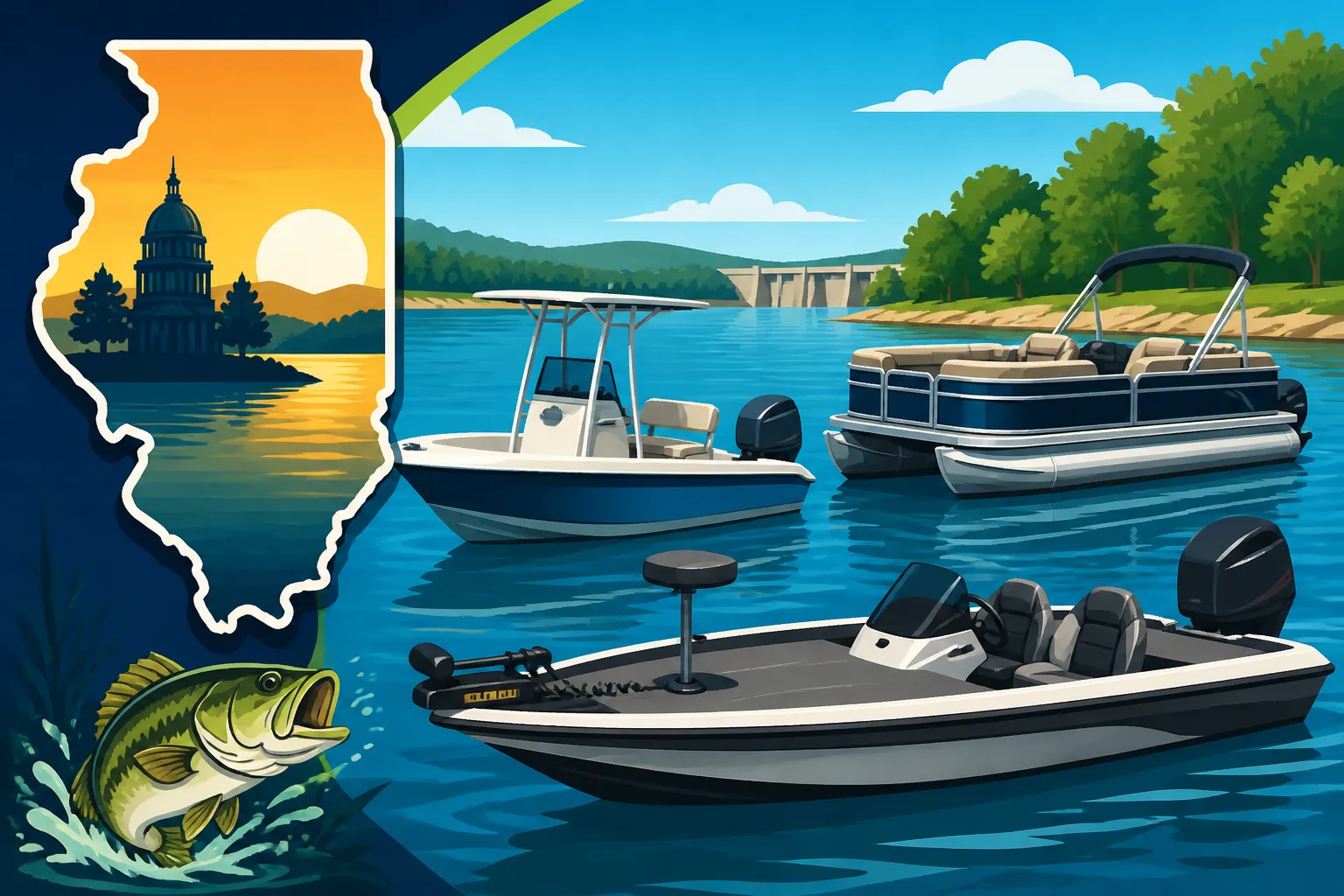
Ah, the classic bass boat. These are the sleek, powerful machines you see flying across the water, often adorned with sponsor decals. They are built for speed and quick access to fishing spots, designed for anglers who prioritize efficiency and competitive fishing. If your heart truly beats for largemouth and smallmouth bass, and you enjoy hitting multiple spots quickly, a bass boat might be calling your name.
Bass boats typically feature powerful outboard motors, shallow drafts, and a flat casting deck that's perfect for pitching and flipping. They come equipped with multiple livewells to keep your catch healthy, plenty of rod storage, and often advanced electronics like powerful trolling motors and fish finders. The trade-off, however, is often less comfortable seating for passengers during long runs in choppy water, and they can be pricier. While a fantastic choice for serious bass fishermen, they might not be the most versatile for a family looking to target panfish or enjoy a leisurely day on the water. Many anglers start their search for these specialized rigs at places like Bass Pro Shops, where a variety of models are often on display.
Pontoon Boats: Comfort and Versatility for Family Fun
When comfort, space, and a relaxed fishing experience are top priorities, pontoon boats often rise to the top of the list. While not designed for high-speed runs or hardcore tournament fishing, modern pontoons can be rigged very effectively for various angling pursuits on Lake Shelbyville. They offer unmatched stability, even in decent chop, and provide ample room for family and friends.
Imagine a beautiful Saturday afternoon, with the sun shining, and you're out on Lake Shelbyville with your family. The kids are catching bluegill off the side, while you've got a couple of lines out for catfish. A pontoon boat provides the stable platform and comfortable seating to make this dream a reality. Many feature comfortable lounges, bimini tops for shade, and can easily be outfitted with rod holders, a portable livewell, and even a fishing station. They excel at anchoring in a cove for crappie or slowly drifting a channel for walleye. While not the fastest, their comfort and social aspect make them fantastic for all-around lake enjoyment.
Jon Boats: Budget-Friendly and Stump-Proof Access
For anglers on a tighter budget or those who prioritize accessing the shallowest, most challenging parts of Lake Shelbyville, a jon boat can be an excellent choice. These flat-bottomed, aluminum boats are known for their rugged durability and shallow draft. They are less forgiving in rough water due to their flat bottom, but they can take a beating and often cost significantly less than other boat types.
A smaller jon boat with a modest outboard or even just a trolling motor can be perfect for exploring those stump-filled backwaters and creek arms that larger, heavier boats avoid. They're easy to launch, retrieve, and store, making them a great option for solo anglers or pairs who want a no-frills, highly functional fishing machine. While you might not be crossing the main lake at full throttle in a heavy chop, a jon boat excels at getting you into the thick of the action where the fish hide. For outfitting these boats, many anglers turn to online retailers like Amazon for smaller accessories, or local bait shops for specific gear.
Deep-V Boats: Conquering the Waves for Walleye and Crappie
If you frequently encounter windy conditions and chop on Lake Shelbyville, especially when targeting species like walleye or crappie that often hold in open water or along wind-swept points, a deep-V aluminum or fiberglass boat might be your ideal vessel. These boats are designed with a sharper V-shaped hull at the bow, which helps them cut through waves and provide a smoother, drier ride than a flat-bottomed boat.
Deep-V boats offer a good balance of stability, ride comfort, and often come equipped with features useful for trolling and jigging, such as large livewells, ample storage, and robust electronics mounting options. They are particularly popular among walleye anglers who spend a lot of time on open water. While they may draw a bit more water than a bass boat, their ability to handle rough conditions often outweighs this in a lake as large and prone to wind as Lake Shelbyville. This kind of boat is a workhorse, allowing you to stay on the water when others are heading back to the ramp. If you're chasing walleye specifically, you'll appreciate how these boats handle the challenges.
Key Features to Look For in a Lake Shelbyville Fishing Boat
Once you have an idea of the type of boat that suits your style, it's time to dig into the specific features that will enhance your fishing experience on Lake Shelbyville. These considerations go beyond just the hull and engine, focusing on the practical aspects that make a day on the water productive and enjoyable.
Trolling Motor and Battery Setup
A reliable trolling motor is absolutely essential for fishing Lake Shelbyville. Whether you're sneaking through stumps, holding position on a windy point, or slowly moving along a weed line, a good trolling motor is your silent partner. Look for models with ample thrust (at least 24-36V systems for larger boats on a lake this size) and, ideally, GPS spot-lock capabilities. Spot-lock is a game-changer, allowing you to electronically hold your position without dropping an anchor, which is especially useful in stump fields or over deep structure.
The battery setup supporting your trolling motor is equally crucial. You'll want marine-grade deep cycle batteries, and potentially a dedicated starting battery for your outboard. A good onboard charger makes recharging easy, ensuring you're ready for your next trip. Nothing is more frustrating than a dead trolling motor battery halfway through a fishing trip, leaving you adrift or constantly having to run your main engine. This is an area where investing in quality pays off significantly.
Livewell and Storage Options
For any angler looking to keep their catch fresh or maintain live bait, a good livewell system is non-negotiable. Look for insulated livewells with aeration systems to keep fish healthy. The size and shape will depend on your target species – a crappie angler might want a longer, shallower well, while a bass angler needs a well that can accommodate larger fish for tournaments.
Beyond the livewell, consider general storage. Where will your rods go? Is there enough dry storage for tackle, safety gear, and personal items? Do you have dedicated compartments for tackle boxes, or built-in coolers? Clutter on a boat can be a safety hazard and a source of frustration. A well-designed boat will have intelligently placed storage solutions that keep your gear organized and easily accessible. Tackle Box Setup for Illinois Species might give you some ideas for organizing your gear once you have the storage.
Electronics and Navigation Aids
Modern fishing boats are often equipped with an array of electronics that can dramatically improve your success. A quality fish finder (sonar) with GPS mapping is incredibly helpful for navigating Lake Shelbyville's contours, identifying submerged timber, and locating fish. Side imaging and down imaging technologies can provide detailed views of the underwater world, helping you pinpoint structure and schools of fish.
Given the lake's size and numerous points and coves, reliable GPS navigation is also crucial. It allows you to mark productive spots, save routes, and safely return to the launch ramp, even in low light or foggy conditions. A good chart plotter can display detailed lake maps, helping you understand depth changes and potential hazards. While these systems can be an investment, they offer invaluable insights into what's happening beneath your boat and where to find the fish.
| Boat Type | Pros for Lake Shelbyville | Cons for Lake Shelbyville | Ideal for |
|---|---|---|---|
| Bass Boat | High speed, shallow draft, ample rod storage, powerful trolling motors, large livewells | Less comfortable in rough water, limited seating, specialized | Tournament bass anglers, serious bass fishermen, quick spot-to-spot fishing |
| Pontoon Boat | Excellent stability, abundant space, comfortable seating, versatile for family/social | Slower speeds, less maneuverable in tight spots, not ideal for heavy casting/flipping | Family outings, relaxed multi-species fishing, entertaining guests |
| Jon Boat | Affordable, extremely shallow draft, rugged, easy to maintain, accesses tight spots | Poor ride in chop, minimal comfort, limited storage/features | Budget-conscious anglers, shallow water specialists, stump field navigation |
| Deep-V Boat | Smooth ride in chop, good for open water, versatile for trolling/jigging, ample rod storage | Can be heavier/deeper draft than bass boats, less flat deck space | Walleye, crappie, multi-species anglers who brave windy conditions |
Budget and Maintenance Considerations for Your Boat
Owning a boat is a significant investment, and it goes beyond the initial purchase price. Before you commit, it's crucial to consider the ongoing costs of ownership and how you'll maintain your vessel to ensure years of enjoyment on Lake Shelbyville.
Initial Purchase and Financing
Boat prices can vary wildly depending on the type, size, age, and features. A basic jon boat might be quite affordable, while a fully rigged bass boat or a large deep-V can represent a substantial financial commitment. Factor in not just the boat itself, but also the engine, trailer, and any initial electronics or safety gear you'll need. Don't forget sales tax and registration fees, which are part of the upfront cost.
Many people finance their boat purchase, so research loan options and understand the monthly payments. It's wise to start with a clear budget and stick to it, remembering that there will always be unexpected costs. Sometimes, finding a good used boat can be a fantastic way to get on the water without breaking the bank, but be sure to have it inspected by a qualified marine mechanic.
Ongoing Maintenance and Operating Costs
Just like a car, a boat requires regular maintenance. This includes routine engine servicing (oil changes, spark plugs, fuel filters), winterization and de-winterization, and periodic checks of electrical systems, pumps, and trailer components. Neglecting maintenance can lead to costly repairs down the line, so factor these expenses into your annual budget.
Operating costs also include fuel, which can add up quickly, especially with larger engines. Insurance is another important consideration, protecting your investment against accidents or theft. Lastly, don't forget storage costs if you don't have space to keep the boat at home, or launching fees at some ramps. Illinois Boat Registration Requirements Explained and Illinois Boat Registration Renewal Process are vital reads before you even think about putting your boat in the water.
Depreciation and Resale Value
Boats, like most vehicles, depreciate over time. While you're buying it for enjoyment, it's worth considering the long-term value. Well-maintained boats from reputable brands tend to hold their value better. If you anticipate upgrading in a few years, choosing a popular model that is in good condition will generally fetch a better price on the used market.
Keeping meticulous records of all maintenance, repairs, and upgrades can significantly boost your boat's resale value. A buyer will have more confidence in a boat with a documented history of care. While not the primary reason to buy a boat, being mindful of depreciation helps make a smarter overall investment.
Getting Your Boat Ready: Registration, Safety, and Gear
Once you've found your ideal boat for Lake Shelbyville, there are a few essential steps you need to take before you can hit the water. These aren't just bureaucratic hurdles; they're about ensuring your safety, the safety of others, and compliance with Illinois regulations.
Boat Registration and Titling
Every motorized boat, and even some non-motorized ones over a certain length, needs to be registered with the State of Illinois. This involves submitting the proper paperwork, proof of ownership, and paying the necessary fees. You'll receive a registration decal that must be displayed on your boat, along with a registration card that should always be onboard when you're using the vessel.
Don't forget about titling, which is separate from registration and establishes legal ownership. If you purchase a used boat, make sure the title transfer is completed correctly to avoid future headaches. Renewing your registration annually or biennially is also required. Always double-check the current Illinois Department of Natural Resources (IDNR) guidelines to ensure you're up to date. You can find more specific details in Illinois Boat Registration Basics for First-Time Owners.
Required Safety Equipment
Safety on the water is paramount, especially on a large lake like Shelbyville. Illinois boating laws mandate specific safety equipment that must be carried on board. This typically includes:
- Personal Flotation Devices (PFDs): You must have a U.S. Coast Guard-approved PFD for every person on board. Children under a certain age (often 13) are usually required to wear a PFD while the boat is underway.
- Throwable PFD: In addition to wearable PFDs, boats 16 feet or longer must carry one Type IV throwable device, like a cushion or ring buoy.
- Fire Extinguisher: Most boats with an enclosed fuel compartment or an inboard engine will need a Coast Guard-approved fire extinguisher.
- Visual Distress Signals: While not always required for inland waters, it's a good idea to carry flares or an orange flag.
- Sound-Producing Device: A whistle, horn, or bell to signal other boaters.
- Navigation Lights: If operating between sunset and sunrise, or during periods of restricted visibility, proper navigation lights are essential.
Familiarize yourself with all the requirements. A quick check before each trip can prevent fines and, more importantly, ensure everyone's safety. For a deep dive, see Illinois Life Jacket and PFD Rules and Illinois Boating Safety Equipment Checklist.
Boater Education Requirements
Depending on your age and the horsepower of your boat's engine, you might be required to complete a boater education course in Illinois. Generally, anyone born after a certain date (often January 1, 1998) needs to pass a boating safety course and carry their Boater Education Card when operating a motorized boat with an engine of 10 horsepower or more.
Even if you're not legally required, taking a boater education course is highly recommended for all boaters. It teaches essential navigation rules, safety procedures, and responsible boating practices that can prevent accidents and make you a more confident operator on Lake Shelbyville. Knowing the rules of the road (or water, in this case!) is crucial for a safe and enjoyable experience. Illinois Boater Education Card Requirements has the full rundown.
Essential Fishing Gear and Accessories
Finally, let's talk about the fun stuff – your fishing gear! Beyond your rods, reels, and tackle, there are some boat-specific accessories that can significantly improve your Lake Shelbyville experience.
- Anchors: While a good trolling motor with spot-lock is amazing, a traditional anchor (or two, for a stern anchor) is still invaluable for holding steady in windy conditions or on soft bottoms.
- Net: A good landing net is crucial for landing bigger fish safely and efficiently, especially when fishing solo.
- Dock Lines and Fenders: Protect your boat when tying up at docks or approaching other vessels.
- First-Aid Kit: Always have a well-stocked first-aid kit on board for minor injuries.
- Toolkit: A basic set of tools for minor repairs or adjustments can be a lifesaver.
- Weather Radio/App: Stay informed about changing weather conditions. Lake Shelbyville weather can change fast!
Equipping your boat with the right gear ensures you're prepared for anything the lake throws your way. You might find great deals on some of these essentials from online retailers, or explore options at a large outfitter like Bass Pro Shops for more specialized items.
Disclaimer
This article is for general informational purposes only and does not constitute professional advice. Laws, prices and regulations vary by location and change over time. Consult a qualified professional for guidance on your specific situation.