Best Bait for Rainbow Trout Fishing
If you've ever stood by an Illinois stream or lake, rod in hand, wondering why those beautiful rainbow trout just aren't biting, you're not alone. It can be incredibly frustrating to see them jump and swirl, seemingly oblivious to whatever you're offering. The truth is, rainbow trout can be a bit finicky, but with the right bait and presentation, you can dramatically increase your chances of success. This guide is all about breaking down the best baits for rainbow trout fishing in Illinois, giving you the insider tips to fill your cooler or enjoy a fantastic catch-and-release experience.
Understanding Rainbow Trout Feeding Habits in Illinois
Before we dive into the tackle box, it’s really helpful to understand what makes a rainbow trout tick. These fish, especially the ones regularly stocked in Illinois waters, have a unique relationship with food that impacts your bait choice. Knowing their natural inclinations and hatchery upbringing is key to unlocking consistent bites.
Why Trout Are Picky Eaters (Sometimes)
Rainbow trout, whether wild-born or hatchery-raised, are opportunistic feeders by nature. In their natural environment, they'd be gorging on aquatic insects like mayflies, caddisflies, and stoneflies, along with terrestrial insects that fall into the water. Small minnows, crayfish, and even the occasional salamander are also on their menu. This diverse diet means they're used to a variety of shapes, sizes, and movements in their food.
However, the "picky" part often comes into play when you're fishing heavily pressured waters or dealing with recently stocked fish. Stocked trout, for instance, spend their early lives in hatcheries eating specific pellets. When they're first released, they're often disoriented and still have a strong preference for what they've always known. This can make them seem incredibly selective, ignoring what a wild trout might eagerly devour. Understanding this distinction is crucial: are you trying to appeal to a wild instinct or a hatchery habit?
The Importance of Matching the Hatch (or the Pellet)
The concept of "matching the hatch" is a cornerstone of fly fishing, where anglers try to imitate the insects currently emerging and abundant in the water. For trout, this means presenting a bait that closely resembles what they're naturally feeding on. If you see a lot of small minnows darting around, a small swimbait or a shiny spoon might be just the ticket. If tiny midges are buzzing the surface, a miniature jig or fly could be far more effective than a big nightcrawler.
For stocked trout, "matching the pellet" is almost as important. Those hatchery pellets have a distinct smell, color, and consistency. This is where scented dough baits really shine, as they are often formulated to mimic these pellets. Even if the trout have been in the water for a while and have started to diversify their diet, that ingrained memory of easy-to-eat pellets can still draw them in. Always observe the water and consider the source of the fish you're targeting; it will guide your bait selection immensely.
Top Artificial Baits for Illinois Rainbow Trout
Artificial baits can be incredibly effective, especially for newly stocked trout or when you want to cover a lot of water quickly. They offer variety in color, action, and scent that often triggers a strike when natural baits might fall short.
PowerBait and Scented Dough Baits: The Stocked Trout's Favorite
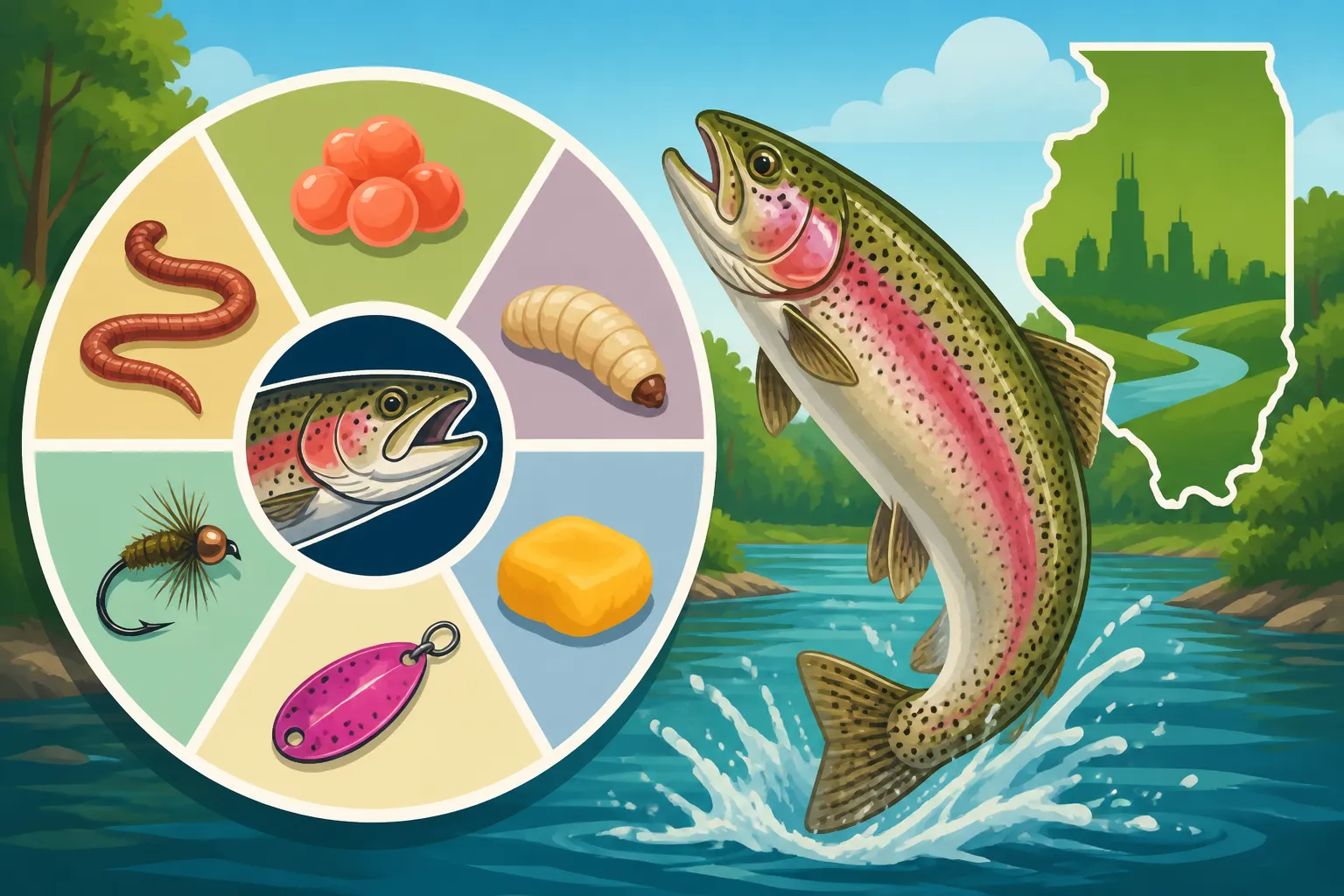
When it comes to stocked rainbow trout in Illinois, it’s hard to beat PowerBait or similar scented dough baits. Brands like Berkley PowerBait have become synonymous with trout fishing for a reason. These baits are designed to mimic the hatchery pellets that these fish were raised on, making them instantly recognizable and appealing. They come in an incredible array of colors, from vibrant neons like chartreuse and orange to more natural hues like white and rainbow. The key is their potent scent, which draws in curious trout, and their floating action.
To use them effectively, you'll want to mold a small, pea-sized ball around a treble hook or a single bait hook, ensuring the hook point is fully concealed. The goal is for the bait to float just off the bottom, presenting a natural, unweighted target. Experiment with different colors on any given day, as trout can show strong preferences based on water clarity and light conditions. If one color isn't working, don't be afraid to switch it up! You can often find a wide selection of these baits, along with different hook sizes, easily available on platforms like Amazon, making it simple to stock up before your next outing.
Spinners and Spoons: Flash and Vibration for Aggressive Strikes
For a more active approach, or when trout have been in the water for a while and are feeding more naturally, spinners and spoons are phenomenal choices. These lures are designed to imitate small baitfish, creating flash and vibration that can trigger aggressive strikes. Classic spinners like Mepps Aglia or Rooster Tail, with their rotating blades, send out irresistible pulses in the water. Spoons such as the Kastmaster or Little Cleo, with their wobbling action, perfectly mimic a fleeing or injured minnow.
The beauty of spinners and spoons is their versatility. You can cast them and retrieve them at varying speeds, or even let them flutter through the water column. They are particularly effective in moving water, like small rivers or streams, where the current helps activate their action, but they work wonders in lakes too, especially around structure or drop-offs. Pay attention to size: smaller lures (1/16 oz to 1/8 oz) are usually best for trout. Consider colors that stand out in murky water (bright colors) or blend in with natural baitfish in clear water (silver, gold, or even subtle patterns). Best Time to Fish in Illinois for aggressive trout often coincides with cooler water temperatures, making these lures particularly effective in spring and fall.
Small Jigs and Flies: Finesse for Wary Trout
When trout are a bit more educated, or conditions call for a more subtle approach, small jigs and flies can be incredibly deadly. Think about micro jigs, often tipped with a piece of worm or a Berkley Gulp! Alive! maggot. Marabou jigs, with their pulsating feather tails, are fantastic for imitating aquatic insects or small forage. Trout magnets, which are tiny jig heads paired with even tinier soft plastic bodies, offer an incredibly realistic presentation for finicky fish.
For those who enjoy fly fishing, or even just fishing with a fly under a bobber, there's a whole world of patterns to explore. Nymphs (like a Pheasant Tail or Hare's Ear) imitate subsurface insects, while wet flies and streamers can imitate baitfish or larger emerging insects. Even a simple dry fly, presented on the surface during a hatch, can elicit explosive strikes. The key with jigs and flies is finesse – lighter lines, delicate presentations, and a slow, natural drift or retrieve. These tiny offerings can often convince a wary trout that something natural and easy to eat is just drifting by. For those exploring different jig and fly options, online retailers are a good place to broaden your selection, though local bait shops will have regional favorites.
Effective Natural Baits for Illinois Rainbow Trout
While artificial baits have their place, sometimes nothing beats the real thing. Natural baits often carry a scent and texture that trout simply can't resist, making them a go-to for many successful anglers.
Worms: The Universal Trout Attractor
Ah, the humble worm! It's practically the universal bait, and rainbow trout are certainly no exception. Nightcrawlers, red wigglers, or even garden worms are incredibly effective because they are a natural part of a trout's diet. They offer irresistible scent, natural movement, and are often easy to come by. Whether you're fishing a stream, a pond, or a lake, a well-presented worm is almost always a solid bet.
For smaller trout or when they're being particularly shy, you might opt for a smaller piece of a nightcrawler or a whole red wiggler, threading it onto a small, sharp hook (size 8 or 10 is usually good). The goal is to keep the worm lively and wiggling, making it look as natural as possible. For larger trout, a whole nightcrawler might be more appealing. You can fish worms directly on the bottom with a small split shot, or suspend them under a bobber. The natural juices and movement are a siren song for hungry trout, making them one of the Best Bait for Rainbow Trout Fishing options universally.
Corn and Marshmallows: Surprisingly Effective for Stocked Fish
This one might sound a little strange if you're new to trout fishing, but regular kernel corn and miniature marshmallows are surprisingly effective baits for stocked rainbow trout, especially in lakes and ponds. The theory goes that these baits closely resemble the color and size of the pellets trout are fed in hatcheries. More importantly, they float! This makes them ideal for presenting just off the bottom where trout often cruise.
You can fish corn kernels directly on a small hook, or thread a small marshmallow onto the hook. Often, anglers will combine them, using a marshmallow for flotation and a few kernels of corn for added visual appeal and scent. A popular trick is to soak your corn in various scents (like garlic or anise) to give it an extra kick. This method works best with a light leader and a small split shot or bottom weight, allowing the bait to rise enticingly. It’s a simple, inexpensive, and often incredibly effective way to fool those pellet-trained trout.
Salmon Eggs and Roe: A Natural Delicacy
Salmon eggs and various types of roe are another fantastic natural bait for rainbow trout. These are packed with protein and nutrients, making them a high-value food source that trout instinctively recognize. Whether you're using single cured salmon eggs or small clusters of roe, their vibrant color and natural scent are hard for trout to ignore. They closely mimic the eggs of other fish species, which trout will readily consume in the wild.
These baits are best fished on very small, light hooks (size 10-14), often drifted naturally with the current in a stream or suspended under a bobber in still water. For single eggs, a very light split shot a foot or two above the hook will help get them down without hindering their natural drift. You can also use "fake" or scented salmon eggs, which offer similar appeal and are more durable. The key is to keep the presentation as natural and unobtrusive as possible, letting the bait's inherent appeal do most of the work.
Rigging Techniques and Presentation Tips for Success
Having the right bait is only half the battle. How you present it can make all the difference between a frustrating day and a successful one. Mastering a few key rigging techniques will greatly improve your catch rate.
The Simple Carolina Rig (or Slip Sinker Rig) for Bottom Fishing
The Carolina rig, often called a slip sinker rig in trout fishing circles, is arguably one of the most effective and popular ways to present floating baits like PowerBait, corn, or marshmallows. Its main advantage is that it allows the fish to pick up the bait and move away without feeling the resistance of the weight immediately, which can lead to more solid hooksets.
Here's how you set it up: First, thread an egg sinker or a small bullet weight onto your main line. Next, tie on a small barrel swivel, which will prevent the weight from sliding down to your hook. Below the swivel, tie a section of fluorocarbon or monofilament line, typically 18 to 36 inches long, known as your leader. Finally, tie your small, sharp bait hook (sizes 8-12 work well) to the end of the leader. When you cast, the weight sinks to the bottom, but your floating bait remains suspended above it, usually in the strike zone where trout are feeding. Adjusting the length of your leader will change how high your bait floats off the bottom. This rig is particularly excellent for shore fishing access points around various Illinois lakes.
Float and Fly Fishing: Targeting Suspended Trout
When trout are suspended at a specific depth, or when you want to cover a broader area while maintaining precise depth control, float and fly fishing is a fantastic technique. This method involves suspending a small bait (like a micro jig, a tiny soft plastic, or even a fly) beneath a bobber or float. The float indicates bites and keeps your bait in the productive zone.
Choose a small, sensitive bobber – either a traditional round one or a slip bobber if you need to fish deeper than your rod length. Attach your chosen bait or fly to a light leader, usually 18 inches to 3 feet long. Set the bobber stop to the desired depth, cast it out, and let it drift naturally. Pay close attention to any dips, twitches, or pauses in the bobber's movement, as these are often indicators of a bite. This technique is especially effective for the Illinois Rainbow Trout Stocked Lakes and Streams right after they've been stocked, as the trout often cruise at predictable depths. Using a light action rod will enhance the sensitivity and make fighting these feisty fish even more enjoyable.
Understanding Water Conditions and Presentation
The success of any bait or rig often hinges on understanding the water conditions and adjusting your presentation accordingly. Clear water, for instance, demands a much more subtle approach. Use lighter lines (4-6 lb test fluorocarbon leaders are excellent for their invisibility), smaller baits, and slower, more natural retrieves. Trout in clear water have excellent vision and can be easily spooked by heavy line or unnatural movements.
Conversely, in murky or stained water, trout rely more on scent and vibration. This is where scented dough baits, worms, or noisy spinners with bright colors really shine. You can often get away with slightly heavier line in these conditions. Current is another major factor: in streams, always try to present your bait so it drifts naturally with the flow, rather than fighting against it. In lakes, consider how wind and waves might affect your bait's movement and adjust your retrieve or drift speed. The more natural your presentation, the more likely a cautious trout is to commit to a bite. Checking Illinois Fishing Regulations Overview will often provide insights into specific water rules that might impact your approach.
Additional Tips for Your Illinois Rainbow Trout Trip
Beyond just bait and rigging, a few other considerations can make your Illinois rainbow trout fishing experience even more rewarding. From knowing when and where to go, to having the right gear, these tips will round out your angling arsenal.
Best Times and Places to Target Rainbow Trout in Illinois
Illinois isn't known for its wild, self-sustaining trout populations outside of a few cold-water streams, so most of our rainbow trout fishing opportunities come from the Illinois Department of Natural Resources (IDNR) stocking programs. This means the best times to target rainbow trout are typically in the spring and fall, coinciding with these stocking events. The IDNR regularly stocks dozens of lakes and streams across the state as part of its Inland Trout Program, offering fantastic opportunities for anglers.
For a productive trip, keep an eye on the IDNR's stocking schedule, which usually announces specific dates and locations for fall and spring stockings. Places like Rock Springs Pond in Decatur, Axehead Lake near Chicago, and Siloam Springs Lake in southeastern Illinois are popular destinations. Early mornings or late evenings often provide the best bites, especially on sunny days, as trout tend to be more active during cooler periods. Remember that these stocked waters often have specific regulations and require an Illinois Trout and Salmon Stamp Requirements in addition to your standard fishing license, so always check the local rules before you head out. Trout Stamp Required at Stocked Inland Lakes is a good resource to learn more.
Essential Gear Beyond Just Bait
While bait is crucial, having the right supporting gear can make your rainbow trout fishing trip much more comfortable and successful. A lightweight spinning rod and reel combo, typically a 5 to 6.5-foot rod with a light or ultralight action, paired with a small spinning reel spooled with 4-6 pound test monofilament or fluorocarbon line, is ideal. This setup provides the sensitivity needed to detect subtle trout bites and the finesse to handle light lines and small baits. Best Rods and Reels for Illinois Anglers can give you more detailed recommendations.
Don't forget a small pair of pliers or forceps for hook removal, as trout often swallow small hooks. A small landing net is also invaluable for safely landing fish, especially if you plan on catch and release. A vest or small tackle box to keep your various baits, hooks, weights, and bobbers organized is a must. You can find a wide range of these practical fishing accessories, from nets to specialized tackle boxes, readily available on Amazon, ensuring you’re well-equipped for any situation.
Practice Catch and Release When Appropriate
While it’s certainly exciting to keep a limit of trout for dinner, many anglers choose to practice catch and release, especially when fishing for larger or wilder trout. This helps conserve fish populations and ensures future generations can enjoy the same great fishing experiences. If you do plan to release fish, handle them with care. Wet your hands before touching the fish to protect its slime coat, which is vital for its health. Try to remove the hook quickly and gently while the fish is still in the water, or with minimal time out of the water.
If the hook is deeply embedded and cannot be removed easily, it's often better to cut the line as close to the hook as possible. Trout have a remarkable ability to shed hooks over time. Always be aware of the specific regulations for the water body you are fishing, as some areas may have catch-and-release only periods or specific slot limits. Being a responsible angler means respecting the resource and understanding that Illinois Fishing Season and Catch Limit Rules are in place to ensure sustainable fishing for everyone.
Bait Comparison for Illinois Rainbow Trout
| Bait Type | Pros | Cons | Best Uses | Key Characteristics |
|---|---|---|---|---|
| PowerBait/Dough Baits | Strong scent, floating, hatchery mimicry | Less natural action, can be messy | Stocked lakes/ponds, bottom fishing | Scented, buoyant, various colors |
| Spinners | Flash & vibration, active presentation | Can snag, requires retrieve | Moving water, active trout, covering water | Rotating blade, metal body |
| Spoons | Mimics baitfish, good for casting distance | Less effective in slack water | Lakes, deeper water, active trout | Wobbling action, metallic finish |
| Small Jigs | Finesse, versatile, subtle action | Requires light line/tackle, small profile | Wary trout, specific depths | Soft plastic or feather, jig head |
| Worms (Nightcrawlers/Red Wigglers) | Natural scent & action, universally appealing | Can be picked off easily, messy | All water types, all conditions | Live, natural, earthy scent |
| Corn/Marshmallows | Floats, inexpensive, hatchery mimicry | Less natural scent, can be ignored by wild fish | Stocked lakes/ponds, still water | Buoyant, sweet/plain scent |
| Salmon Eggs/Roe | High protein, natural food source | Can be fragile, small presentation | Streams, rivers, clear water | Natural, strong scent, delicate |
Disclaimer
This article is for general informational purposes only and does not constitute professional advice. Laws, prices and regulations vary by location and change over time. Consult a qualified professional for guidance on your specific situation.