Illinois Yellow Perch: Where and When to Catch Them
Many Illinois anglers dream of reeling in the distinct striped beauty of a yellow perch, but consistently locating and catching them can feel like a real puzzle. These feisty panfish offer a fantastic fight and delicious table fare, yet they often hide. This guide will unravel the mystery, revealing where and when to target Illinois yellow perch for your best chances, along with optimal gear.
Understanding Yellow Perch in Illinois Waters
Yellow perch are a true treasure for Illinois anglers, offering a unique blend of challenge and reward. Unlike some of their panfish cousins that are practically jumping onto your hook, perch often require a bit more finesse and understanding of their habits. But trust me, once you crack the code, the experience is incredibly satisfying.
What Makes Yellow Perch So Special and Elusive?
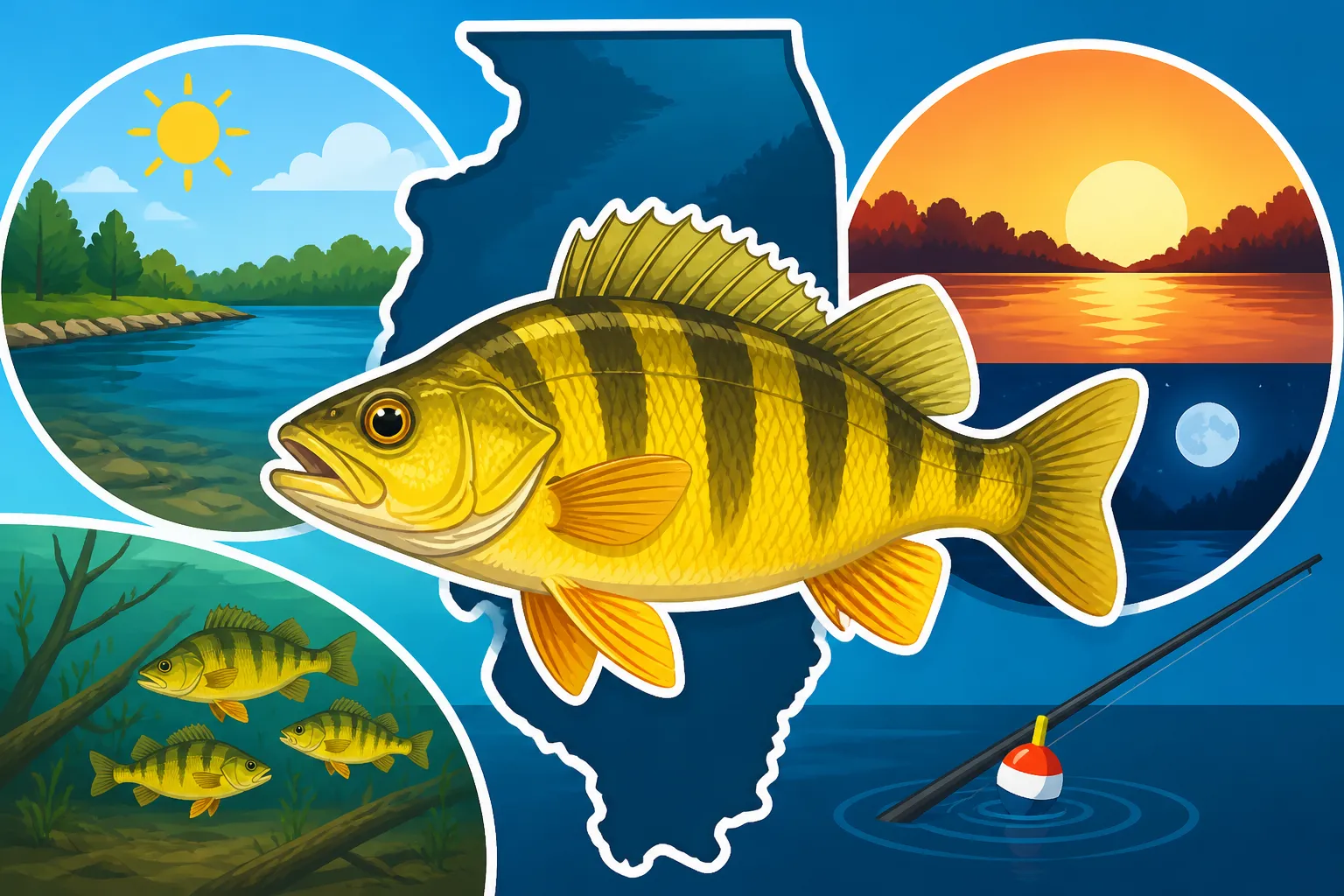
First off, let's talk about their looks. Those vibrant yellow sides with distinct vertical black bars make the yellow perch one of the most handsome fish you can pull from Illinois waters. They're typically smaller than a largemouth bass, usually falling in the 8- to 12-inch range, but don't let their size fool you. A 10-inch perch puts up a surprisingly strong fight on light tackle, often described as a series of strong head shakes and determined dives. Catching a "jumbo" perch over a pound is a real badge of honor among panfish enthusiasts.
Beyond their sporty fight, yellow perch are highly sought after for their culinary value. Their firm, flaky white meat is considered a delicacy by many, often described as having a cleaner, sweeter flavor than some other freshwater fish. This makes them a prime target for anglers looking to fill a cooler for a delicious fish fry. The anticipation of a meal makes the pursuit even more exciting.
So, why are they sometimes so elusive? Yellow perch are schooling fish, meaning they tend to congregate in groups. This can lead to a "feast or famine" situation. You might fish for hours without a bite, then suddenly find yourself in a school, pulling in fish after fish. Their schooling behavior also means they can be on the move, following baitfish or searching for ideal temperatures and structures. They aren't typically found just anywhere in a lake like a bluegill might be; they have specific preferences.
The challenge of locating these schools and understanding their movements is precisely what makes them so special. It's a testament to your angling skills when you successfully pinpoint a productive perch spot. For many, the thrill isn't just in the catch, but in the intelligent hunt, making each successful outing a rewarding puzzle solved. If you're keen to learn more about identifying them, check out How to Identify a Yellow Perch.
Where Illinois Yellow Perch Thrive
Yellow perch, while found in various Illinois waterways, have particular preferences when it comes to habitat. They generally prefer cooler, clearer waters with abundant vegetation, submerged timber, or rocky structures where they can hide from predators and ambush smaller baitfish. Think of them as liking a diverse underwater landscape with plenty of nooks and crannies.
In larger bodies of water, perch often hold to specific depth contours, especially along drop-offs or humps, where they can suspend in deeper, cooler water during warmer months and move shallower to feed. During certain times of the year, particularly the pre-spawn and spawn, they'll congregate in shallower bays or along shorelines with gravelly or sandy bottoms. Understanding these seasonal movements is crucial for consistent success.
They are relatively adaptable, but generally don't thrive in overly turbid (muddy) or extremely shallow, stagnant waters. While you might catch an occasional perch in such conditions, the prime fisheries are typically those with better water quality and more complex underwater features. This preference for cleaner, structured environments often dictates where state agencies focus their stocking efforts or where natural populations flourish.
Think about the largest natural lake in Illinois, Lake Michigan, which is a prime example of ideal yellow perch habitat with its vast depths, cool temperatures, and diverse structures. But many inland lakes and reservoirs also boast fantastic perch populations, especially those with good deep-water access and ample cover.
Prime Locations for Illinois Yellow Perch
When it comes to yellow perch fishing in Illinois, certain locations consistently stand out, offering anglers the best chances to connect with these popular panfish. Knowing where to start your search is half the battle, and Illinois provides some truly exceptional opportunities.
Lake Michigan: The Obvious Choice
Without a doubt, Lake Michigan is the crown jewel for yellow perch fishing in Illinois. Its sheer size, deep, cold waters, and abundant forage create an ideal environment for large, healthy perch populations. Many anglers consider Lake Michigan perch to be some of the biggest and most robust in the state, offering fantastic fighting power and superb table fare. The urban shoreline, stretching from Chicago up to Waukegan, offers numerous access points that are productive for perch.
Along the Lake Michigan shoreline, harbor mouths, piers, and breakwaters are classic hotspots. Places like Montrose Harbor, Belmont Harbor, and DuSable Harbor in Chicago, or the piers in Waukegan and Winthrop Harbor, can hold massive schools of perch, especially during the spring and fall. These structures offer cover, concentrate baitfish, and provide natural ambush points. Many dedicated perch anglers brave the cold winds to fish these spots from shore, casting small jigs and minnows.
Boat anglers on Lake Michigan often find success by drifting or anchoring in 15 to 40 feet of water, targeting subtle breaks, rock piles, or old cribs. Fish finders become indispensable tools here, allowing you to locate those elusive schools suspended off the bottom. Early mornings and late evenings are often the most productive, but once you find a school, the action can be non-stop throughout the day. If you're looking for other types of panfish, our guide on Illinois' Best Panfish Species: A Complete Guide might be helpful.
Inland Lakes and Reservoirs with Perch Populations
While Lake Michigan gets a lot of attention, many of Illinois's larger inland lakes and reservoirs also host thriving yellow perch populations, often offering a more accessible option for anglers across the state. These waters provide excellent opportunities, particularly for those who prefer fishing from a boat or kayak away from the vastness of the big lake.
Lakes like Lake Shelbyville, Rend Lake, and Carlyle Lake are known for their strong panfish populations, and while crappie and bluegill often dominate the headlines there, yellow perch are absolutely present and can be targeted. Look for them around submerged timber, brush piles, or along deeper creek channels, especially where there's a good hard bottom. These structures provide the cover and food sources perch are always seeking.
Beyond the "Big Three" reservoirs, smaller, clear-water lakes managed by the Illinois Department of Natural Resources (IDNR) for diverse fisheries can also hold good numbers of perch. These often include lakes with specific aquatic vegetation management or those with a history of colder water conditions. Always check the IDNR fishing reports for specific lakes you plan to visit, as they often highlight which species are biting and where.
Smaller Waters and Hidden Gems
Don't overlook smaller, often less-pressured waters when hunting for Illinois yellow perch. While these might not yield the massive numbers you'd find in Lake Michigan, they can offer quality fish and a more tranquil fishing experience. Private ponds and smaller public lakes, especially those that are deeper and have good water clarity, can sometimes surprise you with a healthy perch population.
The key to finding perch in these smaller waters often lies in observation and local knowledge. Talk to bait shop owners, read local forums, or simply spend time exploring. Look for areas with weed lines, lily pads, or other submerged cover in deeper sections of the lake. Perch often school up tightly in these areas, and once you find them, you can have some truly memorable outings. These hidden gems can be particularly rewarding for anglers seeking a more intimate connection with their local waterways.
For beginners, or those fishing with children, some of these smaller, less intimidating waters can be ideal. Pairing this with a focus on easy-to-catch species can make for a great family day out, as described in Best Beginner-Friendly Fish Species for Kids Fishing in Illinois. Even local forest preserve lakes near major metropolitan areas can sometimes hold a surprise or two, proving that you don't always need to travel far for a great fishing experience.
When to Target Illinois Yellow Perch
Timing is everything when it comes to consistently catching yellow perch. Their activity levels and locations change dramatically with the seasons, largely driven by water temperature and spawning cycles. Knowing the best times to hit the water can significantly boost your success rate.
The Ice Fishing Bonanza
Without a doubt, winter, particularly during the hardwater season, is arguably the absolute best time to target yellow perch in Illinois. Once the ice is thick and safe, perch become incredibly active under the frozen surface. They tend to school up in large numbers, making them a prime target for ice anglers. The limited access under the ice means they're concentrated in specific areas, and if you find one, you've often found a whole school.
During ice fishing, perch will often congregate near deeper break lines, humps, or submerged points. They're constantly on the move, so it's common for anglers to drill multiple holes and move frequently until a school is located. Once found, the action can be fast and furious, with anglers pulling up fish after fish, making for an exciting day on the ice. The cold water sharpens their bite, making them aggressive feeders.
Essential gear for ice fishing perch includes ultralight rods, small jigs tipped with wax worms, spikes, or a small minnow head. Electronic fish finders, often called flasher units, are invaluable tools for locating schools and watching how they react to your presentation. If you're new to ice fishing, consider reading Best Ice Fishing Species for Panfish and Walleye for more insights on what else you can target, and check out Illinois Ice Fishing Gear Basics to get started.
Spring and Fall Spree
Outside of the ice fishing season, spring and fall offer the next best opportunities for yellow perch in Illinois. These transitional seasons bring cooler water temperatures, which perk up perch activity. In the spring, after the ice melts and before the water gets too warm, perch move into shallower areas to spawn, often in large numbers. This pre-spawn and spawning period (typically April to early May) can be incredibly productive.
During the spring spawn, look for perch in shallow bays, along rocky or gravelly shorelines, or around submerged vegetation in 2-10 feet of water. They'll be focused on reproduction, but also feeding actively to regain energy. Small minnows, worms, or tiny jigs can be deadly during this time. The post-spawn period sees them disperse somewhat but still remaining relatively shallow and active.
Fall, from late September through November, is another fantastic time. As water temperatures begin to drop, yellow perch become very active, feeding heavily in preparation for winter. They'll move from deeper summer haunts back towards shallower structures, break lines, and points, often following schools of baitfish. This can be a great time for both shore and boat anglers to connect with active fish. For seasonal bait advice, check out our Seasonal Bait Selection Guide.
Summer Challenges and Opportunities
Summer can be a more challenging time for yellow perch anglers in Illinois, but it's far from impossible. As water temperatures rise, perch tend to move to deeper, cooler waters, often suspending over open water or holding tight to deep structures like submerged humps, deep rock piles, or the thermocline (a layer of rapid temperature change in the water). This requires more specialized techniques, often involving vertical jigging or drifting in deeper water.
Early mornings and late evenings are typically the most productive times during the summer, as perch may move shallower to feed under the cover of low light. During the heat of the day, you'll need to go deep. Using your boat's electronics to find schools is crucial during this period. Lake Michigan anglers often target them in 20-50 feet of water, while inland lake anglers might look for them in the deepest parts of the lake.
Even with the challenges, summer can yield some quality fish for persistent anglers. The key is adapting your approach to their deeper, more scattered patterns. Don't be afraid to experiment with different depths and presentations until you find what they're hitting. Sometimes, a slow, deliberate approach with natural baits can outperform aggressive lure presentations.
Essential Gear and Techniques for Yellow Perch
Having the right tools and knowing how to use them are paramount for successful yellow perch fishing. While they're not typically tackle-busters, a refined approach with appropriate gear can make a huge difference in your catch rates.
Tackle Box Must-Haves
When assembling your gear for yellow perch, think light and sensitive. An ultralight or light-action spinning rod, typically 5 to 7 feet long, paired with a small spinning reel (size 500-1000) spooled with 4-6 pound test monofilament or fluorocarbon line, is ideal. This setup allows for maximum sensitivity to detect subtle bites and provides an exciting fight with even small perch. For a general overview of appropriate gear, our guide on Best Rods and Reels for Illinois Anglers is a good start, but for perch specifically, go light.
Your terminal tackle should also be on the lighter side. Small hooks, generally size 6 to 10, are perfect for the perch's relatively small mouth. Aberdeen hooks are popular as they are thin-wired and can bend out if snagged, saving your line. Small split shot weights or tiny egg sinkers, just enough to get your bait down, are all you need. And don't forget a selection of small bobbers, especially pencil or slip bobbers, which offer minimal resistance and help detect those hesitant bites. You can find excellent selections of these items from retailers like Amazon, often bundled in convenient starter kits.
A small tackle box filled with these essentials, along with a pair of pliers and a small stringer or cooler, will set you up nicely. Consider a good pair of polarized sunglasses to help spot subtle changes in water color or structure, and don't forget your Illinois Fishing License Guide for 2026 before heading out!
Baits and Lures That Perch Can't Resist
Yellow perch are not particularly picky eaters, but they do have their favorites. Live bait is often the most effective, especially when fishing for hesitant biters or in challenging conditions. Small minnows, often called "perch minnows," are a classic choice and can be rigged through the lips or dorsal fin. Wax worms, spikes (maggots), and red worms are also highly effective, especially when fished under a bobber or on a tiny jig. These natural baits provide scent and natural movement that perch find irresistible. For more specific bait recommendations, refer to Best Bait for Yellow Perch Fishing.
When it comes to artificial lures, think small and flashy. Tiny jigs, usually 1/32 to 1/8 ounce, are incredibly versatile. Tipping these jigs with a piece of a wax worm or a minnow head can significantly increase their effectiveness. Popular jig colors include chartreuse, white, pink, and glow-in-the-dark for low-light or deep-water conditions. Small blade baits, jigging spoons, and micro-crankbaits can also entice aggressive perch, especially when they are actively chasing baitfish. These small lures can be easily ordered from online retailers like Amazon.
Experimentation is key here. What works one day might not work the next, so having a variety of baits and lures in your tackle box is a smart strategy. Don't be afraid to try different colors, sizes, and presentations until you find what the perch are keying in on. If you're looking for gear specifically for smaller fish, our guide on Ultralight Tackle for Panfish Fishing has some excellent tips.
Effective Fishing Techniques
The techniques you employ for yellow perch will depend heavily on the season, location, and whether you're fishing from shore or a boat. However, a few methods consistently prove effective.
Still Fishing with a Bobber: This is a classic and highly effective method, especially for shore anglers or when fishing from an anchored boat. Rig a small hook with live bait (minnow, wax worm) under a slip bobber or fixed bobber, adjusting the depth until you find where the perch are holding. Cast near structure or drop-offs and wait for the bobber to dip. This technique is excellent for detecting the subtle bites of perch.
Jigging: Whether from a boat, pier, or through the ice, jigging is a deadly technique. Drop a small jig, often tipped with live bait, to the bottom or to the depth where you've marked fish on your electronics. Then, use a series of short, sharp lifts and drops, pausing briefly between movements. This mimics an injured baitfish, often triggering a strike. For specific types of jigs and how to use them, check out Best Jigs for Panfish Fishing.
Drift Fishing: From a boat, especially on larger lakes like Lake Michigan, drift fishing can be very effective for locating schools of perch. Use a controlled drift, letting your boat slowly move over potential holding areas while you present your bait or jig vertically. This allows you to cover a lot of water and increase your chances of intercepting a school. Once you find them, you can anchor and continue to jig or still fish.
Shore Fishing Specifics: When fishing from shore, focus on piers, breakwaters, and points that drop into deeper water. These structures attract and hold perch. Cast your bait or jig out and let it settle, slowly retrieving or letting it sit. Be patient, as perch schools can move in and out quickly. Remember that safety is key, especially when fishing unfamiliar spots or during rough weather.
Here's a quick summary of optimal times and locations:
| Season | Optimal Time of Day | Prime Locations | Recommended Gear/Bait |
|---|---|---|---|
| Winter | Mid-morning to Mid-afternoon | Deep humps, break lines, submerged points (ice fishing) | Ultralight rod, tiny jigs, wax worms, spikes |
| Spring | Early morning, late afternoon | Shallow bays, rocky/gravelly shorelines, submerged veg. | Bobber, minnows, worms, small jigs |
| Summer | Early morning, late evening | Deep water (20-50ft), thermocline, deep structure | Vertical jigging, live minnows, small spoons |
| Fall | All day | Break lines, points, edges of deeper channels | Bobber, jigs, minnows, worms |
Remember, yellow perch fishing in Illinois can be incredibly rewarding, whether you're battling them through the ice or enjoying a warm fall day on a quiet lake. With the right knowledge and a bit of persistence, you'll be enjoying these delicious panfish in no time.
Disclaimer
This article is for general informational purposes only and does not constitute professional advice. Laws, prices and regulations vary by location and change over time. Consult a qualified professional for guidance on your specific situation.