Warmouth vs Rock Bass: How to Tell Them Apart
It's a familiar scene for many Illinois anglers: you pull in a feisty panfish, admire its colors, and then scratch your head, wondering if it's a warmouth or a rock bass. These two sunfish cousins can look remarkably similar at first glance, leading to confusion and sometimes even misidentification on the water. This guide will help you understand the distinct features and habits that separate the warmouth from the rock bass, ensuring you can confidently tell them apart on your next fishing adventure.
The Basics: What Are Warmouth and Rock Bass?
Before we dive into the nitty-gritty of telling them apart, let's get a general feel for each of these fascinating panfish. They both belong to the sunfish family, known for their aggressive bites and excellent table fare, but they have adapted to slightly different niches within Illinois' diverse waterways. Understanding their typical environments is often the first step in successful identification.
Meet the Warmouth: A Marsh and Backwater Dweller
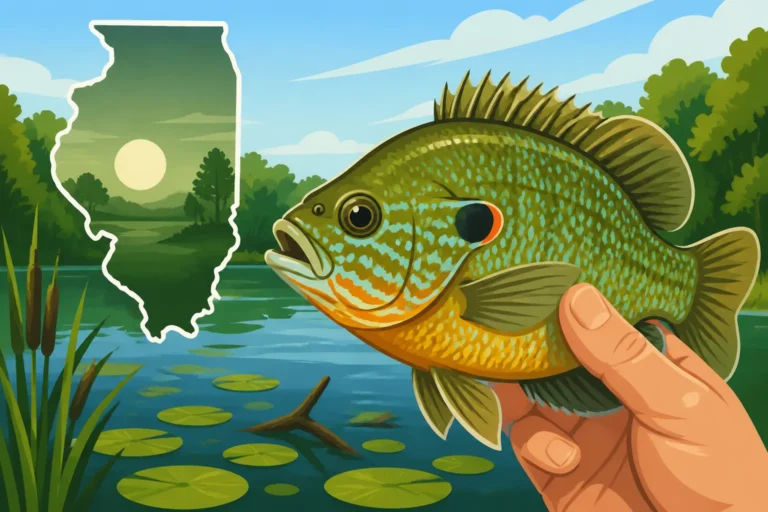
The warmouth (scientific name Lepomis gulosus) is a charming little fish, often overlooked but a true gem of Illinois' slower, warmer waters. Its name "gulosus" actually means "greedy" or "gluttonous," which is pretty spot-on for its feeding habits! They are generally smaller than many game fish, but what they lack in size, they make up for in fight and flavor. Many anglers describe them as looking like a bass-sunfish hybrid due to their somewhat stockier build compared to other panfish.
You'll typically find warmouth tucked away in the thick vegetation of murky ponds, sluggish backwater sloughs, marshy areas, and slow-moving streams. They love structure, whether it's submerged logs, lily pads, or dense aquatic weeds, where they can ambush unsuspecting prey. They're often found in places where the water might be a bit stained or tea-colored, which often makes their patterns blend in perfectly. If you're fishing a quiet, weedy cove, there's a good chance you'll encounter a warmouth.
Get to Know the Rock Bass: A Rocky River Resident
In stark contrast to the warmouth's preference for soft bottoms and dense vegetation, the rock bass (Ambloplites rupestris) is a creature of rocky environments, as its name cleverly suggests. These robust panfish are often called "redeyes" or "goggle-eyes" by local anglers, a nod to their striking crimson eyes. While also members of the sunfish family, they have a distinctly different build and habitat preference that sets them apart.
Rock bass thrive in cooler, clearer waters, particularly in streams, rivers, and rocky sections of larger lakes. Think of places with gravel beds, boulder fields, rip-rap along shorelines, or areas with current. They are less common in the shallow, muddy ponds where warmouth flourish. You'll find them holding tight to structure like submerged rocks, fallen trees in flowing water, and bridge pilings, waiting for a meal to drift by. They are widespread throughout Illinois, especially in the northern and central parts of the state where rocky rivers and creeks are more prevalent. If you're fishing a rocky creek for smallmouth bass, you'll likely run into some rock bass as well. Illinois Rock Bass and Warmouth: Overlooked Panfish Worth Catching delves deeper into their general characteristics.
Key Physical Characteristics for Identification
This is where the rubber meets the road! While both fish share that classic panfish shape, a closer look at a few key features will almost always reveal their true identity. Pay attention to the details, and you'll become a pro at distinguishing them in no time.
Eye Color and Markings: The Easiest Clue
One of the most reliable and often the first thing you'll notice when comparing a warmouth and a rock bass is their eyes and the markings around them.
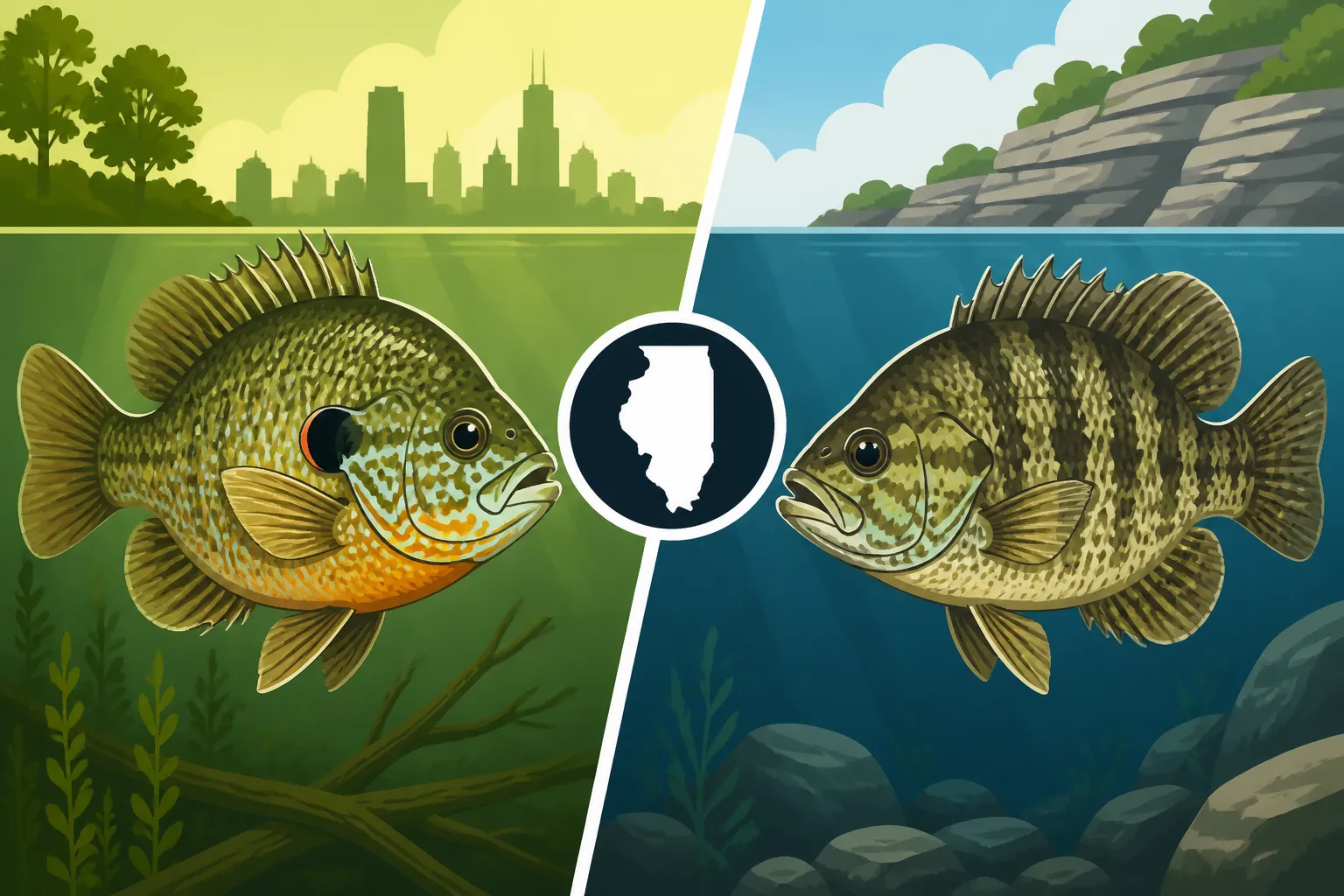
The rock bass truly earns its nickname "redeye" because its eyes are almost always a distinct, brilliant red or orange-red. It’s a very striking feature that immediately catches your attention. Beyond the eye color, rock bass also tend to have rows of dark spots along their lateral lines, which can sometimes look like faint horizontal stripes, and a more uniform coloration across their bodies, ranging from olive to brassy brown. This red eye is so pronounced that even in murky water, if you get a good look, it's a dead giveaway.
The warmouth, on the other hand, typically has eyes that are a more subdued brown, gold, or yellowish hue, not the vibrant red of the rock bass. More importantly, warmouth often have three to five prominent dark, horizontal streaks or lines radiating backward from their eye across their cheek and gill plate. These "tear streaks" or "face paint" markings are a hallmark feature and are usually quite visible. Imagine a warrior with painted stripes on its face—that's often what a warmouth looks like. If you see those radiating lines and a non-red eye, you're almost certainly holding a warmouth.
Gill Plate Spots and Ear Flap Patterns
Moving beyond the eyes, take a moment to inspect the operculum, which is the hard bony plate covering the gills, often called the "ear flap" in panfish. This area also offers some excellent clues.
For the warmouth, you'll often notice a dark spot on the very edge of its operculum, but it won't have the distinct, dark, and rigid ear flap that many other sunfish, like bluegill, possess. The entire gill plate area itself might be mottled or streaked, blending with those facial lines extending from the eye. The overall impression is a fish designed to disappear into shadowy, weedy waters.
The rock bass also has a dark spot on its gill cover, but it's typically less pronounced and less of a defining feature compared to its red eyes. What's more important is that the rock bass usually has fine, almost iridescent green or golden flecks or spots on its sides, which are especially noticeable when the fish is fresh out of the water. Its gill plate might be more uniform in color with less streaking than a warmouth. The gill plate itself is a bit larger and more rounded than the warmouth's. If you're ever in doubt, remember that strong red eye of the rock bass is paramount.
Body Shape and Fin Structure Differences
While subtle, their overall body shape and fin characteristics can also help you distinguish between the two, especially when you've had a chance to compare them side-by-side a few times.
The warmouth generally has a more robust, chunkier body, almost appearing a bit "stubby" or "stocky" compared to other sunfish. Their mouths are relatively large, extending back to at least the middle of the eye, which makes sense given their "greedy" nature and preference for ambushing larger prey. They have 3 spines in their anal fin. Their dorsal fin, which is the fin on their back, has a spiny front part and a soft-rayed back part that are often joined but appear distinct, almost notched. The overall coloration of a warmouth can be quite variable, from olive green to dark brown, often with irregular dark mottling or bars that help it camouflage in dense cover.
The rock bass tends to have a slightly more elongated, compressed body than the warmouth, though still quite stout for a panfish. Its mouth is also fairly large, often extending to or slightly beyond the front edge of its red eye. A key difference in fin structure is that the rock bass typically has 5-7 spines in its anal fin, which is significantly more than the warmouth's 3. This can be a very definitive characteristic if you're comfortable counting fin rays. Their coloration is usually a brassy green or olive-brown, often with darker blotches or horizontal rows of spots, and those signature red eyes really stand out against the body color. If you're examining a fish that seems to have more spines in its anal fin, combined with red eyes, you're almost certainly looking at a rock bass.
Here's a quick table to help summarize the key differences:
| Feature | Warmouth | Rock Bass |
|---|---|---|
| Eye Color | Brown, gold, or yellowish, not distinct red | Bright red or orange-red |
| Facial Markings | 3-5 dark, horizontal streaks radiating from eye | Few to no distinct streaks from eye |
| Gill Plate/Ear | Dark spot on operculum, mottled gill plate | Less pronounced dark spot, often iridescent flecks |
| Body Shape | Stockier, chunkier, slightly more rounded | Slightly more elongated, compressed |
| Mouth Size | Large, extends to or past middle of eye | Large, extends to or slightly past front of eye |
| Anal Fin Spines | 3 | 5-7 |
| Coloration | Olive to dark brown, often mottled | Brassy green/olive, sometimes with spots |
Habitat and Behavior: Where You're Likely to Find Them
Understanding where these fish prefer to live can be just as helpful as their physical traits when you're trying to identify them. After all, if you're fishing a clear, rocky river, you're far more likely to catch a rock bass than a warmouth, and vice-versa for a murky, weedy pond.
Warmouth's Preferred Illinois Waters
As we touched on earlier, warmouth are the kings and queens of the calm, often murky, and heavily vegetated waters. Think about those quiet little backwater areas off the main current of a river, shallow marshy sections of larger lakes, farm ponds, or slow-moving ditches. These are typically the spots where the water isn't too deep, the sun warms it up nicely, and there's plenty of cover to hide in.
In Illinois, you'll find warmouth widely distributed, particularly in the central and southern portions of the state where lakes, ponds, and slower river systems offer ideal conditions. They absolutely thrive in environments that might be a bit too muddy or overgrown for other sunfish species. If you're fishing a spot with dense lily pads, submerged timber, or thick stands of cattails, and you pull out a stocky, dark-eyed panfish with those distinct facial streaks, it's almost certainly a warmouth. They are perfectly adapted to these low-visibility environments, using their large mouths and ambush tactics to catch insects, small fish, and crustaceans. Green Sunfish: A Common Backwater Catch in Illinois might be a good read if you're interested in other fish found in similar habitats.
Rock Bass Hotspots Across Illinois
The rock bass, true to its name, is an entirely different creature when it comes to habitat. These fish prefer cooler, clearer waters with plenty of rocky substrate. They are often found in streams and rivers where there's a good current, as well as the rocky shorelines, rip-rap, and deeper sections of many of Illinois' larger lakes and reservoirs.
You'll encounter rock bass in abundance in places like the Rock River, the Kankakee River, and various other clear, rocky streams in northern and central Illinois. They love to hug structure, using rocks, logs, and underwater ledges as ambush points. They are less tolerant of silty bottoms and heavy vegetation that warmouth prefer. If you're flipping a jig or a small crankbait around rocky points, bridge pilings, or along gravel bars in a river, and you hook into a feisty panfish with bright red eyes, you can bet it's a rock bass. They often coexist with smallmouth bass in these types of environments, as they share similar preferences for structure and water conditions.
How Their Habits Inform Identification
Knowing their preferred habitats isn't just trivia; it's a powerful identification tool. Imagine you're out fishing:
- Scenario 1: You're on a small, muddy farm pond in southern Illinois, casting a bobber and worm into a thick patch of weeds. You catch a panfish. Your first thought should be warmouth, given the habitat. Then, you'd look for those facial stripes and duller eyes to confirm.
- Scenario 2: You're wading a clear, gravel-bottomed creek in northern Illinois, tossing a small spinner near some submerged boulders. You catch a panfish. Your brain should immediately lean towards rock bass. You'd then confirm with its red eyes and more uniform body pattern.
Of course, fish don't always read the rulebook, and you might find an occasional outlier. But generally, the environment they inhabit provides a very strong hint, often before you even get a close look at the fish itself. It's like knowing that you're more likely to see a deer in a forest than a desert – habitat guides expectation. This ecological separation is why they maintain distinct characteristics; they've adapted to different ways of life.
Angling Considerations: What This Means for Your Fishing Trip
Beyond just identifying them, understanding the differences between warmouth and rock bass can actually make you a more successful angler. Their habitat preferences and feeding habits often dictate the best approach for catching them, and even what you do with them after they're in the net.
Tackle and Techniques: Do They Differ?
While both are panfish and can be caught on similar light tackle, subtle adjustments in your approach can make a big difference.
For warmouth, because they favor dense cover and often murky water, you'll want to focus on presentations that can penetrate weeds or wood, and baits that are visible or create vibrations. Small jigs (like a 1/32 or 1/16 ounce jig head) tipped with a small plastic grub, a live worm, or a crickets are excellent choices. Spinnerbaits designed for panfish or small beetle spins can also be very effective, as the flash and vibration can draw them out of cover. Since they're often in tight spaces, a shorter rod or even cane pole can be practical. Look for panfish tackle on online retailers like Amazon, where you can find a good selection of small jigs and soft plastics perfect for warmouth.
When fishing for warmouth, present your bait slowly and deliberately right into or along the edges of heavy cover. Think about a weighted bobber rig that allows you to drop a bait straight down into a hole in the weeds. Because they have a relatively large mouth for a panfish, they're not shy about hitting baits that might seem a bit big for a bluegill. Ultralight Tackle for Panfish Fishing is a good resource for choosing the right gear.
For rock bass, since they prefer rocky, current-laden areas, your tactics will shift. They are aggressive feeders and will often strike at anything that looks like a small crayfish, minnow, or insect drifting by. Small crankbaits that mimic crayfish or minnows, small spinnerbaits, inline spinners (like Mepps or Rooster Tail), and small jigs are all highly effective. Live bait such as small minnows, crayfish pieces, or worms presented on a slip sinker rig can also be deadly.
When targeting rock bass, focus on casting near rocks, eddies, current breaks, and submerged logs in rivers and streams. They will often hold right on the bottom in slightly slower current, waiting to dart out and grab a meal. A medium-light spinning rod with 4-6 pound test line is ideal, allowing for good casting distance and sensitivity. Whether you're targeting rock bass or warmouth, having a good pair of pliers or a hook remover in your tackle box (easily found on Amazon) is always smart, as these fish can swallow hooks deep.
Palatability and Regulations: Keeping Your Catch Straight
Both warmouth and rock bass are considered excellent eating, offering flaky, white meat with a mild flavor, much like bluegill or crappie. However, regulations can sometimes differ slightly, and knowing which fish you have is important for compliance.
Generally, both species fall under the broader "sunfish" or "panfish" regulations in Illinois. This usually means generous daily creel limits and often no minimum size limits, making them fantastic targets for a full cooler. However, it's always crucial to consult the current Illinois Department of Natural Resources (IDNR) fishing regulations guide before you head out, as rules can vary by water body and change over time. Some specific lakes might have unique regulations for certain species. For example, some lakes might have special regulations for Illinois Walleye Size and Catch Limits or Illinois Statewide Bass Fishing Limits that don't apply to panfish, but it's important to differentiate.
By accurately identifying your catch as either a warmouth or a rock bass, you ensure you're adhering to any specific regulations that might apply. While they are often lumped together, knowing the difference demonstrates a high level of angling knowledge and respect for the resource. Plus, it's just plain satisfying to know exactly what you've caught!
Common Misconceptions and Troubleshooting Identification
Even with all the guidelines, sometimes a fish just looks… confusing. Environmental factors, individual variations, and even hybridization can throw a wrench into easy identification. Don't worry, it happens to the best of us!
The Hybrid Conundrum
One of the biggest challenges in panfish identification, particularly with sunfish, is the possibility of hybridization. Different sunfish species can sometimes cross-breed, creating offspring that display a mix of characteristics from both parent species. This is most common when different species are stocked together in smaller, confined bodies of water like ponds.
For example, a warmouth might hybridize with a green sunfish, or a rock bass might cross with another sunfish species. These hybrids can be incredibly difficult to identify because they might have some warmouth facial streaks but slightly redder eyes, or a body shape that doesn't quite fit either description perfectly. In such cases, even experienced anglers can struggle.
If you catch a fish that seems to defy easy classification, it might very well be a hybrid. Don't stress too much about it! For most recreational fishing purposes, hybrids are typically counted under the general panfish bag limits. The key is to recognize that sometimes, nature throws us a curveball, and not every fish will perfectly match the textbook description. Focus on the most consistent markers like the eye color and gill plate streaks first, and if it's still ambiguous, enjoy the catch for what it is.
What to Do if You're Still Unsure
So, you've checked the eyes, counted the fin rays, looked at the facial markings, and you're still not 100% confident. Here are a few tips to troubleshoot:
- Check Multiple Features: Don't rely on just one characteristic. For instance, if the eyes aren't brilliantly red, but it has 5 anal fin spines and is from a rocky river, it's still likely a rock bass. If it has facial streaks and 3 anal fin spines from a weedy pond, it's almost certainly a warmouth.
- Take a Photo: If you have a smartphone, snap a clear photo of the fish, especially its head and fins. You can then review it later or even consult online fishing forums or local IDNR resources. Many anglers are happy to help with identification!
- Consider the Source: Revisit the habitat. Was it caught in clear, rocky water or murky, weedy water? As discussed, habitat is a huge indicator.
- Practice Makes Perfect: The more you catch and examine these fish, the easier it will become. Over time, you'll develop an "eye" for the subtle differences. Next time you go fishing in Illinois, make it a point to catch and identify both species if you can!
- Consult a Local Expert: If you're truly stumped, ask a local bait shop owner or an experienced angler you know. They've likely seen thousands of these fish and can often tell the difference in an instant.
Remember, the goal is to enhance your fishing experience and your understanding of Illinois' incredible aquatic life. Learning to differentiate between warmouth and rock bass is a rewarding step in becoming a more knowledgeable and confident angler.
Disclaimer
This article is for general informational purposes only and does not constitute professional advice. Laws, prices and regulations vary by location and change over time. Consult a qualified professional for guidance on your specific situation.