Illinois Black Crappie Fishing in Backwater Sloughs
Many Illinois anglers find themselves frustrated, driving past countless promising-looking backwater sloughs without truly understanding how to unlock their crappie-fishing potential. These often-overlooked pockets of water hold some of the biggest and most consistent black crappie populations, but figuring out how to approach them can feel like solving a complex puzzle. This guide is dedicated to demystifying black crappie fishing in these unique Illinois backwater sloughs, offering practical advice and techniques to help you consistently find and catch these elusive panfish.
Understanding Black Crappie in Illinois Backwater Sloughs
Black crappie are truly magnificent fish, offering a spirited fight and delicious table fare. In Illinois, they thrive in a variety of environments, but backwater sloughs offer a particularly rich and often less-pressured habitat. To successfully target them, you first need to understand their preferences and habits in these specific watery nooks and crannies.
What Makes Backwater Sloughs Ideal Crappie Habitat?
Backwater sloughs are typically offshoots of larger rivers or lakes, characterized by slower currents, abundant submerged timber, lily pads, reeds, and often slightly clearer water compared to the main body. For black crappie, this combination is a perfect paradise. The reduced current allows them to conserve energy, while the dense cover provides crucial protection from predators like larger bass and northern pike. This cover also acts as ambush points for their preferred prey, which includes minnows, small shad, and aquatic insects. These sloughs often warm up faster in spring and retain heat longer in fall, creating comfortable temperatures for crappie when the main river or lake might be too cold.
Think of a slough as a quieter, more sheltered neighborhood for fish. When the main river or lake is experiencing heavy boat traffic, strong winds, or fluctuating water levels, crappie often retreat into the calm, stable environment of a slough. They use the labyrinth of downed trees, brush piles, and vegetation as their sanctuary. Understanding that crappie are seeking these protective, food-rich havens is the first step to successful fishing. You'll often find that the deeper holes or channels within a slough, especially those adjacent to sharp drops or dense cover, will hold the most active fish.
Identifying Black Crappie vs. White Crappie in These Waters
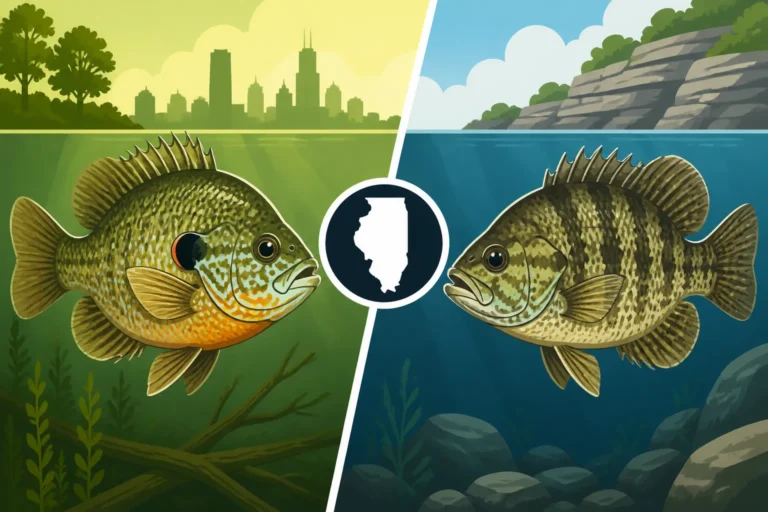
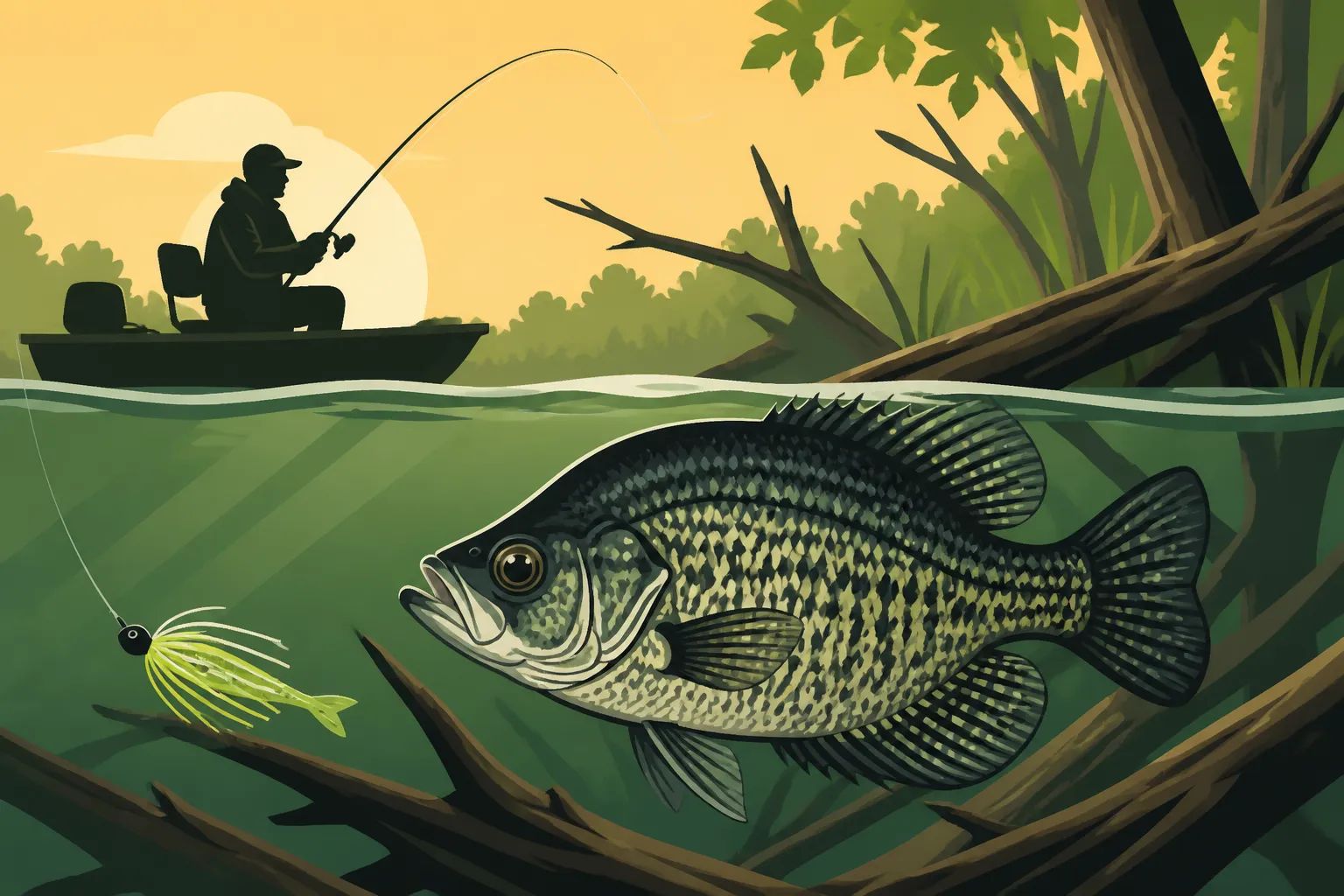
It's common to catch both black and white crappie in Illinois waters, and sometimes even in the same backwater slough. However, knowing the subtle differences can inform your tactics, as black crappie often exhibit slightly different preferences. Black crappie typically have a deeper, more compressed body shape, and their most distinctive feature is a series of irregular, dark blotches or spots scattered across their silvery-green sides. They also have seven or eight dorsal spines, which is generally more than white crappie. On the other hand, white crappie tend to be more slender and have distinct vertical bars on their sides, along with typically six dorsal spines.
While both species are panfish, black crappie generally prefer clearer water and more vegetated or woody cover. White crappie are often more tolerant of turbid, murkier water and open-water schooling. This distinction is particularly relevant in backwater sloughs; if a slough has exceptionally clear water with lots of weeds and wood, you're likely to find a higher concentration of black crappie. If the slough is a bit muddier or has less dense cover, white crappie might be more prevalent. Learning Black Crappie vs White Crappie: How to Tell Them Apart can truly refine your approach. Both are a blast to catch, but tailoring your presentation to the dominant species can make a big difference in your success rate.
Seasonal Movements and Behavior in Sloughs
Black crappie in backwater sloughs are incredibly sensitive to seasonal changes, and their behavior shifts dramatically throughout the year.
- Spring: This is prime time! As water temperatures rise into the 50s and 60s, crappie move into shallow areas of the sloughs to spawn. They'll be found around submerged brush, lily pad stems, and even old dock pilings, often in just a few feet of water. This is when they are most aggressive and easiest to locate. You might find them in massive schools near their spawning beds.
- Summer: Once the spawn is over and water temperatures continue to climb, crappie retreat to deeper, cooler water within the sloughs. Look for them holding tight to submerged brush piles, timber, or along deeper channel edges. They become more lethargic during the heat of the day, making early morning, late evening, or even night fishing more productive.
- Fall: As water temperatures cool, crappie become active again, feeding heavily to prepare for winter. They'll often move back into shallower areas during the day, particularly on sunny days, but will still relate to cover. They can be found spread out, but once you find one, there are often more.
- Winter: During winter, black crappie move to the deepest parts of the slough, often suspending over structure or relating tightly to dense cover near the bottom. Ice fishing on backwater sloughs can be incredibly rewarding, especially if you can pinpoint these deep-water holding areas.
Understanding these patterns is crucial. You wouldn't fish a shallow weed bed in August and expect to find many crappie, just as you wouldn't probe the deepest channel for spawning fish in April. Adapting your location and presentation to the season is key to unlocking the full potential of Illinois Crappie Spawn Season Guide fishing in these backwaters.
Essential Gear and Tactics for Slough Crappie
Fishing backwater sloughs often means navigating tight spaces, dense cover, and sometimes stained water. Your gear and techniques need to be specifically tailored to these conditions to maximize your chances of success and minimize frustration from snags.
Rods, Reels, and Line: The Right Setup
For black crappie in Illinois backwater sloughs, finesse is the name of the game. You're generally not casting long distances, but rather pitching or dropping baits into tight cover. A light-action to ultra-light action spinning rod, typically 5 to 7 feet long, is ideal. This rod length gives you enough leverage to steer fish away from snags, but enough sensitivity to detect those subtle crappie bites that feel like nothing more than extra weight on your line. A fast tip will help with hook sets. When choosing your rod, consider brands known for their sensitive tips and backbone, available from retailers like Amazon.
Pair your rod with a small spinning reel, in the 500 to 1000 size range, spooled with 4-6 pound test monofilament or fluorocarbon line. Monofilament offers a good balance of stretch and abrasion resistance, which is helpful around wood. Fluorocarbon is nearly invisible underwater and has less stretch, providing better sensitivity, but can be pricier. Some anglers opt for a thin, 6-8 pound braided line with a 4-6 pound fluorocarbon leader for maximum sensitivity and strength, particularly if they are constantly pulling jigs out of thick brush. The lighter line is critical for natural presentation and getting more bites from wary crappie.
Lures and Baits: What Works Best
Black crappie in sloughs are usually targeting smaller forage, so your baits should reflect that. The classic combination of a small jig head paired with a soft plastic body is hard to beat.
- Jig Heads: Stick to 1/32 to 1/16 ounce jig heads. Sometimes even 1/24 or 1/80 ounce can be effective if fish are finicky or in very shallow water. The lighter the jig, the slower it falls, which can be crucial for enticing strikes from suspended crappie. Look for jig heads with sharp, small hooks that are less prone to snagging but strong enough to hold a good crappie.
- Soft Plastics: These are your bread and butter. Small grub tails (1-2 inches), tube jigs, minnow profiles, and soft plastic "spiders" or "critters" are all excellent choices. Color can make a huge difference depending on water clarity and light conditions. In stained or murky water, chartreuse, orange, or bright greens often shine. In clearer water, natural colors like smoke, clear glitter, or subtle greens and browns can be more effective. Having a variety on hand is wise. You can find a huge array of options on Amazon to match any condition.
- Live Bait: Don't underestimate the power of live bait, especially when fish are less active. Small minnows (rosies, fatheads), hooked through the lip or back, under a bobber or fished tight-line, are deadly. Wax worms or small red worms can also work wonders, particularly for bluegill or if the crappie are feeding on insects.
- Small Crankbaits/Jerkbaits: While not as common in dense slough cover, tiny suspending jerkbaits or micro crankbaits can be effective when crappie are holding slightly deeper or in more open pockets within the slough. Choose models that dive to the depth where you're marking fish.
| Bait Type | Best Use Case | Ideal Jig Weight (Plastics) | Key Advantages |
|---|---|---|---|
| Soft Plastic Grubs | All-around, versatile, jigging, slow retrieve | 1/32 – 1/16 oz | Mimics minnows, wide color selection, budget-friendly |
| Tube Jigs | Vertical jigging, dropping into cover | 1/32 – 1/16 oz | Excellent darting action, good for tight spaces |
| Small Minnows | Finicky fish, slow bite, stationary presentations | Hooked under bobber/tight-line | Natural scent and action, irresistible |
| Wax Worms | Finesse fishing, light bite, panfish combo | 1/64 – 1/32 oz | Small, subtle, good for all panfish |
| Micro Crankbaits | Deeper pockets, active fish, searching open areas | N/A | Covers water, triggers aggressive strikes |
This table offers a quick guide, but experimentation is always key. Learning Best Crappie Jig Colors for Stained Water can really up your game.
Positioning and Presentation: Getting Your Bait in the Zone
This is where slough fishing for black crappie truly becomes an art. Crappie in these environments are almost always associated with some form of cover – whether it's submerged trees, brush piles, thick weed beds, or rock piles.
- Vertical Jigging: This is arguably the most effective technique for sloughs. Position your boat or kayak directly over or very close to the cover. Drop your small jig straight down, letting it fall slowly into the strike zone. Pay close attention as the jig falls; many bites occur on the drop. Gently lift and drop the jig, imparting a subtle fluttering action. The goal is to keep your bait in the strike zone for as long as possible. This technique is especially good when learning How to Jig for Crappie in Shallow Water.
- Pitching and Skipping: If you're fishing from the bank or a boat that can't get directly over the cover, pitching or skipping your jig under overhanging branches or into tight pockets can be incredibly productive. A sensitive rod and accurate cast are crucial here. Let the jig fall naturally, and once it hits the desired depth, a slow, steady retrieve with occasional pauses can trigger strikes.
- Tight-Lining/No Bobber: While bobbers have their place, fishing without one often provides better feel for the subtle crappie bite and allows for more precise depth control. Use your rod tip to detect bites, which can sometimes be nothing more than a slight tic or the line going slack. This is particularly effective around dense timber where a bobber might get hung up.
- Stealth: Backwater sloughs are often shallow and calm, meaning noise and disturbance travel easily. Approach quietly, use your trolling motor sparingly, and avoid unnecessary movements in your boat. Crappie, especially larger ones, can be surprisingly wary.
Remember, the goal is to present your bait as naturally as possible, right where the crappie are holding. Experiment with different depths around the cover until you find the sweet spot. A great article on Crappie Tightlining Techniques can further refine your approach here.
Navigating and Finding Productive Backwater Sloughs
Finding the right backwater slough can feel like a treasure hunt, but with a bit of research and observation, you can dramatically increase your odds of success. Not all sloughs are created equal, and knowing what to look for can save you a lot of time and effort.
Identifying Prime Slough Locations on Maps and In-Person
Start your scouting mission long before you even launch your boat. High-quality lake or river maps, especially those with depth contours, are invaluable. Look for areas marked as "slough," "backwater," "oxbow," or "old river channel." Pay close attention to connections to the main body of water; crappie often use these channels to move in and out depending on conditions. Satellite imagery (like what you can view through online mapping services) can also reveal hidden gems, showing you areas of dense vegetation, submerged timber, or even boat trails leading into secluded pockets. Look for darker areas that indicate deeper water or dense cover.
When you're actually on the water, observe your surroundings carefully. The best sloughs often have a mix of different types of cover: standing timber, laydowns (fallen trees), thick lily pad fields, and cattail reeds. Areas where these different cover types converge are often crappie magnets. Look for subtle current breaks, transition lines where clear water meets stained water, or slight changes in bottom contour. Don't be afraid to pull out your depth finder if you have one; it can reveal hidden brush piles or depth changes that hold fish. Sometimes, simply seeing other anglers consistently fishing a particular slough can be a good indicator, though the best spots are often the ones less traveled.
Accessing Remote Sloughs: Kayaks, Jon Boats, and Bank Access
The beauty of many productive backwater sloughs is their inaccessibility to larger boats. This is why smaller craft or even bank fishing are often the best ways to reach them.
- Kayaks and Canoes: For truly remote or shallow sloughs, a kayak or canoe is king. They allow for stealthy approaches, can navigate extremely shallow water, and can slip into tight pockets of cover where bigger boats simply can't go. Many anglers consider Best Kayak Models for Illinois Fishing to be indispensable for this kind of fishing. Just be sure to bring proper safety gear and know your limits, as paddling through dense vegetation can be tiring.
- Jon Boats: A small jon boat with a shallow-drafting outboard or an electric trolling motor is another excellent option. These boats are stable, can carry a decent amount of gear, and can be pushed through surprisingly shallow water. The flat bottom design allows them to get into areas that V-hull boats can only dream of. Just like kayaks, stealth is important, so rely on your trolling motor to move slowly and quietly.
- Bank Access: Don't dismiss bank fishing! Many sloughs, particularly those bordering state parks or public access areas, offer excellent bank fishing opportunities. Look for fallen trees that extend into the water, old piers, or areas with clear casting lanes into cover. If you plan to go How to Catch Crappie From the Bank, a good pair of waders can allow you to get into spots that are otherwise unreachable, extending your casting range and opening up new possibilities. Always be mindful of private property and respect local regulations.
Regardless of your chosen mode of transportation, always remember to tread lightly. Many of these backwater habitats are delicate ecosystems, and preserving them ensures great fishing for years to come.
Reading the Water: Interpreting Signs of Crappie Activity
Beyond just finding a likely-looking slough, developing the skill of "reading the water" can dramatically improve your success. This involves paying attention to subtle clues that indicate fish presence or ideal conditions.
- Water Temperature: A pocket of water that is a few degrees warmer or cooler than the main body can be a key indicator. Use a thermometer to check temperatures, especially during spring and fall. Crappie are ectothermic, meaning their body temperature matches their surroundings, so they seek out comfortable thermal zones.
- Baitfish Activity: Seeing schools of minnows flickering on the surface, or small baitfish jumping, is a huge sign. Where there's bait, there are usually predators. Pay attention to how the baitfish are behaving; nervous or scattering bait might indicate a crappie school is nearby.
- Water Color and Clarity: As mentioned, black crappie generally prefer clearer water. However, a slight stain can be beneficial, providing more cover for the fish. Look for areas where the water clarity is just right – not too muddy, not crystal clear.
- Wind and Current: Even in a slough, subtle wind-driven currents can concentrate baitfish and, in turn, crappie. Look for wind-blown banks or points that might be funneling food. On very calm days, crappie might be spread out, but a light breeze can help stack them up.
- Emergent Insects: In the spring, hatching insects can draw crappie to the surface, especially during low light conditions. Observing insect activity can give you clues about what the fish might be feeding on.
Ultimately, reading the water is an intuitive skill that develops with experience. The more time you spend on the water, the better you'll become at putting all these pieces together. Sometimes, the only way to confirm what you're seeing is to drop a jig in and see what happens. Before you head out, make sure you're up to speed on the Illinois Fishing Season and Catch Limit Rules for crappie in your specific area.
Disclaimer
This article is for general informational purposes only and does not constitute professional advice. Laws, prices and regulations vary by location and change over time. Consult a qualified professional for guidance on your specific situation.